REVIEW · SINTRA DAY TRIPS
Surf Lessons Cascais and Lisbon
Book on Viator →Operated by Kai Surf School · Bookable on Viator
First waves, no guesswork. This 2-hour surf lesson with Kai Surf School is built around a tight coaching flow: a short safety intro, a warm-up, time in the water, then real surf practice, finished with a relaxation session. It’s offered in English, and the group size stays small (max 10), so you’re not just standing around hoping for the right wave.
I like two things right away. The instruction feels patient and practical, with teachers known for clear explanations and steady encouragement, including Manuel. And the school uses newer surf gear (boards and wetsuits/suits), which matters because learning is already hard enough without wrestling with worn-out equipment.
One thing to consider: this experience depends on good weather. If conditions aren’t right, you may be offered a different date or a refund, so plan with some flexibility.
In This Review
- Key highlights you’ll actually feel
- Surf Lessons Cascais and Lisbon: What This 2-Hour Session Feels Like
- Getting to Carcavelos: Meeting Point and Easy Setup
- The 2-Hour Flow: Safety Rules, Warm-Up, Surf, Relax
- Instruction Style That Builds Confidence Fast
- Where You Ride: Carcavelos First, Then Other Nearby Beaches
- Gear Matters: New Boards and Suits Help You Learn
- English-Friendly Coaching for Adults and Kids
- Price and Value: Is $108.14 Worth It?
- Practical Tips So You Don’t Lose Time in the Water
- Who Should Book This Surf Lesson?
- Should You Book Kai Surf School in Carcavelos?
- FAQ
- How long is the surf lesson?
- Where does the surf lesson start?
- Is this lesson in English?
- How much does it cost?
- How big are the groups?
- Do you return to the starting point after the lesson?
- Is the surf lesson suitable for beginners and most people?
- Do I get a ticket on my phone?
- What happens if weather is poor?
- Are service animals allowed?
Key highlights you’ll actually feel
- Small groups (up to 10): more coaching per person and less waiting.
- Safety plus surf technique: you get the rules and the “how to take off” part before paddling out.
- Real water time: warm-up, swim, then actual surfing, not just theory.
- Coaching that adapts: teachers adjust pacing and keep you comfortable, even on your first session.
- Gear support: brand-new boards and suits help you focus on balance and timing.
- Multiple beach options: depending on conditions around Carcavelos, you may ride other nearby spots.
Surf Lessons Cascais and Lisbon: What This 2-Hour Session Feels Like
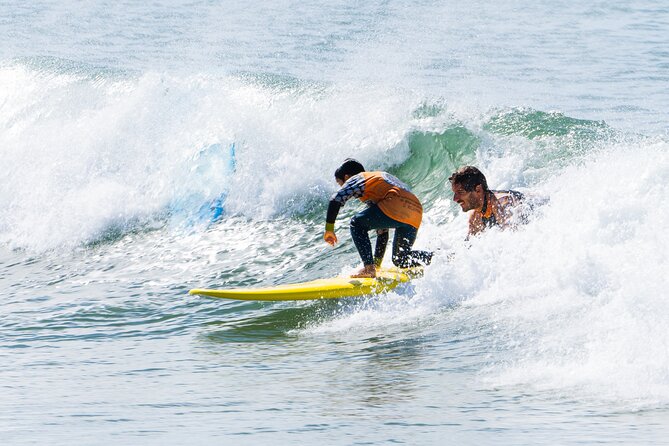
This is a straightforward surf lesson in the Lisbon area, anchored in Carcavelos. You’ll start at the meeting point (MMH9+6Q Carcavelos, and the nearby MMH9+6QW Carcavelos area), and the activity ends back there. It’s designed to feel like a complete mini-program, not a random drop-off at the beach.
Most sessions run about 2 hours, which is a sweet spot for first-timers. You get enough time to warm up and try multiple attempts, but you’re not stuck for half a day in changing waves. And because the class stays small, you should expect more hands-on feedback than the “pooling into a crowd” setup you sometimes see.
The whole flow includes a short safety intro, then warm-up, then time swimming and surfing. At the end, there’s a relaxation session, which is a nice touch because surfing can leave your shoulders and mind buzzing even when you’re having fun.
You can also read our reviews of more tours and experiences in Lisbon



Getting to Carcavelos: Meeting Point and Easy Setup
Carcavelos is the practical starting point here, not a long transfer day. The lesson begins at a specific place in Carcavelos (MMH9+6Q area), and you’ll return to the same meeting point when it’s done. That matters because surf lessons can get chaotic—this one tries to keep logistics simple.
It’s also near public transportation, so you can plan around buses or trains without building your whole day around a car. If you’re staying in Lisbon, this can be an easier way to get Atlantic waves without committing to a full surf trip.
One more small detail that helps: the booking includes a confirmation at the time of reservation, and you get a mobile ticket. For day-of logistics, that reduces the “where’s my voucher” stress.
The 2-Hour Flow: Safety Rules, Warm-Up, Surf, Relax
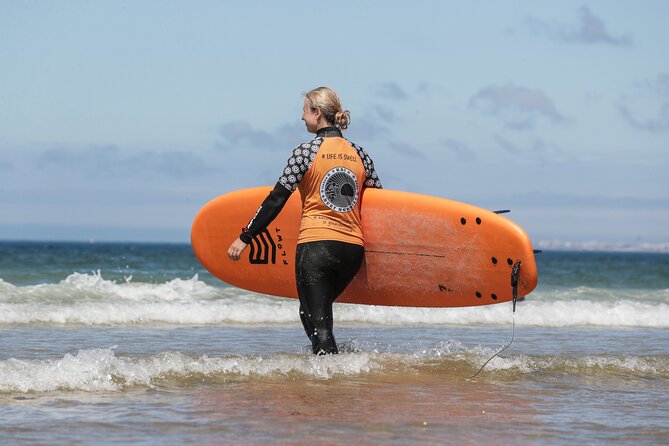
Here’s what you can expect in the session structure. You’ll start with a short introduction to safety rules and how to take off. That preps you for the hardest part for most beginners: understanding what to do when you’re moving from paddling to standing.
Next comes warm-up. This isn’t just stretching—it’s time to get your body ready for the rhythm of paddling, duck-diving under sets (you’ll learn what to do in the surf zone), and then popping up. After that, you go into the water for a swim and surf practice.
The end includes a relaxation session. This is more than a nice “we’re done” moment. It’s a useful reset, especially if you’re learning new movements and your body is still trying to figure out where your balance lives.
Because the entire lesson is time-boxed (about 2 hours), you’ll likely feel the difference between “wading around” and “getting coached through attempts.” This format also keeps you mentally engaged; you’re not stuck listening to lectures while the best sets roll through.
Instruction Style That Builds Confidence Fast
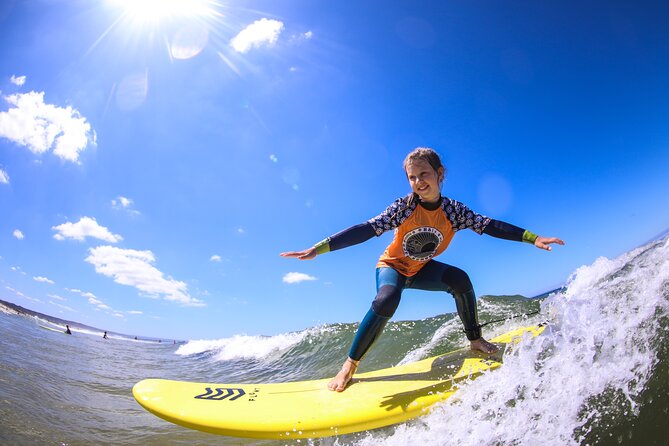
The most consistent theme in the feedback is how coaching stays patient and encouraging. For first-timers, that’s huge. Surf has a learning curve that can mess with your confidence if nobody explains what’s happening in the water.
I like that the lesson doesn’t skip the fundamentals: you’ll get safety rules and technique basics early, then you apply them immediately. You’ll also get guidance on timing and positioning—things that matter more than people think when you’re trying to stand at the right moment.
Teachers are described as attentive and friendly, and they don’t stop at generic advice. Manuel is specifically called out for clear explanation in English, with a calm teaching style that helps non-Portuguese speakers understand what to do. If you’re worried about language being a barrier, this is a reassuring part of the experience.
There’s also an important vibe shift noted by people who’ve tried several schools: the coaching stays serious but not stiff. The goal seems to be getting you to your edge safely—pushing you to improve while still keeping you feeling secure in the water.
Where You Ride: Carcavelos First, Then Other Nearby Beaches
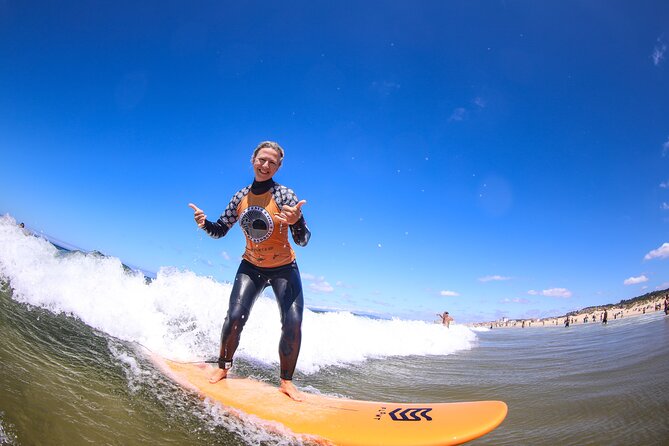
Carcavelos is the base, but the session may change depending on conditions. One of the most practical advantages here is that when Carcavelos isn’t ideal, the school brings you to other nearby surf spots.
People mention options like Costa da Caparica, Guincho, and Praia Pequena when conditions around Carcavelos aren’t working. This is smart for learning because surf quality can swing fast. If you’re stuck where waves are chaotic, you lose time—coaching can’t work miracles.
For beginners, this flexibility can mean more usable wave chances and less frustration. For more advanced surfers, it can mean trying different breaks without booking a full separate day trip.
The trade-off is simple: you shouldn’t treat it like one fixed beach location for every single day. It’s still a single lesson experience, but the exact water spot can vary with the weather and surf conditions.






Gear Matters: New Boards and Suits Help You Learn
Surf lessons are not the place to improvise gear. Here, the school is praised for having brand-new boards and suits, which is exactly what you want when you’re focusing on balance and technique instead of fighting equipment.
Equipment quality matters in a very direct way. A board that’s in good shape tracks better and responds more predictably. That makes your “try, adjust, try again” cycle much more productive.
There’s also a cost angle. One review notes the school brings equipment, so renting would cost much more. Even if you’ve been thinking about renting a board and wetsuit separately, this can reduce the hassle and help you keep your budget under control.
If you’re going as a family or bringing kids, gear readiness is even more important. Kids learn fast when the setup works—and when the teacher can keep the pace moving.
English-Friendly Coaching for Adults and Kids
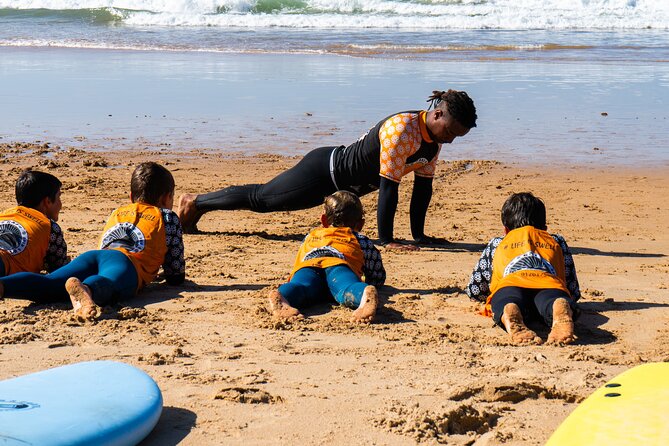
This surf lesson is offered in English, which can be a big deal if you’re visiting and don’t want to spend your limited lesson time guessing. Manuel is specifically mentioned for very good English, and the class structure supports that: clear instructions before you’re out on the water.
The school also has a reputation for working with both adults and kids. That tells me the coaching style is flexible—likely adjusting how much detail they give and how they pace practice. You should feel comfortable whether you’re learning your first pop-up or you’ve already been out a few times.
One more helpful detail from the feedback: teachers are described as very patient and friendly, including with children. In surfing, patience isn’t optional. You need calm repetition, not pressure.
Price and Value: Is $108.14 Worth It?
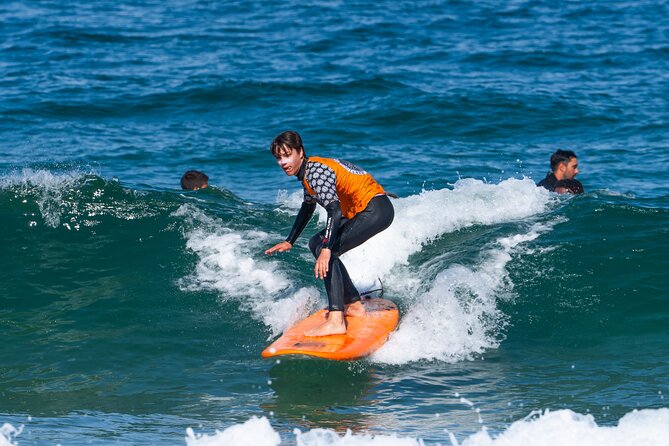
At $108.14 per person for about 2 hours, you’re paying for coaching time, small-group teaching, and surf-specific setup. This is not a “rental-only” price, so the value depends on whether the lesson actually helps you progress.
In the reviews, the lesson repeatedly gets credit for instruction quality and confidence-building—clear explanations, safety focus, and teaching that keeps going until you succeed. That’s what you’re really buying: fewer wasted attempts and better feedback loops.
You’re also not just getting a coach pointing from shore. The class includes warm-up, swim time, surf practice, and a relaxation period. That full sequence makes the session feel like a structured learning experience rather than a quick outing.
If gear rentals were on your plan, the fact that the school provides boards and suits (and brings equipment so renting wouldn’t be necessary) can make the total cost feel more reasonable. For many people, the best value is simply avoiding the extra hassle and cost of separate rental logistics.
Practical Tips So You Don’t Lose Time in the Water
This lesson moves at surf speed—meaning you’ll want to arrive ready so you don’t spend the first minutes figuring things out. Since there’s a safety intro and a technique briefing right at the beginning, listening well at the start is your shortcut to better results.
Because the class can shift to different nearby beaches depending on conditions, keep your expectations flexible. If you’re choosing this for a specific photo spot or a specific beach view, you may not get the same exact shoreline every time. The upside is that the school can chase better conditions for learning.
Also, because it’s suitable for most participants and the group cap is 10, this is a good choice if you want individualized attention. If you’re anxious about surfing, a smaller group and patient coaching can lower the stress fast.
Finally, bring your energy for practice, not perfection. Surf progress usually comes in small wins: a better takeoff, a calmer paddle, a smoother turn attempt. This lesson format is built to help you rack up those wins.
Who Should Book This Surf Lesson?
This is a strong pick if you’re:
- learning surfing for the first time (and you want safety plus technique right away)
- an adult who wants patient coaching without feeling rushed
- looking for a lesson that works for both beginners and more experienced surfers
- traveling with kids and want a school that handles younger learners calmly
- relying on English instruction
It’s also a sensible option if you’re staying in or near Lisbon and want Atlantic surf without turning the day into a long expedition. Carcavelos is the anchor, with flexibility to ride better conditions nearby when needed.
The only “not ideal” scenario I’d flag is if you want guaranteed surf spot sameness every day. This experience is condition-based, so location can vary.
Should You Book Kai Surf School in Carcavelos?
I’d book this if you want an efficient, coached surf session with the basics done right. The strongest reason is the way instruction is described: clear safety guidance, calm technique teaching, patient persistence, and confidence-building coaching from Manuel and the team.
It also scores on value because you’re paying for the lesson structure—not just gear. And with brand-new boards and suits being part of the setup, you’re less likely to get tripped up by equipment problems.
One final decision tip: if your schedule is tight, book with an understanding that weather can affect conditions. If you can be flexible by a date, you’ll give yourself the best chance of getting a session with good waves and a satisfying learning payoff.
FAQ
How long is the surf lesson?
The experience lasts about 2 hours.
Where does the surf lesson start?
The meeting point is in Carcavelos, at the MMH9+6Q area (also near MMH9+6QW Carcavelos).
Is this lesson in English?
Yes, the class is offered in English.
How much does it cost?
The price is $108.14 per person.
How big are the groups?
This activity has a maximum of 10 travelers.
Do you return to the starting point after the lesson?
Yes. The activity ends back at the meeting point.
Is the surf lesson suitable for beginners and most people?
Yes. Most travelers can participate, and the lesson format is set up for beginners as well as people looking to progress.
Do I get a ticket on my phone?
Yes, the experience uses a mobile ticket.
What happens if weather is poor?
The experience requires good weather. If canceled due to poor weather, you’ll be offered a different date or a full refund.
Are service animals allowed?
Yes, service animals are allowed.