REVIEW · CITY TOURS
Private Tour to Evora and Merida – World Heritage City of the Roman Empire
Book on Viator →Operated by Knight Riders Tourism · Bookable on Viator
Two Roman cities, one ghoulish twist. This private 10-hour run packs major Roman ruins in Mérida and the unforgettable Bone Chapel in Évora, with a cultured stop in Moorish-era Badajoz. I love how the day mixes big-ticket sights with smaller, less-crowded museum time, and I love that the sites are grouped logically so you’re not bouncing around aimlessly.
The one possible drawback: several stops are around 30 minutes, so if you want slow museum wandering at every location, you’ll have to choose what to linger over. Also, you’ll be on the move most of the day—great for sight-hungry travelers, less great for anyone who likes long sits. In one standout experience, the guide Hugo set the tone by explaining the history in a way that made the ruins feel connected, not like separate photo stops.
In This Review
- Key points you’ll care about
- A 10-hour Roman Empire sweep from Lisbon
- Badajoz first: Alcazaba fortress walls and culture on restored ground
- Mérida’s National Museum of Roman Art: mosaics you can actually study
- Roman Theater of Mérida: when spectacle was politics
- Temple of Diana: classic Roman form in Lusitania’s capital
- Mérida’s Roman circus: built for legions, not just games
- Aqueduct ruins: The practical engineering you can still feel
- Évora’s Roman roots, Moorish fortification, and Portuguese Gothic flair
- The Bone Chapel in Évora: history in a human-made form
- Price and value: what $423.25 buys you
- Logistics that make or break a day trip
- Who should book this tour
- Should you book this private Évora and Mérida day?
- FAQ
- How long is the private tour?
- Where do you pick up and drop off?
- What language is the tour offered in?
- Do we need to pay entrance tickets?
- Is this tour private?
- Can I cancel for a full refund?
Key points you’ll care about
- Private pickup and drop-off in Lisbon region, Cascais, Sintra, and Almada (your exact address)
- Mérida’s Roman Art Museum stop is built around mosaics, sculptures, and artifacts
- Roman Theater + Temple of Diana + Roman circus give you several angles on Roman “performance”
- Évora’s Bone Chapel is the day’s unforgettable, human-made oddity
- Most admissions are free on this route, with the Roman Theater included
- Hygiene-certified Clean & Safe setup, with mask/sanitizer support and regular vehicle disinfection
A 10-hour Roman Empire sweep from Lisbon
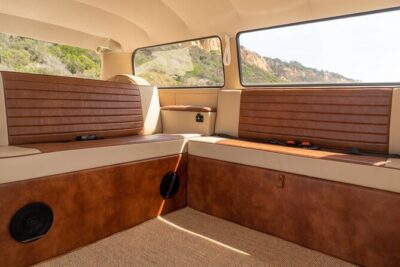
This tour is the kind of day that feels efficient without feeling like a blur. You get a full sweep of Roman-era power—then it pivots to medieval Portugal in Évora, and adds a Moorish-flavored stop in Badajoz. It’s also designed for comfort: an air-conditioned minivan, a driver/guide, and a private setup where it’s just your group.
For your money, the value is tied to two things. First, many sites come with free admission at the scheduled stops. Second, you’re not driving yourself between countries or coordinating separate tickets and timing.
The day starts with Badajoz, then works its way into Mérida, and ends in Évora. That order matters because you’re building toward the big emotional payoff: Évora’s Bone Chapel.
You can also read our reviews of more city tours in Lisbon



Badajoz first: Alcazaba fortress walls and culture on restored ground
Your morning begins at the Ayuntamiento de Badajoz, where the Arab Alcazaba (fortress) sits over the old defensive system of bastions and city walls. It’s not just “nice architecture.” It’s a reminder that the region’s history wasn’t only Roman—it was fought over, rebuilt, and reused.
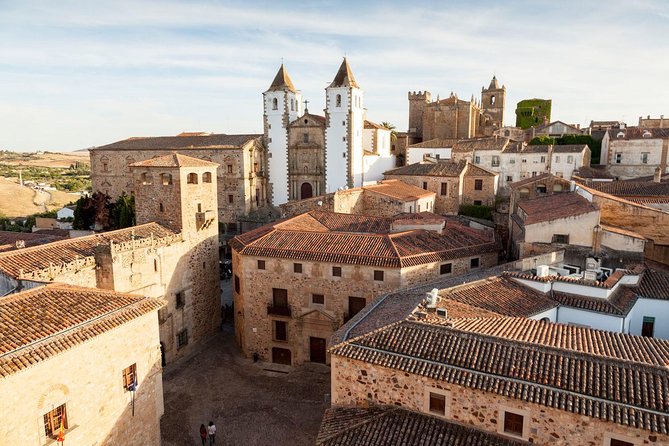
This stop is also about how old fortifications turn into everyday cultural space. You’ll see that many fortified areas have been restored and are now home to cultural institutions, with examples like MEIAC, the Archaeological Museum, and the Carnival Museum. The idea for you: you’re getting a quick historical orientation, so later you understand why Mérida and Évora look the way they do—layered civilizations, not one straight timeline.
You only have about 30 minutes here, and that’s the tradeoff. Use it to get your bearings and let the guide frame what you’re about to see.
Mérida’s National Museum of Roman Art: mosaics you can actually study
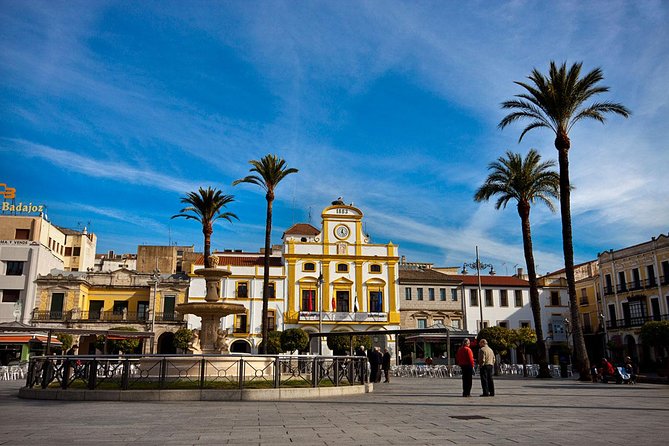
Then you head into Mérida and get the best kind of “Roman intro”: the National Museum of Roman Art. This is where your eye can slow down. The focus is on museum pieces tied to local Roman life—mosaics, sculptures, and artifacts taken from the nearby theater and amphitheater.
Why I like this for you: museums are often where you learn to see. In a Roman city, it’s easy to treat ruins like scenery. A museum stop helps you read what you’re looking at later—patterns, sculpture types, and how art related to public spaces.
You have about 1 hour. That’s enough time to look closely at a few highlights without feeling rushed, especially with a guide to point you toward what matters most.
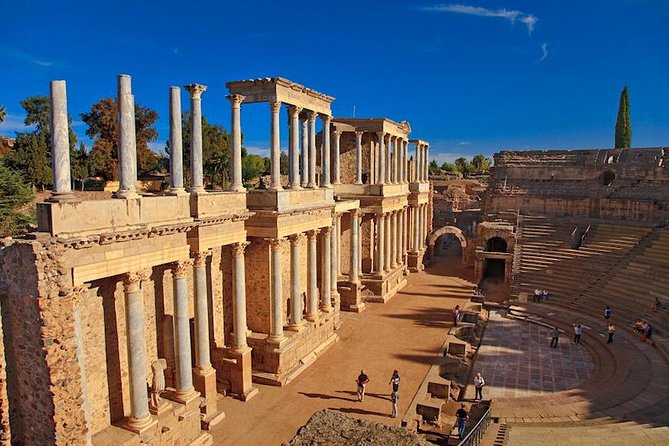
Roman Theater of Mérida: when spectacle was politics
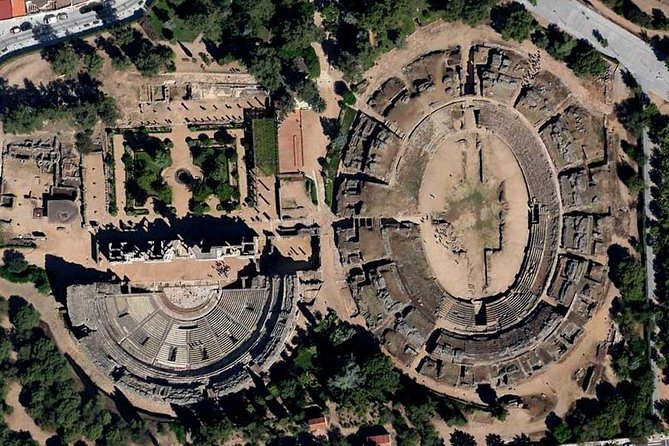
Next comes the Roman Theater of Mérida. The tour highlights it as a theater built by Marco Vipsanius Agrippa, and possibly opened between 16–15 AD. That’s the kind of detail that changes your attitude while standing there: you’re not just looking at old stone, you’re imagining public events in a city that was a provincial center.
You’ll get around 1 hour, and the admission for this stop is listed as included. That matters for planning. It means you can focus on the experience instead of thinking about additional tickets.
If you like architecture and scale, pay attention to the way a theater shapes movement—how the space is designed to hold an audience. Even from a distance, the Roman approach to public spectacle comes through fast.
Temple of Diana: classic Roman form in Lusitania’s capital
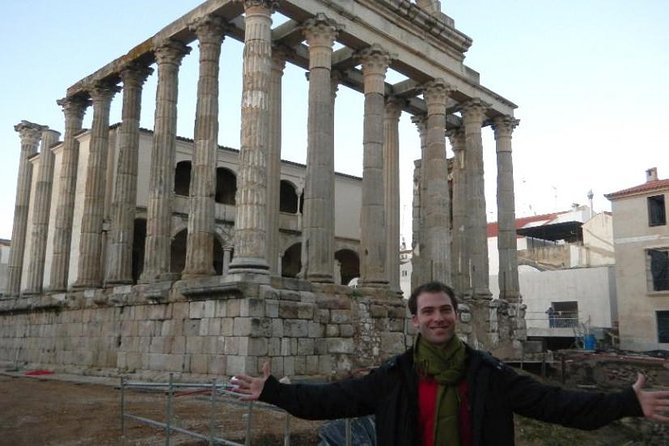
After the theater, the tour moves to the Templo de Diana. This is a Roman temple built until the late 1st century BC, and it’s tied directly to Emerita Augusta, later capital of the Roman province of Lusitania—today’s Mérida.
The value here is speed plus clarity. In half an hour, you can get the “why it matters” context: Romans weren’t only building for crowds and entertainment. They also built religious and civic monuments that signaled authority.
Don’t rush past it. Even if you only catch a few angles, this is one of those sites where your brain starts sorting Roman design elements: proportions, location, and how a temple anchors a town.
You can also read our reviews of more private tours in Lisbon






Mérida’s Roman circus: built for legions, not just games
One of the most fascinating stops is the Roman circus of Mérida—often the one you don’t see on shorter Roman trips. The tour frames it as a circus built for the Roman colony of Emerita Augusta, founded in 25 BC by Augustus. It was for licensed soldiers of two veteran legions from the Cantabrian Wars: Legio V Alaudae and Legio X Gemina.
That military detail matters for you. It changes the story from “entertainment venue” to “Roman identity in stone.” In other words, the crowds and the spectacle weren’t separate from power—they were part of it.
You’ll have about 30 minutes here, and the admission is marked as free. For the time you have, it’s a great stop to take photos and let the guide link the circus to the theater you saw earlier.
Aqueduct ruins: The practical engineering you can still feel
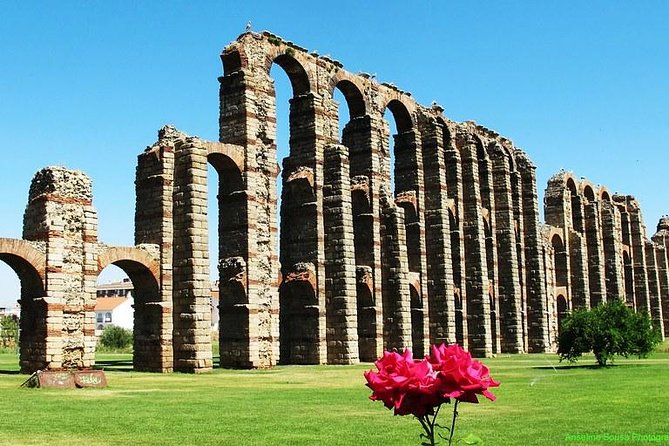
Then you get the Acueducto de los Milagros, described as the ruins of a Roman aqueduct bridge used to supply water to Augusta Emerita (Mérida). You’ll only have around 10 minutes, which is short, but the point of the stop is clear: Roman civilization worked because it could move resources efficiently.
If you’re the type who enjoys engineering more than statues, this is a good balance. You don’t need long hours to get the takeaway. The ruins still show how serious the Romans were about water, infrastructure, and daily life.
A tip for your brain: treat it like a “systems stop.” Ask yourself how a city functioned before electricity, and you’ll start noticing the bigger pattern behind all the monuments.
Évora’s Roman roots, Moorish fortification, and Portuguese Gothic flair
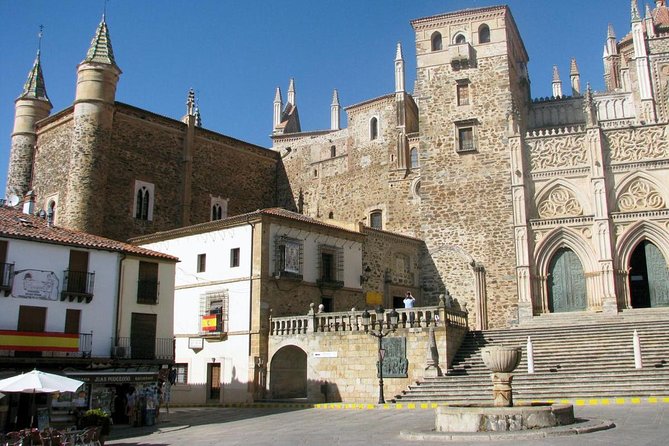
Next is Évora, the final big chapter of the day. The tour describes it as a town originally founded by the Romans, later fortified by the Moors, and flourishing during the 15th century. You can feel those layers in the monuments you’ll visit.
You’ll have around 2 hours, and admissions for this stop are listed as free. That longer window gives you time to move at a comfortable pace, which matters because Évora is the kind of place where one square pulls you into the next.
You’ll see highlights like the preserved Roman Diana Temple, and the Evora castle. You’ll also spend time around Praça do Giraldo, noted for 16th-century Gothic architecture, and you finish with the tour’s headline shocker: the bone chapel.
The Bone Chapel in Évora: history in a human-made form
The bone chapel is described as the most ghoulish sight of Portugal—and one of Évora’s most memorable monuments. The concept is simple, but the impact is not. It’s not a Halloween prop. It’s a space decorated with human remains, and it forces you to confront how people used ritual, memory, and even fear to give structure to death.
For many visitors, this is the emotional peak of the day. For you, it’s also a sign that the tour isn’t only about Roman stone. It’s about how European cities grew beyond Rome, carrying forward ideas about power, religion, and place.
Since you’ll have about 2 hours total for Évora, you can balance the solemn (or strange) with the beautiful: Roman temple remains, castle views, and the lively feel around Praça do Giraldo.
Price and value: what $423.25 buys you
At $423.25 per person for a roughly 10-hour private tour, the first question is whether you’re paying for driving or paying for expertise. This one is priced more like expertise plus convenience.
Here’s why the value can work:
- You get private pickup and drop-off in the Lisbon area plus an air-conditioned minivan.
- You visit multiple “major-hit” sights across three locations, with a route built for one-day flow.
- Many stops list free admission (including several Mérida sights and Évora), and the Roman Theater is marked as included.
The hidden value is that you’re not spending your mental energy on ticket coordination. You also get a guide who can connect what you’re seeing—like the way Hugo’s explanations help turn individual sites into a single story of Roman power and later cultural change.
If you’re traveling as a couple or a small group, private tours often start to look smarter than public transport plus multiple guide services. If you’re solo, it can still feel fair, but it’s more about the “no hassle, door-to-door” factor.
Logistics that make or break a day trip
The tour is in English and uses a mobile ticket. It’s described as a private tour/activity, meaning only your group participates.
Pickup is offered, and you must provide your hotel/port/apartment address in the Lisbon region, including Cascais, Sintra, and Almada. That’s a big deal. You start the day already in vacation mode.
Timing-wise, expect a lot of “short stop” energy. Several stops are around 30 minutes, and one is just 10 minutes. Plan to move quickly, and plan to ask questions. A good guide can make a half hour feel complete.
On the health-and-safety side, the operator notes Turismo de Portugal hygiene certification with a Clean & Safe stamp. Vehicles are cleaned and disinfected each tour, and you’re provided hand sanitizer and masks for safety.
Who should book this tour
This fits best if you want:
- A Roman Empire focus with multiple types of sites (mosaics, theater, temple, circus).
- A memorable “off the standard map” cultural stop in Évora’s Bone Chapel.
- Comfortable logistics: private transport, private pickup/drop-off, and English guidance.
- A day built around sites with free admission on the schedule.
It may not fit as well if you:
- Want long, unhurried time inside every museum and ruin.
- Get uncomfortable with a fast pace and quick transitions.
- Prefer fewer stops and deeper time in one city only.
Should you book this private Évora and Mérida day?
I’d book it if you’re the type who likes to leave with images and a clearer understanding of the story behind them. The combination of Mérida’s Roman art and performance sites plus Évora’s human-made, unforgettable chapel is a strong mix—and the fact that many entrances are listed as free helps your budget breathe.
If you’re on the fence, choose based on your pace tolerance. This is a strong “best-of” route in one day, not a slow travel itinerary. If that sounds good to you, you’ll likely feel satisfied when the day ends—especially with a guide like Hugo setting the history in context as you go.
FAQ
How long is the private tour?
The tour duration is about 10 hours.
Where do you pick up and drop off?
Pickup and drop-off are offered in the Lisbon region, including Lisbon, Cascais, Sintra, and Almada. You provide your hotel/port/apartment address.
What language is the tour offered in?
The tour is offered in English.
Do we need to pay entrance tickets?
Most scheduled stops are listed with admission tickets as free, and the Roman Theater stop is listed as included. (Entrance details are tied to each stop on the itinerary.)
Is this tour private?
Yes. It’s a private tour, and only your group participates.
Can I cancel for a full refund?
Yes. Free cancellation is available up to 24 hours in advance for a full refund.