REVIEW · PASTEL DE NATA BAKING CLASSES
Pastel de Nata Pastry Class: Bake and Enjoy Your Own Treats
Book on Viator →Operated by Homecooking Lisbon · Bookable on Viator
Warm custard, fresh from your own oven.
This hands-on pastel de nata pastry class in Lisbon turns a famous Portuguese treat into something you can actually repeat at home, step by step. You’ll learn the pastry’s background as you work, then bake your own egg custard tarts and enjoy them right away with coffee or tea and a tasting of Porto wine.
What I like most is the clear, practical rhythm: you’re not just watching. You’re rolling, filling, and learning the logic behind each move, from puff pastry to custard.
One possible drawback: it’s two hours focused on cooking, not a long social or sightseeing experience. Also, the tone can be more serious than playful depending on the instructor, so if you want nonstop banter, you might prefer another style of class.
In This Review
- Key highlights you’ll care about
- Why learn pastel de nata in Lisbon’s cooking school vibe
- Meeting point and what the start feels like
- The hands-on heart: from puff pastry to custard (and not panicking)
- Puff pastry: where technique matters
- Custard filling: the sweet spot is texture
- The oven phase: you won’t have to guess
- While the tarts bake: history, snacks, and a friendly pace
- Tasting like a Lisbon local: coffee, Porto wine, and how to judge your results
- Drinks and the 18+ alcohol rule
- What you’ll get to take home (and how to use it later)
- Price and value: is $66.51 a fair deal?
- Who should book this pastel de nata class
- Should you book? My straight answer
- FAQ
- How long is the Pastel de Nata pastry class?
- Where does the class meet in Lisbon?
- Is the class offered in English?
- Is alcohol included?
- What refreshments are included during the class?
- Are the pastries baked during the class?
- What’s the group size?
- What’s included in making the tarts?
- How far in advance is this experience typically booked?
- Can I cancel for free?
Key highlights you’ll care about
- Real scratch making: puff pastry and filling are included, so you start from dough and custard, not shortcuts
- You eat what you bake: you’ll taste the freshly baked tarts right after they come out of the oven
- Drinks are part of the experience: coffee, tea, water, plus alcohol for participants 18+
- Small group kitchen: capped at 16 so you’re more likely to get hands-on time
- Instant payoff for first-timers: guided technique plus help at your station while you bake
- English-friendly: offered in English, which makes the instructions easier to follow
Why learn pastel de nata in Lisbon’s cooking school vibe
Lisbon has pastel de nata everywhere, but there’s a difference between buying one and making one. In this class, you get the whole process in a kitchen setting built for learning, not a demo where you stand back and hope for the best. You’ll work with the dough and the filling, then see how timing and technique turn into that classic custard tart texture.
This is also a smart way to understand Portuguese food culture. Pastel de nata isn’t just dessert. It’s a bite-sized piece of Lisbon’s identity—simple ingredients, careful method, and a little pride in doing it well.
The best part for me is the payoff. You get to taste your own work right there, not later after you’ve cooled your standards in a hotel room. And you’ll do it with the usual Portuguese pairing: coffee or tea, plus a Porto wine tasting to round out the evening mood.
You can also read our reviews of more tours and experiences in Lisbon


Meeting point and what the start feels like
The class starts at R. Aliança Operária 54, 1300-049 Lisboa. It’s set up so you’re close to public transportation, which matters in Lisbon, where getting across neighborhoods can take longer than you expect once hills and traffic stack up.
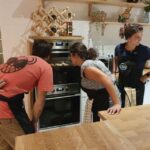
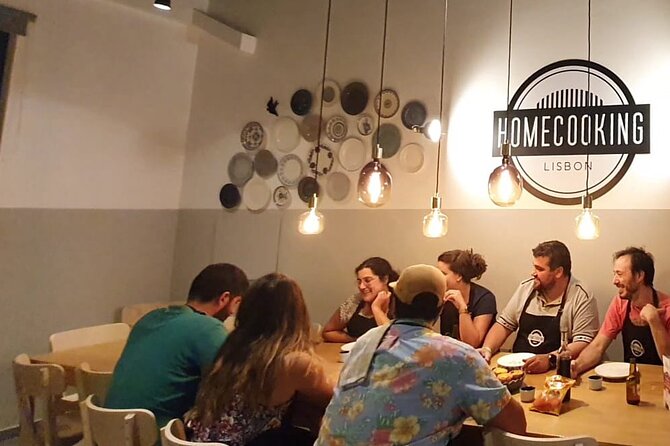
Once you arrive, you’ll get oriented quickly. You’re assigned stations and you’ll start moving through the steps with your instructor. Since the group is capped at 16, the room doesn’t feel chaotic. You can actually ask questions and get real-time feedback instead of waiting for someone to finish their own tart.
If you’re coming as a couple or with a friend, this format is great. Several people love doing it in pairs because you can trade off rolling, filling, and watching the details that make or break the result.
The hands-on heart: from puff pastry to custard (and not panicking)
The core promise here is straightforward: you’ll prepare a batch of pastel de nata from scratch. That means puff pastry and the filling are included, so you aren’t hunting down ingredients or trying to guess technique before you arrive.
Here’s the mindset that helps most: don’t aim for perfection on the first tart. Aim for consistent steps. A lot of people do fine even if they’ve never baked anything serious before, because the class breaks the work into phases and gives you direction during the tricky parts—especially around rolling and shaping.
Puff pastry: where technique matters
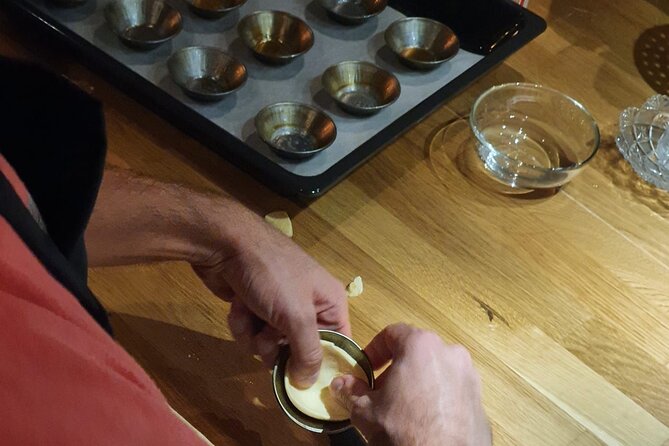
Puff pastry is the part that makes pastel de nata feel light and layered instead of heavy. In class, you’ll learn how to handle the dough so it stays workable and doesn’t turn into a sticky mess. You’ll also get guidance on rolling and shaping so the tart shells form correctly.
This is the stage where small mistakes can show up fast. Too much pressure can flatten layers; too little control can make shaping uneven. The instructors (people like Beatriz, Pedro, Rita, Miguel, and Chef Beatrice show up across different sessions) tend to circulate and give feedback while you’re actively working, not after you’ve already baked a full tray.
Custard filling: the sweet spot is texture
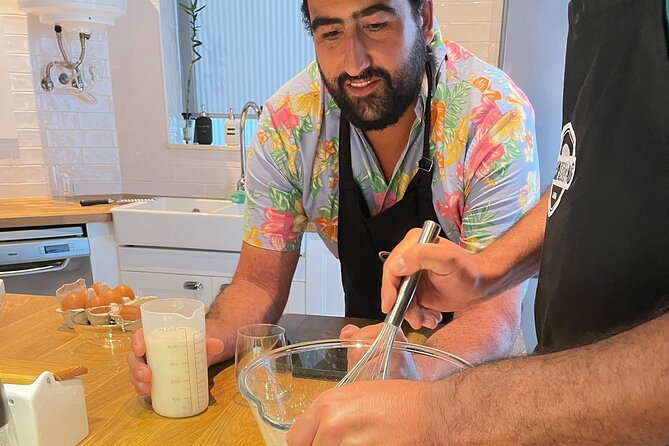
The filling is egg custard, and the trick is treating it like a texture problem, not just a flavor problem. You’ll learn the steps to get the custard into the tarts without overthinking it. The class structure helps because you don’t have to guess the right amount—your course materials and instructions guide you toward the correct fill.
If you’re baking for the first time, keep your focus on consistency. The best-looking results come when each tart gets a similar amount and similar care in placement.





The oven phase: you won’t have to guess
Once assembled, the tarts go into the baking step, which is where impatience can work against you. You’ll spend time with the group while the oven does its thing, and you’ll come back to your batch at the right moment for tasting.
And yes, the tarts can be piping hot when you try them. Plan on letting a bite cool slightly so you don’t scorch your tongue and ruin your first impression.
While the tarts bake: history, snacks, and a friendly pace
Two hours in total doesn’t leave time for a long lecture marathon. Instead, the class folds in history and context while you’re waiting for bake time. That’s a good trade. You learn just enough about pastel de nata to understand why people care, without losing the hands-on momentum.
You’ll also get refreshments during the session: water, coffee, tea, and snacks. Since alcohol is included for the experience, many sessions also include a tasting element at the end—typically Porto wine.
The pacing is usually like this: you do the active prep in the earlier part, then there’s time for you to mingle and snack as the tarts bake. A few people even noted that a big chunk is social, which can be a plus if you like meeting other travelers or you simply want the class to feel like a relaxed evening rather than a strict cooking boot camp.
If you’re someone who wants constant action, you might wish the baking window moved faster. Still, this break is what makes the class feel like more than a quick workshop.
Tasting like a Lisbon local: coffee, Porto wine, and how to judge your results
When your tarts come out, you’ll taste them Portuguese-style: right away, while they’re at their best. The goal isn’t to pretend you’re a pastry critic. It’s to notice what you nailed and what you’d tweak next time.
You can use the taste to learn fast:
- If you get that classic custard set with a creamy center, your timing and fill were close
- If the pastry shell has layered structure, your dough handling worked
- If the top has that slightly toasted finish, your oven moment was on target
Drinks and the 18+ alcohol rule
Alcohol is included as part of the experience, but it won’t be served to participants under 18. For everyone else, this is one of those nice touches that turns a baking class into a real Lisbon food moment, not just a cooking chore. If you’re not drinking, you’ll still have water, juices, or tea.
At the end, you’ll also enjoy a tasting of Porto wine. That pairing makes sense: Porto brings warmth and depth to balance custard sweetness.
What you’ll get to take home (and how to use it later)
One reason people love this class is the emotional part. Fresh pastry you helped make feels different than a box from a counter. In some sessions, the instructors provide boxes so you can take your pastel de natas home after class.
Even if you don’t plan to store them, thinking about take-home changes how you bake. It encourages you to focus on doing each step carefully so you can enjoy results again later, not just during the tasting.
If you do take them home, here’s the practical move: keep them covered so they don’t dry out too much. Custard tarts are best when they retain that fresh-baked texture.
Price and value: is $66.51 a fair deal?
At $66.51 per person, this class isn’t a bargain like a free walking tour. But it also isn’t a premium multi-course food festival where you’re mostly eating and watching.
You’re paying for a few high-value things:
- Hands-on instruction with guidance during the steps
- Ingredients provided, including puff pastry and custard filling
- A complete “make and taste” experience in about two hours
- Drinks included: water, coffee, tea, and alcohol for 18+
- Porto wine tasting at the end
In other words, the price is mostly about labor, setup, and convenience. If you’ve ever tried to recreate pastel de nata at home with the wrong dough or unclear technique, you know why this kind of guided class can actually save money in the long run. You’re paying for less trial and less waste, plus the fun of getting it right in one go.
Who should book this pastel de nata class
This is a strong fit if:
- You’re a foodie who wants more than tasting and wants technique
- You’re traveling as a couple and want a shared activity with a clear payoff
- You’re curious about Portuguese baking but don’t want to commit to a full-day tour
- You like small-group settings where you can participate rather than hover
It’s also a nice option if you’re visiting Lisbon for a short stay. Two hours is easy to slot between sightseeing bursts, and the activity doesn’t demand prior baking skills.
If you hate kitchens, loud timing pressure, or the idea of handling dough, you might not love it. But if you’re okay getting a little flour on your hands and learning while you do, this class is built for you.
Should you book? My straight answer
Yes—if you want a memorable Lisbon food experience you’ll actually use at home. The class structure makes it hard to fail: puff pastry and filling are provided, you bake in a guided setup, and you finish by tasting the results immediately with coffee or tea and Porto wine.
Book it especially if you enjoy learning by doing. You’ll leave with a new appreciation for how much work goes into those iconic egg custard tarts, and you’ll have something delicious to share with friends back home.
Skip it only if you’re looking for a long cultural walking tour or you want a purely social night with no cooking focus. This is a baking class first, and the best version of it is the one where you roll up your sleeves.
FAQ
How long is the Pastel de Nata pastry class?
The class runs for about 2 hours.
Where does the class meet in Lisbon?
The meeting point is R. Aliança Operária 54, 1300-049 Lisboa, Portugal, and the experience ends back there.
Is the class offered in English?
Yes, the class is offered in English.
Is alcohol included?
Yes, alcohol is included, and it’s served only to participants 18 years old and older. For those under 18, water, juices, or tea are available.
What refreshments are included during the class?
You’ll have snacks and water, coffee, and tea, plus alcohol (for those eligible) during the baking process. Coffee or tea is served with the tasting at the end.
Are the pastries baked during the class?
Yes. You’ll prepare Pastel de Nata (egg custard tarts) from scratch and then savor freshly baked pastries at the end.
What’s the group size?
The class has a maximum of 16 travelers.
What’s included in making the tarts?
You’ll make Pastéis de Nata from scratch with puff pastry and filling included.
How far in advance is this experience typically booked?
On average, it’s booked about 21 days in advance.
Can I cancel for free?
You can cancel for a full refund if you cancel up to 24 hours in advance of the experience start time. If you cancel less than 24 hours before, the amount paid won’t be refunded.