REVIEW · DINING EXPERIENCES
Private Tour: Lisbon Sunset Walking Tour with Fado Show and Dinner
Book on Viator →Operated by Inside Lisbon · Bookable on Viator
Lisbon at sunset feels like a movie set. This private tour strings together key viewpoints, the historic lanes of Alfama, and a Fado show with dinner in one smooth evening plan. You’ll learn why Lisbon’s streets look the way they do, and how Fado grew from local life into something UNESCO now protects.
I especially like that everything important is included: the guide, the ginjinha tasting, the reserved Fado show, and a sit-down 3-course dinner with wine or water plus coffee or tea. I also like the pace of a private tour here—hills and cobblestones can be a lot, so having one guide to steer you makes the whole night feel easier.
One thing to keep in mind: you’ll be walking quite a bit on uneven, hilly streets, so moderate fitness helps. If you dislike long strolls or need a very slow pace, tell your guide ahead so they can adjust what’s comfortable.
In This Review
- Key Highlights Worth Your Time
- A 7:00 pm Sunset Plan That Hits Views First, Then Fado
- Meeting at Hotel Mundial (Práça Martim Moniz) and Getting the Lay of the Land
- Praça dos Restauradores, Sant Antão Gates, and Casa Alentejo: Lisbon’s Street History Without the Museum Line
- Mouraria at Dusk: The Fado Crib and a Ginjinha Sour Cherry Break
- Miradouro Chão do Loureiro: Sunset View With the Tagus in Frame
- Ponte 25 de Abril and São Jorge Castle Views: From River to Fortress
- Miradouro das Portas do Sol and Alfama at Night: Cobblestones, Moorish Echoes, and Fado’s Roots
- Ginjinha, Wine, and a UNESCO Intangible Heritage Fado Show
- Price and Value: Why $255.30 Can Be a Smart Bundle in Lisbon
- Who This Private Sunset Fado Tour Fits Best (and Who Should Reconsider)
- Should You Book This Lisbon Sunset Walk With Fado and Dinner?
- FAQ
- What time does the tour start?
- Is this tour private?
- What’s included in the price?
- Where does the tour start and end?
- Do I need to worry about dietary restrictions?
- How long is the tour?
Key Highlights Worth Your Time
- Dinner + Fado show included: fewer bookings, less waiting around.
- Reserved seat energy: prebooking matters for a show that can sell out.
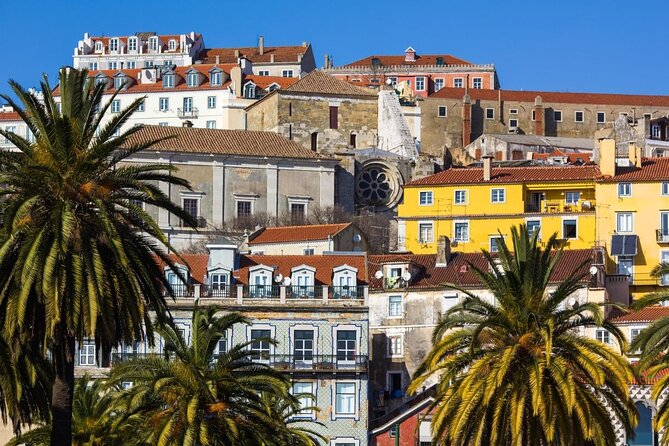
- Sunset viewpoints with story context: Chão do Loureiro to the São Jorge area.
- Alfama on foot at night: cobblestones, Moorish echoes, and Fado’s roots.
- Ginjinha stop in Mouraria: a classic Lisbon sour cherry liqueur moment.
- Private guide attention: you’re not sharing your questions with a big group.
A 7:00 pm Sunset Plan That Hits Views First, Then Fado
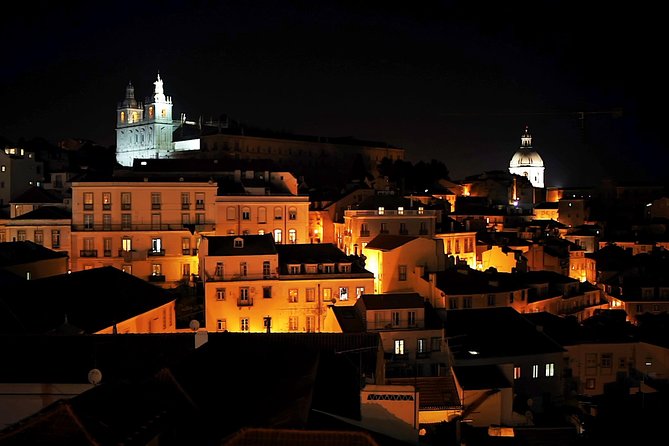
This tour is designed for an evening rhythm: you start at 7:00 pm and build toward the best light over Lisbon. The structure makes sense. You get viewpoints while the sky is changing, and then you settle into dinner and Fado once it’s dark and the mood fits.
You’re also not guessing about timing. The schedule moves from central Lisbon toward Alfama, with the viewpoints placed right when sunset can do its work. If you’re doing Lisbon in a short trip, this is the kind of experience that helps you feel the city instead of just ticking off stops.
And yes, it’s private. Only your group goes with the guide, which is a big deal on nights like this when you want your guide to slow down, speed up, or re-route without worrying about anyone else.
You can also read our reviews of more walking tours in Lisbon


Meeting at Hotel Mundial (Práça Martim Moniz) and Getting the Lay of the Land
You meet at Hotel Mundial, at Praça Martim Moniz 2, right in front of the main entrance. The tour is close to public transportation, which matters because many people are already tired by the time evening arrives.
This first stage is more than a meet-and-greet. It’s where you get bearings for the rest of the walk. You then head into central Lisbon’s story zones, including Praça dos Restauradores—a square tied to Portugal’s struggle for freedom from Spain in 1640. Learning that before you wander helps the route feel purposeful.
Tip: wear shoes that can handle cobblestones. You’ll thank yourself later when you’re in Alfama’s tighter lanes at night.
Praça dos Restauradores, Sant Antão Gates, and Casa Alentejo: Lisbon’s Street History Without the Museum Line
One of the best parts of this experience is how it teaches you Lisbon while you’re still moving. You don’t just stand and read plaques—you hear the meaning behind the streets as you walk them.
The route includes:
- Praça dos Restauradores, where you learn how the square honors Portugal’s freedom from Spain in 1640
- Gates Sant Antão street, tied to the old Sant Antão gates that once protected the city
- Casa Alentejo, described as a former Moorish palace now converted into a restaurant, reflecting the character of the Alentejo region
This is a smart approach for evening tours. Museums often require ticketing time and indoor pacing, which can feel awkward after a full day. Here, the history comes as you pass by real places, so the city feels lived-in, not staged.
Also, the guide can tailor the tone. In the experiences people shared, guides like Joanna and Tiago were praised for connecting history to what you’re seeing street-by-street. If you enjoy explanations that sound like someone who actually cares, you’re in the right format.
Mouraria at Dusk: The Fado Crib and a Ginjinha Sour Cherry Break
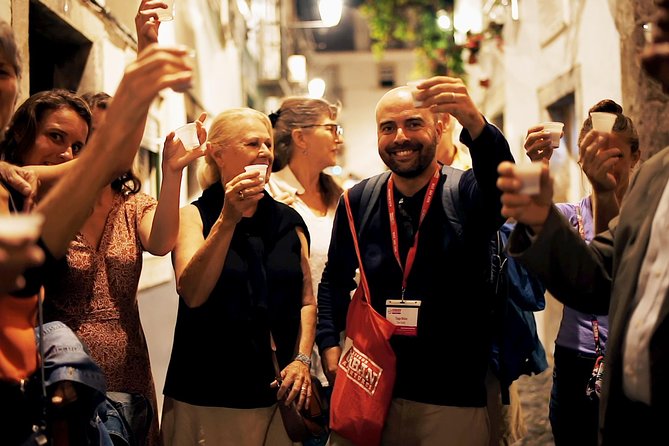
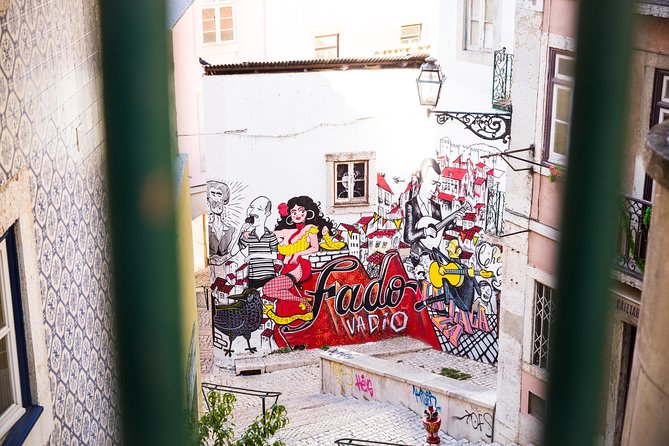
Next comes Mouraria, often described as the Fado “crib.” You’ll spend time in the Monumento Mouraria Berço do Fado area, then walk into Mouraria’s alleys. It’s exactly the kind of neighborhood where you can feel how cultures mixed over time, even from street level.
Then you get the tasting moment: ginjinha, Lisbon’s famous sour cherry liqueur. It’s a simple stop, but it works because it’s tied to place. You’re not just drinking something sweet and alcoholic—you’re trying a local tradition right where the story is being told.
A useful detail here: you may catch Fado atmosphere in the background at a nearby bar during this stretch. It’s a nice soft lead-in before the formal show later.
If you’re thinking about value, this is one of the small inclusions that feels big. You get a taste experience without having to hunt for it, and it naturally connects to the Fado theme of the night.
Miradouro Chão do Loureiro: Sunset View With the Tagus in Frame
This is where the tour stops being just “interesting” and starts being genuinely beautiful. At Miradouro Chão do Loureiro, you get around 25 minutes to look out as the light fades.
Why this stop matters: the viewpoint isn’t thrown in at random. It’s positioned so you can watch Lisbon shift from day-to-night. You’ll focus on the city and then connect what you see to what comes next: the river and the big landmarks over the water.
In practical terms, this is also a break. You get time standing still, catching your breath, and letting the route feel less like a nonstop hike.
If you hate standing still, don’t worry—your guide can point out what to look for so the time doesn’t feel wasted. And if you love photos, this is your moment.
You can also read our reviews of more private tours in Lisbon





Ponte 25 de Abril and São Jorge Castle Views: From River to Fortress
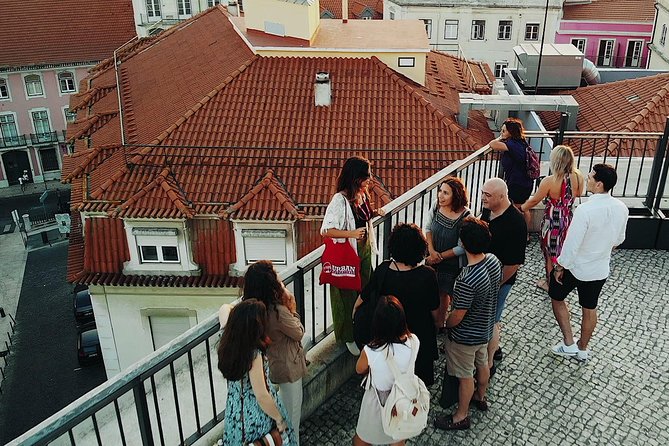
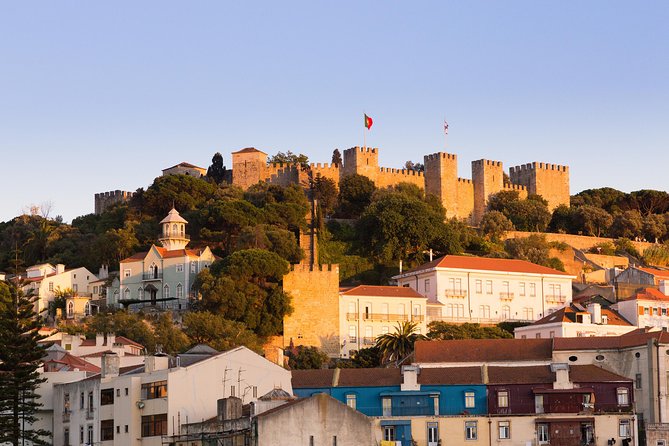
After the main sunset lookout, you’ll briefly take in the Ponte 25 de Abril (about 5 minutes). Then the tour continues to Castelo de São Jorge for panoramic views (around 15 minutes).
This sequence is a smart visual story:
- you look at the bridge as a connector across the Tagus River
- then you pivot your attention toward the fortress presence of São Jorge
It helps you understand Lisbon’s structure fast. The city isn’t flat. It’s built in layers—river, hills, walls, and neighborhoods stacked together. Once you see it from the right angles, navigating later feels easier.
A good sign: many people loved the way their guides used these view points to explain what you’re seeing. Pedro and Dani were both praised for strong explanations, and that kind of guiding really changes a viewpoint from scenery into understanding.
Miradouro das Portas do Sol and Alfama at Night: Cobblestones, Moorish Echoes, and Fado’s Roots
The walk then heads to Miradouro das Portas do Sol for about 15 minutes. This lookout is specifically described as a way to view the eastern front of Alfama and the Tejo River—so you’re not just looking at the horizon. You’re looking at the shape of the neighborhood you’re about to walk through.
Then you go into Alfama for around 30 minutes. This is where the tour earns its Fado identity. Alfama is described as Fado’s birthplace, and the streets are known for their narrow, cobbled lanes and Moorish history.
Night walking here can feel magical. But it’s also practical to plan for the surface under your feet. Keep an eye on where you step, and don’t try to rush for photos. A private guide is helpful because you can pause for views without slowing an entire bus group.
One more detail that matters: the tour ends at a restaurant in Alfama after the walk. So you’re not just sightseeing and leaving. You’re moving from streets into the music-and-dinner part of the same evening arc.
Ginjinha, Wine, and a UNESCO Intangible Heritage Fado Show
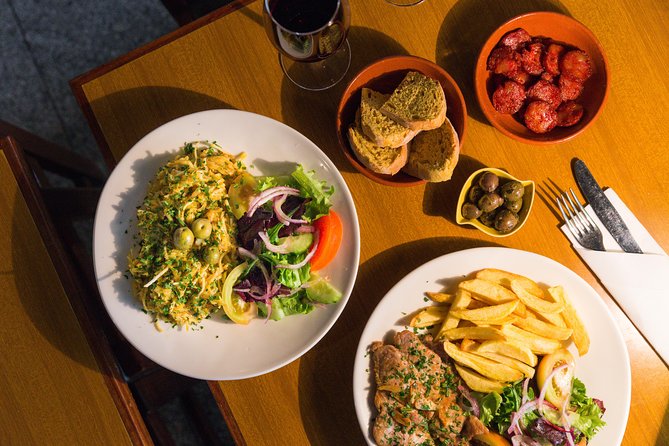
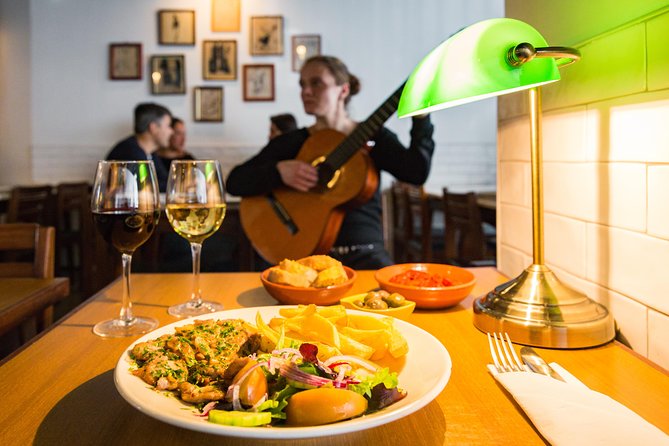
After Alfama, you arrive at the restaurant for the main cultural pairing: Fado + dinner. You’ll get a 3-course dinner with wine or water, plus tea or coffee after.
The Fado show is framed as one of Portugal’s most emotional art forms. It’s noted as part of the UNESCO Intangible Cultural Heritage list. You’ll hear about how Fado has been sung since at least the mid-1800s, with music that’s often described as somber but still intensely alive.
This is also where the private format can pay off. You can focus on the performers and the stories without the stress of coordinating. And because your guide is with you until the end of the evening, you can ask quick questions right there—what you’re hearing, what references mean, and why the themes repeat in songs.
What I found most useful in the way this gets described: the tour sets you up to listen. Before the show, you already learned the local context of Mouraria and Alfama. That makes the performance feel less like entertainment you watch and more like culture you understand.
Balanced note: one criticism showed up in a few details—some people felt the show leaned a bit toward a dinner-theater style instead of a more local, everyday Fado setting. If you’re a purist and you want the rawest possible local vibe, that’s something to consider. Still, the trade-off is clear: you’re getting an included, guided night with a reserved show seat.
Price and Value: Why $255.30 Can Be a Smart Bundle in Lisbon
At $255.30 per person for about 4 hours, this isn’t a budget add-on. But it is a bundle that targets three expensive and time-sensitive things in one go.
Here’s what you’re paying for, in plain terms:
- an expert guide
- ginjinha tasting
- Fado show
- dinner (3 courses) plus wine or water
- tea or coffee
Also, prebooking is explicitly part of the value. In Lisbon, popular cultural shows can get sold out, especially in prime evening slots. If you hate the stress of chasing tickets, that reserved-seat angle matters more than the headline price.
You also avoid the logistical friction of booking dinner, booking a show, then trying to connect the timing with walking across neighborhoods. This tour is built to solve that.
What’s not included is straightforward: entry to museums and monuments, and a tram ride. That makes sense because the focus is walking, viewpoints, and the cultural evening.
If you’re traveling with someone who prefers an organized evening, or if you want a low-stress first week in Lisbon, this bundle-style pricing starts to look fair.
Who This Private Sunset Fado Tour Fits Best (and Who Should Reconsider)
This tour is best for you if:
- you want one guided evening that covers history, viewpoints, and Fado
- you prefer private guiding over sharing hills and cobblestones with strangers
- you like dinner-and-show formats but also want context beforehand
- you’re the type who appreciates short, strong explanations at each stop
It may be less ideal if:
- you want a purely local, small-venue Fado experience with no dinner-theater feel
- you strongly dislike walking on uneven ground
- you’re hoping for museum stops (those aren’t part of what’s included)
Good news: the moderate physical fitness note is clear. Also, multiple guides were praised for adjusting on the fly. For example, one guide (Tiago) was noted for tailoring the itinerary to physical needs and even arranging an alternative meal when seafood wasn’t a preference. That kind of flexibility is exactly what you want from a private tour.
Should You Book This Lisbon Sunset Walk With Fado and Dinner?
I’d book this if your goal is a memorable Lisbon evening without juggling tickets. The strongest case is the combination of reserved Fado, the Alfama night walk, and the fact that dinner is included with drinks and coffee/tea. It’s a lot of cultural payoff for one price, and it saves your time.
I’d think twice if you’re chasing the most raw, ultra-local Fado setting possible. Some people felt the dinner-show format leaned commercial. If that’s your priority, you might want to look for a different Fado option and then pair it with your own Alfama walk.
If you do book, do two things to make it smoother: wear comfortable shoes for hills and cobblestones, and share dietary requirements up front. The experience data clearly supports that kind of communication.
FAQ
What time does the tour start?
The tour starts at 7:00 pm.
Is this tour private?
Yes. It’s a private tour/activity, and only your group participates.
What’s included in the price?
It includes an expert guide, ginjinha tasting, Fado show, and a 3-course Portuguese dinner with wine or water, plus tea or coffee.
Where does the tour start and end?
You start at Hotel Mundial, Praça Martim Moniz 2 and end at Largo do Chafariz de Dentro. The end point can vary in Alfama depending on where the dinner is, and you’ll have easy options for getting back by taxi, on foot, or metro.
Do I need to worry about dietary restrictions?
Yes—share any dietary requirements at the time of booking.
How long is the tour?
It runs for about 4 hours.