REVIEW · BELEM TOURS
Belém District and the Salazar Dictatorship Legacy – Private Walking Tour
Book on Viator →Operated by Lisbon Art & Soul · Bookable on Viator
Belem gets political fast. This private walk through Lisbon’s Belem district connects the waterfront’s big monuments to Salazar’s dictatorship and Portugal’s 1940 exhibition, so the stone details suddenly make sense. You’ll move through squares, gardens, and landmarks while a guide stitches together how propaganda, power, and everyday life shaped what you see today.
I love two things right away. First, the guide work feels tailored and question-driven, so you don’t get stuck with a one-size-fits-all script. Second, the included professional photographer guide means you get plenty of picture moments without constantly stopping to figure out angles.
One thing to consider: it’s still a 3-hour walking tour, and it runs outdoors, so wear good shoes and be ready for weather shifts.
In This Review
- Key highlights worth your time
- Why Belem’s waterfront tells Portugal’s Estado Novo story
- Price and what you actually get for $33.55
- Start at Belem River Station: the walk begins where the “message” was staged
- Afonso de Albuquerque Square: Discovery-era iconography meets 1940 exhibition memory
- Vasco da Gama Garden: old Belem town and what got left behind
- Jerónimos: the cathedral facade and why people call it more than just Gothic
- Praca do Imperio: the 1940 World Exhibition’s outdoor stage set
- Padrão dos Descobrimentos: monuments, missing labels, and the wind-rose detail
- Museu de Arte Popular: a Modernist oddball moment
- Torre de Belém Garden: the Discoveries monument with a modern neighborhood behind it
- What makes the guide experience feel personal (especially in bad weather)
- How to plan your day after the 3-hour walk
- Should you book this Belem and Salazar legacy walking tour?
- FAQ
- Is this tour private?
- How long is the walking tour?
- Where do I meet, and where does the tour end?
- What’s included in the price?
- Are food and drinks included?
- Is there any extra cost for parking?
- What if the weather is poor?
Key highlights worth your time
- Private, small-group feel so you can steer the conversation and ask real questions
- Luís Maio style storytelling that uses the 1940 exhibition as a guide to modern Portugal
- Photo-forward stops with help from a professional photographer guide
- Belem landmarks linked to political meaning, not just postcard facts
- Good pacing even in tough weather, including rain improvisation when needed
Why Belem’s waterfront tells Portugal’s Estado Novo story
If you’ve only visited Belem as a checklist of monuments, this tour changes the order of things. You’ll still see the famous sights, but you’ll also learn how the 1940 Portuguese World Exhibition (run during the Estado Novo era) was designed to sell an image of Portugal—heroic, imperial, and controlled.
That matters because the Belem waterfront isn’t just pretty architecture. It’s a public stage. The guide points out how certain symbols, sculptures, and even layout choices were meant to persuade. One guest said this tour was the missing piece of Lisbon’s modern history, where the fascist years can feel like a gap you can’t quite locate—until you see how the landscape itself carries the fingerprints.
The experience is also balanced. You don’t just get dates. You get the why behind them: how the regime used celebrations, art, and big “Discovery Age” imagery to project stability and greatness, while darker parts of the story waited in the background.
You can also read our reviews of more walking tours in Lisbon


Price and what you actually get for $33.55
At $33.55 per person for about 3 hours, the value comes from what’s included—not from what’s on a poster. You’re paying for a local professional guide plus a professional photographer guide, and the format is private for your group. That changes the math, because a private walking tour with photo help and expert context can easily cost more in cities where you’re basically paying for transportation time.
Also, the tour offers morning or afternoon departure, which is useful in Lisbon, where sun and wind can swing your comfort fast. Booking is often done about 89 days in advance, so if your schedule is set, it’s smart to lock it in early.
One more practical note: the tour description says group discounts may apply, which is a nice bonus if you’re traveling with friends or family.
Start at Belem River Station: the walk begins where the “message” was staged
You’ll meet at Belem River Station (Av. Brasília, 1300-598 Lisboa). From the start, the tour frames Belem as a curated public space. Instead of only pointing at buildings, the guide explains what was happening around these sites when the 1940 exhibition reshaped the waterfront’s role in national identity.
Why this start point works: Belem River Station is more than a train stop. It’s part of the story of how Lisbon presented itself to the world. On this walk, you get hints you might otherwise miss—things like how lettering, layout, and nearby monumental spaces tie back to the exhibition period and the regime’s messaging.
The tour ends at the Torre de Belém Garden (Av. Brasília, 1400-038 Lisboa). It’s close to Algés train/tram/bus stations, so you’re not stuck planning a long return.
Afonso de Albuquerque Square: Discovery-era iconography meets 1940 exhibition memory
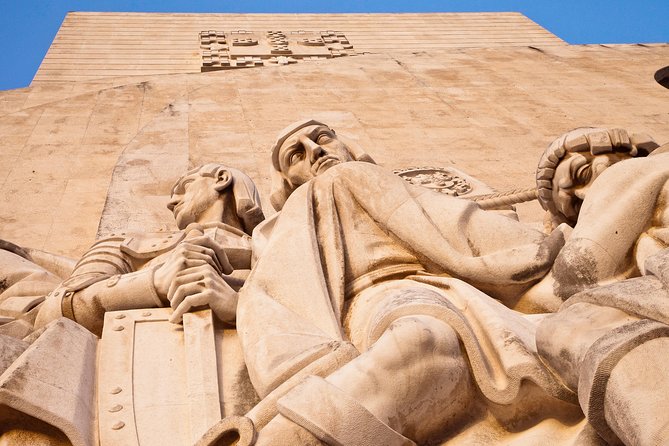
Your first stop is Afonso de Albuquerque Square. You’ll see how Belem’s “Discoveries” theme gets echoed and reframed across time—from the era it commemorates to what was staged in 1940.
This is the moment where the tour’s main technique shows up: the guide doesn’t treat history like a straight line. Instead, they show how later periods borrow and reshape earlier symbolism to create legitimacy. Even if you think you know Belem’s story, this stop is where the meanings start reorganizing in your head.
Time here is short (about 15 minutes), so go with an open posture: listen, then look up. A lot of the value in this tour sits in what’s carved, painted, or arranged—not just in what’s loud.
Vasco da Gama Garden: old Belem town and what got left behind
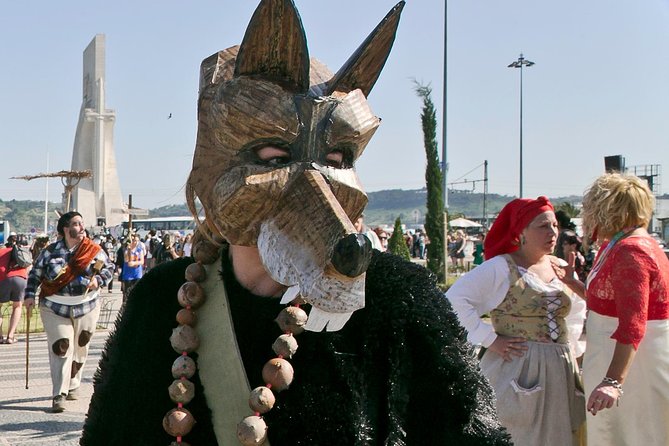
Next up is the Vasco da Gama Garden, where you’ll learn about old Belem town—or what’s left of it. This is one of those stops that can surprise you, because the Belem waterfront is often presented as complete and intentional, but the guide helps you see the layers and gaps.
You’ll get a sense of how the regime’s big public projects sat on top of older neighborhoods and earlier histories. And you’ll start connecting why certain monuments feel like they’re standing in for a bigger narrative—because they were.
It’s another quick stop (about 15 minutes), which keeps the pace moving. If you’re the type who likes to linger, don’t worry—you’ll have other moments where the guide slows down for photos and explanations.
You can also read our reviews of more private tours in Lisbon






Jerónimos: the cathedral facade and why people call it more than just Gothic
Then comes Mosteiro dos Jerónimos. You’ll focus on the facade and also the interior spaces, with explanations about its historical and mystical meaning. The guide’s angle here is important: they don’t treat the monastery as a timeless postcard. They place it in a larger conversation about Portuguese identity—especially in how the 1940 exhibition leaned on national symbols to build an emotional case for the present.
This stop is about 20 minutes. That’s enough to get the main ideas across, but it’s also a clue. If you want a full deep museum-style visit, you’ll need extra time after the tour.
One helpful takeaway: the guide’s framing makes it easier to read the building like a text—what it signals, what it was meant to represent, and how later regimes learned to “borrow prestige” from earlier monuments.
Praca do Imperio: the 1940 World Exhibition’s outdoor stage set
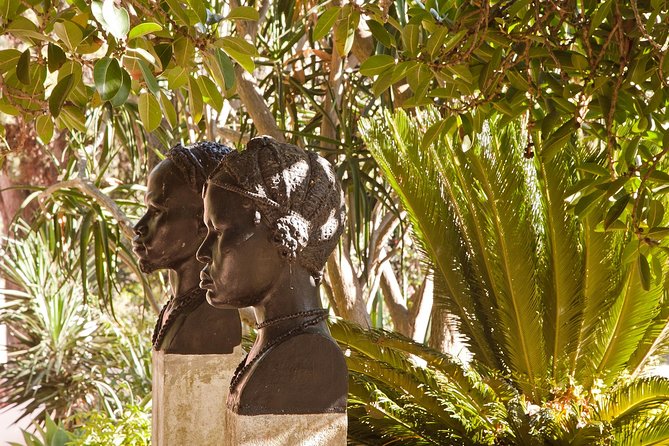
At Jardim da Praca do Imperio, you’ll walk through the square that served as a hub for the Portuguese World Exhibition legacy. This is where the tour becomes visually fun, because you’re not just absorbing facts—you’re learning to “see” the space.
Expect quick stops by:
- heraldic flower beds
- a monumental fountain
- seahorses
These are the kinds of details that turn a walk into a guided reading. The guide uses them to explain symbolism and the exhibition’s design choices. Even when you only spend about 20 minutes here, you’ll come away with the feeling that you understood how the show was staged, not just that it happened.
If it’s sunny, keep your eyes up and your face cool. The guide tends to adjust pacing for comfort, and guests have specifically praised careful choices for shade versus sun.
Padrão dos Descobrimentos: monuments, missing labels, and the wind-rose detail
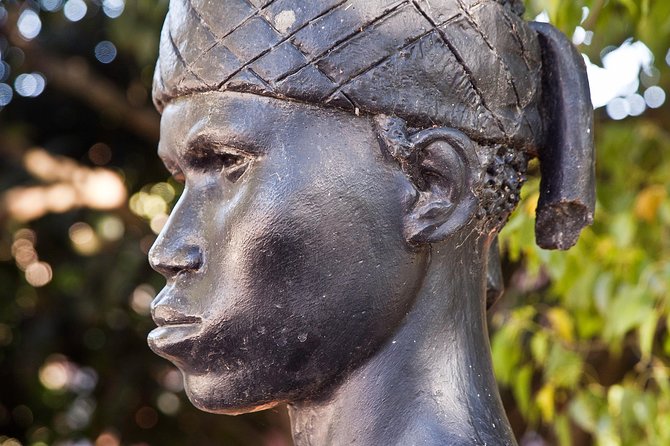
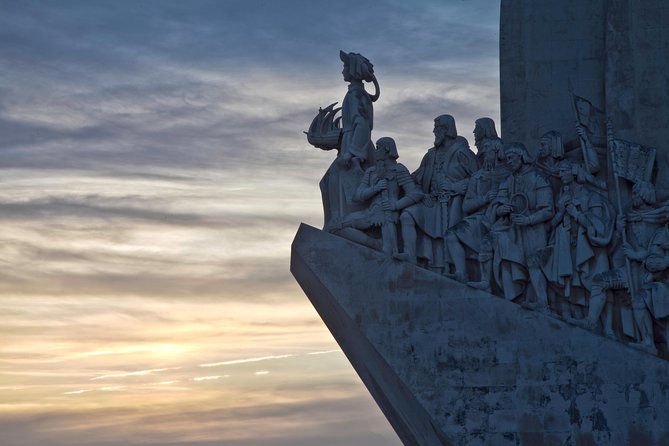
Next is Padrao dos Descobrimentos. You’ll walk around the monument and learn what the iconic imagery represents, with the 1940 exhibition as the interpretive key.
One review highlighted how the tour answers practical questions that guidebooks often ignore—like who the carved figures are, and why certain areas lack clear explanations. This is one of the reasons the tour gets such strong ratings: the guide has a knack for the small-but-meaningful things.
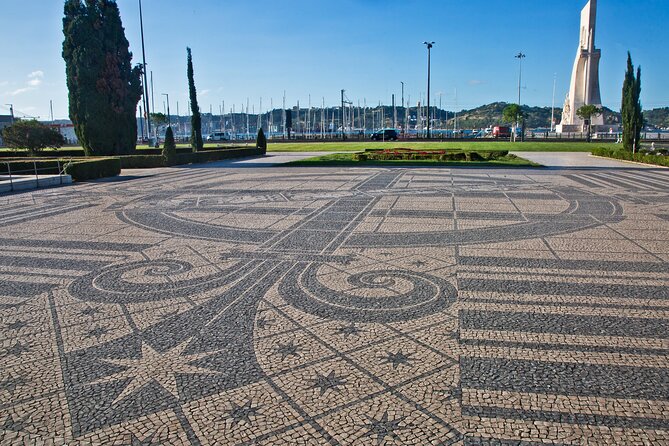
A standout detail here is the majestic wind rose covering the pavement at the base. It’s the kind of feature you might pass by on your own, and in this tour it becomes a reminder that even the ground is part of the storytelling.
Plan for about 20 minutes here. You’ll probably want a few extra minutes after the tour to just stand, read the shapes again, and take a second photo set with your newfound context.
Museu de Arte Popular: a Modernist oddball moment
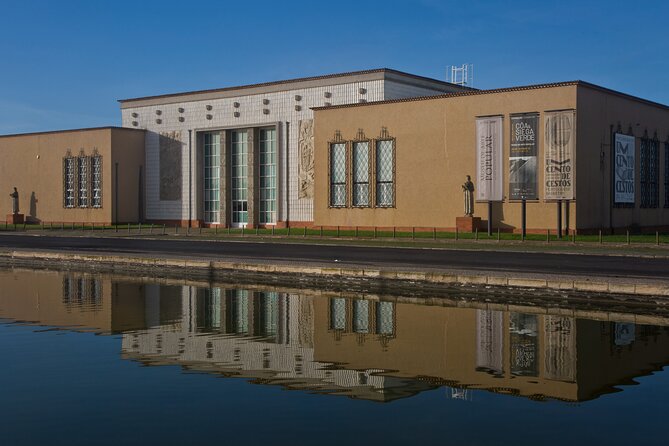
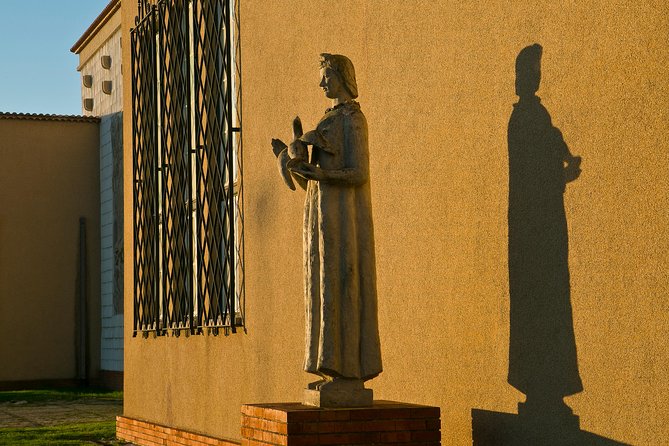
At the Museu de Arte Popular, the stop is brief (about 10 minutes), but it plays a role in keeping the narrative honest. The museum is described as an “oddity” of Modernist Lisbon, which means it helps you see that Belem isn’t only about empire monuments and monumental Gothic stone.
This quick stop also breaks the rhythm before you reach the tower area. It’s like a palate cleanser: not the loudest site of the walk, but useful for broadening the picture of what the Belem district represents across eras.
Torre de Belém Garden: the Discoveries monument with a modern neighborhood behind it
The walk finishes at Torre de Belem Garden, where you’ll connect two big themes: the Discoveries Age monument energy and the Restelo upper-class neighborhood that developed after the 1940 exhibition period.
It’s not just a final photo stop. The guide uses it to wrap up the bigger message: the way the regime repackaged national mythology into physical landmarks that still shape what Belem feels like today.
You’ll get about 15 minutes here, enough time to absorb the context and capture your final set of photos. Then you’re done—right near transport options.
What makes the guide experience feel personal (especially in bad weather)
A repeated theme in the strong ratings is how the guide handles your interest level and your questions. Guides named Luís (often Luís Maio) come across as patient teachers who can adjust depth on the fly. If you’re curious about authoritarian daily life, the story expands. If you mostly want to understand the art and architecture, the guide keeps things grounded.
Another practical plus: comfort management. Guests have praised how the guide minimizes time in direct sun on hot days and chooses places to sit when explanations start getting detailed. Even when weather turns—like real rain—there’s an effort to keep the experience going without turning it into a miserable sprint.
Add the professional photographer guide to the mix and you get less “tour chaos.” You can focus on listening while someone else helps you frame the shots. You still control your camera, but you’re not left guessing.
How to plan your day after the 3-hour walk
This tour is focused. You’ll see and learn a lot, but it’s not built to replace a long, slow monument day. That means you should plan extra time in Belem afterward if you want to linger at Jerónimos, expand into museums, or simply enjoy the waterfront without your feet timing your schedule.
Here’s a simple strategy:
- Do the tour, take the context home, then go back to your favorite spot for slower looking.
- If Jerónimos is a priority for you, budget more time than the tour gives so you can follow your own curiosity.
- Bring smart casual clothing and comfy shoes. This is Lisbon; it’s easy to think you only walked a little until your legs start narrating your day.
If you’re traveling in a small group, the private format is a good match. If you’re solo and don’t meet the minimum of two people, the tour may not run as booked—so check your dates.
Should you book this Belem and Salazar legacy walking tour?
Book it if:
- You want the Salazar era explained through the actual places where it was staged
- You like architecture and symbolism, not just photos
- You want a guide who can answer the questions that normal signage doesn’t
- You appreciate a private guide with photo help
Skip it if:
- You only want a quick sightseeing loop with minimal politics
- You hate walking outdoors for a few hours, rain or shine
- You expect this to be a full-day museum program
For most visitors, this tour is a smart choice because it turns the Belem waterfront from a set of famous monuments into an understandable story. You leave with sharper eyes—and a better map of Portugal’s modern past.
FAQ
Is this tour private?
Yes. It’s described as a private walking tour, meaning only your group participates.
How long is the walking tour?
It runs for about 3 hours.
Where do I meet, and where does the tour end?
You meet at Belem River Station (Av. Brasília, 1300-598 Lisboa) and end at Belém Tower Garden near Torre de Belém (Av. Brasília, 1400-038 Lisboa).
What’s included in the price?
The tour includes a local professional guide, a professional photographer guide, and the private walking tour itself.
Are food and drinks included?
No. Food and drinks are not included.
Is there any extra cost for parking?
Yes. The listed price does not include a parking fee, payable at tour check-in.
What if the weather is poor?
This experience requires good weather. If it’s canceled due to poor weather, you’ll be offered a different date or a full refund.