Lisbon can feel like a maze unless you have wheels and a plan. This private electric tuk-tuk tour strings together major sights and lesser-know viewpoints in just 4 hours. You get a local guide to keep the story straight while you hop between neighborhoods that normally take forever to reach on foot.
I like that the route is built around photo-friendly miradouros, plus real Lisbon moments like Alfama and a stop for pastries in Belém. One thing to consider: some stops are outside-only and several major landmarks require separate tickets if you want to go in (the tour time is short either way).
In This Review
- Key Things to Know Before You Ride
- Electric Tuk-Tuk Ride Time: How the 4 Hours Actually Works
- Start With Lisbon Cathedral and Roman Layers in the Same Morning
- Why these opening stops work
- Two Miradouros in a Row: Portas do Sol and Senhora do Monte
- Small practical tip
- São Vicente de Fora and Panteão Nacional: Churches With Meaning, Not Just Looks
- The value of these stops
- Alfama: Old Lisbon Streets Without the Marathon Walk
- Praca do Comercio and Time Out Market: River Views and a Food Pause
- Belém’s Pastéis and Big Icons: From Jerónimos to the Tower
- One practical thought about Belém
- Basilica da Estrela, Príncipe Real, and São Pedro de Alcântara
- Chiado and the Carmo Convent Ruins: Lisbon’s Most Haunting Stop
- The Guide Factor: Why This Tour Feels Personal
- Price and Value: Is $156.18 Per Person Worth It?
- Who This Tour Fits Best
- Should You Book This Private Tuk-Tuk Tour?
- FAQ
- How long is the tour?
- Is this a private tour?
- Do I get hotel pickup and drop-off?
- Is the tour in English?
- Are attraction tickets included?
- How many people fit in the tuk-tuk?
Key Things to Know Before You Ride
- Private electric tuk-tuk transport saves time on steep streets and tight lanes.
- Pickup and drop-off are included within the city center area, with a clear backup meeting point.
- Guides tailor commentary to your group, including what you care about most and how long you want at each spot.
- Viewpoints drive the itinerary: you’ll hit multiple miradouros for big panoramas with minimal walking.
- Most sights are exterior stops with photo time, not long museum-style visits.
- Group size matters: the tuk-tuk fits up to 6, but comfort is best around 4 people.
Electric Tuk-Tuk Ride Time: How the 4 Hours Actually Works

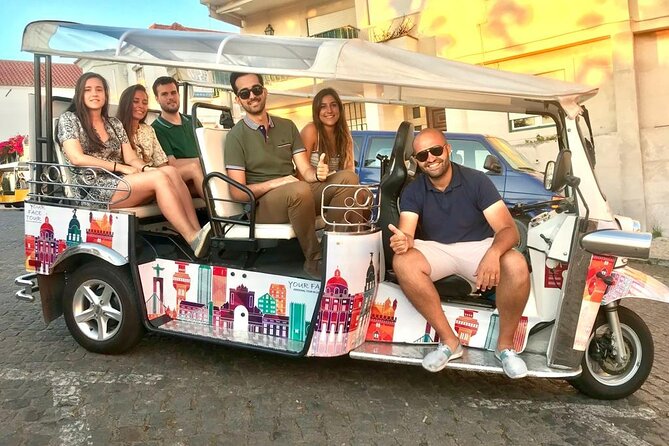
This is a private tour, meaning your group drives the pace. You’re in an electric tuk-tuk, and the whole point is to cover the distance between Alfama, central Lisbon, and Belém without exhausting yourself. The tour lasts about 4 hours, and you’ll spend your time in short bursts: enough time to look, learn, and grab photos, but not so long that you lose the thread of the day.
Pickup is a big deal here. If you’re staying in Lisbon’s city center, you can get hotel/Airbnb pickup and drop-off. If you’re outside that area, your guide meets you at Av. da Liberdade 3 (right across from Hard Rock Café Lisbon). That detail matters because Lisbon’s hills make “just meet me somewhere downtown” a pain.
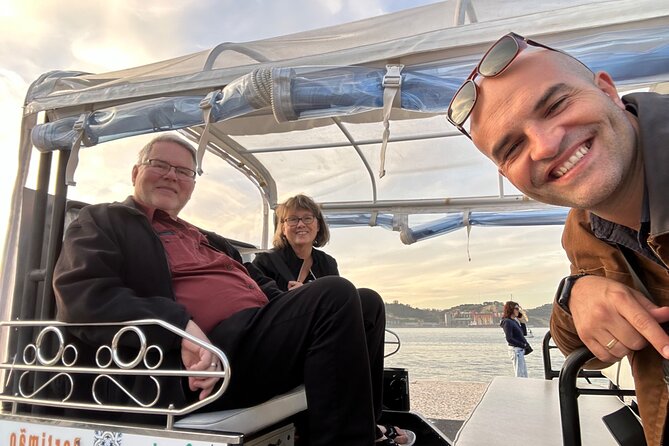
Comfort note: the tuk-tuk fits up to 6 people, but they recommend 4 for a better ride. Also, if you have limited range of motion in your knees, getting in and out might feel tricky since it’s a compact vehicle with step-up access.
You can also read our reviews of more private tours in Lisbon



Start With Lisbon Cathedral and Roman Layers in the Same Morning
You begin at Lisbon Cathedral, a site with serious staying power. The building dates to 1147, and it survived the powerful 1755 earthquake that changed Lisbon forever. Even if you’re not going inside, the cathedral exterior gives you a fast sense of why this spot matters in the city’s story.
Next up is the Museu de Lisboa – Teatro Romano area, where Roman ruins were discovered under rubble from the 1755 quake. If you’re the type who likes seeing how old cities get built on top of newer ones, this is your kind of stop. The time is short, so treat it as a “get oriented” moment and decide on the spot whether you want to add interior time (admission isn’t included).
Why these opening stops work
Cathedral + Roman ruins does two things at once. First, it grounds you in Lisbon’s long timeline. Second, it sets you up for what comes next: Alfama’s dense, layered streets where medieval history isn’t an exhibit behind glass.
Two Miradouros in a Row: Portas do Sol and Senhora do Monte
Lisbon is a city of viewpoints, and this tour uses them like checkpoints. The first is Miradouro Das Portas Do Sol, which is basically one huge balcony above the Alfama neighborhood. Expect big angles, quick photos, and that classic Lisbon look where the rooftops feel stacked like puzzle pieces.
Then you head to Miradouro da Senhora do Monte, Lisbon’s highest lookout point. The name says it all: Our Lady of the Hill. The views are wide, with panoramic sightlines across older quarters, toward the castle area, and out toward the downtown district and beyond.
These miradouros are both free, so you can spend your budget on experiences that aren’t ticket-based. The tradeoff is time. You’ll have about 10 minutes at each viewpoint—long enough for a few photos and to understand what you’re looking at, but not long enough for a slow sunset hangout.
Small practical tip
Bring your phone camera strap or keep your balance steady. The viewpoint areas can get windy, and your best angles happen fast.




São Vicente de Fora and Panteão Nacional: Churches With Meaning, Not Just Looks
After the viewpoints, the tour hits Igreja de São Vicente de Fora, a 17th-century church and monastery. It’s called São Vicente Outside the Walls, which hints at what the city’s boundaries used to be. This stop is short, but it’s one of those places where the architecture and setting help you understand why Lisbon’s religious buildings feel intertwined with daily life.
Then you move to Panteão Nacional, the national pantheon of Portugal and the final burial place for many important Portuguese figures. This is another exterior-focused moment with about 5 minutes on the clock. If you want to go inside, you’ll need a ticket (not included). Still, even from outside, it gives weight to the itinerary. The tour isn’t just sightseeing; it’s tracing how Lisbon honors memory.
The value of these stops
Churches in Lisbon can look similar until you learn what era each one represents. This is your chance to get that context without spending hours.
Alfama: Old Lisbon Streets Without the Marathon Walk

Now you’re in Alfama, Lisbon’s oldest and most authentic neighborhood. This is the part of town where the streets feel tight, steep, and very “I’m not following a grid.” The tour gives you time to be in the neighborhood instead of only looking at it from above.
Because you’re touring by electric tuk-tuk, you can experience Alfama’s vibe without the usual sweat level that comes from trying to reach miradouros and churches on your own. Admission is free, and the focus is on wandering enough to connect the dots between what you saw at the viewpoints and what you’re walking through below.
Praca do Comercio and Time Out Market: River Views and a Food Pause
Next comes Praca do Comercio, a huge, open square that opens south toward the Tagus estuary. This is Lisbon at full scale. One minute you’re in narrow lanes, and the next you’re facing wide space and river air. The contrast helps your brain reset.
From there, you stop at Time Out Market Lisboa in Cais do Sodré. This is a modern Portuguese food hall inside the historic Mercado da Ribeira. Even if you don’t plan a big sit-down meal, it’s a convenient way to grab something and keep moving without turning the tour into a long lunch.
This whole stretch is a nice mid-tour rhythm break: you’re not only chasing landmarks; you’re also giving yourself a chance to taste Lisbon’s everyday food culture.
Belém’s Pastéis and Big Icons: From Jerónimos to the Tower
Belém is where Lisbon shows off its connection to the sea. Your tour makes sure you get the most famous hits without turning the whole day into a ticket marathon.
First, there’s Pastéis de Belém. These pastries are slightly crispy on the outside with a semi-sweet creamy inside, and yes, they’re popular for a reason. The stop is short (around 10 minutes), so it’s more about the classic taste moment than lingering.
Then you head to Jerónimos Monastery, also known as Mosteiro dos Jerónimos. It’s a World Heritage Site (UNESCO declared it in 1983) and it’s a flagship landmark of Portugal. The tour time here is about 15 minutes, but admission isn’t included. Since much of the experience is architectural detail inside and outside, if you want to go in, plan your timing carefully and don’t expect a deep museum-style visit.
After that is Torre de Belem, the island fortress that once served as Lisbon’s port defense. The tour gives you about 10 minutes. Again, ticketing isn’t included, but the exterior view and positioning are part of the impact.
Finally, MAAT (Museu de Arte, Arquitetura e Tecnologia) rounds out the Belém stretch. It’s an architecture-and-technology oriented museum that opened in October 2016. If you’re more into modern design than classical monuments, this stop can balance your day nicely. Admission isn’t included here either, and the tour viewing time is around 10 minutes.
One practical thought about Belém
In 4 hours, you’re not doing a full Belém checklist of everything inside. You’re doing the “see it, feel it, photograph it” version. That’s ideal if you want orientation and highlights, then return later for deeper visits at your pace.
Basilica da Estrela, Príncipe Real, and São Pedro de Alcântara

Once you’ve crossed into central neighborhoods again, the tour keeps stacking viewpoints and character areas.
You’ll visit Basilica da Estrela for about 10 minutes. It’s free to view, and it offers another reminder that Lisbon’s churches often come with distinct personalities, not cookie-cutter sameness.
Then you’re in Príncipe Real, described as the city’s most cosmopolitan neighborhood. This is a good area for people-watching and atmosphere without needing a ticket. It’s also a useful contrast after Belém: Príncipe Real feels more “Lisbon living” and less “Lisbon monument.”
Next is Miradouro São Pedro de Alcântara, known for superb views from the Bairro Alto side over to Alfama and Lisbon Castle. It’s one of those spots where you feel how the city is layered and terraced, like multiple neighborhoods built into the same view.
Chiado and the Carmo Convent Ruins: Lisbon’s Most Haunting Stop
Your final neighborhood stop is Chiado, Lisbon’s elegant meeting place for coffee, shopping, and pre-night-out energy. You’ll have time to take in the street vibe and reset your feet after earlier slopes and viewpoint stops.
Then comes Convento do Carmo, the ruined Carmo Convent. This is the emotional anchor of the route. Most of the original complex was destroyed in the 1755 earthquake, and the roof collapse occurred during Mass on All Saints’ Day. The Gothic arches remain, and Manueline windows and later additions add detail that helps the site feel real instead of purely tragic.
It’s a short stop (about 5 minutes) and admission isn’t included. But it works well as a closing moment because it pulls together the theme you’ve been seeing all day: Lisbon rebuilds, layers, and keeps moving forward.
The Guide Factor: Why This Tour Feels Personal
The private format only works if the guide turns transit time into real understanding. This tour’s guides tend to do that job well, and names that come up often include Patricio, Diego, Alessandro, and Emanuel.
If you get a guide like Diego, expect extra attention to photos. If you get someone like Patricio or Emanuel, you’ll likely get a more playful rhythm: friendly, funny, and patient, with room for questions. Alessandro is another name connected with caring explanations and helpful pacing. The big takeaway for you: the tour isn’t only a route. It’s commentary that can match your interests and your energy level that day, including adjusting when roads are affected by events.
Price and Value: Is $156.18 Per Person Worth It?
At $156.18 per person for roughly 4 hours, this isn’t a budget “hop on a bus and hope” option. The value is in what’s bundled.
You’re getting:
- a private electric tuk-tuk
- hotel/Airbnb pickup and drop-off within the city center area
- live guide commentary in English
- insurance coverage listed by the provider
So the math usually makes sense when you have a small group (especially around 4 people, since they recommend that number for comfort). If you’re traveling solo or as a couple, you’ll still enjoy it most if your priority is time saved plus a guide to connect the stops.
Who This Tour Fits Best
This is a strong fit if you:
- want to see a lot of Lisbon fast without walking steep routes all day
- prefer short, high-impact stops over long museum time
- like viewpoints and neighborhood character (Alfama, Chiado, Príncipe Real)
- value a private guide who can keep the story coherent while you move
It may feel less ideal if you want extended interior visits at multiple ticketed sites. In 4 hours, you’ll mostly be collecting exterior views plus quick context, then deciding later if you want to return.
Should You Book This Private Tuk-Tuk Tour?
If your goal is a smart first pass through Lisbon’s most iconic areas plus the miradouros that make the city make sense, I’d book it. The electric tuk-tuk is the right tool for Lisbon’s hills, and the route is built to connect history, viewpoints, and food moments without turning the day into a logistics headache.
Choose it especially if you want: Alfama + Belém + panoramas in one compact outing with a guide who can tailor the tone to your group. Skip it only if you already plan to spend hours inside major sites and you’d rather DIY everything slowly on foot.
FAQ
How long is the tour?
The tour is about 4 hours.
Is this a private tour?
Yes, it’s private, with only your group participating.
Do I get hotel pickup and drop-off?
Pickup and drop-off are included for accommodations in Lisbon’s city center area. If you’re outside that area, the default meeting point is Av. da Liberdade 3 (across from Hard Rock Café Lisbon).
Is the tour in English?
Yes, the guide provides commentary in English.
Are attraction tickets included?
Admission tickets are not included for several stops, including Lisbon Cathedral, Museu de Lisboa – Teatro Romano, Panteao Nacional, Jerónimos Monastery, Torre de Belem, and Convento do Carmo (among others listed as ticketed). Many viewpoints and areas are free.
How many people fit in the tuk-tuk?
The tuk-tuk fits up to 6 people, but for comfort the recommendation is 4 people per tuk-tuk. Service animals are allowed.