REVIEW · LISBON WALKING TOURS
Best of Lisbon Small-Group Guided Walking Tour
Book on Viator →Operated by Inside Lisbon · Bookable on Viator
Lisbon clicks into place on foot. I like how this small-group guided walk hits the big Lisbon neighborhoods without feeling like you’re trapped on a bus, and I especially like the included pastel de nata plus wine tasting and snacks. One thing to plan for: the route adds up, and the streets around Alfama can feel hilly even when the pace is kept reasonable.
You also get useful context for what you’re seeing. From the stone-wave look of Rossio Square to the 1640 independence obelisk at Restauradores, the guide turns famous corners into clear stories you can remember the rest of your trip.
By the time you reach the Tagus at Praça do Comércio, you’ll understand why Lisbon is built the way it is—after the 1755 earthquake, after 19th-century rebuilding, and after the 1974 Carnation Revolution. Just note: this is a walking highlights tour, not a museum day.
In This Review
- Key highlights worth knowing before you go
- Why this Lisbon walking route is such a smart first step
- Rossio Square: the nerve center and those distinctive wave stones
- Restauradores and Rossio Station: independence symbols and railway engineering
- Largo do Carmo: where the Carnation Revolution became real
- Santa Justa views and the Chiado-to-Baixa shift
- A practical note on pace
- Miradouro Chão do Loureiro: the view break before Alfama
- Alfama on foot: Moorish heritage and fado in the alleys
- Ending at Praça do Comércio: the Atlantic welcome hall
- What you actually get for the money ($23.94) and why it feels fair
- Who this tour fits best (and who might want a different plan)
- Should you book this Lisbon highlights walking tour?
- FAQ
- How long is the walking tour?
- Where does the tour start and end?
- What food and drink are included?
- Is the tour in English, and how big is the group?
- Is there a mobile ticket?
- Do I need to pay admission for stops?
- Is it suitable for moderate walking fitness?
- Are service animals allowed?
- Can I cancel for a full refund?
- What if it rains?
Key highlights worth knowing before you go
- Small group (max 14): easier questions, more personal guidance, and a pace that fits the group.
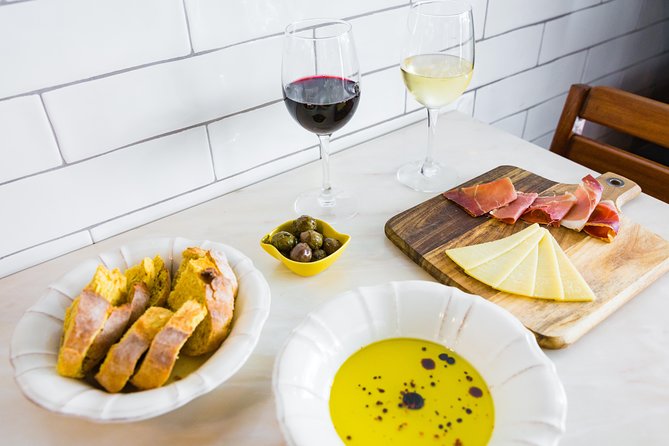
- Food included: you’ll get a classic pastel de nata plus wine tasting and a tapa/snack stop.
- Start-to-finish central routing: Rossio → Restauradores → Carmo → Chiado/Baixa → Alfama → Praça do Comércio.
- Photo-friendly viewpoints: Santa Justa and a miradouro stop help you catch the city from above.
- Guides make the hills manageable: on tougher stretches, guides like Felipe use elevators/escalators when available.
- Real political turning points: 1640 independence and the 1974 revolution show up in the squares you walk through.
Why this Lisbon walking route is such a smart first step
If you’re short on time, Lisbon can be tricky. The city is gorgeous, but it’s also layered: Moorish-era neighborhoods, earthquake rebuilding, royal power, and modern Portugal all stacked within a few kilometers. This tour is built to give you the mental map fast.
I like that it’s organized around walkable logic. You start in central Lisbon, move through squares that anchor key periods of Portuguese history, then shift gradually from Baixa’s wide streets into Alfama’s tight lanes and fado atmosphere. You’re not just collecting landmarks—you’re learning the order things happened in.
Another value point: you get practical city-navigation help. The guide points out how to move through the hills and where to pause for good views, which matters if you’re planning the rest of your days alone.
The only real caution is physical comfort. The tour is listed for travelers with moderate fitness, and you will walk for around 3–4 hours. Wear proper shoes, and expect some uphill sections even if you keep a steady pace.
You can also read our reviews of more walking tours in Lisbon


Rossio Square: the nerve center and those distinctive wave stones

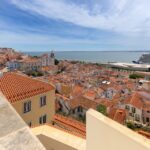
You begin at Praça Dom Pedro IV, one of Lisbon’s main “hub” squares in Baixa. It’s the kind of place where you instantly feel the city’s rhythm: street life, tram and pedestrian flow, and that sense of Lisbon being designed around movement.
A detail that helps you “get it” quickly: the square uses typical Portuguese stones in a pattern that resembles the waves from the nearby ocean. It’s a small visual clue, but once you notice it, you’ll start seeing Lisbon’s design choices everywhere.
From Rossio, the walk nudges you toward other central landmarks without long dead time. That matters on a first day. You’re not spending half your afternoon getting your bearings—you’re building them while you’re moving.
You also get an early break in the form of nearby stops, including Igreja de São Domingos on São Domingos Square. This is less about a “must-see monument” moment and more about getting a feel for Lisbon’s tight, lived-in street fabric in the middle of the action.
Restauradores and Rossio Station: independence symbols and railway engineering
Next comes Praca dos Restauradores, dedicated to Portugal’s restoration of independence after Spanish domination. In the center rises an obelisk tied to battles of the Portuguese Restoration War, inaugurated in 1886. It’s one of those Lisbon points that looks like pure monument from afar, but the guide’s context makes it feel like a timeline in stone.
From there, you head toward Estação do Rossio. The exterior is inspired by 16th-century Manueline architecture, and the station is also where you hear how rail travel works in Lisbon—specifically, how trains head into a tunnel toward Sintra. Even if you never take the train during your trip, this is valuable orientation. It helps you understand where that easy “day trip” energy actually starts.
What I like here is the mix of styles: royal/ceremonial Lisbon in the squares, then practical engineering Lisbon at the station. It gives you a more complete sense of the city rather than only postcard views.
Largo do Carmo: where the Carnation Revolution became real
Largo do Carmo is a compact stop that packs big meaning. It’s associated with either an older convent presence and—more importantly for modern Portugal—with the Carnation Revolution in 1974.
This is where you connect Lisbon’s walls to actual political change. The guide explains how the previous dictatorial regime collapsed after a 48-year rule. You’re not just hearing that as a date on a map. You’re standing in the square where the story becomes tangible.
This stop also works as a breathing point. You’ve been moving through busy central areas, and Largo do Carmo gives you a calmer pocket for photos and reflection before the walk turns toward viewpoints and neighborhood wandering.
If you tend to enjoy political history but dislike museum hours, this kind of “history in the street” is a good trade.
Santa Justa views and the Chiado-to-Baixa shift

After Largo do Carmo, you reach Elevador de Santa Justa, one of the most interesting landmarks in the historic center for its view potential. Even if you don’t ride it, the stop helps you see Lisbon from a more strategic angle—where rooftops, streets, and slopes make sense in relation to each other.
Then comes Chiado. The guide frames it as a neighborhood that grew in the 19th century for intellectual and wealthier elites. What you’ll notice while walking: the facades, the mix of boutiques, theaters, bookstores, and older cafés that give the area its “old Lisbon meets modern taste” feel.
From Chiado, the route flows toward Rua Augusta, the main central street. It’s often described as Lisbon’s most expensive and fancy avenue, and that fits the vibe: it’s broader, busier, and built for strolling and shopping.
Then you arrive in Baixa, Lisbon’s downtown core. This is where the tour earns its keep for anyone who likes city design. You learn that Baixa was rebuilt after the 18th-century earthquake, using anti-seismic rules and updated urban planning ideas for the time. You’ll feel that “grid logic” under your feet as you walk through the open streets.
You can also read our reviews of more guided tours in Lisbon





A practical note on pace
If you’re the type who hates feeling rushed, you’ll likely appreciate how the guide manages timing. In particular, one guide named Felipe is called out for using public elevators and escalators where available. That’s exactly the kind of local problem-solving that makes a walking tour feel fair instead of punishing.
Miradouro Chão do Loureiro: the view break before Alfama

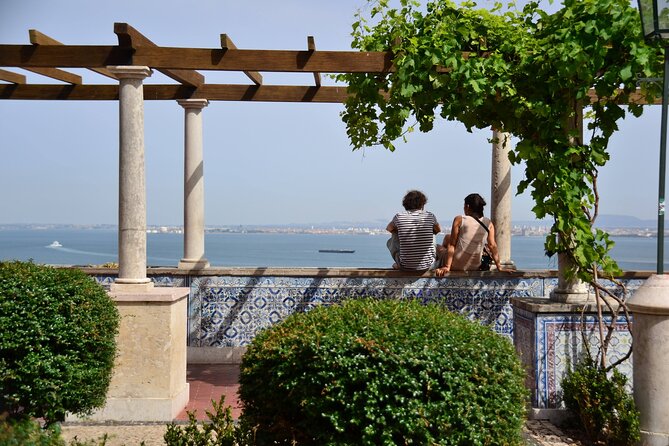
Before Alfama, there’s a short jump to Miradouro Chão do Loureiro, a panoramic viewpoint stop. This is one of those “small time investment, big payoff” moments.
What you gain: you can see how Alfama’s dense street layout sits below you, and you understand why this neighborhood is so characterful—and so steep. It makes the next section of the walk easier mentally, because you’re not guessing what’s coming.
This is also a good chance to adjust your plans for photos. Alfama is a photographer’s dream, but with narrow lanes you sometimes end up with awkward stops if you don’t plan even a little.
Alfama on foot: Moorish heritage and fado in the alleys
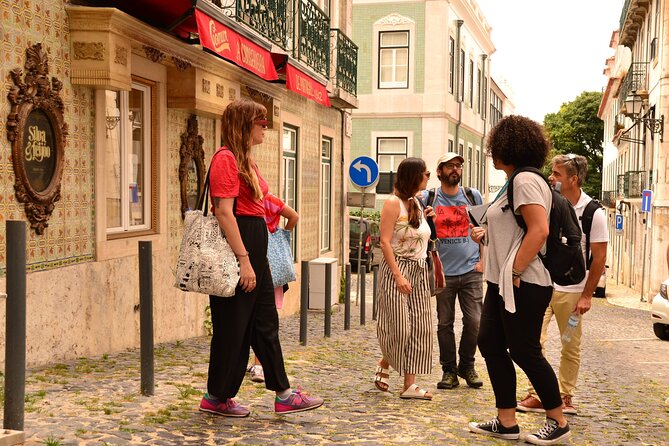
Alfama is Lisbon’s oldest neighborhood, and it shows. Expect narrow streets, a Moorish heritage vibe, and that fado music presence that pops up around you as you move. The guide points out how fado restaurants sit tucked between alleys, so you don’t have to rely on luck to spot where the sound lives.
The walking here is slower by necessity. It’s not just romance; it’s actual city geometry—tight turns, uneven grades, and places where you naturally pause. This is a great neighborhood for anyone who wants Lisbon to feel lived-in rather than just staged.
And yes, it’s a bit of hill work. Even when the tour is manageable, you’ll want to keep an easy pace and take the stops the guide offers. If you’re traveling with limited mobility, moderate fitness is still the ticket here, but you’ll feel the difference between Baixa’s flatter center and Alfama’s slopes.
Ending at Praça do Comércio: the Atlantic welcome hall
The walk finishes at Praça do Comércio (Terreiro do Paço), near the Tagus. This area carries heavy historical weight: it was the location of the Paços da Ribeira (Royal Ribeira Palace) until it was destroyed by the 1755 earthquake, and after that it was remodeled as part of the Pombaline Downtown rebuilding.
The guide explains the square as a reception hall for travelers arriving from the Atlantic. That’s a useful way to see it. It isn’t just “a nice end point.” It’s a space built for arrival and departure, where Lisbon once turned foreign-facing energy into local control and commerce.
By the time you reach the end, you’ll have two useful memories:
1) how Lisbon rebuilt itself after disaster, and
2) how the city moved from royal power to everyday movement along the water.
What you actually get for the money ($23.94) and why it feels fair
At about $23.94 per person, this is priced like a “half-day orientation with extras,” not like a premium private experience. For that, you get a local guide, a classic pastel de nata, and a wine tasting plus tapa/snacks.
The best value is the combination. A walking tour alone can be fine, but adding food and a wine tasting turns the break times into something worth waiting for. Also, the tour includes a lot of what you’d otherwise need to hunt down on your own: the storyline behind squares, and the practical connection between neighborhoods.
You don’t pay extra admission for the listed stops, and you’re not stuck in museum queues. That’s a big deal if you’re trying to beat jet lag and still see plenty in a short time.
One caution: the tour includes wine tasting, so if you don’t drink alcohol, you should plan accordingly and ask how the tasting is handled for your needs when booking. (One group report also noted accommodations for vegetarian requests, but the safest move is to mention dietary needs up front.)
Who this tour fits best (and who might want a different plan)
This tour is ideal if:
- you’re in Lisbon for a short time and want the “big picture” fast
- you like history told at street level, not just from museum walls
- you enjoy walking but want a guide to manage routes and timing
- you want a taste of Portugal’s food culture early—before you start restaurant hunting
It may be less ideal if:
- you’re expecting major museum time or inside cathedral visits, since the focus is street stops and neighborhoods
- you don’t want any hill walking at all, because the Alfama section can feel steep even at a moderate pace
If you tend to travel solo, the tour also has a good track record of guides making sure solo travelers feel included. Names you might hear in scheduling conversations include Jose, who’s specifically praised for caring attention to solo participants.
Should you book this Lisbon highlights walking tour?
I’d book it if you want a structured way to see central Lisbon without wasting half a day figuring out where things connect. The route covers the city’s “why” as much as its “what,” and the included pastel de nata plus wine tasting and snack stops make it feel like more than just a walk.
If you’re already comfortable navigating Lisbon and you only want super deep stops, you might find the experience overlaps with what you could piece together on your own. But for most first visits, this is a strong way to get your bearings fast.
If you do book, wear good shoes, bring a light layer in cooler weather, and ask your guide to help with photos when you’re at the viewpoints—especially around Santa Justa and the miradouro before Alfama.
FAQ
How long is the walking tour?
It runs about 3 to 4 hours.
Where does the tour start and end?
It starts at Praça Dom Pedro IV (1100 Lisboa) and ends at Praça do Comércio (1100-148).
What food and drink are included?
You’ll get a classic pastel de nata, plus a wine tasting and a tapa/snacks.
Is the tour in English, and how big is the group?
It’s offered in English, and the tour has a maximum group size of 14.
Is there a mobile ticket?
Yes, you receive a mobile ticket.
Do I need to pay admission for stops?
The listed stops show Free admission tickets, and the tour does not include entry to museums and monuments.
Is it suitable for moderate walking fitness?
It’s listed for travelers with a moderate physical fitness level. You should expect real walking time and some slopes.
Are service animals allowed?
Yes, service animals are allowed.
Can I cancel for a full refund?
Yes. You can cancel up to 24 hours in advance for a full refund.
What if it rains?
The tour goes on even in rain in many cases, so bring a rain layer or umbrella if that’s likely during your visit.