REVIEW · ALFAMA & OLD TOWN TOURS
Best of Lisbon Walking Tour: Rossio, Chiado & Alfama
Book on GetYourGuide →Operated by Inside Lisbon tours · Bookable on GetYourGuide
Lisbon makes more sense when you walk it. This 3-hour tour stitches together Rossio Square, Chiado, and Alfama with a live English guide (names like Filipa and Martin come up often), plus food stops that keep the pace friendly.
I love how the stories match what you can actually see in the streets, from neo-Manueline details at Rossio to political turning points around Restauradores and Carmo. I also like the included tastings: pastel de nata and small local bites paired with a wine tasting.
One consideration: this is mostly outside and on foot, so if you want long museum time or lots of inside-the-building stops, you may feel a bit rushed or ready for more seated breaks.
In This Review
- Key highlights worth your attention
- Why This Rossio–Chiado–Alfama Route Makes Lisbon Click
- Meeting at Estátua de D. Pedro IV: Start Where Locals Start
- Rossio Square, St. Dominic’s Square, and the Neo-Manueline Details at Rossio Station
- Restauradores Square Obelisk and Largo do Carmo: Lisbon’s Political Turning Points
- Chiado’s Cafés, Boutiques, Theatres, and Bookstores
- Baixa’s Earthquake Rebuild Logic and the City-Planning You Can See
- Alfama Wine-and-Snack Stops and a Closer Feel for Fado
- The Custard Tart Moment: Pastel de Nata Without the Guesswork
- Finishing at Terreiro do Paço (Praça do Comércio): See the Grand Finale
- Price and Pacing: What $23 Buys You in Real Time
- Who Should Book This Tour—and Who Might Want a Different Plan
- Should You Book This Best of Lisbon Walking Tour?
- FAQ
- How long is the Best of Lisbon Walking Tour: Rossio, Chiado & Alfama?
- Where do I meet for the tour?
- What is included in the price?
- Are entrance fees included?
- Is the tour offered in English?
- What should I bring?
- Are pets allowed?
Key highlights worth your attention
- Rossio Square to Terreiro do Paço in one flow: you start in the city’s center and finish at the grand commerce end.
- Neo-Manueline architecture at Rossio Central Station: look for the intricate style details as you pass.
- Restauradores and Carmo Square context: independence from Spain and the Carnation Revolution of 1974.
- Chiado’s old-café feel: boutiques, theatres, and bookstores you can spot while moving through.
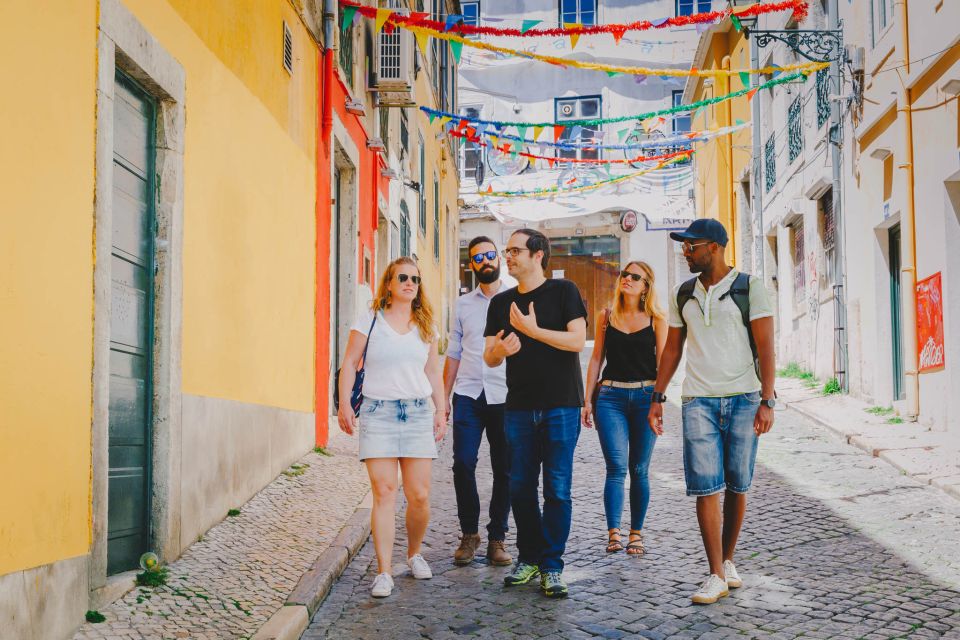
- Alfama’s Fado proximity: Moorish streets with a closer sense of what drives Lisbon music and nightlife.
- Included tastings, not just sightseeing: custard tart plus snack and wine stops that break up the walk.
Why This Rossio–Chiado–Alfama Route Makes Lisbon Click
If Lisbon is your first stop in Portugal, this is a smart way to get your bearings without burning an entire day. The route links the city’s “main chapters”: the energetic center (Rossio and Baixa), the artistic shopping-and-café stretch (Chiado), and the oldest maze-like quarter (Alfama). You’re not just taking photos—you’re learning how the city grew, rebuilt, and reinvented itself.
You’ll also appreciate the tour’s structure. It’s built around viewpoints, short photo moments, and a few longer guided segments where the guide can connect history to street scenes. That mix tends to work well when you only have a limited window and you want to leave with both context and direction.
Finally, it’s good value in a practical way. For $23 per person and 3 hours, you get a live guide plus a pastel de nata and two tasting stops (one snack tasting and one wine tasting). Even if you’re not a big “tour person,” the food and the orientation alone can make the cost feel reasonable.
You can also read our reviews of more walking tours in Lisbon
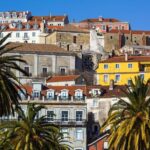

Meeting at Estátua de D. Pedro IV: Start Where Locals Start
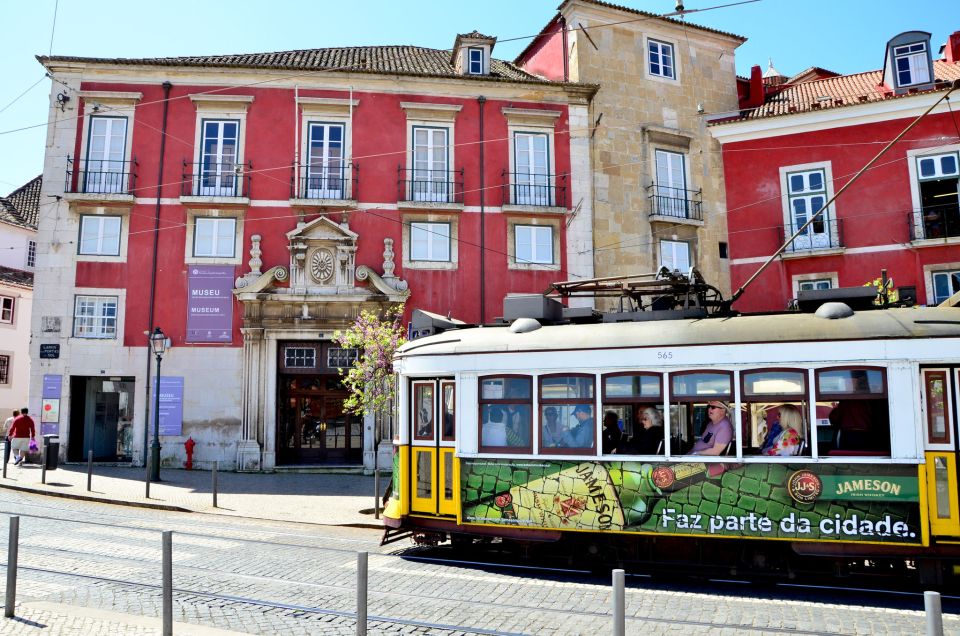
The meeting point is Rossio Square, right by the statue of D. Pedro IV. This matters more than it sounds. Rossio sits at the heart of the city’s older core, so you start in a place where you can easily walk, transfer later, and plan meals afterward without needing complicated backtracking.
From the first minutes, the tour emphasizes the contrast between the old and the newer parts of Lisbon. You’ll be walking through an area that feels like a crossroads—big plazas, key streets, and handy routes outward. If you want to spend the rest of your trip exploring on your own, starting here is a win.
Rossio Square, St. Dominic’s Square, and the Neo-Manueline Details at Rossio Station
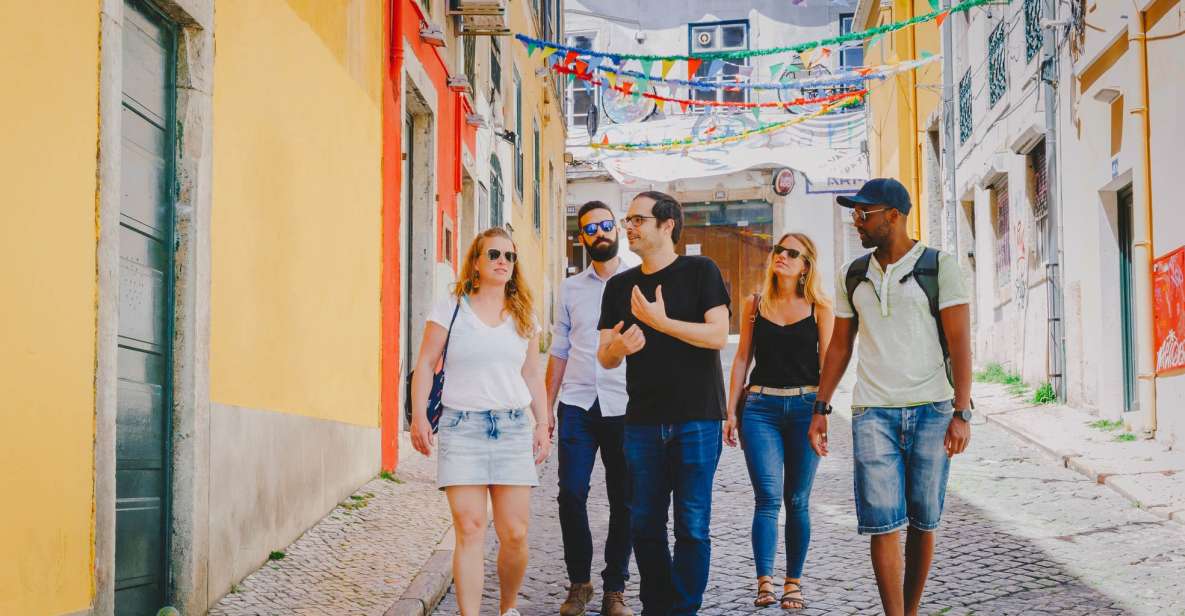
After the initial Rossio Square start, you’ll hit St. Dominic’s Square for a quick photo stop and a bit of guided context. This kind of stop keeps you moving, but it’s not random. You’re learning how Lisbon’s layout shapes what you see and where you turn next.
Then comes Rossio Railway Station. It’s not just a transport hub in this story—it’s a visual lesson. The tour points you to the neo-Manueline architecture worth noticing as you pass. If you like architecture, this is one of those “stop and look” moments even without going inside. The guide’s job here is to help you see what your eyes might otherwise skim right over.
Practical tip: wear shoes you trust. Rossio and the immediate center can be smooth underfoot, but Lisbon quickly becomes a city where your footing matters more than your sightseeing enthusiasm.
Restauradores Square Obelisk and Largo do Carmo: Lisbon’s Political Turning Points
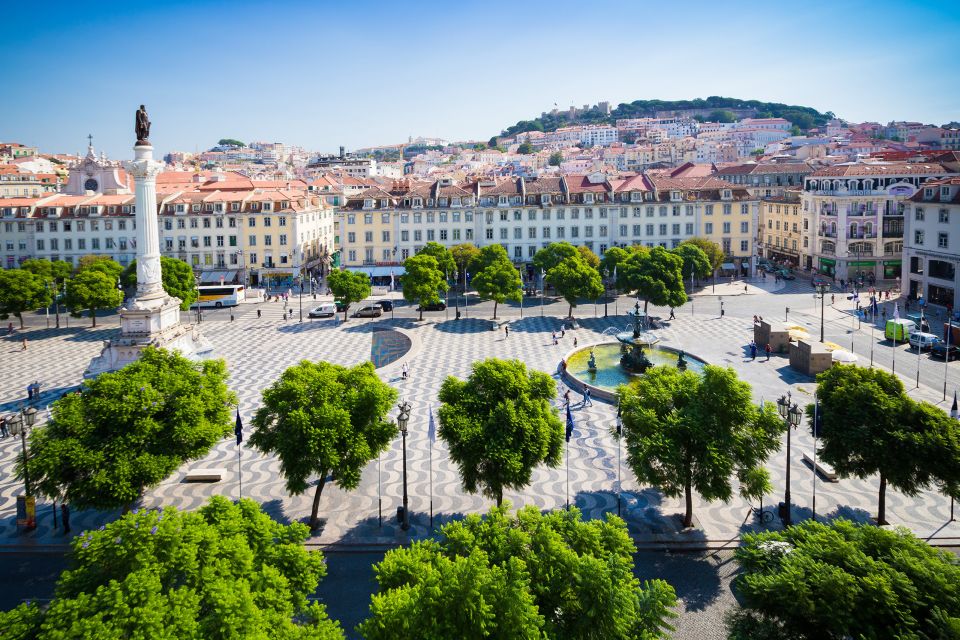
A highlight of this walk is how it brings modern Portuguese identity into a street-level experience. In the middle of Restauradores Square, you’ll see the obelisk connected to the restoration of Portugal’s independence from Spain. Instead of reading a sign later, you’re looking at the monument while the guide explains the story behind it.
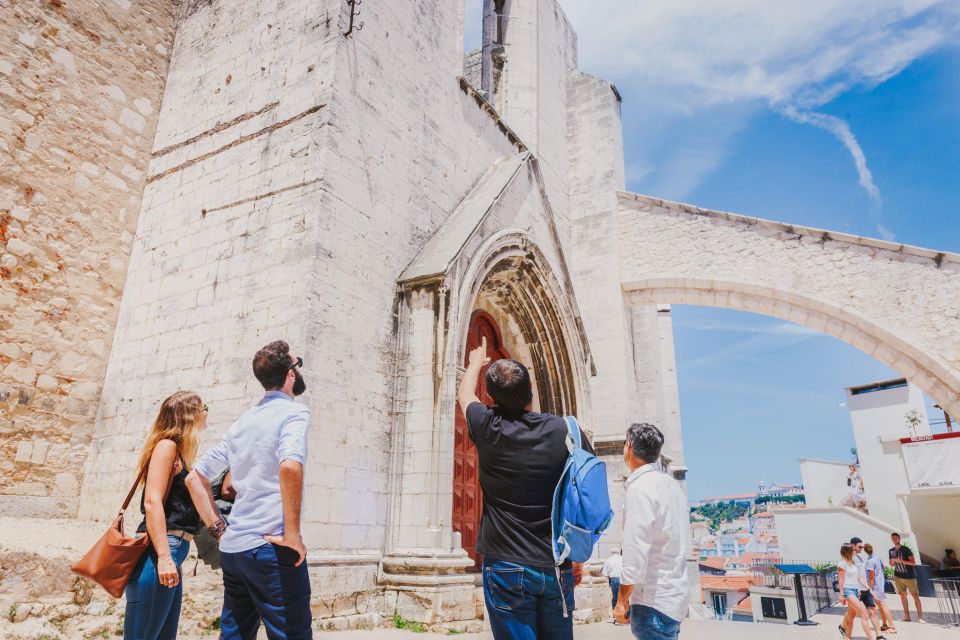
Later, you’ll move to Largo do Carmo Square. This stop focuses on the Carnation Revolution of 1974, the event that ended 48 years of dictatorship. The point isn’t to turn the tour into a politics lecture. It’s to show you why Lisbon’s public spaces carry memory—why certain squares feel like stages, why monuments sit where they do, and how history still shapes the way people talk about their country.
If you’re the type who likes your travel stories to connect to real places, this is where the tour earns its keep.
Chiado’s Cafés, Boutiques, Theatres, and Bookstores
Next you’ll shift into Chiado, a district that feels like Lisbon’s cultural middle ground—part elegant streets, part everyday life. As you pass through, the guide helps you spot the things that make Chiado feel distinct: old cafés, boutiques, theatres, and quaint bookstores.
This is also where many people start to feel the tour’s pacing working. After the political context of the squares, Chiado gives you a calmer emotional tone. You’re walking through a neighborhood that’s built for lingering, even if your tour time doesn’t allow a full coffee break.
One good way to enjoy Chiado on this route: pause for a quick look at storefront details and signs as you walk. The guide’s direction makes those visual cues meaningful.




Baixa’s Earthquake Rebuild Logic and the City-Planning You Can See
From Chiado, you head toward the Baixa de Lisboa area. This is where Lisbon’s story becomes very physical. Baixa was rebuilt after the 18th-century earthquake, following new rules of urban planning and anti-systemic architecture. That phrasing might sound abstract, but you’ll feel it in the streetscape: broader layouts, a more structured grid, and a sense of intentional design.
You’ll also get a food tasting stop in Baixa. This is one of those “timing is everything” points in the tour. It breaks up the walk while you’re still fresh from the center-to-district transitions. You can use that short pause to refill water, regroup, and figure out what you want to explore on your own later.
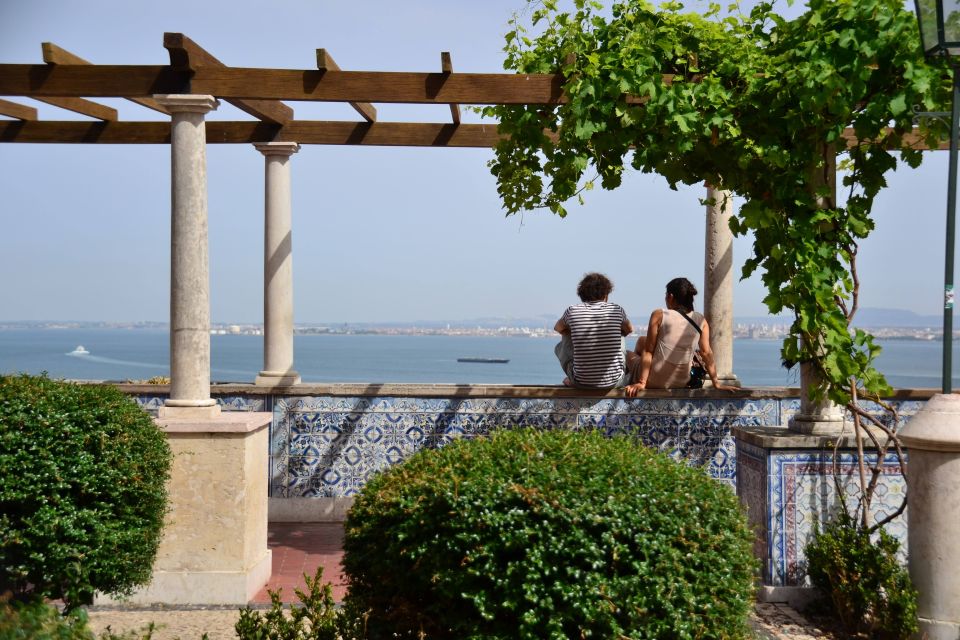
Even better, the tour keeps the movement going with photos and a viewpoint stop after the Baixa moments. That’s helpful because Lisbon’s neighborhoods don’t read at ground level. A viewpoint helps you lock in how the districts relate to each other.
Alfama Wine-and-Snack Stops and a Closer Feel for Fado
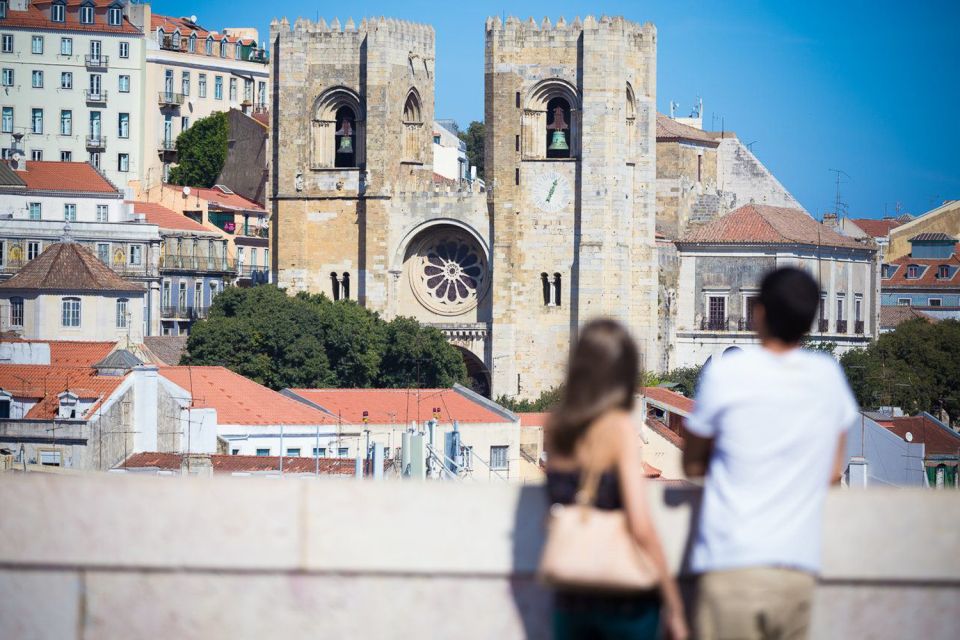
Then you reach Alfama, and the tone changes fast—in the best way. Alfama’s streets are older, narrower, and more winding, so even without changing your speed, the neighborhood feels different. The tour frames Alfama as a Moorish-influenced area, and as you move through alleys and turns, that influence shows up in the feel of the streetscape.
The experience leans into Lisbon’s music culture too. You’ll get an up-close encounter with the art of Fado, Lisbon’s signature musical genre. You might not see a full performance in every case, but the guide’s pointing and local context are what make it click. You start understanding why Fado feels like more than entertainment here—it’s tied to neighborhood identity and everyday emotion.
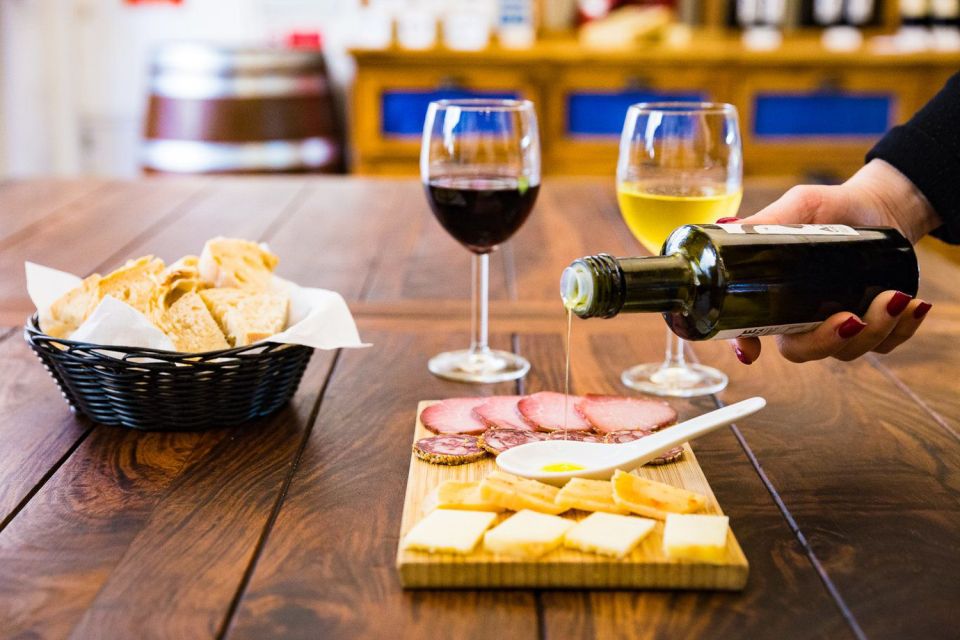
You’ll also get the second major “taste” moment: wine tasting plus food tasting in Alfama. Several guides are described as pairing the stop with story, and people often mention green wine in particular. If you like your tastings to come with context, Alfama is your payoff stop.
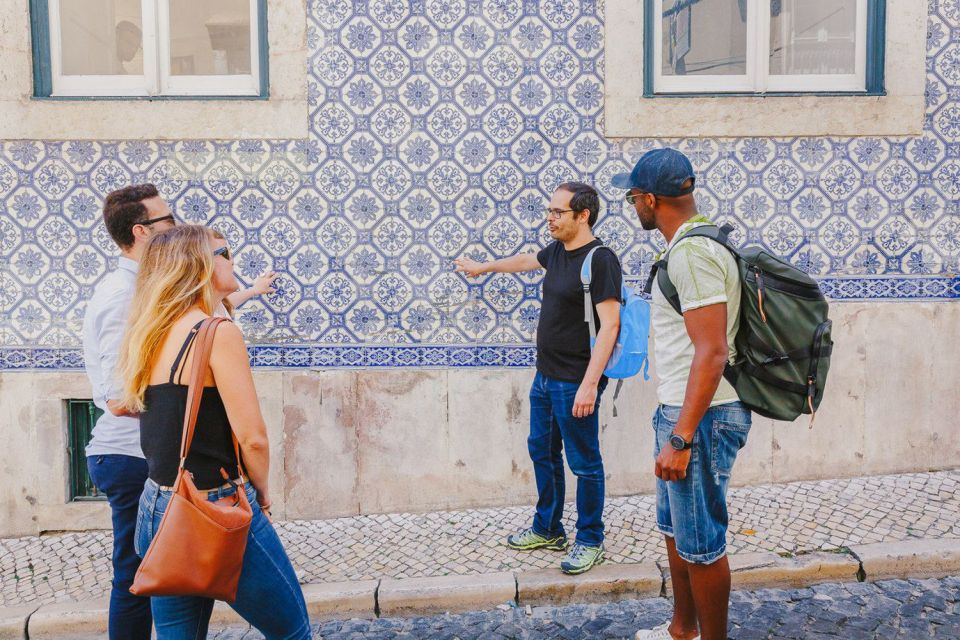
A small but memorable detail you should ask the guide about: some tours include a moment about why certain buildings in Alfama have tiled facades on their fronts. It’s the kind of visual detail you’d miss on your own, but once you know the reason, the neighborhood suddenly looks curated.
The Custard Tart Moment: Pastel de Nata Without the Guesswork
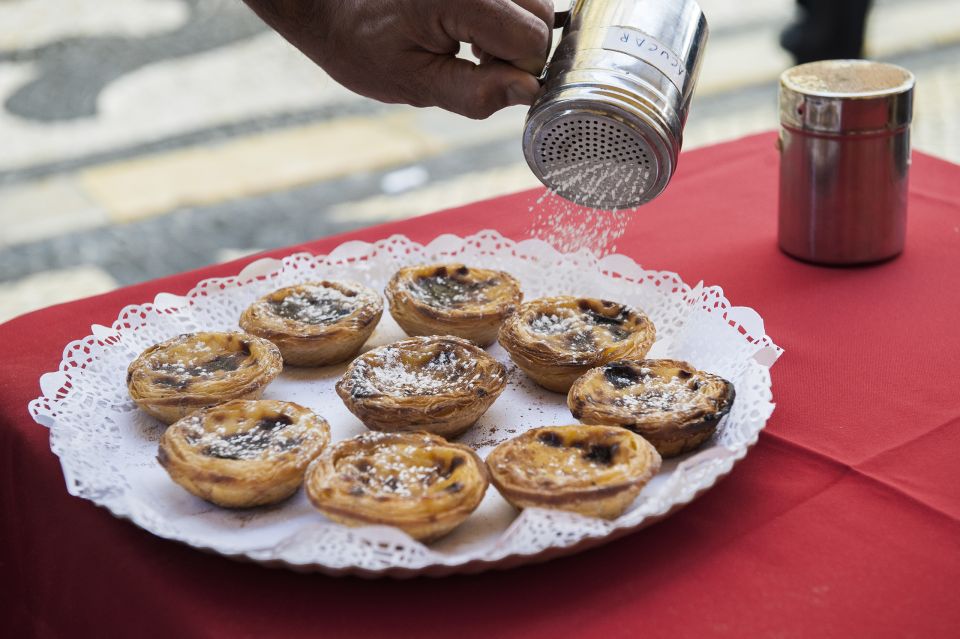
Not all tours handle food well. This one does better by treating the pastel de nata as a proper checkpoint, not a random snack.
You get one pastel de nata, and it’s timed so you’re not eating immediately at the start or struggling to squeeze it in near the end. It’s also a good “flavor anchor” for the rest of the walk. After that first custard bite, the other snacks and wine tasting feel connected rather than like extra add-ons.
If you have a sweet tooth, plan to enjoy this stop slowly. If you don’t, you can still use it as a quick reset before the Alfama section, where the streets start feeling steeper and more twisting.
Finishing at Terreiro do Paço (Praça do Comércio): See the Grand Finale
The tour ends at Terreiro do Paço (also tied to Praça do Comércio). This is the kind of finale that helps you understand the city’s scale. After the tight alleys of Alfama, you arrive in a broader, more open civic space where Lisbon looks grand and formal.
The tour frames this ending as seeing the former entrance hall of the city. Whether you’re headed to another attraction, dinner, or just a long stroll along the waterfront areas nearby, finishing in this zone makes your next step easier.
Price and Pacing: What $23 Buys You in Real Time
At $23 per person for 3 hours, you’re paying for three things: (1) a guided route across major districts, (2) multiple story-based stops at squares and viewpoints, and (3) tastings that include pastel de nata, a snack tasting, and wine tasting.
You should also weigh what’s not included: entrance fees and guiding at attractions and sites. So expect mostly to see key landmarks and neighborhood scenes rather than spend long periods inside paid attractions. That can be a positive if you hate waiting in lines, but it’s a consideration if you were hoping for ticketed museum time.
Pacing-wise, the tour is built around short segments and photo stops, which helps keep energy up over a three-hour walk. Still, there’s Lisbon hill reality. Bring comfortable shoes and expect some uneven footing and stairs, especially as you work your way into Alfama.
Who Should Book This Tour—and Who Might Want a Different Plan
This walking tour is a great fit if you’re:
- visiting Lisbon for the first time and want fast orientation
- interested in how history connects to street corners, squares, and monuments
- excited to try pastel de nata and enjoy a guided wine tasting
- the type who likes a guide who can answer questions and keep things moving with humor and patience (many guides in this program are described that way)
You might want a different option if you:
- want long indoor visits with lots of tickets
- need frequent sit-down breaks
- dislike walking in areas with older paving and more winding streets
Should You Book This Best of Lisbon Walking Tour?
I think you should book if you want a strong start to Lisbon: Rossio for orientation, Chiado and Baixa for the city’s “everyday elegance and planning,” and Alfama for the oldest streets and a closer feel for Fado. The included tastings do real work here. They’re not just snacks; they mark transitions and give you a breather at the right points.
If your schedule is tight, this also checks a practical box: 3 hours is long enough to learn the city’s logic, but short enough to still plan a relaxed afternoon afterward.
One last thought: go in expecting a walking story. Bring good shoes, keep your curiosity switched on, and you’ll leave with a Lisbon you can actually navigate.
FAQ
How long is the Best of Lisbon Walking Tour: Rossio, Chiado & Alfama?
It lasts about 3 hours.
Where do I meet for the tour?
Meet at Rossio Square, close to the statue of D. Pedro IV.
What is included in the price?
The tour includes a local guide and the walking tour, plus 1 pastel de nata, 1 snack tasting, and 1 wine tasting.
Are entrance fees included?
No. Entrance fees and guiding at attractions and sites are not included.
Is the tour offered in English?
Yes, it is run in English.
What should I bring?
Wear comfortable shoes and comfortable clothes.
Are pets allowed?
No, pets are not allowed.