REVIEW · ALFAMA & OLD TOWN TOURS
Alfama Tour in Lisbon Old Town
Book on Viator →Operated by Take Lisboa · Bookable on Viator
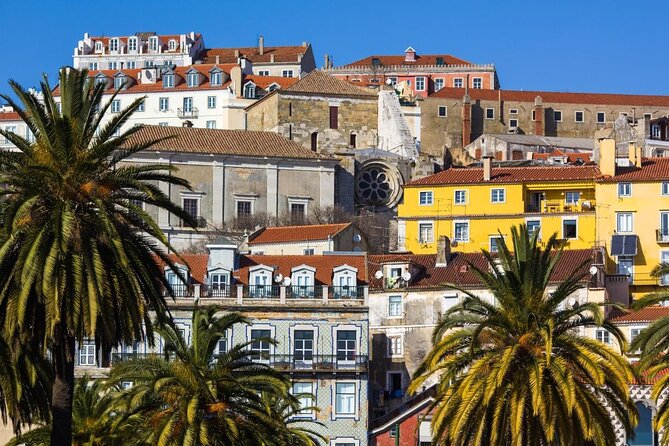
Alfama doesn’t work like a normal neighborhood. This walk threads Lisbon’s oldest streets together with history you can see and views that keep popping around corners. I like how the tour stays practical while still going emotional, from medieval fountains to the miradouros where Lisbon basically shows off.
Two things I really love: the storytelling focuses on why Alfama looks and feels the way it does, and the pacing gives you frequent chances to stop, look closely, and ask questions. Another big plus is the guide-led local tips, so you’re not stuck after the tour wondering where to go next.
One drawback to keep in mind: you’ll be climbing Lisbon’s hills. Expect steep grades and stairs, so pack comfy shoes and plan for some effort.
In This Review
- Key points before you go
- Price and what you really get for it
- Starting at R. dos Bacalhoeiros: get your bearings fast
- Casa dos Bicos and the blue umbrellas: the opening mood
- Chafariz D’El Rei: Lisbon’s old-water engineering
- Largo do Chafariz de Dentro: the central plaza idea
- Largo de São Rafael and Largo do Salvador: stories in stone squares
- Igreja de São Miguel: where festivities actually happen
- The History of Lisbon mural (Nuno Saraiva): modern art in old space
- Miradouro de Santo Estêvão: getting the high-ground feel
- Miradouro das Portas do Sol: one balcony, many layers
- Miradouro de Santa Luzia: the romantic terrace stop
- Lisbon Cathedral (Sé de Lisboa): seeing it without the indoor detour
- Church of St. Anthony: the saint-front celebration moment
- How the guide shapes the whole experience
- Walking reality: hills, stairs, and shoe choice
- Logistics that matter on this type of tour (without overthinking it)
- Should you book the Alfama Tour?
- FAQ
- How long is the Alfama walking tour?
- What language is the tour offered in?
- Are entry tickets included for Casa dos Bicos and the Cathedral?
- Is food or drink included?
- Is there an expected tip?
- Can I cancel for a full refund?
Key points before you go
- Pay-what-you-want / tip-based style: the ticket price is low, but a good tip is part of the deal
- 12 stops in about 2.5 hours: fountains, church squares, murals, and 3 major viewpoints
- Miradouros built for postcard views: Portas do Sol, Santa Luzia, and Santo Estêvão
- Sé de Lisboa from the outside: you’ll skip the interior to keep the pace moving (entry costs extra if you want inside)
- Small group energy: up to 25 people, with guides adjusting pace and breaks
Price and what you really get for it
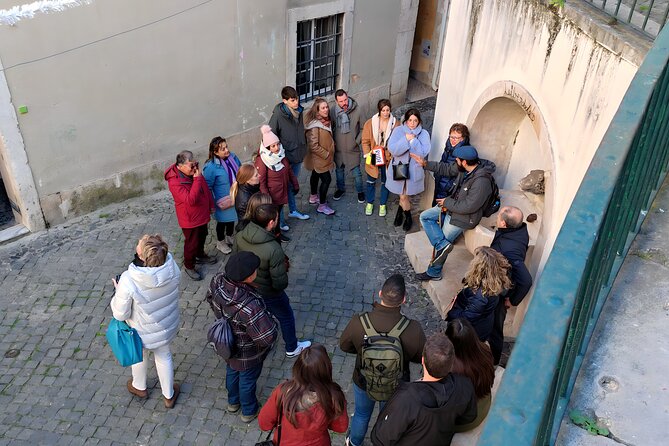
The price you’ll see is $3.62 per person, but this is a fully tip-based tour in practice. That means the money isn’t the point as much as the guide. If you enjoy the walk, you should tip like it matters, because the guide is doing real work: steering you through tight alleys, explaining what you’re seeing, and connecting the dots between Moorish, medieval, and modern Lisbon.
Is it good value? For Alfama, yes—if you want orientation fast. You’re covering a lot of ground (about 2 hours 30 minutes), and you’re hitting the places that make Alfama legible: fountains tied to early city life, plazas shaped by old walls, and viewpoints that show you how the neighborhood slopes down toward the river.
If you prefer to wander solo with zero guidance, you can save money. But if you want to understand what you’re looking at while you’re walking, this format tends to land well. You also get local recommendations at the end, which is where a tour can quietly pay off long after the last viewpoint.
You can also read our reviews of more tours and experiences in Lisbon.



Starting at R. dos Bacalhoeiros: get your bearings fast
The tour meets at R. dos Bacalhoeiros 12A, 1100-070 Lisboa. That area puts you close to the older core of downtown, and it’s a good launching point for Alfama because you’ll start moving uphill pretty soon.
A practical tip: arrive a bit early and use the exact address on your map app. One issue I’ve heard is that nearby points on Google can be close but not exact, and Alfama has lots of side streets. So don’t assume the first pin you see is the right one.
The tour ends in a different location (you’re not walking in a perfect loop). That’s normal here. Just plan for it: bring the idea that you’ll finish near the areas the viewpoints and cathedral sit around, then keep going on your own from there.
Casa dos Bicos and the blue umbrellas: the opening mood
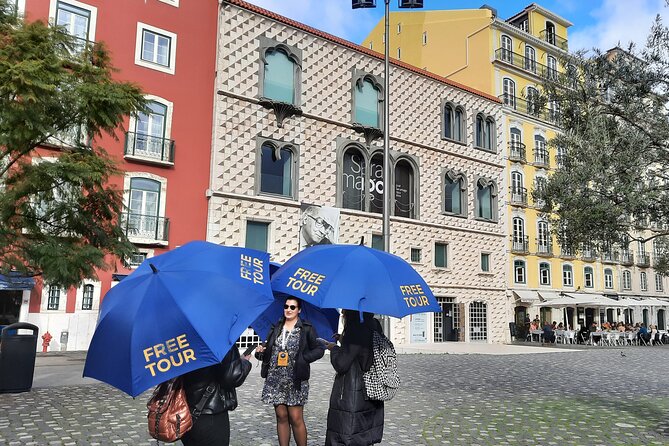
Your first stop is Casa dos Bicos – Museu de Lisboa (about 15 minutes). This is where the tour starts to feel like Alfama: stone details, narrow streets, and that sense you’re entering a living museum without buying a ticket to every single room.
You’ll be looking for the blue umbrellas, which helps you mentally lock onto the spot and start the walk with purpose. The admission ticket isn’t included, so you’re not expected to go inside on this tour. Still, this stop works well because it sets a tone: Lisbon’s identity is built from layers, and Alfama is one of the best layers to experience on foot.
If you’re the type who loves architecture and façade details, you’ll probably enjoy this intro even without entering the museum.
Chafariz D’El Rei: Lisbon’s old-water engineering
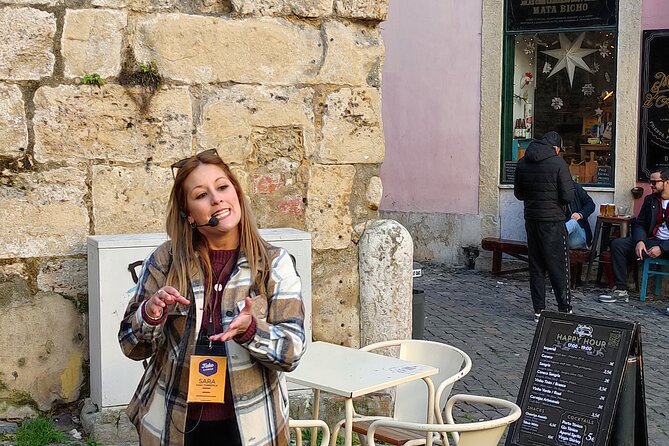
Next up is Chafariz D’El Rei (about 10 minutes). This fountain is tied to the hillside and to the very early idea of public water in Lisbon. The tour framing here is smart: instead of treating the fountain like a random photo stop, you get a story about why water mattered and why this spot made sense on the Alfama slope.
One reason this stop sticks: it’s a reminder that neighborhoods aren’t only about buildings. They’re about systems—water, movement, and daily survival—long before tourism labels it historic.
Entry is free. You’ll just take in the fountain and keep walking.
Largo do Chafariz de Dentro: the central plaza idea
Then you reach Largo do Chafariz de Dentro (about 10 minutes). This plaza was once called Chafariz dos Cavalos, and you’ll hear how the name connects to what the space used to do.
What I like about this stop is the way it explains Alfama’s “central” feeling even when the streets look chaotic. This area is tied to the Fernandina wall, and the tour uses that context to help you see how old fortifications shaped everyday life.
Again, free and quick. But it’s the kind of short stop that changes how you interpret the next bends in the road.

Largo de São Rafael and Largo do Salvador: stories in stone squares
Two more plazas follow: Largo de São Rafael and Largo do Salvador, each around 10 minutes.
- At Largo de São Rafael, you’re near ancient walls and it helps you feel how close history sits to daily life.
- At Largo do Salvador, the tour focuses on listening—stories that connect culture and old habits.
These are good stops to slow down. Alfama’s streets can feel like a maze, so guides who know how to give you a mental map at points like these are worth their weight in gold. If your guide is strong (and many are), these pauses are where you start to understand why Alfama’s vibe is so specific.
Igreja de São Miguel: where festivities actually happen
At Igreja de São Miguel (about 15 minutes), you’ll learn why this church and square matter beyond architecture. This is one of the key locations for the Popular Saints Festivities, so the tour’s story links place to tradition, not just dates and styles.
This is a solid stop if you’re traveling in seasons when festivals are active—or even if you’re not. Why? Because it helps you stop thinking of Alfama as only a viewpoint-and-photo neighborhood. It’s also a place where people mark the calendar.
Entry is free.
The History of Lisbon mural (Nuno Saraiva): modern art in old space
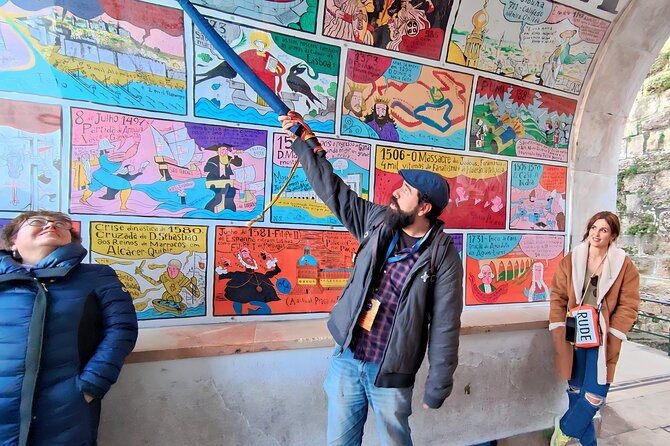
Then there’s a quick but memorable stop at History of Lisbon mural by Nuno Saraiva (about 10 minutes). Murals in old neighborhoods can be hit-or-miss when they feel like decoration, but in this case the tour uses it as a bridge: history isn’t just in ruins. It’s also in what Lisbon chooses to show today.
Because the stop is short, don’t expect a long museum moment. Expect a prompt to look at the art through a Lisbon lens.
Free entry.
Miradouro de Santo Estêvão: getting the high-ground feel
Next, you head to Miradouro de Santo Estêvão (about 15 minutes). The tour reaches the viewpoint depending on pace, and the walk through Alfama’s tight streets is part of the point.
This stop is useful because it teaches you how Alfama climbs and funnels your sightlines. You’ll feel the difference between street-level Lisbon and viewpoint Lisbon, where everything starts to line up.
Free. No ticket required.
Miradouro das Portas do Sol: one balcony, many layers
Miradouro das Portas do Sol is next (about 10 minutes). This viewpoint is famous for a reason: it’s one enormous balcony overlooking Alfama.
What you should do at this stop: don’t just take the postcard shot. Look for patterns. Notice how the streets stack and twist, and how the rooftops create a map you couldn’t see from ground level.
Free entry.
Miradouro de Santa Luzia: the romantic terrace stop
Then you’ll get to Miradouro de Santa Luzia (about 10 minutes). This terrace is described as romantic, and even if romance isn’t your travel style, you’ll still appreciate why it’s popular: it’s a clean, comfortable viewing moment after a lot of walking.
This is a good place to catch your breath, let the guide’s story settle, and then decide where you want to wander next. If you love viewpoints, this is the one you’ll want to linger at—just don’t skip the rest of the route, since the tour still finishes with major landmarks.
Free.
Lisbon Cathedral (Sé de Lisboa): seeing it without the indoor detour
Your final major landmark is Lisbon Cathedral, Sé de Lisboa (about 15 minutes). Important detail: you won’t go inside on this tour. Entry costs 5€ if you want the interior.
I like that the tour keeps you outside here. Inside can be beautiful, but adding it would slow the walk, especially with hills and stairs. Outside is still enough to understand why Sé de Lisboa is one of the oldest and most important churches in the city, with construction dating back to the 12th century.
If you feel curious, you can decide later whether you want the paid interior visit.
Church of St. Anthony: the saint-front celebration moment
After the cathedral, you stop at Church of St. Anthony (about 15 minutes). This is Lisbon’s most cherished saint in the tour’s framing, and the vibe here is less museum and more celebration.
One practical thought: if you’re sensitive to standing in one place for too long, this stop is actually a nice balance because it’s tied to everyday emotion and not only architecture.
Entry is free.
How the guide shapes the whole experience
The itinerary is the skeleton. The guide is the muscles. This is where the reviews consistently point.
You’ll meet guides with very different personalities, but a shared skill: they make Alfama’s layers feel connected. Some guides lean into architecture and how Lisbon rebuilt itself after shocks and rule changes. Others bring out the emotional side—one guide’s storytelling included Fado as an inheritance of longing and resilience, including an explanation of saudade.
You might also get small local touches that make the tour feel real, not scripted. For example, I’ve seen guides include a stop to try ginjinha, including homemade ginjinha sold by Dona Alice in chocolate cups. Even when food isn’t included, these little cultural sampling moments tend to be part of the local flavor of the walk.
And yes, some guides have fun with it. I’ve heard of Cecelia’s singing, Laura’s architecture focus, and Jessica’s careful pacing with breaks in shadier spots. In a neighborhood like Alfama, that human factor matters. It turns a climb-and-look routine into a story you can carry back to the street afterward.
Walking reality: hills, stairs, and shoe choice
Let’s be honest: Alfama is not flat. Even with frequent stops, you’ll be on moderate physical fitness terrain, and some people find it challenging due to steep grades and lots of stairs.
My advice:
- Wear excellent walking shoes with grip.
- Plan water and a light layer, since the viewpoints can feel breezy even when streets are warm.
- If you’re traveling with older family members, you’ll want a guide who truly adjusts pacing. Many guides do, but your best bet is to set expectations before you start and tell the guide what feels hard.
A good guide will slow down when the group needs it and build in short discussion breaks so you’re not constantly in motion.
Logistics that matter on this type of tour (without overthinking it)
You’ll get a mobile ticket, and the tour is offered in English. Confirmation arrives at booking time, and service animals are allowed.
Because the tour ends in a different location, it’s worth planning your next step before you leave your hotel. Pair this with something nearby—coffee, a museum you can enter on your own, or just another loop through Alfama’s back streets.
Also, the tour doesn’t include food or beverages. If you want a full meal, plan that around your schedule rather than assuming it will happen during the walk.
Should you book the Alfama Tour?
Book it if you want fast orientation in Lisbon’s oldest neighborhood and you like learning while you walk. This tour is especially worth it when you want the “why” behind what you see: why fountains were placed where they were, why plazas exist where walls once ran, and why viewpoints are the way they are.
Skip it (or at least think hard) if your legs hate hills or you prefer to explore at your own tempo with no guide-led stops. Alfama is charming, but it’s also physically demanding.
If you’re on the fence, here’s the deciding question: do you want to leave Alfama feeling like you understood it, or just feeling like you survived the steep streets with good photos? If you want understanding, this tour is a strong bet.
FAQ
How long is the Alfama walking tour?
It runs about 2 hours 30 minutes.
What language is the tour offered in?
The tour is offered in English.
Are entry tickets included for Casa dos Bicos and the Cathedral?
No. Casa dos Bicos has admission not included. Sé de Lisboa also is not included for entry (entry is listed as 5€), and the tour does not go inside.
Is food or drink included?
No. Any food or beverages are not included.
Is there an expected tip?
Yes. It’s described as a tip-based experience, and a tip at the end is welcomed and expected.
Can I cancel for a full refund?
Yes. You can cancel up to 24 hours in advance for a full refund. If you cancel less than 24 hours before the start time, the amount paid is not refunded.