REVIEW · TUK TUK TOURS
Classic Lisbon & Earthquake Tour by Private Tuk Tuk (4 Hours)
Book on Viator →Operated by Just Tour It · Bookable on Viator
Four hours, and Lisbon clicks into place. This private tuk tuk tour pairs an English guide with photo-flexible stops so you’re not stuck walking while the city moves on. The big plus for me is the way the route mixes big viewpoints and landmark moments with enough time to pause, frame photos, and keep going. The one catch: you’ll cover a lot of sites quickly, and several of the top museums/monuments list extra ticket prices.
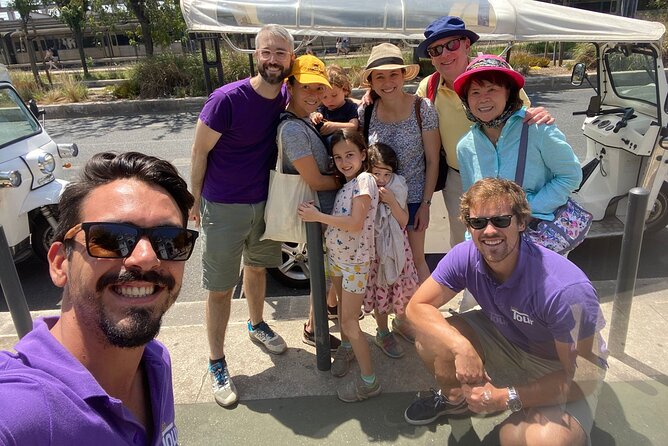
If you’re traveling with kids, going solo, or you just want an easy first-day orientation, this is a very sensible way to start. You meet in the heart of town at Hard Rock Cafe (Av. da Liberdade), so you can roll out fast and avoid a confusing hunt for a pickup spot.
In This Review
- Key points to know before you go
- Why a private tuk tuk beats getting footsore fast
- Meeting at Hard Rock Cafe and getting rolling in the center
- Pombaline Lisbon and Chiado: the earthquake-rebuild story in motion
- Miradouros and gardens: São Pedro de Alcântara and Príncipe Real
- Lisbon’s monuments in quick hits: Estrela, Eduardo VII, and Marquês de Pombal
- Rossio station, Carmo Convent, and Praça do Comércio by the river
- LX Factory, the 25 de Abril Bridge, and Cordoaria Nacional
- Belém: choosing your ticket highlights for maximum payoff
- Museu Nacional dos Coches (royal carriages)
- Palácio de Belém (Presidential residence)
- Jerónimos Monastery (the one you plan around)
- Centro Cultural de Belém and Museu do Combatente area
- Torre de Belém and Padrão dos Descobrimentos
- Electricity Museum / Central Tejo (the modern twist)
- Price and value: what your €174.22 is really buying
- Guides in English and private flexibility that saves your day
- Should you book this Classic Lisbon & Earthquake Tour by Private Tuk Tuk?
- FAQ
- How long is the Classic Lisbon & Earthquake Tour?
- Is this tour private?
- What’s included in the price?
- Are entrance fees included?
- Where does the tour start and end?
- What’s the minimum age for children?
Key points to know before you go
- Private means truly your pace: ask for photo stops and adjust timing with your guide.
- Downtown plus Belém in one sweep: Pombaline areas and the 1755 rebuild story, then on to the riverfront icons.
- Most stops are free to enjoy: lots of viewpoints, squares, and architecture moments have no ticket needed.
- A guide who turns landmarks into stories: you’ll get context at places like the Assembly of the Republic and Convento do Carmo.
- Tuk tuk saves your legs: fewer long walks, even when the city is hilly.
- Optional paid tickets can add up: plan your must-dos (like Jerónimos and Torre de Belém) if you want the full payoff.
Why a private tuk tuk beats getting footsore fast
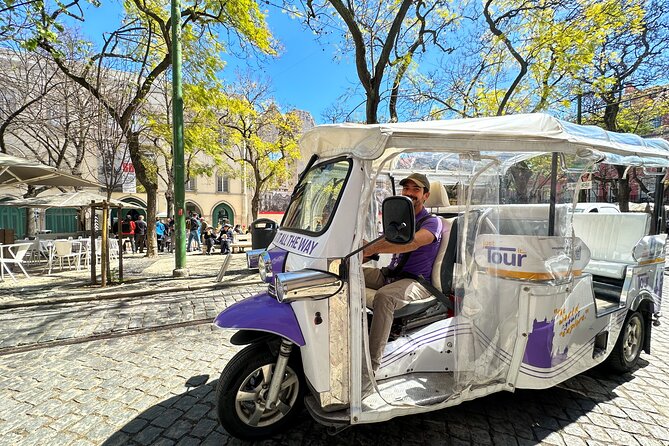
Lisbon has hills, curves, and a lot of “wait, slow down” moments. That’s where a tuk tuk tour makes practical sense. Instead of committing to endless walking, you’re riding comfortably while still getting frequent stops for photos and explanations.
I also like the pacing here. You’re not treated like a passenger staring out a window. The format is built around short segments where your guide gives you the story, you look around, then you move on. For a first visit, that “get the big picture quickly” feeling matters.
The drawback is simple: in four hours, you won’t have a long, museum-style visit at every paid stop. If you’re the type who likes to linger, you’ll want to choose a couple of ticketed highlights and skip the rest or plan a return trip later.
You can also read our reviews of more private tours in Lisbon



Meeting at Hard Rock Cafe and getting rolling in the center
You start at Hard Rock Cafe | Lisboa on Av. da Liberdade 2. That’s a great starting location because it’s central and easy to find, which reduces the usual first-day stress of “Are we late? Did we miss the meeting point?”
From there, the tour is designed to build Lisbon outward. You begin in the downtown zone—classic streets, plazas, and the architectural language that still carries the memory of the 1755 earthquake rebuild. Then you work toward the river and the Belém district with its monument-heavy sightseeing.
This also helps families. If your legs or attention span start to lag, the tuk tuk keeps the rhythm moving. And because it’s private, the guide can react to the pace your group needs instead of sticking to a rigid group flow.
Pombaline Lisbon and Chiado: the earthquake-rebuild story in motion
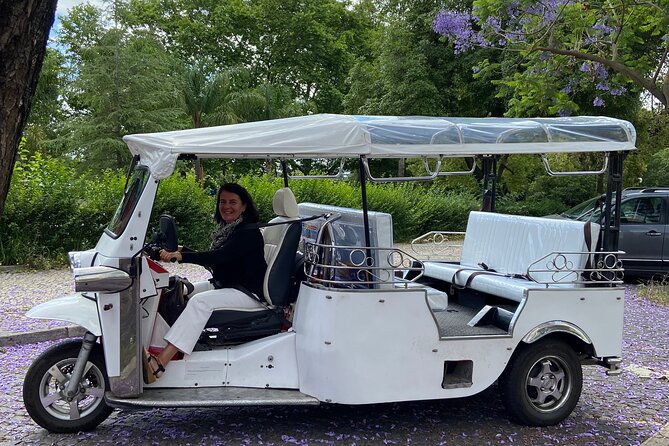
The tour starts by passing through downtown Pombaline and Chiado. That matters because Pombaline Lisbon is where you see the city’s post-1755 mindset—neoclassical planning, straight lines where you might expect chaos, and a rebuilt urban order.
One of the early “you’ll remember this” moments is Luís de Camões Square along the route of Largo das duas Igrejas. The square is pleasant and open, and the guide points out the famous Portuguese sidewalk style—geometric patterns and drawings that reference the sea, the mermaid, and the caravel. It’s the kind of detail you’d miss if you were just rushing through.
Next up is the area around Igreja de São Roque (Church of Sao Roque). Your guide gives context here, which is key. With churches in Lisbon, the exterior alone can look similar if you’re not sure what to look for. Hearing the curiosities and what makes this stop significant turns a quick pause into something more meaningful.
You then pass by the symbol-makers of Lisbon’s political and historical life. The stop at the Assembleia da República is brief, but it’s a strong marker—this imposing building is the legislative body of the Portuguese State. Even a few minutes is enough to feel how architecture signals authority.
Miradouros and gardens: São Pedro de Alcântara and Príncipe Real
Lisbon is built for viewpoints. The tour takes you to Miradouro São Pedro de Alcântara, with a short, clear timing window. Admission is listed as free, which makes it an easy win. Expect an imposing, high-up view that helps you understand the city’s layout fast—where the river sits, how neighborhoods stack, and why Lisbon feels both compact and dramatic at the same time.
Then you move to Jardim do Príncipe Real. This is another free stop and it’s one of those places that feels like real Lisbon life rather than just scenery. You get a chance to slow down, breathe, and watch the city’s temperature change as you move from busy streets to a calmer garden atmosphere.
These two stops also do something practical: they give you photo anchors. Once you’ve captured the viewpoint, everything you see afterward makes more sense. It’s the kind of mental map-building that makes a later wander much easier.
Lisbon’s monuments in quick hits: Estrela, Eduardo VII, and Marquês de Pombal

The tour continues with a sequence of landmark architecture and city-significant spaces:
- Basilica da Estrela (15 minutes; ticket listed as free)
- Parque Eduardo VII (15 minutes)
- A stop to see the statue of Marquês de Pombal and learn why he matters
- Lisbon’s main avenue (commonly experienced as a major promenade-style approach through the center)
- Ending at Restauradores Square before you loop toward Rossio and the downtown core again
Basilica da Estrela is a good “look closer” stop. The guide highlights details and history, so even when you don’t go inside, you can still see what sets the building apart. Parque Eduardo VII is described as breathtaking, and this is the sort of green break that helps you reset after moving through denser streets.
Marquês de Pombal is more than a name on a statue. He connects to the rebuilding mindset tied to Lisbon’s recovery. If you’re trying to understand Lisbon’s story without turning the trip into a textbook, this is one of the right places to pause.
And yes, Lisbon’s main avenue is worth noticing even if you’ve seen “pretty promenades” before. It functions like a geographic spine for your day, and you’ll feel that when you arrive back near Rossio.




Rossio station, Carmo Convent, and Praça do Comércio by the river
The route brings you to Estação do Rossio, where the architecture is the point. The tour keeps this as a short stop, but it’s a perfect reminder that in Lisbon, transport hubs often serve as landmark buildings, not just places to catch a tram.
Then comes one of the tour’s emotional anchors: Convento do Carmo. This stop is not included in the ticket list, so think of it as optional-pay time if you want to go in. The construction dates back to 1389, driven by the religious devotion of D. Nuno Álvares Pereira. The guide also frames the site’s dramatic place on the hill opposite Castelo de S. Jorge and notes that it once rivaled major cathedral-level religious sites in Lisbon. That context makes the visit feel bigger than a quick landmark photo.
From there, you head toward the iconic riverfront mood at Praça do Comércio (Terreiro do Paço). This is one of Lisbon’s “stand and breathe” squares. It’s right next to the Tagus River, and the architectural feel here is tied to the earthquake rebuild story—neoclassical forms created after the 1755 catastrophe. Even a 10-minute pause is often enough to let your eyes catch up with the scale.
The tour also includes Elevador de Santa Justa as a short stop, with admission not included. Don’t worry if you don’t go up—seeing it from street level still gives you a clear sense of how Lisbon solves elevation with style.
LX Factory, the 25 de Abril Bridge, and Cordoaria Nacional
Lisbon isn’t only old stone and big monuments. This tuk tuk route also includes a modern creative break at LX Factory in Alcântara. It’s positioned as a commercial and artistic space, and it’s an easy change of pace if your brain is starting to overload on centuries-old landmarks.
Then you cross into the city’s engineering and naval history mood:
- The 25 de Abril Bridge, a road-rail suspension bridge over the Tagus connecting Lisbon (north bank) to Almada (south bank)
- Fábrica Nacional de Cordoaria (Cordoaria Nacional), a Portuguese Navy manufacturing establishment
These stops are more than “cool to see.” They help you understand that Lisbon’s identity isn’t only about kings and churches. It also lives in the way the city connects regions across the river and supports maritime industry.
If you’re thinking in terms of value, this portion is smart. It adds variety without demanding long museum time. Even a brief look can widen your sense of what Lisbon is beyond the postcards.
Belém: choosing your ticket highlights for maximum payoff
Belém is where Lisbon shifts into monument mode. The tour includes several big names here, and some are ticketed. The good news: you can decide how intense you want Belém to be.
Museu Nacional dos Coches (royal carriages)
Museu Nacional dos Coches is listed as not included, and the ticket is priced separately. It’s famous for a major collection of royal coaches and carriages from the 16th to the 19th centuries. If you’re into costume, design, and how power showed itself in everyday luxury, this is usually the kind of museum stop that makes the ticket cost feel justified.
Palácio de Belém (Presidential residence)
At Palácio de Belém, you get a short look at the National Palace, which serves as the official residence of the President of the Portuguese Republic. Admission is not included here. Even without a full visit, the stop works well because it ties Lisbon’s past to modern governance—another reminder that cities are living systems, not frozen scenes.
Jerónimos Monastery (the one you plan around)
Mosteiro dos Jerónimos is not included and listed with a separate ticket. Your time here is about 20 minutes. This is one of those moments where timing matters. If you want the best experience, you’ll likely want good shoes, a calm pace, and a willingness to focus on detail once you’re inside or near key points.
Centro Cultural de Belém and Museu do Combatente area
The tour includes Centro Cultural de Belém (CCB), also with admission not included. Next, there’s a stop linked with Museu do Combatente, focused on the Great War, overseas wars, peace operations, and aviation in the 19th century and XX among other topics. If you like museums that connect to broader world events, this block gives you that wider historical lens. If you don’t, it still offers a break from the densest monument crowding.
Torre de Belém and Padrão dos Descobrimentos
Torre de Belém is ticketed separately, with a listed admission fee. It’s described as a fortification in the parish of Belém. Next is Padrão dos Descobrimentos, a monument tied to the age of discovery theme. Both stops are longer-look moments (20 minutes each in the schedule), which is great because these are places where the visuals do a lot of storytelling.
Electricity Museum / Central Tejo (the modern twist)
The itinerary also includes an Electricity Museum connected to the former Central Tejo area, described as a museum belonging to the EDP Foundation installed in the old central plant. This is a smart add because it shows Lisbon evolving—how industry and energy history sit right beside older stone monuments.
Price and value: what your €174.22 is really buying
The tour price is $174.22 per person for about 4 hours. That might sound like a splurge until you look at what’s bundled: private transportation plus a private tour guide in English.
This is not a cheap ticket for a bus route. It’s a paid setup that gives you:
- a private vehicle (tuk tuk) instead of walking every segment
- guide explanations at each stop
- short, flexible photo pauses when you want them
Then there’s the ticket question. Several sights are explicitly listed as not included (with separate pricing), including Basilica and Convent of Nossa Senhora do Carmo, Padrão dos Descobrimentos, MAAT, Torre de Belém, Museu Nacional dos Coches, and Mosteiro dos Jerónimos. If you do all the ticketed highlights that are listed, expect the total extras to add up. The flip side is that many of the viewpoints and plazas are free to enjoy (like Miradouro São Pedro de Alcântara), so you can keep costs controlled by choosing only your top paid priorities.
My practical advice: treat the paid stops like a menu. Pick the one or two that would genuinely satisfy you if you only had time for two museum moments that day. The rest still give you plenty of payoff from the outside, from plazas, and from viewpoints.
Guides in English and private flexibility that saves your day
The private setup matters most when things change—weather, closures, and simple group needs. In the provided experience stories, guides such as Ricardo, Bernardo, Matthieu, Tomas, and Victor are named, and the common theme is clear: strong English explanations and a friendly, adaptable pace.
One of the most useful service notes is that a guide can shift based on conditions. For example, Mathieu is mentioned as sensitive to walking needs and able to use a Plan B if a location is closed on Monday. You shouldn’t assume every guide will handle every situation the same way, but it tells you what kind of touring style you’re paying for: calm problem-solving, not rigid marching orders.
If you want a smooth day with minimal walking, clear stories, and frequent chances to stop for photos, this format fits.
Should you book this Classic Lisbon & Earthquake Tour by Private Tuk Tuk?
Book it if you want a smart first introduction to Lisbon that mixes the earthquake-rebuild story in the center with the big Belém highlights. This is especially good if:
- you’re short on time and want a “greatest hits” orientation
- you’re traveling with kids or you prefer not to do long uphill walking
- you like photo stops and appreciate a guide who gives context at each stop
- you’re okay paying for a couple of ticketed monuments while enjoying many free viewpoints and plazas
Skip or swap to a different style if you’re a hard-core museum lingerer who hates time limits. In four hours, you’ll get great scope, but you won’t have hours inside every major site. Also, if you don’t want any extra ticket charges, you’ll need to plan which paid entries to skip.
If your goal is to get your bearings fast and leave Lisbon already understanding what you’re seeing, this is a strong buy.
FAQ
How long is the Classic Lisbon & Earthquake Tour?
It’s about 4 hours.
Is this tour private?
Yes. It’s a private tour/activity, meaning only your group participates.
What’s included in the price?
The price includes private transportation and a private tour guide. A mobile ticket is used, and the tour is offered in English.
Are entrance fees included?
No. Several stops list tickets as not included, including Convento do Carmo, Torre de Belém, Mosteiro dos Jerónimos, and Museu Nacional dos Coches. Many viewpoints and plazas are listed as free.
Where does the tour start and end?
It starts at Hard Rock Cafe | Lisboa (Av. da Liberdade 2, 1250-144 Lisboa, Portugal) and ends back at the meeting point.
What’s the minimum age for children?
The minimum age is 7, and children must be accompanied by an adult. Alcohol consumption is only for travelers over 18.