REVIEW · LISBON WALKING TOURS
Lisbon: The Jewish Sephardic Walking Tour
Book on GetYourGuide →Operated by TakingUThere · Bookable on GetYourGuide
Lisbon’s Jewish story is written in street-level clues. This 4-hour walk connects the lives of Portugal’s Jewish communities to real places you can still point to, starting at Shaare Tikva and continuing through the Alfama lanes. I love how the tour makes history feel local, with stops tied to how people lived, prayed, and survived.
My other favorite part is the guide: Paulo Levy blends Lisbon pride with Jewish history in a way that stays human. In a small group limited to 8, you get real back-and-forth, and the visit to the synagogue site doesn’t feel like a lecture—it feels like a guided look at meaning.
One consideration: this is a long walk on old streets, and it’s not suitable for wheelchair users or people with mobility or heart problems. Also, Lisbon synagogue sites can be picky about dress, so skip short skirts and sleeveless shirts.
In This Review
- Key highlights worth planning for
- Starting at Shaare Tikva: why this synagogue anchors the whole walk
- How the tour builds a timeline: from Exodus to Portugal’s changing rules
- The 1506 Massacre: learning the sequence behind the turning point
- Alfama and Rua de Judiara: why the neighborhood walk changes everything
- Key figures you’ll hear about: Abraham Anahory and Aristides Sousa Mendes
- What the 4-hour pace feels like in real life
- Small group size: why up to 8 changes the experience
- Price and value: is $165 worth it?
- FAQ
- FAQ
- How long is the Lisbon Jewish Sephardic Walking Tour?
- Where does the tour meet?
- How much does it cost?
- Is the tour guided, and what languages are available?
- Does the price include the synagogue entrance fee?
- Is there a lunch stop included?
- Do you need to buy synagogue tickets in advance?
- What should I wear?
- Is the tour suitable for wheelchair users or mobility impairments?
- Should you book this tour or skip it?
Key highlights worth planning for
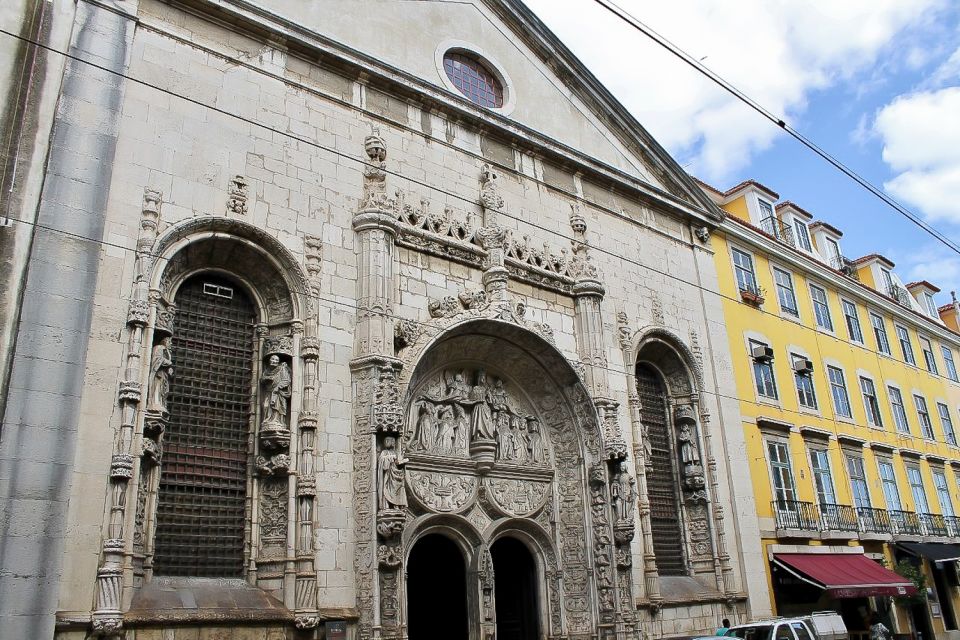
- Shaare Tikva synagogue visit with entrance fees included and ticket-line time saved
- Rua de Judiara in Alfama gives you a “you are here” feel for the neighborhood’s Jewish past
- Portugal’s Jewish legal status explained in clear, everyday terms, not just dates
- The 1506 Massacre story—how it began and what it triggered
- Memorable names and moments like Abraham Anahory and Aristides Sousa Mendes
- Small-group format (up to 8) that keeps questions welcome
Starting at Shaare Tikva: why this synagogue anchors the whole walk
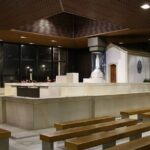
The meeting point is easy to find: in front of the Lisbon Synagogue at R. Alexandre Herculano 59, 1250-010 Lisboa. From there, the tour starts where it should—at Shaare Tikva, described as the first synagogue built in Portugal since the late 15th century. That fact matters because it marks a shift from the long, painful history of pressure and forced change toward a visible Jewish public life again.
Inside (or right around the visit area, depending on timing and flow), the focus isn’t just architecture. Your guide uses the synagogue to explain what community life meant—where identity showed up, what religious practice looked like, and how Portugal’s Jewish people navigated rules that were often written by others.
I especially like that the tour doesn’t treat the synagogue as an isolated building. It ties it to the wider city story: Portuguese Christians and Portuguese Jews sharing the same capital, sometimes in conflict, sometimes through legal and social frameworks, and always in the same geography.
You can also read our reviews of more walking tours in Lisbon
How the tour builds a timeline: from Exodus to Portugal’s changing rules
A big promise here is context, and the 4-hour format is long enough to do it without getting lost in details. The tour starts with the Jewish exodus from Egypt, then moves along a journey through lands, countries, and continents—framed as a kind of nomad experience. That’s not just mythic storytelling. It’s presented as a way to understand why Jewish communities could appear, disappear, and reappear in different places while carrying the same core identity.
Then you jump into Portugal—specifically the idea that, in the 12th century, the Kingdom of Portugal recognized the Jewish community as a distinct legal entity with its own jurisdiction. That single point can change how you see the whole story. Instead of thinking only in terms of tolerance or persecution, you start seeing systems: laws, permissions, protections, and limitations, all shifting over time.
The tour also keeps reminding you that belonging was complicated. The theme is that people could feel connected to their home while still being treated as separate. And that tension becomes more concrete as you move through Lisbon’s older quarters.
The 1506 Massacre: learning the sequence behind the turning point
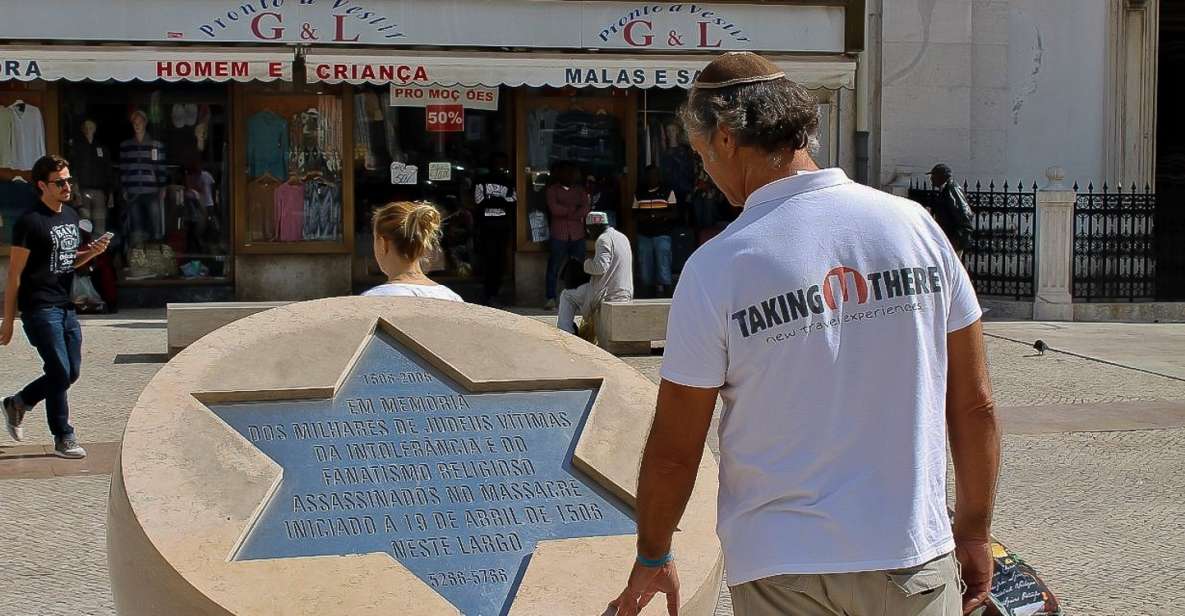
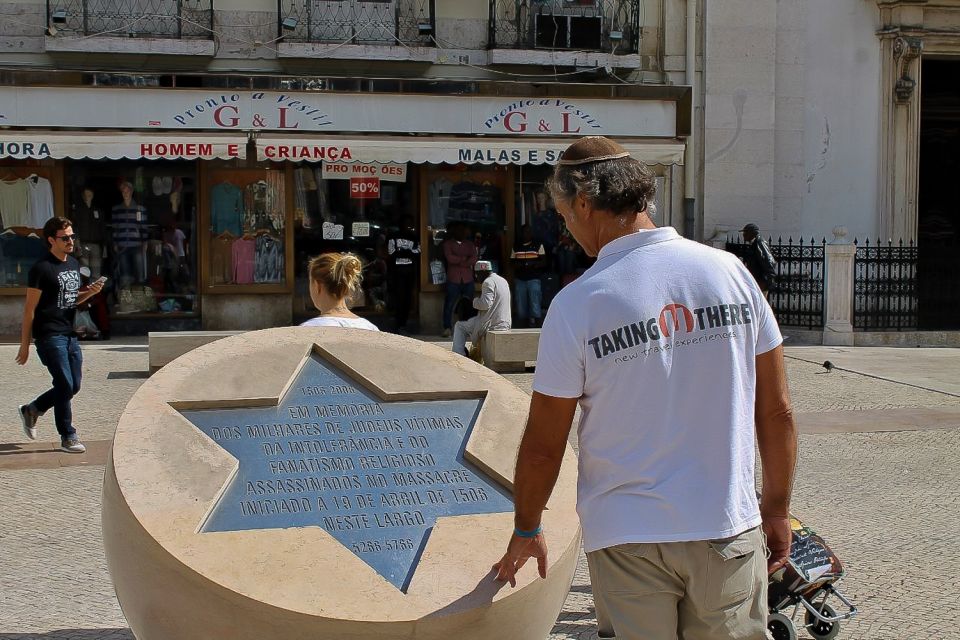
One of the most serious moments on the walk is the 1506 Massacre and how it started. The value here is the cause-and-effect approach. This isn’t only about tragedy as a headline; it’s about understanding the chain of events—what sparked violence, what conditions made it possible, and what came after.
I think this kind of stop is where a good guide earns their fee. You want someone who can explain without turning it into drama. The tour is described as story-led, with your guide connecting the massacre to the broader experience of Jewish life in Lisbon and Portugal at the time.
If you’re the type of person who likes to know why something happened before you move on, this is a strong section. If you prefer a lighter vibe, plan to treat this as the emotional pivot of the tour rather than a minor side note.
Alfama and Rua de Judiara: why the neighborhood walk changes everything
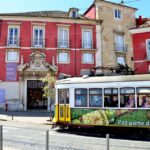
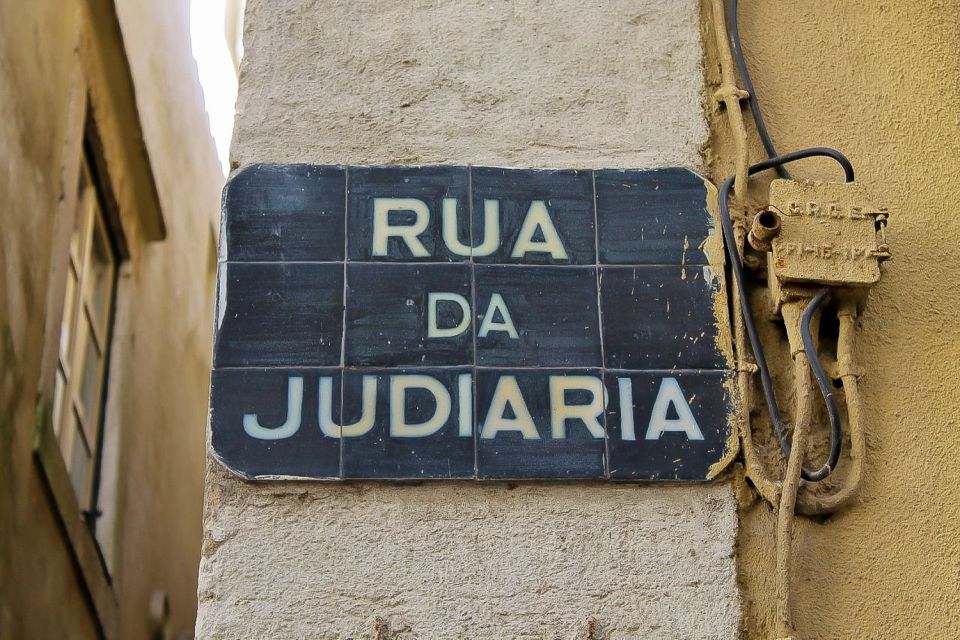
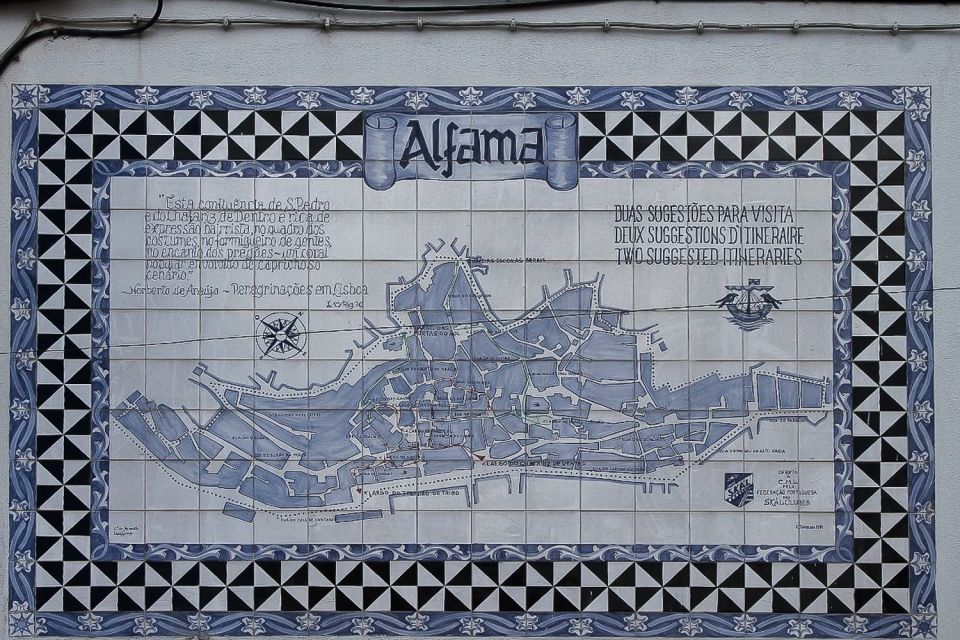
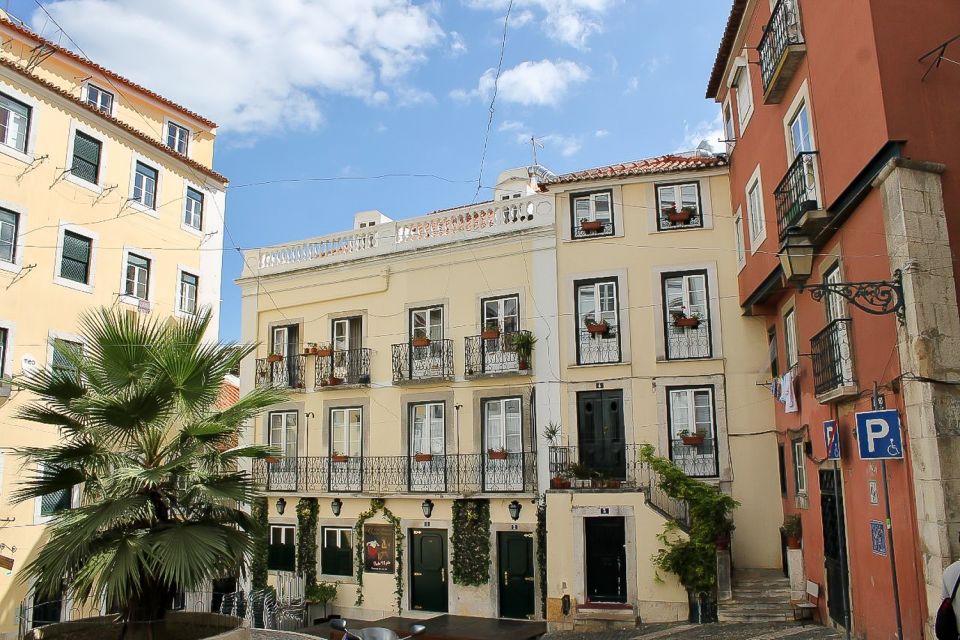
Then comes the part where Lisbon’s streets do the teaching. You walk down Rua de Judiara in Alfama, Lisbon’s oldest neighborhood. Even if you’ve toured Lisbon before, Alfama often feels like the city’s memory. Narrow lanes, old stone, and a sense that you’re walking through layered centuries.
What makes this part work is the way the guide ties street names and locations to the Jewish presence in the city. Rua de Judiara is presented as a direct pointer to where Jewish life was once concentrated. It’s the difference between reading about history and seeing how it lines up with real geography.
Also, the tour is described as covering sites of significance to both Portuguese Christians and Portuguese Jewish communities. That matters in Alfama. It helps you see Lisbon not as separate “chapters,” but as overlapping stories happening in the same spaces—sometimes close enough to feel uncomfortable, which is usually a good sign when you’re learning.
Key figures you’ll hear about: Abraham Anahory and Aristides Sousa Mendes
The tour doesn’t stop at medieval dates and building names. It brings in important people who shaped Lisbon’s story or helped people survive.
Two names highlighted are Abraham Anahory and Aristides Sousa Mendes, the Portuguese consul who saved thousands of Jewish refugees. Even if you already know one of these names, I like that they’re placed in the larger theme: Jewish community life wasn’t only about what happened to Jewish people. It was also about who helped them, who advocated, and who used influence when it mattered.
I’d expect you to come away with a more “human map” of the city. You’re not just learning institutions—you’re learning how individuals acted inside those institutions.



What the 4-hour pace feels like in real life
This is a walking tour, and it’s four hours long. That’s enough time to cover multiple significant stops, but it’s not a sit-down museum stroll. One caution from the experiences shared is that the walk can be challenging due to length.
So here’s my practical take: if you’re comfortable walking at a steady pace for half a day and you’re fine with older-city streets, you’ll likely enjoy it. If not, this tour may feel like work rather than discovery.
Comfort shoes are a must. Weather-appropriate clothing is also a good idea because Lisbon weather can shift fast. And since the synagogue has dress expectations, bring clothes you won’t regret in a quick check—no short skirts, no sleeveless shirts.
A note on logistics that matters for your time: entrance fees to Shaare Tikva are included, and the tour skips the ticket line. That’s a real convenience in Lisbon, where lines can eat up your day.
Small group size: why up to 8 changes the experience
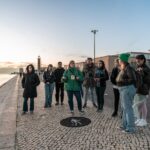
The tour runs as a small group limited to 8 participants, with a live guide in English and Portuguese. That size is a sweet spot. You can hear the guide clearly, you can ask questions, and you’re not just one of fifty faces drifting past a wall.
From what’s described, the guide style is story-driven and personal. Paulo Levy is singled out by name in multiple experiences, often for friendly, enthusiastic delivery and for connecting Lisbon’s modern identity to its Jewish past.
I also appreciate that the tour format supports questions about meaning, not only facts. When a guide can explain both the Portuguese side and the Jewish side without flattening either, you get a better sense of what the city has been through.
Price and value: is $165 worth it?
The price is listed as $165 per group up to 2. That sounds pricey until you think about two things: time and what’s included.
You’re paying for:
- a private guide for a small group tour
- a walking tour across multiple significant sites
- entrance fees to Shaare Tikva
- skip-the-line access at the synagogue
In Lisbon, a good guided experience can save you more than you’d expect. Ticket-line delays and guesswork about what you’re looking at can burn hours. This tour tries to protect your time while giving you someone to translate the city’s layered clues into clear stories.
So I’d frame value like this: if you want more than a “see the synagogue” stop—if you want a coherent timeline (including Portugal’s 12th-century legal recognition and the 1506 Massacre story) plus a neighborhood walk tied to Rua de Judiara—then $165 per group up to 2 can feel fair.
If you’re only after a quick photo stop, you can probably do it cheaper on your own. But if your goal is understanding, this tour is designed for that.
FAQ
FAQ
How long is the Lisbon Jewish Sephardic Walking Tour?
It lasts 4 hours.
Where does the tour meet?
It meets in front of the Lisbon Synagogue, R. Alexandre Herculano 59, 1250-010 Lisboa, Portugal.
How much does it cost?
The price is listed as $165 per group up to 2.
Is the tour guided, and what languages are available?
Yes, it has a live tour guide. The languages listed are English and Portuguese.
Does the price include the synagogue entrance fee?
Yes, entrance fees to Shaare Tikva (Lisbon Synagogue) are included.
Is there a lunch stop included?
No. Lunch and any other items are not included.
Do you need to buy synagogue tickets in advance?
No. The tour description says it skips the ticket line.
What should I wear?
Bring comfortable shoes and weather-appropriate clothing. Also, short skirts and sleeveless shirts are not allowed.
Is the tour suitable for wheelchair users or mobility impairments?
No. The tour is not suitable for people with mobility impairments and wheelchair users.
Should you book this tour or skip it?
Book it if you want a guided Lisbon walk that connects Jewish Sephardic life to specific locations—starting at Shaare Tikva, then walking through Alfama via Rua de Judiara—and you care about the “why” behind major events like the 1506 Massacre. The small group size and the focus on stories tied to real places makes it ideal if you like history that has a sense of geography.
Skip it if you can’t manage a longer walking route or if your situation limits mobility. Also skip it if you’d rather do a self-paced sightseeing day—this experience is built around a guide-led narrative, not quick, independent stops.
If you do book, pack comfortable shoes and dress synagogue-appropriate, arrive ready to ask questions, and treat the serious parts as part of the journey—not an interruption to it.