REVIEW · LISBON WALKING TOURS
Lisbon: Walking Tour in the Center (Max 12 Participants)
Book on GetYourGuide →Operated by WALK 'N' ROLL Tours · Bookable on GetYourGuide
Lisbon is best on foot, uphill and all. This 3.5-hour walk strings together Baixa, Chiado, Bairro Alto, and Alfama so you get a real feel for how Lisbon climbs and curves. I especially love the smart route that hits classic landmarks like Elevador de Santa Justa and the Carmo Convent ruins without turning it into a checklist.
What I like just as much is the small group size (max 12) and the lively German guiding, with names you may hear like Pedro, Sara, or Melina. The one thing to watch for is the physical side: you’ll be walking and going up and down hills, and it isn’t a good match if you have mobility challenges.
In This Review
- Key highlights worth planning for
- Why this Lisbon center walk is a smart way to start
- Getting your bearings at Rossio Square
- Baixa de Lisboa: the lower town that sets the stage
- A small practical note
- Santa Justa to Carmo Convent ruins: Lisbon after the grandeur
- Chiado and Praça Luís de Camões: poets’ streets and a softer pace
- Bairro Alto: residential lanes with nightlife nearby
- Where the guide shines
- Miradouro de São Pedro de Alcântara: the break with a payoff
- Rua Augusta: tiles, a quick food moment, and the river axis
- Alfama and the Tagus: the viewpoint that feels like Lisbon
- Ending at Praça do Comércio and Rua Augusta Arch
- Price and what you’re really paying for
- Who this tour fits best
- Should you book this Lisbon center walking tour?
- FAQ
- FAQ
- How long is the Lisbon walking tour?
- Where does the tour meet?
- What is the group size for the walking tour?
- Is the tour guided, and what language is it in?
- What sights and areas does the tour cover?
- Is the liquor tasting included?
- Does the tour include food?
- What should I bring, and what should I avoid?
- Is the tour suitable for wheelchair users or people with mobility impairments?
Key highlights worth planning for
- Tagus River viewpoints with that unmistakable Alfama overlook vibe
- Elevador de Santa Justa and Carmo Convent ruins in the middle of the story
- Chiado and Bairro Alto pacing that mixes old poets’ streets with nightlife-area lanes
- Praça do Comércio finish by the water, right at Rua Augusta Arch
- Liquor tasting included, plus a short stop along Rua Augusta
Why this Lisbon center walk is a smart way to start
If you’re new to Lisbon, it’s easy to wander the center and still come away with a fuzzy sense of how the city fits together. This tour is built to fix that fast. Starting at Rossio Square and moving through Baixa to Chiado, Bairro Alto, and finally Alfama, it helps you connect neighborhood names with what you actually see: lift architecture, monastery remains, tiled walls, and viewpoints over the water.
The other advantage is time. At 3.5 hours you get a concentrated loop of sights that would take longer to research and stitch together on your own—especially once you factor in the hills. The route is also paced with a real break (a 30-minute pause), not just constant motion.
Language matters too. The tour is guided in German, so if that works for you, you’ll get the full benefit of explanations and context. If you don’t speak German, you’ll want to plan for that—because the value here is the way the guide connects the dots.
You can also read our reviews of more walking tours in Lisbon
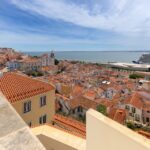


Getting your bearings at Rossio Square
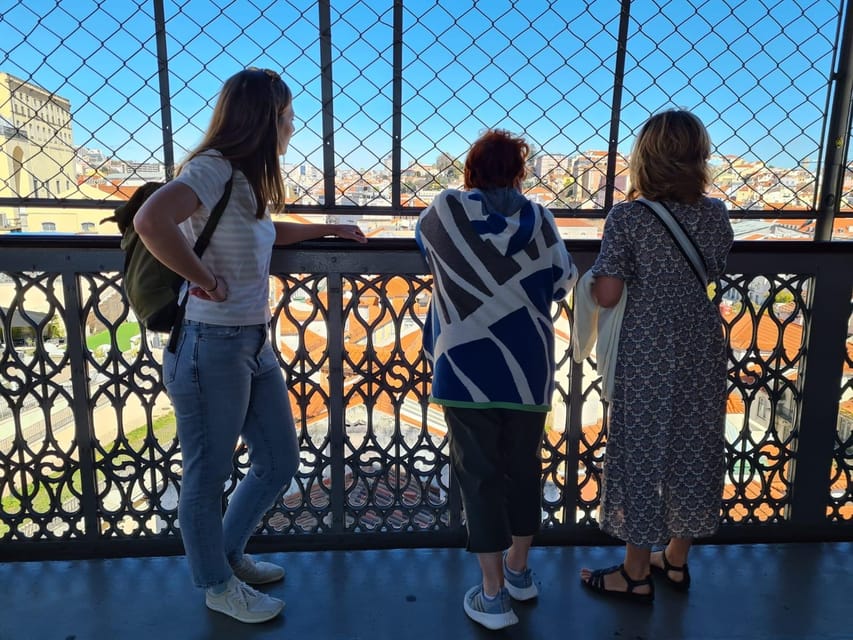
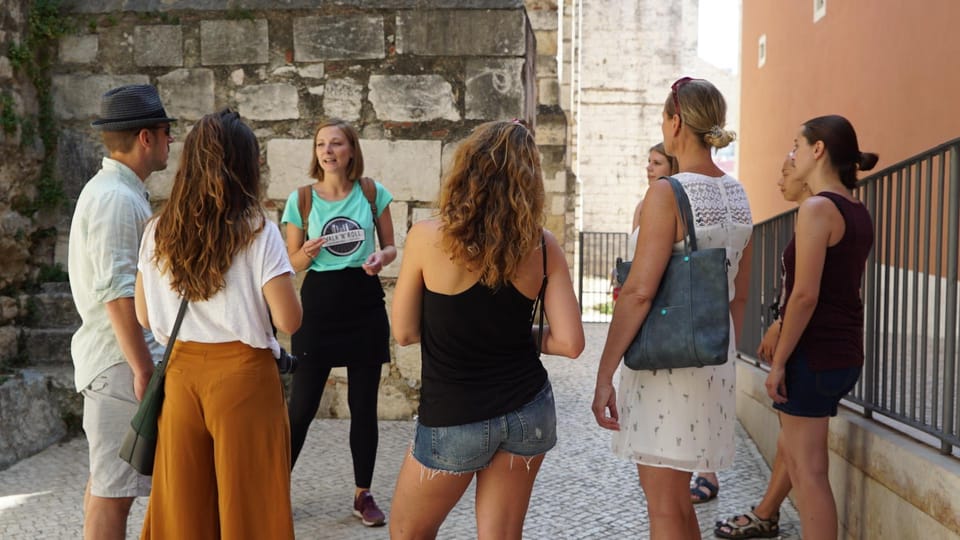
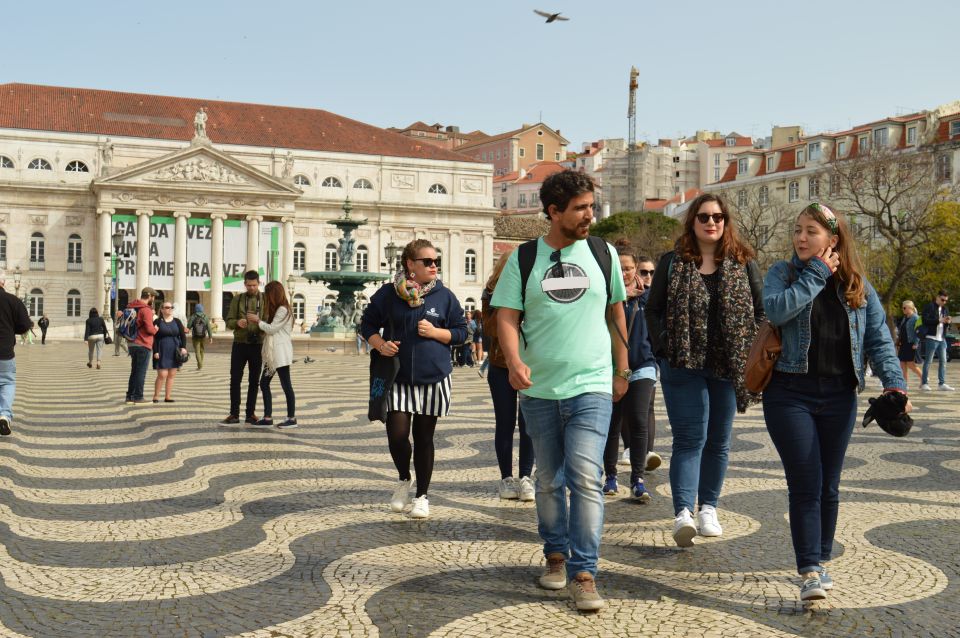
You meet at Rossio Square North Fountain, located between the National Theater and the Royal Statue, and your guide will be wearing a mint-colored WALK ’N’ ROLL t-shirt or carrying a mint burlap bag. This kind of meeting point is practical: Rossio is a central reference point, and it’s an easy place to orient yourself before the walking begins.
From here, the walk starts in the lower town, Baixa de Lisboa. That first stretch is useful because it sets your sense of direction and slope. Lisbon’s layout can feel like a jumble at first—until you start moving between levels and hills. This route makes that progression feel natural.
Baixa de Lisboa: the lower town that sets the stage
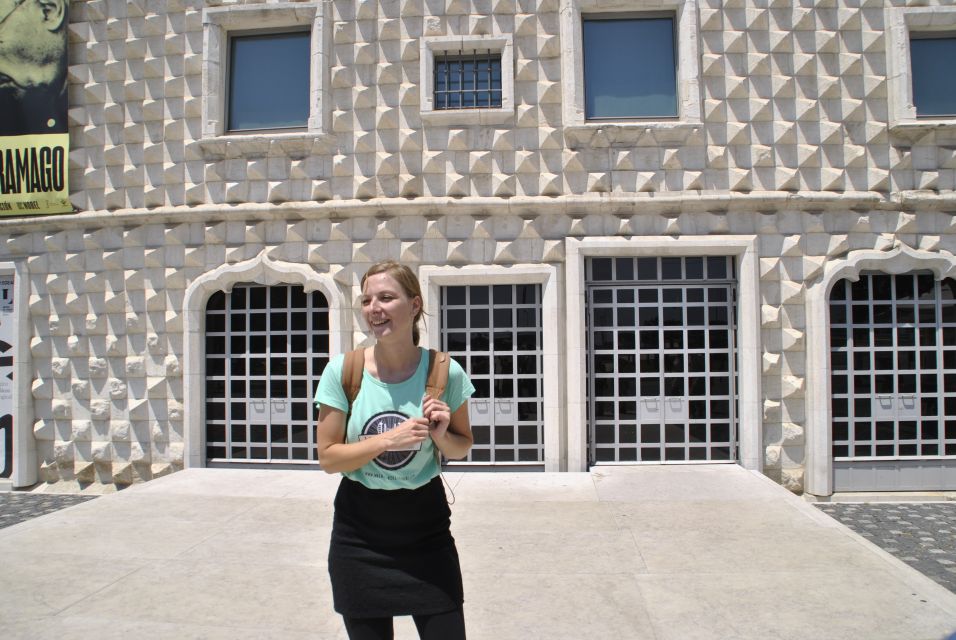
Baixa is where you’ll notice Lisbon’s classic city structure: more open squares, grand-looking facades, and a clear path system compared with the later alley chaos. On this walk, Baixa isn’t treated like a background. It’s your launching pad.
You’ll also see the famous Elevador de Santa Justa area. Even if you’re not focused on machinery, this lift is one of those landmarks you see in photos constantly—and it’s worth seeing in person because it’s a statement of design. The guide’s job here is to give you a sense of why this kind of infrastructure mattered in a city built on hills.
A small practical note
This is the part where good shoes pay off. You’re transitioning into areas where slopes and steps are part of the experience, not a surprise. Bring water and pace yourself.
Santa Justa to Carmo Convent ruins: Lisbon after the grandeur
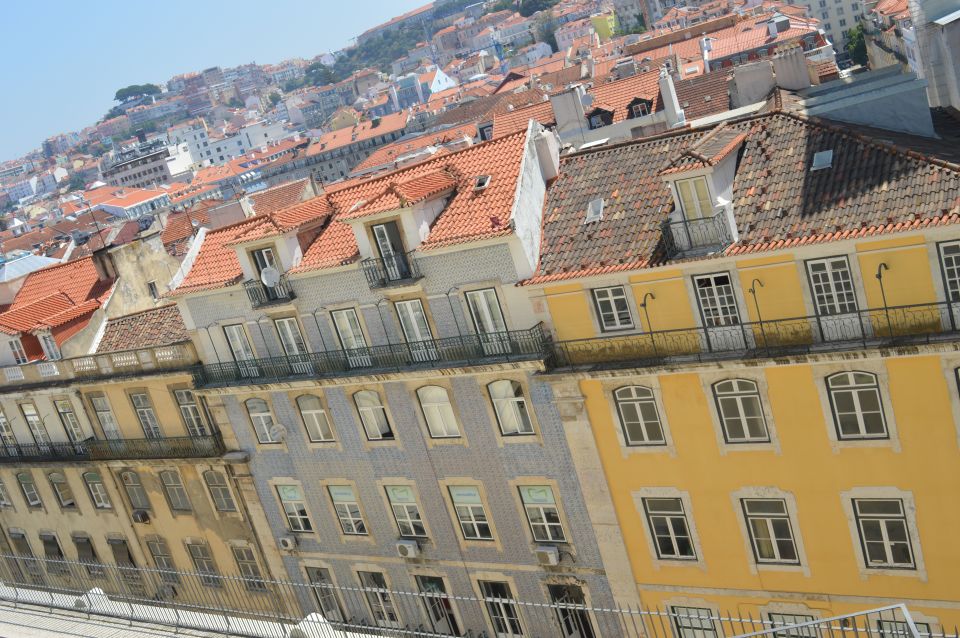
After the lift, the tour heads toward the Carmo Convent ruins. This is where the atmosphere shifts. The remains of the monastery create a visual contrast to the carefully designed streets around it. You get a sense of Lisbon not only as pretty postcard scenery, but as a city shaped by events over time.
The ruins also work well for photos and for understanding the city’s layers—because you’re not just looking at a single preserved building. You’re looking at what’s left and what that tells you about history and change.
One reason this stop earns its place is how it connects to views and angles. As you start moving upward and into the middle hills, the guide helps you notice how sightlines open up and how tile details and street layouts start to matter more.




Chiado and Praça Luís de Camões: poets’ streets and a softer pace

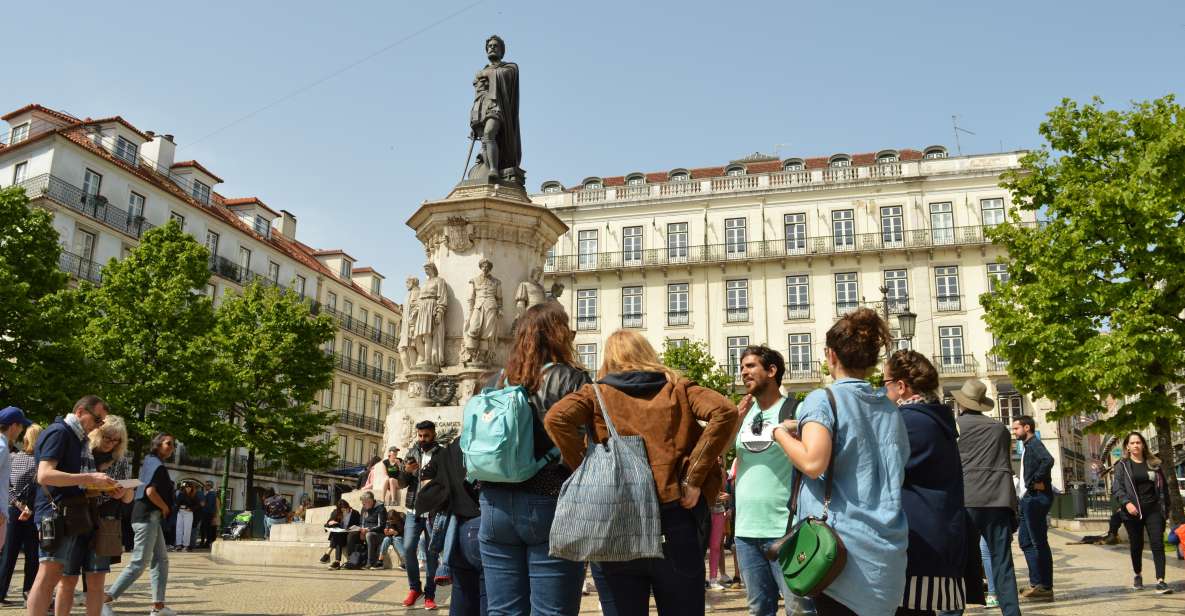
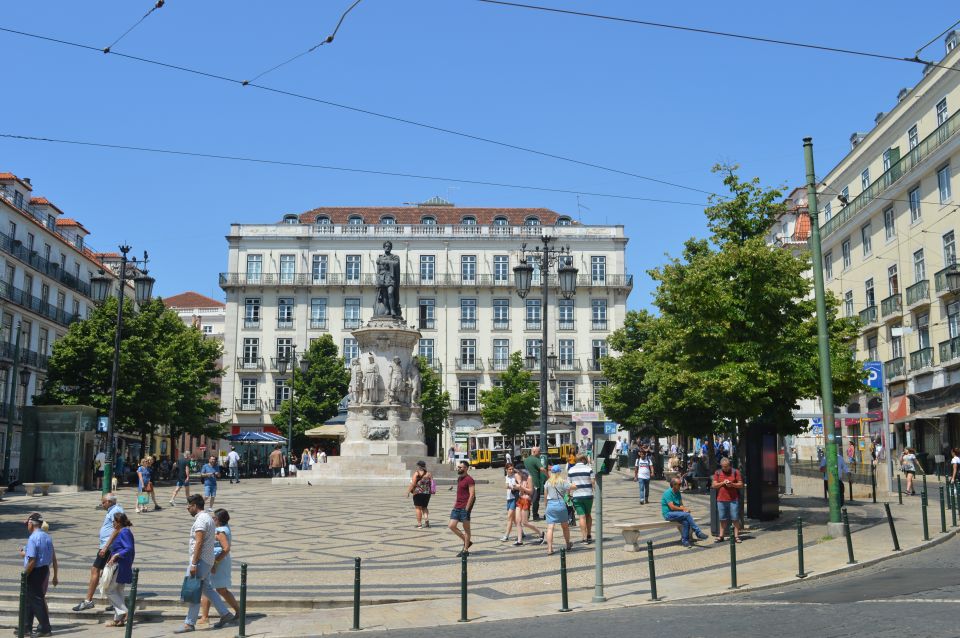
Next comes Chiado, described as the former poets’ quarter, with a stop at Praça Luís de Camões. Chiado can feel a bit more relaxed than the areas that come after it. The streets have their own rhythm: storefront energy, side lanes, and the feeling of a district that’s both residential and cultural.
This is also an important transition zone. You’re moving from the lower-town logic toward steeper streets and more dramatic neighborhood character. Chiado helps you step into that mood without going full steep-alley mode right away.
What I like about including this stop is that it gives your brain a chance to absorb details. You’re still in the center, but you’re starting to see Lisbon as a set of neighborhoods with personality, not just tourist sights.
Bairro Alto: residential lanes with nightlife nearby
Then the walk shifts into Bairro Alto, a residential and nightlife district. Even if you’re visiting in the daytime, the neighborhood’s personality shows up in how people use the streets—where the lanes lead, how shopfronts sit, and how the district holds its energy.
This section is especially useful if you want Lisbon to feel like a living city. You’re not only collecting views and monuments. You’re also learning how locals move through the center, even in areas famous for evening fun.
Where the guide shines
The guide’s value really shows here: you get context that makes the district feel less random. When you understand why a place has its reputation and what shaped it, you walk differently through the streets.
Miradouro de São Pedro de Alcântara: the break with a payoff
At Miradouro de São Pedro de Alcântara, the tour gives you a built-in 30-minute break. That matters more than it sounds. Lisbon walking tours often skip the recovery part, or they squeeze it into a snack stop. Here, you get time to sit, look out, and reset.
This viewpoint is one of those places where you can see how the city stacks up. It’s a good moment to pay attention to your surroundings rather than just power-walking to the next stop. If the weather is working against you, this is also where you benefit most from the break—because the tour runs rain or shine.
Rua Augusta: tiles, a quick food moment, and the river axis
After the viewpoint, the route heads toward Rua Augusta and then the finish area by the water. There’s a short food tasting stop mentioned for about 5 minutes. Since food isn’t listed as included, think of this as a brief sampling moment rather than a full meal replacement. In practice, you’ll still want to plan on eating outside the tour.
What makes Rua Augusta important is that it connects you to the river and to some of Lisbon’s most iconic visual language: the famous Lisbon tiles. You’ll pass tilework and classic streets that feel instantly recognizable, even if you’ve never been here before.
This is also a street that helps you understand Lisbon’s center as a corridor. You’re walking toward the river axis, and it gradually changes how the streets feel and how your orientation clicks into place.
Alfama and the Tagus: the viewpoint that feels like Lisbon
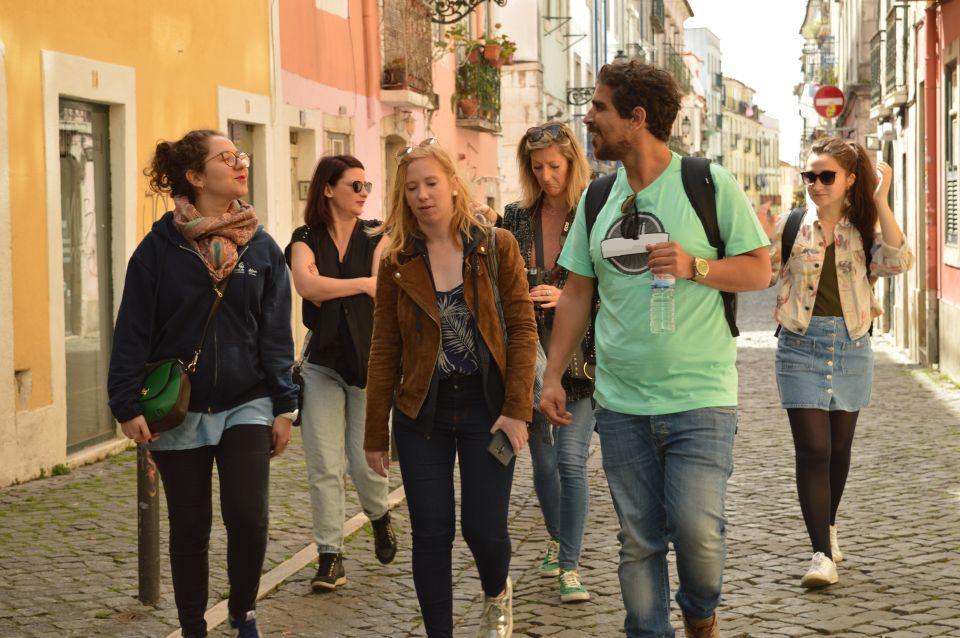
Finally, you reach Alfama, the romantic neighborhood people talk about for a reason. It’s not just a nice setting; it’s where you get the strongest sense of Lisbon’s hills and its relationship with the Tagus River.
In Alfama, the tour’s highlight is the iconic viewpoint overlooking the water. This is the payoff for all the walking ups and downs earlier. When you look out over the Tagus, Lisbon suddenly makes sense: the hills aren’t an obstacle. They’re the structure of the experience.
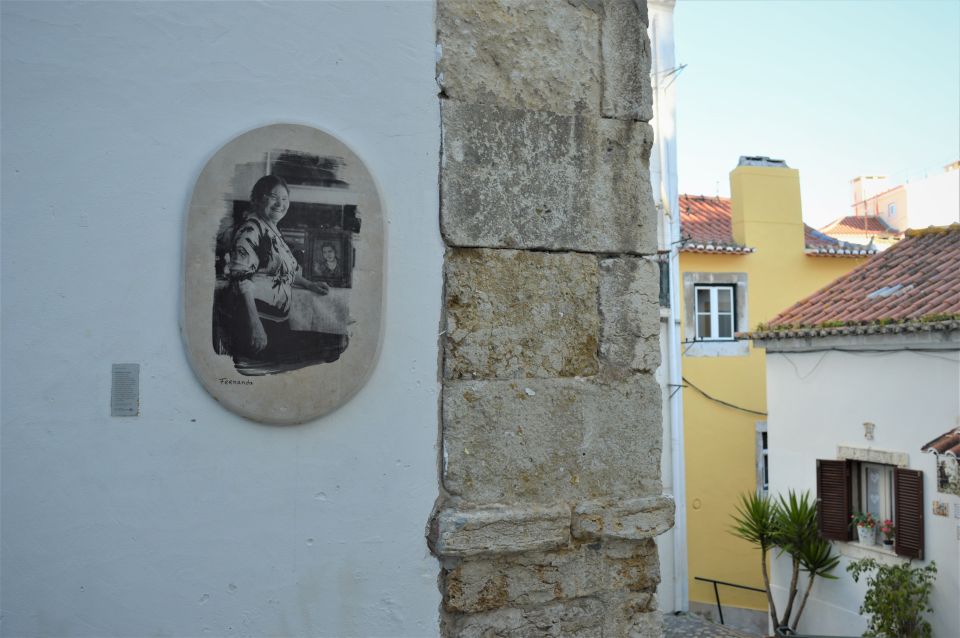
Tiles also return as a theme here. You’ll see those characteristic Portuguese tile details along the way, which help you appreciate the artistry of the city’s surfaces rather than treating everything as scenery.
Ending at Praça do Comércio and Rua Augusta Arch
The tour finishes at Praça do Comércio, right by the Tagus River, at the Arco de Rua Augusta area. This is a clean ending point because it’s open, bright, and easy to navigate from once the tour is over.
You’ll likely feel a shift at the end. Earlier, the streets are tighter and more angled. Near the river, the city opens up. That contrast is part of what makes a guided walk like this work: it turns a bunch of separate neighborhoods into one continuous story you can remember.
Price and what you’re really paying for
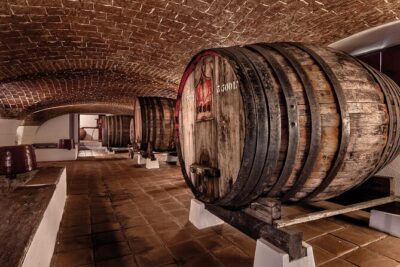
At $47 per person for 3.5 hours, this tour is priced for value if you care about getting context and seeing a coherent route. You’re paying for a live German guide, plus liquor tasting included. That liquor stop helps justify the guide-led approach, because it’s not something you’d naturally coordinate during a casual self-walk.
The bigger value, though, is efficiency. You’re seeing multiple central districts and landmarks—Santa Justa, Carmo Convent ruins, viewpoint time, and the Arco/Praça do Comércio finish—in one outing. If you tried to replicate this solo, you’d spend time figuring out best paths between hills and where to pause for views.
The trade-off is clear: you have to handle the walking. This isn’t a low-effort sit-and-glide tour.
Who this tour fits best
This is a strong match if you want:
- a small-group experience (max 12) in the Lisbon center
- a route that combines neighborhoods, viewpoints, and landmark context
- German narration that helps you make sense of what you’re seeing
It may feel less ideal if:
- you need step-free routes or wheelchair access (it isn’t suitable for mobility impairments and wheelchair users)
- you’re traveling with baby strollers or larger luggage (those aren’t allowed)
- you want minimal uphill walking (this includes hills and stairs)
One more thing: because it runs rain or shine, it suits people who don’t melt at wet sidewalks. Bring sunscreen and water anyway—Lisbon weather can turn quickly.
Should you book this Lisbon center walking tour?
I’d book it if you’re trying to get oriented fast and you like walking with a guide who explains what’s in front of you while you’re moving. The route hits major sights and viewpoints in a sensible order, and the small group size makes it feel like a real walk, not a stampede.
I’d skip it if comfort and accessibility are your top priorities, or if you’re hoping for a mostly flat stroll. With hills and limited suitability for mobility needs, your best bet is to look for a more accessible option.
If you do book it, do the simple prep: wear comfortable shoes, carry water, and plan for some uphill work. Then let the guide lead you from Rossio down to the river—one hill at a time.
FAQ
FAQ
How long is the Lisbon walking tour?
It lasts 3.5 hours.
Where does the tour meet?
Meet at Rossio Square North Fountain, between the National Theater and the Royal Statue. Your guide will be wearing a mint WALK ’N’ ROLL t-shirt or carrying a mint burlap bag.
What is the group size for the walking tour?
The group experience is limited to a maximum of 12 participants. A private option is also available.
Is the tour guided, and what language is it in?
Yes, it’s a live guided tour in German.
What sights and areas does the tour cover?
It focuses on Baixa, Chiado, Bairro Alto, and Alfama, including stops around Elevador de Santa Justa, Carmo Monastery ruins, viewpoints over the Tagus River, and ends at Praça do Comércio.
Is the liquor tasting included?
Yes, liquor tasting is included.
Does the tour include food?
Food is listed as not included. There is also a short food tasting stop mentioned for about 5 minutes, so check what’s covered when you book.
What should I bring, and what should I avoid?
Bring comfortable shoes, sunscreen, and water. Baby strollers are not allowed, and luggage or large bags are not allowed.
Is the tour suitable for wheelchair users or people with mobility impairments?
No. It’s not suitable for people with mobility impairments or for wheelchair users.