REVIEW · ALFAMA & OLD TOWN TOURS
Alfama and Mouraria Tour – The oldest neighbourhoods in Lisbon
Book on Viator →Operated by Hi Lisbon Walking Tours · Bookable on Viator
Lisbon reveals itself best on foot, up and down. This walk through Alfama and Mouraria strings together landmark squares, old churches, and classic viewpoints in a way that helps the city click fast. I especially like how it links the political heart near Praça do Comércio to the everyday street life of the old quarters, and how the stops keep turning into photo moments, not just statues. One catch: expect lots of uphill walking and steps, so bring good shoes and a calm pace.
You’ll also see a smart range of Lisbon layers: a Manueline-style house, the oldest church in the city, and the big Moorish-built drama of São Jorge Castle from the outside. Guides like Claudia, Walter, Tiago, and Hugo are the kind who keep you moving while still explaining what you’re actually looking at. If you hate hills or want frequent sit-down breaks, plan on taking it slow.
In This Review
- Key Highlights You’ll Feel on the Walk
- Walking the Old Heart of Lisbon: Alfama Meets Mouraria on Foot
- Start at Praça do Comércio and the Statue of D. José I
- Praça do Comércio’s Role: Why This Square Matters
- Church of St. Anthony and the Casa dos Bicos Stop
- Alfama Streets: The Climb That Turns Into Atmosphere
- Lisbon Cathedral: Old Faith and a Chance to See the City’s Age
- Panteão Nacional and the View-Forward Flow
- Miradouro das Portas do Sol and Miradouro de Santa Luzia
- São Jorge Castle: Moorish Roots and Big Perspective
- Mouraria: Fado Neighborhood Walking on Real Street Level
- Igreja de São Vicente de Fora and Finishing at Rossio
- Price and Value: Why This Walk Is So Cheap
- Timing, Weather, and What to Bring for a Hill-Friendly Day
- Guides Make the Difference: Claudia, Walter, Tiago, Hugo, Jose
- Should You Book This Alfama and Mouraria Walk?
- FAQ
- Where does the tour start and end?
- How long is the Alfama and Mouraria tour?
- Is the tour offered in English?
- Do I need a paper ticket?
- Are the stops ticket-free?
- Can I cancel for a full refund?
Key Highlights You’ll Feel on the Walk
- Small group size (max 20) helps the guide answer questions without losing momentum.
- Free-to-see stops (listed as ticket-free) keep the cost down, but you should still expect some sites may have paid areas.
- Orange-umbrella meeting point makes it easier to spot your guide at the start.
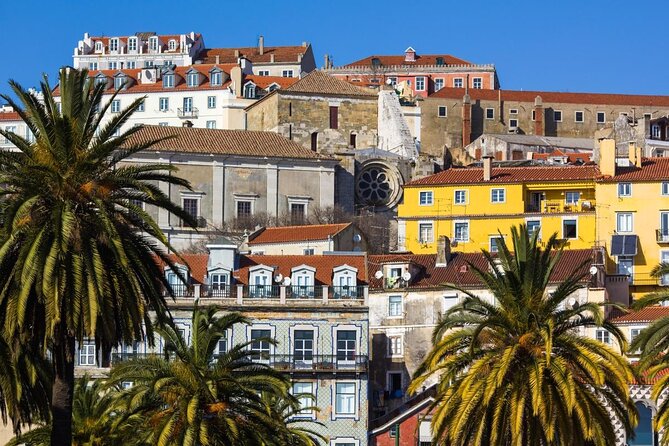
- Two major viewpoints on this route help you understand Lisbon’s layout, not just its monuments.
- Alfama plus Mouraria means you get both the postcard streets and the real fado neighborhood feel.
Walking the Old Heart of Lisbon: Alfama Meets Mouraria on Foot
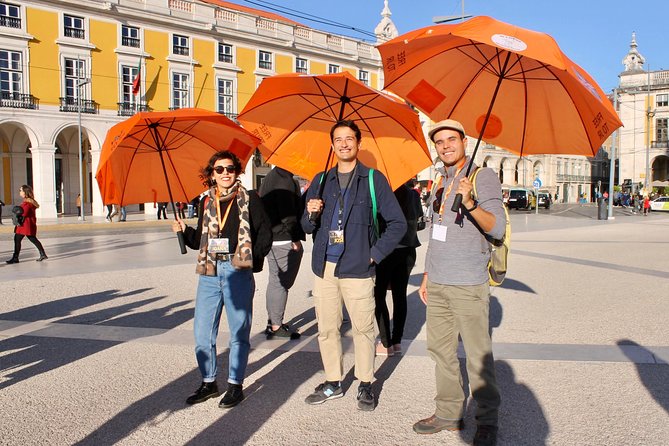
This is a classic Lisbon combo because it covers two neighborhoods that feel like they grew in different directions, then somehow stitched together over centuries. You’ll start near the wide, official Praça do Comércio and end in the lively Rossio area. In between, the city narrows, rises, and turns into a maze of lanes where you start to understand why Lisbon legends and everyday life share the same corners.
The best part is how the route is built like a story. You begin with Lisbon’s public face—squares and monuments—then shift into religion, architecture, and viewpoints, before finishing in Mouraria’s street-level energy. Along the way, your guide keeps pointing out what makes each area Lisbon, not just Portugal.
Plan for time spent on streets and stairs. Even with stops, the “about 2 hours 30 minutes” adds up because this is a hilly walk done properly, at a human pace.
You can also read our reviews of more tours and experiences in Lisbon.



Start at Praça do Comércio and the Statue of D. José I
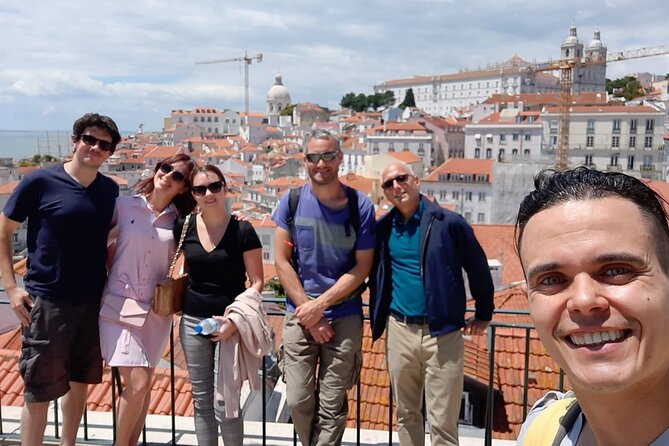
You kick things off at Praça do Comércio, Lisbon’s grand gateway square, with open space that instantly gives you orientation. This is an easy place to understand why the city’s old power sat close to the river-side gravity of trade and government.
The first stop centers on the statue of King José I of Portugal. It’s not just a monument photo moment. It’s a useful anchor for your brain: you’re starting with Lisbon’s official story before you wander into the older, more intimate streets that follow.
If you’re the type who likes to know where you are, this opening works. It helps you build a mental map early, so Alfama doesn’t feel like random climbing.
Praça do Comércio’s Role: Why This Square Matters
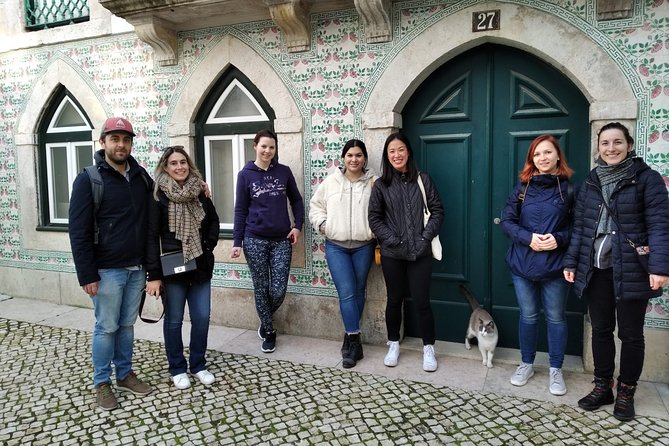
Prçca do Comércio isn’t famous just because it’s photogenic. It’s Lisbon’s reminder that the city’s old neighborhoods weren’t isolated; they connected to major institutions and movement.
You’ll spend only a short moment here, but it’s the right kind of stop—enough time to reset your bearings, then move on while the excitement is still high. The timing also helps if you’re traveling with limited stamina: you get the “big Lisbon” square early, before the steep lanes start taxing your legs.
Church of St. Anthony and the Casa dos Bicos Stop
After the square, the walk pivots into a more personal Lisbon mood: church architecture and older building styles. The Church of St. Anthony is tied to the birthplace story of St. Anthony of Padua, which adds meaning to what you’re seeing. Even if you’re not a big church person, it gives context for why this area feels spiritually layered.
Then comes Casa dos Bicos, an older house in Manueline style. Manueline architecture has that “Portuguese take on late medieval drama” vibe—detailed, decorative, and unmistakably Lisbon once you notice it. This is a stop that pays off because it changes what you look for on the rest of the walk. After seeing Casa dos Bicos, you start spotting design choices in nearby facades and doorways that you’d otherwise miss.
These two stops are also a nice speed-control. You’re moving, but you’re not just walking into slopes without breaks.
Alfama Streets: The Climb That Turns Into Atmosphere
Once you step into Alfama, it’s the kind of neighborhood you feel in your shoulders. Streets tighten, corners appear suddenly, and every turn can show a new angle of old stone. Alfama is where Lisbon becomes more intimate and slightly chaotic—in a good way.
The walk around Alfama is short on paper and long on experience. You’ll get enough time to slow down, take pictures, and notice the rhythm of local streets without getting stuck in one spot too long. If you come in expecting a clean, curated street walk, Alfama corrects that. It’s real city fabric.
This is also where the uphill reality shows up most. One of the most repeated themes from people who’ve done this walk is that it’s a workout. The pace is managed with stops, but you still want comfortable shoes and a water plan.

Lisbon Cathedral: Old Faith and a Chance to See the City’s Age
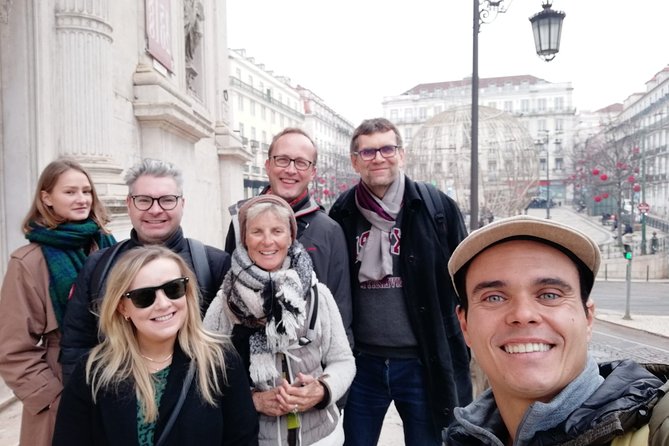
Next up is Lisbon Cathedral, described as the oldest church in Lisbon. Whether you go inside or not, the outside viewing helps you understand why this area kept mattered over centuries. Cathedrals like this sit where older religious and civic life kept returning.
One important practical note: while the tour lists stops as ticket-free, some historic sites can have paid entry areas depending on what you want to see. I’d treat that as a possibility rather than a surprise. If you care about going inside fully, check on-site signage so you’re not caught off guard.
Panteão Nacional and the View-Forward Flow
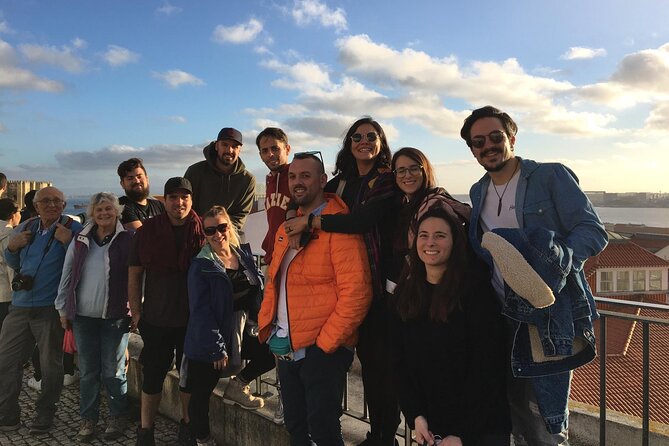
The route then includes Panteão Nacional, the National Pantheon of Lisbon. It’s a different kind of “old Lisbon” than a street or church lane—it feels more monumental and ceremonial, like the city chose to honor key figures with architecture that says, remember this.
Right after that, the tour leans hard into views. That’s the smart design: after you’ve walked through dense streets and big religious architecture, you need a visual breather. Viewpoints give your legs a micro-rest and your eyes a huge payoff.
Miradouro das Portas do Sol and Miradouro de Santa Luzia
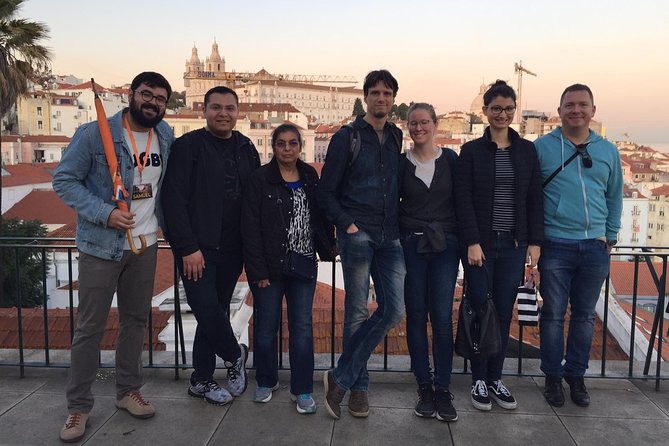
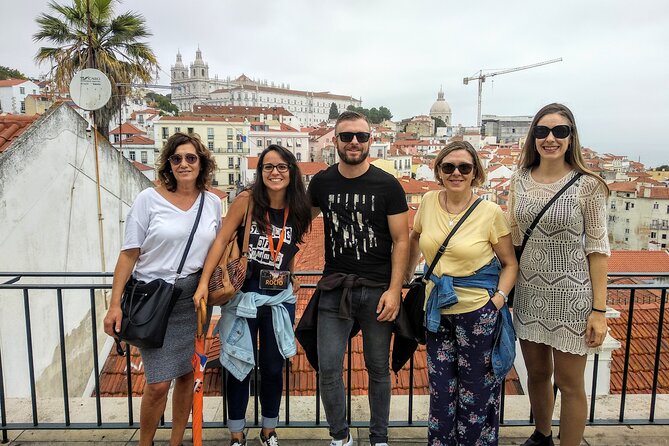
Two viewpoints anchor the climb and make the route easier to remember. Miradouro das Portas do Sol is one of those places where you understand why Lisbon postcards exist. From here, the city’s layered roofs and steep geography make sense as a whole system, not disconnected neighborhoods.
Then you head to Miradouro de Santa Luzia, which is often the kind of viewpoint people find charming in a softer, slower way. Together, these two spots do more than provide photos. They explain the city’s up-down structure that drives everything else about Lisbon.
If it’s hot or bright, you’ll be glad the viewpoints are part of the schedule. They function like intentional pauses, not random stop-and-go.
São Jorge Castle: Moorish Roots and Big Perspective
The tour includes Castelo de São Jorge, described as the old castle built by the Moors in the 8th century. Even in a short visit, the castle’s setting changes your entire sense of Lisbon. It sits like a seat of power over the old quarters below.
The tour also keeps the time realistic. You’re not stuck there forever, and you still get out to enjoy Mouraria afterward. Still, castle entry can sometimes involve fees for certain areas, even if a route lists things as ticket-free. If you’re the type who must go inside, plan a small budget for that possibility.
Mouraria: Fado Neighborhood Walking on Real Street Level
After the castle viewpoint energy, the walk shifts toward Mouraria, often called the birthplace neighborhood tied to fado. The streets here feel more grounded—less about grand monument framing and more about the everyday story of people moving through narrow lanes.
You’ll spend time walking around the area, and this is one of those moments where Lisbon stops feeling like sightseeing and starts feeling like you’re passing through a living neighborhood. It’s also where the guide’s commentary really helps, because Mouraria can look like any old street maze unless someone points out what to pay attention to.
Keep your eyes open for small details. If you only look at big landmarks, you miss why Mouraria feels Lisbon rather than just old.
Igreja de São Vicente de Fora and Finishing at Rossio
The route ends with Igreja de São Vicente de Fora, a church built in honor of St. Vincent. Even if you don’t go inside, it’s a fitting closing stop because it keeps you in the “old Lisbon” thread: religion, architecture, and history that shaped the neighborhood life around it.
From there, the tour finishes around Rossio Square. Rossio is a good exit point because it’s central and easier to connect onward—food, transit, and the next part of your day.
Price and Value: Why This Walk Is So Cheap
At about $1.25 per person, this is priced like a snack, not a sightseeing event. The value isn’t just the low number—it’s that the route stacks meaningful stops without forcing paid admissions at every turn.
Most of the listed stops are marked as free to visit, which keeps your budget predictable. But do keep one practical mind-set: historic sites can have paid sections, and one participant had issues finding the guide and later ran into paid entry for the cathedral and castle. That doesn’t mean the tour is misleading—it means Lisbon’s attractions sometimes have optional paid parts. If you care, check signage for what costs once you arrive.
The duration—about 2 hours 30 minutes—is also a value factor. You’re not burning half a day on logistics. You’re getting enough coverage to understand Lisbon’s geography and old quarters without needing a full-day commitment.
Timing, Weather, and What to Bring for a Hill-Friendly Day
This tour requires good weather, so build flexibility into your Lisbon plan. If rain hits, you’ll likely get a different date or a refund offered.
For comfort: wear shoes with grip and expect stairs. The route includes multiple uphill sections, and several guides are known for setting a pace that tries to keep the group comfortable. Still, uphill walking is uphill walking.
Bring a water bottle. Sun can be intense, and even short viewpoint stops feel longer in heat. A hat helps. If you’re sensitive to walking time, plan for breaks during viewpoints rather than pushing through.
Guides Make the Difference: Claudia, Walter, Tiago, Hugo, Jose
This tour lineup seems to attract guides who care about both history and how to keep a group moving. Names that show up include Claudia, Walter, Tiago, Hugo, and Jose—each with a style that leans toward storytelling.
What I like about this kind of guiding is that it turns locations into understanding. Walter’s style, for example, tends to give you context that makes Alfama and Mouraria feel connected rather than two separate attractions. Tiago and Hugo are often praised for pacing, friendliness, and making sure the group can handle the walk without falling behind.
One thing to watch: the tour’s start is tied to finding your guide at the meeting point. Look for the guide with the orange umbrella. If you arrive late or from the wrong side of the square, it can turn into stressful guesswork. Do yourself a favor: arrive early, use your phone map, and be at the exact start point before the scheduled start.
Should You Book This Alfama and Mouraria Walk?
Book it if you want a fast, guided way to understand Lisbon’s older neighborhoods. It’s ideal as a first Lisbon walk or as a middle-of-trip reality check after you’ve seen the big postcard sights. The price is hard to beat, and the mix of squares, churches, Manueline architecture, and viewpoints helps you see Lisbon as a system.
Skip it or choose a gentler plan if hills and steps are a deal-breaker. You’ll be walking uphill and dealing with stairs, and there are limited chances to fully rest during the guided explanation.
Also consider booking if you like meeting local-minded guides and getting practical pointers. This route tends to give you enough orientation to keep exploring on your own afterward—especially once you’ve learned where Rossio sits in relation to the old quarters.
If you’re ready for a leg workout and you want your Lisbon to feel real fast, this one is a strong bet.
FAQ
Where does the tour start and end?
It starts at Praça do Comércio (1100-148 Lisbon, Portugal). The tour ends around Rossio Square (Praça do Rossio, 1100-200 Lisboa, Portugal).
How long is the Alfama and Mouraria tour?
It runs for about 2 hours 30 minutes.
Is the tour offered in English?
Yes. The tour is offered in English.
Do I need a paper ticket?
No. It uses a mobile ticket.
Are the stops ticket-free?
The stops are listed as admission ticket free, but some major historic attractions can have paid entry areas. If you want to go inside specific sites, double-check what costs once you’re there.
Can I cancel for a full refund?
Yes, you can cancel up to 24 hours in advance for a full refund.