REVIEW · LISBON WALKING TOURS
Lisbon – Small Group Walking Tour
Book on Viator →Operated by My Lisbon Tours · Bookable on Viator
Lisbon reveals itself in three easy hours. This small-group walk hits Baroque churches and Lisbon viewpoints with an English-speaking guide, with stops that make the city easy to picture.
I love how the guide links details to what you’re seeing in front of you, from the artwork in Igreja de São Roque to the meaning behind Largo do Carmo. I also like that the route is built for getting your bearings fast in central Lisbon, with plenty of time to look, listen, and take photos.
The only catch: plan for lots of walking on city streets, and if rain hits, you’ll want sturdy shoes and be ready for slower pace.
In This Review
- Key things this Lisbon tour does well
- Why this 3-hour Lisbon walk works as a first-time plan
- Igreja de São Roque: the Baroque church stop that sets the tone
- Bairro Alto, Bica, and Cais do Sodré: old Lisbon in real street form
- Trindade and the strange connections: faith, beer, and freemasonry
- Largo do Carmo and the 1755 earthquake lesson you can still see
- Santa Justa Elevator: a viewpoint break that helps you understand Lisbon
- Chiado: traditional stores and the Lisbon downtown heartbeat
- The world’s oldest bookstore and a Neo-Manueline station moment
- Largo de São Domingos and Igreja de São Domingos: religion, memory, and interior detail
- From historical squares to the pedestrian street near Santa Justa
- Praça do Comércio and Praça Dom Pedro IV: your Lisbon finish line
- Price and what you actually get for $39.78
- Should you book this Lisbon walking tour?
- FAQ
- How long is the Lisbon small-group walking tour?
- How much does the tour cost?
- Where does the tour start and end?
- What language is the tour offered in?
- What group size should I expect?
- Are food and drinks included?
- Is hotel pickup or drop-off included?
- Is there an entry fee for the stops?
- What if the weather is poor?
- FAQ
- Can I cancel for a full refund?
- Are service animals allowed?
- Does the tour allow children?
Key things this Lisbon tour does well
- Max 8 people keeps the experience personal and question-friendly
- Igreja de São Roque gives you top-tier Baroque church art in a short visit
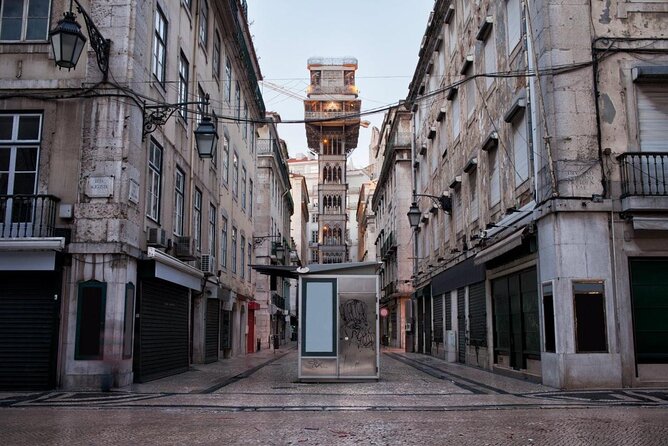
- Santa Justa Elevator area helps you see Lisbon’s layout and the Tagus from above
- Earthquake memory at Largo do Carmo ties 1755 to what you still see in the streets
- Bertrand Bookstore + Neo-Manueline station mixes literature with striking architecture
- Big finish at Praça do Comércio lands you in one of Lisbon’s most cinematic squares
Why this 3-hour Lisbon walk works as a first-time plan
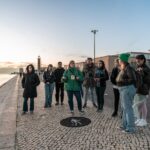
If you’re short on time, this is the kind of tour that makes Lisbon feel navigable. You start near Igreja de São Roque, then work your way through older neighborhoods and major squares, ending at Praça do Comércio. In about three hours, you cover a lot of “Lisbon energy” without needing to figure out every turn yourself.
The small group size (up to 8) matters more than you might think. In reviews, people highlight pacing and the chance to ask questions without feeling swept along. One guest praised Andriy for knowing when to add extra detail and when to keep the flow moving. Another loved Rui Fernandez for being friendly and patient, with a tour that stayed relaxed even when the weather turned.
At this price point, the value comes from focus: the route is built around recognizable landmarks plus the smaller stories that explain why those landmarks exist where they do. It’s not a checklist tour. It’s more like having a local-minded guide connect the dots for you as you walk.
You can also read our reviews of more walking tours in Lisbon
Igreja de São Roque: the Baroque church stop that sets the tone
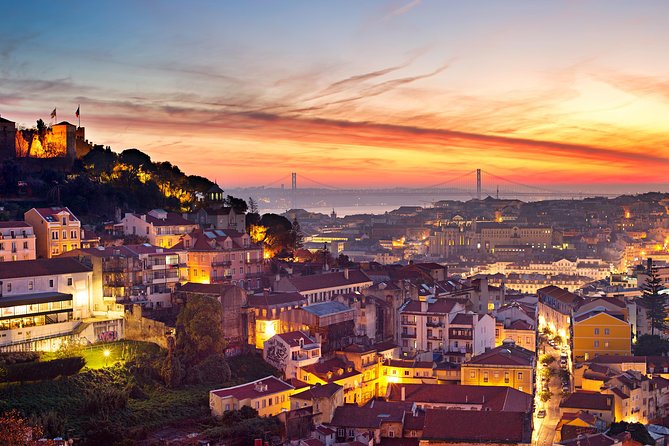
The first stop is Igreja de São Roque (Saint Roque). You’re not just doing a quick exterior peek. This is a guided visit to one of Lisbon’s standout churches, centered on Portugal’s artistic skill and some of the best examples of Baroque art in the country.
Why this works early in the tour: churches like São Roque are more than pretty buildings. In Lisbon, religious art, patronage, and local workshops shaped what you see in the streets for centuries. The guide’s role here is to make the visuals readable—so you understand what you’re looking at instead of treating it like a museum screen.
Practical tip: keep your camera ready. Even in short visits, the lighting and details inside can be photogenic. And because the stop is scheduled around 15 minutes, you won’t feel trapped waiting for a slow group.
Bairro Alto, Bica, and Cais do Sodré: old Lisbon in real street form
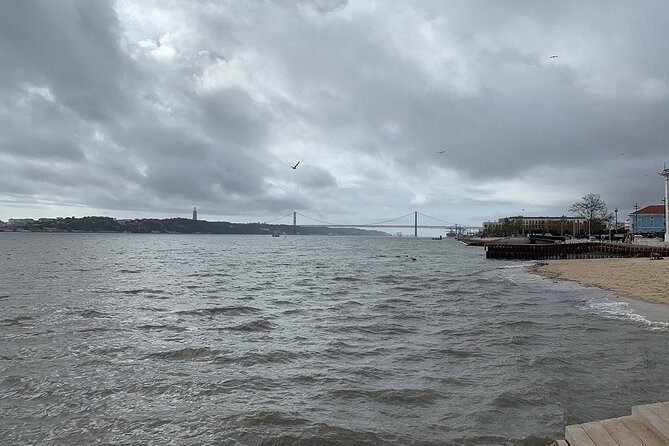
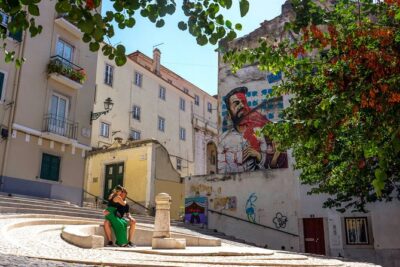
Next you move through Bairro Alto, Bica, and Cais do Sodré. This section is about atmosphere and topography—how Lisbon’s neighborhoods stack on hills and curve around daily life. It’s one of the more “feel it” parts of the tour, where a guide helps you read the street layout and connect it to older Lisbon.
Bairro Alto is known for being slightly eccentric and historically layered, and this walk is a chance to see that without needing a separate plan. You’re not just passing through; you’re navigating with commentary on what makes the area special.
If you like photos that show context—streets, balconies, stairways, and the angles between buildings—this is where you’ll want to slow down. Reviews mention that guides often keep an easy pace even on long days, and that downhills can make the walking feel manageable.
Trindade and the strange connections: faith, beer, and freemasonry
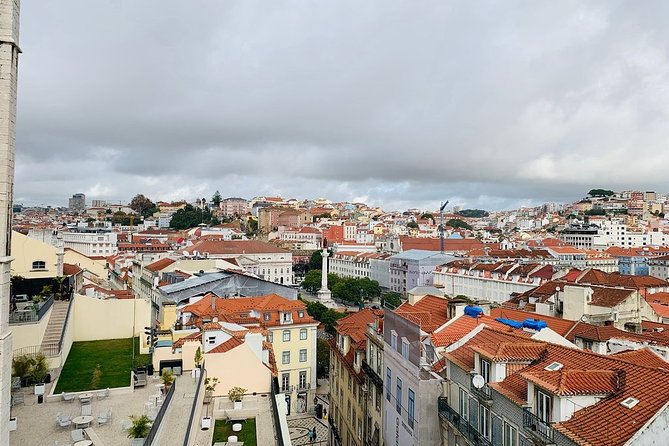
You then get a very quick stop in Trindade—about five minutes—but it’s memorable because the guide explains the connection between Catholic worship, beer, and freemasonry tied to a peculiar Lisbon restaurant area.
This is the kind of story that makes Lisbon feel like a living place. You start noticing how religion, social life, and local culture overlap. It’s also a good reminder that history in Lisbon isn’t locked behind dates. It shows up in odd details that a passing tourist usually misses.
Because the stop is short, treat it like a “story snapshot.” Ask questions if you’re curious. People in the reviews loved guides like Andre and Rui for being patient when guests wanted more background.
Largo do Carmo and the 1755 earthquake lesson you can still see
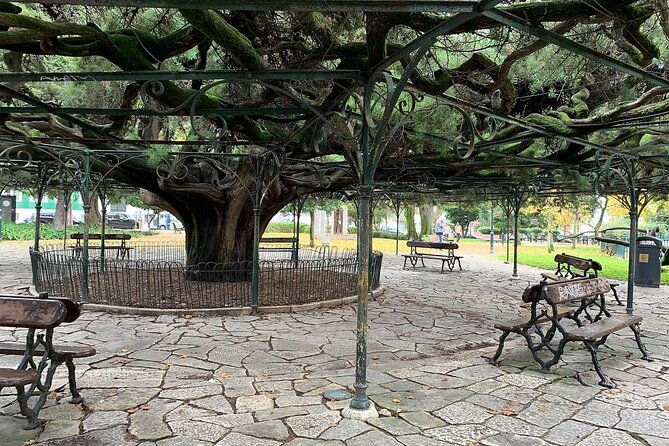
Then you reach Largo do Carmo, one of Lisbon’s more idyllic squares. Here, the focus is the Gothic ruins of the Carmelite Convent and how they connect to the earthquake of 1755.
This stop is valuable because it adds real-world meaning to a famous event. Instead of reading about the earthquake like a random textbook page, you’re standing where the evidence of the shock and the aftermath lives in the city.
One warning: ruins and squares often mean uneven surfaces and windier spots. If you’re filming or photographing, keep an eye on your footing and keep your layers light for sudden temperature swings.



Santa Justa Elevator: a viewpoint break that helps you understand Lisbon
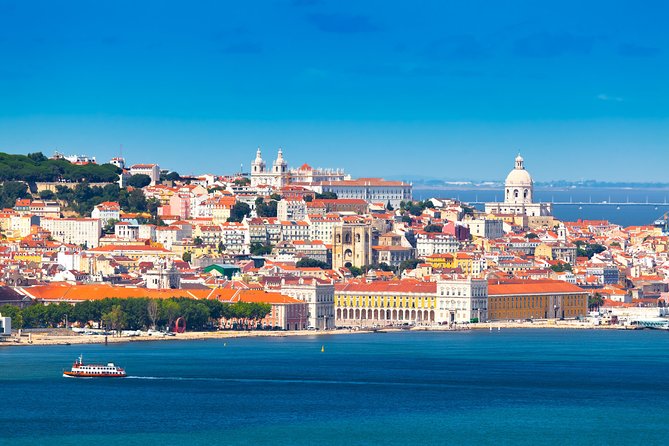
At Elevador de Santa Justa, you get time with one of Lisbon’s most iconic structures. The big payoff is the birds-eye look you can get over the city and toward the River Tagus.
Even if you’ve already seen photos online, seeing Santa Justa’s location in the city helps you understand why Lisbon’s skyline looks the way it does. The guide’s commentary matters here: viewpoints are more than scenic moments when someone explains what you’re actually looking at.
Reviews repeatedly mention beautiful views plus a clear sense of pacing—no frantic sprinting. That’s what you want from a walking tour: you should finish knowing Lisbon better, not just tired.
Chiado: traditional stores and the Lisbon downtown heartbeat
Next comes Chiado, known for having a large concentration of traditional stores and long-running businesses. This part of the tour shifts from monuments to daily Lisbon—shops, street rhythm, and that downtown feel that makes you want to wander after the tour ends.
This stop is a smart move because it balances the heavier historical sites with something more everyday. You see Lisbon as a place people work and shop now, not only as a set of preserved buildings.
If you like souvenir hunting, go easy here. The tour doesn’t include food or drinks, but it does tend to give you time to pause and look. Reviews mention that some guides even built in a break for coffee and a pastel de nata on the way—so if you have a pastry craving, this is often when it happens.
The world’s oldest bookstore and a Neo-Manueline station moment
After Chiado, you hit two culture-and-architecture treats.
First is the world’s oldest bookstore—a place that’s perfect for readers and anyone who likes tangible old-school Lisbon. It’s the kind of stop where you can browse for a few minutes and feel a connection between Lisbon’s present and its bookish past.
Second is a late-19th-century train station described as Neo-Manueline architecture. Even without a long stop, it’s a chance to notice how Lisbon uses style—ornament, color, and detail—to give civic buildings character. Stations in Europe are often ignored because people just pass through, but here you’re getting a moment to actually look.
What I love about pairing these two stops: you go from ideas (books) to design (architecture) in a way that feels natural while you’re walking. It also gives you variety. Not every stop needs to be a church or a square.
Largo de São Domingos and Igreja de São Domingos: religion, memory, and interior detail
Then the tour turns to two places tied to Lisbon’s darker moments and distinctive worship spaces.
At Largo de São Domingos, you learn about the Jewish massacre of 1506 that occurred in one of the city’s oldest squares, and you contemplate the memorial honoring victims of religious persecution. This stop adds depth that most “quick highlights” tours skip. It also frames Lisbon’s religious architecture in a broader human context.
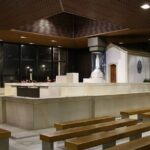
Next is Igreja de São Domingos, where you get the chance to visit one of Lisbon’s unique places of worship and admire the church interior. The interior visit is usually where your guide’s explanations really land—because you can’t understand the design intent without someone pointing you toward what to look for.
Practical tip: church interiors can be busy and echo-y. If the group gets quiet during explanations, it’s smart to position yourself where you can hear clearly—especially if you’re a little behind the front line.
From historical squares to the pedestrian street near Santa Justa
Between the churches and the finish, there’s time to admire historical city squares and step into the downtown pedestrian flow. You’ll stroll along a main walking street with coffee shops and historical businesses nearby, and you’ll also get a sense of how the Santa Justa Elevator fits into this broader urban corridor.
This part is useful because it turns the earlier “sights” into a route you can repeat later. By the end, you’re not just remembering names—you’re able to picture where they are in relation to each other.
If you’re the type who likes to keep exploring after a tour, take five minutes here. Walk a few steps away from the group, then look back. You’ll usually get a clearer mental map of Lisbon’s center.
Praça do Comércio and Praça Dom Pedro IV: your Lisbon finish line
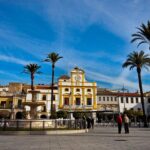
The tour ends at Praça do Comércio (Terreiro do Paço), a famous open square that’s huge on photo opportunities. Your guide connects the square to major Portuguese figures, including the Marquis of Pombal and the regicide of 1908.
Ending at Praça do Comércio is a smart design choice. After walking through narrow streets, churches, and hills, you’re rewarded with open space and wide views. It’s the kind of landing spot where Lisbon feels cinematic and easy to orient yourself.
Then you continue to Praça Dom Pedro IV, another key square in the Baixa Pombalina district. Here, you’re shown major attractions like the Queen Mary National Theatre and Opera house, plus the Tabacaria Mónaco and other local businesses.
Why this ending matters: once you reach these squares, you can quickly branch out on your own. You’re in the part of town that’s most connected for getting elsewhere—whether that means more cafés, museums, or just walking without a plan.
Price and what you actually get for $39.78
At about $39.78 per person for roughly 3 hours, this tour is priced like a solid “first-day value” option. What makes it feel fair is that it’s not just sightseeing; it’s guided interpretation across multiple districts.
You’re getting:
- A local guide and tour escort/host
- A small group (max 8)
- A route that includes major landmarks and story-heavy stops, many marked as free for admission at the scheduled points
- Time to slow down for viewpoints and photos, rather than rushing from one place to another
What you should budget for: food and drinks are not included, so plan to buy your own coffee or snacks if you want them. If you’re arriving hungry, you’ll likely want a break during the walk—some guides have been known to build that in, like the coffee and pastel de nata stop mentioned with Andre.
What you should bring:
- Comfortable shoes for streets and uneven surfaces
- A light layer for churches and windy squares
- A phone camera with battery charged, since the view from Santa Justa is a highlight
Should you book this Lisbon walking tour?
Book it if you want a structured, story-led way to learn Lisbon in one afternoon, without paying for lots of separate tickets or trying to piece together a route on your own. The small group cap helps, and the tour style shows up in reviews again and again: great pacing, lots of answers, and guides like Rui Fernandez and Andriy who keep the experience calm even when the weather isn’t perfect.
Skip it or rethink if you hate walking or you’re hoping for a mostly seated, low-footprint outing. This is a walking tour with real street time, and church interiors and squares can mean uneven ground.
If your goal is to get your bearings fast and leave with Lisbon stories you can repeat while you wander, this is a strong pick.
FAQ
How long is the Lisbon small-group walking tour?
It’s approximately 3 hours.
How much does the tour cost?
The price is $39.78 per person.
Where does the tour start and end?
It starts at Church of Saint Roch, Largo Trindade Coelho, 1200-470 Lisboa, Portugal. It ends at Praça do Comércio, 1100-148 Lisboa, Portugal.
What language is the tour offered in?
The tour is offered in English.
What group size should I expect?
The maximum group size is 8 travelers.
Are food and drinks included?
No. Food and drinks are not included.
Is hotel pickup or drop-off included?
No. Hotel pickup and hotel drop-off are not included.
Is there an entry fee for the stops?
The listed stops show admission ticket as free.
What if the weather is poor?
This experience requires good weather. If it’s canceled due to poor weather, you’ll be offered a different date or a full refund.
FAQ
Can I cancel for a full refund?
Yes. You can cancel up to 24 hours in advance for a full refund.
Are service animals allowed?
Yes, service animals are allowed.
Does the tour allow children?
Children must be accompanied by an adult.