REVIEW · CITY TOURS
Lisbon by Tuk Tuk Guided Tour: City of Neighborhoods
Book on GetYourGuide →Operated by Tejo Tourism - Guided Tours · Bookable on GetYourGuide
Lisbon hops fast when you ride a tuk tuk. This 1.5-hour guided circuit makes the city’s “seven hills” feel manageable, with a 100% electric vehicle that can thread through the tight old streets. I also like the way the history is handled by real Lisbon people—guides such as Eduardo and Sophia are known for turning landmarks into stories, not just stop-and-point facts.
The main trade-off is time. In a short visit you’ll see highlights, but you won’t have long enough to linger everywhere, especially in the most climb-heavy areas.
In This Review
- Key highlights worth your attention
- Riding an electric tuk tuk through Lisbon’s seven-hill layout
- Alfama: Fado streets, viewpoint energy, and real old-town texture
- Miradouros: Santa Luzia to Nossa Senhora do Monte panoramas
- Baixa de Lisboa squares and church facades after the 1755 earthquake
- Sé to Castelo: Moorish fortifications and the city’s defensive logic
- Feira da Ladra: a live slice of Lisbon street life
- Electric tuk tuk comfort and pacing in just 1.5 hours
- Price and value: $159 per group up to 3
- Where you start and where you end (and how that affects your day)
- Should you book this Lisbon by Tuk Tuk tour?
- FAQ
- How long is the Lisbon by Tuk Tuk Guided Tour: City of Neighborhoods?
- How much does it cost?
- Do you visit Alfama and Baixa de Lisboa?
- Where do I meet the guide?
- Can the tour pick me up from my hotel?
- What languages are offered for the live guide?
- Is there free cancellation?
- What transportation do they use?
Key highlights worth your attention

- Electric tuk tuk access: easier than walking for hopping between viewpoints and neighborhoods
- History that connects the dots: Age of Discoveries stories tied to what you’re actually seeing
- Miradouros for panoramas: Santa Luzia, Portas do Sol, and Nossa Senhora do Monte on one route
- Alfama + Fado atmosphere: narrow lanes and the local scene around Alfama’s bars and restaurants
- Old-city classics in motion: Praça do Comércio, Rossio, Sé de Lisboa, and Castelo de S. Jorge
- A real Lisbon moment: a stop at Feira da Ladra flea market life
Riding an electric tuk tuk through Lisbon’s seven-hill layout

Lisbon is built like it’s daring you to try. The center is stacked, the streets twist, and the best views are often on hills. A tuk tuk tour is a smart fit because it solves the hardest part: getting from Baixa up toward Alfama and back to viewpoints without turning your day into a stair workout.
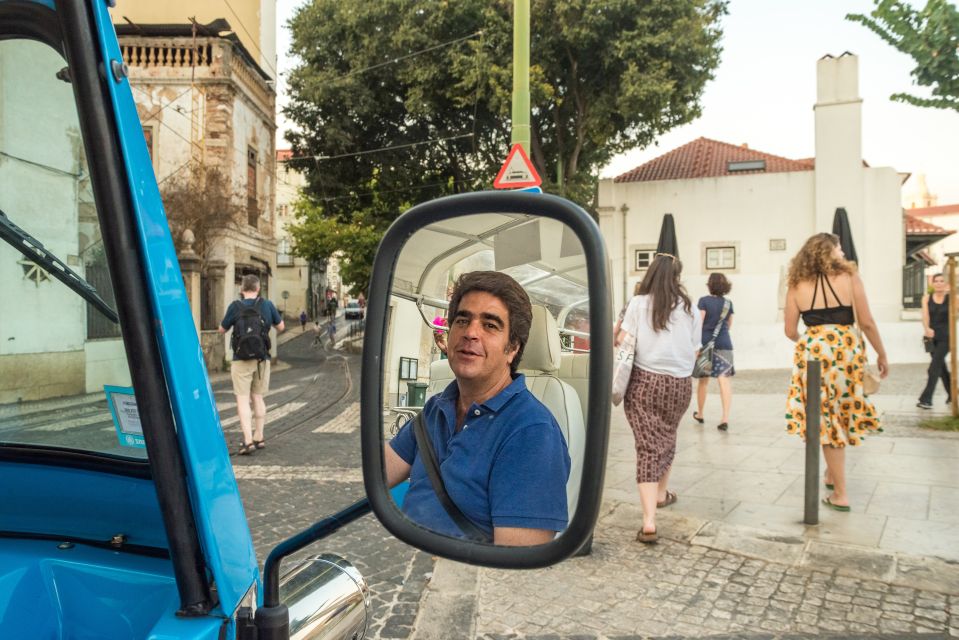
This one runs on a 100% electric tuk tuk, which matters in practical ways. The vehicle is designed for old-city navigation, so you get close enough to enjoy sights without wrestling with traffic and narrow lanes. It’s also a small-group experience, and the private group setup (up to 3 people) keeps things less rushed than big-bus tours.
You’ll also want to pick your travel style here. If you like a fast orientation and then want to return later on your own, this tour is ideal. If you want hours inside museums or a deep, slow neighborhood wander, you may feel slightly cut off by the time limits.
You can also read our reviews of more guided tours in Lisbon



Alfama: Fado streets, viewpoint energy, and real old-town texture
Alfama is where Lisbon feels most like Lisbon. The lanes are tight, the buildings are layered, and the neighborhood carries that smoky, late-night Fado vibe even in daylight. During the tour you’ll get a guided look here for about 45 minutes, which is enough time to understand the rhythm of the area and not just drive past it.
What I like about this stop is that it’s not treated like a postcard. You’re shown the “why” behind the neighborhood, with stories tied to Portugal’s past and the Age of Discoveries. Guides who’ve led this route—people like Bruno and Antonio—are praised for being professional, pleasant, and focused on Lisbon’s history and architecture, which changes the whole experience.
You’ll also be in the right place for atmosphere. Alfama is the heart of Lisbon’s traditional Fado bars and restaurants, and you’ll see those streets during the tour. Even if Fado isn’t on your schedule that night, you get the setting that makes it feel local instead of touristy.
Small consideration: Alfama’s charm comes with narrow streets. The tour’s tuk tuk format helps, but you should still expect some time standing and looking around at street level rather than a fully hands-off experience.
Miradouros: Santa Luzia to Nossa Senhora do Monte panoramas

Lisbon’s most useful sightseeing move is learning where the city reveals itself. That’s what miradouros are for, and this tour builds them into the route so you’re not searching for viewpoints on your own.
You’ll visit major lookouts, including Miradouro de Santa Luzia, Miradouro Portas do Sol, and then Miradouro Nossa Senhora do Monte. The last one gets a dedicated 15-minute sightseeing window. That’s a good amount of time for photos and for simply letting the city make sense—rooftops, river angles, and the “how did they build here?” feeling of the hills.
One thing to keep in mind: viewpoints can be windy or crowded depending on the time of day. Since your time at each miradouro is limited, aim to arrive ready to look, not to linger. If your guide suggests a quick photo spot or a best angle, take it. You’re on a schedule, and those small tips make a big difference.
Also, I like that the route doesn’t just toss you into one scenic stop. By stacking several miradouros, you get different angles of the same city, which is how Lisbon starts to click in your head.
Baixa de Lisboa squares and church facades after the 1755 earthquake

After you’ve climbed through the older textures, Baixa de Lisboa brings you back to the city’s organized spine. This part of the tour runs about 30 minutes with guided time, centered around squares and monuments tied to Lisbon’s rebuilding era.
You’ll see key public spaces such as Praça do Comércio and Praça da Figueira. Both are tied to how Lisbon reshaped itself after the devastating 1755 Lisbon Earthquake, and that context matters because it explains why the layout looks more geometric and intentional than the hillside neighborhoods.
You’ll also move through Rossio—the Praca Dom Pedro IV area with the famous black-and-white pavement. This is the kind of detail you’d normally walk past, but on a guided tuk tuk pass, it becomes a clue to how the city’s public life works.
The tour also includes church and cathedral facades as you travel through central areas, including Igreja de Santo António and Sé de Lisboa (Lisbon Cathedral). The takeaway here is not only what the buildings look like, but what they signal about Lisbon’s layers of belief, power, and identity.
Sé to Castelo: Moorish fortifications and the city’s defensive logic
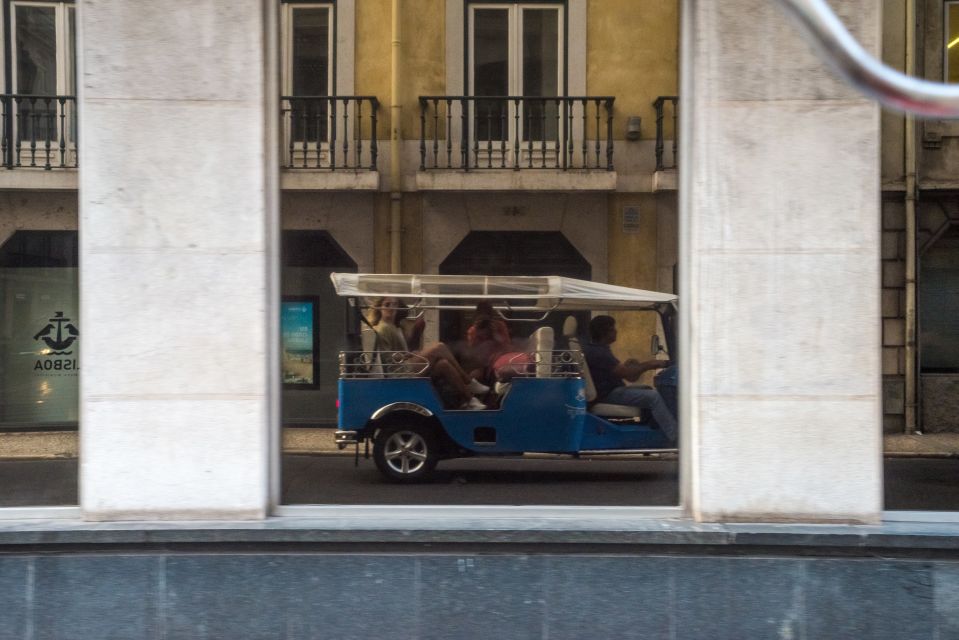
One of the most satisfying parts of Lisbon is seeing how the city defended itself, not just how it celebrated itself. As you drive past Sé de Lisboa, you’re also in the general zone of Lisbon’s earlier stronghold energy. Then the route continues toward Castelo de S. Jorge, where you can admire the defensive walls and fortification feel.
You don’t need to be a military-history enthusiast to appreciate this stop. It simply gives you a new lens. From the defensive perspective, Lisbon’s hills aren’t just scenic—they’re strategic. The fortified posture also helps you understand why Alfama’s streets grew the way they did.
A practical plus of the tuk tuk approach: you get viewpoints and exterior views without committing to a long hike every time the elevation changes. That’s valuable because the best spots on this route often require climbs you might not want to repeat later.
You can also read our reviews of more city tours in Lisbon






Feira da Ladra: a live slice of Lisbon street life
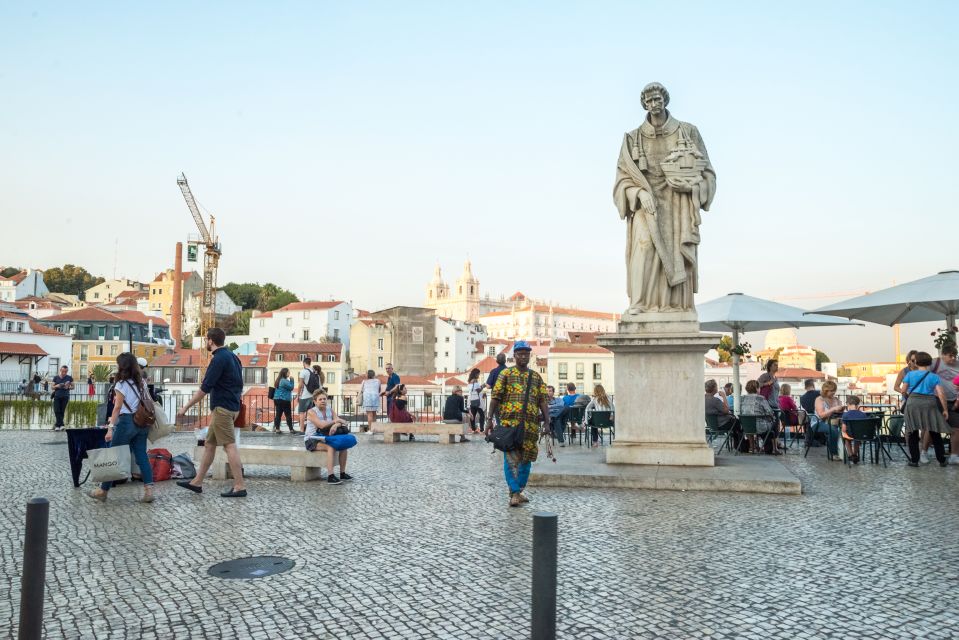
Not every “old town highlight” tour includes a real local marketplace. Here you get a stop connected to the Feira da Ladra flea market, known for its busy, everyday energy.
This is one of those experiences that doesn’t require you to know the history to enjoy it. The point is movement: sellers, browsing, people bargaining, and the sense that Lisbon has street life that keeps going beyond monuments.
If you like shopping for meaning—not just souvenirs—this stop can be a fun break from architecture. It’s also a good chance to reset your feet and eyes after looking up at miradouros and down at squares.
One more detail I appreciate: the tour doesn’t ignore “in-between” landmarks. Along the way you’ll also see the former 17th-century Church of Santa Engracia, now known as the Panteão Nacional (National Pantheon). Seeing it in motion helps you connect Lisbon’s religious monuments with its later national identity, even if you’re not going inside.
Electric tuk tuk comfort and pacing in just 1.5 hours

With private group service and a 1.5-hour duration, this tour is built for efficient, high-impact sightseeing. The pacing works like this: a guided neighborhood block (Alfama), a concentrated viewpoints stretch (miradouros), then central-city highlights (Baixa and landmark exteriors).
Why that matters: Lisbon’s magic can be slow, but the logistics aren’t. This route gives you a guided structure so you don’t spend your energy figuring out what’s worth returning to later.
Vehicle access is another practical win. Because the tuk tuk is 100% electric and made for tight city routing, you get places that might be unpleasant by car or hard by bus. Plus, the guides are described as skilled drivers who know how to park in the right spots so the experience stays smooth.
You should still plan for quick stops rather than long museum-style immersion. If you do want more time somewhere, use the tour to identify what’s calling you back.
Price and value: $159 per group up to 3

At $159 per group up to 3, you’re paying for private, guided orientation plus transportation in an electric tuk tuk. For Lisbon, that can be good value if you’re traveling as a small group and want a “see a lot fast” day.
Here’s how I’d think about value:
- If you’re 1–2 people, the per-person cost can feel higher than a shared bus tour, but you gain private handling and better flexibility with a smaller group.
- If you’re 3 people, the cost evens out quickly, and the private setup becomes a real advantage for asking questions and getting specific recommendations for what to do next.
Also, don’t underestimate what you’re paying for: navigation help, history context, and access to narrow streets. In Lisbon, that combination is worth money because it prevents you from wasting hours on trial and error.
Where you start and where you end (and how that affects your day)
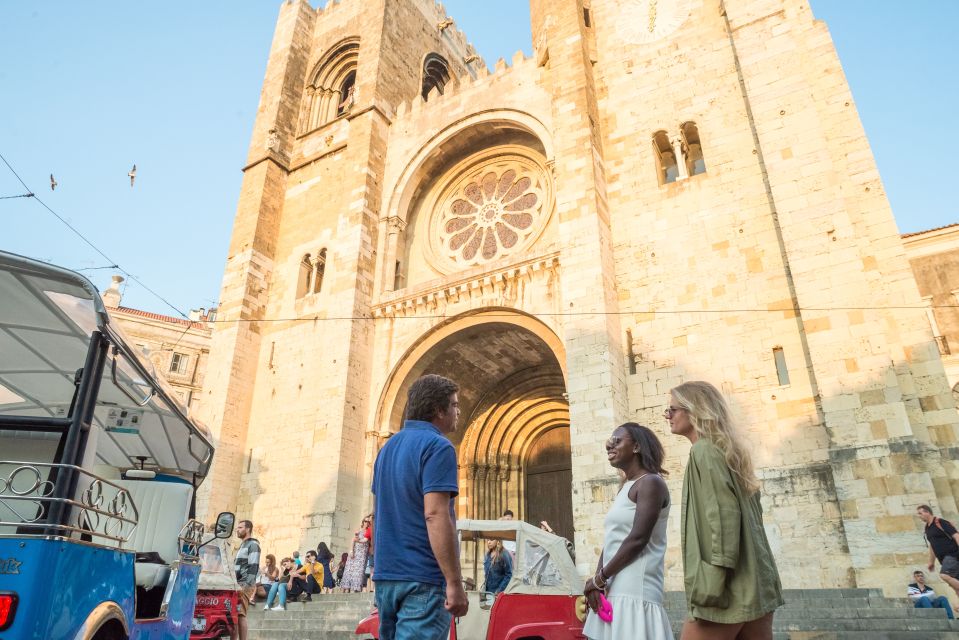
The standard start point is D. Pedro IV Square (Rossio Square), behind the D. Maria II National Theatre. If you choose pickup optional, the guide can meet you at your accommodation in downtown Lisbon.
Drop-off locations include Largo do Regedor 2 and Praça Dom Pedro IV area (Rossio). That’s helpful because both are central. After the tour, you’re positioned to keep exploring without needing a long commute.
One thing to consider: your exact pickup and meeting details depend on your chosen option. If you have a tight schedule for lunch or your next activity, verify the meeting approach ahead of time so you’re not showing up to the wrong spot.
Should you book this Lisbon by Tuk Tuk tour?
Book it if you want a smart first pass through Lisbon’s top neighborhoods with real guidance and quick, scenic payoff. It’s especially good for first-timers who want to see Alfama, Baixa, major squares, key churches, Castelo walls, and miradouros in one compact day.
Skip it (or pair it with something longer) if you hate time limits or you’re hoping for deep, slow exploring in just one neighborhood. This tour is about highlights and orientation, not lingering for hours.
If you’re deciding right now, I’d use this checklist:
- You want panoramic views without long climbs
- You want history explained while you move through neighborhoods
- You’re traveling with up to 3 people and want a private feel for the price
FAQ
How long is the Lisbon by Tuk Tuk Guided Tour: City of Neighborhoods?
It runs for 1.5 hours.
How much does it cost?
The price is $159 per group, up to 3 people.
Do you visit Alfama and Baixa de Lisboa?
Yes. You spend guided time in Alfama and then guided time in Baixa de Lisboa.
Where do I meet the guide?
Meet your guide at D. Pedro IV Square (Rossio Square), behind D. Maria II National Theatre, when the tour starts.
Can the tour pick me up from my hotel?
Pickup is optional, and the guide can meet you at your accommodation in downtown Lisbon.
What languages are offered for the live guide?
The live guide offers Spanish, English, and Portuguese.
Is there free cancellation?
Yes. You can cancel up to 24 hours in advance for a full refund. Also, the tour offers reserve now & pay later, meaning you can book without paying today.
What transportation do they use?
The tour uses a 100% electric tuk tuk.