
REVIEW · OCEANARIUM & AQUARIUM TICKETS
Lisbon: Oceanário de Lisboa Entrance Ticket
Book on GetYourGuide →Operated by Oceanário de Lisboa · Bookable on GetYourGuide
Big tank, bigger sea drama in Lisbon. The Oceanário de Lisboa turns a rainy day (or a hot one) into a real ocean show, with four habitats and a layout designed so you keep finding new views. I especially love the main central tank—it makes sharks, rays, and other big movers feel close without you ever needing to guess where to look.
I also like the sheer variety: more than 8,000 sea creatures from 500 species, plus exhibits that include coral reef displays and even Europe’s only 2 sea otters. One possible drawback: it can get busy, so if you hate crowds, plan your timing carefully and expect some squeeze around the most popular viewing points.
In This Review
- Key Highlights Worth Building Your Day Around
- Oceanário de Lisboa: Why This Indoor Aquarium Works So Well
- What Your Entrance Ticket Includes (Permanent and Temporary Exhibits)
- The 4 Ocean Worlds: How the Layout Makes the Sea Feel Connected
- The Main Tank Moment: Sharks, Rays, Reefs, and Sea Otters
- Don’t Rush the Levels: How to Read the Exhibits Without Getting Overwhelmed
- Temporary Exhibitions: Why They Matter Even if You Know the Core Tanks
- Timing Your Visit: How Long to Plan and When It Feels Best
- Getting There From Lisbon: Oriente by Metro and Bus
- Guided Tours at Extra Cost: When the Names Matter
- Price and Value: Is $29 a Good Deal for Lisbon?
- Quick Practical Notes Before You Go
- Should You Book the Oceanário de Lisboa Ticket?
Key Highlights Worth Building Your Day Around
- A central viewing system that rewards slow wandering instead of rushing
- Four ocean “worlds” (North Atlantic, Antarctic, Temperate Pacific, Tropical Indian Ocean) that make the big picture click
- Europe’s only 2 sea otters, often a top moment for kids and adults
- A huge species count (8,000+ creatures across 500+ species) without feeling like a random zoo
- Skip-the-ticket-line entry so you spend more time watching and less time waiting
- Permanent + temporary exhibitions included in one ticket, so you’re not limited to a single loop
Oceanário de Lisboa: Why This Indoor Aquarium Works So Well

If you’ve only got one or two spare hours in Lisbon, the Oceanário can still be worth your time. It’s not a tiny aquarium where you zip through and wonder what happened. It’s a full indoor attraction built for lingering—dark enough and designed enough that you actually focus on the animals, not the clock.
The setting helps, too. It’s on the Expo 98 site in Parque das Nações, right by the waterfront. That matters because you can pair it with an easy transport link from the city center and then plan a calm walk afterward. The whole place feels like Lisbon saying: even our rain days can be educational and fun.
You can also read our reviews of more tours and experiences in Lisbon



What Your Entrance Ticket Includes (Permanent and Temporary Exhibits)

Your ticket is simple and powerful: entrance ticket + access to all permanent exhibitions + access to all temporary exhibitions. There’s no “add-on” needed to see the core experience. You also get skip-the-ticket-line, which is a big deal in a popular attraction.
The aquarium is open daily from 10:00 AM to 8:00 PM, with last entry at 7:00 PM. Plan your day so you’re not sprinting at closing time. The best experiences inside are the ones where you stop, find a viewing spot, and let your eyes adjust to different tank levels.
Food and drink are available for purchase, but they’re not included. So if you’re traveling with kids or you get snacky while reading placards, bring water habits into your plan (or be ready to buy).
The 4 Ocean Worlds: How the Layout Makes the Sea Feel Connected

One of the smartest parts of the Oceanário design is that it doesn’t just show individual aquariums. It builds a story. The complex is divided into four separate bodies of water:
- North Atlantic
- Antarctic
- Temperate Pacific
- Tropical Indian Ocean
From there, the experience uses large acrylic panels and a central tank setup that gives you the impression that creatures from different environments are part of one connected ocean system. It’s a clever way to help your brain stop treating marine life as unrelated “fish sections.”
When it clicks, you’ll start noticing patterns: how different species use similar strategies in different waters, and how the aquarium is trying to help you connect conservation to real ecosystems. You don’t need a degree to get something out of the displays—you just need a slower pace and a willingness to read a few labels.
The Main Tank Moment: Sharks, Rays, Reefs, and Sea Otters

If you’re trying to decide what to prioritize, start with the central exhibit. This is where people spend the longest stretches because it feels like the ocean’s “big screen.” Several visitors specifically call out the feeling of being surrounded by motion—sharks and rays gliding by, and viewing spots that let you watch without constantly repositioning.
Here’s what stands out most based on what’s consistently highlighted:
- Sharks and stingrays in the central tank area
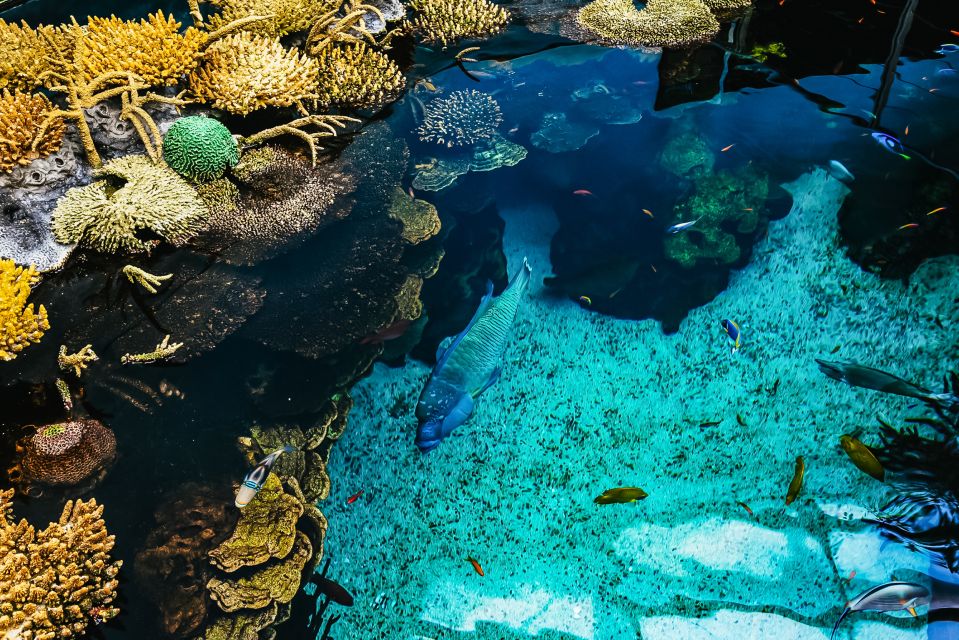
- Coral reefs and reef-style displays that make the ecosystem feel structured
- Sea otters—and yes, you should plan around this
The sea otters are a big part of the Oceanário’s identity. It has the only 2 existing sea otters in Europe. That means it’s not just a cute animal encounter. It’s a rare chance to watch behavior that many Europeans will never see in person.
One practical tip from the experience: if you want to time the best viewing, check eating/feeding times online before you go. Feeding moments tend to concentrate movement, and that’s when you’ll often see more active behavior in a way that’s easy for kids (and adults) to notice.
Don’t Rush the Levels: How to Read the Exhibits Without Getting Overwhelmed

This is one of those places where rushing makes it worse. You’ll miss the “aha” parts—like small displays that give context, or viewpoints that show how animals move across space.
A few things you’ll likely appreciate once you’re inside:
- Different levels offer different angles, so the same animal can look totally different depending on where you stand
- Breakout info sections help you understand what you’re looking at (not just what you’re seeing)
- There are plenty of viewing spots, including quieter areas where you can sit and watch
Some visitors mention the experience is designed for all ages, which matches what the building supports: children get the thrill of watching animals move, while adults get the satisfaction of learning what’s behind the scenes. You’ll even see people slowing down simply to watch rays cruise through the main tank.
If you’re the type who hates reading, you can still enjoy the tanks. But if you’re willing to spend a few minutes with the explanations, the whole place becomes more meaningful.





Temporary Exhibitions: Why They Matter Even if You Know the Core Tanks

Because your ticket covers permanent and temporary exhibitions, you’re not locked into just the main aquarium. Temporary displays can change over time, which is useful if:
- you’re visiting on a trip day when you want more than one highlight, or
- you’re going with kids who need a few “new things” to stay engaged, or
- you want extra context beyond the permanent galleries
Think of temporary exhibits as the bonus layers that keep the day from feeling repetitive. Even if the main tank is the star, the extra areas are what turns a quick visit into a full outing.
Timing Your Visit: How Long to Plan and When It Feels Best

You have a whole day window, but you still need strategy. The aquarium opens at 10:00 AM, and last entry is 7:00 PM. In real life, that means you can choose between:
- A morning start (often calmer than peak school/trip times)
- Afternoon/evening (still great, but more crowding is possible)
One travel reality: the Oceanário can be popular with school trips. If you’re going during high-traffic periods, you might face tighter viewing areas around the most famous tanks. The good news is the building has many viewing points, so even when it’s busy, it’s usually still possible to enjoy the displays.
If you want maximum value for time, I’d aim for a visit length that allows you to watch the central tank properly and then circle back for the smaller exhibits. Some people end up spending around 3.5 hours and mainly focus on the main tank—enough for a strong visit, especially if that’s your priority.
Getting There From Lisbon: Oriente by Metro and Bus

The Oceanário sits in Parque das Nações, on the waterfront. The easiest transport hub is Oriente, and that helps you avoid complicated transfers.
You can reach it from Lisbon’s historic center using public transport, including:
- Bus
- Subway/Metro
- Train
- Boat
- Car
- And it’s a common stop for hop-on hop-off buses
For buses, the routes that serve Oriente (nearest stop) include: 5, 10, 19, 21, 28, 50, 68, 81, 82, 85. By subway, follow the red “M” signs and take the red line to Oriente—it’s the last stop.
If you like planning like a local, this is one of those attractions where knowing the nearest metro stop (Oriente) makes your whole day smoother.
Guided Tours at Extra Cost: When the Names Matter

An entrance ticket gives you full access on your own. Guided tours are optional and cost extra.
If you do choose a guided tour, it can be worth it because guides bring out the “why” behind the animals and the exhibits. Several reviews highlight guides who were friendly, funny, and deep on species details. Names mentioned include Sophia, Bruno, Katie, and Silvia—a good sign that staff tend to be comfortable sharing facts and answering questions.
Guided tours are available in Portuguese, Spanish, and English, but English must be pre-booked. Also, pre-booking is required for certain educational activities for schools and organized groups.
If your goal is photography plus a quick skim, skip the guide and spend extra time on the central tank and otters. If your goal is learning and you like asking questions, a guided tour can turn “interesting fish” into a more connected understanding of ocean life.
Price and Value: Is $29 a Good Deal for Lisbon?
For about $29 per person, this is the kind of attraction that works best when you treat it as a high-value indoor anchor for your day.
Here’s why the value holds up:
- You get access to multiple exhibits, not one room
- It’s an all-weather plan in a city where weather can swing
- The scale is real: 8,000+ creatures across 500+ species
- The main tank experience is built to keep you watching for a long time
It’s not a “cheap and fast” stop. But it is a strong use of time if you want a focused Lisbon activity that doesn’t depend on tours lining up with your schedule.
The best value strategy: go on a day you’d otherwise be wandering aimlessly, and commit to at least one “sit and watch” session instead of treating it like a checklist.
Quick Practical Notes Before You Go
A few things will help you have less friction and more fun:
- Save your “big camera time” for the central tank. That’s where attention naturally clusters.
- If otters are a priority, look up eating/feeding times online so you’re not just hoping.
- Expect crowds at popular hours and around peak school trip moments. Plan to be patient near the busiest viewpoints.
- The building is wheelchair accessible, with ramps and elevators available throughout.
Also, the ticket is valid for 1 day and timing depends on availability of starting times. And it’s non-refundable, so lock in your date once you’re fairly sure.
Should You Book the Oceanário de Lisboa Ticket?
Yes, I think you should book this if you want a Lisbon activity that’s genuinely worth your time indoors. It’s especially good if you’re traveling with kids, if you like marine life, or if you want a break from walking while still doing something that feels like more than a museum stop.
Book it with confidence if:
- you care about seeing sharks/rays and want long viewing time
- you want the rare chance to see the Oceanário’s sea otters
- you’d rather spend time in a designed exhibit space than chase open hours outside
Skip it or adjust your plan if:
- you hate crowds and are only able to visit at peak times
- your idea of an aquarium is “a quick loop,” because this place rewards slower pacing
If you’re deciding between this and another indoor option, the Oceanário wins for scale, layout, and the way the experience stays interesting from the first moment you find a viewing spot.