REVIEW · ALFAMA & OLD TOWN TOURS
Lisbon E-Bike Tour Commerce Square, Mouraria and Alfama
Book on Viator →Operated by Boost Portugal · Bookable on Viator
Lisbon has steep hills, so why not ride them instead. This 3-hour e-bike tour turns tough climbs into an easy glide, while a local storyteller guide brings Alfama, Mouraria, and the riverfront to life. You’ll hit sweeping viewpoints over the Tagus and come away with a fast, practical sense of where everything is.
I especially like how the small-group pacing keeps you together on narrow streets, without turning the ride into a race. And I like that you get an equipment lesson at the shop, so you’re not guessing how the bike works while the pavement gets bumpy. One consideration: you must be confident on a bike, because Lisbon’s old lanes include steep grades and cobblestones that can feel intimidating even with electric assist.
In This Review
- Key highlights you’ll feel on the ride
- Why Lisbon by e-bike beats walking when the hills hit
- Getting started at Boost Portugal in central Lisbon
- Praça do Comércio: the riverfront you can understand at a glance
- Alfama’s fado context starts with the Museum stop
- Three big religious and cultural landmarks in one day
- Miradouros and São Jorge area: the viewpoints that make the climb worth it
- Alfama itself: medieval lanes, staircases, and the fado vibe
- Sé Cathedral and the practical magic of seeing it by bike
- How the guide turns streets into stories (names you might get)
- Bikes, roads, and comfort: what could affect your ride
- Price and value: what $30.23 really buys
- Who should book this Lisbon e-bike tour
- Should you book this Commerce Square, Mouraria, and Alfama e-bike tour?
- FAQ
- How long is the Lisbon E-Bike Tour through Commerce Square, Mouraria and Alfama?
- Where does the tour start?
- Do I need experience riding an e-bike?
- What’s included in the price?
- Are monument entrance tickets included?
- What should I wear if it rains?
- How big is the group?
- Is hotel pickup and drop-off included?
- Who is the tour best for?
Key highlights you’ll feel on the ride
- Electric assist for Lisbon’s hills: less puff, more focus on views and stories.
- Small group, big coverage: you see multiple neighborhoods in about 3 hours.
- Miradouros with Tagus views: you’ll climb to high viewpoints near São Jorge Castle.
- Alfama’s medieval lanes and fado connections: you’ll get the context behind the music.
- Safety setup before you roll: helmet, briefing, and a quick “how it works” run-through.
Why Lisbon by e-bike beats walking when the hills hit
If you’ve ever walked Lisbon, you know the pattern: a beautiful street… followed by a surprise hill. This tour solves that problem by using an electric-bike with assist that makes the climbs feel manageable. That matters because it lets you spend your energy on enjoying the city, not just surviving the slope.
I also like that the ride is designed for real Lisbon streets, not smooth bike paths. You’ll move through narrow lanes and cobbled sections where a normal bike would turn into a chore. With the assist, you keep momentum and keep your attention on what’s around you.
You can also read our reviews of more cycling tours in Lisbon

Getting started at Boost Portugal in central Lisbon
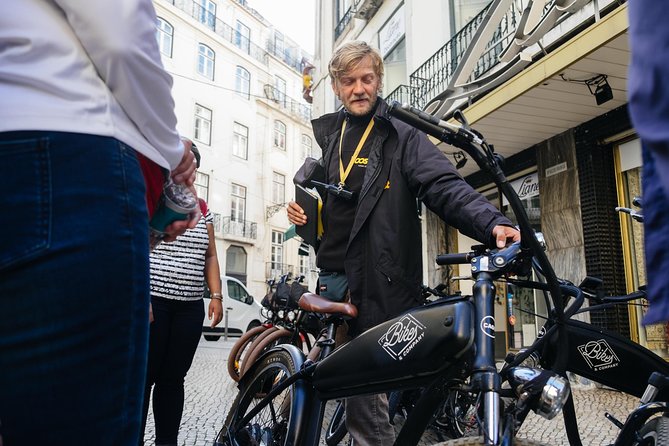
The tour meets at Boost Portugal – Urban Thrills on R. dos Douradores 16, near public transportation. You’ll want to arrive early enough to check in 15 minutes ahead. The ticket is mobile, and the shop is also presented as a comfortable starting point with things like restrooms, filtered water, and Wi‑Fi.
Before you roll, you get an equipment adaptation lesson and a safety briefing. No prior e-bike experience is required, but you do need to be ready to ride confidently once you’re out on the streets. You’ll get a helmet and you’ll also be covered by liability and personal accident insurance.
Praça do Comércio: the riverfront you can understand at a glance
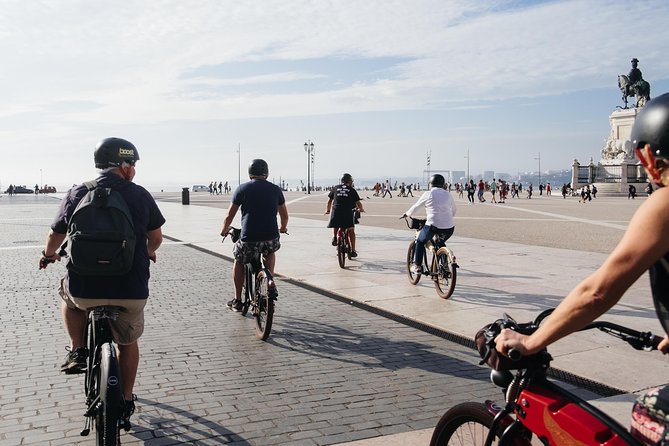
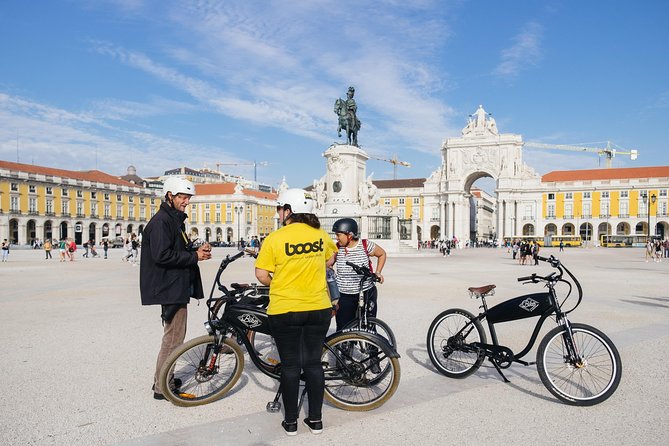
You start at Praça do Comércio, Lisbon’s biggest riverfront square. It’s famous as a centerpiece of the rebuilding after the 1755 earthquake, when much of the city was destroyed and then remade. Standing there, with the water nearby and the open space around you, you get a clear orientation for the rest of the day.
This stop is also a good “warm-up” moment. The ground is flatter than the old quarters you’ll explore later, so you can settle your position on the bike and get the group rhythm right away.
Alfama’s fado context starts with the Museum stop
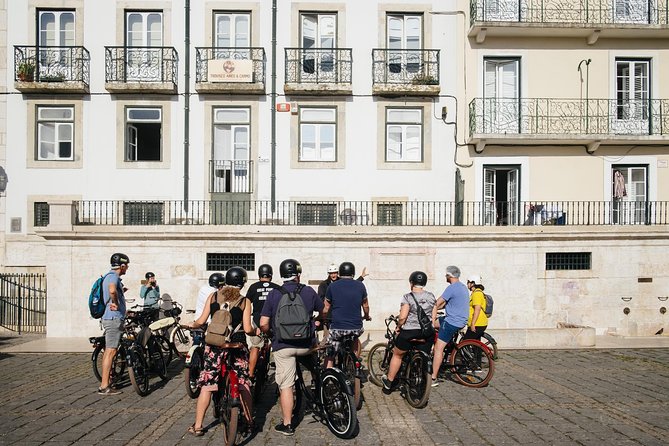
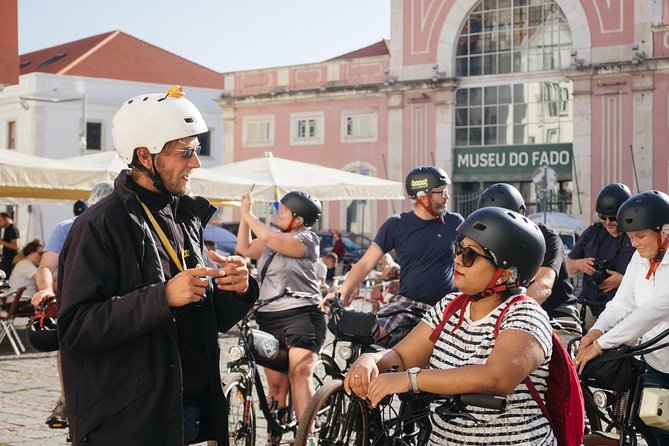
After you leave the riverfront, you’ll connect Lisbon’s oldest neighborhood with its signature music. The Museu do Fado is a short stop that explains why fado belongs to Alfama. The tour frames it in the way Lisboners do: a sound shaped by streets, distance, and emotion.
Importantly, museum admission isn’t included, so you can treat this as a quick orientation stop rather than a full museum visit. If fado is a priority for you, you’ll likely want to plan extra time on another day.
Three big religious and cultural landmarks in one day
You’ll also make time for major sites that shaped Portuguese culture and politics, without turning the tour into a ticket line marathon.
- Panteão Nacional (St. Engratia Church): This baroque monument took centuries to complete, from 1682 to 1966. It’s also the resting place of important cultural and political figures. Admission is free for this stop, based on what’s included here.
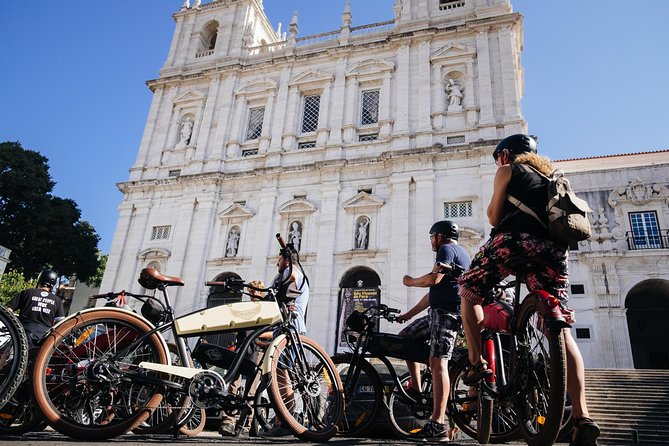
- Mosteiro de São Vicente de Fora: You’ll see one of Portugal’s important monasteries and a mannerist building. The royal pantheon connected to the Braganza monarchs is part of what makes it significant. Admission to the monastery sites isn’t included.
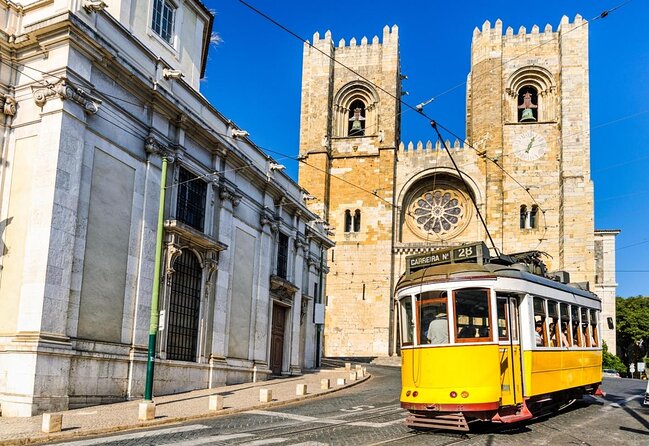
- Sé de Lisboa (Lisbon Cathedral): You’ll also admire the oldest place of worship in Lisbon, dating to the mid-12th century. Admission isn’t something you’re paying for on this tour, so you’ll want to confirm what you can access during your visit time window.
These stops work well because they give the “why” behind the buildings. Lisbon isn’t just a collection of pretty facades; it’s a city where religion, monarchy, and civic life are layered in the same places you’re riding through.
You can also read our reviews of more tours and experiences in Lisbon
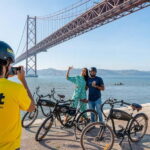


Miradouros and São Jorge area: the viewpoints that make the climb worth it
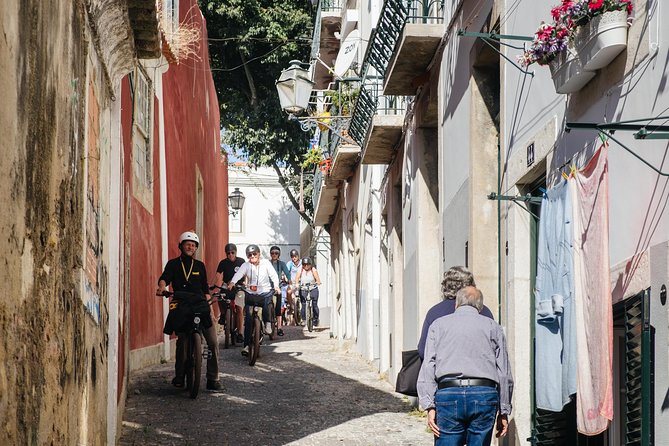
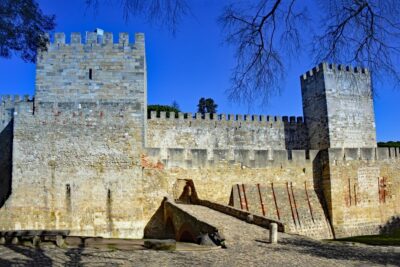
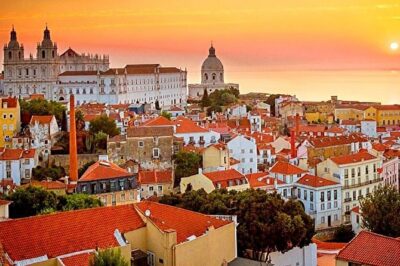
This is the part of Lisbon that persuades you to keep going uphill. You’ll reach high viewpoint areas near Miradouro da Graça (Sophia de Mello Breyner Andresen). From here, you get wide views that include the Tagus River and the castle area in the distance.
The tour description also includes the climb toward São Vicente Monastery views and then pushes on through the Graça area for photo-worthy scenes tied to the castle coast. In practice, what you’ll enjoy is the contrast: you start near the grand riverfront, then end up looking down over the dense, layered city fabric.
You’ll also visit Miradouro da Senhora do Monte, one of the highest viewpoint areas. This is a great spot for perspective: from street level, Lisbon’s hills can feel chaotic. From a miradouro, the city snaps into a readable shape.
Alfama itself: medieval lanes, staircases, and the fado vibe
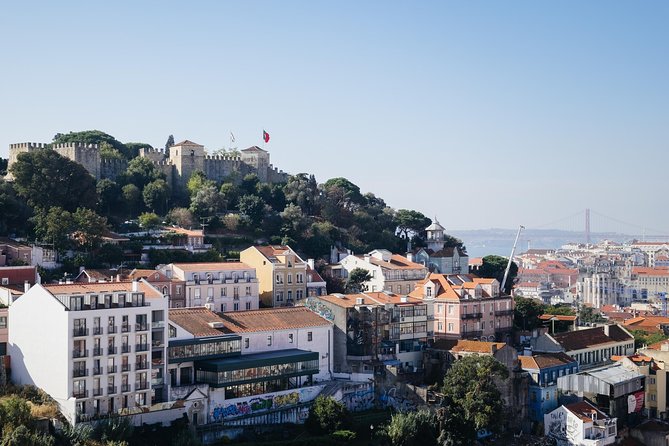
Alfama is the heart of this tour, and it’s also where the city feels most old-school. This is Lisbon’s oldest neighborhood, with lanes that have the look and texture of medieval times. You’ll glide into streets that still carry a Moorish feel—alleyways, stairs, and even small everyday details like clothes drying on windows.
This neighborhood is also tied to Santo António festivities in June, when the streets fill and the atmosphere turns communal. Even if you’re not traveling in June, the tour’s context helps you understand why people love Alfama: it’s not staged for visitors, it’s a living neighborhood.
One more practical note: the roads here can be narrow and steep. Electric assist helps a lot, but you’ll still want to ride smoothly and keep an eye on your line through the cobbles.
Sé Cathedral and the practical magic of seeing it by bike
After the Alfama lanes, the tour includes a stop at Lisbon Cathedral (Sé de Lisboa). Being here as part of a bike tour changes how the stop feels. Instead of arriving sweaty after stairs, you arrive with the city already “set” in your mind from the earlier viewpoints and squares.
The cathedral is old—mid-12th century old place of worship by the tour’s description—so it works as a historical anchor. It also gives you a sense of Lisbon’s long timeline: fado and tradition in the streets, and centuries of architecture at the top of the hill.
How the guide turns streets into stories (names you might get)
The guide is a big reason this tour earns a 4.7 rating with a strong recommended score. A good guide does two things at once: keeps you safe on tricky streets, and makes the history feel like a reason you’re standing where you’re standing.
I’ve seen multiple guide names associated with standout experiences on this style of tour. Peter, for example, is repeatedly praised for being warm, attentive, and excellent at making sure everyone stays comfortable and together—especially when weather is rainy. Cameron and Joãο show up with praise for fun pacing and making the hills manageable, plus clear explanations of Lisbon’s Portuguese storylines.
Eduardo is mentioned for staying entertaining, while Alexandra is praised for getting people around safely and adding stories without dragging. Dre and Tony also come up for keeping the ride relaxed and informative. Helio and Leonardo are noted for helpfulness and careful guidance through views, river scenes, and streets. Carmen is praised for passion and a fun approach to Alfama.
If you book, here’s the practical tip: pay attention during the first bike functions walkthrough and ask questions right away. The guides that earn top marks are the ones who make the group feel confident early.
Bikes, roads, and comfort: what could affect your ride
The tour sets expectations clearly: you should have moderate physical fitness and you should be confident bike riders. That matters because the route includes steep hills and narrow streets, with cobblestone sections that can feel uneven under tires.
Most of the tour’s value comes from electric assist doing the hard work. Even so, the ride may still feel different from what you’re used to if you mainly cycle on smoother surfaces. One important thing to watch for: the bikes can vary. Some riders have described bikes that felt less precise or harder to handle than they expected, especially on bumpy stone roads. You can reduce risk by keeping your posture steady, going slowly in tight areas, and sticking close to your guide.
Rain is also part of Lisbon life. The tour operates in the rain, and ponchos are provided. That’s a plus, but it also means you should dress for wet streets and expect slower handling on cobbles.
Price and value: what $30.23 really buys
At about $30.23 per person for around 3 hours, this tour prices itself as a value option for first-time Lisbon sightseeing. You’re paying for:
- electric-bike rental and an adaptation lesson
- helmet
- an experienced local storyteller guide
- liability and personal accident insurance
- taxes (VAT 23%)
What’s not included: entrance tickets to monuments and museums, plus any personal expenses. So your “actual total” depends on what you choose to pay for during those stops.
For value, the key idea is time. If you walked from place to place, Lisbon’s hills would eat the day and you’d arrive at viewpoints tired. This lets you cover multiple districts and viewpoints without paying for taxis between major hill areas.
Who should book this Lisbon e-bike tour
You’ll likely love it if:
- you want a fast orientation to Lisbon’s old neighborhoods
- you like viewpoints and want help getting there efficiently
- you prefer guided storytelling over reading plaques for hours
- you want a small-group feel with a maximum of 24 riders
You might want to think twice if:
- you’re not confident on a bike (narrow streets and cobbles are part of the experience)
- you’re sensitive to bumpy surfaces or steep, uneven climbs
- you expect a brand-new, perfectly smooth ride feel (the streets are old, and some bikes may feel worn)
If you’re traveling in mixed ages, this tour can still work well because the electric assist reduces the physical difference between riders. The real difference is confidence and comfort riding in old-town conditions.
Should you book this Commerce Square, Mouraria, and Alfama e-bike tour?
Book it if you want Lisbon’s hills, viewpoints, and historic neighborhoods in one tidy half-day, with guidance that helps you feel confident early. It’s a smart choice when you want to see a lot without turning the trip into stair-climbing cardio.
Skip or adjust your expectations if you’re a brand-new cyclist or you know cobbled, steep streets make you tense. In that case, ask yourself whether you can handle the short period of bike setup and the uneven road texture, even with electric assist.
If you’re comfortable on a bike and you want the Tagus-and-castle payoff plus Alfama context, this is the kind of tour that helps your future Lisbon days feel easier.
FAQ
How long is the Lisbon E-Bike Tour through Commerce Square, Mouraria and Alfama?
The tour lasts about 3 hours.
Where does the tour start?
It starts at Boost Portugal – Urban Thrills, R. dos Douradores 16, 1100-206 Lisboa, Portugal.
Do I need experience riding an e-bike?
No. The tour includes an equipment adaptation lesson and a safety briefing so you can learn how the bike works.
What’s included in the price?
Included: electric bike rental and equipment adaptation lesson, safety helmet, an experienced local storyteller guide, liability and personal accident insurance, and VAT (23%).
Are monument entrance tickets included?
No. Tickets for museums and monument entries are not included.
What should I wear if it rains?
The tour operates in rain, and ponchos are provided. You should still dress for wet weather and cobblestones.
How big is the group?
The tour has a maximum of 24 travelers.
Is hotel pickup and drop-off included?
No. There is no hotel pickup or drop-off.
Who is the tour best for?
It’s best for people with moderate physical fitness who are confident bike riders, since Lisbon’s old streets include steep hills and narrow lanes.