REVIEW · HISTORICAL TOURS
Historical Walking Tour of Lisbon
Book on Viator →Operated by Vibrant City Tours · Bookable on Viator
Lisbon tells its story on foot. This walking tour strings together the city’s biggest squares with tight, human-scale narratives you can actually remember. The guides lean hard into storytelling style, the kind that can make Roman-era clues and the 1755 earthquake feel close by—whether you’re with Logan, Nuno, Bruno, or Kiara. Main-squares route is the whole point here.
Two things I really like: you get clear context at each stop (not just dates), and you finish with hand-picked suggestions to help you keep exploring after the walk. One heads-up: you’ll cover a lot of ground with some uphill sections, and Lisbon’s sidewalks can be uneven, so comfy walking shoes matter.
In This Review
- Key highlights to look for on this Lisbon walk
- A low-price, story-packed intro to downtown Lisbon
- Rossio Square to Praça da Figueira: Lisbon’s roots in stone and stories
- Rua Augusta: the main artery and the Enlightenment influence you can spot
- Terreiro do Paço: the earthquake, the discoveries, and rebuilding at human scale
- Chiado and the oldest bookstore stop: art district energy with a history lens
- Largo do Carmo and Convento do Carmo: survival, revolution, and scars that matter
- Elevador de Santa Justa viewpoint: a practical reset before you leave
- What you’ll actually walk (and what to do about it)
- Guides make the difference: what the best storytelling sounds like
- Is this tour worth $3.62? Value check before you book
- Who this Lisbon walking tour suits best
- Should you book this Lisbon walking tour?
- FAQ
- How long is the Historical Walking Tour of Lisbon?
- Where does the tour start?
- Where does the tour end?
- Is the tour offered in English?
- How big is the group?
- Do I need to buy separate tickets for the sights?
- What should I wear or bring for this walking tour?
- What kind of ticket do I get?
- Is the tour dependent on weather?
- Can I get a refund if I cancel?
- Are service animals allowed?
Key highlights to look for on this Lisbon walk
- Rossio Square to the riverfront core: start in the city’s central hub and work through the downtown core.
- 1755 earthquake + Age of Discovery + political battles: history is threaded through the streets you’re standing on.
- Rua Augusta walk with Enlightenment-era architectural influence.
- Terreiro do Paço stories about entry points to the city, rebuilding, and key turning points.
- Chiado and the chance to visit the oldest bookstore in the world (as part of the Chiado stop).
- Santa Justa Lift viewpoint plus practical tips so you leave with a plan, not just photos.
A low-price, story-packed intro to downtown Lisbon
At $3.62 per person for a 2 hours 45 minutes guided walk, this is the rare deal where your money buys more than just movement. You’re paying for someone to connect landmarks into one readable timeline, and for a set of local ideas so you can spend the rest of your trip smarter.
The format also helps. It’s capped at a maximum of 20 people, so the tour doesn’t feel like a moving crowd wall. You’ll be in the English-speaking group, and you’ll get a mobile ticket, which makes day-of logistics easier than hunting for paper.
The best part is the balance. You’re not stuck in one museum room. You’re outside, in the actual streets and plazas where Lisbon’s past and present overlap. If you like to walk, and if history makes you curious (not bored), this kind of route gives you a strong first “map in your head.”
You can also read our reviews of more walking tours in Lisbon
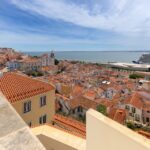


Rossio Square to Praça da Figueira: Lisbon’s roots in stone and stories
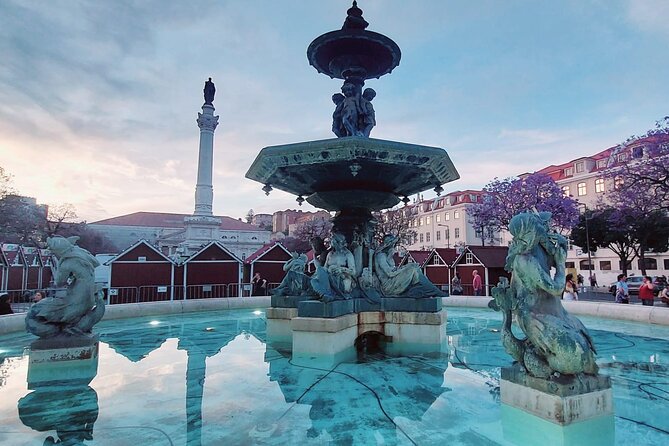
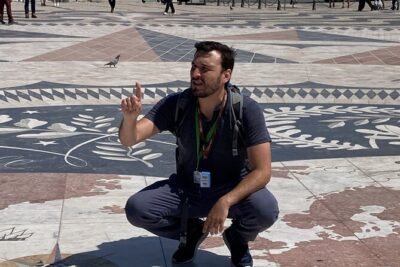
The tour begins at Rossio Square (Praça Dom Pedro IV). This is a perfect opener because it’s central, easy to find, and full of visual cues. You’ll hear about the city’s first inhabitants—framed as a starting point roughly 3,000 years back—while you look at the floor work that makes Rossio feel like more than just a traffic hub.
From there you head to Praça da Figueira (fig tree square). This stop comes with a heavier topic: the largest public hospital that was destroyed in the 1755 earthquake. It’s not taught as a tragedy lecture. You’re shown why it mattered, and you learn about the battles over the crown between Portugal and neighboring powers.
Why this works: these two squares give you both sides of the Lisbon coin. You get the human-scale “this is where life happened” feel, then you get the big events that shaped the city’s direction. It’s also a good warm-up pacing-wise—each of these early stops is about 15 minutes, so you don’t burn out before the downtown walk.
One practical note: both Rossio and Praça da Figueira are busy public spaces. You’ll want to keep your phone handy for maps, but also keep your attention on the guide—because the story is tied to what you’re looking at, not just where you’re walking.
Rua Augusta: the main artery and the Enlightenment influence you can spot
Next you move downtown through Rua Augusta, Lisbon’s emblematic main street. This is the section where the tour shifts from “squares with speeches” to “a living corridor.”
The key theme here is the Enlightenment’s influence on architecture. The tour doesn’t treat it like a distant academic topic. You walk while you’re told how ideas from that period shaped what you see along the way, and you start noticing details that you’d otherwise glide past.
This part is valuable for two reasons. First, Rua Augusta helps you orient yourself fast. You’ll feel where the city’s central flow runs. Second, it gives you context for why the main axis looks the way it does—so later, when you explore on your own, you understand what you’re staring at.
If you’re the type who likes photos, this is a good stretch for them. But don’t just take images. Focus on the street rhythm and building lines while you walk.
Terreiro do Paço: the earthquake, the discoveries, and rebuilding at human scale
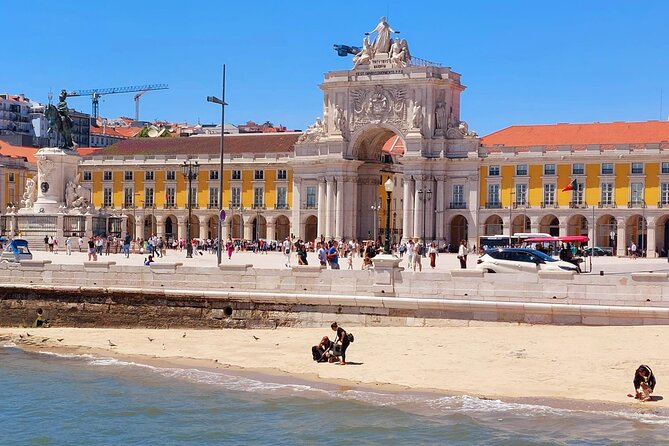
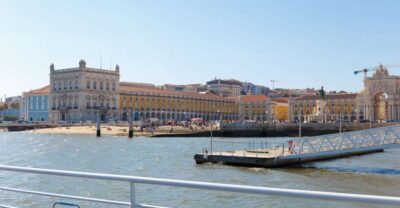
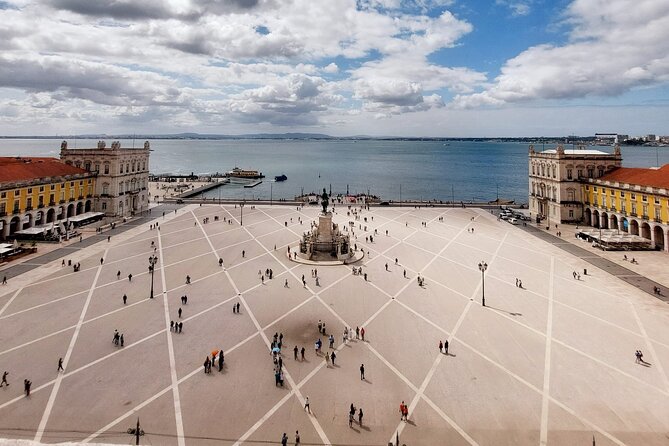
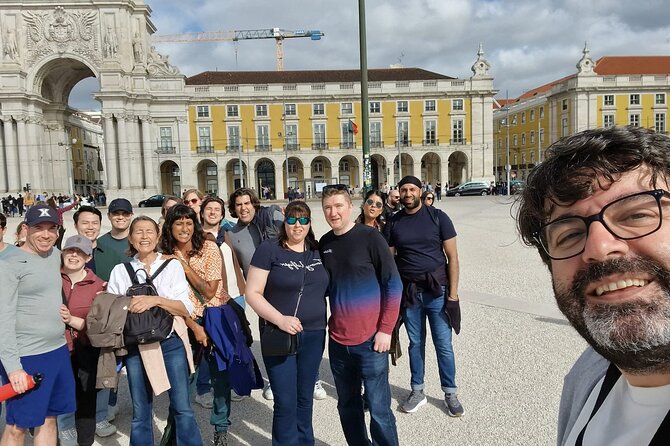
Praca do Comercio (Terreiro do Paco) is one of the big payoff stops. This is described as the city’s main square that has served as the entry point to the city for millennia, which immediately frames why it matters.
Here, the guide ties three major threads together: the Age of Discovery, the 1755 earthquake, and the city’s rebuild efforts (plus the role of heroes). The way it’s presented helps you see Lisbon’s center as a place that keeps getting redesigned after shock, then moving forward.
Expect a longer stop—around 30 minutes—so you can stand, look, and actually absorb. This is also where the tour gives you “why Lisbon looks like it looks” in a direct way. If you’ve ever felt like big cities can be hard to decode, this is the moment the tour helps you read them.
Drawback to consider: because this is a large open square, it can feel a little exposed to wind or weather. The overall experience is listed as requiring good weather, so plan for that reality.
Chiado and the oldest bookstore stop: art district energy with a history lens
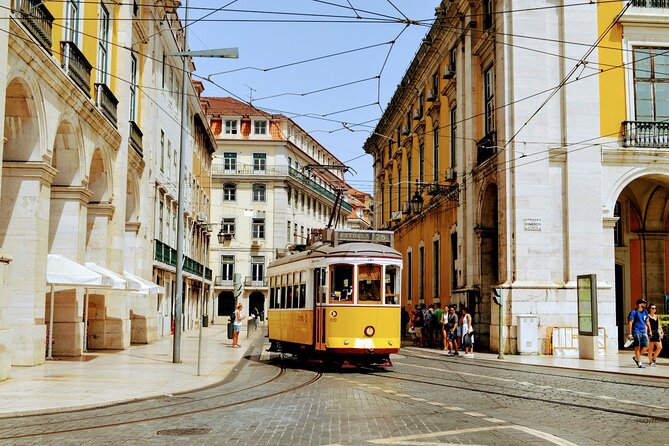
Then you reach Chiado, Lisbon’s art district. The tone shifts again. This isn’t just a history stop. It’s lively territory with cafés, theatres, bookshops, and nightlife energy where you can feel the modern city overlapping with older layers.
The tour also highlights poets and writers—people who helped shape Lisbon’s cultural identity. And there’s a chance to visit the oldest bookstore in the world as part of this stop. That’s the kind of detail you’ll remember when you’re later walking around and spotting bookshops like it’s no big deal.
This is a strong mid-to-late tour stop because it gives you a breather from the heavy themes. You get history, but you also get a sense of what Lisbon feels like day to day.
If you’re short on time later in your trip, this stop alone can steer your independent plans. You learn how to spot the cultural heart of the city, and you’ll know where to return if you want reading, snacks, and a slower pace.
You can also read our reviews of more historical tours in Lisbon





Largo do Carmo and Convento do Carmo: survival, revolution, and scars that matter
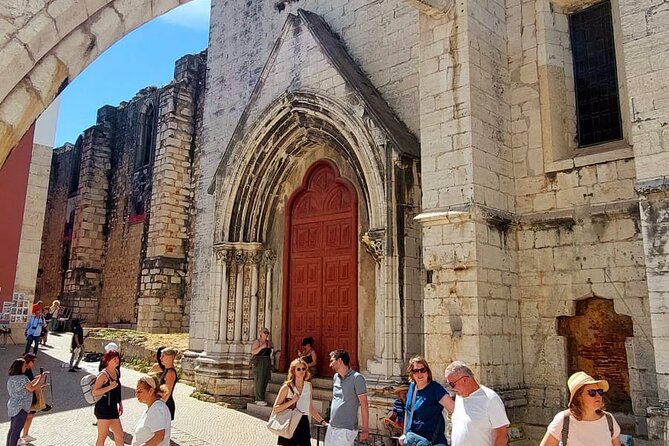
At Largo do Carmo, you meet Convento do Carmo, described as the second oldest building in the city. The big reason it’s important is its survival—barely—through the devastating 1755 earthquake.
The storytelling here connects past and present in a vivid way. You’re told how this became a place for emblematic social events across the country’s history, including the 1974 Carnation Revolution. You’ll hear it framed as a standout moment—often mentioned with the phrase coolest coup in the world, which captures the idea that it wasn’t just political change, it was a cultural shift you can still feel.
This stop also gives you perspective on “ruins” or “damage” without turning it into gloom. The building’s endurance is the message. You’re shown how Lisbon keeps evidence of its shocks in the cityscape instead of cleaning it all away.
Time here is about 30 minutes, so you won’t feel rushed. It’s also a good place to ask questions, because this is where a guide’s personality really shows—how they choose what to emphasize, and how they link the city to the larger Portuguese story.
Elevador de Santa Justa viewpoint: a practical reset before you leave
The tour finishes with the Elevador de Santa Justa. This is where you get a birds-eye view of downtown Lisbon, which is helpful because it “locks in” the map you’ve been building on foot.
The best part isn’t the view alone. The tour also turns outward with local tips—things like food to try and viewpoint ideas—so you leave with a short list of smart next steps. That lines up with how many guides are praised for handing out suggestions after the tour, not just storytelling during it.
The Santa Justa stop is listed as a 15-minute window, and that makes sense. It’s a reset moment, not an all-day detour. If you want longer time with viewpoints later, this stop can point you toward where to spend extra time on your own.
The tour ends in the upper part of downtown, near the Carmo Archaeological Museum (Largo do Carmo). From there, you’ll have the “up and down” logic of Lisbon in your legs and in your head.
What you’ll actually walk (and what to do about it)
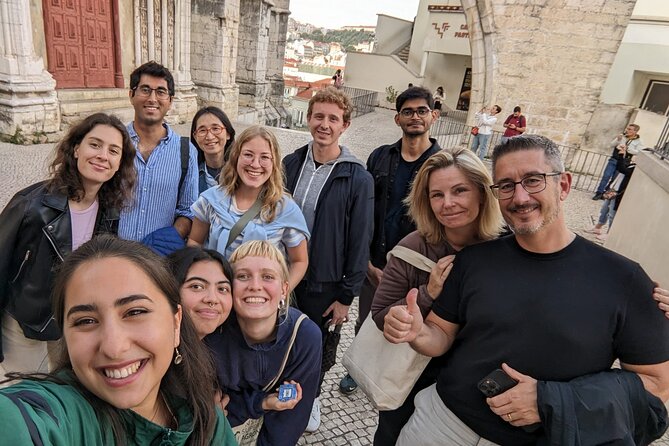
This is a walking tour through central Lisbon’s squares and streets, with some hillside elements. One review story points out that guides may adjust to uphill climbs so the group stays together, which is a good sign of flexible pacing.
Still, plan for uneven cobblestones. Lisbon looks gorgeous, but the sidewalks can be rough underfoot. Bring shoes you can trust on stone. Also bring a water bottle and a bit of sun protection; these are simple things, but they change your comfort level a lot.
If you hate crowds, the small group size (max 20) is a real advantage. You’re not swimming through shoulder-to-shoulder tourist traffic for the whole route.
Guides make the difference: what the best storytelling sounds like
What repeatedly comes through in the guide praise is how the tour is taught: animated storytelling, friendly delivery, and answers to questions.
Names you may hear associated with standout performance include Logan, Nuno, Bruno, Kiara, Constança, Andre, Antonio, and Tomàs. While you won’t control which guide you get, the consistent theme is that the guide keeps the pace comfortable, checks that everyone can hear, and adds extra context when it fits your interests.
That’s a big deal. A good history walk is not just information. It’s momentum. When a guide knows how to connect details to the physical street you’re standing on, you remember more and feel less like you’re being lectured.
Is this tour worth $3.62? Value check before you book
The price is the most surprising part. A guided 2h45 walking route through multiple top stops, in English, with a professional guide and hand-picked suggestions is not a normal $3.62 deal. Even if you adjust expectations for local pricing, the structure makes sense: you’re buying guidance, not museum admissions.
The tour also lists each stop as admission ticket free. That means you’re mostly paying for the guide experience and the route planning, which is ideal if you want your day budget to stay under control.
So the value question becomes: do you want a guided “big picture” of Lisbon’s core? If yes, this price is hard to beat. If no—if you only want independent wandering or you hate walking with narration—then any paid guide won’t feel like value, no matter the cost.
Who this Lisbon walking tour suits best
This works especially well if you want:
- A first-timer orientation through downtown Lisbon
- A route that connects the 1755 earthquake and later political moments to the places you’re seeing
- A guide who offers practical follow-up ideas for where to eat and what to do next
It may be less ideal if:
- You want a quiet, self-paced tour with no group storytelling
- You’re very sensitive to hills and cobblestones
- You’re only interested in one theme (like only architecture, or only maritime history)
For families: the reviews include a 13-year-old enjoying the tour, and guides are praised for keeping questions interactive and the pace manageable. Still, it’s a lot of walking, so bring snacks and plan for breaks.
Should you book this Lisbon walking tour?
Book it if you’re trying to understand Lisbon fast and you like your history told through places, not textbooks. This is one of the best ways to get oriented in central Lisbon, then turn that knowledge into smarter choices for the rest of your trip. The small group size, strong guide storytelling, and practical recommendations make it feel like a real service, not just a checkout counter activity.
Skip it if you want a laid-back day with minimal walking or if you dislike guided narration. Lisbon can be enjoyed on your own, especially if you already know what you want to see.
If your schedule allows, I’d go for it early in your visit. You’ll walk away with both a map and a set of next steps.
FAQ
How long is the Historical Walking Tour of Lisbon?
It lasts about 2 hours 45 minutes.
Where does the tour start?
The tour starts at Rossio Square (Praça do Rossio, 1100-200 Lisboa, Portugal).
Where does the tour end?
The tour ends in the upper part of downtown near the Carmo Archaeological Museum (Largo do Carmo, 1200-092 Lisboa, Portugal).
Is the tour offered in English?
Yes, it is offered in English.
How big is the group?
The tour has a maximum of 20 travelers.
Do I need to buy separate tickets for the sights?
The itinerary marks the listed stops as admission ticket free.
What should I wear or bring for this walking tour?
Bring comfortable walking shoes. A water bottle and sunscreen are also useful.
What kind of ticket do I get?
You’ll receive a mobile ticket.
Is the tour dependent on weather?
Yes. It requires good weather. If it’s canceled due to poor weather, you’ll be offered a different date or a full refund.
Can I get a refund if I cancel?
Yes. Cancellation is free up to 24 hours in advance for a full refund.
Are service animals allowed?
Yes, service animals are allowed.