
REVIEW · CITY TOURS
Lisbon: City Sightseeing Hop-On Hop-Off Bus Tour
Book on GetYourGuide →Operated by City Sightseeing Europe · Bookable on GetYourGuide
Lisbon feels like a city you can read in layers—fast. This hop-on hop-off bus setup is a simple way to cover big sights without spending your day in transit, with audio guide headphones and multiple route choices. You get three routes so you can match what you want to see to the time you actually have.
I like the way it groups Lisbon’s best-known highlights into an easy circuit. On the Red Route, you can jump off for the UNESCO heavy hitters—Jerónimos Monastery and Torre de Belém—and then come back for more city squares and viewpoints. I also love the variety beyond the postcards, because the routes pass major museums and gardens like Jardim da Astrela and Jardim do Principe Real, plus cathedrals you can reach by bus and short walks.
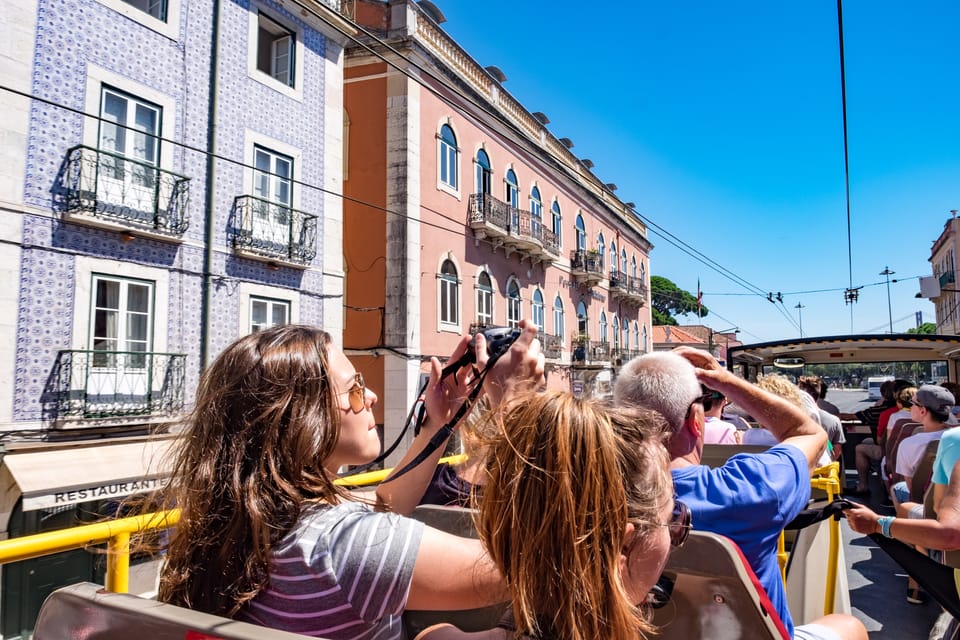
One thing to plan for: the buses are open-top. If rain or wind shows up, you may get wet, and the audio can feel less clear when it’s windy—so bring a light rain layer even in shoulder seasons.
In This Review
- Key things to know before you ride
- Getting oriented fast: Marques de Pombal and how the ticket works
- Red Route for Belém UNESCO: Jerónimos and Torre de Belém with a view loop
- Blue Route for museums and Oceanário: from Azulejo to Vasco da Gama
- Green Route for older Lisbon climbs: Martim Moniz, Castelo, and miradouros
- Audio, timing, and open-top reality: how to ride without stress
- The 48-hour upgrades: night panoramas and two walking tours
- Stops that reward your time: squares, gardens, cathedrals, and museums
- Price and value: is $37 really fair for Lisbon?
- Should you book this Lisbon hop-on hop-off bus?
- FAQ
- How long is the hop-on hop-off bus ticket valid?
- Where does the tour start?
- How many routes are included?
- Are audio headphones included?
- What time do the night tour and walking tours run with the 48-hour ticket?
- Are there any rules about pets or smoking?
Key things to know before you ride
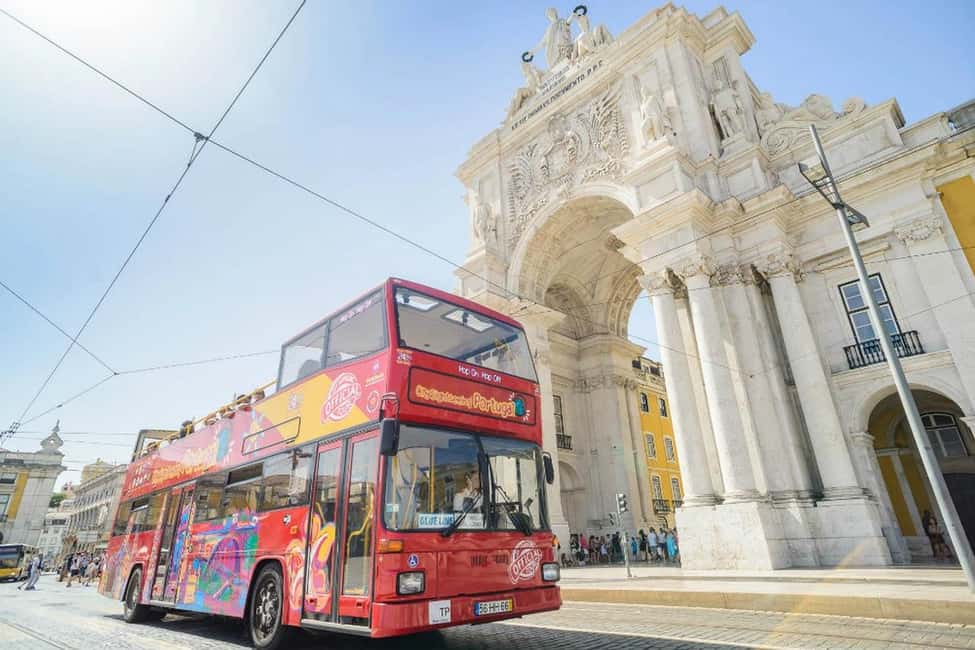
- Three routes, 40+ stops: Red for Belém-style sights, Blue for museums and Oceanário, Green for older hills and viewpoints.
- Audio guide with headphones in 13 languages, so you can move at your pace without guessing.
- 24 or 48 hours: 48-hour tickets add a night tour plus extra walking experiences.
- 105-minute route loops: Each line takes about this long end to end, so hop-offs fit naturally.
- Good for first-timers: It covers huge distances across Lisbon’s neighborhoods with less backtracking.
Getting oriented fast: Marques de Pombal and how the ticket works
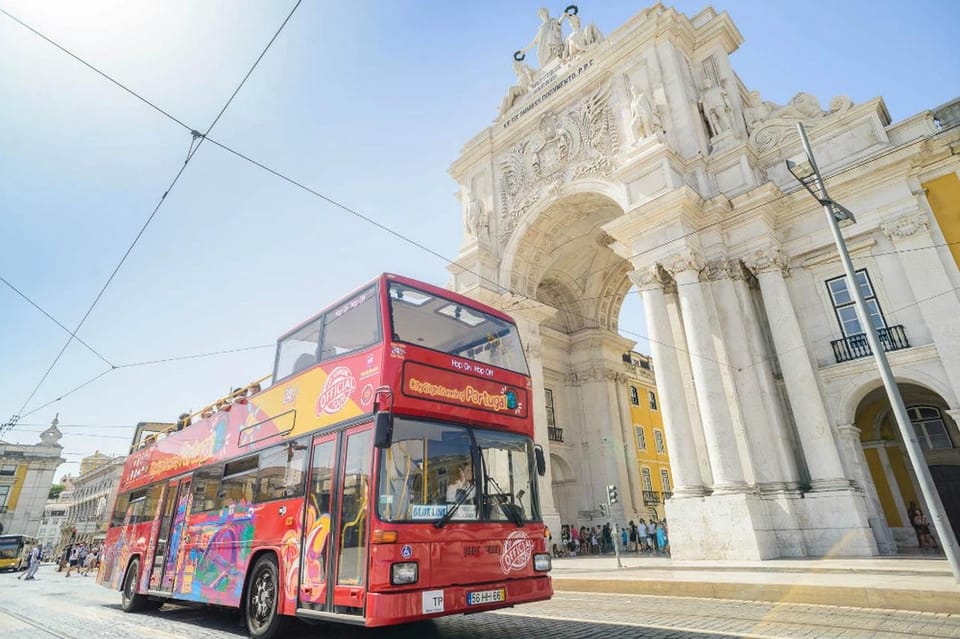
Your bus day starts at Marques de Pombal Square, and from there you can ride whichever route matches your mood. You’ll get a ticket valid for either 24 or 48 hours, which matters because Lisbon is spread out. Even if you love walking, you’ll burn time climbing hills, crossing busy streets, and detouring to get back to viewpoints.
This is a classic hop-on hop-off design: stay on for views, hop off for a museum or viewpoint, then return when the next bus comes. Each route loop takes about 105 minutes, and buses run on schedules you can plan around—every 30 minutes on the Red and Green, and every 40 minutes on the Blue. That’s the sweet spot for day-trippers: frequent enough that you’re not waiting around for long, but not so frequent it feels chaotic.
Also, don’t ignore the practical bit: this is an open-top bus with audio headphones. That combo is great for getting your bearings quickly, especially in a city where neighborhoods feel like different towns stacked on hills.
You can also read our reviews of more city tours in Lisbon



Red Route for Belém UNESCO: Jerónimos and Torre de Belém with a view loop
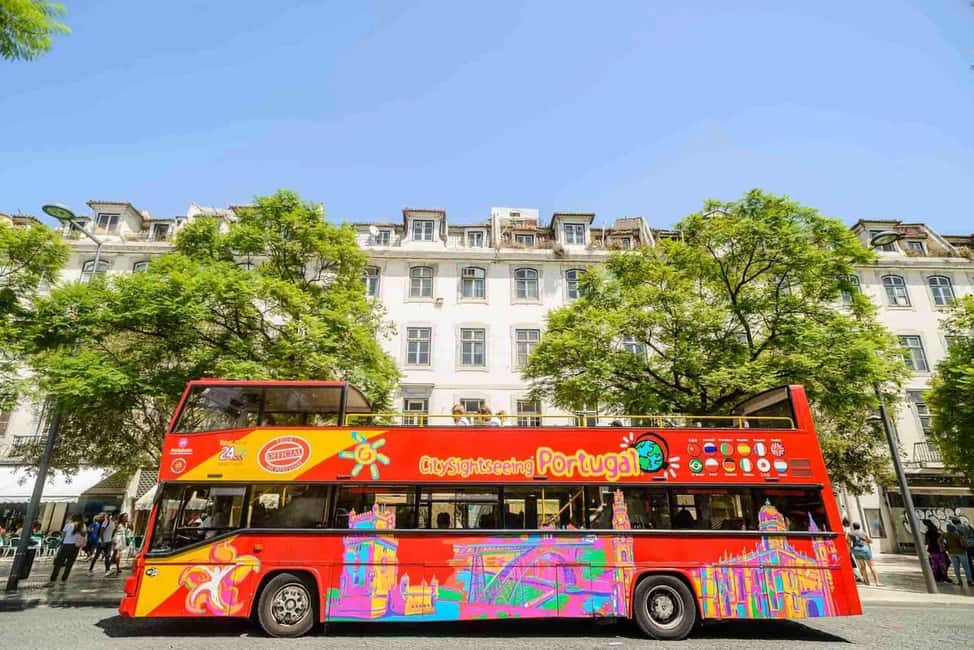
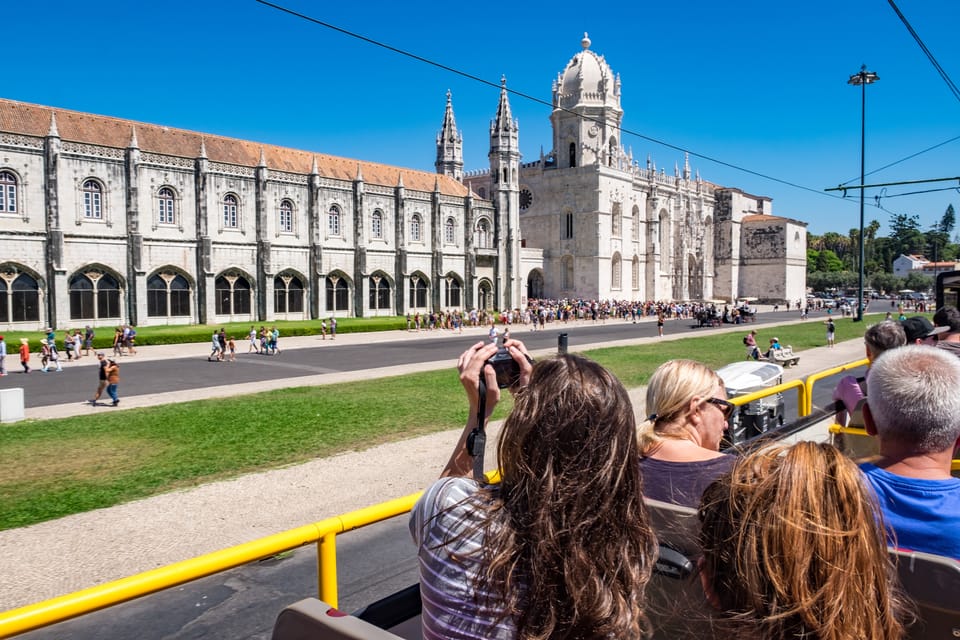
If Lisbon has two obvious icons, it’s these: Jerónimos Monastery and Torre de Belém. The Red Route is built to get you there and back in a way that feels low-stress. You’re not only seeing the monuments; you’re also driving through the city sections that connect them to daily life.
Here’s how the Red Route feels in practice:
- Marques de Pombal Square → Parque Eduardo VII: This is a calmer start with big-sky Lisbon energy. It’s a good place to settle in and get your first wide-angle views.
- Principe Real and Bairro Alto: The bus puts you close to some of Lisbon’s hillside character—good if you want to step into lively streets and then re-board before you over-walk.
- Cais do Sodré and Pilar 7: This is where you start to feel the city’s waterfront pull. You can hop off for stroll time, then catch the bus again without losing your day.
- Museu dos Coches: Perfect if you like museums but don’t want the planning work. You can fit it in between big-name stops.
- Mosteiro dos Jeronimos and Torre de Belem: This is the main event. Expect to spend more time than you think once you’re there, because these places deserve it.
- Padrão dos Descobrimentos, MAAT area (Estação Fluvial – MAAT), and Docas: This stretches your day beyond the classic shots into modern waterfront Lisbon.
- Basilica da Estrela and Restauradores: The route rounds out with grand architecture and central-city energy.
Timing tip: Red Route first departure is 9:30am and the last departure is 5pm. If you want soft light for photos and a calmer visit to Belém sights, aim to reach the UNESCO stops earlier rather than later.
And yes, the Red Route is also a good choice if you want the “see a lot, decide later” style day. You don’t need to commit to one museum. You can hop off, walk a bit, and come back when the loop is convenient.
Blue Route for museums and Oceanário: from Azulejo to Vasco da Gama
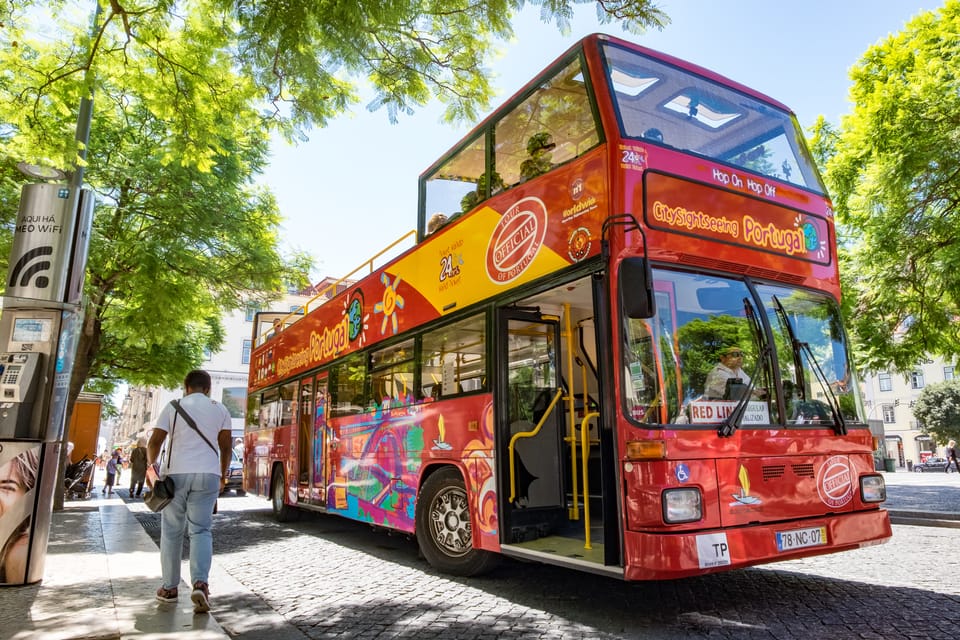
The Blue Route is Lisbon for people who want variety, not just monuments. It’s also handy if you’re traveling with different tastes in your group, because you can jump between culture, seaside views, and large modern attractions without switching systems.
Key stops on the Blue Route include:
- Av. Duque de Loule and Campo Pequeno: A more “city-in-motion” segment where Lisbon feels like a working capital.
- Santa Apolonia: A central rail-and-city connector. It’s a useful drop-off if you want to branch out into nearby areas on foot.
- Museu da Água and Museu do Azulejo: These are Lisbon’s brainy, creative side. The Azulejo route is a strong pick if you want visual culture that feels unmistakably Portuguese.
- Poco do Bispo: Good for quick orientation and nearby exploration.
- Oceanário de Lisboa: If you’re visiting for aquarium time, this is the major reason to pick the Blue line.
- C. C. Vasco da Gama and Torre Vasco da Gama: Modern Lisbon by the water—great for views and a break from older streets.
- Gare do Oriente and Entrecampos: Useful for catching the “Lisbon is built in layers” feeling.
- Jardim Zoológico: If you’re traveling with families or just like animals, this makes Blue more than just museum stops.
- Jose Malhoa / Hotel Mercure, Jose Malhoa / Novotel, and El Corte Ingles: These add convenience if you need shopping or a predictable pickup point.
Practical note: Blue Route first departure is 10am, last departure 5pm, and the bus runs about every 40 minutes. That wider gap means you’ll want to plan your hop-offs a little more tightly—especially if you’re pairing a museum visit with lunch and then catching a later re-board.
One more thing: there’s a stop listed as LCT – Only for cruise ships. If you’re in Lisbon as a cruise day, it’s there to make the connection easier.
Green Route for older Lisbon climbs: Martim Moniz, Castelo, and miradouros
The Green Route is the one I’d choose if you want Lisbon’s hilly character and classic viewpoints. It doesn’t just show buildings; it sets you up for stairs, short walks, and those “wait—look at that view” moments.
Highlights along the Green Route:
- Rua S. Bento – Parlamento: This is Lisbon with official energy. A good point early in your ride to understand what areas the city is built around.
- Principe Real and Bairro Alto: Again you’ll pass these, but on Green they feel more connected to the older uphill segments coming next.
- Martim Moniz: A strong “people and street life” stop. It’s also a good anchor point if you’re planning to re-board quickly.
- Castelo S. Jorge: This is the big viewpoint target. If you’re going to climb once in Lisbon, this is a smart place to do it.
- Miradouro da Graça: The view stop. Even if you don’t stay long, it’s one of those places that makes Lisbon click.
- Panteao Nacional: Monumental and photo-friendly if you’re into architecture and scale.
- Feira da Ladra and Rua Palma – Praca da Figueira: These are perfect if you like markets, streets, and the everyday side of the city.
At the end of the Green loop, you’re back at Restauradores – Terminal, which is useful for finishing your day without having to rethink transportation.
The schedule: Green Route first departure is 10am, last departure 5pm, and it runs every 30 minutes. That frequency helps because viewpoint stops often come with unplanned extra minutes—photos, chatting, looking down at the streets.
Also, the Green Route is the most “you’ll walk for real” line. It’s still a bus tour, but you’ll get more value if you’re comfortable with short uphill stretches.
Audio, timing, and open-top reality: how to ride without stress
The tour is designed around easy movement, but the details matter.
You’ll get an audio guide in 13 languages with headphones, including English, Spanish, French, German, Italian, Dutch, Japanese, Chinese, Portuguese, Russian, Polish, and Ukrainian. That’s not just a nice-to-have; it turns the bus into a planning tool. You can listen, identify what you care about, then decide where to hop off next.
Frequency and route length are the other half of the equation:
- Red and Green: about every 30 minutes
- Blue: about every 40 minutes
- Each loop: about 105 minutes
Also, note the first and last departures. Red is 9:30am to 5pm. Blue and Green start at 10am and run to 5pm. If you’re relying on this as your main transportation, don’t leave your key stops for the last half hour of the day.
One real-world consideration: because it’s open-top, rain and wind can change the comfort level fast. The bus may not protect you much, and the audio can feel less pleasant if it’s very windy. I’d treat this like a sightseeing ride you gear for outdoors: hat or sunglasses, sunscreen, and a packable rain layer.
Finally, keep an eye on stop signage. Some stops can feel hard to spot at first, especially if you’re looking for a stop label rather than a nearby landmark. Give yourself a few minutes to orient at each stop so you’re not running up and down the sidewalk.



The 48-hour upgrades: night panoramas and two walking tours
If you’re staying more than a day—or you want Lisbon to feel more like a story than a checklist—choose the 48-hour option. It adds extra time windows and experiences that don’t just rely on bus viewing.
Included with 48-hour tickets:
- A night-time panoramic bus tour starting at 8pm every day, about 1 hour
- A Carmo – Miradouro S. Pedro de Alcantara walking tour (only for 48-hour tickets), meeting at Rua do Carmo, departing 10am daily, about 1 hour
- A Castelo – Alfama Walking Tour (only for 48-hour tickets). Meeting point is Stop 4 on the Green Route, departing 5pm daily, about 1 hour
- A boat tour, but only if you select the appropriate ticket option
Why this matters: Lisbon at night is a different city. You’ll see the same neighborhoods with softer light and a calmer rhythm. The walking tours also solve a common problem: buses can’t take you deep into every lane. These walks do that for you—especially with miradouros, where the whole point is the viewpoint and the short trek up to it.
If you want to plan a simple 2-day rhythm:
- Day 1: focus on the Red Route UNESCO plus city squares
- Day 2 morning/afternoon: pick the Blue museums or the Green old-hill climbs
- Night: do the included 8pm panoramic ride so you get a Lisbon “after dark” feel without extra organizing
Stops that reward your time: squares, gardens, cathedrals, and museums
This tour works best when you treat stops like choices, not obligations. A quick hop-off with a short walk often beats staying on for every block.
Here are the types of stops that tend to pay off:
- City squares: You can stroll places like Praça do Município, Praça do Comércio, and Praça do Rossio. These are where Lisbon feels social and open, good for a coffee break or people-watching.
- Gardens: Jardim da Astrela and Jardim do Principe Real are the kind of stops that calm your day. If you’ve been walking hills, gardens can feel like a reset button.
- Cathedrals and big church buildings: Lisbon’s religious architecture is a major part of the city’s visual identity. With the bus dropping you near major spots, you don’t have to plot a complicated route to see them.
- Museums you can fit around: Museu dos Coches, Museu do Oriente, Museu do Azulejo, and Museu de Arte Antiga show up as options depending on your route choices. The bus makes it easier to mix a museum day with street time.
If you’re trying to see the most in the least time, don’t aim for “every museum.” Pick one museum focus (Azulejo or Oceanário or Coches) and use bus rides to connect the rest.
Price and value: is $37 really fair for Lisbon?
At $37 per person, this is priced like a “time saver” product. The honest value question is: will you use enough of the route to justify paying instead of using public transport?
Here’s how it becomes good value:
- You’re covering huge distances across Lisbon’s neighborhoods
- You want UNESCO sights on the Red Route
- You want museums and major attractions without planning transfers
- You can use the 24 or 48 hours to spread visits across two days
- You like an audio guide so you spend less mental energy on reading and map work
It’s less of a bargain if:
- You’re only interested in one neighborhood and you’re strong at navigating on foot and by metro
- You’re not likely to hop off more than a couple times
But for first-timers, busy schedules, and anyone who wants a smooth first contact with the city, this ticket is usually a smart bet. The big advantage is not one stop—it’s the way you can adjust your plan day-to-day without starting over.
Should you book this Lisbon hop-on hop-off bus?
I’d book it if you’re doing Lisbon for the first time and you want your sightseeing day to feel organized without feeling rigid. The bus is especially useful for hitting Belém (Jerónimos and Torre de Belém), picking up a second “worlds collide” day with Oceanário and Azulejos, and then chasing viewpoints with the Green Route.
Choose the 48-hour ticket if you care about night views and want at least one structured walk—Carmo to Miradouro São Pedro de Alcantara and the Castelo to Alfama option—because those are the times when Lisbon goes from photo stops to real atmosphere.
If you’re deciding between 24 and 48 hours, here’s my simple rule: if you want more than one “big zone” plus a night option, go 48.
FAQ
How long is the hop-on hop-off bus ticket valid?
The ticket is valid for 24 or 48 hours, depending on the option you select.
Where does the tour start?
The starting point is Marques de Pombal Square.
How many routes are included?
You get access to three routes: Red, Blue, and Green, with more than 40 stops total.
Are audio headphones included?
Yes. The tour includes an audio guide in 13 languages with headphones.
What time do the night tour and walking tours run with the 48-hour ticket?
The night tour starts at 8pm daily and lasts about 1 hour. The Carmo – Miradouro São Pedro de Alcantara walking tour meets at Rua do Carmo and departs 10am daily. The Castelo – Alfama walking tour uses Stop 4 on the Green Route as its meeting point and departs 5pm daily.
Are there any rules about pets or smoking?
No pets are allowed, and smoking is not allowed on the tour.