REVIEW · ALFAMA & OLD TOWN TOURS
Lisbon: Alfama, Chiado and Baixa Walking Tour with Tastings
Book on GetYourGuide →Operated by Bluedreamtours Portugal · Bookable on GetYourGuide
Old streets, steep steps, and sweet bites. That is the charm of this Lisbon walk. You start in Alfama, work your way through Chiado and Baixa, and you get a real feel for how different parts of the city live side by side. Add planned stops like Miradouro de Santa Luzia and Santa Justa Lift, plus Portuguese food tastings, and you have a compact way to orient yourself fast.
Two things I really like: first, the route mixes viewpoints, churches, and squares with very human stops like family-run places for tastings. Second, the guides I heard about by name (Ricardo, Eduardo, Matias, Joao) sound energetic and confident, with plenty of history that stays practical instead of lecturing.
One possible drawback: for $63, you need to be in the mood for a walking-heavy 3.5 hours and a structured pace that includes food stops. If you want extra time purely in Chiado and Baixa, the tastings can feel like they shorten those strolls a bit.
In This Review
- Key highlights worth planning for
- A 3.5-hour loop that gives Lisbon a sense of direction
- Merendinha meeting point: start here, shoes here
- Alfama’s old lanes: Miradouro de Santa Luzia and azulejos up close
- Chiado’s elegant streets: art, literature, and café culture
- Baixa and Rossio: squares, lifts, and the city’s big plans
- Landmark stops that add meaning: Roman Theater, Lisbon Cathedral, and Pantheon
- Miradouros you’ll remember: Portas do Sol and São Pedro de Alcântara
- Food tastings in plain terms: pastel de nata, ginjinha, beer or green wine, and bifana
- What the best guides bring: Ricardo, Eduardo, Matias, and Joao
- Price ($63) and value: what you’re really paying for
- Who should book this Lisbon Alfama–Chiado–Baixa walk
- Should you book it?
- FAQ
- How long is the Lisbon Alfama, Chiado and Baixa walking tour?
- Where do I meet the guide?
- What food and drinks are included in the tastings?
- Is the Santa Justa Lift ride or other attraction entry included?
- What viewpoints does the tour include?
- Is this tour suitable for people with mobility impairments or wheelchair users?
- What language is the tour guide available in?
- What’s the walking difficulty like?
- Is there any optional extra food I can add?
Key highlights worth planning for
- Miradouro de Santa Luzia viewpoints for that classic Lisbon perspective
- Alfama lanes + azulejo facades and photo stops that feel lived-in
- Chiado’s art-and-literature vibe with café culture in the mix
- Baixa’s Rossio and Commerce Square with big-city order after the hills
- Food tastings that include pastel de nata, ginjinha, beer or green wine, and bifana
- Several landmark church and museum stops, from Lisbon Cathedral to Roman Theater
A 3.5-hour loop that gives Lisbon a sense of direction
This is the kind of tour I like for a first visit because it does two jobs at once. You get a walk through Lisbon’s older layers in Alfama, you slide into the more elegant Chiado streets, then you land in Baixa’s grand squares and practical city layout.
The schedule is tight but not rushed-chaos. You’re out long enough to cover major areas on foot, yet short enough that you still have plenty of day left for your own wandering afterward. And because the walking connects neighborhoods instead of only circling one district, you learn how the city shifts when the hills give way to wider streets.
If you’re the type who likes to know where you are, why the city looks the way it does, and what to eat along the route, this hits the right note. The tastings are not an afterthought, either—they’re built into the experience so you sample Lisbon flavors while you’re walking through Lisbon’s story.
You can also read our reviews of more walking tours in Lisbon

Merendinha meeting point: start here, shoes here
You meet the guide at Merendinha, R. Nova do Almada 45a. It’s a good anchor point for this walk because the route threads its way from central Lisbon into Alfama and back.
Come prepared for walking. The tour notes mention steep streets but a moderate overall level, and the route clearly includes hills in Alfama. I’d treat this as a shoes-first plan: comfortable sneakers beat nice sandals, and you’ll feel better with water in your bag. Also keep your belongings secure in busy areas since you’ll pass through well-traveled streets.
One practical tip: if the weather is warm, you’ll do better with a light layer. Lisbon’s sun can be strong, then the shade in narrow streets cools things down fast. Bring the flexible clothing you can adjust during the walk.
Alfama’s old lanes: Miradouro de Santa Luzia and azulejos up close
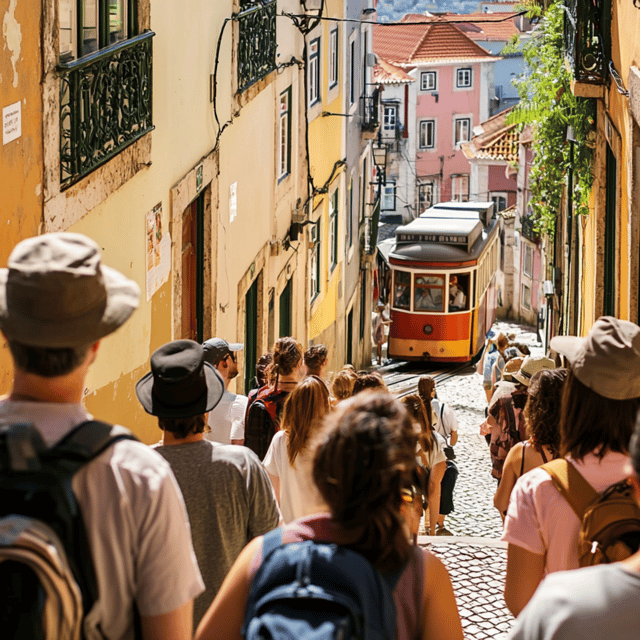
Alfama is where Lisbon shows its age in a good way—narrow, winding, and full of visual texture. You’ll start with guided time in the neighborhood and you’re set up for the classic Alfama effect: the city feels like it’s folding around you. Cobblestones underfoot, walls covered in azulejo tiles, and viewpoints that make the whole hill climb feel worth it.
A standout stop is Miradouro de Santa Luzia, where you get panoramic views. This is the kind of viewpoint that helps you understand Lisbon’s geography. Once you can see how the roofs stack and how the river direction affects what you’re looking at, the rest of your Lisbon day becomes easier.
Along the way, the tour includes time for you to spot details like decorated facades and small street textures. It also includes tastings that connect the visuals to daily life—this is where the experience feels most local. And since Alfama is emotionally distinct from the more orderly parts of town, the guidance helps you recognize why the neighborhood looks the way it does.
It’s also worth noting the steepness. If you’re comfortable walking uphill and down narrow streets, you’ll be fine. If not, plan for slower pacing and short pauses at viewpoints.
Chiado’s elegant streets: art, literature, and café culture
After Alfama’s hillside feel, you shift into Chiado—more stylish, more center-city, and generally easier on your knees. Chiado is known here as a hub of art and literature, and the walk matches that vibe with stops that feel tied to Portuguese café culture and classic city promenades.
You’ll stroll through Chiado with guided support, and you’ll also pass key landmarks along the way. The tone changes from “how did people live on that hill” to “how does Lisbon present itself in the center.” You get icons and streets that are made for browsing: shops, cafés, and the kind of city atmosphere that invites you to slow down.
One practical note: because the tour includes tastings and several built landmarks throughout the afternoon, this part of your walk may feel more guided than free. If you love stopping to browse windows and linger over coffee without moving on, give yourself time afterward to return to Chiado on your own.
In my view, Chiado is best as a reset zone. You’ll get a break from the tightest streets, and you’ll get your bearings for the rest of Lisbon.
Baixa and Rossio: squares, lifts, and the city’s big plans
Baixa is Lisbon’s grand-plan zone, and the tour uses it well. You go into the heart of the commercial and civic grid with stops around major public spaces, where the city’s architecture feels deliberate and open compared with Alfama.
You’ll visit or tour places like Commerce Square and Rossio Square. These spots matter because they’re not just pretty squares. They’re where the city’s center-life happens, where routes make sense, and where you can orient yourself visually—especially after coming down from the steep neighborhoods.
You also get a guided stop for Elevador de Santa Justa. Important detail: entrance fees are not included, so if you want to ride up, plan for tickets separately. Still, the lift is one of those structures that you don’t want to ignore. Even from street level, it helps explain how Lisbon solves its elevation challenge.
Baixa also sets you up for a smooth transition back toward older Lisbon layers, including castle-area streets and cathedral views later on. It’s the “here’s how the city is organized” chapter of the walk.




Landmark stops that add meaning: Roman Theater, Lisbon Cathedral, and Pantheon
This tour doesn’t only chase viewpoints. It also builds a layer-cake of Lisbon through major sites.
You’ll stop at the Museum of Lisbon – Roman Theater, which gives you a reminder that Lisbon’s story doesn’t start in the age of azulejos and churches. Then you’ll move through areas like Casa dos Bicos and Trindade, which help connect architecture to Lisbon’s evolving identity.
One of the deeper guided segments includes the National Pantheon of Santa Engrácia and the Monastery of São Vicente de Fora. These aren’t just photo stops on a tight route; they help you understand Lisbon as a city shaped by religious institutions and political change across centuries.
Later, you hit the Lisbon Cathedral and the broader castle-area feel through the Castle Quarter. This is where the tour makes practical sense: after you see the views at miradouros, you then get to the religious and historical anchors that sit above the city.
Drawback? If you prefer fewer stops and more time per stop, you might feel the pacing is “see a lot” rather than “slow and study.” For many visitors, though, that’s exactly the point of a 3.5-hour orientation walk.
Miradouros you’ll remember: Portas do Sol and São Pedro de Alcântara

Lisbon viewpoints are not a gimmick here—they’re structural. This tour includes multiple miradouro stops so you can compare angles as you move through neighborhoods.
You’ll visit Miradouro das Portas do Sol and later Miradouro de São Pedro de Alcântara. Each one gives you a different view rhythm. After Santa Luzia, it’s easier to spot how the city bends, where streets climb, and what’s worth revisiting for your own photos.
Miradouro time is also where your walking effort gets rewarded. The climb is real in Lisbon. These stops turn that effort into something you can actually see and remember.
Bring your camera. And if it’s windy at the viewpoints, zip up lightly and watch the small-street steps—nothing dramatic, just practical.
Food tastings in plain terms: pastel de nata, ginjinha, beer or green wine, and bifana

Let’s talk tastings, because this tour clearly treats them as part of the experience, not filler. Included tastings and drinks are listed clearly, and the names are the kinds of Lisbon foods you’ll want on day one.
What you can expect included:
- Portuguese custard tart (Pastel de Nata)
- Drink: coffee + water or juice
- Ginjinha chocolate shot (local cherry licor)
- 1 beer or green wine glass
- 1 bifana (traditional Portuguese sandwich)
There’s also an optional add-on: the tour offers Açaí + juice for an extra 10€, and it says you pay for that at the meeting point, Merendinha.
And there’s a note for solo travelers: if you book as a solo, the product includes an option where you pay for 2 and get extra food options. If you’re traveling alone and food matters to you, this is worth asking about when you confirm your booking.
One balanced thought based on experience reports: most people love the tastings as part of the day, but a few noted that the Alfama food component felt light for the price. That’s not everyone’s take, but it’s a good reason to go in with realistic expectations: you’re getting several tastings, yet the overall plan is still centered on walking and landmark stops.
What the best guides bring: Ricardo, Eduardo, Matias, and Joao
The difference between a “walk and point” tour and a memorable one is the guide. Here, the names that stand out are Ricardo, Eduardo, Matias, and Joao—and the common thread in their approach is clear: they’re engaging, they explain what you’re seeing, and they keep the walk lively.
If you enjoy history that connects to daily life—why a neighborhood looks like it does, what a structure tells you, why people built where they built—you’ll likely appreciate this style. The tour is packed with sights, but the guides are described as making the route feel like a story you can follow.
If you hate talking mid-walk, you might prefer to keep headphones on during parts. But given the tour format, assume you’ll get explanations along the way, not just at a single stop.
Price ($63) and value: what you’re really paying for
At $63 per person for about 3.5 hours, the value depends on what you want from Lisbon in your first day.
Here’s what that price includes: a local guide, a set route through three neighborhoods, and multiple tastings plus drinks. You’re also getting several planned landmark stops, including miradouro viewpoints and notable sites like the Roman Theater museum stop area and Lisbon Cathedral.
If you were to do the same day on your own, you’d spend money on food and you’d still need a plan to connect all these areas efficiently. The tastings help justify the price, especially because you’re not just tasting one thing—you get pastel de nata, ginjinha, bifana, and a beverage like beer or green wine.
Possible reason the price might feel off: if you’re expecting more free time in Chiado and Baixa or more food variety, the pacing won’t match that wish. Also, entrance fees are not included, so any ticketed attractions you choose to add later can add cost.
My practical take: if you want a guided orientation plus real Lisbon flavors, $63 feels fair. If you want total freedom and only the most famous “top hits,” you might prefer a lighter self-guided day.
Who should book this Lisbon Alfama–Chiado–Baixa walk
This tour is a strong fit if:
- You’re short on time and want a neighborhood-to-neighborhood feel fast
- You want a guide to help you interpret Lisbon’s streets, squares, and landmark meaning
- Portuguese food is part of your travel plan, not a side quest
You should rethink it if:
- You have mobility limitations or use a wheelchair (the tour is not suitable for wheelchair users or people with mobility impairments)
- You dislike structured pacing and prefer long, slow browsing without scheduled tastings
- You want lots of optional ticketed attractions added for free (entrance fees are not included)
Should you book it?
I’d book it if you’re arriving to Lisbon and want a day that does two things well: you see the city’s key neighborhoods on foot, and you eat Lisbon classics while you’re moving. The price is tied to the food stops and the guide-led route, so it works best when you’re comfortable with walking and you like learning as you go.
If you’re the type who can’t stand hills, or you only want major sights without food stops, then look for a different format. But for most first-timers, this is a practical, high-value way to get your bearings and leave with a full mouth and a full map in your head.
FAQ
How long is the Lisbon Alfama, Chiado and Baixa walking tour?
It lasts about 3.5 hours.
Where do I meet the guide?
Meet at Merendinha, R. Nova do Almada 45a.
What food and drinks are included in the tastings?
The tour includes Pastel de Nata, coffee plus water or juice, a ginjinha chocolate shot, 1 beer or green wine, and 1 bifana.
Is the Santa Justa Lift ride or other attraction entry included?
Entrance fees are not included. If you want to enter ticketed places or ride lifts, you’ll need to plan for those separately.
What viewpoints does the tour include?
You’ll visit Miradouro de Santa Luzia, Miradouro das Portas do Sol, and Miradouro de São Pedro de Alcântara.
Is this tour suitable for people with mobility impairments or wheelchair users?
No. It’s not suitable for wheelchair users or people with mobility impairments.
What language is the tour guide available in?
The live guide is available in English, Spanish, Italian, German, and Portuguese.
What’s the walking difficulty like?
Expect some steep streets but a moderate overall level. Wear comfortable walking shoes and bring water.
Is there any optional extra food I can add?
Yes. There’s an optional Açaí + juice add-on for an extra 10€, paid at the meeting point.