REVIEW · MORNING
Lisbon: Portuguese School of Equestrian Art Morning Training
Book on GetYourGuide →Operated by GetYourGuide Tours & Tickets GmbH · Bookable on GetYourGuide
A courtly equestrian world, up close and practical. You’ll see Lusitano horses and riders working through warm-ups and agility exercises, and you also get an interpretative route at Nora Pateo before heading to the Henrique Calado Arena. Two things I like: the chance to understand how the training is built, and the period-costume atmosphere that makes the movements easier to appreciate without needing deep background. One possible drawback: the whole experience runs only through a tight 11am–1pm window, so you need to plan your timing well.
Think of this as a focused morning-training visit, not a full-day entertainment package. It’s based in the gardens of the National Palace of Queluz, which is a lovely setting for what feels like “real work” between performances. If you’re after a long, polished show, this may feel short; if you’re a horse-and-craft person, it’s a smart use of time for the price.
In This Review
- Key Highlights Worth Your Time
- Portuguese Court Equestrian Art at Queluz: Why This Works
- The 11am–1pm Timing Game: Nora Pateo Then Henrique Calado
- Behind the Scenes in the Stables: Warm-Ups, Handlers, and Agility Work
- Nora Pateo Interpretive Route: How to Read What You’re Seeing
- Henrique Calado Arena: The Court-Style Training Session (and the Wednesday Twist)
- Price and Logistics: The $9 Value Check
- Getting There From Calçada da Ajuda (and What to Expect When You Arrive)
- Who Should Book This Morning Training Visit?
- Should You Book?
- FAQ
- Where does this experience meet?
- How long is the experience?
- What are the opening hours and time slots?
- Is there a different schedule on Wednesday?
- What’s included in the ticket price?
- Are food and drinks included?
- Do I need tickets for the Queluz National Palace and gardens?
- Is it wheelchair accessible?
Key Highlights Worth Your Time
- Watch warm-ups and agility drills before the music-and-moves moments
- Follow the interpretive route at Nora Pateo to understand the techniques you’re seeing
- Experience the Henrique Calado Arena session with stage lighting that supports the court-style feel
- See horses and riders from the working side, not just from a distant seat
- Get time with stables on your own (and use an audio guide if available)
Portuguese Court Equestrian Art at Queluz: Why This Works
Portuguese Equestrian Art isn’t just a performance style. It’s a training tradition tied to how Lusitano horses are prepared for highly controlled routines, and that’s what makes this morning visit more satisfying than a typical “watch-and-leave” attraction.
This experience is set in the context of the old Portuguese court, with activities built around how horses and handlers get ready. You’ll start with the practical side: people preparing equipment, horses getting settled, and riders warming up. That matters because once you’ve seen the setup and the early work, the later choreographed moments in the arena click faster.
You’re also in a setting with real visual atmosphere: the visit takes place in the National Palace of Queluz grounds. Even if you don’t plan to do the palace itself, the location supports the feeling that this is a living tradition, not a staged museum display.
You can also read our reviews of more tours and experiences in Lisbon


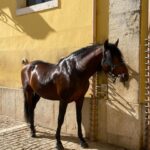
The 11am–1pm Timing Game: Nora Pateo Then Henrique Calado
The whole visit is built around a short schedule, so your main task is simple: show up in time for the right segment.
Here’s how the day breaks down:
- Opening hours: between 11am and 1pm
- Nora Pateo visits: 11am to 12pm
- Henrique Calado Riding Ring (training): 12pm to 1pm, except Wednesday
- Henrique Calado Riding Ring (exhibitions): 12pm to 1pm on Wednesday
If you arrive late, you can miss part of the interpretive route or the training session. That’s the only real “gotcha” here. Plan for a bit of cushion, especially if you’re navigating Lisbon streets and getting oriented before you reach the meeting point.
Behind the Scenes in the Stables: Warm-Ups, Handlers, and Agility Work
The best part of this kind of equestrian visit is that you don’t just see the final shapes you’d expect from a court-style routine. You see how that control is built.
You’ll watch warm-up work and agility exercises performed by riders, with handlers preparing horses for high-level galas and performances. Riders wear authentic period costumes, which is great for the mood, but it also helps you keep an eye on what matters: balance, rhythm, and the steady progression from basic readiness into more precise movements.
One of the most satisfying aspects—based on real visitor experiences—is that you can walk among the horses, riders, and stables area. That gives you a better sense of scale and timing than standing behind barriers alone. You’re also likely to be able to explore the stable spaces more or less on your own, and an audio guide may be available. If you enjoy learning at your own pace, that self-guided time can turn a short visit into something more memorable.
Practical tip: wear shoes you feel good standing in, because you’ll be in and around working spaces where people are moving and horses can shift attention toward activity.
Nora Pateo Interpretive Route: How to Read What You’re Seeing
The Nora Pateo interpretive route is where the visit earns its “you’ll understand more than you think” reputation. You’re not just watching movements; you’re given context about the history and techniques of Portuguese equestrian art.
Even without deep technical knowledge, this section helps you notice patterns:
- how riders transition between actions,
- how horses respond to training cues,
- how the work prepares for the later choreographed routines.
Think of it as your quick decoder ring. If you go straight to the arena with no context, the training can still be impressive. With the interpretive route, it becomes easier to understand why certain movements are trained and repeated.
Time is tight here, though: Nora Pateo is only listed from 11am to 12pm. If interpretive learning is a big reason you’re going, make sure you don’t cut it short.
Henrique Calado Arena: The Court-Style Training Session (and the Wednesday Twist)
The Henrique Calado Arena is the main stage moment. After the stables and interpretive route, you move into a space where riders and horses perform choreographed routines to music—recreating the ambiance of the Portuguese court.
Stage lighting matters here. It’s not just for “pretty.” Good lighting helps you follow body positions and movement lines. Court-style equestrian work depends on tiny changes—turns, pauses, and rhythmic transitions—and lights that flatter the riders and horses make those details easier to catch.
Wednesday works slightly differently: instead of the training label, you’re scheduled for exhibitions from 12pm to 1pm. Either way, you’re going to see structured work with a performance feel. The key is that the session is tied to the 12pm–1pm window, so your arrival timing still matters.
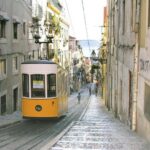
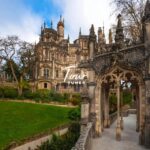


Price and Logistics: The $9 Value Check
At $9 per person, this is priced like a budget-friendly cultural stop, not a luxury tour. The value comes from what’s included:
- Portuguese School of Equestrian Art entry ticket
- Access to the Henrique Calado Arena
- Interpretative route at Nora Pateo
What you don’t automatically get:
- Hotel pickup and drop-off
- Food and drinks
- Queluz National Palace entry ticket
- Queluz National Gardens entry ticket
That last point is important for your budget math. Even though the equestrian school is located in the Queluz palace grounds, the palace and gardens entry tickets aren’t included in your equestrian visit. If you want the full Queluz site experience (palace rooms and garden areas), you’ll need to account for additional tickets. If you only care about the equestrian training, then the $9 is a very lean way to experience an otherwise niche tradition.
Also, the experience includes a ticket-line skip, which is helpful in any busy travel rhythm. You still need to be at the right place at the right time.
Getting There From Calçada da Ajuda (and What to Expect When You Arrive)
Your meeting point is CALÇADA DA AJUDA (near the number 23). That means you should plan to be on your feet getting from there to the venue. There’s no pickup included, so think of this as a walk-and-stroll Lisbon outing.
A couple “know before you go” items are worth attention:
- Wheelchair accessible is listed, but there are access restrictions to the cabin and south stall due to stairs.
- Opening hours and slot timing are short, so don’t treat this as a casual, stroll-in-anytime activity.
If you’re traveling with mobility concerns, it’s smart to plan around what you can reach comfortably and what areas may be off-limits.
Who Should Book This Morning Training Visit?
This one suits you if:
- you like horses and want to see training logic, not just a finished show,
- you enjoy culture with a practical spine—how things are prepared and refined,
- you’re happy with a short visit that rewards smart timing.
It may feel less satisfying if:
- you’re expecting a long, full-length performance experience,
- you want lots of built-in downtime and wandering time,
- you’re only interested in a single dramatic highlight and not the lead-up work.
Balance note: some people found the training portion underwhelming for the price, while others loved the up-close access and stable atmosphere. That tells me the experience depends on your personal focus. If you’re the kind of person who notices warm-ups, pacing, and rider technique, you’ll probably feel like $9 is a steal. If you only care about the most spectacular minute, you might wish the schedule lasted longer.
Should You Book?
If you want an authentic, skill-first equestrian experience in Lisbon, I’d book it—especially for the price. The included interpretive route at Nora Pateo and the arena access make this more than a basic “sit and watch” event.
Book it if:
- you can arrive by 11am and catch the Nora Pateo slot,
- you’re into Portuguese equestrian tradition and the Lusitano way of moving,
- you want close-up working-stable energy.
Skip it or reconsider if:
- your schedule makes it hard to hit the 11am–1pm window,
- you’re looking for a longer, standalone show with less standing around.
FAQ
Where does this experience meet?
The meeting point is on CALÇADA DA AJUDA near the number 23.
How long is the experience?
It’s listed as a 1-day experience, with activities scheduled during the morning window.
What are the opening hours and time slots?
Opening hours are between 11am and 1pm. Nora Pateo visits run from 11am to 12pm. Henrique Calado training runs from 12pm to 1pm, except Wednesday when exhibitions run then.
Is there a different schedule on Wednesday?
Yes. On Wednesday, the Henrique Calado Riding Ring session is listed as exhibitions from 12pm to 1pm instead of training.
What’s included in the ticket price?
The ticket includes entry to the Portuguese School of Equestrian Art, access to the Henrique Calado Arena, and the interpretative route at Nora Pateo.
Are food and drinks included?
No. Food and drinks are not included.
Do I need tickets for the Queluz National Palace and gardens?
Yes. Queluz National Palace entry ticket and Queluz National Gardens entry ticket are not included.
Is it wheelchair accessible?
It’s listed as wheelchair accessible, but there are accessibility restrictions to access the cabin and south stall because stairs are involved.