REVIEW · ALFAMA & OLD TOWN TOURS
Full Day Lisbon Tour Baixa Chiado with Alfama and Belem
Book on Viator →Operated by Take Lisboa · Bookable on Viator
Lisbon clicks into place on foot. This full-day route strings together Belém, Baixa-Chiado, and Alfama with included monument time and pay-attention-to-the-details history.
I love that you get real access at the big-set pieces: Torre de Belém and the Mosteiro dos Jerónimos. I also like that lunch time is built in but flexible, so you can reset at Time Out Market instead of eating on the run.
One consideration: it’s a long 9-hour walk with some steep lanes in Alfama. If you hate hills, or you’re slow in crowds, plan to pace yourself and wear good shoes.
In This Review
- Key highlights to look for
- A full-day route that actually covers Lisbon’s best “story beats”
- Belém’s Tagus walk: Torre de Belém, Discoveries symbols, and river history
- Jerónimos Monastery: where Manueline style feels real (not just decorative)
- Pastéis de Belém: included taste with a full backstory
- Lunch timing at Time Out Market: a 90-minute reset you can control
- Baixa-Chiado icons: Terreiro do Paço, Rua Augusta, and the Arco do Triunfo
- Viewpoints that make Alfama feel like a living maze
- Alfama’s streets and churches: where the 1755 story shows up in stone
- Lisbon Cathedral (Sé): layers under one roof
- Saint Anthony’s Church: birthplace, crypt, and an earthquake-sparing image
- Conceição Velha: Manueline facade survivors
- The backstreets between big sights: São Roque and Casa dos Bicos
- Convento do Carmo: Gothic scale and the earthquake’s mark
- Igreja de São Roque: a simple face with valuable chapels
- Casa dos Bicos: diamond façade and a modern literary home
- Ending at Arco do Triunfo and Rossio’s Praça Dom Pedro IV vibe
- Price and value: what you pay for (and what you don’t)
- Who should book this, and who should skip it
- Should you book this tour?
- FAQ
- How long is the full-day tour?
- What time does the tour start, and where do we meet?
- Where does the tour end?
- What’s included in the price?
- Is lunch included?
- Is this tour good for people with limited mobility?
- How large is the group?
- What happens if it’s bad weather?
Key highlights to look for
- Belém in the morning: Tagus views plus Portuguese Discoveries landmarks, including Wind Rose Square and Jerónimos Monastery
- The original Pastéis de Belém: a hands-on taste of Lisbon’s bakery story, not just a generic dessert stop
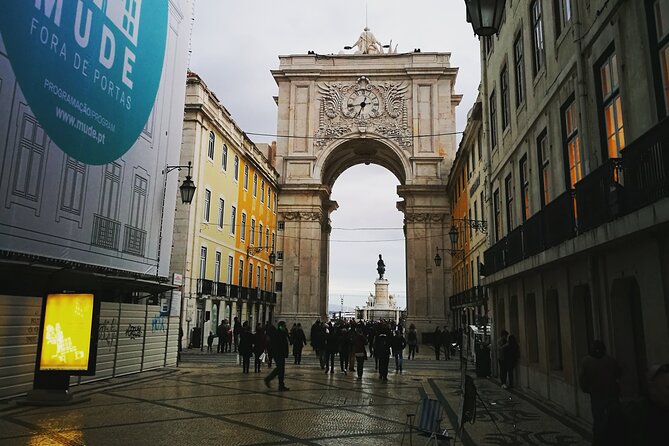
- Baixa-Chiado icons: Terreiro do Paço, Rua Augusta, and the Arco do Triunfo set up easy photo lines
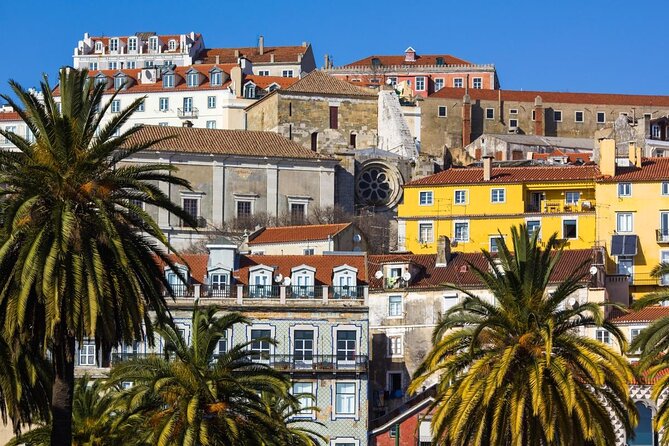
- Viewpoints that frame the city: Santa Luzia’s tiled lookouts and São Pedro de Alcântara’s big panorama over Alfama
- Alfama on foot: surviving streets and churches tied to the 1755 earthquake story
- Small-group energy: max 20 adults, with a guide who keeps the day structured and lively
A full-day route that actually covers Lisbon’s best “story beats”
This tour works well if you want Lisbon to make sense fast. Instead of scattering sights across several separate days, you get a clear arc: Portuguese exploration energy in Belém, royal-city rebuilding in Baixa, then the older, hillside soul of Alfama.
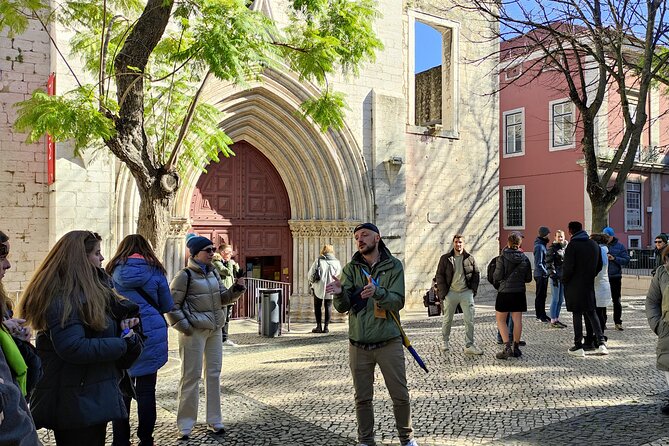
The group stays small (up to 20), and that matters when you’re walking tight lanes and changing elevations. You’ll also get a lot of guide-led narration, with local suggestions sprinkled in so you can keep exploring after the tour ends. It’s the kind of day that helps you decide what to return to on your own.
You start at 9:00 am at Avenida Brasília (Av. Brasília, 1400-038 Lisboa) and finish near the São Pedro de Alcântara viewpoint. Plan for a true day out: it’s listed at about 9 hours.
You can also read our reviews of more tours and experiences in Lisbon

Belém’s Tagus walk: Torre de Belém, Discoveries symbols, and river history
The day begins in Belém, where Portugal’s ocean power is written into stone. You’ll start at Torre de Belém with about 30 minutes there, and that entrance is included. This tower is one of those landmarks you recognize instantly, even if you’ve never been. The added value is the way the guide connects it to the maritime era rather than treating it like a standalone photo spot.
Right after, you’ll move along the river area in Belém with time to stroll and absorb the atmosphere. You’ll learn about the background of the Portuguese Discoveries here, not just in theory but with the sights around you as your cues.
There’s also a quick stop at Padrão dos Descobrimentos, the big caravel monument with Henry the Navigator leading the story. You won’t go inside, which is totally fine because the real win is understanding what the monument is trying to communicate at a glance.
Next up is Rosa dos Ventos, the Wind Rose Square. The scale is hard to miss: a wide map-like design and compass rose built into the plaza geometry. It’s a clever, visual way to talk about navigation without turning the day into a museum lecture.
Practical tip: Belém mornings can feel windy near the river. Bring a layer you can handle, especially if you’re starting early.
Jerónimos Monastery: where Manueline style feels real (not just decorative)
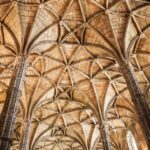
The highlight of the morning is Mosteiro dos Jerónimos. You get about 1 hour, and the entrance is included. This is the stop where Portuguese Gothic/Manueline details click—especially because the building was tied to the return of Vasco da Gama and the resources that followed Portugal’s overseas trade.
The guide’s job here is big: the architecture can look like “cool carving” if you see it fast. With a structured tour, you’re more likely to notice patterns, the grandeur of the cloister spaces, and how the site connects to an older port area called Ermida do Restelo.
Worth knowing: in some monument spaces, the guide may not be able to provide detailed info once you’re inside. That’s normal for guided access in Europe. You’ll still get the context, and you can use the time on-site to look closely and soak up what you can.
If you care about the period beyond the postcard version, Jerónimos is where this tour earns its money.
Pastéis de Belém: included taste with a full backstory
You don’t just get a pastry stop. You get the origin story. The tour includes the original Pastéis de Belém (about 15 minutes).
Here’s what makes it more than a snack: the pastries link to the closing of convents after the Liberal Revolution and how production continued through a pastry shop connected to the monastery world. You also hear how the production began in the 19th century and how the recipe was kept by master confectioners, made by hand.
Practical tip: Pastéis are best when you eat them soon after you buy them. Don’t treat it like a later dessert you’ll remember. Take the first warm moment and enjoy it.
Lunch timing at Time Out Market: a 90-minute reset you can control
After Belém, you’ll head toward the historic center for the afternoon walking. Lunch is set at Time Out Market Lisboa with a 90-minute break. The meal itself is not included, but the timing is perfect for a real recharge.
Time Out Market is a former food market space with lots of options—especially if your group has mixed tastes. If you’re traveling solo, it’s still a good bet because you can choose something quick without abandoning the rest of the day’s pace.
How I’d use the 90 minutes: pick your food order quickly, eat close to your seating spot (don’t wander too long), then come back ready to walk. This tour is long enough that a slow lunch turns the afternoon into a scramble.

Baixa-Chiado icons: Terreiro do Paço, Rua Augusta, and the Arco do Triunfo
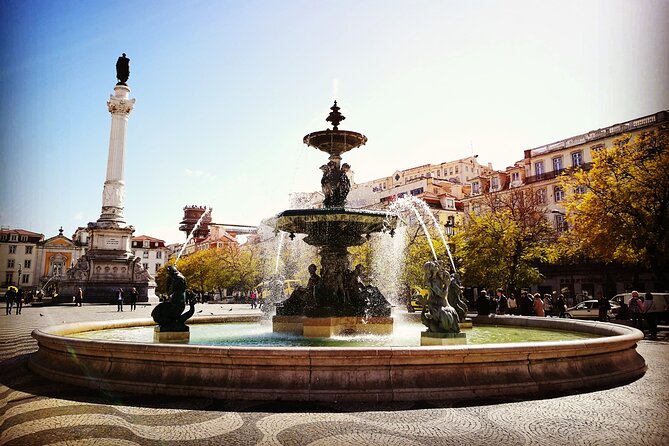
Once lunch is done, the tour shifts to Lisbon’s rebuilding and grand public spaces. You’ll spend time at Praca do Comercio (Terreiro do Paco), one of Europe’s largest squares at about 36,000 square meters with 79 arches. Before the 1755 earthquake, this was the royal palace and official residence area for roughly 250 years.
The guide explains how Marquês de Pombal planned a new city layout, with this square acting as a major symbol. It’s a useful stop because it shows you why modern Baixa looks the way it does.
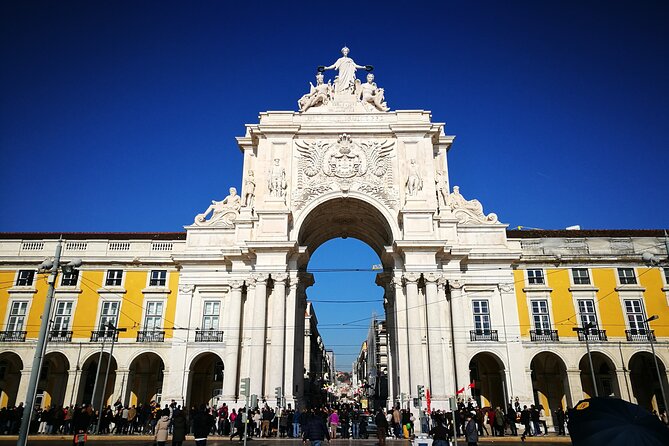
Next, you’ll pass through the Arco do Triunfo, which is also included for entry. It’s a triumphal arch completed in 1873, and it’s more than decoration. The statues and river figures connect it to the Portuguese story of exploration, with figures like Vasco da Gama and Marquês de Pombal placed in a symbolic city-to-sea direction.
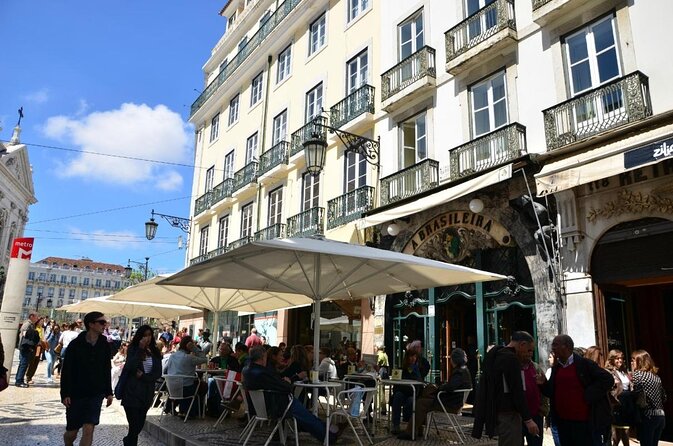
Then there’s Rua Augusta, Lisbon’s liveliest central street, paved with the classic Portuguese calçada. It’s closed to vehicle traffic since the late 1980s, which makes walking and stopping for photos easier. You’ll likely run into street artists and vendors because the street is built for people-watching.
Small reality check: Rua Augusta and nearby areas can feel busy. That’s normal. The tour helps because you move as a group and you’re not trying to navigate it alone.
Viewpoints that make Alfama feel like a living maze
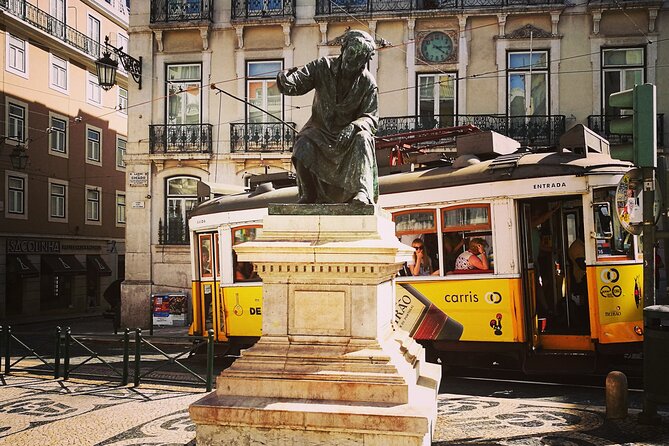
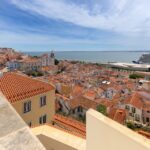
Afternoons on this route are built around viewpoints, and that’s smart. Lisbon’s older neighborhoods don’t read well from street level alone. You need height to connect the roofs, churches, and river lines into one mental map.
First, you’ll visit Miradouro de Santa Luzia. This is often described as a romantic viewpoint, and the visual design supports that: a window-like viewpoint with creepers, framing the labyrinth of Alfama roofs, older churches, and Tagus river activity. There are also tile panels here, connected to the Fábrica Viúva de Lamego, set into the walls near Igreja de São Brás and Igreja de Santa Luzia. If you like architecture details, slow down for these.
Then you’ll reach Miradouro São Pedro de Alcântara. It’s another major lookout with a tile panel by Fred Kradolfer that acts like a landmark guide—showing the Graça Church, São Jorge Castle, and the Cathedral from the viewpoint’s angle.
What to do at viewpoints: don’t just shoot and leave. Stand still long enough to track where you’ll walk later. On a city like Lisbon, that simple habit makes the afternoon feel clearer and more satisfying.
Alfama’s streets and churches: where the 1755 story shows up in stone
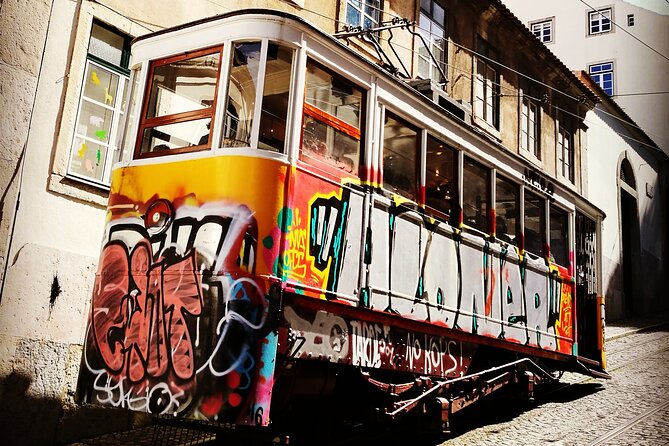
The heart of the day’s older Lisbon experience is Alfama, a historic neighborhood between the castle and the river. The tour gives you around 40 minutes here, and it’s mostly about atmosphere: small shops, taverns, and those tight streets where the city’s age feels personal.
Alfama also has a direct connection to the 1755 earthquake narrative. These typical houses are said to have withstood the quake, which is one reason the neighborhood still feels “real” rather than rebuilt from scratch like some other areas.
As you move through, you’ll also visit several churches and landmark facades that survived or were reconstructed after 1755. These aren’t random stops. They’re part of the same theme: what Portugal rebuilt, what endured, and how style changed.
Lisbon Cathedral (Sé): layers under one roof
You’ll spend about 30 minutes at Lisbon Cathedral (Santa Maria Maior Basilica). Admission is not included, so be prepared to pay separately if you want to go in.
The cathedral’s story is layered: built after the Christian recapture from the Moors, it’s tied to earlier religious structures on the site, including a Muslim mosque and earlier Christian Visigothic space indicated by archaeology. The guide also notes the first architect as Master Roberto, French, and connects the building to other Portuguese works like the Sé of Coimbra.
Even if you only do what you can from the outside, the quake-and-rebuild context makes it worth the stop.
Saint Anthony’s Church: birthplace, crypt, and an earthquake-sparing image
Next is Church of Saint Anthony of Lisbon, about 15 minutes. Admission is free, and it’s built on the birthplace site before Saint Anthony left to preach. The current temple was built after the 1755 earthquake on an older chapel footprint.
The highlights here are the image of the patron saint said to have been spared by the earthquake, plus the crypt marking his birthplace and a canvas representing Saint Anthony’s features. John Paul II is also noted as having visited in 1982.
Conceição Velha: Manueline facade survivors
You’ll also see Igreja de Nossa Senhora da Conceição Velha with about 10 minutes. This one is mainly a facade-and-feeling stop. It’s described as one of the best surviving Manueline structures after the earthquake, with angels, flowers, and religious symbolism arranged in an unusually composed exterior.
This church is a good choice for anyone who likes reading the surface of a building like a text.
The backstreets between big sights: São Roque and Casa dos Bicos
After the viewpoint and cathedral cluster, the tour keeps you moving through a “between major things” style of Lisbon sightseeing—because that’s where you see how the city actually lives.
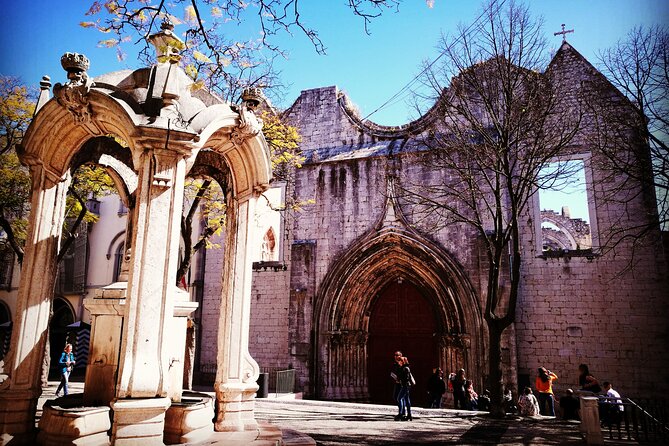
Convento do Carmo: Gothic scale and the earthquake’s mark
Convento do Carmo is about 20 minutes, and admission is not included. The church is tied to a promise made to Our Lady of Carmo and is known as the city’s largest Gothic monument.
The ceiling disappearing during the earthquake on 1 November 1755 is the defining story here. The convent remained standing, and then a later fire consumed much of the artistic heritage. Even if you don’t go deep inside, the building’s survival pattern connects to what you’ve been learning across the day.
Igreja de São Roque: a simple face with valuable chapels
Igreja de Sao Roque runs about 20 minutes with admission free. The origin story links to King Manuel I asking Venice for a relic of São Roque, who was known for miracles against the plague.
The church’s surviving connection is important because it’s said to have endured the earthquake almost intact, and the current building was completed by the Italian architect Filipo Terzi. From outside, the mannerist facade is described as simple, but inside the chapels are where much of the artistic value lives.
Casa dos Bicos: diamond façade and a modern literary home
You’ll also stop at Casa dos Bicos (about 10 minutes). Admission is not included. It’s known for its diamond-shaped stone cladding called bicos, built in 1523 for D. Brás de Albuquerque.
There’s a nice detail here: the design was influenced by a trip the owner took to Bologna, where he saw the Diamond Palace. The building lost its last two floors in the 1755 earthquake and was restored in 1983. Today, it’s headquarters of the José Saramago Foundation.
Even without entering, this is one of those stops that helps you visualize early 1500s Lisbon design habits.
Ending at Arco do Triunfo and Rossio’s Praça Dom Pedro IV vibe
The tour continues through central streets and squares that made Lisbon feel like a stage for centuries of daily life.
You’ll spend around 20 minutes at Praça Dom Pedro IV (Rossio). This square was the heart of Lisbon in the Middle Ages, with fairs, festivals, and bonfires. The guide’s WWII framing is part of what makes this stop memorable: the area is described as one of the largest espionage centers during World War II, with refugees waiting for visas in nearby areas.
Along the way, you also get time at Rua Augusta and other central streets that keep you grounded in what modern Lisbon feels like.
Finally, your route ends near São Pedro de Alcântara viewpoint at R. de São Pedro de Alcântara 85.
Price and value: what you pay for (and what you don’t)
At $110.06 per person for an approximately 9-hour guided walking day, this is priced for travelers who want structure. The value comes from the fact that you’re not paying full price for every single monument on your own.
Included items you should care about:
- Original Pastel de Belém
- Entrance to select iconic monuments (not every stop is ticketed)
- Torre de Belém, Mosteiro dos Jerónimos, and Arco do Triunfo are explicitly tied to included admission
- A guide who keeps the day moving and connects the sites to the Discovery Age and Lisbon’s major historical shifts
Not included:
- Lunch (you get 90 minutes at Time Out Market to choose what you want)
- Some monument entrances are free and some are not included, so be ready for a few extra entry decisions depending on what you choose to do inside
Also, group size stays reasonable at max 20. That’s important for a city like Lisbon where walking is the main mode and hills slow everyone down.
Who should book this, and who should skip it
This tour is ideal for:
- First-time Lisbon visitors who want Belém + Baixa-Chiado + Alfama without planning a route from scratch
- People who like history that’s tied to visible places, not just dates
- Travelers who want a guide-led day with photo stops at the right moments
You might want a different option if:
- You struggle with long walking days and steep streets
- You prefer slow museum time over active street-level sightseeing
- You want every single monument entry to be fully included (some entrances are free, some aren’t)
One more small note: the tour requires good weather, and if it’s canceled for weather you should be offered a different date or a full refund. If you’re booking near the start of your trip, that flexibility can help.
Should you book this tour?
If you want Lisbon to feel coherent after one day, I’d book it. The combination of Belém exploration story, Jerónimos Monastery time, the included Pastéis de Belém, and the viewpoint-to-Alfama flow gives you a strong mental map for the rest of your trip.
Just show up ready for walking, and let the guide’s narration do its job. If you pace yourself and take breaks when needed, this is one of those days that makes the city stick in your memory.
FAQ
How long is the full-day tour?
It runs for about 9 hours.
What time does the tour start, and where do we meet?
It starts at 9:00 am at Avenida Brasília, Av. Brasília, 1400-038 Lisboa, Portugal.
Where does the tour end?
It ends near R. de São Pedro de Alcântara 85, 1200-089 Lisboa, Portugal, close to the São Pedro de Alcântara viewpoint.
What’s included in the price?
The price includes an original Pastel de Belém, a group guided experience (max 20 adults), and entrance to select iconic monuments. Mobile tickets are used.
Is lunch included?
No. Lunch isn’t included, but you get a 90-minute break at Time Out Market Lisboa to buy and eat your own meal.
Is this tour good for people with limited mobility?
The tour is described as suitable for travelers with moderate physical fitness. It’s a walking day, so comfortable mobility and shoes matter.
How large is the group?
The group size is capped at a maximum of 20 travelers.
What happens if it’s bad weather?
The experience requires good weather. If it’s canceled due to poor weather, you’ll be offered a different date or a full refund.