REVIEW · ALFAMA & OLD TOWN TOURS
Privat Walking Tour in Alfama, Baixa, Chiado
Book on GetYourGuide →Operated by Nicifeel Lisboa · Bookable on GetYourGuide
Lisbon changes fast when you walk. This private 3-hour route strings together Alfama, Baixa, and Chiado with viewpoint time and street-level stories that move beyond postcards. I especially like the way the guide brings historic Lisbon to life while pointing out architecture and street art, and I also love the photo stops at major view spots like Portas do Sol. One thing to consider: it’s a solid walking tour on old streets, so plan for 3 hours on your feet and wear closed-toe shoes.
You’ll go with a small group capped at 10, which keeps things relaxed rather than chaotic. The tour includes a taste of local flavor with ginjinha, so you’re not just sightseeing in theory, you’re sampling as you go. If you prefer a totally low-walking outing or you’re traveling with kids under 10, this one may not fit.
In This Review
- Key points that make this Lisbon walking tour click
- A 3-hour Lisbon sampler that covers the neighborhoods you keep pairing together
- Meet at the Statue of S. Vicente: your starting point matters
- Alfama’s old streets (80 minutes): history, street art, and postcard views
- Portas do Sol viewpoint: why you want it early
- Photo stop expectations
- Baixa de Lisboa and Praça do Comércio (30 minutes): the city opens up
- What you’ll get from the shorter stop
- Santa Justa Lift (10 minutes): a fast landmark that still pays off
- Chiado and Rossio Square (40 + 20 minutes): shopping streets, square energy, and more photos
- Why this pairing works
- Miradouro de São Pedro de Alcântara finish: end with a view and a calmer walk home
- Price and value: does $58 make sense for 3 hours and a small group?
- What the included ginjinha actually adds to your experience
- Pace, walking comfort, and the rules that keep things smooth
- Languages and guide style: why Ingo’s approach is a standout
- Who should book this Alfama–Baixa–Chiado walk?
- Should you book it?
- FAQ
- Where does the tour start?
- How long is the tour?
- What is the price per person?
- How big is the group?
- Which neighborhoods and stops are included?
- Is ginjinha included?
- What languages are offered?
- Do I need closed-toe shoes?
- Is there any cancellation flexibility?
- Can I reserve and pay later?
Key points that make this Lisbon walking tour click
- Alfama first, with proper photo time so you start in the most atmospheric neighborhood
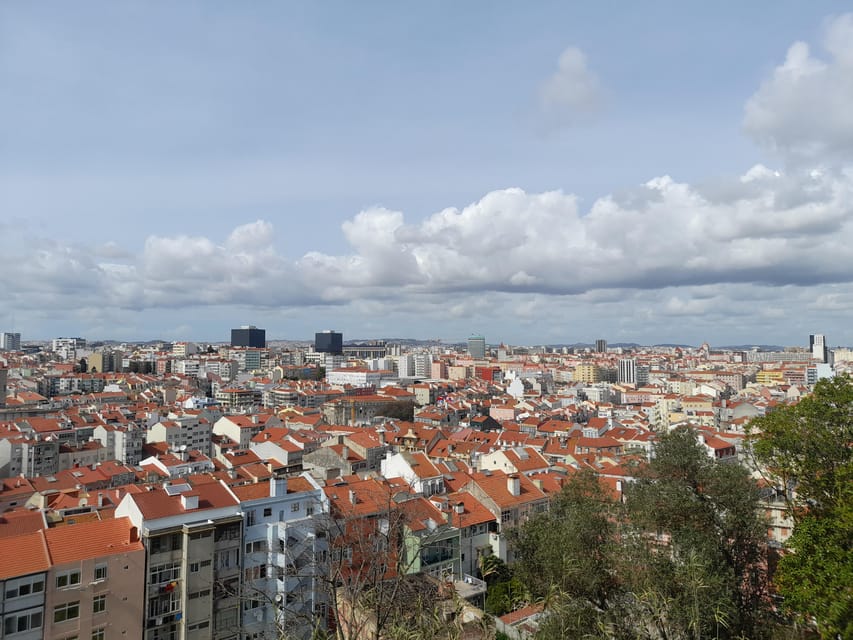
- Portas do Sol viewpoints where Lisbon’s layout suddenly makes sense
- Baixa and Praça do Comércio for the more open, classic downtown feeling
- Santa Justa Lift stop for a quick, high-impact landmark moment
- Chiado and Rossio Square to link “old Lisbon” to the city’s everyday center
- Small group (max 10) plus a live guide including ginjinha
A 3-hour Lisbon sampler that covers the neighborhoods you keep pairing together
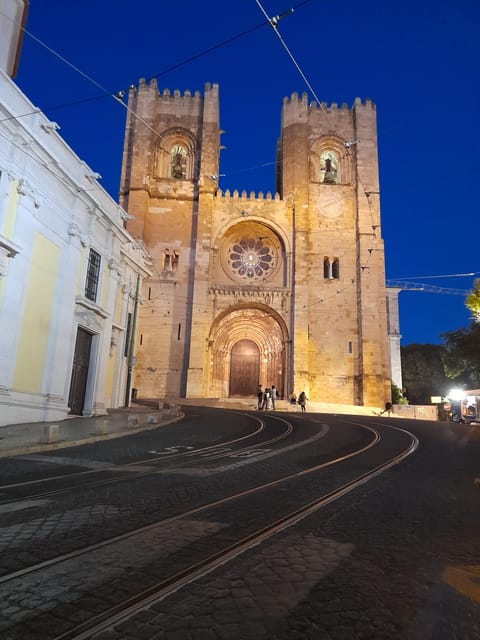
This is one of those Lisbon itineraries that makes sense on day one, or anytime you want a clean overview without hopping around by bus. You cover a lot of territory in 3 hours: Alfama, Baixa, Chiado, and key central squares and viewpoints. The pacing is framed as a leisurely stroll, not a workout, which matters when you’re trying to enjoy street life instead of just covering distance.
The big win is that the tour isn’t only about landmarks. You’re guided through old streets, with stops built in for photos and explanations, plus you’ll also notice street art and architectural details as you move. That mix is what turns a “look and leave” tour into a “I get it now” walk.
The group size stays small (limited to 10), so questions don’t get lost in the crowd. You also get multilingual guiding in German, Spanish, or English, which is great if your group has mixed language comfort.
You can also read our reviews of more walking tours in Lisbon

Meet at the Statue of S. Vicente: your starting point matters
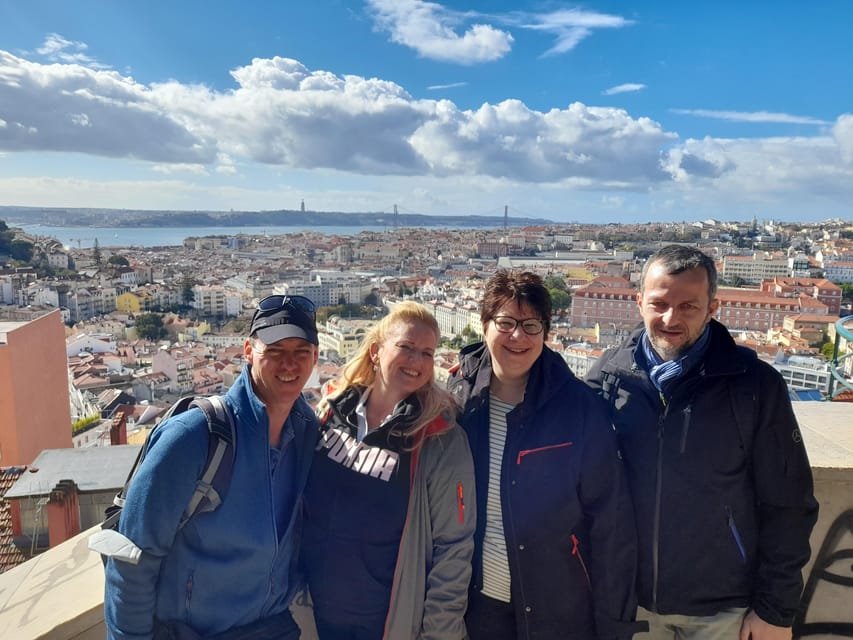
You meet your guide at the statue of S. Vicente. Starting there is practical because it puts you in the flow of the Alfama side of town right away, instead of making you play catch-up later. It also helps the tour settle into that old-streets vibe immediately.
From the beginning, you can expect a guide-led pace designed for listening. The tour description emphasizes that the guide will inspire you with the ancient layers of Lisbon and show you where to look. In plain terms: you’re not just following directions, you’re learning how to read the streets as you walk.
I also like that the tour is framed around your interests. The guide is said to read your wishes and adjust what you pay attention to. That’s what you want in a city like Lisbon, where you can easily spend hours on the wrong kind of “sightseeing” (the rushed, photo-only version).
Alfama’s old streets (80 minutes): history, street art, and postcard views
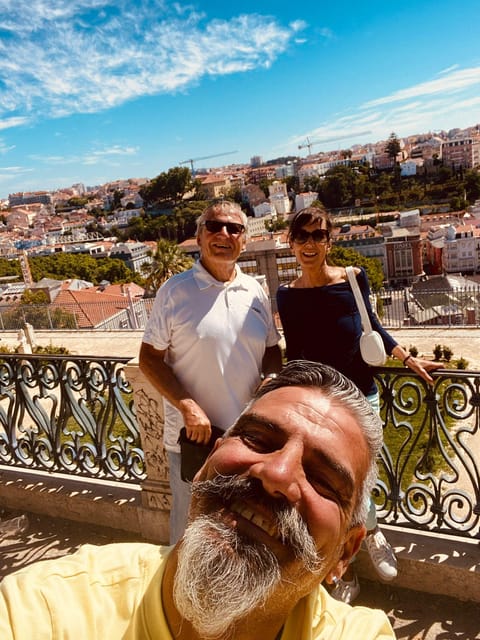
Alfama is where this tour earns its name. You’ll get a long block of time here, including a photo stop and guided walking for about 80 minutes. That’s enough time to slow down and actually notice details instead of sprinting between corners.
What makes this part special is the combination of setting and storytelling. The tour focuses on the idea of ancient history tied to one of the first kings, plus you’ll encounter architecture and street art along the way. Even if you’re not a “facts on demand” person, the guide’s explanations help you see why Lisbon looks the way it does and how old neighborhoods carry their own logic.
Portas do Sol viewpoint: why you want it early
The highlight list calls out Portas do Sol, and I’m glad it’s part of the route. Viewpoints in Lisbon don’t just give pretty pictures. They also help you understand how neighborhoods connect. After you stand and look, the streets you walk through later feel less random.
If your goal is getting oriented fast, this is one of the best ways to do it. You’ll see the city’s layout and get a sense of where Baixa and the downtown grid will be in relation to Alfama.
Photo stop expectations
Photo stops are built into the tour flow. That sounds obvious, but it changes the experience. You’re not constantly stopping abruptly. Instead, the guide pauses at the right moments so you can take pictures without holding up the whole group too long.




Baixa de Lisboa and Praça do Comércio (30 minutes): the city opens up
Next comes Baixa de Lisboa for about 30 minutes, with guided tour and walking. This is the part where Lisbon shifts gears. Alfama is all twists and texture; Baixa feels more structured and centered.
The highlights include Praça do Comércio, and that makes sense for how Baixa functions in real life. Praça do Comércio is a classic downtown anchor, and the way you experience it on foot is different from viewing it from afar. You can see how wide open space changes the mood compared with the tighter old streets.
What you’ll get from the shorter stop
Thirty minutes doesn’t sound like a lot, but it’s enough for two useful things:
- to connect the street-level story you learned in Alfama with the more public, civic feel of downtown, and
- to reset your pace before the next landmark stop.
This segment is also smart for readers who want variety without fatigue. If you’re trying to maximize a short trip, this middle section keeps you from feeling like you’re stuck in only one neighborhood style.
Santa Justa Lift (10 minutes): a fast landmark that still pays off
Santa Justa Lift is only around 10 minutes in the itinerary, but don’t dismiss it. A short stop can be ideal when the goal is recognition and orientation rather than a long indoor visit.
Here, the guide still provides context through a photo stop and brief guided talk. Think of it as a “bookmark” in the tour. You’ll know where you are in Lisbon’s bigger story, and you’ll have a landmark reference point for later when you explore on your own.
Even if you’re not planning to spend hours with a single attraction, a quick, guided moment like this helps you connect the dots across neighborhoods.
Chiado and Rossio Square (40 + 20 minutes): shopping streets, square energy, and more photos
After Santa Justa Lift, you’ll reach Chiado for about 40 minutes, then Rossio Square for about 20. Combined, this section makes the tour feel like a full Lisbon cross-section rather than a “historic neighborhoods only” loop.
Chiado is where street life can feel calmer than Alfama but still very alive. You’ll have photo stops and guided walking, so you can expect time to frame views and details while the guide fills in the why behind what you’re seeing.
Rossio Square adds a sense of central gravity. Squares matter in Lisbon because they act like social hubs, meeting points, and wayfinding landmarks. Even if you don’t plan to hang around for hours, seeing Rossio as the tour’s next anchor point helps you map the city in your head.
Why this pairing works
I like that Chiado and Rossio don’t compete with the viewpoints. They complement them. By the time you get here, you’ve already built up a mental picture from Portas do Sol and earlier stops, so the downtown energy feels less overwhelming.
Miradouro de São Pedro de Alcântara finish: end with a view and a calmer walk home
The tour finishes at Miradouro de São Pedro de Alcântara. That’s a strong finish, because miradouros in Lisbon are best when you end on them. You get the payoff of all that walking with a wide, settling view.
Finishing here is practical, too. It signals the end of the structured tour while still leaving you in a place where you can naturally continue wandering or connect to whatever plan you have next.
If you’re the type who likes to end sightseeing with a clear “moment,” this is it: the last stop is designed for looking outward, not just moving along.
Price and value: does $58 make sense for 3 hours and a small group?
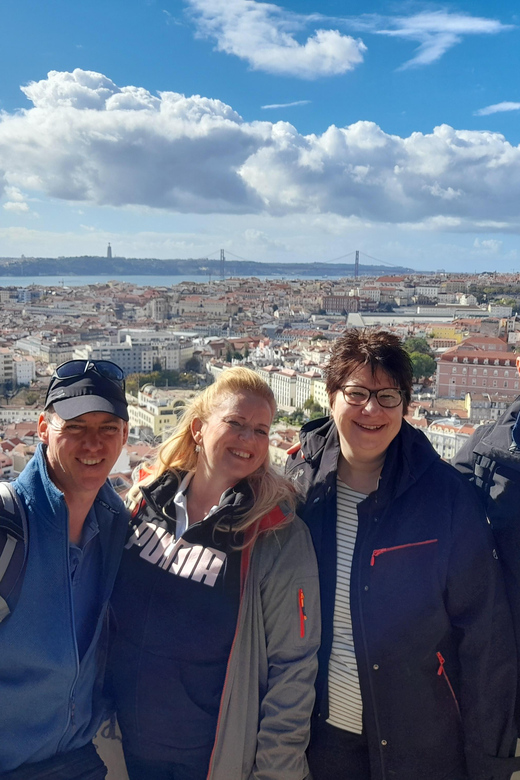
At $58 per person for a 3-hour private walking tour, the math works best if you care about guidance, timing, and a route that strings multiple neighborhoods together cleanly. This isn’t a barebones self-guided idea. You’re paying for a live guide, included ginjinha, and the structure of photo stops across key areas.
Here’s the value breakdown in plain terms:
- Small group (max 10) keeps the experience personal enough that you can ask questions and move at a comfortable pace.
- Multiple neighborhood transitions save you from planning a route yourself, especially if you’re short on time.
- Ginjinha included means you get a simple local taste without stopping to figure out where to buy it.
- The route hits big recognition points like Santa Justa Lift and downtown anchors, while still spending real time in Alfama.
One caution on value: this price is for the tour experience, not for extra admissions. If you’re the kind of traveler who wants to skip interpretation and only collect major sites, you might feel like you’re paying for talking time as well as walking time. If you enjoy context, this is a solid deal.
What the included ginjinha actually adds to your experience
Ginjinha is included, so it’s not an afterthought. In practice, it turns the tour into something more like a shared local moment. You’re walking Lisbon, learning Lisbon, then you get a taste of the city as part of the rhythm.
Just remember the tour explicitly does not allow alcohol and drugs. Since ginjinha is included, you’re not expected to bring your own drinks and you won’t be turning the tour into a party.
If you’re on the fence about trying it, this is an easy way to do it once, in a guided setting, without you having to hunt down the right spot.
Pace, walking comfort, and the rules that keep things smooth
This is a walking tour through older areas, and that affects comfort more than you’d think. The requirement to bring closed-toe shoes is there for a reason. Wear shoes you can walk in confidently for the full 3 hours.
It also isn’t set up for very young kids. The tour is not suitable for children under 10. That usually means it’s paced and explained in a way that works best for older kids and adults.
The tour is also described as not allowing alcohol or drugs, which helps keep the group focused and respectful. If you’re traveling with a small group and you want everyone to stay on the route without distractions, that’s a good sign.
Languages and guide style: why Ingo’s approach is a standout
The tour runs with live guides in German, Spanish, and English. That language flexibility matters because walking tours can get frustrating if your guide and your group are mismatched.
One name you may run into is Ingo, mentioned as a guide who brings real enthusiasm and detailed historical knowledge. I like that combination. Some guides can recite facts; others can make the facts feel like stories you can use. Ingo is also described as sharing tips for restaurants off the tourist path, which is exactly what helps after the tour ends.
The short version: if you want a guide who doesn’t just point and talk but also helps you plan what comes next, this format is a good bet.
Who should book this Alfama–Baixa–Chiado walk?
This tour fits best if you want:
- a structured way to cover Alfama, Baixa, Chiado, and central Lisbon in one go,
- viewpoint time plus guided explanations that make the streets feel meaningful, and
- a small group experience where questions stay possible.
It may be less ideal if:
- you strongly dislike walking for 3 hours,
- you’re traveling with kids under 10, or
- you only want to check boxes and move on immediately without interpretation.
Should you book it?
I’d book this private walking tour if you want Lisbon to feel connected instead of fragmented. Spending the longest time in Alfama, hitting Portas do Sol, then transitioning through Baixa to Chiado and ending at Miradouro de São Pedro de Alcântara is a smart route for seeing the city’s mood shifts in a single afternoon.
If $58 fits your budget and you’ll appreciate a guide who can explain what you’re seeing (plus include ginjinha), this is a strong value choice. If you’re sensitive to time on your feet, skip it and look for something shorter or more segmented.
FAQ
Where does the tour start?
Meet the guide on the statue of S. Vincente.
How long is the tour?
The tour lasts 3 hours.
What is the price per person?
The price is $58 per person.
How big is the group?
It’s a small group limited to 10 participants.
Which neighborhoods and stops are included?
You’ll cover Alfama, Baixa de Lisboa, Santa Justa Lift, Chiado, Rossio Square, and you finish at Miradouro de São Pedro de Alcântara.
Is ginjinha included?
Yes, ginjinha is included in the tour.
What languages are offered?
The live tour guide is available in German, Spanish, and English.
Do I need closed-toe shoes?
Yes. The tour specifies bringing closed-toe shoes.
Is there any cancellation flexibility?
You can cancel up to 24 hours in advance for a full refund.
Can I reserve and pay later?
Yes. You can reserve now and pay later.