REVIEW · FOOD
Private group Lisbon Roots, Food & Cultural Walk
Book on Viator →Operated by Taste of Lisboa Food Tours · Bookable on Viator
Lisbon tastes better when you walk off the main route. This private group Lisbon Roots, Food & Cultural Walk blends local food stops with real neighborhood history, especially around Mouraria, the birthplace of fado.
I like that it’s built as a true food walk: you get more than 10 tastings plus wine and other drinks, spread across local places. I also like the balance of bites and context, so places like São Domingos Church and Rossio Square feel connected to what you’re eating, not like random sightseeing.
One thing to plan for: you’ll be on cobblestones with uphill bits and steps, so you’ll want moderate stamina and comfy shoes.
In This Review
- Key highlights before you go
- Price and what you actually get for $325.60
- Starting where Lisbon locals actually gather
- Stop-by-stop: what each part is really for
- 1) Mouraria introduction: fado roots and 10+ tastings
- 2) Igreja de São Domingos: a church shaped by catastrophe
- 3) Rossio Square: the city’s meeting point with a past
- 4) Elevador de Santa Justa: the ironwork shortcut (and a view)
- 5) Mouraria’s Fado monument: why this neighborhood keeps singing
- 6) Igreja micro-stories (and another Lisbon layering moment)
- 7) Praça da Figueira: from a major hospital site to today’s city life
- 8) Martim Moniz: tram 28 energy and Mouraria’s gate
- 9) Chapel of Our Lady of Health: a plague protector with a long timeline
- 10) Largo de São Domingos: tolerance in 34 languages and a cherry brandy shop
- 11) Memorial to victims of the 1506 massacre: heavy context, not a side note
- What you’ll eat and drink: why it feels like a real education
- The guide matters more than most people think
- Who should book this (and who should skip it)
- Quick practical tips to make your walk smoother
- Should you book this Lisbon Roots Food & Cultural Walk?
- FAQ
- How long is the tour?
- Is the tour private?
- What does the tour include?
- What is not included?
- How hard is the walking?
- Where do I meet the guide?
- Can the tour adjust for dietary restrictions?
- What’s the cancellation window for a full refund?
Key highlights before you go
- Private, flexible pacing for your group instead of the big-tour herd.
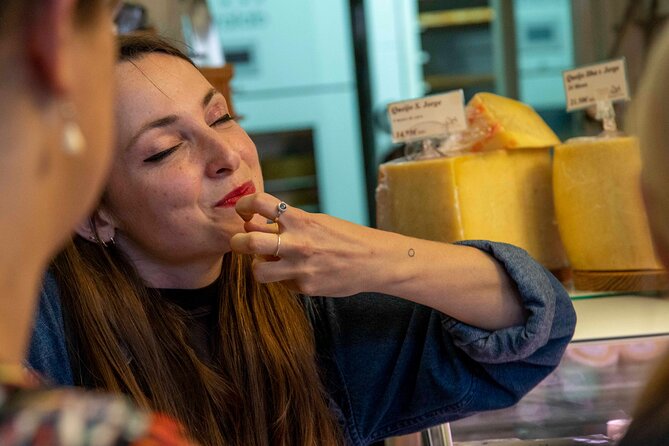
- 10+ tastings paired with wine and alcoholic beverages at the stops.
- Mouraria focus: fado roots, multicultural Lisbon, and key local landmarks.
- Church and square stops with clear stories about earthquakes, fires, and older Lisbon.
- A good workout without being a full hike, but you’ll feel it on old streets.
Price and what you actually get for $325.60
At $325.60 per person for about 3 hours 30 minutes, this isn’t a budget “grab and go” tour. It’s priced more like an all-in experience: a local guide, multiple tasting stops, and drinks are part of the package, not add-ons you discover later.
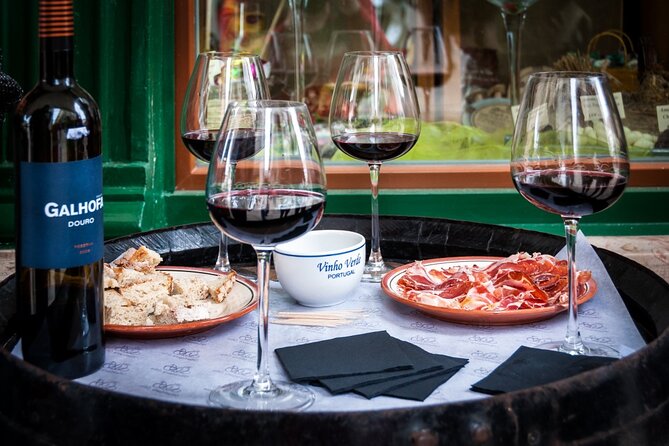
The value shows up in the structure. You’re not just tasting one snack and calling it a day—you’re doing 6 stops with 10+ tastings, plus coffee/tea and snacks. And because you’re on a private group format, the guide can keep the rhythm matched to your pace (instead of stopping every two seconds for a crowd).
The trade-off is time and intensity. You’re walking a lot for 3.5 hours, and you won’t have time to “wander” like you might on your own. If you like slow museum-style pacing, you may prefer another kind of tour.
You can also read our reviews of more walking tours in Lisbon
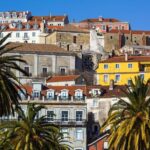

Starting where Lisbon locals actually gather
You meet at Largo São Domingos (St. Dominic’s Square). That’s a smart choice because it places you right in the atmosphere of Mouraria, where locals and longtime families still shape the neighborhood day-to-day.
The walk then finishes at Confeitaria Nacional, Praça da Figueira 18B. Ending near a famous pastry stop is handy: you can keep the food theme going, or just grab coffee and decompress after the climbs.
If you’re thinking about timing, the tour runs Monday–Saturday, 9:30 AM to 8:30 PM. Pick a time when you’re not rushing to catch another reservation right afterward—this is the kind of walk that builds appetite and then keeps feeding it.
Stop-by-stop: what each part is really for
1) Mouraria introduction: fado roots and 10+ tastings
The first (and main) leg takes you from older Lisbon layers to today, while anchoring the story in Mouraria. This neighborhood is famous as the birthplace of fado, and the tour uses that idea to explain why food and music can feel like the same thing here: working-class life, community, and traditions carried on through families and small shops.
You’ll hit off-the-beaten-path streets, with at least 6 tasting stops and 10+ tastings total. That’s the tour’s core value—multiple bites instead of one big meal. And you’ll likely taste Portuguese staples and influences rather than only “tourist Portuguese” (the stuff that shows up in souvenir-shop versions of a dish).
Practical note: the tour’s physical level is listed as medium, and that’s accurate. Expect cobblestones, some uphill, and steps down and up—classic Lisbon street design.
2) Igreja de São Domingos: a church shaped by catastrophe
After the food and neighborhood orientation, you pivot to history at São Domingos Church (original from the 13th century). The church has survived Lisbon’s hardest moments: earthquakes, a major fire, and long closures.
What I find useful about this stop is how it ties Lisbon’s “survival mindset” to places you’ll keep seeing in the city. You walk past streets that look ordinary, then learn how many times the city rebuilt itself—and why today’s interiors can feel simpler than the dramatic exterior stories.
No ticket cost here: admission is free.
You can also read our reviews of more food & drink experiences in Lisbon


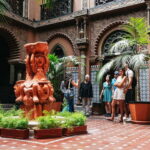


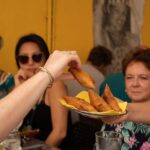
3) Rossio Square: the city’s meeting point with a past
From there, you reach Rossio, officially Praça de D. Pedro IV. This is the central square feel of Lisbon: flower vendors, shoppers, and people cutting across the city.
You’ll also learn why Rossio matters beyond photos. It’s been the stage for major moments—revolts, celebrations, and executions—and today it’s still the kind of place locals use as a default meeting spot.
This stop works well as a reset. After tastings and stairs, you get a broad open space with easy orientation.
4) Elevador de Santa Justa: the ironwork shortcut (and a view)
If you include the Elevador de Santa Justa experience, you’re talking about one of Lisbon’s best-loved landmarks. The elevator, built in 1902, connects downtown to Bairro Alto, and it’s built in that iron architecture style that people often associate with the Eiffel-era boom.
The top is where the payoff is: you can look out over Rossio Square, the castle, and toward the river. The climb is spiral-staircase style, so it adds a bit more effort, but it’s short.
Important cost note: admission is not included for this stop. You’ll need to decide on the spot if the view is worth the extra ticket.
5) Mouraria’s Fado monument: why this neighborhood keeps singing
Next is the Monumento Mouraria Berço do Fado, a marble memorial tied to fado’s story. It’s designed around the Portuguese guitar and includes names and references to major figures connected to fado’s development in Lisbon—like Maria Severa and Fernando Mauricio.
This stop makes Mouraria feel less like a “background neighborhood” and more like a cultural engine. It’s also a great place to pause, take a photo, and let your guide connect fado storytelling to what you tasted earlier.
Admission is free.
6) Igreja micro-stories (and another Lisbon layering moment)
You’ll also make time for another church-related stop in the route—one that ties together 12th–18th century changes. The details here matter because Lisbon is a city of rebuilds, repairs, and survivals, not one-and-done architecture.
That’s the theme: the tour keeps showing how older Lisbon keeps reappearing, even when disaster hits.
7) Praça da Figueira: from a major hospital site to today’s city life
Praça da Figueira is one of those squares where you can feel the city thinking in layers. Before the 1755 earthquake, it was the site of the All-Saints Hospital, and you can learn how foundations ended up exposed during construction of the underground car park.
The tour also flags an older downtown plan connected to the Marquis of Pombal, plus a bronze equestrian statue of D. João I (set up in 1971).
Admission is free, and this stop is a good “end-zone” preview as you move toward the finish area near Confeitaria Nacional.
8) Martim Moniz: tram 28 energy and Mouraria’s gate
At Praca Martim Moniz, you’re at the starting point of the famous tram 28. Even if you don’t ride it, the area gives you that “gateway” feeling—like you’re stepping into Lisbon’s older core.
The tour also describes the square as a mini Chinatown vibe, with Saint George Castle in the view direction and Martim Moniz acting like a gate into Mouraria. That matters because Mouraria isn’t just historic—it’s multiethnic, and the daily life is part of what you’re seeing, not only what you’re reading.
Admission is free.
9) Chapel of Our Lady of Health: a plague protector with a long timeline
The Capela de Nossa Senhora da Saude is a key Mouraria landmark, built in 1505 by artillerymen from the Lisbon garrison. It ties together religious devotion with public fears of the time—especially war, famine, and plague.
Originally dedicated to St. Sebastian, it later became known as Our Lady of Health, including works after the 1755 earthquake and an 18th-century portal attribution.
If you like when tours slow down and let you look at details, this is a good stop. You’re also told about the tradition of a thanksgiving procession on the first Sunday of May.
Admission is free.
10) Largo de São Domingos: tolerance in 34 languages and a cherry brandy shop
This is one of my favorite kinds of Lisbon stops: a square that feels local, not staged. Largo de São Domingos is popular among locals and the African community, and it features a mural that reads Lisbon, City of Tolerance in 34 languages, referencing the 1506 episode and paying tribute to Jewish victims.
And yes, this is also where you’ll encounter A Ginjinha, a well-known cherry brandy stop. It’s the kind of place that fits the tour perfectly: history, everyday life, and Portugal’s love for small shots.
Admission is free.
11) Memorial to victims of the 1506 massacre: heavy context, not a side note
The tour finishes with a memorial connected to the Lisbon Massacre (1506), also called the 1506 Easter Slaughter. The story includes how a tense situation sparked violence, leading to the accusation and persecution of Jewish people in the city, plus later events connected to the Inquisition.
This part doesn’t act like a horror-history detour. It explains why this area carries memory in the public space—why murals, monuments, and naming matter here.
Admission is free.
What you’ll eat and drink: why it feels like a real education
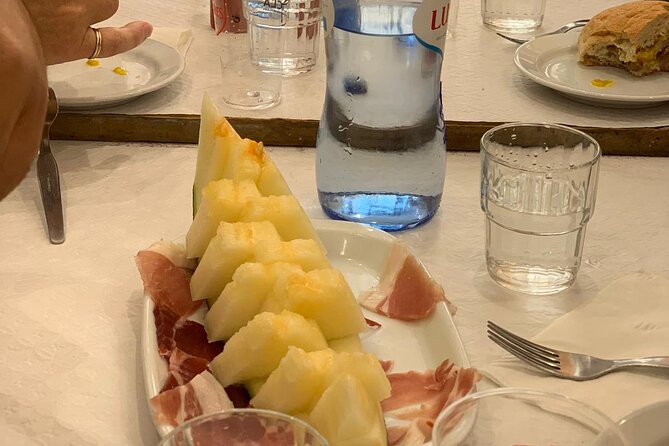
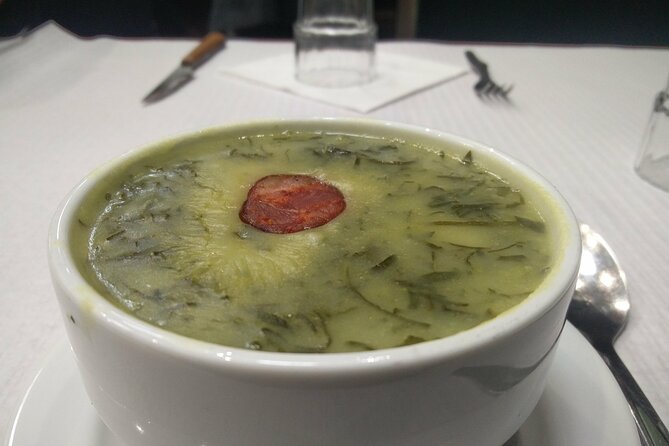
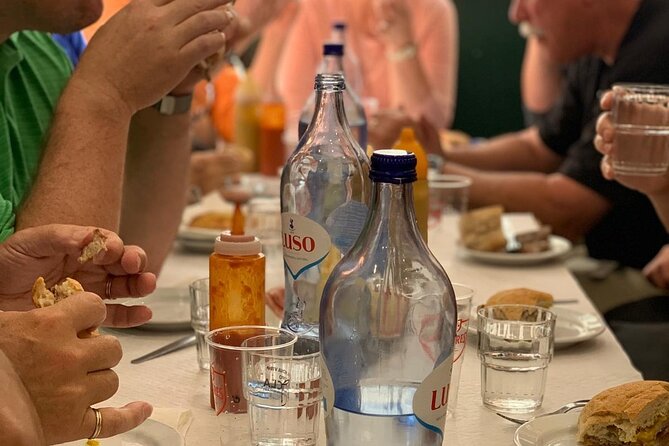
The tour includes wine tasting and alcoholic beverages, and it doesn’t treat drinks like an afterthought. There’s also coffee/tea and snacks along the route.
In practice, that means your appetite will stay “in motion” the whole time. You’re tasting across multiple venues, so flavors shift instead of repeating. That variety is exactly what makes the tour more than a basic food crawl.
Also, this is not only about meat and sweets. The food stops are described as Portuguese staples with influences, and it’s set up so guides can work with diets—but you must tell them ahead of time.
If anyone in your group has dietary restrictions, put it in the booking form. The tour information is clear that they won’t be able to adapt tastings on the day if it wasn’t shared in advance.
The guide matters more than most people think

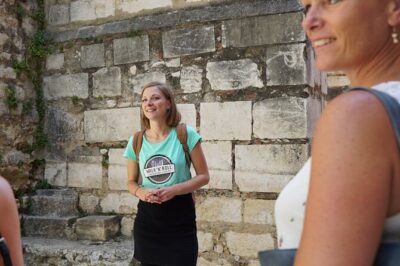
This walk is private, so you’re not just paying for tastings—you’re paying for a local guide to stitch the story together as you walk.
The guides for this operator are Lisbon-based, and based on consistent feedback patterns, the big wins are humor, energy, and making the route feel personal rather than scripted. One guide example that comes up often is Pedro; another is Daniella/Dani, both praised for blending history with food talk and keeping the group engaged.
One smart move: if singing or storytelling comes up in your conversation, don’t be shy about asking your guide if they have something fun ready. If they do, it can turn a good walk into a memorable one.
Who should book this (and who should skip it)
This is a strong fit for:
- Couples and small groups who want a structured food experience but still like getting off the main tourist lane.
- People who care about Lisbon beyond postcards, especially Mouraria’s culture and fado connections.
- Anyone who enjoys learning while walking—history is built into the route, not thrown in at random.
You might skip it if:
- You’re not comfortable with cobblestones, uphill walking, and steps.
- You want a very relaxed sightseeing day with lots of free time to wander. This tour keeps momentum.
Quick practical tips to make your walk smoother
- Wear comfortable shoes. Lisbon streets are not built for slippery soles.
- Eat light before you go unless you truly want to start the first tasting with instant hunger.
- If you care about what you drink, tell your guide your preferences early.
- Plan for the day’s pace. This is a walking food loop, not a sit-down meal tour.
Should you book this Lisbon Roots Food & Cultural Walk?
Yes, if you want a food-and-culture day that feels locally rooted and packed with tastings. The private group format, the focus on Mouraria and fado connections, and the mix of landmarks (churches, Rossio, squares, and memorials) make this more than a checklist.
I’d book it especially if you like your Lisbon with context: you eat, you look, you learn, and you keep moving. Just go in knowing it’s moderate effort, and make sure dietary details are handled during booking, not on the day.
FAQ
How long is the tour?
It’s listed as about 3 hours 30 minutes.
Is the tour private?
Yes. It’s a private tour/activity, and only your group participates.
What does the tour include?
Food tasting, a local guide, wine tasting, alcoholic beverages, coffee and/or tea, and snacks are included.
What is not included?
Hotel pickup and drop-off are not included, and transportation to/from attractions is also not included. Admission for the Elevador de Santa Justa is not included.
How hard is the walking?
It’s described as medium physical level, with uphill walking on cobblestones and climbing down steps typical of old Lisbon streets.
Where do I meet the guide?
The start is at St. Dominic’s Square, Largo São Domingos, 1150-114 Lisboa. The end is Confeitaria Nacional, Praça da Figueira 18B.
Can the tour adjust for dietary restrictions?
You need to share dietary restrictions in the booking form. The info says they won’t be able to adapt tastings on the day if restrictions weren’t provided.
What’s the cancellation window for a full refund?
You can cancel for a full refund up to 24 hours in advance of the experience’s start time. Within 24 hours, there’s no refund.