
REVIEW · WORKSHOPS
Lisbon Surf Guide – Surf class & Pick Up
Book on GetYourGuide →Operated by Lisbon Surf Guide · Bookable on GetYourGuide
Waves start fast when pickup is easy. This is a 3-hour surf class near Lisbon that combines city convenience with real time in the ocean, led by local coaches like Inês and the supportive team she brings along (I saw plenty of praise for Tomas). I love how the lesson is built around your level, with clear coaching so you know exactly what to do before you paddle out.
My second big win is the amount of water time for the price: you spend about 1.5 hours surfing after a wetsuit-up warm up and a safety briefing. The one drawback to plan for is that the session is weather and sea-condition dependent, so the exact beach (Lisbon, Cascais, or Costa da Caparica) and even the start timing can shift.
In This Review
- Key points to know before you go
- Starting At Titanic Sur Mer: The easy Lisbon pickup that gets you to waves quickly
- Small-group coaching with Inês and the team: what you gain from the low headcount
- The 2-hour beach block: wetsuit, safety, warm-up, then right into it
- Choosing Lisbon, Cascais, or Costa da Caparica: how your best waves get matched to your level
- 1.5 hours surfing: what that time feels like in real terms
- Portuguese surf culture lessons: more than just technique
- What’s included (and what you must bring) for a stress-free session
- Price and value: is $58 worth it for 3 hours?
- Who should book this Lisbon surf class (and who might want to think twice)
- Should you book Lisbon Surf Guide – Surf class and Pick Up?
- FAQ
- Where do I meet the van?
- How long is the whole experience, and how much time is spent surfing?
- Is this surf class good for beginners?
- What’s included in the price?
- What should I bring, and can I bring food or drinks in the vehicle?
- Does the lesson depend on weather?
Key points to know before you go
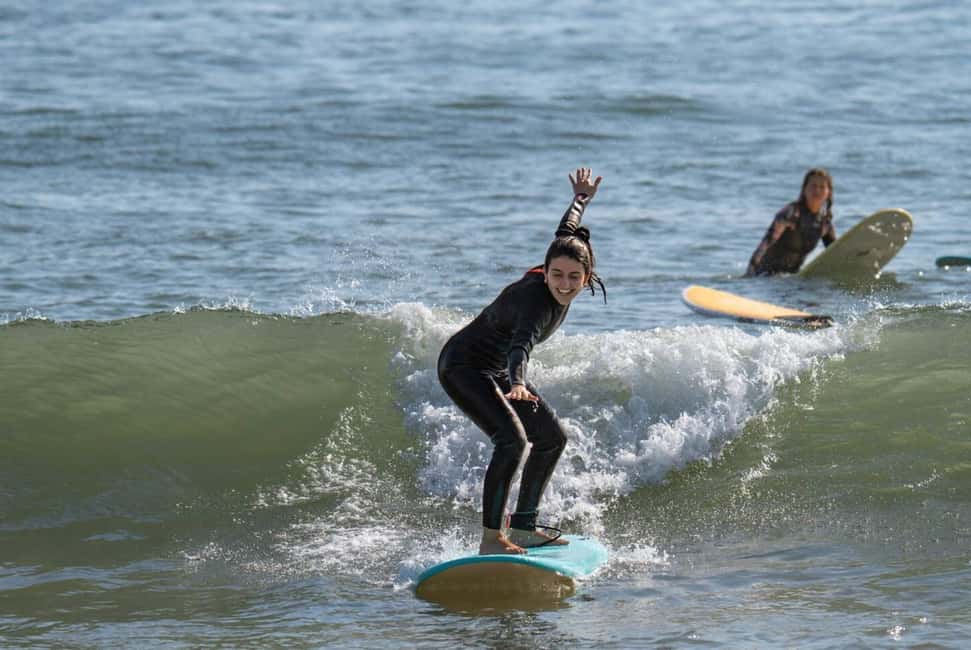
- Van pickup from Titanic Sur Mer bar puts you on the coast without hassle
- Small groups (max 8) means you actually get individualized feedback
- Safety briefing plus warm-up on the sand helps you avoid common beginner mistakes
- 1.5 hours in the water is where the progress happens
- Choose the best waves for your skill level by moving between Lisbon, Cascais, and Costa da Caparica
Starting At Titanic Sur Mer: The easy Lisbon pickup that gets you to waves quickly
This experience starts with something you’ll appreciate if you don’t want to figure out public transport, parking, or surf logistics: a van pickup in Lisbon city center. The meeting point is simple—look for the van parked in front of Titanic Sur Mer bar—and you’ll get taken to the beach that offers the best conditions that day.
That matters more than it sounds. Lisbon’s coastline is close, but waves change fast depending on wind and swell. Instead of forcing you to one spot, the guides plan around what the ocean is doing. In practice, that means you’re more likely to get a session where you can learn, not just stand around watching bigger sets roll in from the wrong angle.
Expect a smooth morning flow: you meet, hop in, and settle into a trip that’s long enough to break from the city, but short enough that the day still feels efficient.
You can also read our reviews of more guided tours in Lisbon



Small-group coaching with Inês and the team: what you gain from the low headcount
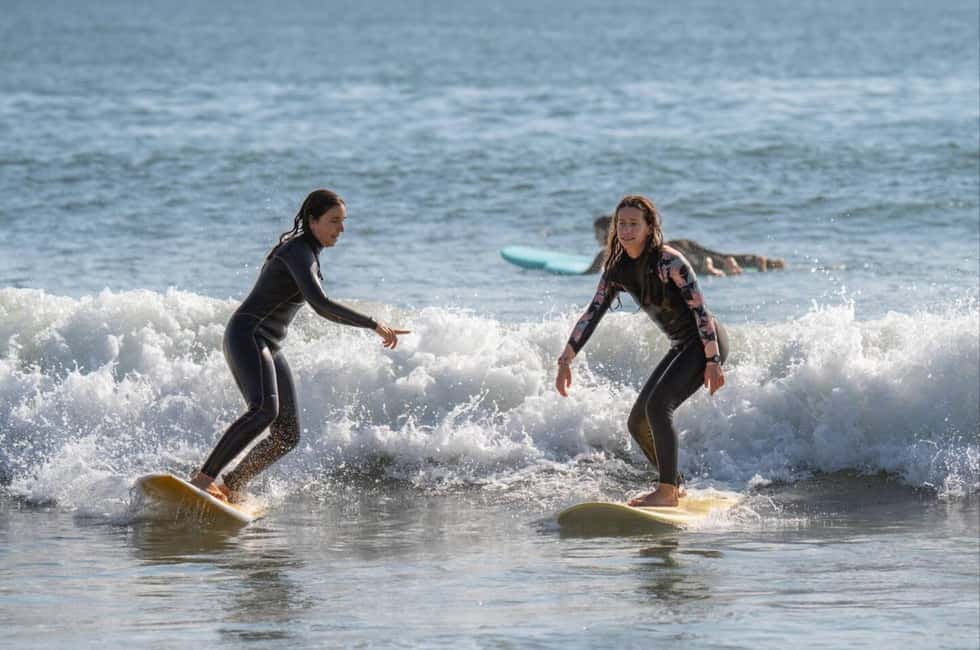
The group size is kept intentionally small: max 8 participants, with an instructor-student ratio that stays hands-on. Many lessons I’ve done in popular beach towns feel crowded, so you get generic advice and quick turns. Here, the teaching style is clearly built around catching mistakes early—stance, where you look, how you paddle, and how you time the rise to stand.
Inês is the name you’ll hear most often, and the feedback pattern is consistent: people describe her as patient, supportive, and direct, with coaching that changes based on what each surfer is doing wrong in the moment. Tomas also shows up in the praise for helping first-timers feel confident and guided from the start. Other instructors you might encounter include Nuno and Gustavo, but the vibe stays the same: practical technique plus encouragement.
If you’re a first-timer, this matters because you don’t just need to be pushed into the surf—you need to be taught how to manage the board, the wave line, and the safety rules. If you’ve surfed before, the low ratio means you’re more likely to get technique tweaks that help you catch more waves and stay balanced.
The 2-hour beach block: wetsuit, safety, warm-up, then right into it
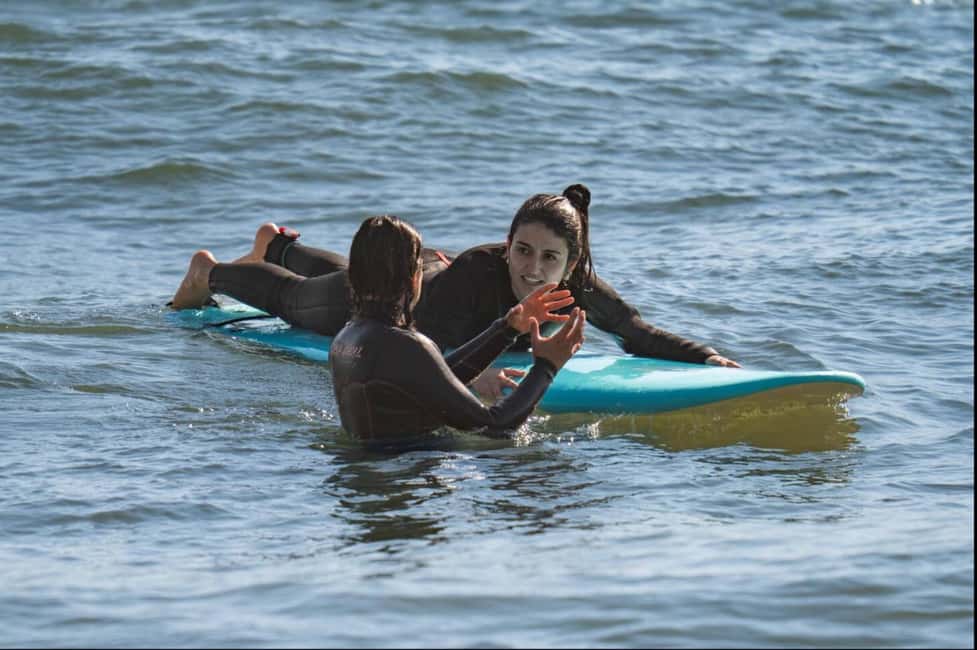
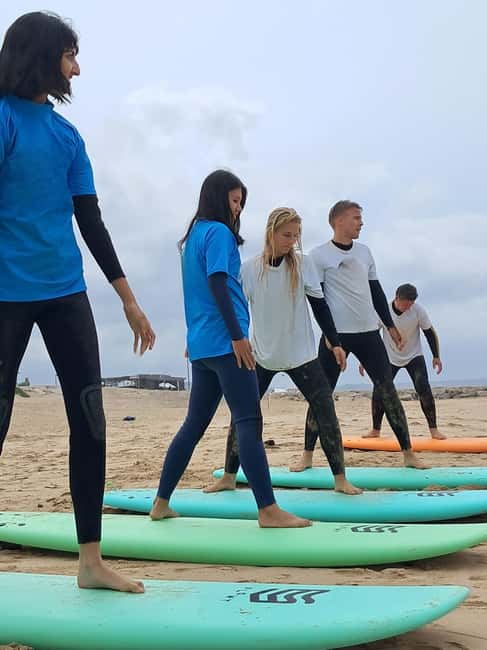
Once you arrive, the session is structured so you don’t waste time. You’ll dress in your wetsuit with the equipment the guide provides, then do a short but important sequence on the beach.
Here’s what that beach time typically looks like:
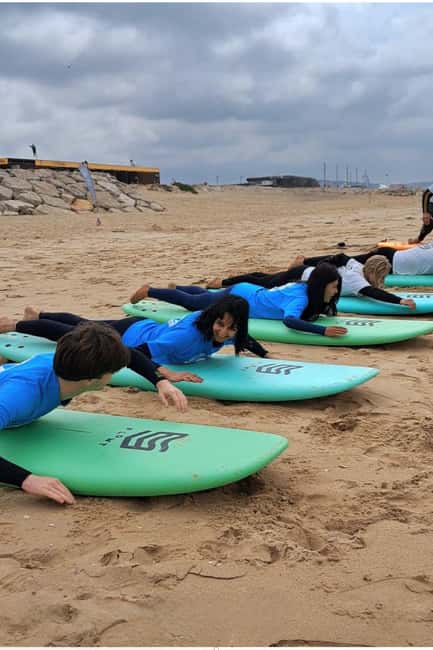
- Brief safety and equipment briefing (what to do, what to avoid, how to handle the board)
- Warm-up and stretches so your body is ready for paddling and popping up
- A quick refresher on fundamentals like how to stand and where to position yourself on the board
This is also where small details pay off. Several people mention wetsuit fit as a plus, and the point is simple: a wetsuit that actually fits lets you move and stay warm enough to focus on learning. Since you’ll likely change clothes at the beach, plan to bring a towel and follow the guide’s lead on where to stash items.
On top of that, this is a nature activity. You should expect to be outside for a chunk of time, and showers might not be available even though they often are. It’s best to assume you’ll do this with beach basics and good vibes, not a full gym setup.
Choosing Lisbon, Cascais, or Costa da Caparica: how your best waves get matched to your level
You won’t always surf in the exact same place. Depending on waves and weather, the guides may head toward Lisbon, Cascais, or Costa da Caparica. The drive each way is typically 30 to 45 minutes, which is enough time to settle in, but not so long that the day drags.
So what’s the value of this moving-around plan?
1) The ocean isn’t one-size-fits-all. A spot that’s perfect for beginners might be too strong on another day.
2) Surf lessons work best when you can repeatedly try the same skill. The guide’s job is to place you where you’ll keep getting opportunities to stand, not where you only watch waves.
3) Conditions decide everything. Wind direction, swell size, and the way waves break determine whether paddling feels smooth or chaotic.
You’ll also notice the coaching is tailored to the group. People in mixed-skill groups described getting individualized feedback, which suggests the instructor keeps an eye on how each person is progressing rather than treating everyone the same.
1.5 hours surfing: what that time feels like in real terms
The schedule is clear on paper: after dressing and the warm-up/briefing, you get about 1.5 hours of pure surfing time. In real terms, that means you’re in the water long enough to learn how your body responds to paddling, timing, and popping up—then to repeat it enough times to see improvement.
For beginners, the most helpful part is the feedback loop. You try something, you fall (a lot, at first), and the coach gives the next cue so you adjust immediately. That’s why so many participants talk about getting standing moments by the end. It’s not magic. It’s coaching timed to your attempts.
For returning surfers, this “repeat and adjust” style can still work well. Instead of only focusing on one big change, the coaching tends to point out the small things that stop you from getting into the right takeoff position. And with more wave catches over a longer water session, you get more chances to test corrections.
Also, the lesson is built to keep you on the correct side and surf safely. First-timers get extra reassurance here—so you’re not guessing whether you’re doing things right. That’s a big confidence builder.
You can also read our reviews of more tours and experiences in Lisbon






Portuguese surf culture lessons: more than just technique
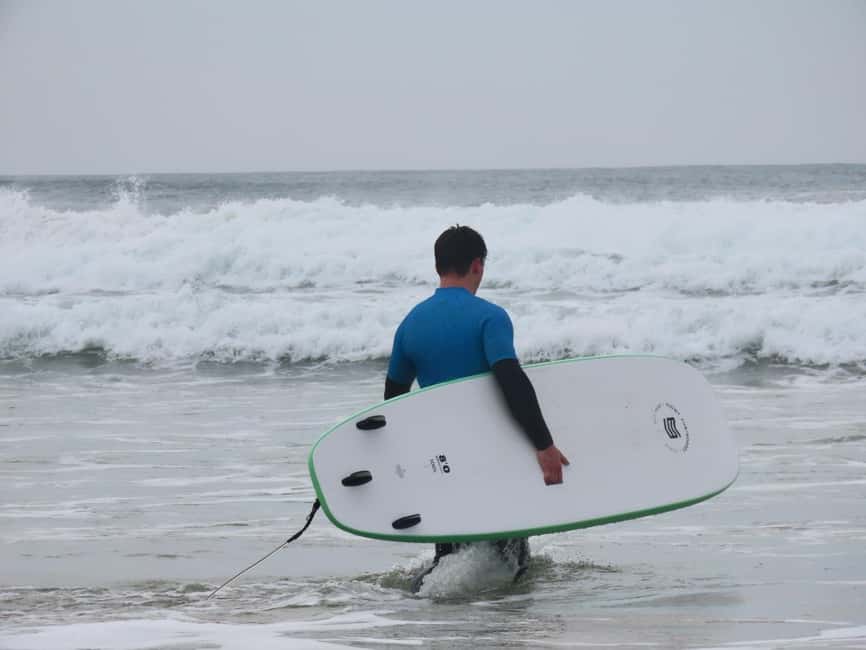
This class isn’t only about balance and board control. You’ll also learn about Portuguese surf culture while you’re being coached. The practical value is that surf culture helps you understand how locals think about the ocean, the etiquette, and the rhythm of the shoreline—things you’ll otherwise miss if you only focus on the technical side.
In lessons like this, the culture talk usually shows up as:
- Why safety rules matter where people actually surf
- How locals read wave behavior and pick positions
- How to stay calm, patient, and ready between sets
That emotional side is underrated. A good lesson doesn’t just teach you to stand once. It teaches you how to keep trying even when the wave doesn’t cooperate.
If you enjoy blending a hands-on activity with local context, this component is one of the reasons the experience earns repeat bookings and strong word-of-mouth.
What’s included (and what you must bring) for a stress-free session
The price includes the core gear and the logistics that make surf lessons painless. Specifically, you get:
- Pick up and drop off
- Surf lesson with the instructor
- Surf board
- Wetsuit
- Transportation
- Insurance
So you’re not hunting for rentals, figuring out where to buy a wetsuit last minute, or worrying about whether something covers you during a sport like surfing.
What you should bring:
- Swimwear
- Towel
- Sunscreen
- Water
And two simple rules:
- Drinks in the vehicle are not allowed
- Food in the vehicle is not allowed
If that sounds strict, it’s mostly there to keep the van ride clean and comfortable for everyone. Pack water, skip snacks for the ride, and you’ll be fine.
One more planning detail: the instructors may start earlier or later depending on sea conditions, and they’ll let you know the day before your pickup time. That means you should leave some flexibility in your schedule, especially if you’re stacking this with other Lisbon plans.
Price and value: is $58 worth it for 3 hours?
At $58 per person for about 3 hours total, the value depends on what you compare it to. If you’re used to pay-per-lesson surfing where you get minimal feedback and shorter time in the water, this model feels fair because you get:
- Small-group sizes (up to 8)
- Coaching that aims to correct technique while you’re actively trying
- About 1.5 hours in the water
- Gear plus insurance included
The insurance piece matters if you’ve ever thought about risk and coverage in sports. You’re still doing something physical and outdoorsy, but the lesson isn’t leaving you to guess.
And the pickup/drop-off from central Lisbon is a genuine value boost. Surf lessons often charge extra in hidden ways—time lost to transport, taxis, or renting equipment on top of the lesson. Here, the basics are handled.
Would I say it’s a bargain? It’s priced like a properly run small-group lesson with equipment and transport. The “worth it” answer comes down to your goal: if you want to learn with coaching and actually get time surfing, it delivers.
Who should book this Lisbon surf class (and who might want to think twice)
This experience is a strong fit if:
- You’re first-time surfing and want someone to teach safety, stance, and technique in a controlled way
- You’ve surfed before and want more coaching time per person
- You want to spend a short, efficient window away from the city and still get a real activity payoff
- You like small groups and personal attention, not a crowd
It’s less ideal if:
- You hate scheduling around weather. Surf conditions can change, and the location and timing can shift based on the ocean.
- You want a very “structured resort” feel with indoor facilities. This is a beach-based nature activity, with beach changing and occasional limits on showers.
If you’re the type who’s excited by learning something physical outdoors, this is the kind of activity that becomes a highlight fast.
Should you book Lisbon Surf Guide – Surf class and Pick Up?
If you want a surf lesson that mixes Lisbon convenience with real time in the water, I’d book it. The standout reasons are the small-group coaching, the way instructors support first-timers, and the clear schedule that gets you surfing for about 1.5 hours rather than treating the ocean like a backdrop.
Book it especially if you care about technique and feedback more than just getting photos. And if you’re planning your day tightly, keep one buffer hour for weather-dependent changes.
If you’re looking for a quick, coach-led way to experience Portuguese surf culture and catch your first waves near Lisbon, this lesson is a practical, good-value choice.
FAQ
Where do I meet the van?
Look for the van parked in front of Titanic Sur Mer bar in Lisbon city center.
How long is the whole experience, and how much time is spent surfing?
The total duration is 3 hours. At the beach, the activity takes about 2 hours, including wetsuits and a warm-up, followed by around 1.5 hours of surfing.
Is this surf class good for beginners?
Yes. The instructors guide first-time surfers to a safe surf spot and teach you how to surf, including staying on your side and using correct technique. The class also teaches surfers at beginner through advanced levels.
What’s included in the price?
Included are pick up and drop off, the surf lesson, the instructor, surf board, wetsuit, transportation from the meeting point, and insurance.
What should I bring, and can I bring food or drinks in the vehicle?
Bring swimwear, a towel, sunscreen, and water. Drinks and food are not allowed in the vehicle.
Does the lesson depend on weather?
Yes. The activity depends on weather and sea conditions, and the session may start earlier or later. You’ll be informed 1 day before the pickup time.