REVIEW · HISTORICAL TOURS
Lisbon Essential Walking Tour: History, Stories and Lifestyle
Book on Viator →Operated by Lisboa Autêntica · Bookable on Viator
Lisbon’s hills teach you fast. This 3-hour walking + viewpoints tour is a smart first-day way to understand how the city fits together, from the post-1755 rebuild story in Bairro Alto to the religious and political landmarks that shaped Portugal later. I especially like the mix of big-sight stops with small moments—like passing through gardens and winding lanes—plus the included café break with coffee and cake. One drawback to plan for: this is still real walking on hilly streets, so it’s not the right choice if you want a mostly flat, light stroll.
For first-timers, the value is clear: the price covers a professional guide, key viewpoints, a tram ride, and the snack stop, with most major sites handled along the route. You’ll also end at Lisbon Cathedral, so you finish with a strong historical anchor instead of just circling back to where you started. Bring comfortable shoes and a water bottle, because the best views in Lisbon come after a few climbs.
If you want a guided “story route” through classic neighborhoods—without spending your day bouncing between unrelated tickets—this tour fits the bill. It’s capped at 15 people, so you get enough attention to ask questions, and guides like Paolo, Beatrice, Ana, Ricardo, and Sofia are praised for turning facts into street-level stories and practical tips.
In This Review
- Key things I’d bet on before you go
- How the 3-hour loop works (and why it matters)
- Bairro Alto: the post-earthquake neighborhood story starts here
- Miradouro São Pedro de Alcântara: a viewpoint with purpose
- Igreja de São Roque: Jesuit art that looks plain outside
- The Carmo Convent: Gothic bones and the Carnation Revolution connection
- Santa Justa area: the best view, with an optional upgrade
- Baixa café break: coffee and cake when you need it
- Praca da Figueira and the tram ride toward Portas do Sol
- Alfama: fado streets, saints, and the Tagus at the end
- Finishing at Lisbon Cathedral: built fast after the Moorish return
- Price and value: why $30.25 can feel fair
- Who should book this tour (and who should skip it)
- Should you book this tour for your first days in Lisbon?
- FAQ
- How long is the Lisbon Essential Walking Tour?
- What is included in the $30.25 per person price?
- What is not included?
- Which major sights does the tour cover?
- Is food and drink part of the tour?
- Does the tour include a tram ride?
- How big is the group?
- Can I cancel for a full refund?
Key things I’d bet on before you go
- A first-day Lisbon setup: you cover multiple districts in one loop, with a clear storyline across centuries
- Real Lisbon shortcuts: gardens, viewpoints, and the practical tram hop save time and confusion
- Stong art + architecture stops: São Roque’s interior collections and the Gothic look of Carmo
- A snack break that’s actually useful: coffee and cake in Baixa to reset your energy
- Small group feel: max 15 travelers keeps it more personal than big-bus touring
- Good “what to do next” guidance: guides often add restaurant and fado listening suggestions
How the 3-hour loop works (and why it matters)
This is designed as an efficient introduction: about 3 hours, moving at a conversational walking pace while you stop for photos and context. The route is built around Lisbon’s hill geography—so even when you’re not climbing a staircase, you’re still climbing the city’s layout.
Your guide keeps the flow tight: you move from Bairro Alto to viewpoints above the Tagus, down toward Baixa, and then into Alfama before ending at Lisbon Cathedral. Most of the stops are described as free admission during the tour, so you’re not constantly worrying about ticket lines.
One practical point: the tour includes a tram ride, but it does not include the Santa Justa elevator ticket. You’ll still get one of the best viewpoints by being in the right place at the right time—then you can decide on your own whether to pay extra to ride the elevator tower.
Finally, this tour includes liability and personal accident insurance, plus the guide, and uses a mobile ticket. It’s also close to public transportation, which helps if your meeting point is a quick transit stop from your hotel.
You can also read our reviews of more walking tours in Lisbon
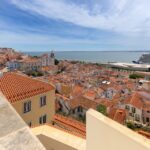


Bairro Alto: the post-earthquake neighborhood story starts here
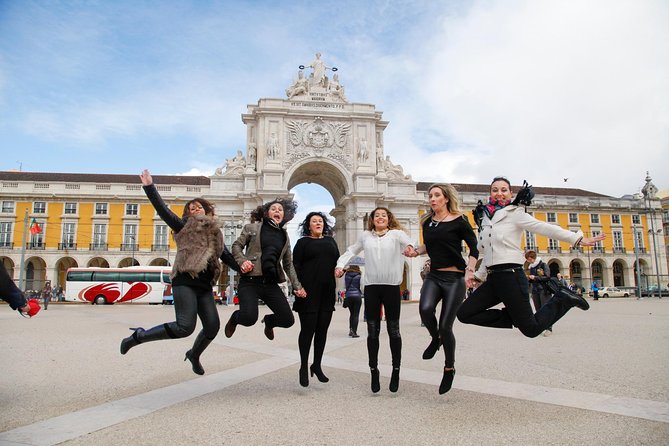
You begin in Bairro Alto, a hillside area with layers you can feel. The big framing idea is how Lisbon changed after the 1755 earthquake. Instead of staying stuck in old patterns, the area drew families looking for renewal after the devastation.
This is a great opening stop because it gives you a mental map of the city’s structure. Lisbon isn’t one flat grid—it’s hills, viewpoints, and neighborhoods that evolved based on rebuilding, religion, trade, and politics. Starting here helps you understand why later stops feel connected rather than random.
You’ll get time for photos from the street level and also enough context that names like Baixa and Bairro start to mean something. If you’ve been staring at a map for an hour already, this is where the map finally clicks.
Miradouro São Pedro de Alcântara: a viewpoint with purpose
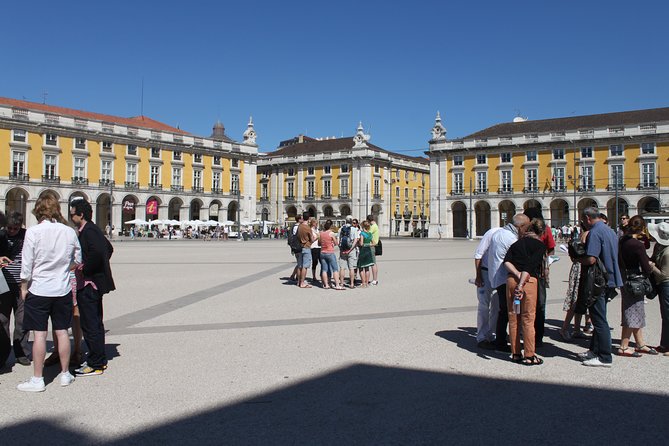
Next comes Miradouro São Pedro de Alcântara, reached by passing through the garden area. Lisbon viewpoints can feel like a quick photo stop, but here it’s more than that: it’s your first broad read of the city’s shape.
From this spot you look over Baixa and toward the south bank of the Tagus River. That river view matters because it explains why Lisbon developed the way it did—trade and life orbit the water, while the city climbs to stay connected.
Plan for a short pause. This isn’t a long museum visit; it’s a focused reset. When you’re done, you’ll head into the denser streets again with a better sense of where you are.
Igreja de São Roque: Jesuit art that looks plain outside
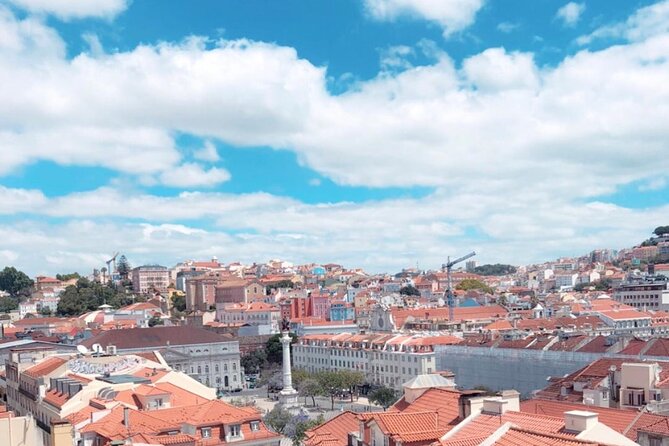
Igreja de São Roque is one of those places Lisbon does well: an austere exterior hiding serious interior treasures. The church was built by the Jesuits, and the story connected to it is part of the reason the stop feels worthwhile, not just scenic.
Inside, you’re looking at a mix of gilding, tiled walls, and paintings that push into Mannerist and Baroque styles. In other words, it’s not just architecture; it’s like a museum room built as a place of worship.
A good guide makes this stop work by pointing out what to look for beyond the obvious ceiling shots. You’ll likely spend enough time here to absorb the contrast: calm, dark façade on the outside—then color and detail inside.
The Carmo Convent: Gothic bones and the Carnation Revolution connection
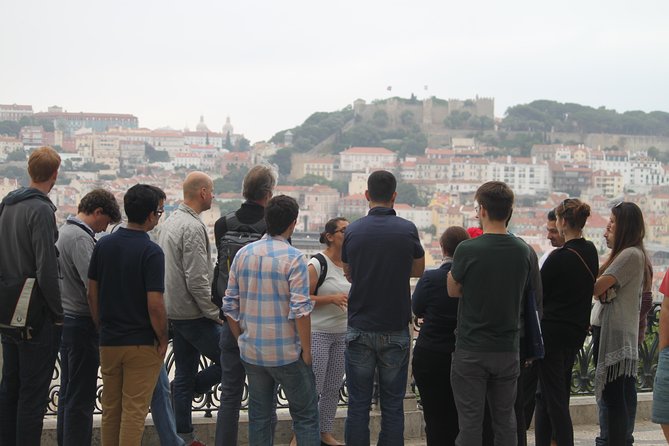
Heading down the hill, you’ll reach the Carmo convent and church. This is where the tour pulls history forward into the 1900s—because this site is tied to the Carnation Revolution that began in 1974, ending nearly five decades of dictatorship.
Architecturally, it’s described as fine Gothic architecture, which means you’re paying attention to stone shapes and structure as much as you are to the story. The pairing is smart: you get the visual language of Gothic design, then you get why a landmark like this mattered politically.
This stop can be emotional in a quiet way because revolutions don’t feel real until you connect them to actual streets and buildings. If you like Portugal’s modern history, this is one of the most meaningful moments on the route.
You can also read our reviews of more historical tours in Lisbon





Santa Justa area: the best view, with an optional upgrade
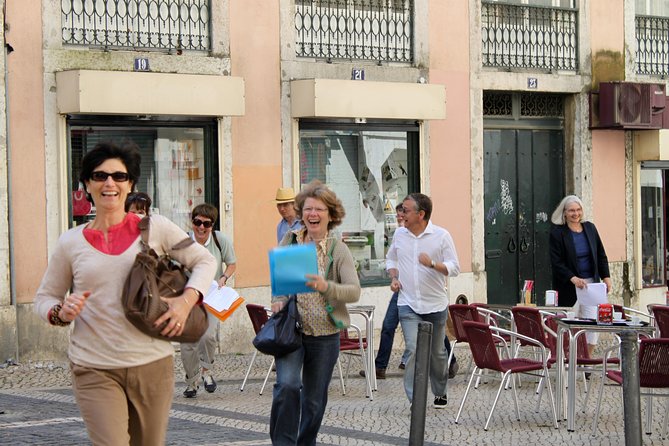
You’ll reach the Santa Justa elevator area, an imposing monument in Gothic Revival style. Even if you don’t ride it, the location itself functions like a built-in photo platform—one of the best viewpoints in Lisbon.
Here’s the key tradeoff: the elevator ride isn’t included. The tour includes getting you there and showing you why it’s worth attention, but you decide if you want to pay extra for the experience of going up.
I like this setup because it respects different energy levels. After a few climbs already, some people want the extra lift; others are happy with the view from the ground.
Either way, the Santa Justa stop gives you that satisfying “wow” moment that makes Lisbon feel cinematic instead of just historic.
Baixa café break: coffee and cake when you need it
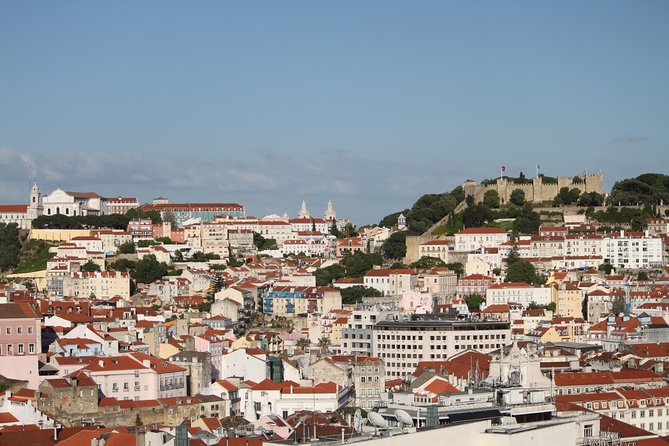
At Baixa de Lisboa, the tour switches from sights to a practical pause: coffee with pastry in a local café. This is one of the most underrated parts of walking tours, because energy management is what keeps you from turning your afternoon into a slog.
Baixa is the central, street-focused heart of the city, and this snack break is your chance to reset before you head into more winding areas. The included treat also makes the tour feel like a real deal compared with paying for separate stops and then realizing you missed a convenient food moment.
If you tend to get hungry on tours, this break helps you stay in the right mindset for the rest of the walk. And if you’re not hungry, you still get a chance to sit for a minute and plan your next photo angles.
Praca da Figueira and the tram ride toward Portas do Sol
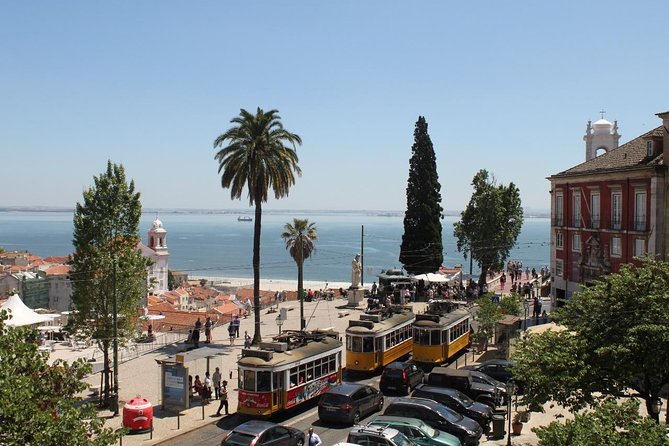
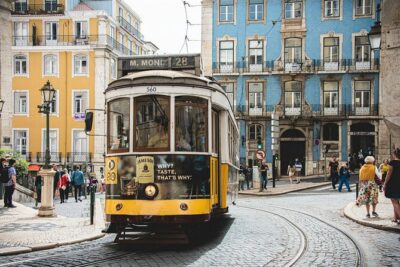
From Baixa, you’ll see Praca da Figueira and other attractions in the center. After a short break, you take a tram ride going up from the castle toward Portas do Sol.
This tram segment is valuable even if you’ve ridden trams elsewhere. It’s a practical transport link, and it also changes the feel of the day: you’re not just walking through neighborhoods, you’re moving through the city the way locals do—slowly, on track, taking in slopes and sightlines.
When you get off near Portas do Sol, you’ll be in a better position to start your Alfama approach, with the Tagus and river views already part of the picture.
Alfama: fado streets, saints, and the Tagus at the end
Alfama is where Lisbon becomes unmistakably itself. At Portas do Sol, you’ll see landmarks linked with the area, including the Monastery of São Vicente de Fora and the National Pantheon, then continue into the older neighborhood streets.
Alfama spans narrow streets and a strong sense of tradition. It’s known for fado houses, and it’s also tied to festivals of saints—especially St. Anthony. Even if you’re not there during a big festival week, your guide can help you connect the religious rhythm of the city to what you’re seeing on the ground.
This is also one of the best places to notice how Lisbon’s old neighborhoods “hold” the city together. You get history without the museum walls, and you get it in street scale: steep steps, tight turns, and views that pop up like surprises.
I’d treat this part as your chance to slow down. The final neighborhood stretch is where your camera work will pay off, but so will just looking up and around as you walk.
Finishing at Lisbon Cathedral: built fast after the Moorish return
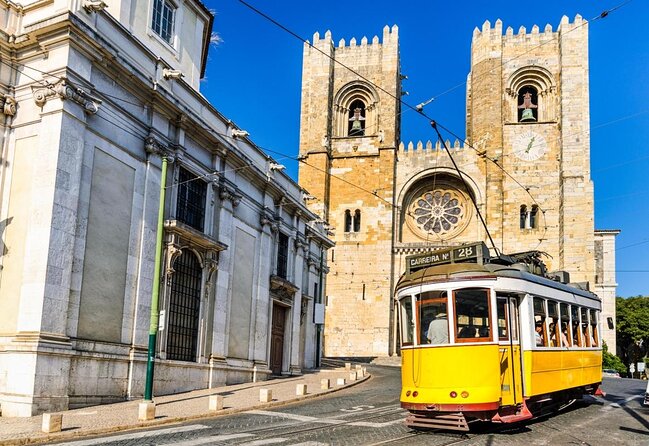
The tour ends at Lisbon Cathedral, built in 1150, just three years after the city was taken back from the Moors. That origin date matters because it anchors the cathedral in the immediate post-reconquest era.
Over time, the building was changed, which means you’re looking at a mix of architectural styles rather than a single clean period. That makes the cathedral a strong finish: instead of ending on a viewpoint only, you end on a place where the city’s long timeline is physically layered.
It’s a great way to cap the day’s storyline. You start with Bairro Alto and rebuilding after catastrophe, you pass through religious art and political turning points, and then you land in a landmark tied to Lisbon’s medieval transformation.
Price and value: why $30.25 can feel fair
At $30.25 per person for about 3 hours, this tour can be good value if you’re comparing it to buying everything piecemeal. You’re not just paying for a walk: you get a professional guide, a tram ride, and the included coffee and pastry break. You also get insurance coverage included in the package.
Most of the listed stops are free admission during the tour, which cuts down friction for you. The one obvious “possible extra” is the Santa Justa elevator ticket, which isn’t included—so if you definitely want to ride it, factor that additional cost into your day.
In plain terms: if you want a guided route that hits major districts without wasting time figuring out logistics, the price makes sense. If you already know Lisbon well and hate walking between hills, you may feel the cost more than the benefit.
Who should book this tour (and who should skip it)
This is ideal for:
- First-time visitors who want a guided route that explains Lisbon’s layers quickly
- Travelers who like history with street-level context—churches, neighborhoods, and political milestones
- People who appreciate small-group pacing (max 15) and a guide who can answer questions along the way
You might skip it if:
- You want a fully relaxed, low-step day (Lisbon’s hills are part of the plan)
- You only care about one neighborhood or only want major museums, not churches and viewpoints
Should you book this tour for your first days in Lisbon?
Yes, I’d book it if you’re trying to get oriented fast and you want the city to make sense before you go off on your own. Starting in Bairro Alto, stopping at São Roque and Carmo, then ending at Lisbon Cathedral gives you a strong backbone: geography first, then art and architecture, then modern political history, then medieval Lisbon.
Also, the included snack break is not a throwaway. It keeps you moving through the afternoon with fewer energy crashes, and it turns the tour into something you actually use, not just something you watch from a sidewalk.
If you’re debating between this and a more museum-heavy day, choose the walking tour when you want context. Choose museums when you want slow, indoor detail. Lisbon is both—but this route is built to help you understand the city’s pulse from the street.
FAQ
How long is the Lisbon Essential Walking Tour?
The tour runs for about 3 hours.
What is included in the $30.25 per person price?
The price includes a professional guide, a tram trip, coffee and cake, and liability and personal accident insurance.
What is not included?
The Santa Justa elevator ticket is not included, and other food and beverages are also not included.
Which major sights does the tour cover?
You’ll visit places including Bairro Alto, Miradouro São Pedro de Alcântara, Igreja de São Roque (church and museum of San Roque), Igreja do Carmo, the Santa Justa elevator viewpoint area, Baixa de Lisboa, Praca da Figueira with a tram ride, Alfama, and you’ll end at Lisbon Cathedral.
Is food and drink part of the tour?
Yes. You’ll have coffee with pastry during a café stop in Baixa.
Does the tour include a tram ride?
Yes. A tram ride is included as part of the route, going up from the castle area to Portas do Sol.
How big is the group?
The group is limited to a maximum of 15 travelers, and service animals are allowed.
Can I cancel for a full refund?
Yes. You can cancel up to 24 hours in advance for a full refund. If you cancel less than 24 hours before the start time, the amount paid is not refunded.