REVIEW · ALFAMA & OLD TOWN TOURS
Explore Lisbon by Tuk Tuk: History and Viewpoints
Book on Viator →Operated by Eco Tuk Tours Lisboa · Bookable on Viator
Lisbon feels like a maze until you ride it. This electric tuk tuk tour gives you fast orientation plus picture-perfect stops, and the onboard PA system helps you catch every story without shouting. One thing to consider: if you’re tall, the vehicle’s height and transparent cover can cut into your view at some angles.
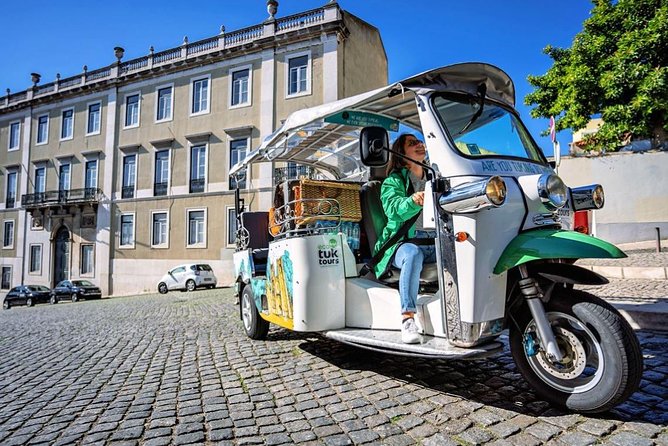
I really like how the guide-driver works like a mix of host and navigator, tailoring stops to what you care about—whether that’s river views, medieval lanes, or Belém monuments. I also love that you’re not stuck parked-and-walking everywhere; the tuk tuk gets you close to the action, then lets you hop out briefly for photos and viewpoints.
In This Review
- Quick highlights: what makes this Lisbon tuk tuk different
- Electric tuk tuk comfort on Lisbon’s steep streets
- Setting the tone at Praça do Comércio (riverfront orientation)
- Lisbon Cathedral as a surviving medieval anchor
- Alfama: cobblestones, steep lanes, and medieval mood
- Miradouros: Senhora do Monte and the big-city photo rush
- Praça da Figueira: old marketplace energy, post-market today
- Praca dos Restauradores and Praça Dom Pedro IV: independence and daily life
- Panteão Nacional and monument tickets: grand sight, optional inside
- Chiado & Carmo, plus Carmo Square ruins
- Bairro Alto and the nightlife-turn district (for longer rides)
- Alcântara-Mar and the river approach (for the extended itinerary)
- 25 de Abril Bridge ex-libris: steel and scale
- Jerónimos Monastery, Padrão dos Descobrimentos, and Torre de Belém: Belém classics
- Comfort, hearing, and photo strategy inside the tuk tuk
- Price value: is $19.35 per person a smart deal?
- Should you book this Lisbon tuk tuk history and viewpoints tour?
- FAQ
- How long is the Explore Lisbon by Tuk Tuk tour?
- What’s the price per person?
- Do you get pickup, and where does it end?
- Is the tuk tuk covered for rain or cold weather?
- Are monument entry tickets included?
- Is the tour wheelchair accessible?
- Are there age limits or restrictions for riders?
Quick highlights: what makes this Lisbon tuk tuk different
- Electric ride with open-air photos, plus rain/cold protection using a transparent cover you can close
- Photo-first miradouros that focus on Lisbon’s best sightlines (not just passing by them)
- Private group of up to 6, so you can move at your pace and ask questions without a crowd
- Old-town sweep from post-earthquake Baixa through Alfama and up into the viewpoints
- Longer options keep going toward Belém and the 25 de Abril Bridge
- Some monument entry is extra, so you’ll plan for tickets only where needed
Electric tuk tuk comfort on Lisbon’s steep streets
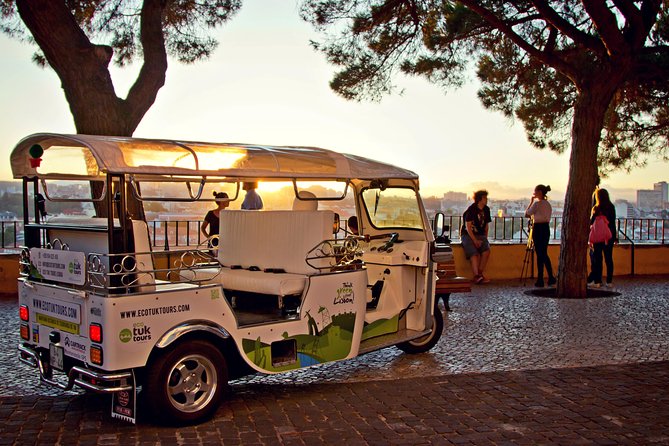
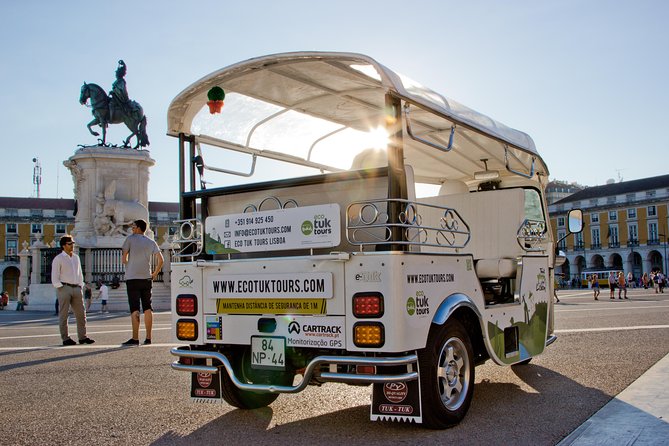
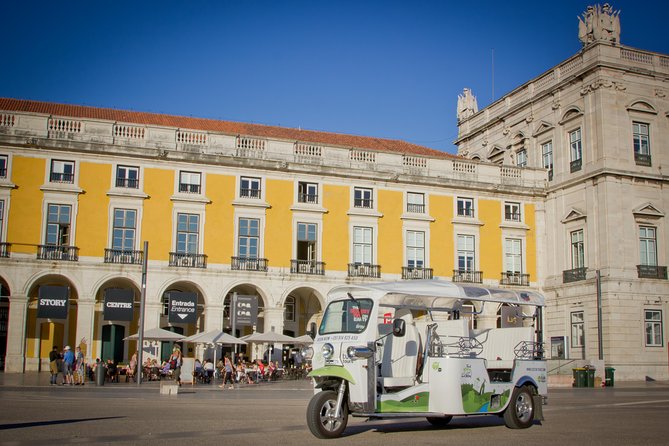
Lisbon’s charm is in its slopes and tight lanes. The eco-friendly electric tuk tuk is built for that reality: you can enjoy the motion without the exhaust and without constantly hunting for parking spots. And because it’s an open vehicle with a transparent cover that can close in cold or rain, the ride stays comfortable even when the weather turns.
The practical win is how the tour is structured around short “pause points.” You get brief moments to look, shoot photos, and absorb the setting—then you’re off again before you lose momentum on foot. That’s a big deal in Lisbon, where walking times can stretch fast once you’re climbing.
Also, you’re not dealing with a huge group shuffle. Maximum 6 people per vehicle keeps it manageable, and since it’s a private tour, your guide-driver can adjust the route to match your priorities. In guides’ stories from real departures, names like Luis, Daniel, Hugo, Manuel, Paulo, Arthur, Lucas, and Nani come up again and again—often for being warm, flexible, and focused on photo spots.
You can also read our reviews of more historical tours in Lisbon


Setting the tone at Praça do Comércio (riverfront orientation)
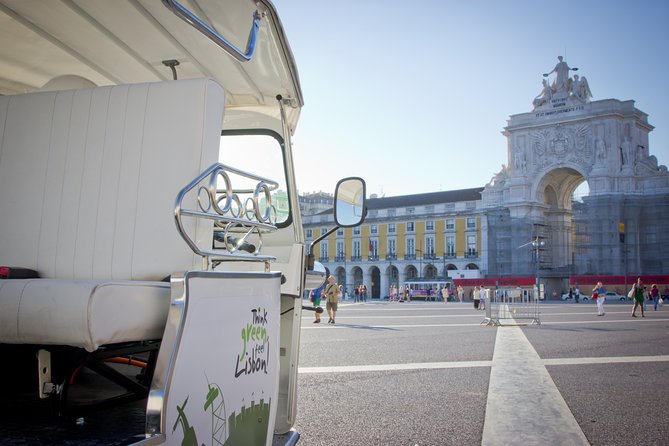
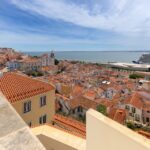
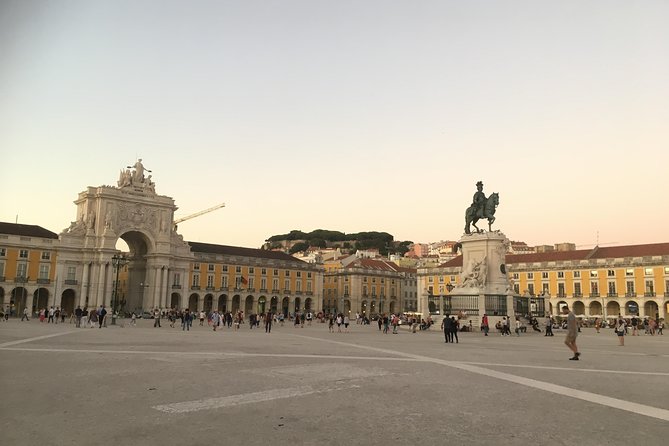
Your tour typically starts in the Baixa waterfront zone at Praça do Comércio, one of Lisbon’s most central reconstructions after the 1755 earthquake. The square’s main draw is its sheer scale and its “river in front of you” geography. It’s the right first stop because it gives you a reference point for the rest of the day—where the water is, where the city opens up, and how the neighborhoods relate to each other.
This is also a helpful moment to get your bearings fast. You can see the layout and feel the axis of the city before you start climbing into older quarters. The stop is short (about 15 minutes), but it’s enough to reset your mental map.
Watch for this: since the tour is time-based, if you’re doing the shortest option, your “orientation” portion will be tighter. Still, Praça do Comércio is usually the strongest starter location because it teaches you what Lisbon looks like from a distance—before you move into the details.
Lisbon Cathedral as a surviving medieval anchor
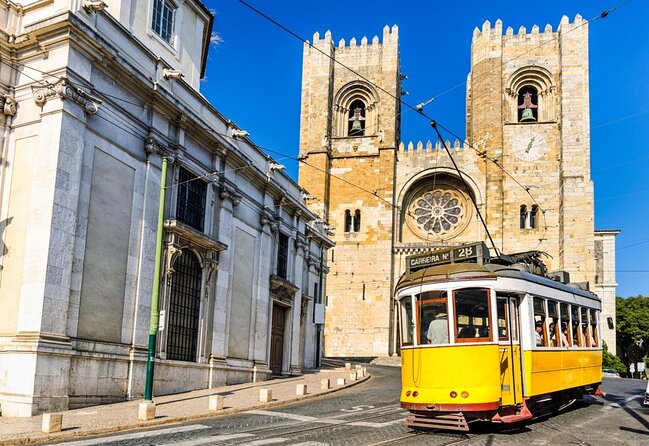
Next comes Lisbon Cathedral, a medieval church that survived the 1755 earthquake. Even if you don’t go inside, the exterior presence matters because it connects you to the older layers of the city. This stop is also useful because it shifts your focus from “big square + river” to “enduring stone + sacred site.”
One important practical point: entry to the monument is not included. That means you can spend your time outside for orientation, or you can decide on the extra ticket if the inside is a priority for you.
In my view, this is a smart stop even when you skip tickets. It acts like a history hinge: after the earthquake-era rebuild at Praça do Comércio, you get a landmark that hints at earlier Lisbon continuity.
Alfama: cobblestones, steep lanes, and medieval mood
Alfama is Lisbon’s oldest neighborhood, and it’s famous for its steep, cobblestoned lanes that still feel medieval. In a tuk tuk, this part of the tour works best as a “glimpse with context” segment. You see the vibe—tight streets, old facades, and the neighborhood’s sense of age—without trying to cover it all on foot.
The stop is brief (about 15 minutes), which is exactly right if you want to come back later for longer exploring. The tour’s value here is psychological: you understand where Alfama “is,” so your independent wanderings afterward are more intentional.
If you hate steep walking, this segment is still worthwhile because the vehicle handles most of the route while you get a feel for the area. Just remember the cobbles are real once you hop out for photos.
Miradouros: Senhora do Monte and the big-city photo rush
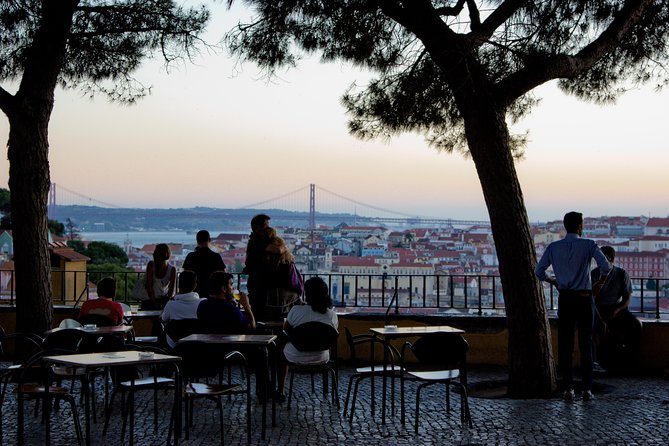
Lisbon viewpoints are a category of their own, and the tour includes two of the most iconic: Miradouro Da Senhora Do Monte and Miradouro São Pedro de Alcântara (the second appears later in the route list).
At Senhora do Monte, you get a large, panoramic outlook and a strong “this is Lisbon” moment. It’s right next to the top area of Elevador da Glória, which helps you understand how the city moves vertically. This stop is about 15 minutes—enough time to frame shots, watch the street textures below, and feel how neighborhoods stack on hills.
At São Pedro de Alcântara, the viewpoint is one of the most stunning photo spots in Lisbon and another anchor for understanding the city’s spread. If you only do one thing with your camera, make it one of these miradouros. They’re where the city stops being a blur of streets and becomes a readable whole.
Practical note from the vehicle setup: the transparent cover can help in wind and cool weather, but on bright days it can also change glare and reflections. If photos matter, bring sunglasses and try a couple angles before committing to one shot.




Praça da Figueira: old marketplace energy, post-market today
Praça da Figueira is tied to Lisbon’s older commercial life. This area used to be the main marketplace, with a covered market built in 1885 and later demolished in the 1950s. What replaced it is now a visual landmark: a bronze equestrian statue of King João I.
Even with a short stop, this location teaches you how Lisbon reuses space. The square isn’t just a pretty stop—it shows how the city adapts after modernization and urban change.
If you’re a “look for the layers” traveler, this is a fun pause. It also sets you up to move toward other central squares and neighborhoods that shaped daily life.
Praca dos Restauradores and Praça Dom Pedro IV: independence and daily life
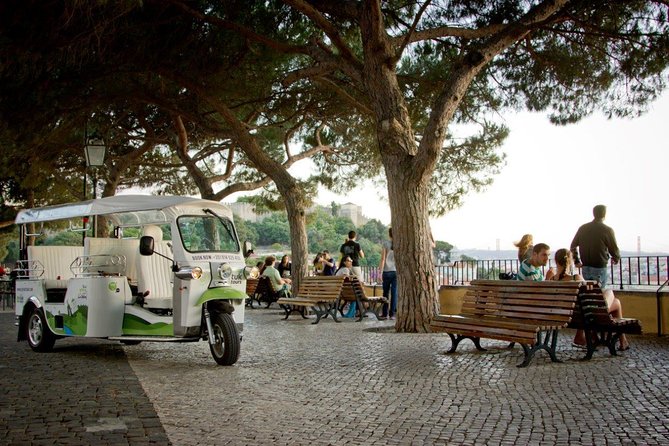
The tour often continues through Praca dos Restauradores, a square celebrating Portugal’s independence. Then it reaches Praca Dom Pedro IV, described as the heart of Lisbon’s lively daily life.
These two stops are less about architecture-detail and more about energy. They help you feel the city’s pulse, especially if you’re arriving in Lisbon for the first time and your legs are still fresh. Both are short stops (around 15 minutes), so you’re not meant to linger like you would at a museum. Instead, you’re meant to absorb the atmosphere and keep moving.
If you plan to eat or shop later, this is a helpful part of the tour because it orients you in the central grid of streets.
Panteão Nacional and monument tickets: grand sight, optional inside
Panteão Nacional is a major baroque-style building, and it took three centuries to build. It’s also a resting place for Portugal’s most illustrious figures, so it has weight beyond sightseeing.
As with other major monuments on the route, the ticket to the monument is not included. That means you’ll either enjoy the exterior views and setting, or you can buy the entrance separately if it’s a must-see for you.
To me, this stop is a good example of what the tuk tuk does well: it gets you close to landmarks with minimal fuss, but it doesn’t force you into paid entries you might not want. Decide based on your own interests and how much time you have.
Chiado & Carmo, plus Carmo Square ruins
The Chiado & Carmo area adds a different texture: elegant shops, historic cafés, and a refined slice of old Lisbon. The route also passes Carmo Square and its intriguing ruins, which bring an atmospheric, broken-history note to the day.
This is a nice “switch” after squares and big viewpoints. It helps you see that Lisbon isn’t one mood. You get formal and stylish streets, but you also get the memory of damage and rebuilding.
Keep your expectations realistic: this is a pass-through segment. You’re not getting a slow museum-style visit—more like a guided street-level understanding of what this neighborhood represents.
Bairro Alto and the nightlife-turn district (for longer rides)
On the longer versions (the route list marks some stops as possible on the 3- or 4-hour options), you’ll reach Bairro Alto. It’s known for nightlife and a more bohemian atmosphere, making it a great fit if you want Lisbon to feel current as well as historic.
There’s also a separate optional stop described as a former sordid quarter—once brothels and clubs, now known for live music, burlesque shows, and tapas spots. The value here is not just entertainment. It shows you how Lisbon repurposes neighborhoods over time, and how “night energy” has a history behind it.
My practical take: if you’re doing a short tour, these sections may get cut. If you want this nightlife vibe, plan for at least the longer option.
Alcântara-Mar and the river approach (for the extended itinerary)
Alcântara-Mar is included on the longer tours and sits below the 25 de Abril Bridge along the river. It’s a spot to relax and reset. After hours of streets and viewpoints, this river area feels like a breather.
This is also where Lisbon’s relationship with water becomes clearer. From the central hills, you can look out. Along the river, you get the other side of the story: movement, ferry routes, and the way the city breathes at street level.
25 de Abril Bridge ex-libris: steel and scale
Ponte 25 de Abril (the 25 de Abril Bridge) is one of Lisbon’s most notable symbols. It’s often compared to the Golden Gate Bridge in San Francisco, and it’s a clear “big object” viewpoint that gives your camera a strong focal target.
This stop is short (around 15 minutes), but it’s the kind of photo you’ll keep. It also helps you understand why Lisbon feels so dramatic—because so much of the city’s identity is tied to the Tagus River crossing.
Jerónimos Monastery, Padrão dos Descobrimentos, and Torre de Belém: Belém classics
If you’re doing the 3- or 4-hour versions, the route heads into Belém’s Age of Discovery zone. You may see these places from the outside, and you can add monument tickets if you want deeper visits.
- Jerónimos Monastery: you can see it from outside or buy entry separately; the monument ticket is not included.
- Padrão dos Descobrimentos: tied to the Discoveries and Belém’s monumental historic district; monument ticket is not included.
- Torre de Belém: built between 1514 and 1520 under King Manuel I; the monument ticket is not included.
These stops are powerful because they turn the stories you heard earlier into a visible “Portugal was here” moment. Baixa and Alfama give you the lived-in layers; Belém gives you the global outward-facing chapter.
Time reality check: monument entries can eat your schedule. If you only have a few hours, it’s totally valid to prioritize outside views and save paid visits for a separate trip when you can slow down.
Comfort, hearing, and photo strategy inside the tuk tuk
A tuk tuk tour can be either great or frustrating depending on expectations, so here’s how to set yourself up.
For comfort: blankets are provided for cooler weather, and the vehicle’s transparent cover can close in rain. That matters in Lisbon because sudden wind can feel colder on exposed streets.
For hearing: an onboard PA system is a plus, and it helps the guide keep explanations clear without needing to talk over engine noise. That’s especially helpful if your group includes people who want history but don’t want to strain to hear.
For photos: you get open-sided viewing for pictures, but the cover can also create glare. Take a few test frames at the start of each stop so you know how your camera handles reflections.
For space: there can be limited legroom, and you may get cozy if you have more than four adults in one ride. If legroom matters, it’s worth picking a timing that gives you the most comfort and choosing the smaller side of your group.
For what you bring: no large items like suitcases or strollers are allowed. Keep it compact so everyone stays comfortable and secure.
Price value: is $19.35 per person a smart deal?
At about $19.35 per person, this tour prices itself as an affordable way to get orientation without spending hours in transport lines. The value comes from three things.
First, the electric tuk tuk does the heavy lifting on Lisbon’s hills and narrow streets. You’re not paying for “just driving”; you’re paying for being transported close to viewpoints and landmarks quickly.
Second, the tour is private, so you’re not stuck buying a per-person ticket for a packed group experience. You can ask questions, request adjustments, and spend time at the viewpoints that matter most to you.
Third, the route mixes quick context stops with optional monument depth. Entry fees aren’t included for some sites (Cathedral monument, Panteão Nacional, Jerónimos Monastery, Padrão dos Descobrimentos, Torre de Belém), so your final value depends on whether you buy those tickets. Still, even without entry, the orientation is the product—and that part is included.
The main value trap to avoid: because the tour is time-based (1 to 4 hours), your duration selection matters. If you choose too short a time window, you’ll miss parts of the route that appeal to you—especially Belém and the bridge segment.
Should you book this Lisbon tuk tuk history and viewpoints tour?
Book it if you want a smooth first encounter with Lisbon that hits the big geography: Baixa river squares, medieval Alfama lanes, and viewpoint stops that make the city look real. It’s also a strong choice if your time is limited and you want a guide-driver to handle route logic while you focus on photos and questions.
Skip it (or consider a longer option) if you’re expecting a full monument-by-monument day. Monument entries aren’t included for several key sites, and the tour’s time-based format means you won’t get every stop at a slow walking pace.
If you want the best mix of orientation plus Belém highlights, plan for the longer duration. If you want a quick start and then freedom to wander, the shorter ride still gives you the “where am I?” clarity that makes the rest of Lisbon easier.
FAQ
How long is the Explore Lisbon by Tuk Tuk tour?
The tour runs from 1 to 4 hours, depending on the option you choose.
What’s the price per person?
The price is $19.35 per person.
Do you get pickup, and where does it end?
Pickup is offered, and the tour can include pickup and drop-off at the Hard Rock Cafe or the Cruise Terminal. The activity ends back at the meeting point.
Is the tuk tuk covered for rain or cold weather?
Yes. The eco tuk tuk has a transparent cover that can be closed in cold weather or rain, and blankets are provided for cooler temperatures.
Are monument entry tickets included?
Entry fees are not included. Tickets to the monument are specifically noted as not included for Lisbon Cathedral’s monument area, Panteão Nacional, Jerónimos Monastery, Padrão dos Descobrimentos, and Torre de Belém.
Is the tour wheelchair accessible?
Yes, the tour is listed as wheelchair accessible.
Are there age limits or restrictions for riders?
Children 6 and under are not legally allowed on the eco tuk tuk. Children ages 7 to 12 can ride with a booster seat if needed (you should let the provider know). Pregnant women and intoxicated people are forbidden/not recommended, and people who are mentally or physically incapacitated are not recommended.