
REVIEW · COOKING CLASSES
Hands on Portuguese Cooking Class in Lisbon
Book on Viator →Operated by Compadre Cooking School · Bookable on Viator
Portuguese cooking hits different in Lisbon. This hands-on class at Compadre Cooking School turns you into a real participant, not an observer, with a full-course Portuguese meal cooked from start to finish at your own station. I also like that you leave with the recipes, so the experience doesn’t end the moment you walk out the door.
The main trade-off is that dessert isn’t included, and wine can be pretty limited. If you’re coming for a long, alcohol-forward dinner, plan around the class format instead of expecting a full restaurant-style meal.
In This Review
- Key things you’ll notice right away
- Entering Compadre Cooking School in central Lisbon
- Small-group cooking: why 12 people feels like the sweet spot
- Your 3-hour Portuguese menu: starter, cod, and a meat dish
- Starter: learn the rhythm of a Portuguese plate
- Fish course: cod (bacalhau) and why Portugal loves it
- Meat dish: the comfort-course that anchors the meal
- If your class includes seafood prep, be ready to roll up sleeves
- The best part: cultural context plus cooking you can repeat
- Price and value: what $82.24 buys you (and what to expect)
- Timing, alcohol, and comfort level for real-life dining
- Who should book this cooking class in Lisbon
- Should you book Compadre Cooking School?
- FAQ
- How long is the Hands on Portuguese Cooking Class in Lisbon?
- What will we cook during the class?
- How many people are in the class?
- Where do I meet for the cooking class?
- Is the class offered in English?
- Can I cancel for a full refund?
Key things you’ll notice right away
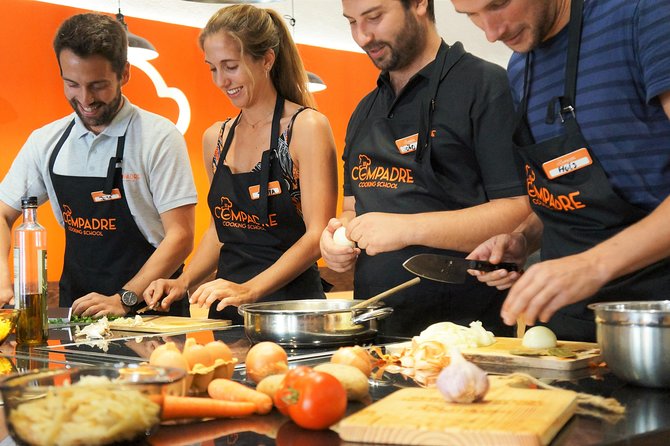
- Small group size (max 12) means you get hands-on help instead of standing around.
- Your own station helps you move step by step through each dish.
- A full menu structure: a starter, a traditional codfish course, and a traditional meat dish.
- Take-home recipes make it easy to repeat the meal later at home.
- Instructors with local perspective include Anna, Marta, and others who tie dishes to Portuguese culture.
- You eat what you cook, sharing the meal with your group at the end.
Entering Compadre Cooking School in central Lisbon
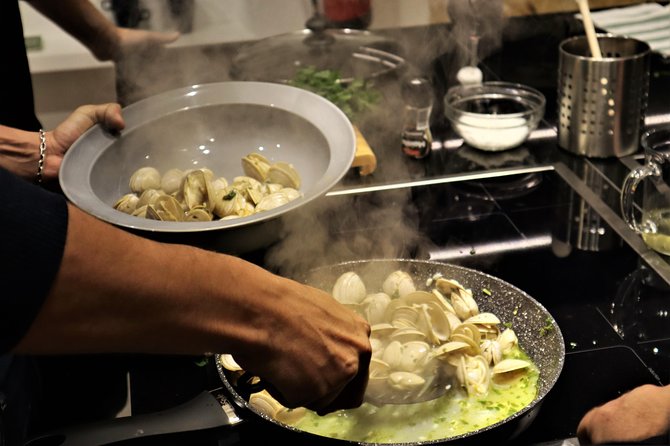
Your class starts at Compadre Cooking School on R. Heliodoro Salgado nº14, 1170-176 Lisboa. It’s described as a beautiful, spacious cooking school, which matters because cooking classes that are too tight can feel stressful fast. Here, the room is set up so you can actually work without bumping elbows every two minutes.
This stop is the only location on the schedule, and that’s good news for your time in Lisbon. You meet, you cook, you eat, and then the experience ends back where you started. It’s also listed as near public transportation, which helps if you’re combining it with other plans around Alfama, the center, or the river.
You can also read our reviews of more cooking classes in Lisbon


Small-group cooking: why 12 people feels like the sweet spot
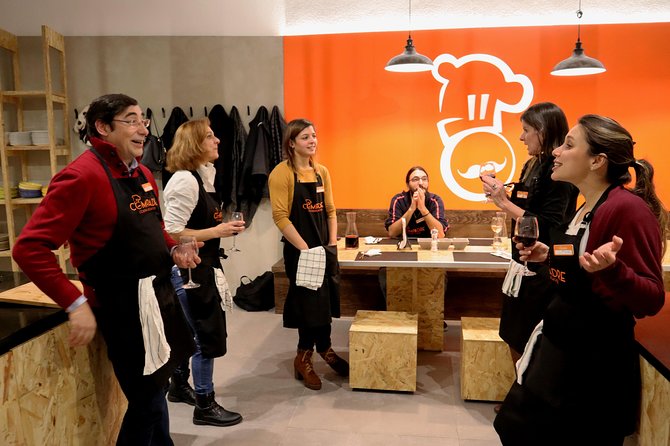
This is capped at 12 travelers, and that shows in how the lesson is paced. The format is hands-on and step by step, with instructors able to look over your shoulder while you prep and cook. In the best moments, you’ll feel like you’re learning a method, not just copying a recipe.
You also get a practical setup: each small group has its own station. That means you can focus on what’s in front of you—mixing, prepping, seasoning—rather than waiting for tools or for someone else to finish. And if you’re a confident cook, you’ll still get useful direction. If you’re new, the class is built so you can follow along without feeling lost.
One extra plus: the course is offered in English, and the instruction style from the instructors in the program (notably Anna and Marta in multiple class comments) is patient and structured. People specifically called out clear guidance and the mix of cooking skill plus cultural context.
Your 3-hour Portuguese menu: starter, cod, and a meat dish
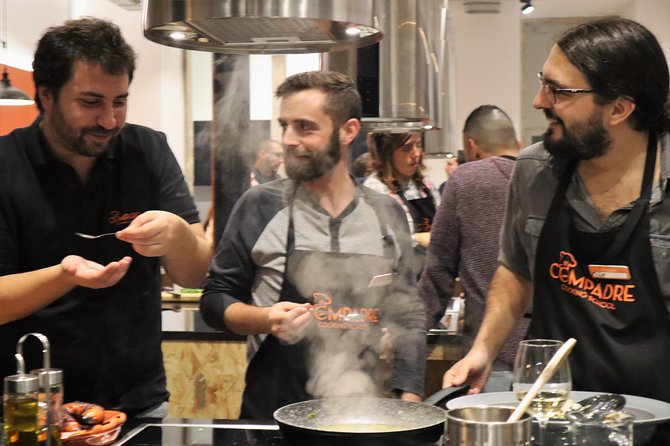
The class is built around a full Portuguese course meal. You start with a traditional Portuguese starter, then move into the fish course: a traditional codfish recipe. After that, you cook a traditional meat dish. The overall plan is designed so you learn how a Portuguese meal flows, not just how to cook one item.
Starter: learn the rhythm of a Portuguese plate
The starter is described simply as a traditional Portuguese starter, and the point here is to get you cooking early. This is the moment where you’ll get used to the kitchen workflow—timing, station movement, and how the instructor expects you to prep. It’s also where the class sets the tone: casual enough to have fun, structured enough to get results.
If you’re hoping to impress yourself at home later, starters are often the best training ground. They teach technique and seasoning without the pressure of a main course timeline.
Fish course: cod (bacalhau) and why Portugal loves it
The fish course is built around codfish, specifically a traditional cod recipe. Multiple comments zero in on bacalhau and its importance in Portuguese cuisine, which is exactly what you want from a cooking class. You don’t just taste cod; you learn why it shows up again and again in menus across Portugal.
Cod also tends to be a great “learning food.” It can be forgiving if you follow the steps, and the flavors you build are the kind you can replicate without a special trip to Portugal. After this course, you’ll be less intimidated ordering bacalhau at restaurants.
You can also read our reviews of more tours and experiences in Lisbon





Meat dish: the comfort-course that anchors the meal
The third course is a traditional meat dish. Even without extra detail on the exact cut or sauce, the value is that you’re learning how the instructor moves from one course style to another. Portuguese cooking isn’t only about one taste profile—it’s about balancing flavors across the whole meal.
And because you cook both a fish main and a meat main in the same session, you’ll get a clearer sense of the Portuguese approach to seasoning and serving.
If your class includes seafood prep, be ready to roll up sleeves
Some participants mention classes that included seafood prep tasks like cleaning and deveining prawns. One person noted disliking the prep part, but the class still worked smoothly once they adjusted (they took a slower pace with a drink while others finished). If you’re sensitive to that kind of hands-on work, consider that this is truly a practical cooking lesson, not only a “watch and taste” experience.
The best part: cultural context plus cooking you can repeat
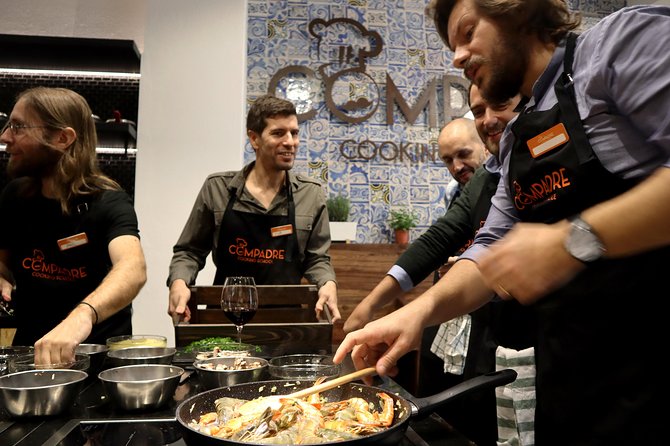
One reason people rate this class so highly is that it doesn’t treat food like random recipes. Instructors explain the history and traditions behind what you’re cooking, and they connect it to Portuguese life. Comments highlight that you’ll hear real context while you work.
You’ll also notice a consistent theme: you’re cooking in a calm, organized way while still having fun. Several mentions call out warm, welcoming teaching styles from instructors like Anna and Marta, and even class moments involving Nina and Ana in other sessions. That variety is a good sign: it suggests you’re not stuck with one “script,” but with a team that can explain Portuguese food in more than one voice.
Then there’s the payoff. At the end, you sit down and share the meal you cooked with the other students. That part matters more than you might think. Eating together turns your time into an evening, not just an activity, and it helps the food make sense in your head. You’re not just tasting. You’re tasting what you built.
Finally, you take home recipes. That’s what converts this from a fun afternoon into something you can use later when you want a Portuguese night for friends or family.
Price and value: what $82.24 buys you (and what to expect)
At $82.24 per person for about 3 hours, you’re paying for three things at once:
- Guided, hands-on instruction in a real kitchen setup
- A full-course Portuguese meal you cook and eat
- The recipes you can repeat later
This isn’t just a food tasting. It’s also structured like a lesson, with your own station and small-group attention. That’s where the value often shows up: you’re not spending money on ingredients you don’t know how to use, and you’re not left guessing about technique once you’re home.
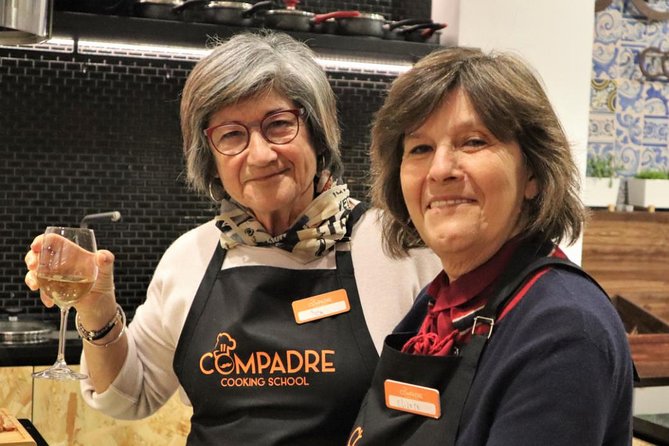
Still, manage expectations. It’s not a private chef experience, and the class is time-boxed. The menu is built around a starter plus two mains, so if you’re hoping for a multi-course dessert finish, you’ll need to plan that separately. Some participants also pointed out that wine supply can be modest, such as one bottle offered for a group of five adults.
Timing, alcohol, and comfort level for real-life dining
The class runs for around 3 hours, which is a great length for Lisbon. It’s long enough to feel like you got a real meal lesson, but short enough to still enjoy the rest of your day. If you’re on a first trip and want something active, this class can be an easy win.
On alcohol: you won’t be served alcoholic beverages to participants under 18. Water or tea is substituted. Some comments also flag that wine is not unlimited, and you may not get the same free-flow feeling you’d expect at a long dinner table.
So what should you do?
- If you drink wine, treat it as an add-on, not the main event.
- If you want a stronger pairing experience, consider having a drink before or after, outside the class.
And if you’re bringing kids: children up to 17 must be accompanied by a participating adult (plus 18 years old). The class can be hands-on for younger cooks, but it’s still centered on participating adults guiding the experience.
Who should book this cooking class in Lisbon
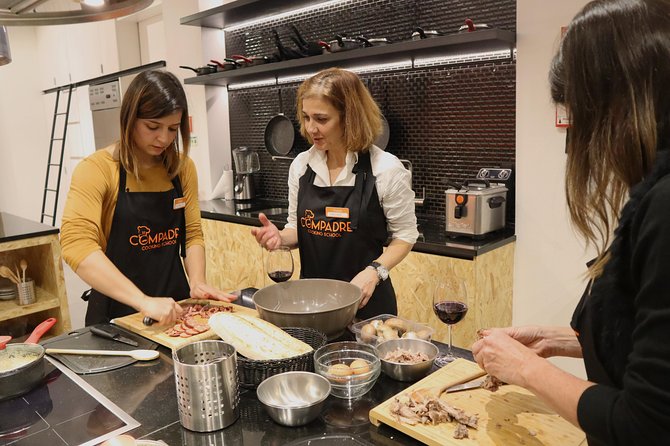
This works best if you want your Lisbon food experience to be practical, social, and tied to culture.
You’ll probably love it if:
- You like cooking enough to enjoy chopping, seasoning, and actually making food
- You want to understand Portuguese staples like bacalhau instead of only eating it once
- You want a class that works for couples, solo travelers, or small groups
- You want recipes you can repeat at home without guessing
You might think twice if:
- You expect a dessert included with your ticket
- You want a long wine-and-dine experience with lots of alcohol
- You dislike seafood prep tasks and want to avoid cleaning or deveining
Should you book Compadre Cooking School?
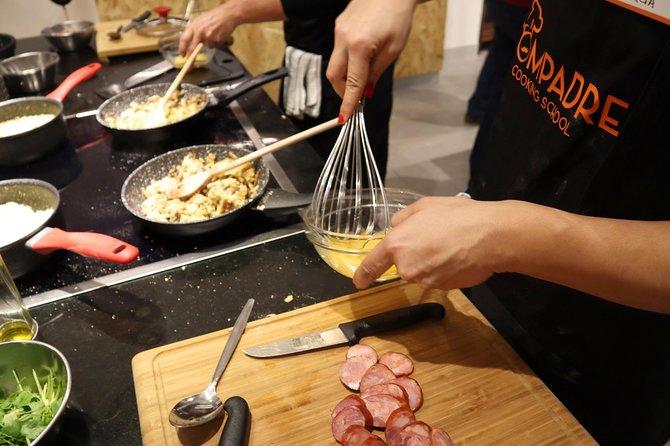
I’d book this class if your goal is to leave Lisbon with skills, not just photos. The standout strengths are the small-group attention, hands-on cooking at your own station, and take-home recipes that make the experience useful later. Add in cultural context from instructors such as Anna and Marta, plus the fact that you eat what you cook, and you get an evening that feels like Lisbon, not just a lesson.
If dessert and bigger alcohol service are must-haves for you, plan a separate sweet stop and drink timing around the class schedule. For most food lovers, that trade feels worth it.
FAQ
How long is the Hands on Portuguese Cooking Class in Lisbon?
It runs for about 3 hours.
What will we cook during the class?
You cook a full Portuguese course meal: a traditional Portuguese starter, a fish dish with a traditional codfish recipe, and a traditional meat dish.
How many people are in the class?
The class has a maximum of 12 travelers.
Where do I meet for the cooking class?
You meet at Compadre Cooking School at R. Heliodoro Salgado nº14, 1170-176 Lisboa, Portugal. The activity ends back at the meeting point.
Is the class offered in English?
Yes, it is offered in English.
Can I cancel for a full refund?
Yes. You can cancel for a full refund up to 24 hours in advance of the experience start time.