REVIEW · FATIMA, NAZARE & OBIDOS DAY TRIPS
From Lisbon: Alcobaça & Óbidos Self-Guided Tour
Book on GetYourGuide →Operated by Gray Line Portugal · Bookable on GetYourGuide
Two Portuguese icons in one 6-hour loop. I like the way this self-guided format gives you freedom once you arrive, and I like that the interactive audio guide helps you make sense of what you’re seeing without needing to chase a person with a microphone. You get two very different styles of Portugal in one stretch of the day.
The trade-off is time. A stop that’s short can feel short, especially if you want to linger over the monastery details or if Óbidos hits the late-day pace. If you’re not strict about timing, you might spend more time finding your way than actually looking.
You’ll start and finish at Terminal Marques Pombal Square (bottom of Park Eduardo VII). Since there’s no hotel pickup, plan your Lisbon transit so you arrive early enough to check in calmly.
In This Review
- Key highlights worth your attention
- Why Alcobaça and Óbidos work so well together
- Getting to the start: Lisbon timing and the no-pickup reality
- The UNESCO Monastery of Alcobaça: what matters in 1 hour
- Inês de Castro and the real Romeo-and-Juliet connection
- Alcobaça free time: use it for the monastery mood shift and sweets
- The ride toward Óbidos: don’t waste it on autopilot
- Óbidos at your own pace: audio guide + 2 hours of freedom
- Town Gate and the tiles: the quick route for the best wow factor
- St. Peter’s Church, St. James, and St. Mary: churches that each tell a different story
- Pousada Óbidos: history turned into a building you can actually feel
- The timing issue to plan around: how to avoid a short-feeling day
- Price and value: is $50 reasonable for this 6-hour plan?
- Who should book this trip, and who should skip it
- Should you book this Lisbon to Alcobaça and Óbidos self-guided tour?
- FAQ
- Where does the tour start and end?
- Is hotel pickup or drop-off included?
- How long is the tour?
- What stops are included?
- Is there an audio guide?
- What languages are available for the audio guide?
- Do I get a map?
- What should I bring?
- Are pets allowed?
- What’s the cancellation and payment flexibility?
Key highlights worth your attention
- UNESCO Alcobaça monastery: Cistercian scale and famous tombs in a timed visit
- Inês de Castro connection: the story behind the real Romeo-and-Juliet angle
- Óbidos walls and lanes: explore at your pace with an audio guide on hand
- Tile-and-church details: Passion scenes, baroque woodwork, and Visigoth-to-mosque-to-church layers
- Historic architecture up close: including the Manueline-style windows at the Pousada area
- Easy “do it yourself” structure: you get a map plus a planned flow, without a rigid walking group
Why Alcobaça and Óbidos work so well together
Alcobaça and Óbidos feel like two chapters in the same book. Alcobaça is about stone, order, and big ideas from medieval Portugal. Óbidos is about compact streets, church spires, and the kind of small-town atmosphere where you can pause every few minutes and still stay on track.
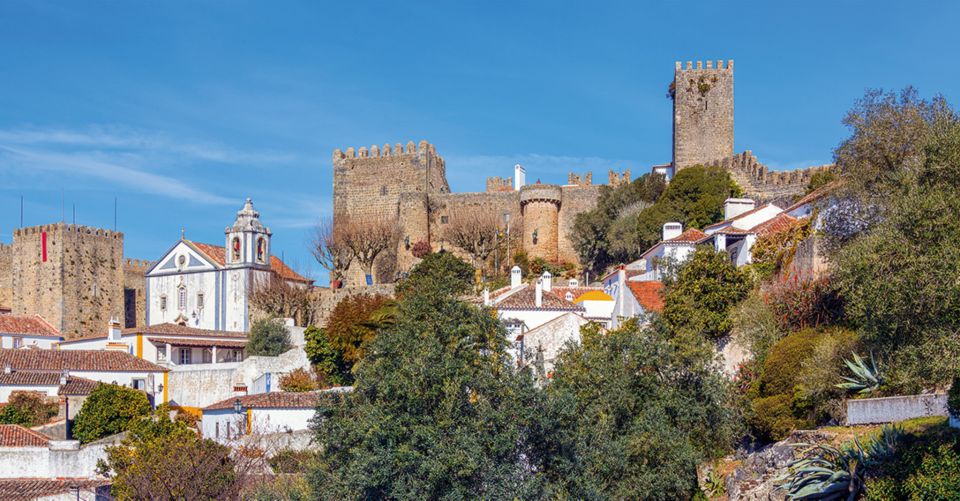
This tour is built for that pairing. You don’t just hop between places; you get a clear reason to be there. Alcobaça anchors the day with the Monastery of Alcobaça, a UNESCO World Heritage site. Óbidos then gives you the classic walled-village experience, with churches, gateways, and castle views that you can take in one alley at a time.
If you like structure but want control, this format hits the sweet spot. You have planned transit windows, then you choose how to spend the free time inside each town. That means you can focus on the parts that matter to you—tombs and tiles, or quick scenic wandering and snacks.
You can also read our reviews of more guided tours in Lisbon



Getting to the start: Lisbon timing and the no-pickup reality
The tour runs from Cityrama Gray Line, starting at Terminal Marques Pombal Square at the bottom of Park Eduardo VII. It also ends back at that same meeting point. So you’re not dealing with hotel pickup routes, which can save time and reduce confusion—but it also means you own your trip to the meeting area.
Because the duration is listed as about 6 hours, you’ll want to show up a bit early. If you’re late, you don’t magically gain time inside the monastery or on the Óbidos walls. And since you’re relying on your own pace once you’re on site, getting the start right helps the whole day feel smoother.
Bring what you’d bring for real walking: comfortable shoes and a camera are the obvious ones. Add sunglasses and a sun hat, because you’re outdoors moving between gates, viewpoints, and church fronts. Also remember pets aren’t allowed.
The UNESCO Monastery of Alcobaça: what matters in 1 hour
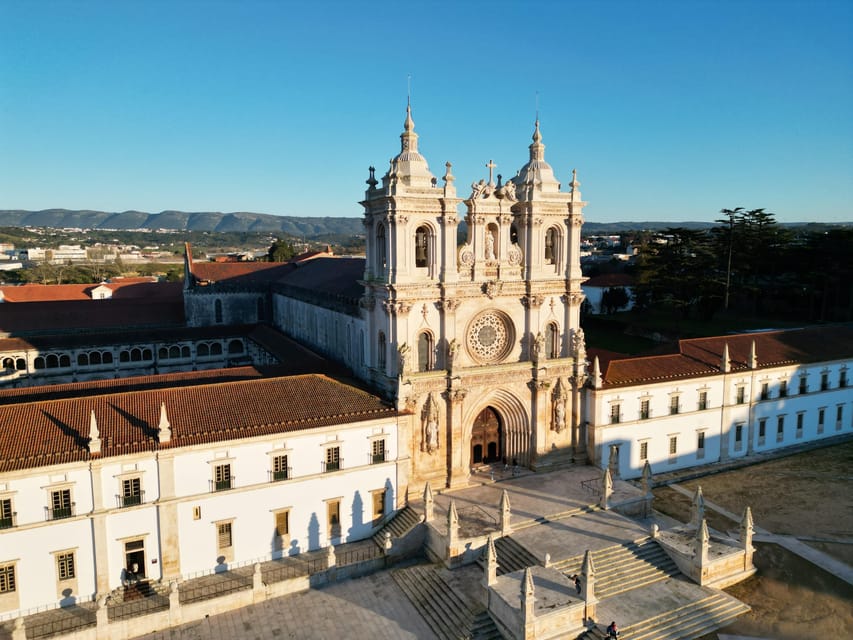
Alcobaça’s centerpiece is the Royal Monastery of Santa Maria de Alcobaça, recognized by UNESCO since 1989. The construction began in 1178 on the order of King D. Afonso Henriques, and the monks took occupancy in 1223. That timeline matters because it explains why the monastery feels both grand and practical—built to last, built to function.
In your guided plan, you get about 1 hour of visit time. That’s not enough to read every plaque and trace every detail, so I’d focus on the big hits:
- Church and tomb area (the main reason people come)
- The scale of the complex (why it’s considered one of the largest and best-preserved Cistercian settings)
- How the monastery tells a story of power and faith
The audio guide helps here. You’re not left guessing what you’re looking at. Instead, you can walk through the space with a basic map in your head—what to notice first, what to photograph, and what to slow down for.
Cistercian architecture can feel like “very serious stone,” but the monastery isn’t cold or generic. It’s more like quiet theater: massive forms, strong symmetry, and details that reward even a fast visit if you know where to look.
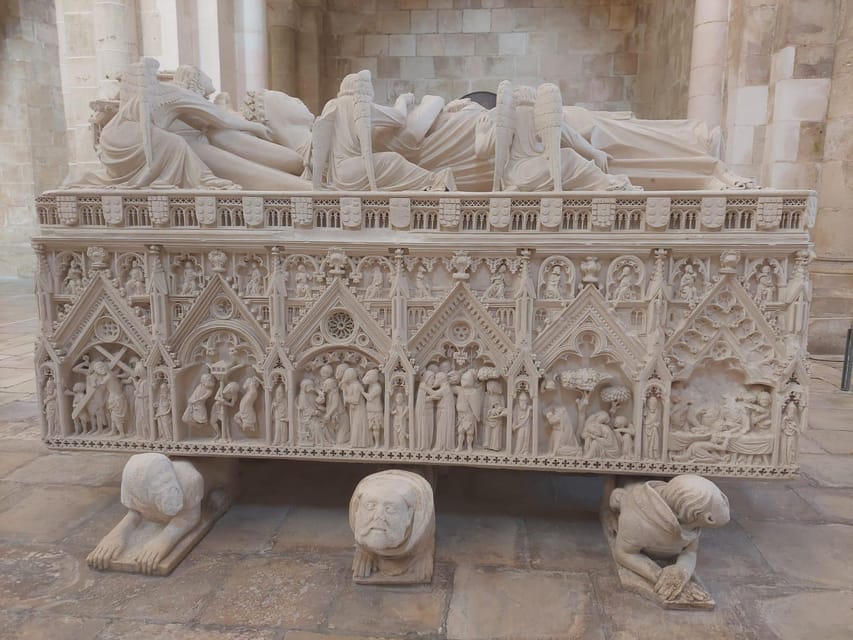
Inês de Castro and the real Romeo-and-Juliet connection
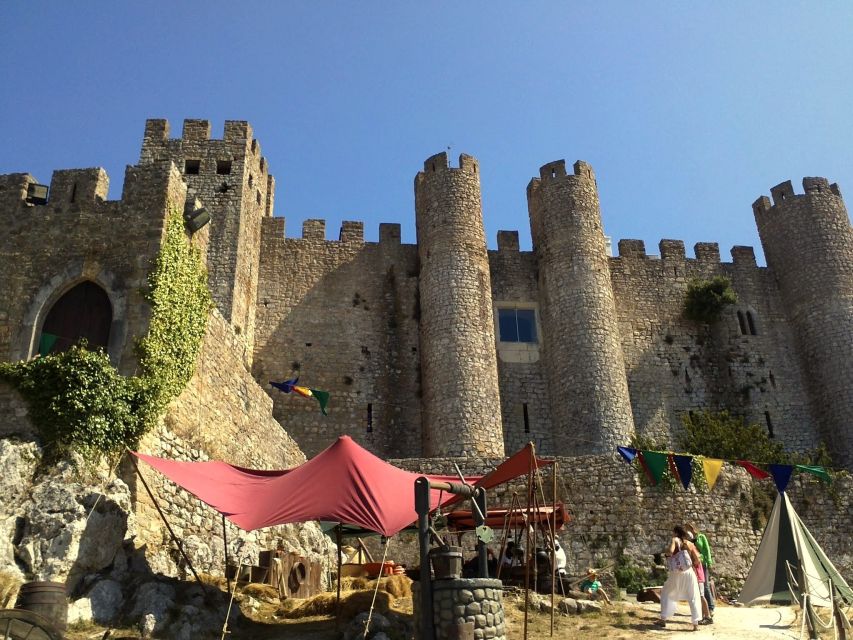
This is one of the tour’s most compelling reasons to go: the story tied to the tombs. King D. Pedro chose the church of the monastery as the burial site for himself and for Inês de Castro. When you’re standing where those tombs are connected to the narrative, the famous Romeo-and-Juliet comparison makes more sense—not as a gimmick, but as a shortcut for how this story echoes through Portuguese culture.
The important part for you is how to experience it in limited time. Don’t try to memorize the entire legend. Instead, treat the tombs like anchors:
- Look at how the setting frames the final resting place
- Let the audio guide fill in the relationships and historical context
- Notice how the monastery becomes a kind of monument to love, politics, and memory
This is also where the audio guide earns its keep. Without it, you’d likely appreciate the architecture and miss why it’s emotionally famous.
If you care about history, this is your “why it matters” moment. If you care more about scenery and street life, it’s still worth paying attention for a few minutes, because it gives the day a storyline instead of just a route.
Alcobaça free time: use it for the monastery mood shift and sweets
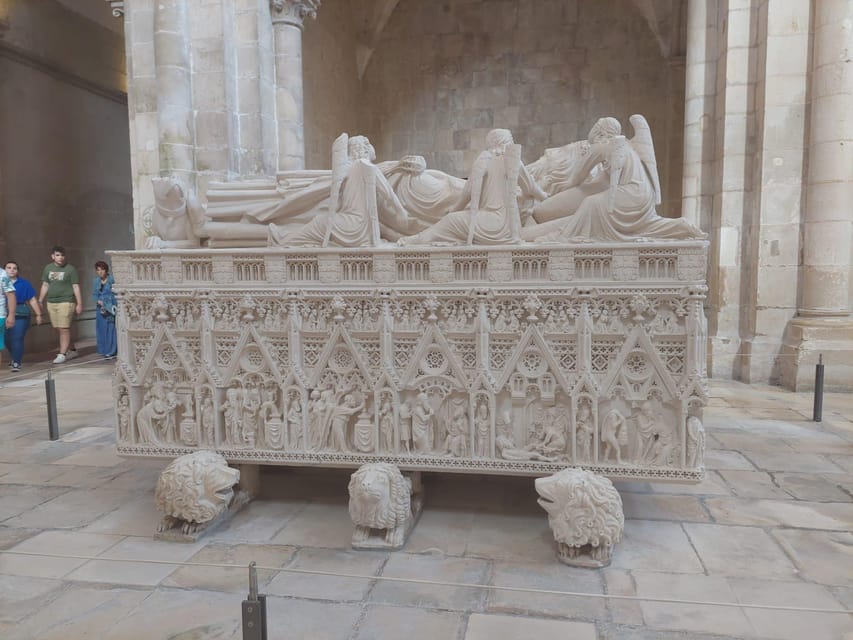
After the monastery stop, you get free time in Alcobaça, including a chance to taste the famous heaven sweets of the area. This is one of those travel moments that feels small but matters. When the day is structured, it’s easy to think you only need to see buildings. But food breaks help you reset your brain for the walking that comes next in Óbidos.
Here’s how to make it work:
- Keep your snack realistic. Aim for something quick that you can eat and still move.
- If you want to shop, set a personal limit before you start browsing.
- Don’t spend your entire free hour searching for the perfect pastry and then realize you’re short on time.
Think of the sweets break as a transition: from monastery gravity to village wandering. A good snack gives you energy for the walls and churches that follow.
You can also read our reviews of more tours and experiences in Lisbon





The ride toward Óbidos: don’t waste it on autopilot
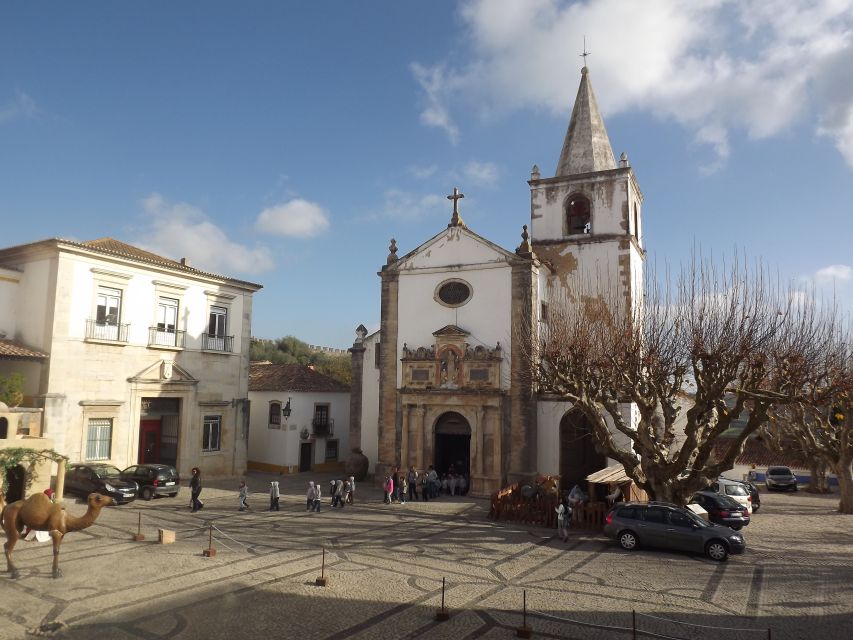
Between stops, you’ll have transfer time. That bus ride is part of the day, even if it feels like “waiting.” I treat transfer time like prep time:
- Get your camera ready
- Use the ride to review what you want to prioritize in Óbidos
- Mentally set the pace you’ll use once you’re released on your own
Because the schedule is compact, your decisions once you arrive matter. Óbidos has several churches and key viewpoints, and you have about 2 hours of self-guided time there.
If you like to slow down, that’s fine—but do it on purpose. The goal is to match your walking speed to your priorities, not to wander until you suddenly notice you’re rushing.
Óbidos at your own pace: audio guide + 2 hours of freedom
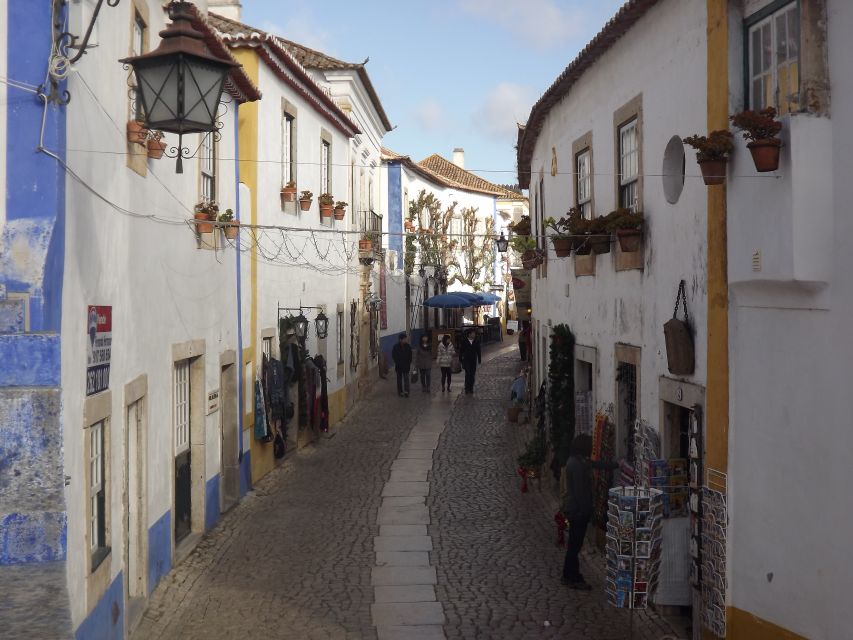
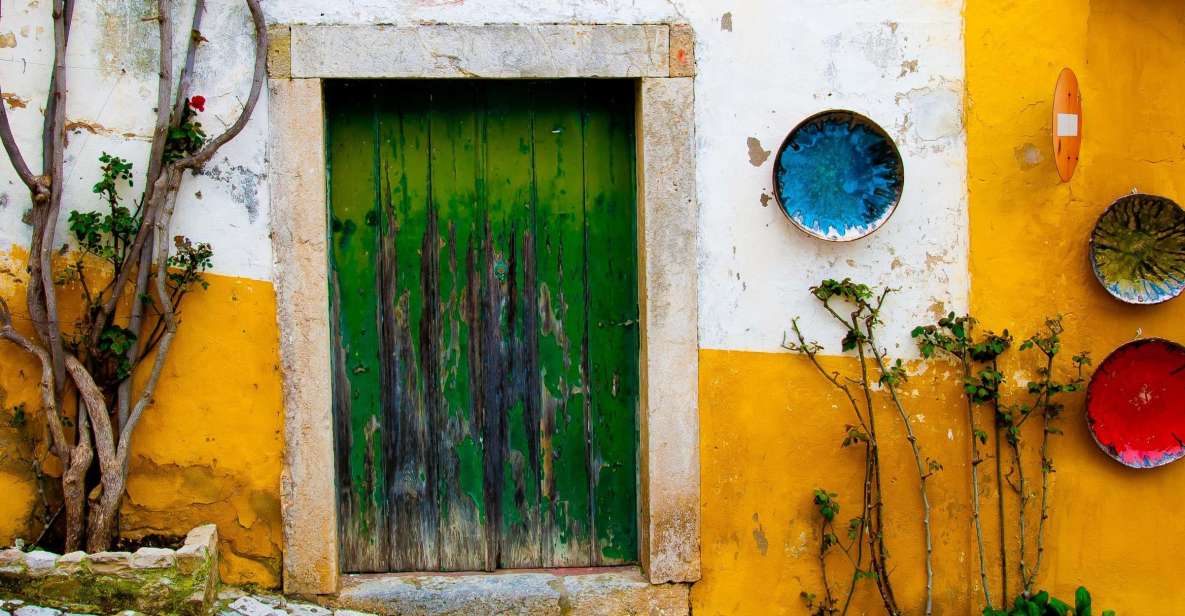
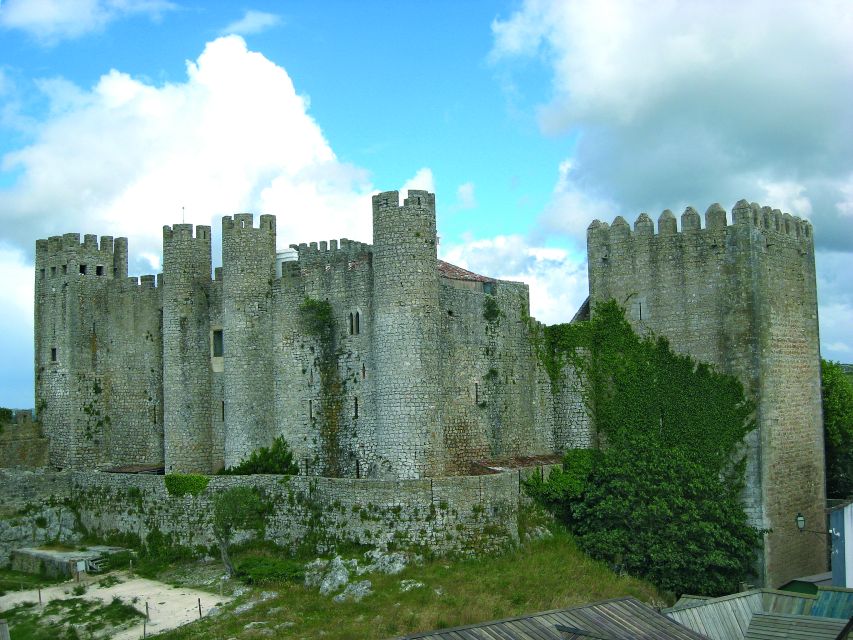
Óbidos is a medieval walled village in western Portugal, and the experience here is all about roaming. You’ll explore churches, the walls, and the castle area, plus colorful streets where flowers decorate the façades.
The history layers are part of why the town feels so “alive.” The village was probably founded by the Celts in 308 BC. Recent studies have even suggested it was part of the ancient Roman city of Eburobrittium. After that came periods of barbarian presence and then Moorish occupation. King Afonso Henriques later conquered it from the Moors, and in the 18th century it stayed tied to royal summer life.
This time period detail matters because you can feel it in the architecture. Óbidos wasn’t just a battlefield zone; it became a leisure stop, and that helps explain the mix of grand and charming details.
The included audio guide guides you through the points of interest as you go. You’re not herded into a strict route, but you do get structure. It’s an ideal compromise: enough information to avoid aimless wandering, enough freedom to choose your pace.
Town Gate and the tiles: the quick route for the best wow factor
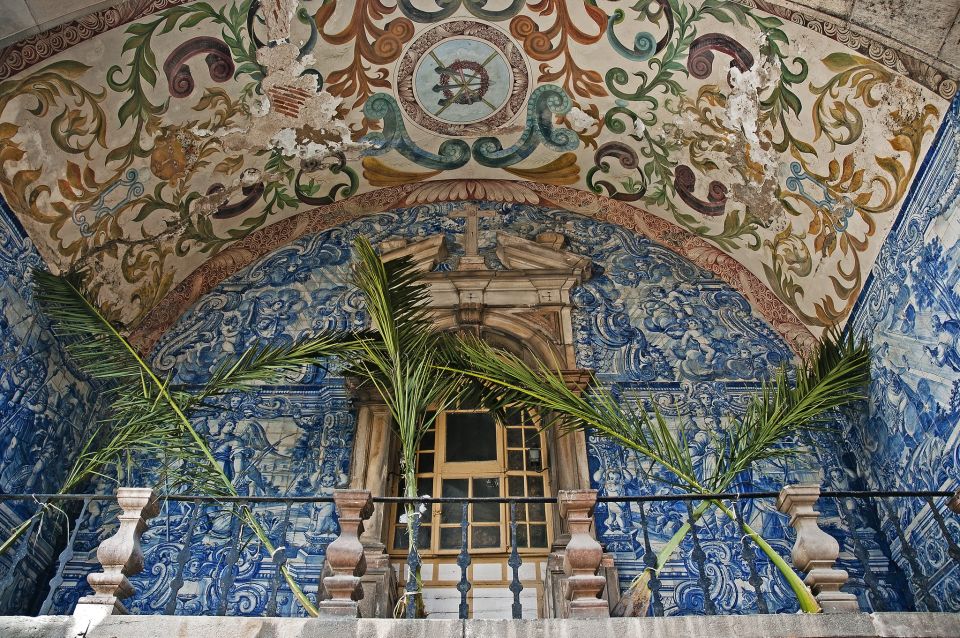
One of the first places you’ll likely want to aim for is the Town Gate, also called Our Lady of Sorrow. The gate includes an inscription tied to the 17th century and to John IV’s time: The Virgin, Our Lady, was conceived without original sin. It’s the kind of text you wouldn’t find on your own unless someone pointed you there.
Near this, you can spot 18th-century tiles that represent scenes from the Passion of Christ. This is a great use of your time because tiles are visually fast to read. Even if you don’t slow down for every explanation, you’ll collect a few strong images that define the town.
If you’re tempted to skip this because it’s “just a gate,” don’t. It sets the tone: Óbidos doesn’t rely on big monuments alone. It uses details—inscriptions, tilework, and the way streets funnel your attention.
St. Peter’s Church, St. James, and St. Mary: churches that each tell a different story
Óbidos gives you multiple church stops, and each one reflects a different era.
St. Peter’s Church has a medieval foundation and still keeps its original portal. It was renovated in the second half of the 16th century. Expect a single nave layout and a baroque wooden altarpiece from the architectural period associated with King John V. This is where you can shift from “medieval town wall” mode to “art and craftsmanship” mode.
St. James Church connects to the royal family’s patterns of staying in Óbidos over centuries. It was founded by King Sancho, so it carries that early Portuguese link.
St. Mary’s Church of Óbidos is the one with the most dramatic layers. The church sits on what used to be a Visigoth temple. That temple later became a mosque. After Christian conquest by Afonso I, it became a Catholic church. Inside, you’ll find a splendid collection of tiles covering the walls, plus the tomb of D. João de Noronha, mayor of Óbidos in the 16th century, created by sculptor Nicolau Chanterene.
If your 2 hours feel short, here’s a smart approach: pick one church for deep attention and let the others be “highlights.” St. Mary’s is the one I’d prioritize if you care about layered religious history and tile interiors.
Pousada Óbidos: history turned into a building you can actually feel
The Pousada of Óbidos is located inside what was once the Paço do Alcaide. It’s notable because it was the first in Portugal built from a historical building. Even if you’re not staying overnight, it’s worth noticing what’s kept and what’s adapted.
You can look for Manueline-style windows and an ornate doorway with a lintel molded in the fashion of intertwined tree-trunks. That kind of design is hard to recreate by imagination—you need to see it.
This is a good “slow down for 3 minutes” stop. It breaks up the church-and-wall route so you can recharge before you continue up or around the town.
The timing issue to plan around: how to avoid a short-feeling day
One clear consideration with a day trip like this is the risk of feeling rushed. You’ll only have about an hour in Alcobaça and about two hours in Óbidos. If you arrive later than planned, or you spend too long inside one attraction, the rest can feel squeezed.
There’s also the practical reality of church schedules. If you land in Óbidos when churches are already closed, your audio guide can still give context, but you won’t see everything you expected.
So go in with a simple strategy:
- Decide what “must see” you care about: monastery tomb area and one key church in Óbidos
- Use the audio guide early so you know where to spend your limited time
- Save time for the walls and streets, not just inside spaces
This is a short day. The goal isn’t to absorb everything. It’s to leave with a clear picture of how Alcobaça and Óbidos connect historically and visually.
Price and value: is $50 reasonable for this 6-hour plan?
At about $50 per person, this tour is priced for people who want a guided structure (audio + map + transfers) without paying for a full private guided day. You get bus/coach transport from Lisbon, a planned route between two major towns, and a multilingual audio guide in Spanish, Chinese, English, French, German, Italian, and Portuguese.
The value question comes down to your travel style. If you’re comfortable navigating on your own once you’re dropped in a town, you’ll likely feel the value quickly. If you need someone to manage timing constantly and keep doors open for you, you may want a more structured guided tour.
Also, there’s no hotel pickup or drop-off. That’s normal for this kind of day trip, but it can change the real cost in time and local transport effort depending on where you’re staying in Lisbon.
Still, for a 6-hour loop that covers UNESCO Alcobaça and historic Óbidos, it’s a fair deal if you approach it like a highlights day.
Who should book this trip, and who should skip it
I think this works best if you:
- Want two major towns in one day
- Like exploring on your own, but want an audio guide to keep you oriented
- Prefer flexible free time over long guided segments
- Enjoy history, tomb stories, and tile-and-church details
You might skip it if you:
- Want lots of museum-style time and slow browsing
- Hate the idea of potentially arriving near late-day church schedules
- Need door-to-door convenience from your hotel
Should you book this Lisbon to Alcobaça and Óbidos self-guided tour?
If you’re the type who likes a clean plan and then freedom on the ground, I’d book it. Alcobaça gives you a UNESCO landmark with meaningful tomb history, and Óbidos delivers the medieval walls-and-church wandering experience without locking you into a rigid pace. The audio guide plus map makes the day feel purposeful instead of random.
Just be honest about the timeframe. This is not a slow travel day. If you show up early, set priorities for the churches and tombs, and treat sweets and street walking as part of the experience, you’ll likely feel you got your money’s worth.
FAQ
Where does the tour start and end?
It starts at Terminal Marques Pombal Square, at the bottom of Park Eduard VII. The tour ends back at the same meeting point.
Is hotel pickup or drop-off included?
No. Hotel pickup or drop-off is not included.
How long is the tour?
The duration is listed as 6 hours, but it’s described as approximate.
What stops are included?
The tour includes stops for Alcobaça (visit and free time) and Óbidos (self-guided visit and free time), with transfers in between.
Is there an audio guide?
Yes. An interactive audio guide is included.
What languages are available for the audio guide?
The audio guide is available in Spanish, Chinese, English, French, German, Italian, and Portuguese.
Do I get a map?
Yes. A map of the destination is included.
What should I bring?
Bring comfortable shoes, sunglasses, a sun hat, and a camera.
Are pets allowed?
No, pets are not allowed.
What’s the cancellation and payment flexibility?
Free cancellation is available up to 24 hours in advance for a full refund. There’s also a reserve now & pay later option to keep travel plans flexible.