REVIEW · LISBON
4 hour Lisbon Half Day Tour – The Essencial with “Ginjinha Taste”
Book on Viator →Operated by Lx Tuk Tour · Bookable on Viator
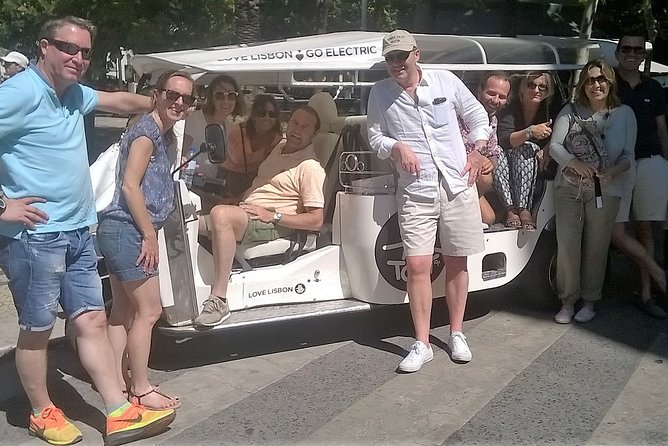
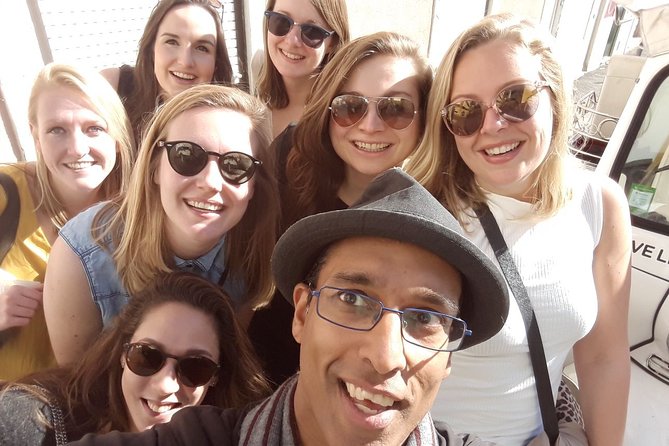
One short ride makes Lisbon click. In just four hours, this eco tuk-tuk loop strings together the city’s best photo stops without tiring you out on hills. I really like the private driver setup, because the day feels organized instead of you wrestling with directions. I also love that the tour includes an Alfama ginginha taste, so you get a real local-flavor moment, not just sightseeing.
The trade-off is time: several places are more about quick looks, viewpoints, and exteriors than slow museum wandering. If you want long, detailed stops everywhere, you’ll feel slightly rushed because this route packs in a lot.
In This Review
- Key reasons to choose this Lisbon tuk-tuk tour
- Eco tuk-tuk pacing: how 4 hours really works in Lisbon
- Starting at Hard Rock Café: getting oriented fast
- Rossio Square wave design and the Santa Justa Elevator views
- Alfama viewpoints and the Portas do Sol-to-Senhora do Monte chain
- Lisbon Cathedral, Saint Vincent monastery, and getting the cultural spine
- Comercio Square, Bairro Alto/Bica/Cais do Sodre, and where the city turns scenic
- Time Out Market, Jerónimos Monastery, and Belém’s riverfront icons
- Discoveries Monument to MAAT: ending with views over the Tagus
- Price and value: what $126.03 buys you (and what it doesn’t)
- Who this tuk-tuk tour suits best (and who should think twice)
- Should you book the Lisbon 4-hour Essencial with Ginjinha Taste?
- FAQ
- How long is the Lisbon half-day tour?
- What’s included with the Ginjinha Taste experience?
- Is this tour private?
- Where do you meet for the tour?
- Is the tour in English?
- Are admission tickets included for the main stops?
- What if the weather is poor?
- What is the cancellation policy?
Key reasons to choose this Lisbon tuk-tuk tour
- Eco tuk-tuk sightseeing keeps you moving while Lisbon’s hills do their thing
- Ginjinha taste in Alfama is built into the route, and alcoholic drinks are included
- A private-driver feel means you’re not figuring out where to go next
- Big viewpoint chain: Parque Eduardo VII, Portas do Sol, Senhora do Monte, and more
- Belém in a half-day: you get the west-side icons like Torre de Belém and Jerónimos
- Short, efficient stops make it ideal for first-timers who want the essentials fast
Eco tuk-tuk pacing: how 4 hours really works in Lisbon
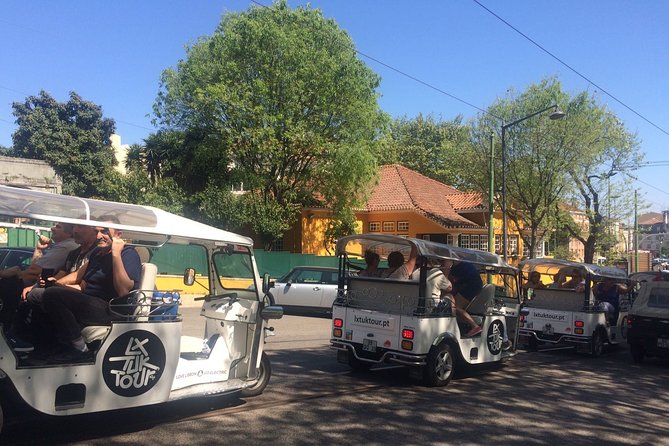
Lisbon is a city of angles. You turn a corner and the next view is suddenly higher, wider, and more dramatic than the last. What makes this 4-hour half-day tour work is the pacing: you hop between viewpoints quickly, then step out for a brief moment to take it in. It’s a practical way to cover a lot of ground without feeling like you did a marathon.
You’re traveling by eco tuk-tuk, which is a big part of the fun. It’s comfortable, easy to enjoy, and it matches Lisbon’s vibe—casual, scenic, and slightly theatrical. Most of the stops are designed to give you maximum payoff per minute: a square where you can feel the city’s character, an elevator for the dramatic structure, or a viewpoint where you can point your phone and let Lisbon do the rest.
Because it’s a private tour/activity (only your group), the day feels smoother. You’re not squeezed into a huge crowd, and the driver can time the route around what your group wants to linger on—within the overall schedule.
One thing to watch for: weather. This experience requires good weather, and if conditions are poor the tour can be rescheduled or refunded. If you’re traveling in a rainy season, try not to plan this as your only “must-do” day.
You can also read our reviews of more tours and experiences in Lisbon.



Starting at Hard Rock Café: getting oriented fast

The meeting point is the Hard Rock Cafe Lisboa on Av. da Liberdade (near public transport). Av. da Liberdade is a wide, easy-to-find avenue, which matters when you’re starting a route and want your first hour to feel calm, not chaotic.
From there, you’re set up to get your bearings right away. The tour is essentially a guided orientation map, but in motion. You head to the high ground first—Parque Eduardo VII—so you see Lisbon’s modern layout alongside the older feel of the city. It’s a smart opener because it helps you understand what you’ll be seeing later: the hills, the river, and how neighborhoods stack on different levels.
This is also where the private-driver advantage shows up. You’re not trying to translate street signs while climbing steep streets. You’re just riding, looking, and listening. For many people, that alone is worth choosing a guided route for the first day.
Rossio Square wave design and the Santa Justa Elevator views
Next comes Rossio Square (Dom Pedro IV Square), Lisbon’s oldest square and a key social hub. The big visual detail here is the pavement: the Portuguese cobblestone wave design creates a striking 3D effect when you’re walking around or looking down from a nearby angle. It’s the kind of detail you can miss if you’re passing through quickly without a reason to slow down.
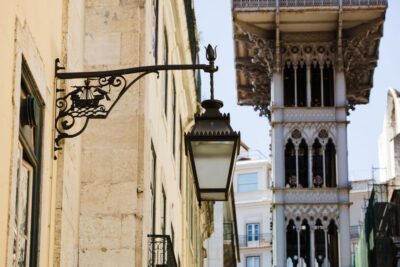
Then you reach one of Lisbon’s most iconic structures: the Santa Justa Elevator. It was inaugurated in 1902 and is famous for its cast-iron architecture. What I like about adding the elevator isn’t only the building—it’s the way it connects the view points. From up high, you can frame São Jorge Castle and Rossio Square, basically tying together the map you’re building in your mind.
Even if you’re not planning to spend long inside, the value is the viewpoint payoff and the storytelling that helps you understand why these places sit where they do. Lisbon’s landmarks aren’t random; they’re connected to geography and history, and the tour makes that connection feel simple.
Alfama viewpoints and the Portas do Sol-to-Senhora do Monte chain
Lisbon’s best views often come from places that look like they’re just built for pausing. Miradouro das Portas do Sol sits beside ancient city gates and overlooks Alfama, the oldest district. This stop is brief, but it gives you the “shape” of Alfama: narrow streets, layered rooftops, and a sense of the neighborhood’s lived-in feel.
Then the route climbs again to Miradouro da Senhora do Monte, often described as one of the best viewpoints in Lisbon. This is the stop you’ll want to be present for. The timing matters here: you’ll be coming off earlier sights, and then suddenly the whole city opens up. If you’re the type who thinks you have “too many pictures already,” this is where you still end up taking one more because the angle is that good.
What I especially like is how the tour doesn’t treat viewpoints as filler. Each one has a different angle and a different story, so you’re not just repeating the same view three times.
Lisbon Cathedral, Saint Vincent monastery, and getting the cultural spine
The tour keeps one foot in old Lisbon’s spiritual heart. Lisbon Cathedral is described as the oldest building still in use today, which makes it more than a pretty exterior—it’s a living reference point for the city. You’re not asked to become an expert on your stop, but you do get a sense of why this place anchors the surrounding streets.
From there, you visit Mosteiro de São Vicente de Fora (the Monastery of Saint Vincent). It’s presented as one of Lisbon’s key landmarks, with an explanation of the deep roots of cultural identity. Even when you only get a short stop, that kind of context helps you look differently: you start noticing patterns, materials, and the “why” behind the location.
Then comes a very practical, very Lisbon moment: in Alfama, the route includes a ginginha taste at a typical bar. This is exactly the kind of detail that turns a sightseeing day into a memory. Ginjinha (a cherry liqueur) isn’t just something you drink; it’s a local habit tied to streets and neighborhood life. If you like flavor stops, this is one of the best parts of the day.

Comercio Square, Bairro Alto/Bica/Cais do Sodre, and where the city turns scenic

After Alfama, the tour shifts toward Lisbon’s civic and everyday-energy spaces. Comércio Square is framed as Lisbon’s most iconic square, originally designed for Portuguese governmental institutions. Standing here, you get the sense of scale—Lisbon isn’t only steep hills and old alleyways; it also has grand, open spaces that feel made for ceremonies and crowds.
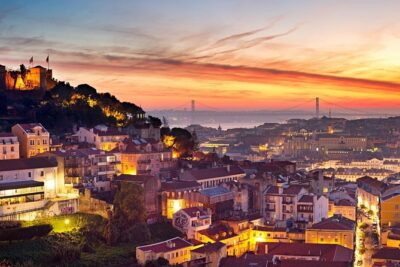
The route also takes you through the hills-and-neighborhoods zone around Bairro Alto, Bica & Cais do Sodre. Instead of trying to cover this on foot, you’re positioned to see it and then pause at the right place to look out. That’s where São Pedro de Alcântara viewpoint comes in, with stunning panoramas and a strong “Lisbon from above” perspective.
This part of the day is useful if you’re curious about Lisbon’s social rhythm—how people move between layers of the city, where the lines between “tourist streets” and “real neighborhood streets” blur, and how quickly scenery can change.
Time Out Market, Jerónimos Monastery, and Belém’s riverfront icons
No Lisbon “essentials” route is complete without Belém. This tour gets you there with a smooth flow of stops that balance atmosphere and landmark recognition.
You’ll pass through Mercado da Ribeira, now known as Time Out Market. It’s housed in a 19th-century building, and the site is split between active market stalls and a food-hall style setup. Even if you only take a quick look, it helps you understand how Belém isn’t frozen in the past—it’s a working area that has evolved.
Then comes Jerónimos Monastery, highlighted as Lisbon’s iconic example of Late Gothic architecture in the Manueline style. This is one of those sights where the exterior alone can be enough to feel the importance. The tour keeps the stop practical, so you’re not stuck in a long line for this day’s limited time window, but you still get the signature “this is a top-tier landmark” moment.
Next: Torre de Belém. You’ll have a short stop to soak in the atmosphere and take photos of the exterior. It’s not a deep dive into the tower’s interior; it’s a “get the feel of the riverfront” stop, which is exactly what you need in a half-day route.
Discoveries Monument to MAAT: ending with views over the Tagus
The day doesn’t just end with a checklist. It ends with perspective.
At the Padrão dos Descobrimentos (Discoveries Monument), you get stories about Portuguese explorations during the 16th century. This is a good mid-museum/mid-monument transition point—enough information to connect the monument to the bigger story, without turning the day into a lecture.
Then you reach MAAT (Museu de Arte, Arquitetura e Tecnologia). The highlight here is that it includes a viewpoint. From there, you can see the 25th of April Bridge, the broad Tagus estuary, and the Discoveries Monument. This is the kind of ending that makes everything else feel connected. You started the tour with city views, and now you finish with the river view that explains why this part of Lisbon mattered.
You return back to the meeting point at the end of the tour, so the day stays contained and easy to wrap up.
Price and value: what $126.03 buys you (and what it doesn’t)
At $126.03 per person for about four hours, you’re paying for three things: guided navigation, efficient use of time, and included drinks. The value isn’t just that you see a lot. It’s that you see a lot while someone handles the tough parts—timing, route flow, and getting you to viewpoint clusters without confusion.
A big value lever here is that admission tickets are listed as free for the key stops on the route. Also, alcoholic drinks are included, and the Alfama stop explicitly includes a ginginha taste. For a half-day in Lisbon, those two points can turn the tour from “nice sightseeing” into a day that feels like you got something more local.
What you’re not getting is long, slow museum time at each major landmark. This is a highlights route. If your goal is deep detail inside every big site, you’ll want to pair it with another day doing slower wandering. But if your goal is to get the essentials and the views fast, this is a strong fit.
Who this tuk-tuk tour suits best (and who should think twice)
This tour is a great choice if you want a first-time overview of Lisbon without spending hours planning. It’s also a smart option if your group includes people who don’t want to do lots of walking uphill. One of the recurring themes from guide praise is that the day is fun and the stops are paced so you can keep moving without burning energy.
It’s also ideal for travelers who like viewpoints. The route repeatedly hits high points—Parque Eduardo VII, Portas do Sol, Senhora do Monte, São Pedro de Alcântara—and that viewpoint stacking is a huge part of the “Lisbon effect.”
Who should think twice: if you know you want long, sit-and-read museum time or long cathedral-time, this half-day format may feel too short. The stops are designed to be efficient, which is exactly the point.
As for guides, I’ve noticed multiple praised names showing up around this kind of experience—people like Jonathan, Silvio, Laura, Tercio, and Ivo. Regardless of who you get, the consistent strength is storytelling plus timing.
Should you book the Lisbon 4-hour Essencial with Ginjinha Taste?
If you’re trying to decide whether this is “worth it,” I’d say book it when you want a fast, friendly route that gives Lisbon’s highlights a clear storyline. The combination of eco tuk-tuk comfort, private-driver ease, and the Alfama ginginha taste makes it feel more than a transport service.
I’d skip it if you’re the type who plans entire days around entering major monuments for hours at a time. This tour is for getting your bearings, collecting the views, and leaving room for a slower day later.
If you do book: plan for weather, keep your phone charged for the viewpoints, and treat the stops like quick chapters. Lisbon moves fast, and this route helps you read it.
FAQ
How long is the Lisbon half-day tour?
It runs for about 4 hours.
What’s included with the Ginjinha Taste experience?
You’ll have a ginginha taste at a typical bar in Alfama, and alcoholic drinks are included.
Is this tour private?
Yes. It’s listed as private, so only your group participates.
Where do you meet for the tour?
The meeting point is Hard Rock Cafe Lisboa, Av. da Liberdade 2, 1250-144 Lisboa, Portugal. The tour ends back at the meeting point.
Is the tour in English?
Yes, it’s offered in English.
Are admission tickets included for the main stops?
The tour information lists free admission tickets for the stops described.
What if the weather is poor?
The experience requires good weather. If it’s canceled due to poor weather, you’ll be offered a different date or a full refund.
What is the cancellation policy?
There’s free cancellation. You can cancel up to 24 hours in advance for a full refund, based on the experience’s local time.