REVIEW · CASCAIS
Lisbon: Surf Lesson
Book on GetYourGuide →Operated by Lisbon Surfaris · Bookable on GetYourGuide
Cold water, warm coaching in Lisbon. A surf session here is a fast path from land nerves to ocean basics, taught step by step on Portugal’s Atlantic coast. You’ll meet at Carcavelos Beach by Bar o Moinho, get outfitted, then learn how to read the water and catch waves with an instructor who can coach you in Spanish, English, Portuguese, or French. You might even be guided by instructors like Ivo, Patrick, Tiago, or PePe, based on who’s teaching that day.
What I like most is the small group setup (one instructor, max five people). That means you’re not just watching; you’re getting practical feedback as you try paddling, takeoffs, and standing. Second, I love that the lesson is built around safe wave choices, not random splashing—so even if you’ve never surfed, you learn what to do before you go for the good sets.
One thing to consider: the beach can be crowded, and depending on the day’s conditions you may spend part of the lesson adapting to busier lineups. Also, this isn’t ideal for kids under 6, pregnant women, or people with mobility impairments.
In This Review
- Key Highlights You Should Care About
- Two Hours of Surf Coaching From Carcavelos
- Choosing Your Surf Spot: Carcavelos vs Guincho Beach
- Gear, Wetsuit Fit, and Why It’s Included
- The Lesson Flow: Safety, Wave Reading, and Standing Up
- 1) Safety basics and ocean awareness
- 2) How to choose a wave
- 3) Paddling and positioning
- 4) The pop-up: standing up in one smooth sequence
- 5) Catching your first waves
- Instructors, Small Groups, and the Feedback That Changes Everything
- Price and Value: Is $47 Worth Two Hours in the Ocean?
- What to Bring, Wear, and Know Before You Go
- Timing, Weather, and the One-Day Reality of Surf
- Should You Book Lisbon Surfaris for a Surf Lesson?
- FAQ
- How long is the Lisbon surf lesson?
- Where do I meet for the lesson?
- What’s included in the price?
- Do I need to bring anything?
- Are private lessons available?
- Is this suitable for children or everyone?
Key Highlights You Should Care About
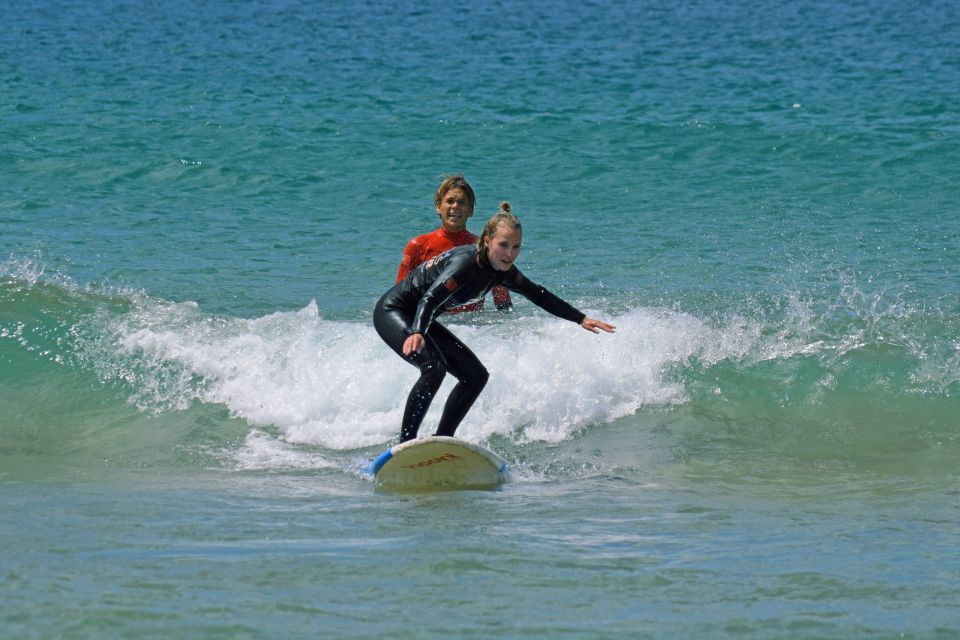
- Max 5 people per instructor so you get real attention during practice, not just a group briefing
- Carcavelos or Guincho depending on weather, so you’re more likely to surf the best conditions
- Safety and ocean-reading basics first, including how to choose a wave before you stand up
- Gear and insurance included, which keeps the cost simple and the risk lower
- Personal coaching helps you progress quickly, with frequent individual tips during the session
Two Hours of Surf Coaching From Carcavelos
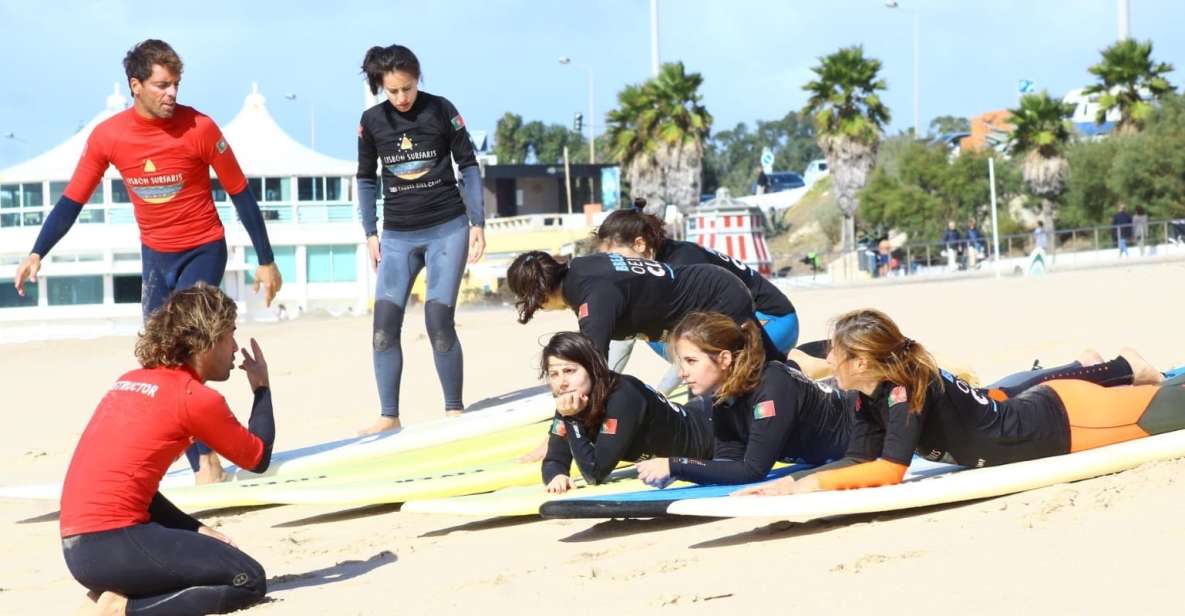
Carcavelos is where Lisbon people go when they want the ocean to feel real. It’s close enough to the city that you can make a surf lesson work on a travel schedule, but it still feels like you’re stepping into the Atlantic’s world.
Your lesson runs for 2 hours, which is a smart length for first-timers. Long enough to learn the key steps and get multiple attempts. Short enough that you don’t burn your enthusiasm before the waves actually show up.
You’ll start with a meet-up right at Carcavelos Beach, next to Bar o Moinho. That’s helpful because you’re not playing guessing games about where the group gathers. It also means you’re close to the water quickly after gear fitting.
The other practical win is the instruction style: the group is small, the instructor stays close, and you practice under supervision. In a beginner surf lesson, the difference between fun and frustration is usually whether someone corrects your technique before bad habits become automatic. Here, that’s built into the format.
You can also read our reviews of more tours and experiences in Cascais


Choosing Your Surf Spot: Carcavelos vs Guincho Beach
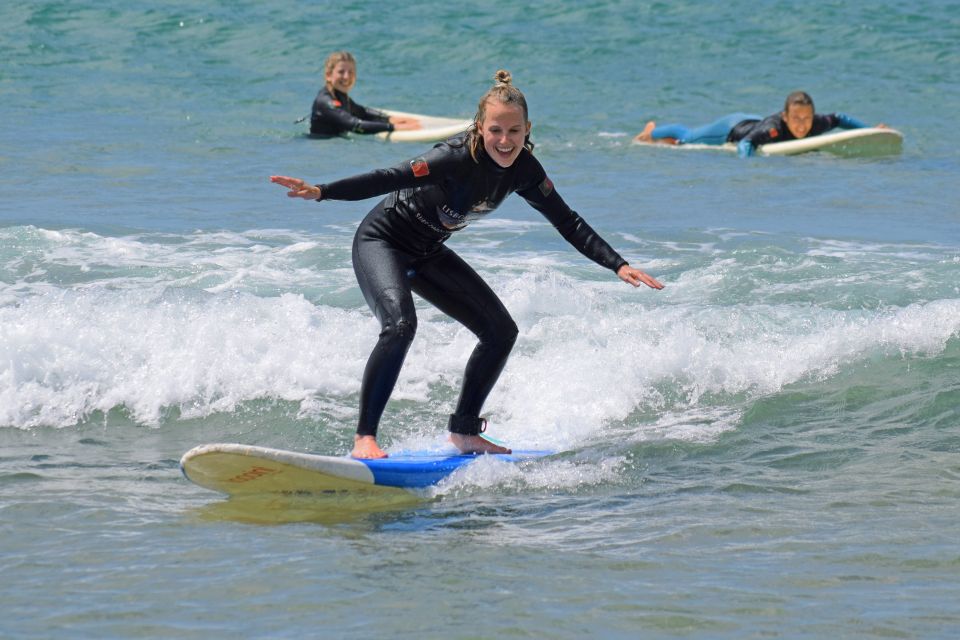
On the day, you won’t always surf the same beach. The plan is to travel to Carcavelos or Guincho beach depending on what the ocean is doing and what the day’s weather offers.
Why this matters: beginner surf depends on conditions. Some days are smooth and forgiving. Other days are rougher or messier, where catching your first wave can turn into a slog. Having the option to shift locations gives you a better shot at getting meaningful riding time.
Also, don’t expect the lesson to feel identical on every date. Even when you keep the same skills—paddling, pop-up, wave selection—the ocean’s behavior changes. That’s part of the value. You learn not just a trick, but how to think like a surfer: check the water, spot workable sets, and avoid the chaos.
Included transportation to the beach if necessary means you’re not on your own for getting between options. If you’re already using public transit or walking, this kind of built-in logistics helps you stay in vacation mode.
Gear, Wetsuit Fit, and Why It’s Included
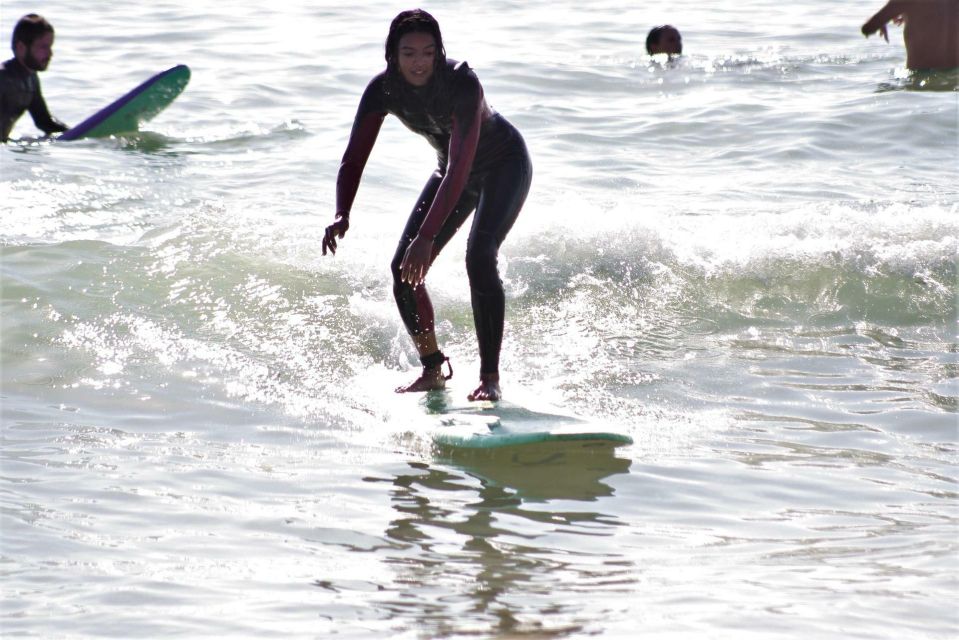
You’ll get surfing equipment as part of the lesson, including a wetsuit and a board. That’s a big deal for value. When you’re paying for the learning time, you don’t want additional rental steps that steal your energy or leave you guessing on sizing.
The wetsuit matters for two reasons. First, it keeps you comfortable enough to practice longer. Second, a good fit helps you move properly—less stiffness, better control. For Lisbon’s Atlantic, where the water can feel chilly even when the sun is out, this is not a minor detail.
The lesson also includes instructor guidance and insurance. Insurance won’t be a headline moment for most people, but it’s a real comfort factor when you’re learning a sport with water hazards and board impact risks.
One small “bring your own” note: pack a towel and sunscreen. You’ll change out of wet gear at some point, and even if you’re focused on surfing, the sun still does its job.
The Lesson Flow: Safety, Wave Reading, and Standing Up
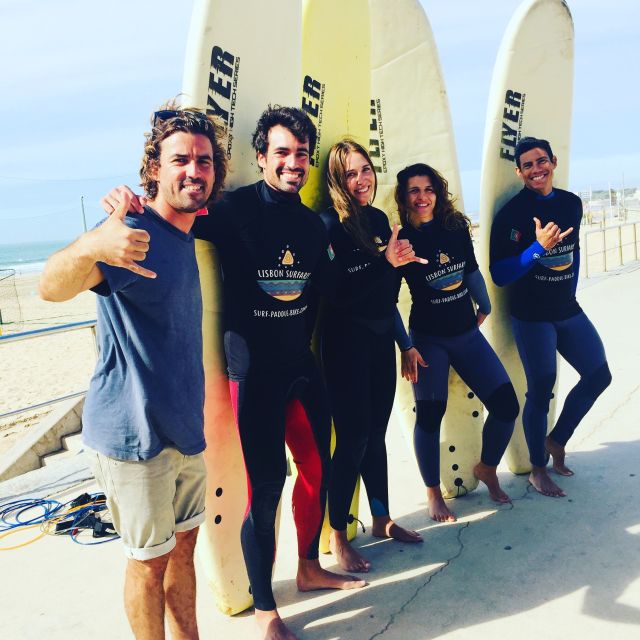
This surf lesson is structured around the basics that keep you safe and help you progress fast. It’s not just motion drills. It’s instruction that explains what the ocean is doing and why your next move matters.
Here’s what you can expect as the session moves forward:
1) Safety basics and ocean awareness
You’ll learn essential safety skills right away. That includes how to think about hazards in the lineup and how to behave around other surfers. The goal is simple: you should understand the rules of the beach before your body gets busy paddling.
You’ll also learn how to read the ocean. That might sound abstract until you realize it’s actually practical: identifying what kind of waves are coming and which ones you should avoid.


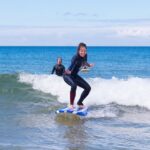

2) How to choose a wave
Wave selection is one of the fastest ways beginners improve. You don’t just want the biggest wave. You want the right wave for your timing, your position, and the distance to shore.
You’ll be taught how to choose a wave so you’re not wasting attempts on sets that will either pass you or knock you around. For many first-timers, this is the moment the lesson clicks.
3) Paddling and positioning
Before you can stand, you have to manage the paddle. You’ll practice the movements that help you move efficiently in the water and get into position for takeoff.
A good surf coach can tell in seconds whether you’re paddling effectively or fighting the board. With the small group size, you’re more likely to get corrected in the moment.
4) The pop-up: standing up in one smooth sequence
The standing up part is where beginners usually feel awkward. The lesson teaches the practical movements of paddling, then the standing up motion for catching a wave.
This is also where instructor feedback really matters. In a small group, you get individualized pointers—so you’re not guessing why your timing is off. Multiple people’s experiences with these instructors highlight that you’re watched closely and adjusted when needed.
5) Catching your first waves
The best part is exactly what you came for: trying to catch waves. The goal isn’t perfection. It’s learning to connect the sequence—paddle, takeoff, stand—while keeping safety rules in your head.
Even when the beach is busy, the coaching style aims to keep you moving toward progress rather than freezing in confusion.
Instructors, Small Groups, and the Feedback That Changes Everything
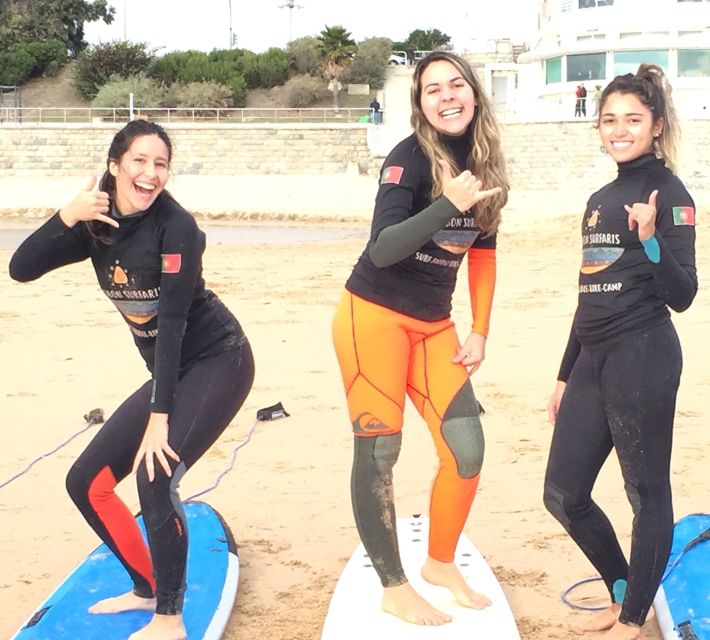
This is where Lisbon Surfaris scores big for beginners. The format is 1 instructor for up to 5 people, and that ratio is rare at this price point.
Why it matters: surf learning is not passive. You can’t fix your stance from 20 feet away. You need someone to catch what’s off—your timing, your angle to the wave, your hand placement, your approach to takeoff.
From the experiences people share, the instructors tend to deliver feedback that’s personal and immediate. That shows up in how often beginners report feeling less nervous as the lesson goes on and how quickly they can get standing with guidance.
Language coverage is also practical: Spanish, English, Portuguese, and French. If you don’t speak Portuguese, you’re not stuck. You can still understand the safety rules and the technique cues.
And yes, instructors also bring personality. People often mention coaches who are fun and entertaining, with a helpful tone that keeps the session light while still focused. That balance matters. Surf can feel scary at first. A relaxed instructor helps you treat the day like practice, not a test.
Price and Value: Is $47 Worth Two Hours in the Ocean?
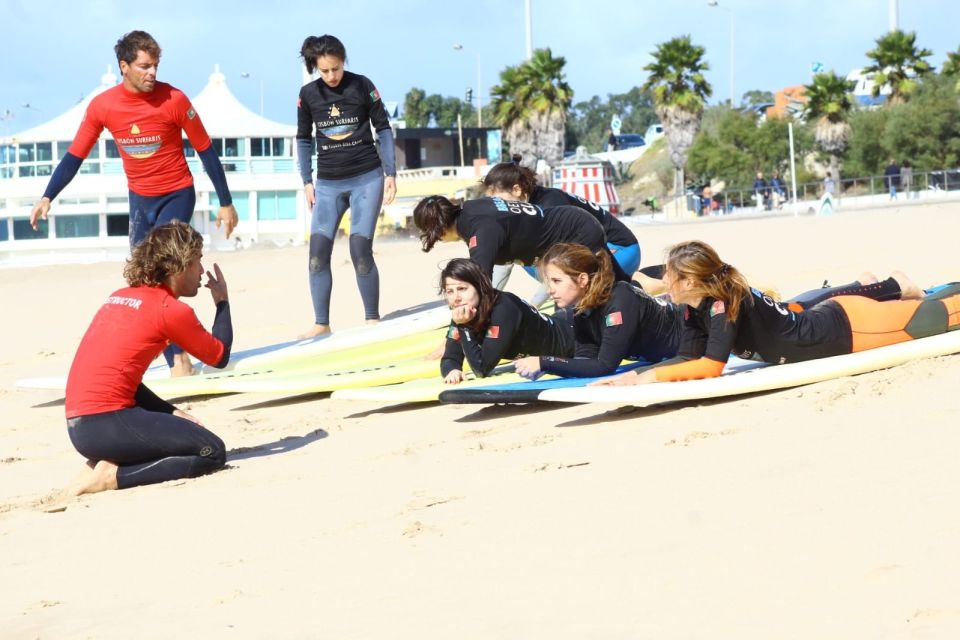
At $47 per person for a 2-hour beginner lesson, the value comes from what’s included and what you avoid.
You get:
- Surfing equipment (wetsuit and board)
- Instructor coaching
- Insurance
- Transportation to the beach if necessary
That bundle is what makes the price feel fair. Without it, you’d likely spend money on gear rentals, figure out getting to the surf spot, and then still pay for instruction. Here, those baseline costs are rolled into one clear lesson fee.
Also consider the time. You’re not looking at a half-day commitment just to learn a sport. Two hours is enough to get real attempts, especially when the instructor keeps you moving through the learning sequence.
The one “you’ll still need to plan for this” item is food and drinks. It’s not included, and the lesson doesn’t replace a meal plan. If you’re surfing midday, bring a plan for hydration and a snack before or after.
What to Bring, Wear, and Know Before You Go
You don’t need a closet full of surf gear. You just need a few essentials so you can focus on learning.
Bring:
- Passport or ID card
- Towel
- Sunscreen
Wear:
- Whatever you’ll be comfortable in with a wetsuit. The wetsuit takes care of the main thermal challenge, but you still want something easy to change out of afterward.
Logistics to remember:
- The meeting point is at Carcavelos Beach, next to Bar o Moinho.
- Group size is max five per instructor.
- The instructor languages include Spanish, English, Portuguese, and French.
Who should skip this lesson:
- Children under 6
- Pregnant women
- People with mobility impairments
If any of those apply, you’ll save yourself time and discomfort by choosing a different kind of experience.
Timing, Weather, and the One-Day Reality of Surf
Surf is weather-dependent in a way that feels obvious once you’re standing there with your wetsuit on. That’s why the lesson chooses between Carcavelos and Guincho based on the most favorable conditions.
A practical tip: build this activity into a day where you can be flexible about timing. The session lasts 2 hours, and starting times depend on availability, so you’ll want to check the schedule when you book.
Also, expect the ocean to set the pace. Even with great instruction, conditions can change how many waves you catch. That doesn’t mean the lesson is wasted. It usually means you’ll spend more time on the parts that keep you ready for the next set—positioning, paddling, and wave choice.
Crowds can happen at Carcavelos. It’s not a deal-breaker, but it can affect the vibe and where you paddle. The coaching matters here, because safety and traffic rules become more important with more surfers in the water.
Should You Book Lisbon Surfaris for a Surf Lesson?
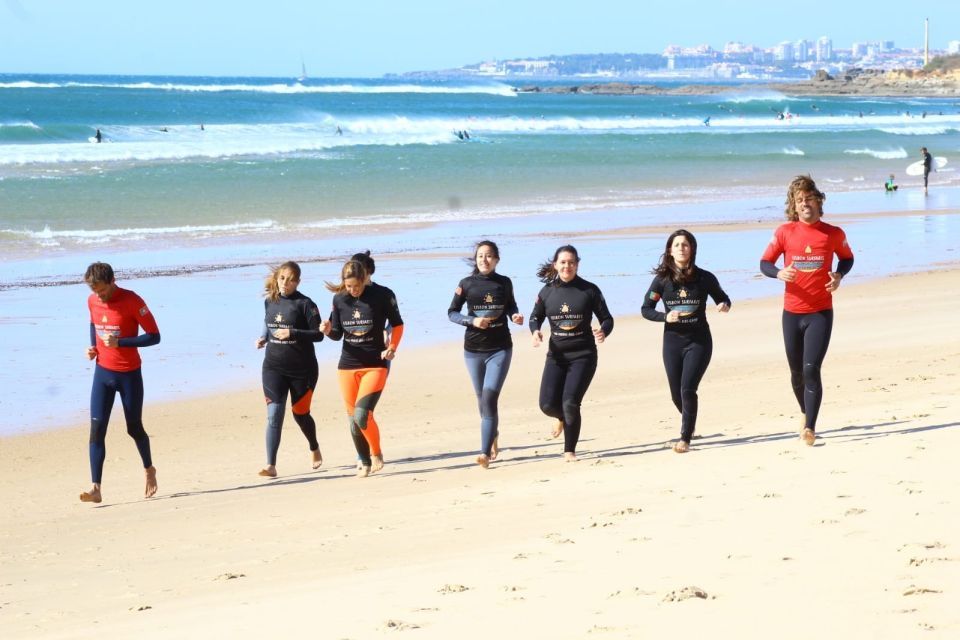
If you’re a beginner and you want a surf lesson that prioritizes safety, wave reading, and technique, I’d say yes. The small-group setup (max five) and close instructor attention make a big difference, especially for first-timers who need quick correction.
This is also a good pick if you don’t want to deal with gear rental or complicated travel to the beach. Equipment and transportation (if needed) are included, so you can keep your day simple.
Skip it only if the physical constraints don’t match your needs, like age under 6, pregnancy, or mobility limitations. For everyone else who can get in and out of a wetsuit and handle some water time, this is a solid way to experience Lisbon’s ocean without turning it into a long, stressful project.
If you like the idea of learning the fundamentals—then trying your first waves right away—book the lesson that fits your schedule and go show up ready to practice. The Atlantic can be dramatic, but the coaching here is built to turn that drama into your first real surfing memory.
FAQ
How long is the Lisbon surf lesson?
The lesson lasts 2 hours.
Where do I meet for the lesson?
You meet at Lisbon Surfaris directly at Carcavelos Beach, right next to Bar o Moinho.
What’s included in the price?
The lesson includes surfing equipment (wetsuit and board), an instructor, insurance, and transportation to the beach if necessary.
Do I need to bring anything?
Bring a passport or ID card, a towel, and sunscreen.
Are private lessons available?
Yes. You can choose between a shared lesson and a private lesson, or other small-group options.
Is this suitable for children or everyone?
It’s not suitable for children under 6, pregnant women, or people with mobility impairments.