REVIEW · 3-HOUR EXPERIENCES
3-Hour Private Guided Walking Tour of Lisbon
Book on Viator →Operated by THIBAUT PAKIRY, UNIPESSOAL LDA · Bookable on Viator
Lisbon is best felt on foot. This 3-hour private guided walking tour strings together classic squares, viewpoints, and old neighborhoods, with a fun drink stop along the way. I really liked the small-group feel (up to 8) and the sense that you’re walking from one meaningful spot to the next.
Two big hits for me: meeting Pedro, who’s friendly and clearly passionate about the story of Lisbon, and getting those photo-perfect miradouro moments in a tight route. One thing to plan for: parts of this area are hilly, and with only about three hours, you’ll be moving most of the time—great for a first orientation, less great if you want long stays inside every site.
In This Review
- Key things I’d plan around
- Private Lisbon with a real guide: what makes this tour work
- Meeting at Praça Dom Pedro IV, then ending near Praça Luís de Camões
- From Estação do Rossio to Praça Dom Pedro IV: Lisbon’s grand entry rhythm
- The ginjinha stop: a quick taste that anchors the walk
- Praça da Figueira and Igreja de S Domingos: Lisbon beyond the obvious postcards
- Mouraria and fado markers: Monumento Mouraria and Fado Vadio graffiti
- Miradouro Chão do Loureiro: the view that resets your expectations
- Alfama and Miradouros: Santa Luzia and Portas do Sol
- Lisbon Cathedral and Baixa: old sacred space meets the 1755 rebuild
- Chiado and Praça Luís de Camões: a smoother finish to the loop
- Price and what you’re really paying for in a $204.38 private group
- Language check: confirm French-only before you go
- Who this tour is best for (and who should skip it)
- Should you book this Lisbon private walking tour?
- FAQ
- FAQ
- How long is the 3-Hour Private Guided Walking Tour of Lisbon?
- What’s the group size for this private tour?
- Where does the tour start and where does it end?
- Is the tour offered in English?
- Are there admission fees for the stops?
- Is there a mobile ticket?
- What’s the cancellation policy?
Key things I’d plan around
- Up to 8 people, private vibe: you can ask questions and slow down when something catches your eye.
- Rossio Station + big squares early: you get an easy start in the city’s main public-life zone.
- A real tasting pause: the ginjinha stop turns the walk from sightseeing into something you remember.
- Mouraria fado clues: you’ll see markers of fado culture right in the streets.
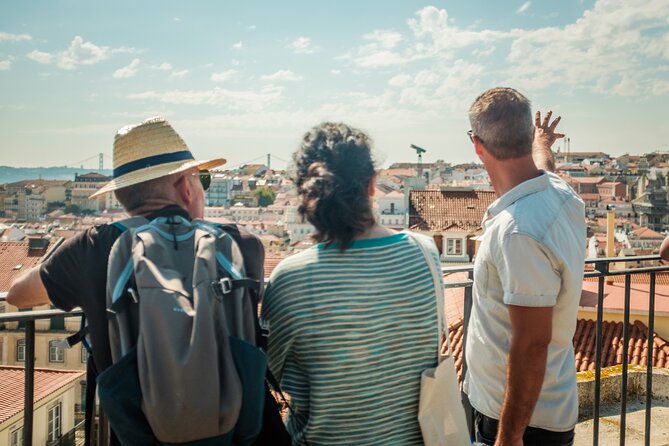
- Three viewpoints in sequence: Chão do Loureiro, Santa Luzia, and Portas do Sol give you different angles fast.
- A loop that mixes old and rebuilt Lisbon: Alfama and the Cathedral meet Baixa and Terreiro do Paço.
Private Lisbon with a real guide: what makes this tour work
This is a private walking tour, meaning it’s just your group—no joining random strangers mid-walk. With a max of 8 people, the pace feels controlled: not a sprint, not a slow crawl. You’ll cover a lot of ground in three hours, but you won’t feel lost because the route is built around well-known landmarks.
The biggest advantage of a private guide in Lisbon is how the city “reads.” Lisbon is famous for its layers—old quarters, rebuilds, views from above, and neighborhoods that feel distinct within a few minutes of walking. Pedro’s style, based on the experience I’m drawing from, is warm and story-driven. It’s the kind of guiding that helps you understand why a square matters or why one street name keeps showing up around fado culture.
One small consideration: because this is designed as an efficient loop, you won’t have hours to linger at any single stop. If you like to stand and stare for 30 minutes, you may feel a bit rushed. But if you want a strong first orientation and photos that actually capture Lisbon’s shape, this format is ideal.
You can also read our reviews of more walking tours in Lisbon

Meeting at Praça Dom Pedro IV, then ending near Praça Luís de Camões
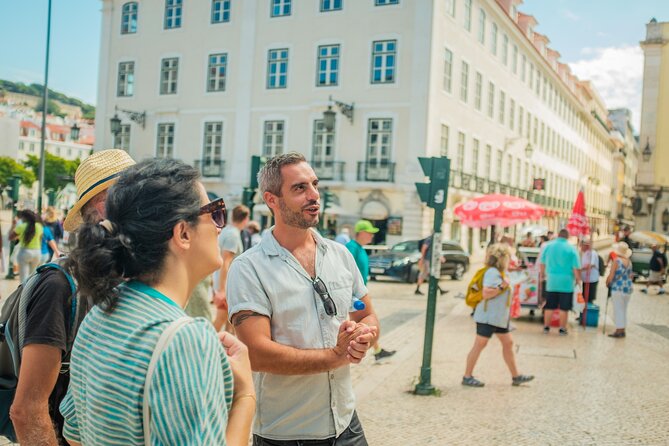
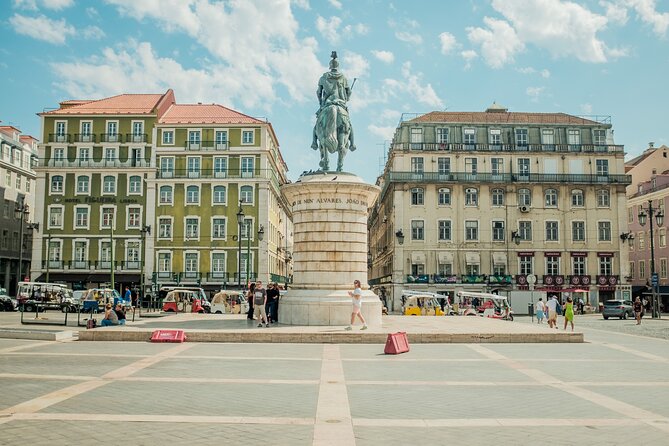
The tour starts at the foot of the statue at Praça Dom Pedro IV, near Teatro Nacional Dona Maria II. That’s a useful meeting spot because it puts you close to one of Lisbon’s main “movement hubs,” with public transportation nearby.
You end at Praça Luís de Camões, close to the city’s central pedestrian-friendly edges. Ending there matters more than it sounds: after a walk like this, you’ll likely want food, a café break, and an easy way to continue exploring without backtracking across hills. Praça Luís de Camões is a natural place to do that.
This is also a practical tour design for travelers who hate logistical puzzles. You get a clear start, a defined walking loop, and a finish that keeps you in the flow of the city.
From Estação do Rossio to Praça Dom Pedro IV: Lisbon’s grand entry rhythm
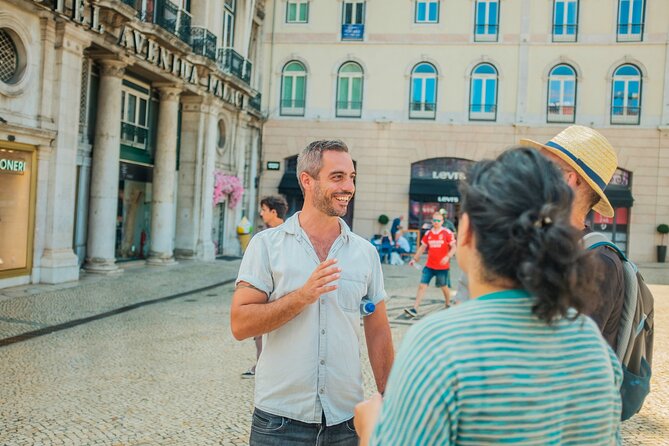
The walk opens at Estação do Rossio. The tour description calls it Lisbon’s most beautiful station, and even if you’re not the type to rank architecture, it’s a great starting moment because it’s recognizable and visually impressive. Stations also make sense for a walking tour: they’re busy, central, and full of lived-in city energy.
From there, you move to Praca Dom Pedro IV, one of Lisbon’s emblematic squares. Squares like this do two things for you at the start of a tour. First, they help you map the city in your head—where you are and what directions feel “uphill” vs “downhill.” Second, they give you a solid reference point for later viewpoints, where you’ll look over neighborhoods you’ve just walked toward.
These early stops are short, around ten minutes each, which is exactly right here. You’re not trying to tour the entire station or sit through a square lecture. You’re getting bearings and momentum.
The ginjinha stop: a quick taste that anchors the walk
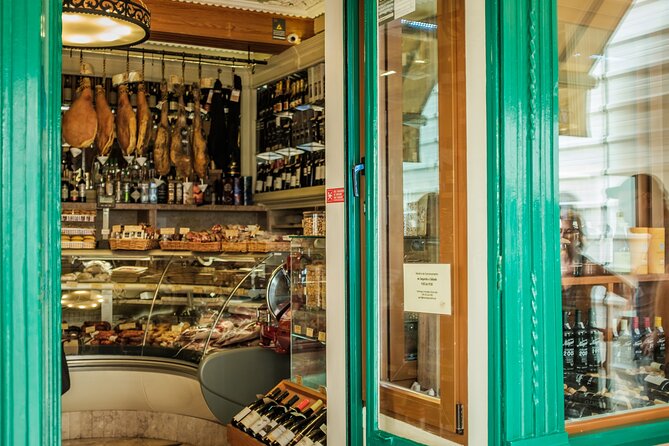
Halfway through the central segment, the tour includes A Ginjinha, an authentic place for ginjinha. This is the kind of stop that I love on guided walks. It breaks the rhythm of constant scenery, and it gives you a small, local souvenir you can talk about later.
Even though the stop is brief (around five minutes), it matters because it connects the guide’s storytelling to something you can experience immediately. If you’re the type who usually skips food stops because they slow you down, this one is short enough to fit the tour pace without derailing it.
One practical note: “typical” doesn’t always mean “everyone wants it.” If you’re not sure you’ll enjoy ginjinha, think of the stop as a chance to try a sip or choose a non-alcoholic option if offered—just ask your guide what’s available when you arrive.
Praça da Figueira and Igreja de S Domingos: Lisbon beyond the obvious postcards
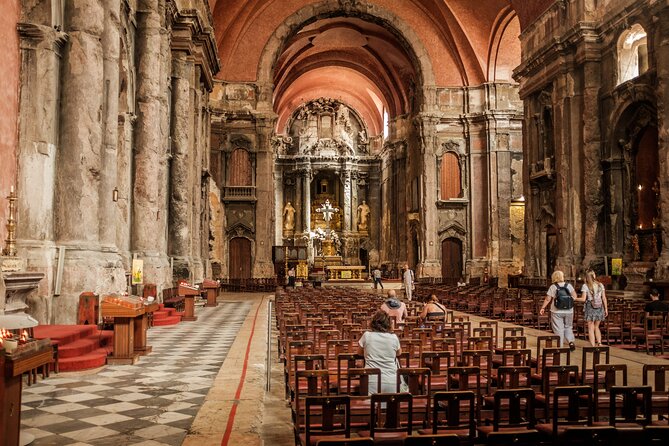
After the ginjinha pause, you head to Praca Da Figueira, described as the little sister from the previous place—also superb. This is a nice transition stop because it’s close enough to feel part of the same world, but it gives you a different square perspective. It helps the walking route feel intentional, not like a list of random sights.
Then you get to Igreja De S Domingos, a small church you shouldn’t miss. I like stops like this because they tend to be the “quiet” contrast to big squares and busy streets. Even with only about ten minutes, you’ll get a sense of Lisbon’s everyday spiritual side—plus it’s an easy moment to step out of the flow and regroup your feet.
The tour keeps things brisk here. That’s a benefit for first-timers, but if you’re deeply into religious art or want to read every plaque, you might wish you had longer.
You can also read our reviews of more guided tours in Lisbon




Mouraria and fado markers: Monumento Mouraria and Fado Vadio graffiti
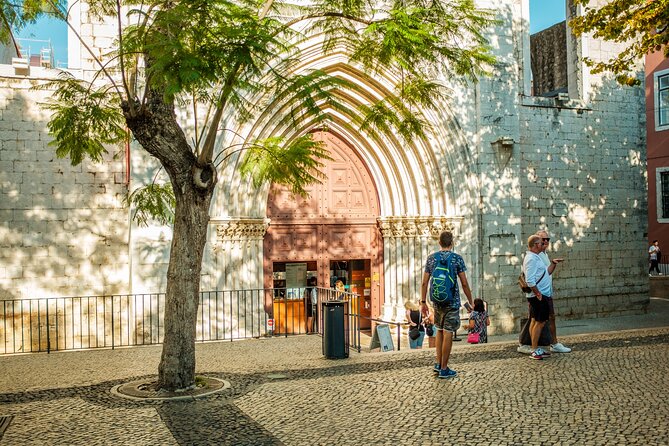
Next comes Monumento Mouraria Berço do Fado, which signals Mouraria’s connection to fado. Mouraria is often talked about as the fado district, and this stop gives you a concrete entry point into that story—no guessing required.
Then you’ll see Fado Vadio, described as graffiti on a wall in the Mouraria district. Graffiti might sound like a random sight, but in this context it works as a cultural signpost. It shows how fado isn’t stuck in museums; it shows up in street art and public space.
One thing I like about this part of the route is the mix. You’re not only looking at buildings. You’re also reading the neighborhood through symbols—monuments, street-level art, and the general vibe of the streets in Mouraria.
Miradouro Chão do Loureiro: the view that resets your expectations
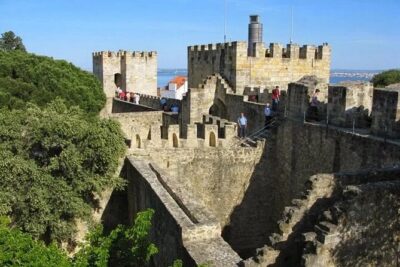
At Miradouro Chão do Loureiro, you’ll get a view over Lisbon’s historic center. This is one of those stops that doesn’t require you to be a “view person.” Even if you think you’ve seen a lot of city skylines, Lisbon’s angles are different. You’ll notice how neighborhoods stack, how streets twist, and how the city’s geometry is part of what makes it feel so distinct.
The stop is about ten minutes, which is perfect for first-time orientation. You’ll have time to take photos and look around without turning it into a long viewing session.
If you’re traveling with a camera, bring a strap or keep your hands free. Viewpoints are crowded at peak times, and your best shots come when you can move safely and quickly.
Alfama and Miradouros: Santa Luzia and Portas do Sol
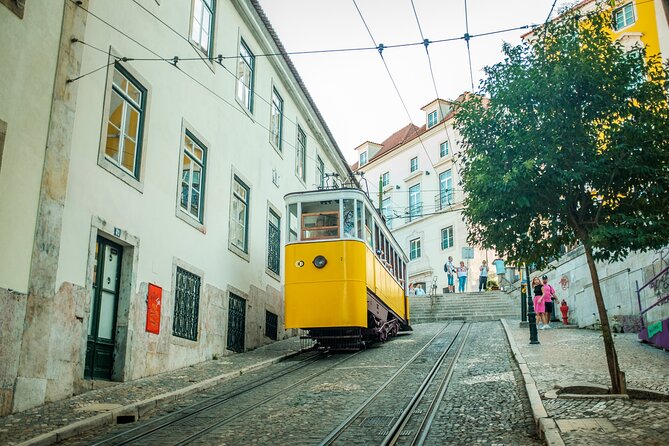
The tour then moves into Alfama, described as the most famous district of Lisbon for its timeless, unique side. Alfama is the heart of the old-quarter feel—tighter streets, steep slopes, and the sense that Lisbon has been shaped by generations of residents, not just planners.
You’ll also pause at Miradouro de Santa Luzia for another viewpoint over Alfama, then continue to Miradouro Das Portas Do Sol next door for yet another angle. Getting two viewpoints back-to-back is smart because you can compare what you’re seeing. One viewpoint may flatter the rooftops and street patterns; another might widen the view toward the broader city.
These stops are around ten to fifteen minutes each. That’s enough time to catch the view, take a few photos, and move on while your legs still feel decent.
The practical reality: you’ll be walking between viewpoints, and those walks can feel steeper than you expect. Wear comfortable shoes you trust. Lisbon rewards people who come prepared for uneven pavement.
Lisbon Cathedral and Baixa: old sacred space meets the 1755 rebuild
Next is Lisbon Cathedral, described as the most beautiful church in Lisbon. Even without going deep into architectural specifics, it’s a strong anchor stop because cathedral sites often sit at the center of older, historically important neighborhoods. It’s a moment where the tour slows just enough for you to appreciate the significance of the setting.
From there, you head to Baixa de Lisboa, the central district rebuilt after the earthquake of 1755. This is where the walking tour becomes more than “pretty streets.” It’s also about how Lisbon changed. Baixa’s rebuilt character contrasts with Alfama’s older, more organic feeling.
Then you arrive at Praca do Comercio (Terreiro do Paco), described as the most beautiful square in Lisbon, overlooking the Tejo River. That river-facing moment is one of the smartest ways to end the history-heavy middle of the tour. It’s space. It’s air. It’s a different scale than the old quarters.
This stretch gives you a real before-and-after sense of Lisbon: older hills and medieval-feeling streets, followed by a broader, rebuilt central zone.
Chiado and Praça Luís de Camões: a smoother finish to the loop
Finally, you stop in Chiado, described as another neighborhood, more chic this time. Chiado works well as a closing neighborhood because it feels more relaxed and “central-city.” After steep and winding areas, it can feel like a reset—less climbing, more room to breathe.
Then you reach Praça Luís de Camões, an emblematic square where the tour ends. This finish is useful because it’s a natural launchpad. From there, you can keep walking, find a café, or use public transportation to hop to your next planned stop.
If you’re the type who likes to end a walking tour with options—food, shopping, and easy connections—this ending location is a strong match.
Price and what you’re really paying for in a $204.38 private group
At $204.38 per group (up to 8), the price works out very differently depending on your travel style. If you’re a solo traveler or a couple, it’s not a bargain compared to a mass-market group tour. But private tours are often worth it when you care about pace, comfort, and the ability to ask questions.
Here, the value comes from two places:
- You get a compact route that hits major Lisbon areas in about three hours, including viewpoints and a tasting stop.
- You’re not just “following stops.” You’re getting a guide who’s invested in the story—Pedro was described as friendly, passionate, and the kind of person who helps you connect what you’re seeing.
For families or small groups, this price can feel much more reasonable because the cost spreads out while you still get the private advantage. If you’re traveling with friends and you want a guided “first Lisbon” walk without the stress of planning every turn, this tour’s structure makes sense.
Just be sure the language fits your group. The tour data indicates English, but also states in French only—so confirm the language before you assume.
Language check: confirm French-only before you go
The tour is listed as offered in English, yet it also says French only. That’s a big enough mismatch that I’d treat it as a “confirm before booking” item, even if you see your language listed.
If your group is comfortable with French, great. If not, message the provider after booking (or when you confirm) to confirm the guide’s language. This tour is short—so you don’t want to lose the fun parts because you can’t follow the guide.
Who this tour is best for (and who should skip it)
This tour is a strong fit if you:
- Want a first-pass Lisbon orientation without spending all day planning routes
- Like viewpoint stops and photo angles, especially in Alfama
- Prefer a private guide who can pace the walk for your group
It’s less ideal if you:
- Want long museum-level stops or extended time inside churches
- Don’t like walking on hills and uneven pavement
- Need a tour in English and can’t confirm language support
Should you book this Lisbon private walking tour?
Yes, I’d book it if you want an efficient, guided walk that covers the Lisbon “greatest hits” while still feeling personal. The small-group private format plus Pedro’s friendly, story-forward guiding makes this more than a checklist. And the route’s mix—Rossio, fado cues in Mouraria, viewpoints, Alfama, Cathedral, Baixa, and Terreiro do Paço—gives you a satisfying sense of how Lisbon is built.
If you’re picky about language, verify it first. If you confirm French (or secure English if that’s available for your booking), you’ll likely have a smooth three hours that helps you explore the rest of Lisbon with way better context.
FAQ
FAQ
How long is the 3-Hour Private Guided Walking Tour of Lisbon?
It’s about 3 hours.
What’s the group size for this private tour?
It’s private, for up to 8 people per group.
Where does the tour start and where does it end?
It starts at Teatro Nacional Dona Maria II / Praça Dom Pedro IV (at the foot of the statue) and ends at Praça Luís de Camões.
Is the tour offered in English?
The tour details say English, but it also indicates French only. You should confirm the language for your booking.
Are there admission fees for the stops?
The tour description lists admission ticket free for the stops included.
Is there a mobile ticket?
Yes, it includes a mobile ticket.
What’s the cancellation policy?
Free cancellation is available up to 24 hours in advance for a full refund. If you cancel less than 24 hours before the start time, the amount paid is not refunded.