Bairro Alto tells its story in layers, from the temple-like Rossio Station to the vow that shaped Largo do Carmo. I like the way the walk connects big Portuguese names and events to the streets you’re standing on, not just stuff you read later. One note: you’ll be moving through hilly, old-stone Lisbon, so plan on a bit of climbing and bring grippy shoes.
You start at Praça Dom Pedro IV and work your way up and over toward the Miradouro de Santa Catarina area. The tour lasts about 2 hours 30 minutes, runs in English, and caps at 50 people, so it feels small enough for questions. The price is low for what you get, especially because the main stops are free and the guide adds context on the earthquake’s impact and Lisbon’s city growth.
In This Review
- Key things to watch for on this Bairro Alto walk
- Start at Praça Dom Pedro IV: you get your bearings fast
- Rossio Train Station: why the front looks like a temple
- Praça Luis de Camões: the poet behind the name on the map
- Bairro Alto’s street story: walls, churches, and the plague
- Largo do Carmo: Nuno Álvares Pereira’s church-and-convent origin
- Finishing near Miradouro de Santa Catarina: turning history into a view
- Price, value, and what the guide actually buys you
- Who this walking tour suits best
- Quick tips so you enjoy it more
- Should you book this Bairro Alto walk?
- FAQ
- What is the duration of the Lisbon Bairro Alto tour?
- Where do I meet, and where does the tour end?
- Is the tour offered in English, and do I need a printed ticket?
- Are there admission fees at the stops?
- Is private transportation included?
- Is there free cancellation?
Key things to watch for on this Bairro Alto walk
- Rossio Station’s Neo-Manueline façade: horseshoe portals and a temple-like front face
- Luís de Camões at Praça Luis de Camões: Os Lusíadas and the poet’s Ceuta story
- Bairro Alto’s plague-era planning: Saint Roque’s relic draws people toward the hermitage
- Nuno Álvares Pereira’s Carmo vow: Aljubarrota turns into a Carmelite church and convent
- A viewpoint finish near Santa Catarina: the route ends where the views start paying off
Start at Praça Dom Pedro IV: you get your bearings fast
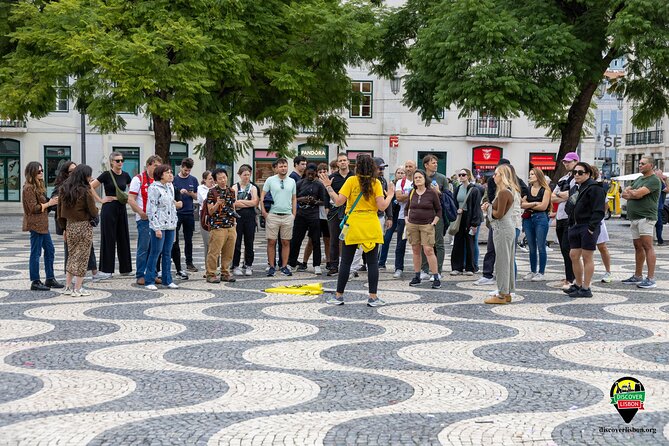
Most Lisbon walks do one of two things: they either rush you through sites, or they get stuck in a single neighborhood. This one does a good third option. You begin at Praça Dom Pedro IV, the practical launchpad for the Rossio area, and you start learning Lisbon’s layout right away.
From here, the route heads toward the classic “middle” of town, then gradually shifts uphill toward Bairro Alto. That matters because Bairro Alto isn’t just a pretty hill. It’s a place shaped by shifting populations, changing walls, and rebuilding after disaster. The guide frames what you’re seeing as you go, so you don’t spend the whole time thinking, Wait, what is this street for?
Good to know: the tour is about 2.5 hours. That’s enough time to connect the dots, but not so long that you feel crushed by walking.
You can also read our reviews of more tours and experiences in Lisbon.


Rossio Train Station: why the front looks like a temple
Stop 2 is the star for architecture lovers, and it’s a great early win. Estação do Rossio was commissioned by the Portuguese Royal Railway Company. The façade was designed between 1886 and 1887 by architect José Luís Monteiro, and it was completed in 1890.
Here’s the detail I’d personally want you to notice: the station’s design is Neo-Manueline, meaning it’s a Romantic recreation of the exuberant Manueline style linked to early 16th-century Portugal. In other words, you’re not looking at a plain “rail building.” You’re looking at a statement.
Pay attention to the entrance: the station has two intertwined horseshoe portals and signage that reads Central Station. It also feels less like a station and more like a ceremonial structure, with an outer façade that resembles a temple. That contrast is part of the charm. Rail travel in the late 1800s didn’t just move people—it was an image of Portugal arriving in modern times.
Why this stop is valuable: it gives you a visual anchor. After Rossio Station, Bairro Alto’s twists start making more sense because the tour sets up Lisbon as a city that keeps remixing older styles and layers.
Praça Luis de Camões: the poet behind the name on the map
Next you hit Praça Luis de Camões, where Portuguese literature gets physical. The guide connects this square to Luís de Camões, Portugal’s national poet and author of the epic poem Os Lusíadas.
What you learn here is simple but powerful: Camões’ poem is tied to the story of Vasco da Gama’s sea route to India. That’s not minor. It’s part of why Portugal became a global name during the Age of Discovery.
And it doesn’t stay bookish. You also hear about the personal detail that Camões is said to have lost one eye in a battle in Ceuta. The guide usually ties that into how the poem became a lasting symbol of national identity. There’s even a linguistic angle you might like: Portuguese language is sometimes called the language of Camões.
Practical payoff: this stop works as a “story hinge.” After the station’s design talk, you shift to human stories—words, conflict, exploration—and then those threads lead you into the neighborhood history near Bairro Alto.
Bairro Alto’s street story: walls, churches, and the plague
Then the walk turns more neighborhood-specific at Bairro Alto. This is where you stop treating Lisbon like a museum and start seeing it like a living place that had to solve real problems.
The guide explains how, in the late 15th century, Lisbon was packed with people from around the world during the discovery boom. That growth created pressure to expand the center. The area around today’s Camões square had once been one of the city entrances. Long before the streets looked “modern,” there were defensive and ceremonial boundaries, including the Fernandine wall and the door of Santa Catarina at that general location.
Then came layers of rebuilding. After the earthquake, the tour points out how you end up with the two churches of Encarnação and Loreto where earlier wall structures had stood. You’re basically seeing how catastrophe changes the urban plan.
Now, the darker and more interesting part: on the other side of that wall were areas tied to wealthy noble families, while higher up sat a cemetery for plague victims. That’s the sort of detail you’d never guess from a casual stroll.
Finally, the story gets very Lisbon-specific. In 1506, King Manuel I requested a relic of Saint Roque from Venice and placed it in a hermitage near that cemetery. As the population swelled and the black plague spread, the less fortunate and the sick moved into this area to stay close to the church. An urban plan followed to absorb that shift.
Why this matters on a walking tour: Bairro Alto isn’t just nightlife. It’s also the product of fear, faith, and practical city planning. When you understand that, the streets feel less random.
Possible drawback: if you’re expecting only scenic viewpoints and photo stops, the density of context here can slow your pace. If that’s you, it helps to bring a phone camera and take breaks for quick snapshots rather than trying to “capture everything” in every paragraph.
Largo do Carmo: Nuno Álvares Pereira’s church-and-convent origin
Stop 5 is Largo do Carmo, home to the Carmelite church and convent. The backstory is the kind you don’t forget because it’s tied to a clear turning point in Portuguese history.
The church and convent were built in 1389 after Nuno Álvares Pereira (a general who helped King John repel Castilian troops). He’s described as vowing to build the world’s most beautiful church if he defeated the Castilians in the Battle of Aljubarrota in 1385.
The Portuguese victory followed. Pereira kept his word and funded the Carmelite church and convent. After the completion in 1423, he even joined the Carmelite order and spent the rest of his life in the convent.
That sequence makes the site more than architecture. It becomes a hinge between battlefield success, religious devotion, and long-term institutions. You also get a sense of why Lisbon’s religious buildings often feel like storybooks made of stone.
What you can do here: use this stop to slow down. Look at the site as a whole, not just one façade. If you’re the type who likes to read a place like a timeline, this is your payoff stop.

Finishing near Miradouro de Santa Catarina: turning history into a view
The tour ends in the Santa Catarina area, at Miradouro de Santa Catarina. That’s an excellent finish because it changes your job from storytelling to scanning the city.
Even if you’ve seen Lisbon viewpoints before, finishing this way makes them more meaningful. You’re not just looking outward. You’re seeing the city’s geography after you’ve been taught how people moved through it—into entrances, into hillsides, and around walls and churches that shaped daily life.
If you’re planning a dinner afterward, this is a good place to pause. Let the view work like a timer reset. You’ll be more ready for the evening rhythm afterward because the walking portion already gave you a framework.
Price, value, and what the guide actually buys you
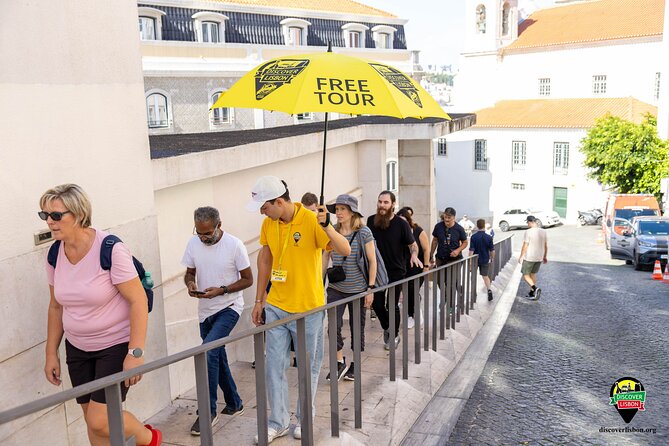
The headline price is $3.61 per person, and that’s going to look suspiciously low. Here’s how the value adds up based on what’s included.
Most of the stops you visit are free (including the station, squares, and the Carmo complex). So you’re mainly paying for:
- a local expert guide
- the historical linking of people, events, and the earthquake’s impact on the urban fabric
- practical context and fun facts that help the neighborhoods click in your head
- a promised benefit: discounts for booking other experiences later in the day and night
One catch: the tour notes a suggested contribution to the guide of 10–20€. That’s not optional in spirit. If the guide does their job well—and these tours succeed when they do—you’ll feel better factoring that in.
Also, you’re not using private transportation. So you’ll be walking. That’s usually where you get the best context anyway. The price basically buys you a guided “route brain,” which is a lot more useful than squeezing through stops alone.
Who this walking tour suits best
This works especially well if you:
- want Bairro Alto explained in plain language, not just photographed
- like Lisbon history tied to specific named places: Rossio, Camões, Bairro Alto, and Carmo
- enjoy learning how city planning changes after major events (growth, plague, and rebuilding)
It may feel less ideal if you:
- hate walking uphill and uneven stone
- prefer very relaxed tours with long free time at each stop
- only want modern Lisbon nightlife and views, with minimal history
The good news: the group size is capped at 50, and the tour runs about 2.5 hours, so it’s not a slog.
Quick tips so you enjoy it more
- Wear grippy shoes. Old streets plus a hill finish is not the time for slippery soles.
- Bring a light layer. Lisbon viewpoints can get breezy, especially near the end.
- Have your camera ready early. Rossio Station is the kind of architecture you’ll want to frame quickly.
And if you’re the type who loves names and dates, this route gives you plenty: José Luís Monteiro, 1886–1887, 1890, 1506, and Aljubarrota all show up naturally in the stories.
Should you book this Bairro Alto walk?
If you want a smart introduction to Bairro Alto and you like learning history where it actually happened, I think this is a solid pick. The guide-led storytelling turns free stops into something you remember, and the mix of Neo-Manueline architecture, poet-literature, plague-era city shifts, and the Carmo origin story gives the neighborhood real texture.
Book it if you value orientation and context, especially in a city where streets can feel like a maze. Skip it if you’re after a mostly scenic, low-effort stroll with minimal talking.
FAQ
What is the duration of the Lisbon Bairro Alto tour?
The tour takes about 2 hours 30 minutes.
Where do I meet, and where does the tour end?
You start at Praça Dom Pedro IV, 1100-581 Lisboa and end at Miradouro de Santa Catarina, 1200-262 Lisboa.
Is the tour offered in English, and do I need a printed ticket?
It’s offered in English, and you get a mobile ticket.
Are there admission fees at the stops?
The tour’s listed stops are described as free for admission, including Rossio Station and the main squares/church area included in the route.
Is private transportation included?
No. Private transportation is not included.
Is there free cancellation?
Yes. You can cancel for a full refund if you cancel at least 24 hours before the experience starts.
If you want, tell me what dates you’re considering and whether you prefer more architecture or more neighborhood stories, and I’ll suggest the best way to pair this with dinner plans in the Bairro Alto or Santa Catarina area.