REVIEW · TUK TUK TOURS
Lisbon: Private Guided Tour by Electric Tuk Tuk
Book on GetYourGuide →Operated by Battuta Experiences · Bookable on GetYourGuide
Lisbon hills get easier on a tuk-tuk. This private ride in a 100% electric tuk-tuk turns key sights like Rossio and Lisbon Cathedral into a smooth route, and it adds photo-stop viewpoints so you get Lisbon angles without the full sweat tax. I especially like how guides bring the city to life with stories you can actually use, and I’ve seen that energy firsthand with guides such as Dominique, Filipa, and Joao.
One thing to plan for: Lisbon’s streets can feel bumpy on cobbles, and the narration competes with city noise in some areas. If you’re sensitive to rough rides, pack patience and take a slow approach.
In This Review
- Key things to know before you ride
- Why an electric tuk-tuk fits Lisbon so well
- Starting at Lisbon pickup to Rossio and the Lisbon Cathedral pass-by
- Portas do Sol Terrace and Miradouro da Senhora do Monte: the viewpoint strategy
- Graça and São Vicente de Fora: the maze work, done with a pro
- Alfama stops that feel personal, not rushed
- Praça Luís de Camões to Bairro Alto: the center’s personality shift
- Largo do Carmo to the finish: ending with the right kind of energy
- Customization that actually changes your day
- Price and time: is $169 per person good value?
- Small comfort tips for a smoother ride
- Should you book this private electric tuk-tuk tour?
- FAQ
- How long is the Lisbon private electric tuk-tuk tour?
- Is hotel pickup included?
- What landmarks will we see?
- Is the tour wheelchair accessible?
- What’s included in the price?
- Are museum entrance fees included?
- Are there any smoking restrictions?
Key things to know before you ride
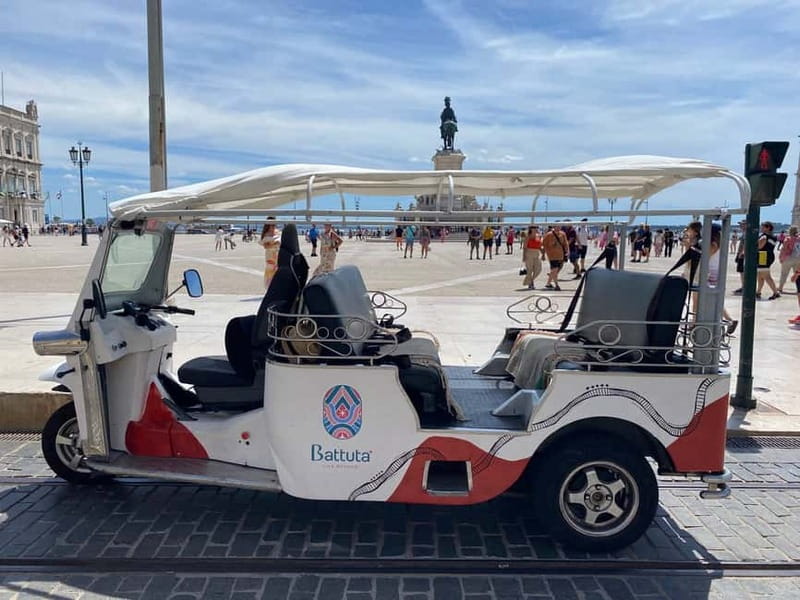
- Electric and hill-friendly: Lisbon’s slopes become manageable in a maneuverable tuk-tuk.
- Viewpoints plus walking: short walks at terraces and miradouros help you snap photos without overdoing it.
- A guide who talks like a person: stories range from landmark context to everyday life themes.
- Old-town loop with flexible pacing: you cover Alfama, Graça, Bairro Alto, and central squares efficiently.
- Private group comfort: you get a more personal experience than group shuttles.
Why an electric tuk-tuk fits Lisbon so well
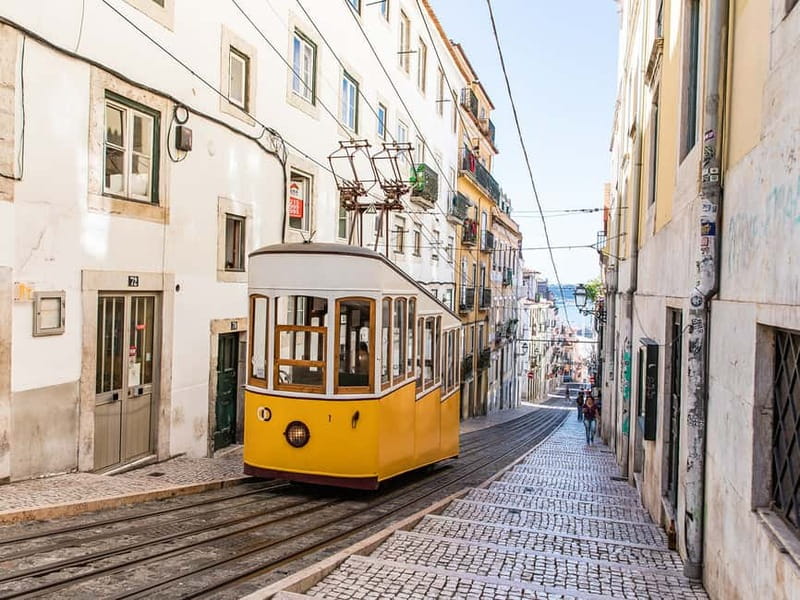
Lisbon is gorgeous, but the logistics can be brutal. Hills, stairs, and switchbacks can steal your momentum. This tour uses a private electric tuk-tuk to solve the main problem: getting you close to the sights while keeping your legs ready for the stairs you actually choose.
The vehicle experience is part of the charm. In practice, the ride feels quieter than you’d expect for a street vehicle, and it’s designed for close maneuvering on narrow lanes. One review even noted the seats face forward for better viewing when traveling as a small party. That matters because Lisbon isn’t just about standing still and looking up. It’s about moving through neighborhoods and seeing how they connect.
You also get something more valuable than convenience: a human guide in motion. When your guide like Rui or António keeps explaining what you’re seeing, you stop treating landmarks like checkboxes. You start noticing patterns—where the streets turn, how viewpoints frame the city, and why certain squares became social magnets.
You can also read our reviews of more guided tours in Lisbon



Starting at Lisbon pickup to Rossio and the Lisbon Cathedral pass-by
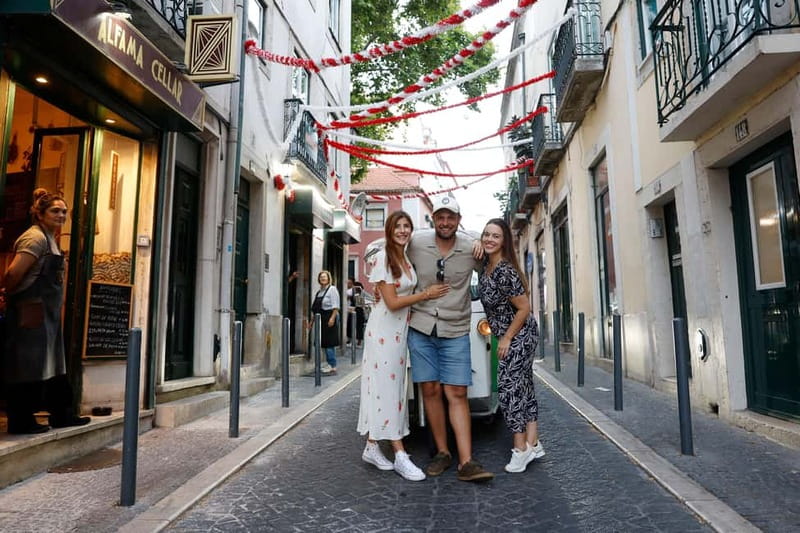
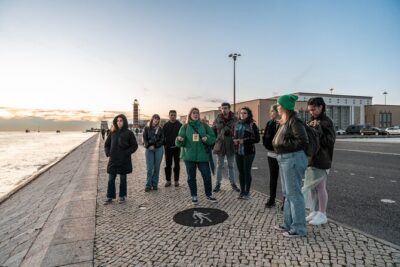
The tour starts in Lisbon, and city-center hotel pickup is available on request. When pickup happens, look for a tuk-tuk with the Battuta logo on it. That small detail can save you time when you’re juggling a schedule, bags, and street traffic.
Your first big anchor is Rossio Square. You don’t just pass it; you get a guided moment that helps you place Lisbon’s center. It’s a good warm-up stop because Rossio gives you a feel for how the city funnels people into its old quarters.
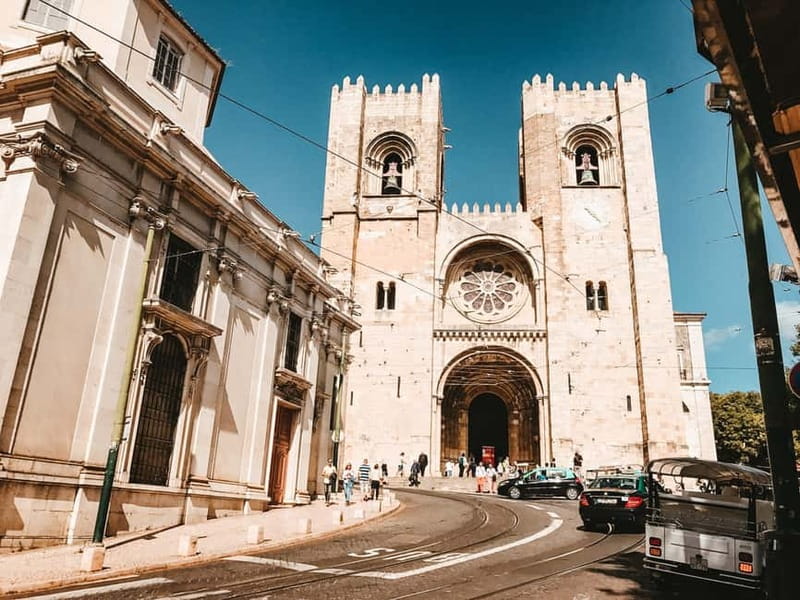
Next comes Lisbon Cathedral via a guided pass-by. The value here isn’t that you’ll spend hours inside. It’s that you’ll understand why this area matters and what to pay attention to as you move on. For first-timers, this is huge. You arrive without knowing what you’re looking at, then you leave with a mental map that makes later neighborhoods click.
Portas do Sol Terrace and Miradouro da Senhora do Monte: the viewpoint strategy

Lisbon viewpoints can be a trap. You’ll walk up, take a few photos, and then lose time without knowing what you’re seeing. This tour uses a smarter plan: short photo stops tied to guided context.
You’ll pause at Portas do Sol Terrace for photos and a brief walk (about 10 minutes). It’s just enough time to get your bearings and capture images without turning the day into a stair workout. Then you head to Miradouro da Senhora do Monte, with a longer photo stop and walk (about 15 minutes).
These viewpoint segments are where the tour’s pacing feels right. The guide’s stories help you frame what’s in front of you—especially if you’re bouncing between neighborhoods with different vibes. You’re not just looking at a view; you’re learning how that view relates to the streets below.
Practical note: the vehicle is electric, but the walk time is still outdoors and can be windy. Bring a light layer even in pleasant months, and wear shoes you trust on stone steps. One review mentioned a blanket being offered when it got chilly and windy, but don’t count on that every time.
Graça and São Vicente de Fora: the maze work, done with a pro

The Graça Historic District is famous for narrow lanes and steep turns. This is where a regular walking route can feel like an obstacle course. On this tour, you get the best of both worlds: you drive the tough bits and still step into the maze.
You’ll spend time with guided narration while passing through Graça, which helps you understand what makes the district feel unique. A guided approach is especially useful here because Graça can look chaotic at first glance. With a guide like Biuna or Bruna (both praised for tailoring and clear storytelling), the place stops feeling random.
You’ll also visit Monastery of São Vicente de Fora as a guided stop. Whether you’re a museum person or not, this kind of stop adds anchor points to the neighborhood walk. It’s a quick way to connect the religious and architectural landmarks to the broader story of the city.
This segment is one of the tour’s strongest value zones because it saves time without removing the “I’m really in Lisbon” feeling. You get the atmosphere and the context without needing to design the route yourself.
Alfama stops that feel personal, not rushed
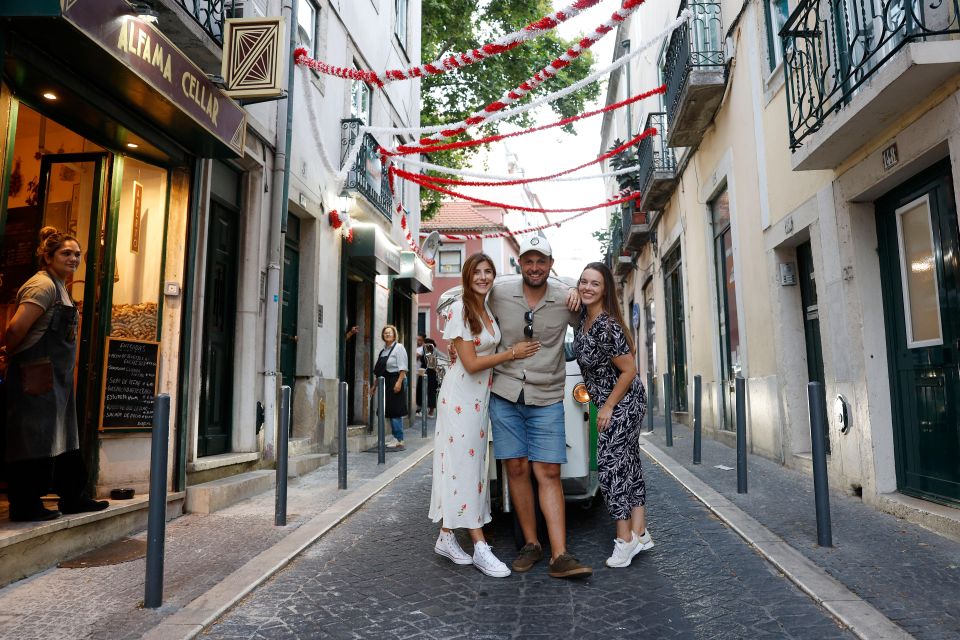
After Graça, the tour leans into Alfama, Lisbon’s old-school neighborhood character. You’ll get a mix of photo moments and short guided walk time, including a photo stop with about 10 minutes of walking.
Alfama can be stunning but also easy to misunderstand if you’re trying to map it in your phone while walking downhill. The guided pacing reduces that stress. Your guide points out what’s worth noticing and when to slow down for photos. That’s also why having a private group helps: you don’t need to match the fastest walker in the tour.
You’ll also pass by several specific landmarks on the way, including Casa dos Bicos and Ribeira das Naus. The itinerary treats them as guided pass-by moments, not long museum-style stops. For many people, that’s the right formula. You learn enough to recognize what you’re looking at later, then you can choose if you want to return on your own with more time.
One more Lisbon perk in this stretch: it’s where the tour’s theme comes through. You’ll hear stories about the city’s significance, including a mention that Lisbon is the world’s second oldest capital. That kind of framing makes the winding streets feel less like wandering and more like history you can navigate.
You can also read our reviews of more private tours in Lisbon





Praça Luís de Camões to Bairro Alto: the center’s personality shift

As you head toward Praça Luís de Camões, Lisbon starts to feel more social and less maze-like. This square is a strong transition point. It helps your brain reset from hill-and-lane navigation into a district with more open streets and a different rhythm.
Next up is Bairro Alto, guided via pass-by. Bairro Alto is the neighborhood many people associate with evening energy and street life. On this tour, you’re not stuck in the loudest corners for long. You’re sampling the district so you understand where it fits into Lisbon’s overall layout.
You’ll also pass by Jardim do Príncipe Real, which helps break the route up with a more relaxed, open-air moment. That matters because the day can start feeling like nonstop motion if every stop is tightly packed.
Finally, the itinerary includes a pass-by of Miradouro de São Pedro de Alcântara with a photo stop and about 10 minutes of walking. This is Lisbon again through the “look up and understand” lens. The guide’s narration keeps the viewpoint from becoming just a photo background.
Largo do Carmo to the finish: ending with the right kind of energy

As the tour wraps, you’ll pass by Largo do Carmo Square before returning to Lisbon. This final segment works because it closes the loop without dumping you back into the hardest-to-walk streets at the end. If you’ve been doing lots of city walking already, this matters.
At this point, you’ll usually have two kinds of takeaways. First are practical ones: which neighborhoods you want to return to, and where you’d rather spend more time on foot. Second are emotional ones: Lisbon feels layered when you’ve seen multiple districts in one short time.
Guides often make this last stretch smoother by adjusting pacing. One common theme from guide feedback is flexibility—getting to as much as possible even when the city throws obstacles into the mix, like street closures during busy festival days. Your guide should be able to tailor the route around your interests within the tour window.
If you’re the type who wants to keep exploring after the tour, ask your guide for two or three next stops. You’ll get recommendations on where to eat and which areas make sense based on what you just saw. That advice can save you hours of trial and error later.
Customization that actually changes your day
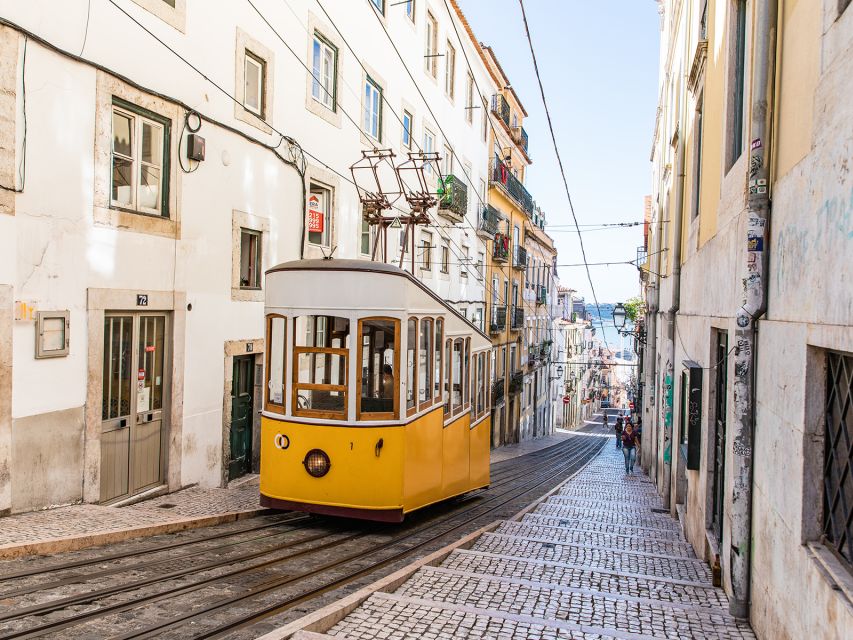
On paper, this is a structured itinerary. In real life, the best tours are the ones that let you steer. This one is set up for customization to match your preferences.
A few ways customization shows up in how guides work:
- You can emphasize less time in more intense areas if that’s your style (one guide tailored for guests staying in Alfama).
- You can adjust your focus toward major sights or toward photo points and neighborhood atmosphere.
- You may be able to add or extend stops if time allows, such as getting farther into the Belém area when it fits your schedule.
The tour is also designed around short guided moments, with more time saved for you to look, photograph, and wander briefly at the stops. That matters because you’re in a private group. The guide isn’t forced to keep a rigid pace for a larger crowd.
Food fits into the mix too. You’ll have opportunities to purchase snacks and drinks at stops made during the tour. One guide experience mentioned a traditional pastry snack, and another mentioned a stop linked to Pasteis de Belém when the route allowed it. It’s not a full meal plan, but it gives you an easy way to try something local without hunting it down.
Price and time: is $169 per person good value?
At $169 per person, this tour costs more than public transport or a self-guided walking plan. But it’s also solving multiple problems in one go.
What you’re really paying for:
- A private electric vehicle that handles steep streets and narrow lanes.
- A local guide who explains what you’re seeing while you move.
- Photo-stop planning, so you get viewpoint time without guessing where to go next.
- Time efficiency—you cover Rossio, Lisbon Cathedral, key old-town districts like Alfama and Graça, plus Bairro Alto and viewpoint stops, usually within 2–4 hours.
The duration is listed as 2–4 hours, and you can check availability for starting times. That range matters because it changes what feels “worth it.” If you’re only there for a short visit and want a strong introduction, the mid-to-long end of the duration tends to feel like the sweet spot.
Also, you’re not just buying transportation. You’re buying interpretation. When guides like Dominique, Rui, and Joana are praised for storytelling that connects landmarks to daily life, you get context you’d otherwise have to research later. With a 4.8 rating from 436 reviews, the consistent theme is that the guide makes the difference, not just the vehicle.
Is it for everyone? No. If you love slow travel and you plan to spend your mornings wandering with a map and museum tickets, this may feel pricey. But if you want a guided route that keeps you moving through Lisbon’s big hitters with minimal guesswork, it can be a smart splurge.
Small comfort tips for a smoother ride
This is a practical, street-level tour, not a quiet countryside glide. Expect a mix of pavement types and frequent movement between stops.
A few tips that make a difference:
- Bring water. One guide experience specifically suggested it because the roads can feel rough.
- Wear shoes that handle cobbles and short walks. You’ll do walk segments around terraces and viewpoints.
- If you’re hard of hearing, keep in mind that city noise can make narration harder to catch at times. The tuk-tuk motor is quiet, but the street won’t always be.
- Plan for cool air near viewpoints. One review mentioned a blanket being offered when it was chilly and windy.
- Smoking isn’t allowed in the vehicle.
For who it fits best: it’s a good match for couples, solo travelers, and small parties who want a first introduction to Lisbon’s structure. It’s also a solid option if mobility is limited, since wheelchair accessibility is listed.
One more thing to consider: the tour is not suitable for children under 5 and not suitable for pregnant women. That’s not about access—it’s about the ride experience and the route style.
Should you book this private electric tuk-tuk tour?
I’d book this if you want an efficient, guided way to understand Lisbon fast. You’ll get expert narration, viewpoint photo stops, and a route that strings together Alfama, Graça, Bairro Alto, and central squares in a way that’s hard to replicate on your own in just a half day.
Choose it especially if you’re thinking:
- You want to reduce walking on hills but still want short stretches to step out and photograph.
- You care about local stories, not just monument names.
- You like having a plan, then tailoring it with your guide.
I’d think twice if you already know Lisbon well, or if you prefer long, independent museum time. The tour’s strength is orientation and context, not deep museum immersion.
If you’re trying to make your first hours in Lisbon count, this private electric tuk-tuk is one of the most practical ways to do it.
FAQ
How long is the Lisbon private electric tuk-tuk tour?
The tour duration is listed as 2 to 4 hours. Starting times depend on availability.
Is hotel pickup included?
Hotel pickup is included for city center locations on request. Otherwise, you’ll meet at the pickup location in Lisbon.
What landmarks will we see?
The route includes stops or guided moments around Rossio Square, Lisbon Cathedral, Portas do Sol Terrace, Miradouro da Senhora do Monte, Graça Historic District, Monastery of São Vicente de Fora, Alfama, Praça Luís de Camões, Bairro Alto, Jardim do Príncipe Real, Miradouro de São Pedro de Alcântara, and Largo do Carmo Square.
Is the tour wheelchair accessible?
Yes, wheelchair accessibility is listed as available.
What’s included in the price?
The included items are the driver/local guide, city-center hotel pickup (on request), and a 100% electric tuk-tuk.
Are museum entrance fees included?
No. Museum entrance fees are not included.
Are there any smoking restrictions?
Smoking is not allowed in the vehicle.