REVIEW · 3-HOUR EXPERIENCES
Tour TukTuk 3 hours Lisbon Free Pick-up
Book on Viator →Operated by Chaparru's Tours · Bookable on Viator
Lisbon flies by in a tuk-tuk. This private tuk-tuk tour strings together big sights—cathedral, viewpoints, Alfama streets, and downtown squares—without forcing you to earn every hill on foot. I love the guide-led storytelling (seriously, you’ll understand what you’re seeing), and I love how quickly it gets you oriented across Lisbon’s neighborhoods. The one catch: monument entries aren’t included, so a few stops are mainly for exterior views and quick photo time.
I recommend it for first-time visitors who want a smart highlights loop in about 3 hours. You ride in comfort with a mobile ticket and an English-speaking guide, plus you’re with only your group.
One more plus: the guides (like Rodrigo, Miguel, Fernanda, Thiago, and Alexandra) bring real personality, and the company can work with your schedule when weather turns rough. Just keep in mind the tour requires good weather, since you’ll spend a good chunk of time looking out over Lisbon.
In This Review
- Key Things That Make This Tuk-Tuk Tour Work
- Price and What $48.12 Buys in Lisbon Time
- Getting On and Off: Rua do Comércio Setup and Practical Rules
- The Cathedral Stop: Lisbon’s Oldest Church Marker (But Quick)
- Miradouro das Portas do Sol: Moorish Clues and River Views
- A Portuguese Pavement Detail and the Graça Viewpoint Shift
- Miradouro da Senhora do Monte: Big Views Plus a Hermitage Legend
- St. Vincent de Fora and the National Pantheon: Culture, Not Just Pretty Buildings
- Alfama: Old Neighborhood Feel, plus Fountains and the Saramago Connection
- Church of Our Lady of Old Conceição: The 1755 Earthquake Comes Up
- Praca do Comercio and Cais do Sodré: Power, Famous Cafés, and Night Energy
- Chiado, Igreja de São Roque, and the View from São Pedro de Alcântara
- Bairro Alto and Carmo Convent: When Lisbon Looks Like It Doesn’t Try
- Who Should Book This Tour (And Who Should Skip It)
- Should You Book This Tuk-Tuk Tour?
- FAQ
- How long is the Lisbon tuk-tuk tour?
- Is the tour in English?
- Is the pickup included?
- Where does the tour start and end?
- Is there a mobile ticket?
- Are monument entrance tickets included?
- Are meals and drinks included?
- Is it a private tour?
- Are children allowed?
- Is smoking or alcohol allowed on board?
- What happens if weather is bad?
Key Things That Make This Tuk-Tuk Tour Work
- A fast, private way to cover Lisbon: viewpoints and neighborhoods in one short run.
- Excellent guide energy: Rodrigo, Miguel, Fernanda, Thiago, and Alexandra all get high marks for making the city make sense.
- Viewpoints built for photos and perspective: Portas do Sol, Graça, Senhora do Monte, and São Pedro de Alcântara.
- Alfama without the steep climb: fountains, church exteriors, and historic street texture.
- Downtown hits included: Praca do Comercio, Cais do Sodré/Time Out area, Chiado, and Bairro Alto.
- You’re not paying extra for every doorway: admissions aren’t included, so you’ll choose what’s worth entering on your own.
Price and What $48.12 Buys in Lisbon Time
At $48.12 per person for about 3 hours, this is one of those Lisbon deals that’s really about value in time. You’re paying for private transportation and a guide who helps you connect the dots across multiple areas of town—so you don’t waste your limited vacation hours figuring out routes and translations.
What’s not included matters, though. Entrances to monuments aren’t included, and there are no meals or drinks. So think of this as a highlights tour: you’ll see plenty, but you won’t automatically get ticketed access everywhere. That’s not a downside if you’re using the tour to decide where you want to return later with more time.
Also, it’s popular—on average it’s booked about 54 days in advance—so if you’re traveling in peak season or on a specific date, it’s smart to lock it in early.
You can also read our reviews of more tours and experiences in Lisbon


Getting On and Off: Rua do Comércio Setup and Practical Rules
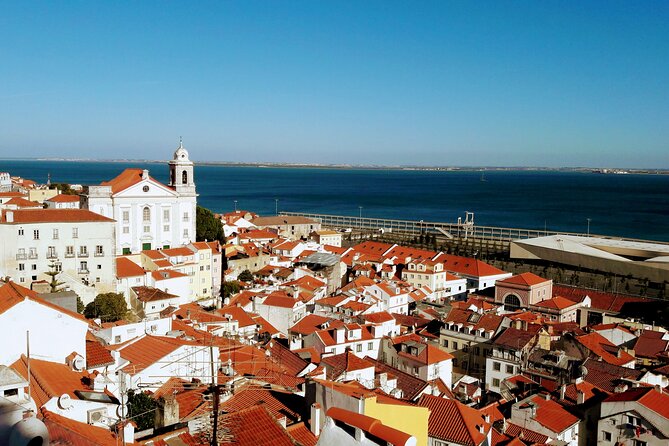
Your tour starts and ends back at Rua do Comércio, 1100 Lisboa, Portugal. That’s helpful because you’re not trying to match up with a far-off drop-off point after a short tour—you finish where you began.
A few practical notes that affect comfort:
- Large suitcases aren’t allowed, so travel light.
- No smoking and no alcohol on board, which keeps the ride pleasant.
- Most travelers can participate, but children under 7 aren’t allowed.
- It’s described as near public transportation, which is useful if you’re also hopping metro/trams elsewhere.
Lisbon is hilly, crowded, and sometimes street closures happen. If an event blocks roads (like commemorations do), your best move is to follow your guide’s instructions closely for where to meet and when.
The Cathedral Stop: Lisbon’s Oldest Church Marker (But Quick)
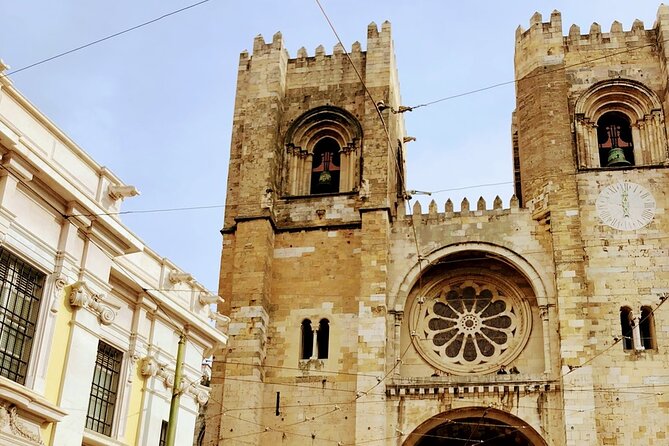
You’ll begin at Lisbon Cathedral, a major anchor point because construction began in 1147, after the capture of Lisbon from the Moors. It’s considered the oldest church in the current Portuguese capital. The stop is about 15 minutes, and admission isn’t included, so plan on exterior viewing and a fast orientation moment.
This is a good first stop because it sets the timeline. Before you’re thrown into viewpoints and neighborhoods, you get a clear sense of how old Lisbon’s core really is—even if you only have a short afternoon.
Tip: if the cathedral area is crowded, don’t rush. Use the guide’s comments to spot what to look for in the architecture, then grab your photos and move on.
Miradouro das Portas do Sol: Moorish Clues and River Views
Next up is Miradouro das Portas do Sol, with a name tied to an old dor (door) connected to the sun—along with Moorish-era elements. You’re also pointed toward the Cerca Velha wall remnants, and you get classic Tagus River views.
This stop is about 10 minutes and free. It’s brief, but it’s the kind of viewpoint that changes your mental map fast: suddenly you’re not just seeing Lisbon—you’re understanding how the city hangs over the water.
If you want a photo, aim for the moment the group is most settled. Tuk-tuks aren’t meant for long waiting around, so treat this stop like a quick photo sprint.
A Portuguese Pavement Detail and the Graça Viewpoint Shift
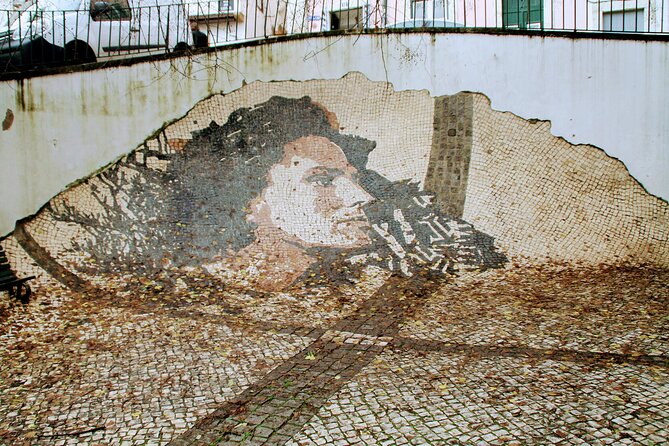
You’ll also pass by a piece of street art—a face of Amália Rodrigues—made by the urban artist Vhils. This is one of those stops that’s small in time but big in charm: it’s Lisbon culture at street level, not just postcard buildings.
Then the tour heads to Miradouro da Graça (near the Convent of Grace area). This viewpoint is connected to Sophia de Mello Breyner Andresen, and the guide points out the area’s deeper roots on Monte de São Gens, tied to the siege of Lisbon in 1147. You’ll also be directed toward tile panels nearby.
This stop is about 15 minutes, and admission isn’t included. So if the tiles are behind a door or require entry, don’t assume it’s included—use the tour to decide if you want to return.
Right after that, you’ll reach Vila Berta, an industrial-heritage area tied to iron and stamped tiles. The description includes how it was planned to house factory workers in the industrial period, designed by Joaquim Francisco Tojal. Even if you don’t study industrial Lisbon, this stop helps you see the city as more than just old churches and miradouros.




Miradouro da Senhora do Monte: Big Views Plus a Hermitage Legend
If there’s one stop that feels worth the ride time, it’s Miradouro da Senhora do Monte. You get sweeping views south toward Palha Sea, São Jorge Castle, part of Lisbon downtown, and the Tagus estuary. To the west you’re looking toward Bairro Alto and Monsanto Forest Park, and to the north you can see the valley around Avenida Almirante Reis.
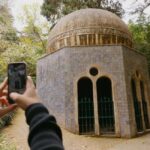
Next to the viewpoint is the small Hermitage of Our Lady of Mount, founded in 1147 and consecrated to Saint Gens. The tour’s story includes the “stone chair” legend: pregnant women who sat there were believed to have uncomplicated births, including mention of D. Maria Ana from Austria. It’s the kind of detail you don’t get from a map.
This stop is about 15 minutes and free. It’s also a natural pause point—after churches, architecture, and quick movement, you finally get space to breathe and look.
St. Vincent de Fora and the National Pantheon: Culture, Not Just Pretty Buildings
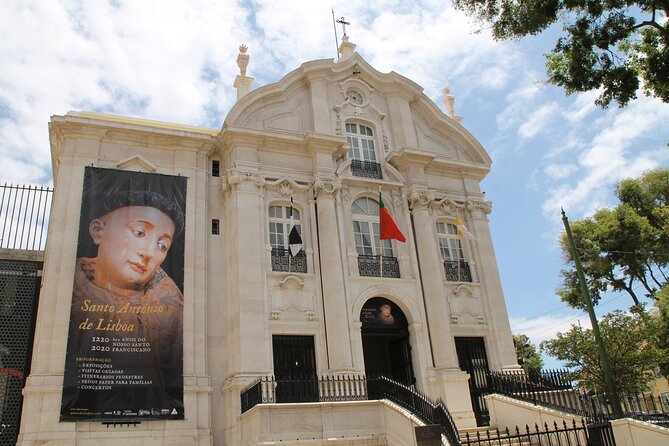
You’ll then go toward Church of St. Vincent de Fora, and the tour notes that you visit from outside. Construction began in 1582 where D. Afonso Henriques previously ordered an earlier temple. Expect a mix of architectural traces: Mannerism, plus Gothic and Baroque elements. The description also references the Pantheon of the Dukes of Bragança, where members of the Bragança dynasty are buried, but admission isn’t included here.
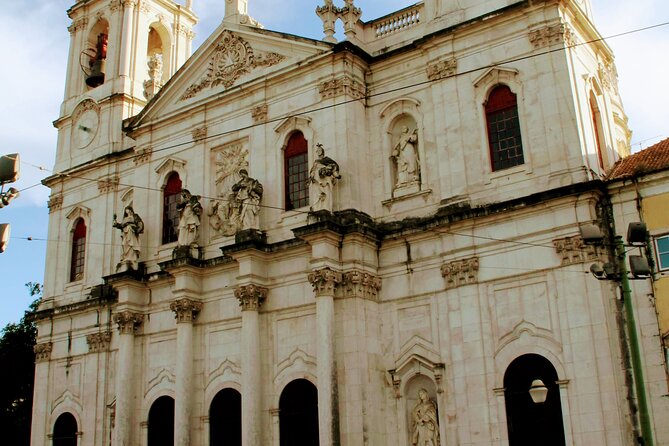
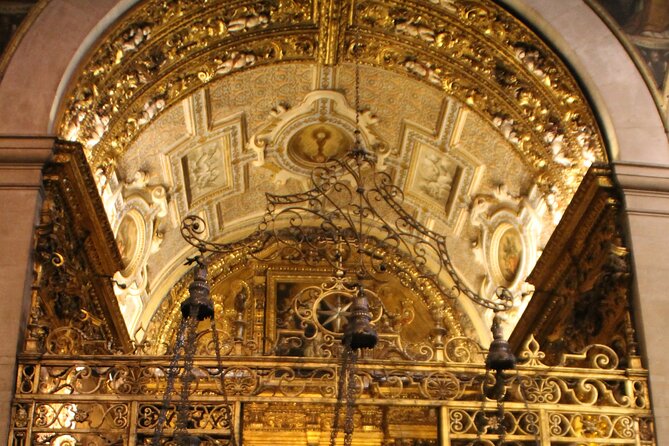
After that, the tour moves to Panteão Nacional (the National Pantheon) inside Igreja de Santa Engrácia. Construction began in 1682 and wrapped up in 1966—an astonishing 284 years later. The tour highlights famous burials such as Amália and football legend Eusébio.
This is a longer stop at about 30 minutes, and again admission isn’t included. If you’re a fado fan or into Portuguese cultural figures, this is the stop I’d consider returning to on your own with a ticket, because the tour gives you the names and the significance without forcing a full entry time.
Alfama: Old Neighborhood Feel, plus Fountains and the Saramago Connection
Then you shift into Alfama, Lisbon’s oldest neighborhood, with roots tied to Arabic al-hamma (fountain/hot water baths). The tour’s explanation links Alfama to thermal waters used for wellness—an angle that makes the neighborhood feel older than just “pretty streets.”
This stop is about 10 minutes and free. You’ll get the vibe: narrow streets, historic atmosphere, and the sense that the city’s been layering here for centuries.
Right after, you’ll be pointed toward Chafariz de Dentro—one of Lisbon’s fountains supplied inside the Fernandina fence. The details are fascinating: the earliest record mentioned is 1285 as the Fountain of Horses, and in 1373 the Castilians allegedly took the bronze heads. The description also includes how the fountain’s water supply supported ships arriving from abroad and how the fountain had multiple spouts regulated by social groups.
This is a short, about 5 minutes stop and free. It’s also an example of why this tour works: you see a fountain for a moment, then you understand why it mattered.
You’ll also encounter the House of Nozzles (also called the House of Brás de Albuquerque). The description says it houses the museum of writer José Saramago on the second floor, and notes what’s visible at street level: Roman-era salt tanks, a medieval tower, and Mudejar pavement. Built in 1523, with diamond-shaped stone on the façade influenced by Italian Renaissance design.
If you’re curious about literature, architecture, or city layers, this is one of the stops where you’ll probably want more time than the tour gives.
Church of Our Lady of Old Conceição: The 1755 Earthquake Comes Up
Next is Igreja de Nossa Senhora da Conceicao Velha, where the tour explains how reconstruction after the 1755 earthquake produced a blend of architectural styles. The first church on the site was the Church of Our Lady of Mercy, described as the second largest Manueline temple in Lisbon after Jerónimos (in Belém).
The stop is about 5 minutes and free. It’s short, but it gives you a key Lisbon lesson: the city rebuilt itself, and that history shows up in what stands today.
Praca do Comercio and Cais do Sodré: Power, Famous Cafés, and Night Energy
After the older lanes, you move into a major open space: Praca do Comercio (Commerce Square). It’s described as the site of the Portuguese kings’ palace for around two centuries, and it’s one of the largest squares in Europe.
The tour points out details like the Martinho da Arcada café in one of the buildings, noted as the oldest in Lisbon, and linked to Portuguese writer Fernando Pessoa. You’ll also hear about the Triumphal Arch on the north side of the square from Rua Augusta.
This stop is about 15 minutes and free. It’s also a good moment to rest your legs, because the square is flat compared to Lisbon’s climbs.
Then you head toward Cais do Sodré, described as lively for nightlife and gastronomy by the river. The tour mentions the old Ribeira Market (opened in the 19th century) and how today that area connects with Time Out and a cluster of restaurants.
Chiado, Igreja de São Roque, and the View from São Pedro de Alcântara
You’ll pass through Chiado, described as one of Lisbon’s emblematic, more bohemian areas. The tour emphasizes Lisbon’s intellectual connections here over time, and points to places like the Brasileira café with a statue of Fernando Pessoa, plus Largo Luis de Camões tied to the poet of The Lusiads.
Then comes Igreja de Sao Roque. Built at the end of the 16th century, it belonged to the Society of Jesus and is described as the first Jesuit church in Portugal. One strong fact in the tour description: it survived the 1755 earthquake unscathed. The tour also describes Baroque chapels and highlights Saint John the Baptist, said to be an Italian artwork noted as unique.
This stop is about 15 minutes and free.
For a final viewpoint later in the tour, you’ll reach Miradouro São Pedro de Alcântara, described as one of Lisbon’s most beautiful viewpoints, looking over the east and downtown. It’s about 10 minutes and free.
Right nearby is the Convent of Saint Peter from Alcântara, founded in 1670, with a funerary chapel of Cardinal D. Veríssimo de Lencastre said to have remained untouched after the earthquake.
Bairro Alto and Carmo Convent: When Lisbon Looks Like It Doesn’t Try
The last stretch leans into the parts of Lisbon that feel less like a museum and more like daily life.
You’ll pass through Bairro Alto, described as old and picturesque with narrow, cobbled streets and centuries-old houses. The tour also notes its nightlife reputation since the 1980s, including fado clubs, and mentions press organizations were present there until the 1970s/80s.
Then you’ll see the Carmo Convent, founded in 1389 by D. Nuno Álvares Pereira. The tour emphasizes that it didn’t survive the 1755 earthquake, and that some walls remained and weren’t rebuilt to match what stood at the time of the disaster—an unusual choice that keeps history visible in the open air.
Right in front, the tour mentions the Pombalino do Carmo Fountain, replacing an older fountain in 1786.
This finishing sequence matters because it gives you variety: viewpoint, church, market-style city texture, then a more lived-in late-day atmosphere.
Who Should Book This Tour (And Who Should Skip It)
This is a great fit if you want:
- A 3-hour private way to cover a lot of Lisbon without over-walking
- An English-speaking guide who can connect neighborhoods to stories
- Multiple miradouros and viewpoint moments you can remember later
- A tour that covers both old Lisbon (Alfama, historic churches) and central Lisbon (Commerce Square, Chiado, Bairro Alto)
Skip it if:
- You need guaranteed monument entry tickets included (they aren’t)
- You’re traveling with a large suitcase
- You’re bringing kids under 7
- You’re sure you’ll have rainy weather (the tour requires good weather)
Should You Book This Tuk-Tuk Tour?
Yes—if your goal is a fast, well-organized Lisbon highlights loop with strong guiding and viewpoint time. I like that the tour includes both the high points (literal miradouros) and the street-level details (fountains, pavements, and neighborhood texture) without dragging you through ticket lines.
Book it early if you can, especially in busy periods. Then use the tour as your decision tool: after you see what the guide points out, you’ll know what to return to later for real entry time.
If you’re traveling with limited mobility for hills, this kind of tuk-tuk route can be a lifesaver—just remember it’s built for good weather and quick stops, not long museum sessions.
FAQ
How long is the Lisbon tuk-tuk tour?
The tour is about 3 hours.
Is the tour in English?
Yes, it’s offered in English.
Is the pickup included?
This experience is listed as having free pick-up. Your booking confirmation should include the exact details.
Where does the tour start and end?
It starts at Rua do Comércio, 1100 Lisboa, Portugal and ends back at the meeting point.
Is there a mobile ticket?
Yes, you’ll have a mobile ticket.
Are monument entrance tickets included?
No. Entrances to monuments are not included.
Are meals and drinks included?
No. Meals and drinks aren’t included.
Is it a private tour?
Yes. It’s a private tour/activity, so only your group participates.
Are children allowed?
Children under 7 aren’t allowed.
Is smoking or alcohol allowed on board?
No. Smoking isn’t allowed on board, and alcohol isn’t allowed.
What happens if weather is bad?
The tour requires good weather. If it’s canceled due to poor weather, you’ll be offered a different date or a full refund.