REVIEW · CASCAIS
Évora: Flexible Walking Tour in Historic Center
Book on GetYourGuide →Operated by Travelbox, Lda. · Bookable on GetYourGuide
Évora’s stone streets reward slow walking. I like this experience for two very specific reasons: the centuries-old city walls and the show-stopping Praça do Giraldo fountain. The only real catch is you’re relying on a charged smartphone and the app, so it’s not ideal if you prefer a fully guided, hands-on tour—or if you have mobility impairments.
What makes it work (and feel relaxed) is the Walkbox app, which plays stories automatically as you go and works offline. You can stop, restart, and do the route in parts within 5 days, then come back to keep exploring without pressure to match a group.
In This Review
- Key highlights worth clocking
- Getting Started at Porta Velha da Lagoa (and why it matters)
- Rua do Cano to Praça de Sertório: Roman traces in plain sight
- Praça do Giraldo and the fountain show
- Rua 5 de Outubro: the local shopping spine
- Cathedral area: Portugal’s largest medieval cathedral views
- The Roman Temple: a preserved 1st-century anchor
- Church of Loíos and the calmer side lanes
- Colegiais Garden and Espírito Santo College: green breaks with brain time
- Páteo de São Miguel: terrace views before the big finale
- Igreja da Graça and the Convent of São Francisco’s Bones Chapel
- The romantic garden finish and the walk back on the medieval walls
- Price and what you’re really paying for (US$8 logic)
- Who should book this self-guided Évora walk?
- Quick FAQ
- FAQ
- How long is the Évora flexible walking tour?
- What distance does the route cover?
- Where does the tour start and end?
- Is there a live guide with this tour?
- Can I do the tour in parts over multiple days?
- Does the Walkbox app work without internet?
- What languages are included in the audio?
- Are tickets included for paid attractions?
- Is the tour suitable for people with mobility impairments?
- Should you book this tour?
Key highlights worth clocking
- Porta Velha da Lagoa as your easy start point, near a recommended free car park
- Água de Prata Aqueduct views early in the walk, right as you get your bearings
- Praça de Sertório with Roman baths tucked inside the Town Hall area
- Praça do Giraldo with its eight-spout fountain and neoclassical façade drama
- Capela dos Ossos in the Convent of São Francisco, including the bone-lined chapel
- Panoramic terrace moments from the cathedral and viewpoints later in the route
Getting Started at Porta Velha da Lagoa (and why it matters)
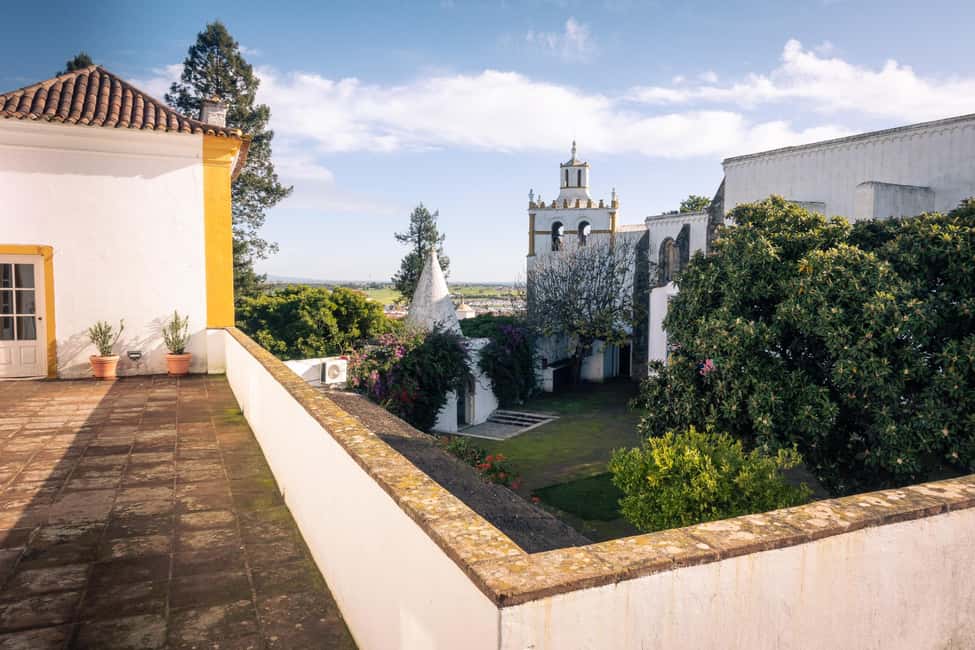
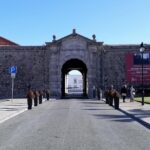
The tour starts and ends at Porta (Gate) Velha da Lagoa, right in the historic center zone you’ll want to be exploring anyway. The location choice is smart: it’s close to a recommended free car park, which is helpful if you’re not arriving by public transit.
From there, you ease into the walk along Rua do Cano, with the Água de Prata Aqueduct running alongside your route. This is a nice early “orientation” moment. Instead of immediately jumping into crowded squares, you get a sense of how Évora’s layers fit together: Roman-era engineering lines up with medieval and later streets.
If you’re the type who hates getting lost, you’ll appreciate that the route is about 5 km and designed to be easy to follow. Your phone guides the timing; your feet set the pace. And because the audio plays automatically, you don’t have to keep tapping every few steps.
You can also read our reviews of more walking tours in Cascais

Rua do Cano to Praça de Sertório: Roman traces in plain sight
After that aqueduct stretch, your first meaningful stop is Praça de Sertório. This square isn’t famous just because it’s a nice plaza; it’s famous because it hints at what’s hidden in everyday city life. Here, you can see Roman baths tucked inside the Town Hall area.
That “look up, then look closer” rhythm is part of why I like this tour format. Évora can feel like a museum, but this route nudges you toward moments that don’t scream tourist trap. You’re learning to spot the old stuff without needing a lecturer.
One practical tip: wear shoes you can trust. Even with a relatively easy route, you’re walking through historic stone areas where the ground can be uneven. The good part is that the path is meant to be manageable, so you can keep the energy for later highlights.
Praça do Giraldo and the fountain show
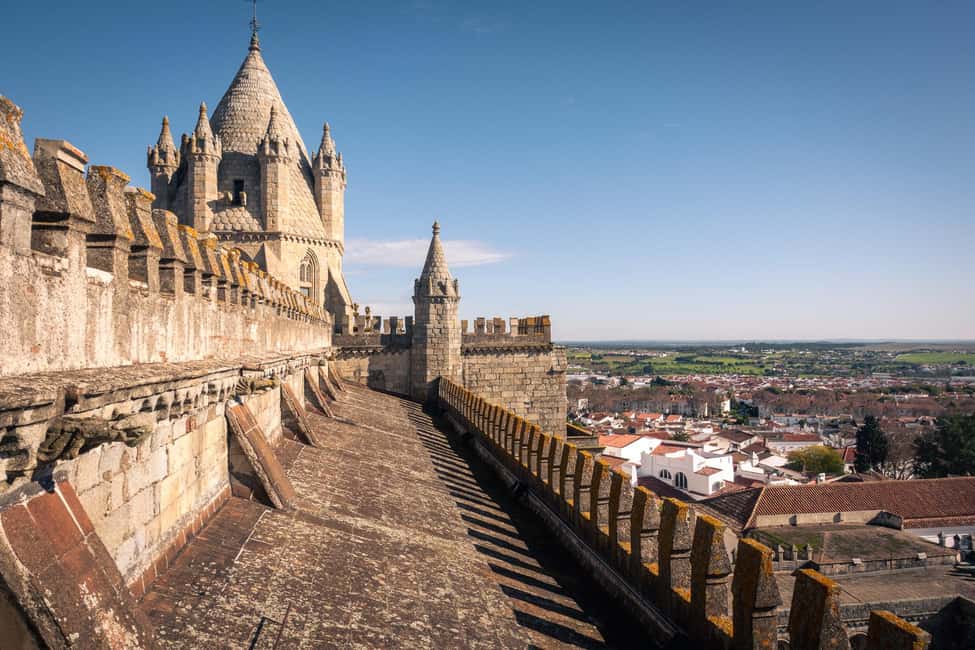
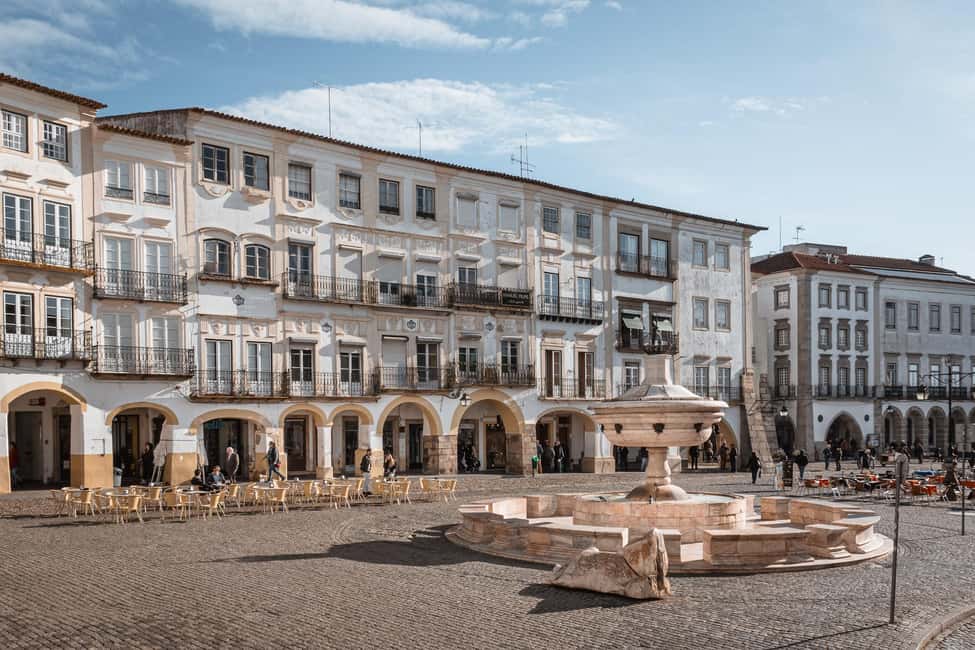
Next comes Praça do Giraldo, and yes, it’s a big deal. The square has neoclassical façades and a grand eight-spout fountain that becomes your natural meeting point with Évora’s public-life side.
This is the kind of stop that works whether you like architecture, people-watching, or just needing a quick break. Sit for a minute and you’ll feel the square doing what squares are supposed to do: reset your attention. You’re not rushing to the next “must-see.” You’re pausing where the city gathers.
I also like that the tour doesn’t treat this as the end of sightseeing. It’s more like a hinge. After you get your bearings in the plaza, the walk turns toward crafts, churches, and the cathedral area—so you can keep building your mental map.
Rua 5 de Outubro: the local shopping spine
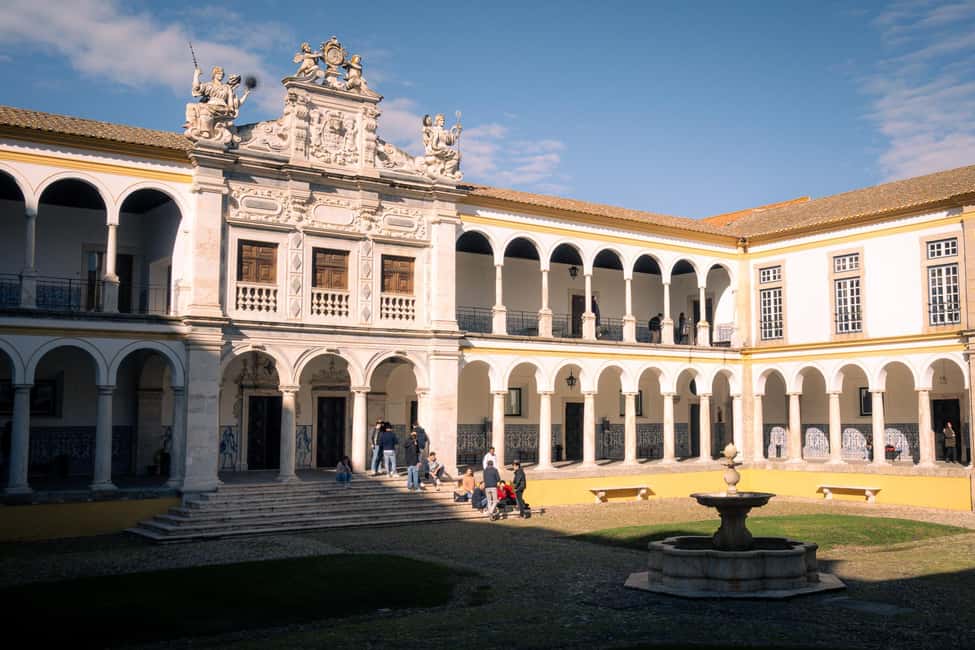
From the square, the route carries you along Rua 5 de Outubro, the city’s main street for crafts and local shops. This section is valuable even if you don’t plan to buy anything, because it keeps the tour grounded in modern Évora.
Self-guided tours can sometimes feel like you only sprint between monuments. This one gives you at least one shopping street stretch, which helps you understand the city’s daily rhythm. You’re not only looking at stone. You’re also seeing how people live between landmarks.
If you want to keep the tour feeling easy, this is a good place to slow down your pace. Let the audio finish its story, then walk 2–3 minutes longer and browse a window or two. It’s a small change, but it makes the overall day feel more like travel and less like checklists.
Cathedral area: Portugal’s largest medieval cathedral views
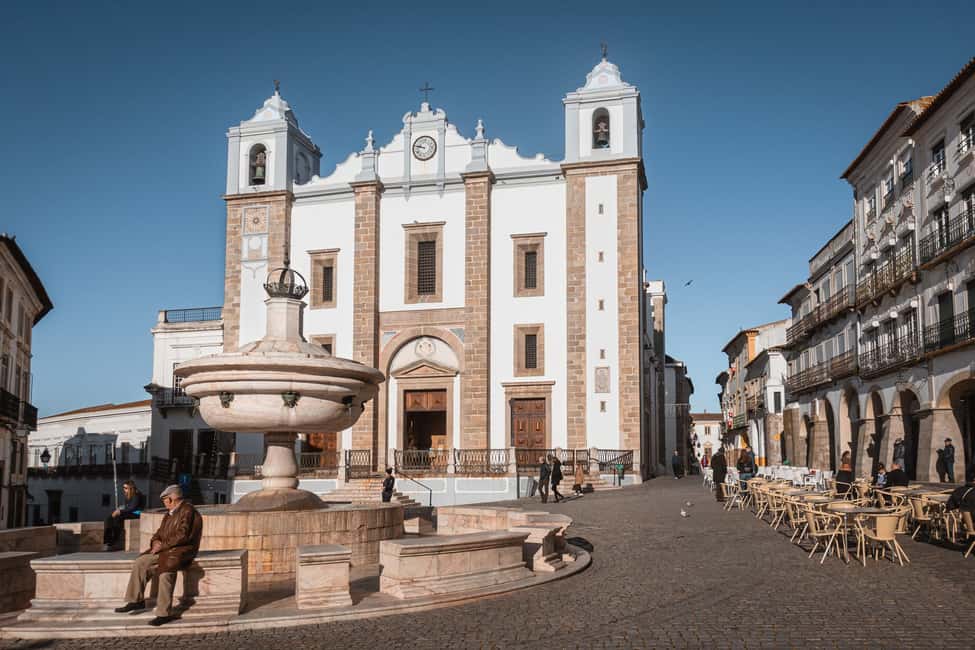
Soon you reach the monumental zone where major sights cluster. One of the headline stops is the largest Portuguese medieval cathedral, plus the chance to reach a panoramic terrace view.
This is the moment where Évora’s scale clicks. From the cathedral area, you can see how the historic center spreads and how the walls and rooftops shape the city’s look. Even if you’re not big on churches, the terrace angle is worth it because it turns architecture into geography.
One caution: viewpoints and terraces are best when you’re willing to linger. If you’re the type who hates waiting or looking down at crowds, plan a calmer time of day when you’re less likely to feel rushed. The upside of the Walkbox setup is you control your timing. You can spend 5 minutes or 30 minutes, then continue.
You can also read our reviews of more historical tours in Cascais

The Roman Temple: a preserved 1st-century anchor
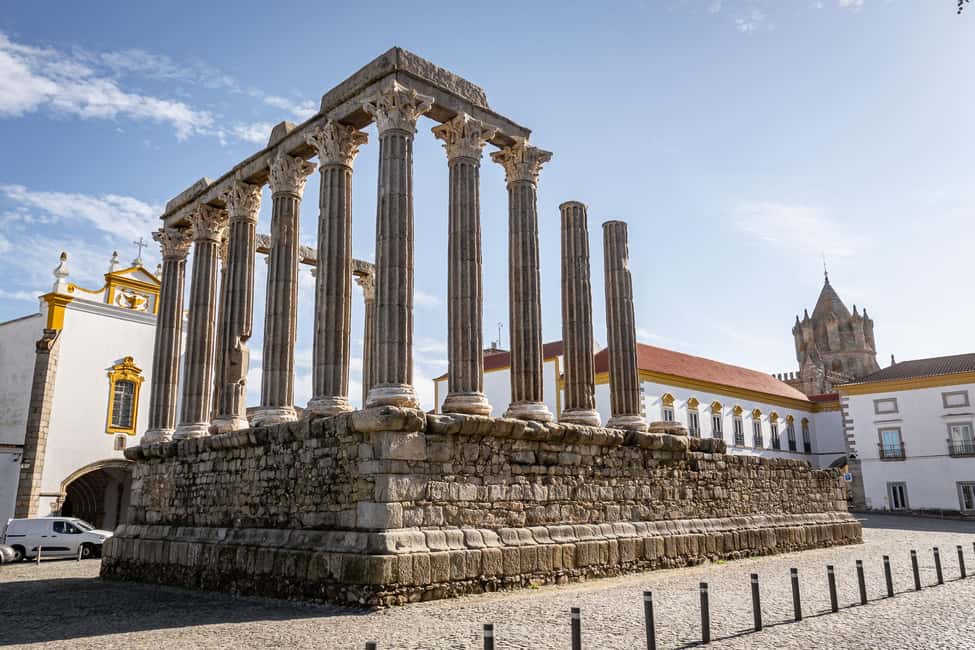
Right near the cathedral area is Évora’s Roman Temple, described as a 1st-century marvel and noted for being perfectly preserved.
This stop is more than a photo opportunity. It’s a way to feel continuity. You’re walking from medieval heights and church façades into something that survived with impressive integrity. The contrast helps you understand why Évora’s history is not only layered, but also physically present.
When you stand there, try shifting your perspective: look at the temple first, then look for how it sits relative to the medieval structures nearby. The mental image helps the rest of the walk make more sense.
Church of Loíos and the calmer side lanes
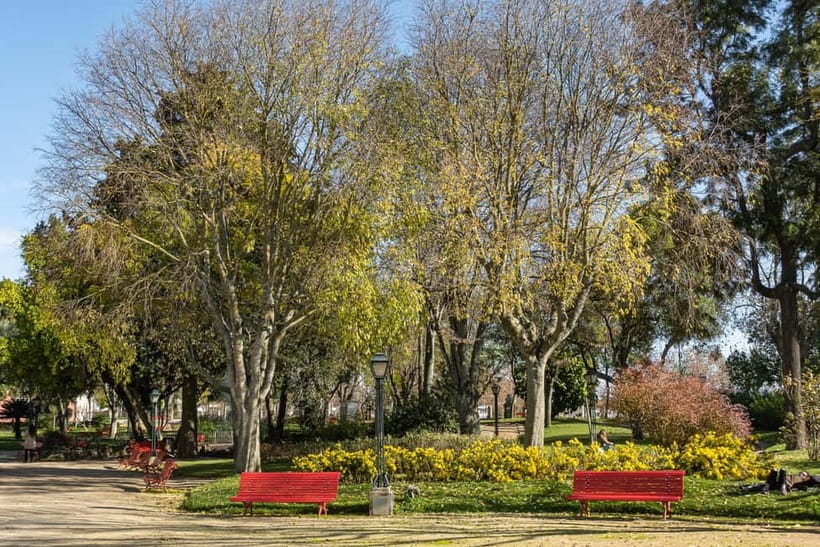
Your route also includes the Church of Loíos. This is one of those stops that can be easy to rush past if you’re speed-walking between bigger names, but it’s worth respecting because it adds texture to the day.
A good rule for this tour: if an area feels quieter than the main plaza, that’s usually where you’ll get the most “Évora” feeling. You can slow down, read the audio’s cues, and treat smaller churches like chapters—not just stops.
Colegiais Garden and Espírito Santo College: green breaks with brain time
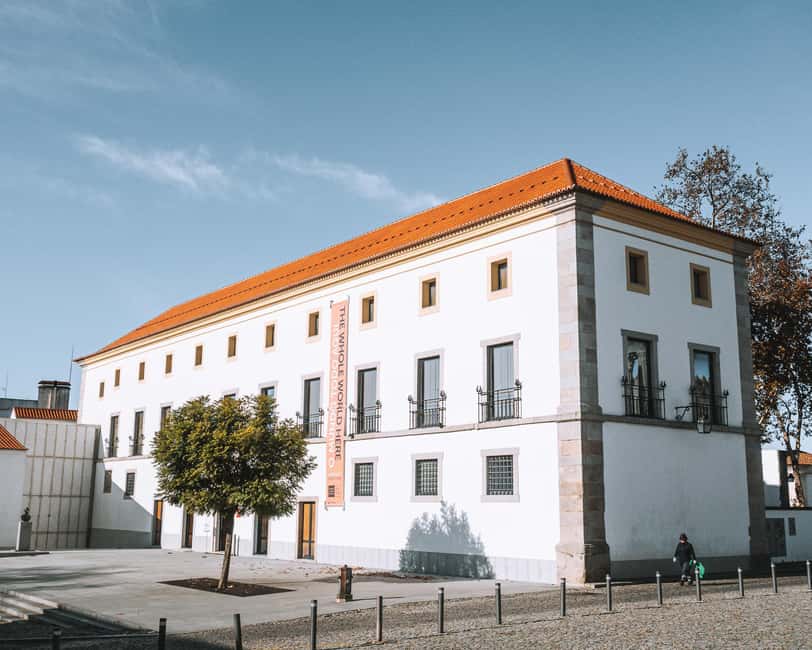
Next you move through Colegiais Garden, then toward the university area where you can marvel at Espírito Santo College.
These segments work like mental punctuation. After cathedral and Roman highlights, you get a pause that doesn’t mean the tour is over. Gardens and university buildings bring a different kind of atmosphere: less of the grand monument effect, more everyday life and calmer movement.
For me, this part is where you start enjoying the flexibility. If you’re tired, you can extend the garden break. If you’re still buzzing, you can push through to keep momentum. The route is set up so you can make those calls without feeling like you’re breaking anything.
Páteo de São Miguel: terrace views before the big finale
Then comes Páteo de São Miguel, with its terrace panoramic views. This is another “step back and look” moment—similar in spirit to the cathedral terrace, but with a different vantage rhythm.
Even if you’ve already seen wide views, this stop earns attention because it gives you another angle on the city’s layout. It also keeps you energized before what is arguably the most unforgettable part of the route.
Igreja da Graça and the Convent of São Francisco’s Bones Chapel
The emotional and visual centerpiece of the walk is the São Francisco Church and the Convent of São Francisco, including the Capela dos Ossos (the bone-lined chapel).
This is not a “cute photo op” stop. It’s eerie by design, and the tour gives you context through its storytelling format. Since the experience is audio-led, you’re not left wondering what you’re looking at—you can take it in at your own speed, then decide how long you want to stay with the chapel.
A practical note: if you’re sensitive to unusual displays, think about how you want to pace yourself here. You can give yourself extra time nearby so you’re not rushing out of the chapel and then immediately walking back into noise and crowds.
Also, because paid attractions aren’t included, check whether the chapel portion requires any admission on the day you go. The tour setup includes prices and opening hours for attractions in the route where applicable, which helps you avoid arriving and then scrambling.
The romantic garden finish and the walk back on the medieval walls
To end, you walk through Évora’s romantic garden, then return to Porta Velha da Lagoa along the medieval wall.
This ending choice is smart. It closes the loop visually. Earlier you started by getting your bearings near the aqueduct. Now you finish with the walls, turning the whole route into one coherent circuit through Évora’s protective and ceremonial architecture.
If you want the day to feel complete, use the wall return as your final unwind. Walk slower here. You’ve already “done the highlights,” so now it’s about atmosphere.
Price and what you’re really paying for (US$8 logic)
At $8 per person, the value is mainly in what the app provides: a curated 5 km route, 50+ points of interest, and multi-language audio (English, Portuguese, French, and Spanish). Add the fact that it works offline, and you’re paying for a low-cost guide that doesn’t depend on a live person showing up with a microphone.
What this is not: it’s not a guided tour with a live expert leading you from stop to stop. Tickets to any paid attractions are also not included.
So the best match is clear:
- You want flexibility over a fixed group schedule.
- You like learning in chunks you can control (pause, replay, move on).
- You’d rather spend your money on time and entry fees than on a full live guide.
Who should book this self-guided Évora walk?
I’d book this if you:
- enjoy a self-paced route through UNESCO-listed historic areas
- want automatic audio that plays as you walk
- like hitting major sites (Roman Temple, cathedral area, Capela dos Ossos) without feeling rushed
- travel with a smartphone that will stay charged
You might skip it if:
- you prefer a live guide speaking in real time
- you don’t want to rely on an app
- your mobility needs make uneven historic walking uncomfortable (it’s noted as not suitable for people with mobility impairments)
The “best day” scenario is simple: go with comfortable shoes, expect 4–6 hours depending on stops, and treat the audio as a way to see more, not a way to hurry.
Quick FAQ
FAQ
How long is the Évora flexible walking tour?
It takes about 4 to 6 hours depending on your pace and which stops you choose to spend time on.
What distance does the route cover?
The walking route is about 5 km.
Where does the tour start and end?
It starts and ends at Porta (Gate) Velha da Lagoa, near the recommended free car park.
Is there a live guide with this tour?
No. Guidance is provided through the Walkbox app, not a live tour guide.
Can I do the tour in parts over multiple days?
Yes. You can do it whenever you like and in full or in parts within 5 days of booking.
Does the Walkbox app work without internet?
Yes. The guide works offline.
What languages are included in the audio?
The content is available in English, Portuguese, French, and Spanish.
Are tickets included for paid attractions?
No. Tickets to paid attractions are not included.
Is the tour suitable for people with mobility impairments?
It is not suitable for people with mobility impairments.
Should you book this tour?
Yes, if you want an Évora day that feels self-directed but still intelligently guided. This is the rare budget option where the “guide” is strong: automatic, offline audio, a route that makes logical sense, and enough structure to take you to the big names like the Roman Temple and the Bones Chapel without feeling like you’re wandering.
Skip it only if you want a live guide or you can’t comfortably walk the historic streets. If your phone is charged and you like the idea of choosing your own stopping points, this is a very practical way to see Évora for the price of a coffee.