REVIEW · 3-HOUR EXPERIENCES
3-Hour Guided Street Art Walking Tour of Lisbon
Book on Viator →Operated by TheCityGuru · Bookable on Viator
Lisbon has a talent for turning walls into stories. This 3-hour guided street art walk gives you the map and meaning behind what you see, from nightlife-tagged Bairro Alto to tile-lined streets in Baixa. I especially love how the guide frames street art as part of Lisbon’s culture, not just random graffiti, and I like that the group is small for real conversation and quick questions with guides like Erika and Maria.
One thing to keep in mind: this is a walking tour with hills and uneven ground, and it’s not recommended for mobility issues. If you’re traveling in comfortable shoes and you’re up for cobblestones and slopes, you’ll feel like you’re moving through Lisbon’s street-level gallery.
In This Review
- Key takeaways before you go
- Lisbon street art, explained in the real places
- Price and value for a 3-hour guided walk
- Where it starts and how the timing actually feels
- What to wear on Lisbon’s cobblestones and slopes
- Stop 1: Bairro Alto and the street art of nightlife culture
- Stop 2: Elevador da Glória and the Urban Art Gallery feel
- Stop 3: Baixa de Lisboa, azulejos, and symbolism you’d miss alone
- Stop 4: Miradouro da Graça and the legacy behind the walls
- Stop 5: Alfama and the Chão do Loureiro street-art building
- How the guides make the difference
- After the tour: what to do with what you learned
- Who this tour suits best (and who should skip it)
- Weather and common-sense planning
- Should you book the 3-hour Lisbon street art walk?
- FAQ
- How long is the 3-hour guided street art walking tour of Lisbon?
- Where does the tour start and end?
- What is the price per person?
- Is the tour admission included at the stops?
- What’s included in the tour?
- Is food or drinks included?
- Is it accessible for travelers with mobility issues?
Key takeaways before you go
- Small group pacing (max 12) means you get attention instead of getting swept along.
- Street art + context: you’ll learn the social and historical signals behind the art you’re seeing.
- Five focused stops cover nightlife traditions, tiled symbolism, and neighborhood legacies.
- A mid-tour rest break helps you keep your energy for the uphill sections.
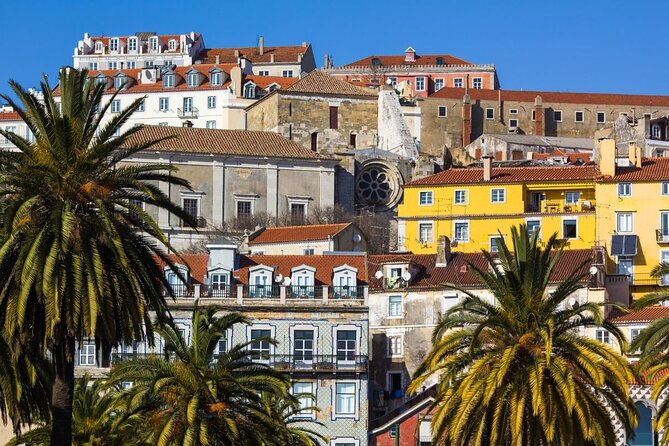
- Photo-friendly route across viewpoints and distinct neighborhoods.
- Good-weather dependent timing keeps the experience from turning into a soggy scramble.
Lisbon street art, explained in the real places
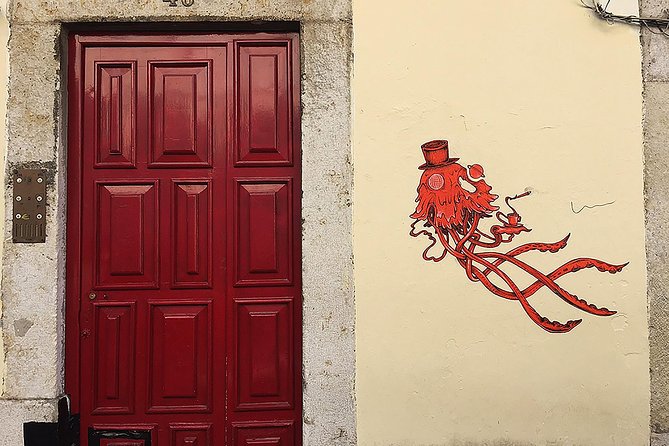
What makes this tour work is that it treats street art like a language. Lisbon’s walls don’t just decorate neighborhoods. They react to people, politics, daily life, and international art trends that show up on Portuguese streets.
The big win is that you’re not left guessing. With a local guide, you get the why behind the what. Guides highlighted in the comments include Erika and Maria for connecting murals, graffiti, and even tile work to broader themes like community identity and social issues. If you’re the kind of person who likes to see both the art and the reason it exists, this tour fits like a camera strap.
You can also read our reviews of more walking tours in Lisbon


Price and value for a 3-hour guided walk
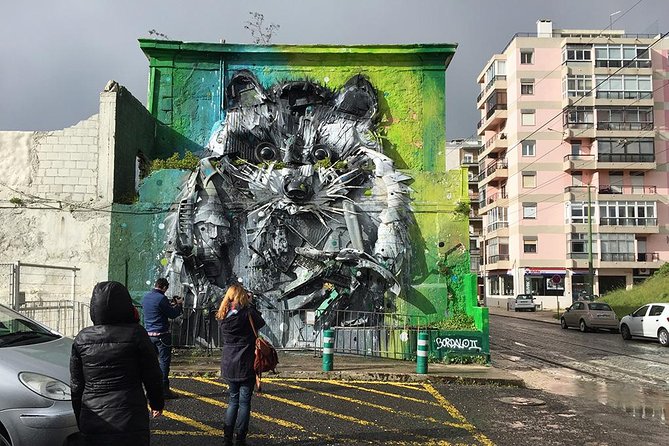
At $42.27 per person for about 3 hours, this isn’t a bargain-price “wander and hope” experience. It is closer to what you’d pay for a solid neighborhood walk with a specialist guide. The value comes from three parts you’ll feel fast:
- A local guide who can interpret what you’re seeing.
- A small group size that keeps the pace sane.
- Multiple neighborhood stops that would be harder to connect on your own without a lot of backtracking.
Also, each of the listed stops has free admission, so you’re not paying extra to access the sights. You are paying for the route and the explanation that turns random corners into a coherent tour.
Where it starts and how the timing actually feels
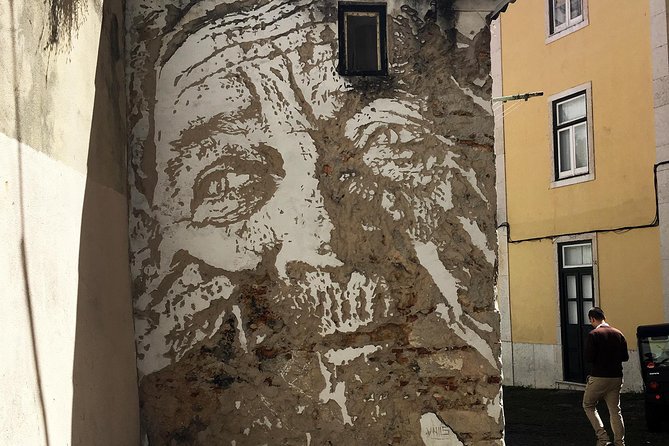
You’ll meet at R. Luz Soriano 67, 1200-246 Lisboa, Portugal and the tour ends at Miradouro da Graça, Calçada da Graça, 1100-265 Lisboa. Expect a walk that covers several distinct neighborhoods within a short time, with a rest break around the half-way point.
The schedule is built on short stops (about 30 minutes each). That matters. You’re not getting stuck staring at one mural for an hour. You move, you look, you learn, you move again. It keeps the tour from dragging while still giving enough time for meaningful conversation.
Logistics are straightforward: you get a mobile ticket, it runs in English, and it’s near public transportation. If you’re traveling solo, this style of tour is also one of the easier ways to get your bearings fast because you’re guided through the city rather than left to decode it by yourself.
What to wear on Lisbon’s cobblestones and slopes
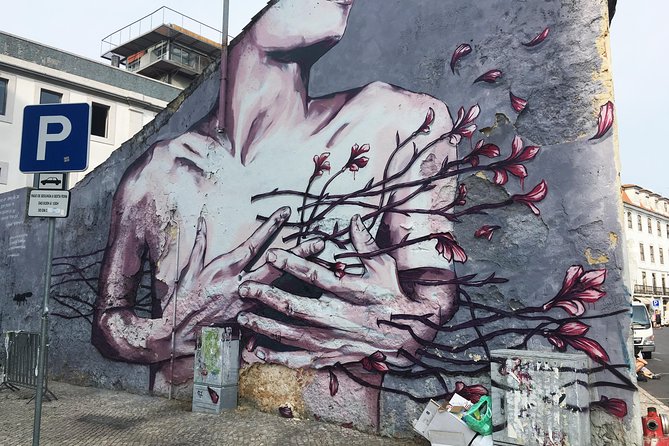
This is where good planning pays off. The tour is a walking route and you must be able to walk on unpaved or uneven terrain. Lisbon’s hills are real, and your comfort depends on your shoes.
You’ll want to wear comfortable clothes and supportive walking shoes, especially if you know you get tired on slopes. It is not recommended if you have mobility issues. The tour allows service animals, and most travelers can participate.
Also note the practical side: this is about the walk and the stops, not about long indoor breaks. Bring water if you know you’re sensitive to heat, since food and drinks aren’t included.
Stop 1: Bairro Alto and the street art of nightlife culture

Your first stop is Bairro Alto, where the street art theme leans into the neighborhood’s nightlife traditions. Bairro Alto is the kind of place where street life changes by the hour. The art here often feels like it belongs to the night energy: bold labels, strong visual statements, and designs that fit the rhythm of late hours.
What I like about starting here is that it sets the tone. You learn early that street art isn’t just about aesthetics. It can reflect local habits, social scenes, and the way a neighborhood markets its identity.
Practical note: since this stop is about atmosphere, you’ll get the most out of it if you pause and look at how the art interacts with the street itself, not only the wall surface. Think signage, angles, and what’s easy to photograph from where you’re standing.
You can also read our reviews of more guided tours in Lisbon





Stop 2: Elevador da Glória and the Urban Art Gallery feel
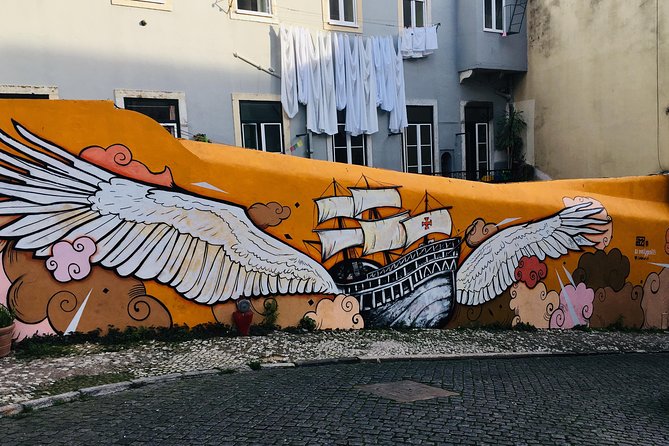
Next you head to Elevador da Gloria, specifically tied to Calçada da Glória and its reputation as an urban art gallery where street artists from all over the world create projects.
This stop helps you zoom out beyond Lisbon. You start to see street art as part of a wider international conversation. That’s important for photographers and art fans because it reframes what you’re seeing. You’re not only looking at local expression. You’re also looking at how Lisbon connects to global street art culture.
One drawback here is simple: places that feel like open-air galleries can also be crowded or busy at peak times. That’s not a reason to skip the tour. Just be ready to share viewpoints and adjust your photo angles.
Stop 3: Baixa de Lisboa, azulejos, and symbolism you’d miss alone
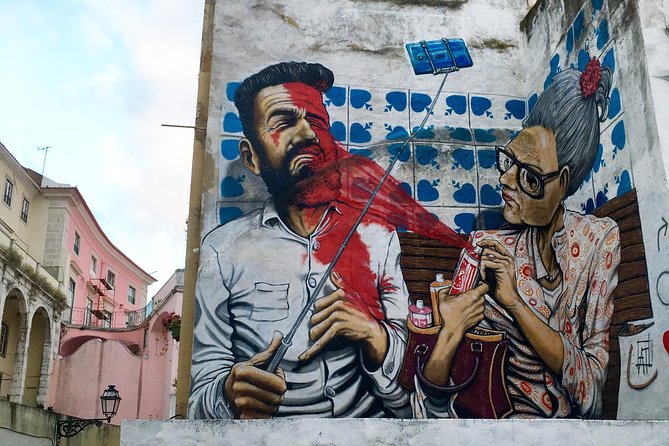
In Baixa de Lisboa, the focus shifts from pure street walls to symbols you can find across the ground-level city. You’ll spend time looking at azulejos (Lisbon tiles) and cobblestone streets, and learning the stories behind the designs.
This stop is a big reason this tour is worth more than a basic graffiti walk. It teaches you that Lisbon’s visual culture includes tilework and Enlightenment-era art signals. When you understand that link, you start seeing art everywhere: in patterns on sidewalks, in how symbols get repeated, and in the ways old aesthetics still show up next to newer street murals.
Practical photography tip: tilework and patterned stone are perfect for close framing. If you keep your phone or camera ready for ground-level details, this stop rewards you fast.
Stop 4: Miradouro da Graça and the legacy behind the walls

At Miradouro da Graça (Sophia de Mello Breyner Andresen), you reach a viewpoint area while also learning about the residential district of Bairro da Graça. This part connects street art to an historical link involving Portuguese workers unions and workers’ rights.
That context changes how you read the art. Instead of treating the visuals as decorative, you start connecting them to themes like labor, identity, and civic memory. The art here often reflects that legacy, so the best way to enjoy this stop is to slow down and listen for the meaning behind the imagery.
Also, this is one of those moments where Lisbon’s geography helps the story. A viewpoint stop gives you breath and perspective, so you’re better able to imagine the neighborhoods below as communities with their own histories.
Stop 5: Alfama and the Chão do Loureiro street-art building
Your final stop is Alfama, specifically Chão do Loureiro, described as a Car-Park transformed into a Street-Art gallery. The standout detail is the scale: it’s a five-floor building showing street art from Lisbon’s south margin and featuring work by prominent local artists.
This is the stop that often hits hardest for art fans because it’s not a single mural on a single wall. It’s vertical. It’s layered. You get a sense of the building as a whole canvas, and you can spend time scanning the different levels and styles.
If you’re a photographer, this is also where you’ll want patience. Look for patterns you can repeat across floors and details you can frame close up. If you rushed the walk, you’ll feel it most at this stop, because you’ll want more time than the allotted window.
How the guides make the difference
A lot of walking tours show you places. This one helps you interpret them. That’s the difference between seeing street art and understanding street art.
The comments you can learn from include repeated praise for guides putting the work into social, cultural, and historical context. Names that came up strongly in the stories include Erika and Maria for connecting murals and street art to larger themes, and Laith / Leith / Lait for deep street art explanations and passion for the scene. One guide, Lait, was described as even bringing a spray can for participants to try, which is the kind of extra touch that makes the tour feel like a living lesson rather than a slideshow.
Even if you’re not an art expert, you’ll still benefit because the guide explains street art concepts and location-specific meaning. The pacing also seems built for real questions. You’re not stuck listening for three hours without a chance to react.
After the tour: what to do with what you learned
By the time you finish near Miradouro da Graça, you should be able to spot clues more quickly around Lisbon. You’ll start noticing:
- which walls look like they’re responding to local life versus global trends,
- how symbolism and repetition work in tiles and street design,
- and why certain neighborhoods feel like they have a stronger visual “voice” than others.
The most useful thing you’ll carry is a way of looking. Even if the next street corner you find doesn’t have a huge mural, you’ll still know what questions to ask as you scan for details.
Who this tour suits best (and who should skip it)
This is best for you if:
- you love street art and photography and want the story behind the visuals,
- you enjoy understanding art through history and community,
- you prefer a small group with a real guide.
It’s not a great fit if:
- you need a low-steps, minimal-hill route, since it involves uneven terrain and is not recommended for travelers with mobility issues,
- you want a food-focused experience, because food and drinks aren’t included.
Weather and common-sense planning
This tour needs good weather. If it’s canceled due to poor weather, you’ll be offered a different date or a full refund. That’s helpful, because street art looks different when you’re dealing with rain, wind, and slippery cobblestones.
If you’re booking, pick shoes you can trust in wet conditions too. And if you tend to get tired on slopes, plan your day so you’re not immediately hopping into another long walk right after.
(And yes, the tour offers free cancellation up to 24 hours in advance for a full refund, which makes it easier to commit if your schedule might shift.)
Should you book the 3-hour Lisbon street art walk?
If your goal is to see Lisbon through its walls and streets, I think this is a strong yes. The route makes sense, the stops cover different kinds of visual storytelling (from tiles to multi-floor street art), and the small-group size keeps the experience personal. At $42.27 for about three hours, it’s priced like a guided learning experience, not like a casual sightseeing add-on.
Only skip it if you know you can’t handle uneven ground and hills, or if you want minimal walking. If you’re comfortable with cobblestones and slopes, you’ll leave with more than photos. You’ll leave with a new way to read Lisbon.
FAQ
How long is the 3-hour guided street art walking tour of Lisbon?
The tour runs for about 3 hours.
Where does the tour start and end?
It starts at R. Luz Soriano 67, 1200-246 Lisboa, Portugal and ends at Miradouro da Graça, Calçada da Graça, 1100-265 Lisboa.
What is the price per person?
The price is $42.27 per person.
Is the tour admission included at the stops?
The stops listed have free admission, and your ticket covers the guided experience.
What’s included in the tour?
Included are a local guide, a rest break at the half-way point, and a small group tour.
Is food or drinks included?
No. Food and drinks are not included.
Is it accessible for travelers with mobility issues?
It is not recommended for travelers with mobility issues, and you must be able to walk on unpaved or uneven terrain.