REVIEW · ALFAMA & OLD TOWN TOURS
Small-Group Alfama Walking Tour
Book on Viator →Operated by My Lisbon Tours · Bookable on Viator
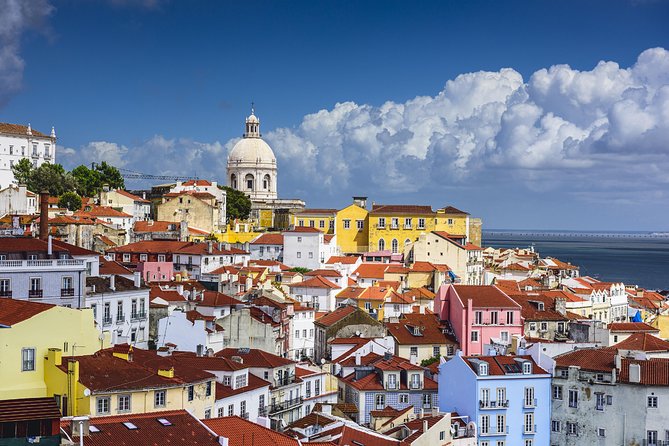
Lisbon feels different when you walk Alfama instead of just zooming past it. This small-group 3-hour walk strings together viewpoints, old churches, and neighborhood texture, from Miradouro da Graça to Alfama’s best lookouts.
I really liked how the route mixes famous landmarks with day-to-day streets—no museum-only mode. And I love the payoff of a small group (max 8), where your guide can answer questions and keep the pace comfortable.
One consideration: it’s not built for people who struggle with stairs and hills. Even though much of the walking trends downhill, the start and the narrow lanes can still be a workout.
In This Review
- Key things I’d circle before you book
- Miradouro da Graça: where your Lisbon orientation locks in
- Igreja & Convento da Graça and the flower-lined street detour
- Igreja de São Vicente de Fora: patron-saint meaning in real stone
- Feira da Ladra (Thieves Market): shop the vibe on Tuesdays and Saturdays
- National Pantheon exterior and Alfama’s everyday rhythm
- Miradouro de Santo Estêvão and the Fado connection
- Igreja de São Miguel and Lisbon’s earthquake survivor story
- Lisbon Cathedral and Church of St. Anthony: where the tour finishes strong
- Price and logistics: is $39.50 good value?
- How hard is the walk, really?
- Should you book this Alfama tour?
- FAQ
- How long is the Small-Group Alfama Walking Tour?
- What’s the group size limit?
- Is the tour offered in English?
- When does Feira da Ladra (the Thieves Market) happen?
- Are admission tickets included for all stops?
- Is hotel pickup or drop-off included?
Key things I’d circle before you book
- Small group (max 8): more time for questions and better attention from your guide.
- Two big viewpoints: Miradouro da Graça and Miradouro de Santo Estevão do the heavy lifting for photos.
- Feira da Ladra on the right days: the Flea Market shows up on Tuesdays and Saturdays.
- Church stops with real backstory: Augustinian monks, Saint Vincent’s significance, and more.
- Fado connection along the way: you’ll connect Alfama’s streets to the music without needing a concert ticket.
Miradouro da Graça: where your Lisbon orientation locks in
Most Lisbon walks start with “Here’s what you’re looking at.” This one starts with you standing in the right place to see it all. You meet at Miradouro da Graça (Sophia de Mello Breyner Andresen), and the guide gets you oriented fast.
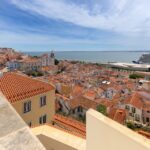
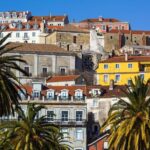
From here, Lisbon’s layers snap into focus: the Castle of Saint George, the historic Mouraria district, and the Tagus River stretching behind it. That matters because Alfama can look like a maze. After this opening view, the twists and turns start to make sense.
This first stop also sets the tone for the whole tour. You’re not just collecting views; you’re learning why the viewpoints exist and how this neighborhood fits into the broader city. It’s a quick stop (about 10 minutes), but it makes the rest of the walk easier to follow.
You can also read our reviews of more walking tours in Lisbon
Igreja & Convento da Graça and the flower-lined street detour
Next up is Igreja & Convento da Graça, one of Lisbon’s older church-and-convent sites. You’ll admire the church and learn about the Augustinian monks, who lived there until 1834. The lesson here is simple: the building isn’t just pretty stone—it’s tied to how neighborhoods formed and changed over time.
After the church, the walk shifts into the soft beauty of everyday Alfama. You’ll head to one of those charming little lanes with houses that have large terraces decorated with buganvilia and other flowers. This is the kind of detail you miss when you only take big-street photos.
Then the tour adds a sharper edge: you’ll hear about the history of trade union activism in Lisbon. That’s a great reminder that working life, politics, and culture all live in the same narrow streets. It makes the area feel lived-in, not staged.
This section isn’t about rushing. It’s more like turning the volume up on the neighborhood—religious life, street aesthetics, and social history in a single pass.
Igreja de São Vicente de Fora: patron-saint meaning in real stone
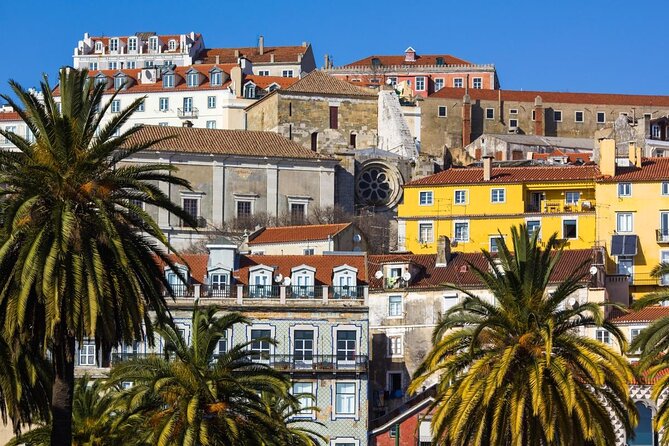
At Igreja de São Vicente de Fora, the guide focuses on the historical significance of the church tied to Lisbon’s patron saint. This stop is short (about 10 minutes), but it’s useful because it gives context before you move into market and cathedral territory.
What I like about this pacing is that you’re never waiting in a line or sitting through a long presentation. You’re walking, noticing, and connecting the dots with the guide’s commentary. It’s also a good spot to ask questions—churches often raise practical ones, like dates, roles, and why specific saints mattered locally.
If you’re a “show me why this matters” type of traveler, you’ll appreciate how the tour treats each building like a chapter, not a checklist item.
Feira da Ladra (Thieves Market): shop the vibe on Tuesdays and Saturdays
Then comes Feira da Ladra, which many people call the Thieves Market. It’s one of Lisbon’s oldest flea markets, and the tour times it for the days it’s actually running—Tuesdays and Saturdays.
This is a fun stop because you get the atmosphere, not just the fact. You’ll spend around 15 minutes in the market area, enough time to slow down, scan stalls, and notice the mix of items without turning the tour into a shopping marathon.
Two practical notes:
- If you’re traveling on a non-market day, your route would still include the neighborhood moments, but this specific flea market stop won’t match the same energy.
- Don’t expect luxury. You’ll likely find plenty of oddities, secondhand goods, and local browsing culture. That’s part of the charm.
It’s also a nice “breather stop” after churches and viewpoints, because the street-level chaos of a market resets your attention.
National Pantheon exterior and Alfama’s everyday rhythm
After the market, you get a quick exterior look at the National Pantheon. This is a not-included admission moment, and that’s okay because the tour gives you the big-picture view: it’s a mausoleum for some of Portugal’s greatest men and women.
Even outside, it helps you feel how Lisbon honors its figures—then you drop back down into the human scale of Alfama. The tour moves into the neighborhood itself, where you’ll get acquainted with Alfama and the everyday life of its inhabitants (about 30 minutes in this part of the walk).
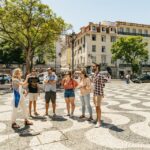
This is where small-group format shows its value. When you’re walking narrow streets, it’s easy to feel like you’re just threading a needle. With a guide, you slow down at the right corners and start noticing patterns: where people gather, how the street bends, what kinds of facades repeat.
You also get a clearer picture of Alfama as more than a postcard. It’s a living district with routines and local character.



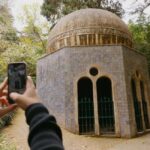
Miradouro de Santo Estêvão and the Fado connection
One of the best payoffs in this walk is the second viewpoint: Miradouro de Santo Estevao. You’ll enjoy Alfama’s best viewpoint, with tiny streets below that instantly feel like the real Lisbon you came for (about 5 minutes).
The guide also connects this part of the neighborhood to Fado. You’ll get an exterior visit connected to fado’s presence in Alfama, which helps translate why this area became so tied to the music.
Why this matters: a Fado show is one thing. Understanding why those streets and viewpoints became part of the story is another. Even if you don’t attend a performance during your trip, you’ll leave with a stronger sense of the setting behind the songs.
And yes, take photos here—but don’t stand like a traffic cone. Give yourself space, then give the view room to breathe.
Igreja de São Miguel and Lisbon’s earthquake survivor story
Next is Igreja de São Miguel, another short (about 5 minutes) stop with big meaning. The guide points out that this church survived the earthquake of 1755.
This stop is quick, but it changes how you interpret what you’re seeing. Lisbon is full of “old” buildings, but when you learn that some actually endured a major turning point, the stone feels heavier—like history you can’t scroll past.
It’s also a good reminder that Alfama’s character didn’t come from one moment. It’s the result of rebuilding, survival, and local continuity.
Lisbon Cathedral and Church of St. Anthony: where the tour finishes strong
The tour includes the chance to visit Lisbon Cathedral interior for a detailed tour, but admission is not included. Plan for that if you want to go inside fully—this isn’t just a quick exterior photo stop.
Finishing touches come with the Church of St. Anthony, built on the site where Saint Anthony was born. You’ll have around 15 minutes for this visit, which is a nice length: long enough to see what you came for, not so long that you feel trapped inside when the group is ready to move.
By the time you’re near the end of the walk, you’ll notice a pattern: the tour keeps layering meaning—religion, community identity, music, and resilience—without losing sight of how Alfama looks and feels on the ground.
Price and logistics: is $39.50 good value?
At $39.50 per person for about 3 hours, this tour is priced for real value if you care about guided context. You’re not just paying to walk; you’re paying for someone to connect the buildings and streets into a story you’ll remember.
What makes it feel fair for the price:
- Small group (max 8): this usually costs more than big-bus tours, yet it keeps the experience personal.
- Multiple stops, short segments: you get views, churches, a flea market moment, and neighborhood walking without wasting time.
- Guiding includes local taxes, guide/escort/host: you’re covered for the core experience while ticketed admission is handled separately when needed.
Also, the tour is in English, and you’ll get a mobile ticket. That’s convenient when you’re juggling multiple bookings in Lisbon.
One minor cost “gotcha” to plan for: National Pantheon and Lisbon Cathedral admission are not included. Exteriors are covered, but if you want interiors, you should expect additional tickets.
How hard is the walk, really?
If you’re fit and used to city walking, you’ll likely be fine. The pace is built around short stops and transitions (often 5–10 minutes), and a lot of the route trends downhill after the start.
But if you have mobility limits, stairs can still be an issue. The tour is not recommended for travelers with difficulty walking. Even small step counts add up in Alfama’s narrow streets.
My practical advice:
- If stairs are an issue, consider arriving with a plan to limit uphill strain at the start.
- Comfortable shoes matter more than you think. The streets are charming, but they’re also Lisbon streets.
Should you book this Alfama tour?
I’d book it if you want Lisbon that feels real: viewpoints with context, churches with meaning, and neighborhood streets where life continues. The small group size makes a difference, and guides like Andriy and Rui Fernandes (from past experiences with this provider) are the kind of hosts who answer questions and keep the story grounded.
Skip it if you strongly dislike uneven streets or you know hills and steps are a problem for you. Also, if you’re visiting specifically to shop, note that time at the market is brief. You’ll get the vibe and a chance to browse, but it’s not designed as a full shopping expedition.
If you’re on the fence: Alfama is one of those neighborhoods where the guide payoff is obvious. Without context, you can end up lost with great photos. With context, you end up with stories you’ll still be repeating later.
FAQ
How long is the Small-Group Alfama Walking Tour?
It lasts about 3 hours.
What’s the group size limit?
The tour has a maximum of 8 travelers.
Is the tour offered in English?
Yes. English is the offered language.
When does Feira da Ladra (the Thieves Market) happen?
Feira da Ladra is part of the route on Tuesdays and Saturdays.
Are admission tickets included for all stops?
No. National Pantheon and Lisbon Cathedral have admission not included. Other stops are listed as free to access.
Is hotel pickup or drop-off included?
No, there’s no hotel pickup or hotel drop-off included.