REVIEW · 7-DAY EXPERIENCES
Private Tour for small groups of 7 Days in Portugal from Lisbon
Book on Viator →Operated by RecordTours · Bookable on Viator
Seven days in Portugal without the guesswork.
This private week links Lisbon’s rebuilt streets after the 1755 earthquake with Sintra’s royal palaces, the chapels of Fatima, and wine country around Porto—plus the Atlantic viewpoints that make this region feel bigger than it is. It’s offered in English, designed for small groups, and it starts right at Pç do Marquês de Pombal at 9:00 am.
I especially like two things about the experience. First, the human touch: the guides Miguel and Juan are singled out for attentive, excellent care, including practical tips and steady pacing. Second, the food-and-drink stops are not random—Pastéis de Belém in Lisbon, Sintra sweets like Queijadas de Sintra and Travesseiros, and tastings in Porto-area and Douro wineries.
One thing to keep in mind: some sights are marked as admission ticket not included, so you’ll want to budget extra for entry fees (and plan for meals most days).
In This Review
- Key highlights you’ll feel on this tour
- 7 Days Covering Lisbon to Évora, With Wine Country in Between
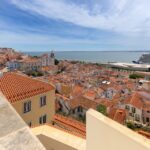
- Lisbon’s Earthquake-Rebuilt Baixa, Then Views From Castelo de São Jorge
- The practical payoff
- Alfama’s Fado Streets and Belém’s Discovery-Era Monuments
- Sintra’s Narrow Alleys, Pena-Area Palaces, and the Atlantic Edge at Cabo da Roca
- The one drawback to watch
- Fatima’s Chapel of Apparitions and Coimbra’s Joanine Library Before Porto
- Why this day works
- Porto’s Tile Art at São Bento, the Bookstore Staircase, and Churchill’s Port Cellars
- A tip for this day
- Amarante’s São Gonçalo Traditions and the Douro Valley From Pinhão Station
- The value of this approach
- Aveiro Canals, Nazaré Waves, and Medieval Óbidos Walls
- Who this day suits
- Évora’s Temple of Diana, Chapel of Bones, and Cork Craft in Azaruja
- The final takeaway
- Price and What You’re Really Paying For at $1,652.87
- Should You Book This Private Portugal Tour?
- FAQ
- How long is the Portugal private tour?
- Where does the tour start and when?
- Is this tour private?
- What languages is the tour offered in?
- What does the tour include for tickets?
- Does the tour cover Lisbon and Porto?
- Which wine stops are included?
- Are meals included?
- Is accommodation included?
- Can I cancel for a full refund?
Key highlights you’ll feel on this tour
- Private small-group format with only your group participating
- Lisbon by theme: earthquake-rebuilt Baixa, Alfama’s oldest lanes, and Belém’s Age of Discovery icons
- Sintra plus coast: Pena-area palaces and the dramatic cliffs at Cabo da Roca, then Cascais and Estoril
- Fatima and Coimbra together before heading north to Porto
- Port and Douro wine with visits tied to Churchill’s and Sandeman’s Quinta do Seixo
- Final day in Évora with the Chapel of Bones and a cork-factory stop in Azaruja
7 Days Covering Lisbon to Évora, With Wine Country in Between
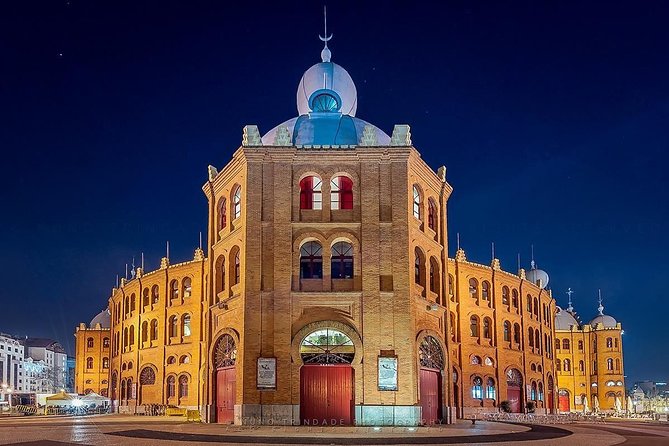
This is a tour built for people who want to see a lot of central and northern Portugal in one go—and not spend your time juggling tickets, directions, and “where should we go next?” decisions. The route is ambitious, but it’s also coherent: start in Lisbon, move through the “wow” stops of Sintra and Fatima, then settle into Porto and the Douro, and finish with coastal towns and Alentejo’s grand stone.
You’ll feel two different rhythms. South and central Portugal are about royal, religious, and sea-front landmarks—churches, palaces, and ocean edges. The Porto-to-Douro portion slows into tasting, craft, and riverside life, with places like São Bento Station and the Pinhão train station tying the art to the region’s real economy.
If you like variety—architecture, museums, viewpoints, and food/wine—this tour is a strong match. Just remember: a packed week means early starts and lots of moving between cities.
You can also read our reviews of more private tours in Lisbon


Lisbon’s Earthquake-Rebuilt Baixa, Then Views From Castelo de São Jorge
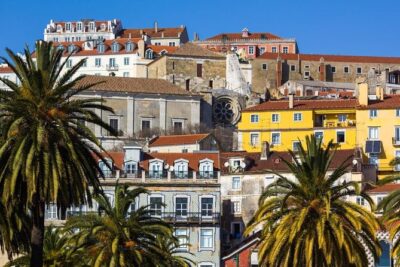
Day 1 is Lisbon doing what it does best: dense history in walkable chunks. You begin in Baixa, the downtown grid planned after the 1755 earthquake. The tour’s focus on right angles and central axes (think Rua Augusta) is a good clue for how Lisbon wants to be understood: not just as “pretty hills,” but as a city redesigned for survival.
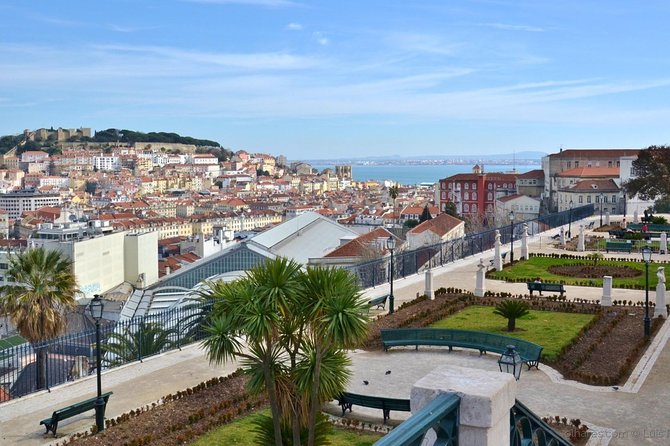
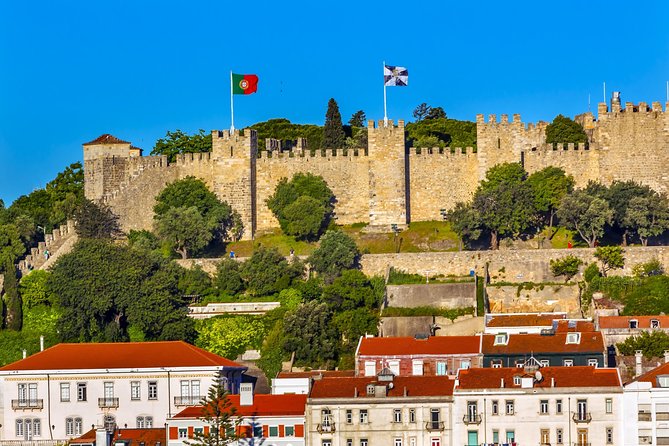
From there, you have the choice point at Castelo de São Jorge. If you go in, you’ll get one of the best surviving markers of Arab presence in Lisbon, plus layers of Romans, destructions, and reconstructions. If you skip the inside, you still get the key payoff: views from the Miradouro de Nossa Senhora do Monte area, which is a practical way to enjoy the skyline without turning the day into a ticket-hunt.
Then the tour turns into atmosphere with Alfama, the oldest district, famous for tight alleys and a defensive layout going back to the Arab period. This is also where Lisbon’s fado identity gets explained in a grounded way—fado’s birthplace is tied here, with that Portuguese mood called saudade hovering in the streets.
Finally, you swing to Belém. Torre de Belém and the Belém-area monuments connect directly to the Portuguese Age of Discovery story—sailors departing, asking for protection, and a golden-age narrative that Lisbon still wears on stone. You also visit Pastéis de Belém, the centennial pastry factory where the origin of the custard tart is part of the charm.
The practical payoff
Lisbon can overwhelm you fast. This route helps you “file” it: earthquake-era downtown planning, Alfama’s older maze, and Belém’s empire-era monuments. That structure makes it easier to remember what you liked later.
Alfama’s Fado Streets and Belém’s Discovery-Era Monuments
If you’re the type who likes the feeling of place, Day 1 is set up well. Alfama is not just a photo stop—it’s framed as a living neighborhood with lanes and protective design. You get the cultural link to fado without needing a separate evening show.
Belém, on the other hand, gives you the big-picture Portugal story. The tour connects Belém to the Jerónimos Monasteries and the monument to the Discoveries, plus the Tower itself. Even if you don’t go deep into every building, the way the stops are grouped makes the whole era feel like one narrative.
One watch-out: some of these sights are marked as admission not included. So you may want to carry a small buffer in your budget for entry fees.
Sintra’s Narrow Alleys, Pena-Area Palaces, and the Atlantic Edge at Cabo da Roca
Day 2 is where this tour becomes truly “Portugal postcard,” but with real guidance behind it. You start in the Historic Center of Sintra, known for narrow lanes, local shops, and the aristocratic vibe. The pastry stop is a highlight for me because it’s specific: Piriquita is where you’ll find Queijadas de Sintra and the puffier local favorite, Travesseiros de Sintra.
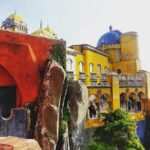
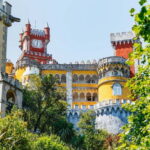
Then the day shifts into palace country. The tour centers on Sintra National Palace of Pena and the surrounding area, including the Palaio da Pena (the romantic 19th-century revival) and references to the Castle of the Moors as proof of the Islamic presence in the region. The tour also notes that which palace (or palaces) you focus on can be guided by what you want most, including places like Quinta da Regaleira.
This is a smart approach. In Sintra, people often suffer from choice overload. Here, you’re meant to follow the guide’s suggestion and build your own “best of” within the limited time you have.
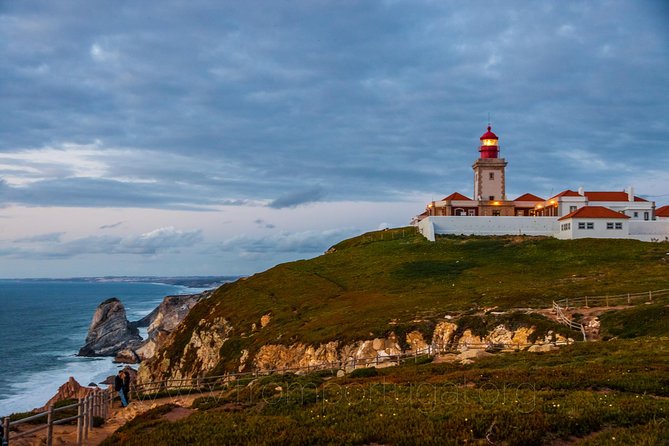
After the palaces, you hit the coast. Cabo da Roca is described as where the land ends and the sea begins—also tied to poet Camões in Os Lusíadas. It’s a dramatic stop in the Sintra-Cascais Natural Park area, and the point is simple: you see the cliffs, you feel how exposed this coastline is, and you understand why sailors and poets keep coming back to it.
You then continue along to Cascais and Estoril, with the chance to explore Cascais’s seaside feel and pass Casino Estoril while enjoying ocean views along the Marginal road route back toward Lisbon.
You can also read our reviews of more tours and experiences in Lisbon


The one drawback to watch
Sintra is visually addictive. If you’re prone to photo-mode paralysis, you might feel the pressure of time. I’d plan to slow down for 10-minute chunks—one view, one street, one palace detail—then move on.
Fatima’s Chapel of Apparitions and Coimbra’s Joanine Library Before Porto
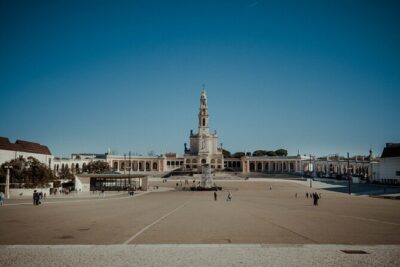
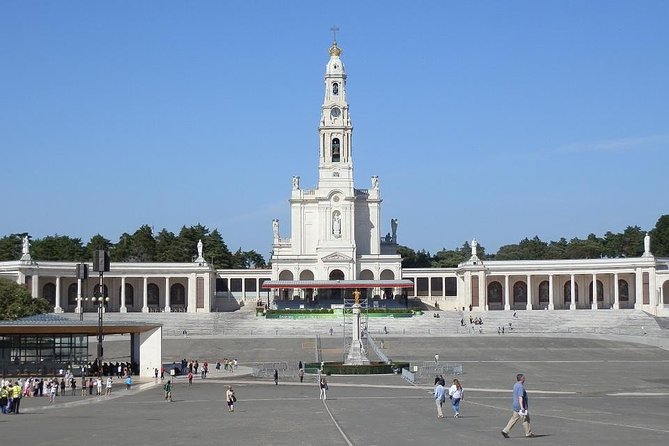
Day 3 is a major route change, and it’s handled in a way that keeps the week from feeling random. You start with Fatima, visiting the Sanctuary Museum area and the chapels. The tour highlights the Chapel of the Apparitions as important not because of scale, but because of its placement in the sanctuary story. That’s a helpful way to understand why people feel moved here even without giant architecture.
You also visit the Basilica of Our Lady of the Rosary. This stop comes with specific details that make it easier to picture the place: the basilica is neo-baroque, built in 1928, and it houses tombs of children and also the tomb of Sister Lucy (noted as having died in 2005). The tour also references the later Basilica of the Holy Trinity with more than 8,000 seats, plus the architect Alexandros Tombazis and the large total designed area.
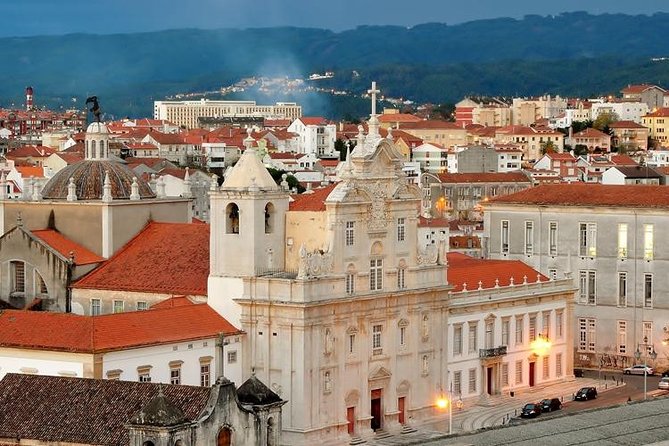
Then you go to Coimbra, and the tone becomes more academic and artistic. You’ll see the University of Coimbra, described as the oldest in Europe, with the Joanine Library as the star. The tour points out details like the library being in the former prison, and it calls out the fresco work by Mestre António Ribeiro and Vicente Nunes, plus the portrait of Dom João V by Italian Domenico Dupra.
Finally, you end Coimbra in Sé Velha, the cathedral area and older center where you can relax in cafes and wander through the narrow streets and squares before continuing toward Porto.
Why this day works
Fatima and Coimbra could feel like two different trips. Here, the flow is purposeful: faith and memory first, then learning and art, then the northbound shift. It gives you variety without whiplash.
Porto’s Tile Art at São Bento, the Bookstore Staircase, and Churchill’s Port Cellars
Day 4 is Porto focusing on culture you can spot instantly. You start at Avenida dos Aliados and the Porto City Hall, then head to Livraria Lello. Even if you aren’t a literature obsessive, this bookstore’s staircase is the kind of thing you’ll remember—especially for Harry Potter fans, since the tour connects Rowling’s writing period with time in Porto.
Next is São Bento Railway Station, where the art is more than decoration. The tour describes around 20,000 tile pieces by Portuguese artist Jorge Colaco, creating a visual journey through Northern Portugal and its historical layers. It’s also tied to the wider cathedral complex and Roman-Gothic features, with references like the interior medieval rosette and the outside lateral gallery work by Nicolau Nasoni in 1736.
From there you visit Igreja de São Francisco, a church built in the 12th century and later transformed through Gothic and baroque styles. The tour calls out three naves with gold carvings, and it even gives a startling estimate about gold dust—over 300 kilos is mentioned. You’ll also hear about the tree of Jesse, described as an important polychrome wooden sculpture.
Then you cross into Port wine country with Churchill’s at Vila Nova de Gaia. This is not just a “walk past barrels” stop. The tour frames it as a visit to where port wine is aged in hundreds of cellars, finishing with a tasting and an explanation of the process from vintage to final product.
A tip for this day
Keep your camera ready for tile work, but also give yourself time to stop and just look at the art. The station and churches are “detail heavy.” The payoff is real if you slow down for five minutes.
Amarante’s São Gonçalo Traditions and the Douro Valley From Pinhão Station
Day 5 is where the week locks into its wine-country heart. You begin in Amarante with Igreja de São Gonçalo, plus the surrounding historic center and the church/convent complex near the bridge of S. Gonçalo. The tour also mentions a local museum in the area—Amadeu de Souza-Cardoso Museum—and ties in the local festival sweets: quilhõezinhos de S. Gonçalo, described with humor because of their shape. You’ll hear the tradition about boys offering them to girls during June festivities.
Then you head to the Douro Valley, with a signature stop at the Pinhão Railway Station. This station is built in the 19th century and covered with azulejos showing the region’s life and the port wine story—harvest scenes, grape imagery, and even the “rabelos” boats used for transporting wine downriver toward Gaia.
After that, it’s winery time at Quinta do Seixo – Sandeman. The tour sets expectations clearly: you’ll get a guided visit focused on winemaking, then taste some of the winery’s wines. It also notes that the wines are recognized by Wine Spectator, which signals quality without needing you to be a wine expert.
The value of this approach
The Douro can feel abstract if you only see big scenic viewpoints. This gives you the production backbone: the river transport, the station art, and then the winery tasting.
Aveiro Canals, Nazaré Waves, and Medieval Óbidos Walls
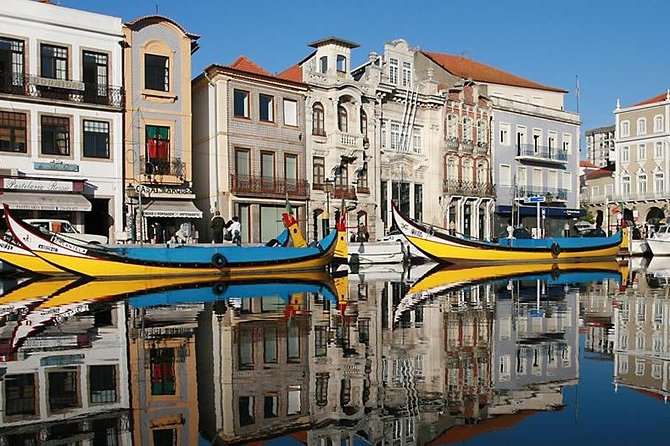
Day 6 is coastal variety with a few curveballs. You start in Aveiro, nicknamed the Portuguese Venice. The tour suggests a Moliceiro boat trip to see the canals, and it calls out what you’ll learn along the way—like seaweed moliça and salt.
Then you head to Nazaré, described as a picturesque village with churches and traditional houses. The tour ties Nazaré’s fame to the Nazaré Cannon, including the fact that in 2013 surfer McNamara broke a world record surfing a wave about 30 meters high. It also notes the local “seven skirts” connection, where a tradition ties to a woman’s outfit that became part of Nazaré’s identity.
The day finishes in Óbidos, including its castle walls and the UNESCO World Heritage framing. Óbidos is presented as a time-warp experience: whitewashed houses, narrow streets, and traditional shops along medieval walls. The tour also gives you the historical origin story—Óbidos as a wedding gift from D. Dinis to D. Isabel and its later connection to the Casa das Rainhas until 1834, plus aqueduct and fountain building attributed to D. Catarina.
Who this day suits
If you want a mix of sea air, local legends, and photogenic old towns, this is your day. If you dislike frequent scene changes, you’ll still be fine—just plan to pick your favorite moments rather than trying to absorb every detail.
Évora’s Temple of Diana, Chapel of Bones, and Cork Craft in Azaruja
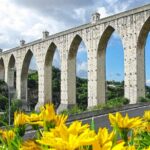
Day 7 slows down just enough to feel like a finishing crescendo. You head to Évora, known for Portuguese kings and for art patronage. The tour starts with the Temple of Diana next to the Cathedral, then mentions the Água da Prata aqueduct, with arches visible inside the city and a 16th-century water transportation purpose.
Then comes the stop that people either love or find unforgettable: the Chapel of Bones. The tour explains it as the Church of St. Francis’s ex-libris, decorated with skulls and bones linked to 500 monks. It also includes the message at the entrance that tells visitors, in essence, we bones are here for you to wait. It’s unsettling in the best way—short, clear, and memorable.
After that, you visit Cortiçar – Arte em Cortica in Azaruja, a cork factory stop tied to how cork is harvested and made. The tour explains the cork bark removal timing (after about nine years, repeating in a cycle) and why cork matters: it’s light, elastic, and resistant to fire. It also gives a big production stat: Portugal is responsible for 55% of world cork production.
You’ll also learn how cork fits wine aging. The tour notes cork’s role as allowing very small amounts of oxygen in contact with wine without harming the aging process—useful context if you’ve already tasted port or Douro wines earlier.
Finally, the day includes Igreja de São Francisco in Évora. The tour frames the church as originally tied to the Franciscan order in Portugal, with a primitive 13th-century church later remodeled in the late 15th century into the temple you can still see.
The final takeaway
This last day gives you two types of memory: architectural awe in Évora’s Roman and medieval layers, plus a practical craft story about cork you can connect back to wine you tasted earlier.
Price and What You’re Really Paying For at $1,652.87
At $1,652.87 per person for an approximately 7-day private, small-group tour, the biggest question is value: are you buying convenience, or are you buying access?
You are buying both. The itinerary strings together major regions—Lisbon, Sintra, Fatima, Coimbra, Porto, the Douro, Aveiro, Nazaré, Óbidos, and Évora—at a pace that would be hard to coordinate without time costs. The private small-group setup also matters. It’s not shared with strangers in the way big group tours often are, and that’s consistent with the emphasis on personalized guidance.
You’ll also likely appreciate that the tour isn’t just “look at the famous thing.” It weaves in tastings and craft context: Pastéis de Belém, Sintra sweets, port cellar visiting at Churchill’s, Douro winery time at Quinta do Seixo – Sandeman, and a cork-factory stop that connects materials to wine aging.
Still, the pricing comes with caveats you should plan for. Some admissions are explicitly marked as not included, and meals and lodging are not included on the days where overnight stops happen. So treat the stated price as covering the core guided experience, not everything you might spend on top for entrances and your own meals.
Should You Book This Private Portugal Tour?
Book it if you want a structured week that hits the big Portugal moments—Lisbon, Sintra, Fatima, Porto, Douro wine—and you prefer a guide to handle the order and timing. I’d also recommend it if you care about service quality. The praise for Miguel and Juan is unusually direct, with emphasis on caring attention and practical tips.
Skip it (or at least consider a lighter schedule) if you hate paying extra for entrance fees, or if long days of moving between cities will wear you down. Sintra alone can feel like a lot when you’re trying to see everything.
If you’re the type who likes to leave with stories—fado lanes, Azulejo art, Chapel of Bones, and a glass of port you understand a bit better—this route makes a strong case.
FAQ
How long is the Portugal private tour?
It lasts about 7 days.
Where does the tour start and when?
It starts at Pç do Marquês de Pombal 8, 1250-160 Lisboa, Portugal, with a start time of 9:00 am.
Is this tour private?
Yes. It’s a private tour/activity, and only your group participates.
What languages is the tour offered in?
It’s offered in English.
What does the tour include for tickets?
Some stops are marked as admission ticket free, while others are marked as admission ticket not included, so you may need to pay entry fees for certain sights.
Does the tour cover Lisbon and Porto?
Yes. It includes Lisbon on the first day, and Porto on multiple days, including a day focused on Porto sights and a day that includes the Douro Valley.
Which wine stops are included?
The tour includes port wine at Churchill’s and a winery visit/tasting at Quinta do Seixo – Sandeman in the Douro region.
Are meals included?
Meals are listed as not included on multiple days, so plan on paying for your own meals during the trip.
Is accommodation included?
Accommodation is noted as not included on the days where overnight locations change, so you’ll need to arrange lodging yourself.
Can I cancel for a full refund?
Yes, free cancellation is available. You can cancel up to 24 hours in advance of the experience for a full refund.