REVIEW · HISTORICAL TOURS
Jewish Sephardic Heritage Essence 10H – Private Tour from Lisbon
Book on Viator →Operated by Essência da Latitude Turismo Lda · Bookable on Viator
A border day with real stories. This private 10-hour route connects Sephardic Jewish heritage across medieval Spain and Portugal, from Valência d’Alcántara to hilltop Marvão and Castelo de Vide. I like that it’s not just sightseeing; the history is tied to specific places you can stand in.
Two things I especially liked: the way the tour links the Jewish experience in Iberia to the Reconquista and to the expulsion that sent people fleeing, and the practical comfort of round-trip transfers in an air-conditioned mini van. One thing to think about: it’s a long day with walking on slopes and stone streets, so solid shoes matter.
In This Review
- Key highlights you’ll feel all day
- A private 10-hour route from Lisbon: logistics that actually help
- Valência d’Alcántara: medieval Spain, Sephardic traces, and a synagogue stop
- Portagem’s crossing: the border as a lifeline after the Alhambra Decree
- Marvão in Alentejo: Roman roots, Jewish presence, and hilltop defense
- Castelo de Vide synagogue site: what survives, what doesn’t, and how it’s interpreted
- Castelo de Vide inside the castle walls: seeing coexistence in stone
- The driver-guide factor: questions, translations, and keeping the day moving
- Value and price: what $390.37 covers (and why it can be worth it)
- What to bring: shoes, snacks, and a luggage plan
- Who should book this private heritage tour
- Should you book Jewish Sephardic Heritage Essence 10H?
- FAQ
- What time does the tour start?
- How long is the private tour?
- Is pickup and drop-off included?
- Is this tour really private?
- Are entrance fees included?
- Are food and drinks included?
- How much luggage can I bring?
- Is the tour offered in English?
- Can I cancel for free?
Key highlights you’ll feel all day
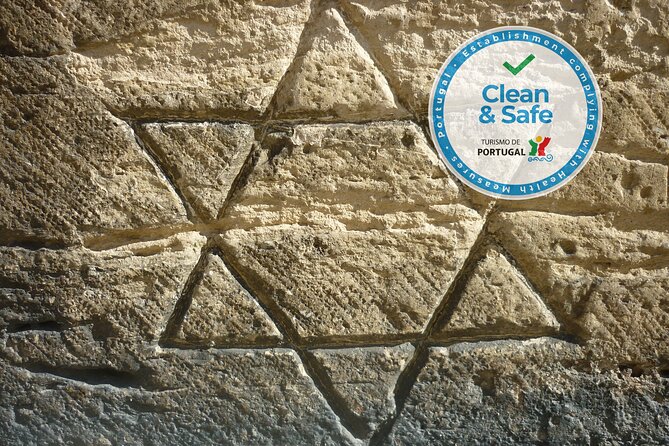
- Spain and Portugal border history in one outing, including the crossing area tied to the late-15th-century exodus.
- Synagogue-related stops: Valência d’Alcántara and the interpreted synagogue site in Castelo de Vide.
- Hilltop medieval towns like Marvão, where defense and daily life overlap in the same view.
- Door-to-door convenience from Lisbon (and also Sintra/Cascais central hotels) plus cruise terminal or airport pickup.
- A full-day driver-guide who keeps questions moving and helps you understand what you’re seeing.
A private 10-hour route from Lisbon: logistics that actually help
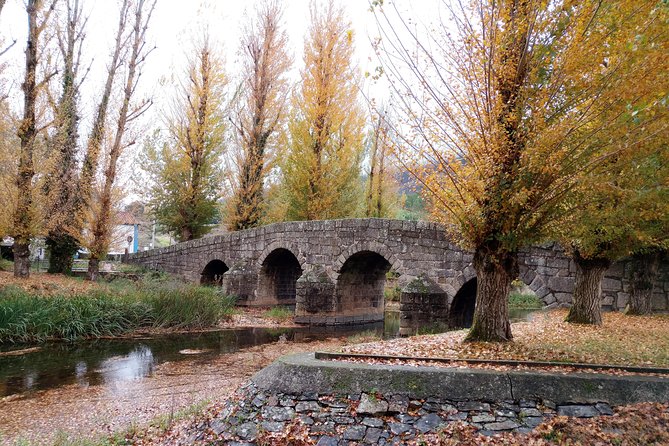
This is a true private tour, meaning it’s just your group in the vehicle. Start time is 8:00 am, and you’ll be out for about 10 hours total. That early start matters here because you’re covering multiple towns in both countries, including one drive that takes roughly 2 hours 45 minutes before your first main stop.
You ride in an air-conditioned mini van with a full-time driver-guide, and you get fresh water. Pickup and drop-off are included for Lisbon, Sintra, and Cascais central hotels, and also the Lisbon cruise terminal or airport. If you’re traveling light, note the baggage limit: up to 4 medium-sized suitcases can be transported.
One practical rule: the van is for riding, not eating. There’s no eating or smoking inside, so plan to use comfort stops outside the vehicle when you need a break. Also, the “near public transportation” note is useful mainly because it hints you won’t be in a remote dead-end pickup zone; it’s easier to understand where you’ll be able to walk or connect if something changes.
You can also read our reviews of more private tours in Lisbon

Valência d’Alcántara: medieval Spain, Sephardic traces, and a synagogue stop
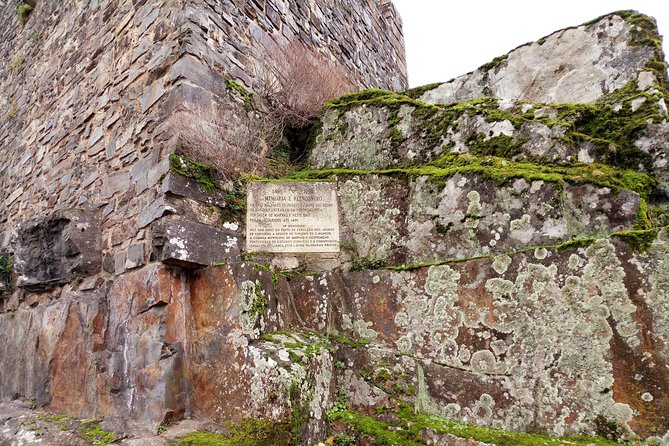
Your first big shift is crossing from Portugal into Spain at Valência d’Alcántara in Extremadura. This town sits close to the Portuguese border, and that location shows up in the story: it mattered during the Reconquista, when Christian powers reclaimed territory from Muslim rule, and it also supported a Jewish community in medieval times.
A highlight here is the Sephardic Synagogue. The time on site is about 45 minutes, and the admission ticket listed for this stop is free. Even if you know next to nothing about Iberian Jewish history, you can still connect the dots: this is one of those places where the building itself helps you picture the community’s routines—worship, gathering, and identity—before later upheavals.
What I’d do in your shoes: keep expectations realistic. Don’t treat this as a theme park “synagogue experience.” It’s better as a serious, place-based visit. Look for interpretive details and focus on what the site represents rather than expecting every original structure to be perfectly intact.
Portagem’s crossing: the border as a lifeline after the Alhambra Decree
After Spain, you head back toward Portugal with a short stop at Torre da Portagem (Portagem). This is one of the tour stops that feels extra meaningful because it’s tied to a specific cause-and-effect moment in history.
The tour frames Portagem as a key crossing point for Spanish Jews seeking safety in Portugal after the Alhambra Decree in the late 15th century. In other words: this isn’t just an atmospheric border view. It’s about routes people actually took when they were forced to leave their homes.
You’ll spend about 20 minutes here, and the admission ticket is also listed as free. What you’re looking for is less about a single monumental building and more about remnants—old pathways and traces of structures that may have supported or sheltered fleeing people.
If you’re the type who likes history with geography, this is a strong moment. The border becomes tangible: the map lines turn into lived movement.
Marvão in Alentejo: Roman roots, Jewish presence, and hilltop defense
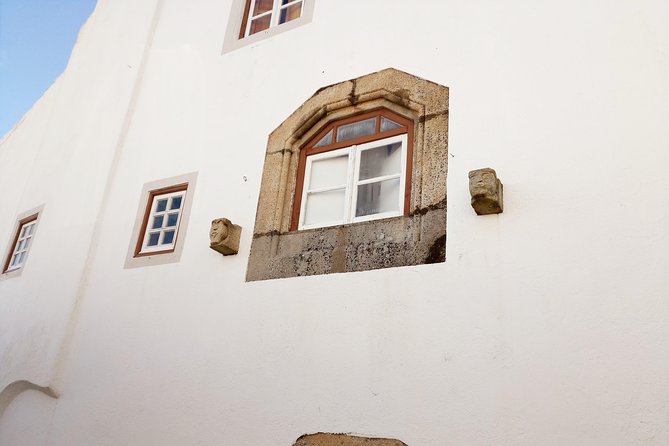
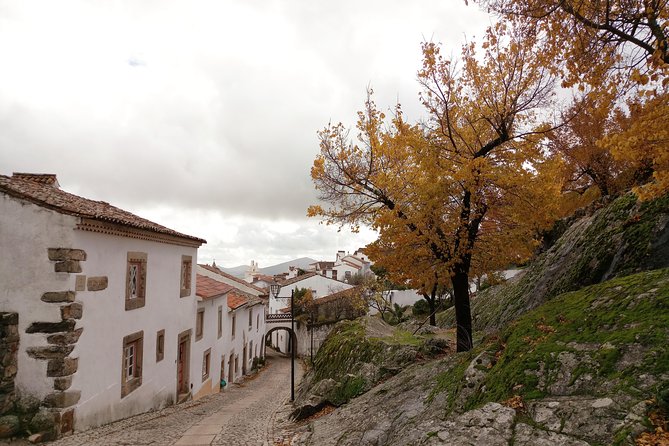
Next comes Marvão, a medieval village perched on a hill in Portugal’s Alentejo region. The town’s story connects several eras: it dates back to Roman times, then grew in importance during the medieval period as a defensive stronghold because of its strategic hilltop position near Spain.
Like other parts of the Iberian Peninsula, Marvão had a significant Jewish population during the Middle Ages, and the tour makes that link part of the walk. You’ll have about 1 hour in Marvão, with admission listed as free.
This stop is also where “good walking shoes” stops being a vague suggestion and becomes the entire game plan. Hill towns mean slopes, steps, and cobblestones. Even if your pace is slow, you’ll likely be climbing and descending more than you’d expect for a 1-hour visit.
I like this stop because it gives you contrast. Earlier you’re seeing specific religious heritage markers. In Marvão, you’re seeing the town shape—walls, vantage points, and defensible space—that would have influenced how any community lived, worked, and stayed connected.
Castelo de Vide synagogue site: what survives, what doesn’t, and how it’s interpreted
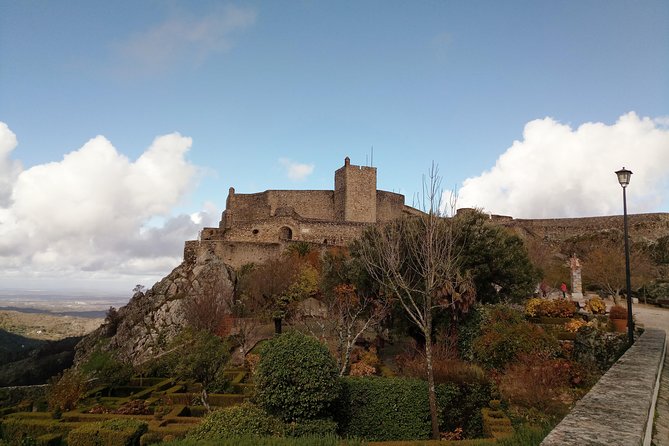
Your next focus is Castelo de Vide, and the first synagogue-related stop is the Castelo de Vide Synagogue visit. This is one of the most “emotionally honest” moments on the route, because it’s explicit that the original synagogue may no longer exist.
Instead of pretending everything stayed preserved, the stop focuses on historical significance and how the town works to preserve and interpret its Jewish heritage. The visit time is about 1 hour, admission listed as free.
Here’s what makes it valuable for your understanding: you get to see how cultural memory works when physical remnants are incomplete. The meaning isn’t erased just because the building isn’t fully there. Interpretation—signage, location, and context—becomes the bridge between present-day visitors and a community that was once centered here.
If you want to get the most out of this stop, slow down and read. The details are the point.
You can also read our reviews of more historical tours in Lisbon





Castelo de Vide inside the castle walls: seeing coexistence in stone
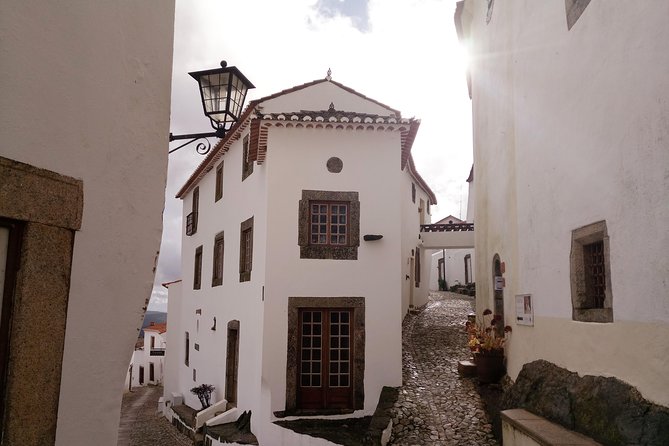
After the synagogue site, the tour keeps you in Castelo de Vide for a final visit tied to the castle walls. This is about the area that showed a substantial Jewish presence during medieval times, and the tour highlights a period of harmony and coexistence with the local Portuguese community.
Time here is about 30 minutes, admission listed as free. That short window can feel quick, but within a castle setting, it works. You’re meant to get a visual sense of how fortified space shaped everyday life: where people moved, how communities clustered, and how the castle’s structure influenced social connection.
I like finishing here because it grounds the story you’ve been hearing all day in a physical frame. You’re not just hearing about Jewish Iberian heritage. You’re standing in the kind of place where the idea of coexistence or tension would have been visible in the street-level reality.
The driver-guide factor: questions, translations, and keeping the day moving
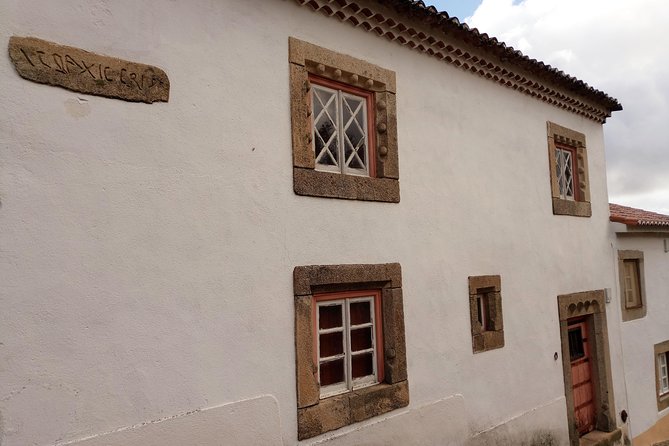
A big reason this tour gets strong satisfaction is the way the guide supports the day. Your driver-guide leads the full trip, and the emphasis is on explanation plus interaction.
In at least one standout experience, the guide is described as Daniel, with good English and a willingness to help with translation. The vibe that matters: questions are encouraged, and comfort stops happen as needed. That’s not small stuff on a 10-hour day. When you can ask follow-ups in plain language, the history stays connected instead of turning into a lecture you can’t process.
You’ll also notice how the tour handles sensitive material. The route doesn’t skip the difficult side of Jewish history in Iberia. It frames changes across centuries with specific geographic anchors—Spain first, then border crossing, then Portuguese settlements. That makes the story feel less abstract.
Value and price: what $390.37 covers (and why it can be worth it)
At $390.37 per person, this is not a “cheap bus tour.” But price is only one half of the equation.
Here’s what you get for your money, based on what’s included:
- Private transport in an air-conditioned mini van
- Pickup and drop-off for central Lisbon, Sintra, Cascais hotels, plus cruise terminal/airport
- A full-time driver-guide
- Fresh water
- A schedule that strings together multiple heritage-linked towns across the Spain-Portugal border
Entrance fees are listed as not included in general terms, but the specific sightseeing items in the itinerary are marked with free admission tickets. Still, I’d treat this as a “mostly low entry-fee day” rather than a guaranteed zero-cost day, since real-world hours and optional add-ons can vary.
Where the value really lands is that you’re not spending your time on logistics. You’re paying to remove the stress of border-crossing travel, route timing, and navigation across several medieval towns.
Also, group discounts are offered. If you’re traveling with friends or family, you may be able to reduce the per-person cost.
What to bring: shoes, snacks, and a luggage plan
Because you’re visiting medieval villages and castle areas, bring comfortable clothing and sturdy walking shoes. The tour itself recommends smart casual, but the practical reality is: you’ll be walking up and down hills and through uneven stone streets.
Food and drinks are not included, unless specified. So plan your own meals and water top-ups. You do get water from the tour, but it’s smart to plan extra, especially if you’re the kind of person who likes a longer snack break.
Also remember the van rule: no eating inside. That means your snack plan should happen during stops outside the vehicle.
Finally, luggage: you can only transport up to 4 medium-sized suitcases. If you’re bringing more (or very large bags), plan to travel lighter or ask ahead how it will be handled.
Who should book this private heritage tour
This works best if you want history with place-based context. You’ll enjoy it if:
- You care about Sephardic Jewish heritage and how it moved through Iberia over time
- You like border history tied to real routes, not just broad timelines
- You prefer a private format where you can ask questions and pace the day with your guide
It’s also a good fit for couples or small groups who want a full day without splitting into a bigger crowd. The tour’s design is private and question-friendly, and that can make the material easier to absorb.
If mobility is a concern, take the hilltop villages seriously. The tour says most people can participate, but Marvão and castle areas naturally create more steps and uneven walking than a flat city stop.
Should you book Jewish Sephardic Heritage Essence 10H?
If your goal is a focused, full-day look at Jewish Sephardic heritage across Spain and Portugal—plus synagogue-linked sites and medieval town settings—this is a strong pick. The day is built around specific locations tied to major historical turning points, and the private format plus hotel/cruise/airport pickup makes it feel manageable rather than chaotic.
I’d only hesitate if you hate long drives, dislike walking on slopes, or want a shorter half-day experience. This is a proper day out, and the best results come when you wear shoes for hills and plan meals of your own.
If that sounds like your kind of travel, book it.
FAQ
What time does the tour start?
The tour starts at 8:00 am.
How long is the private tour?
The duration is about 10 hours.
Is pickup and drop-off included?
Yes. Pickup and drop-off are included for Lisbon, Sintra, Cascais central hotels, and also the Lisbon cruise terminal or Lisbon airport.
Is this tour really private?
Yes. It’s a private tour/activity, so only your group participates.
Are entrance fees included?
Entrance fees are not included. The itinerary notes free admission tickets for the listed stops.
Are food and drinks included?
No. Food and drinks are not included unless specified.
How much luggage can I bring?
Baggage transport is limited to 4 medium-sized suitcases.
Is the tour offered in English?
Yes. The tour is offered in English.
Can I cancel for free?
Yes. Free cancellation is available if you cancel up to 24 hours in advance for a full refund.