
REVIEW · STREET ART
LISBON Street Art Tour
Book on Viator →Operated by Lisbon Street Art Tours · Bookable on Viator
Lisbon’s walls tell better stories than guidebooks. This 3-hour walk through historic neighborhoods turns street art into a map you can actually understand, with stops tied to fado roots, big mural streets, and famous lookouts.
I like two things most: the small group size (max 10) that keeps the pace human and questions close, and the way the guide connects each wall to Lisbon’s culture—so you’re not just taking photos, you’re reading the city in real time.
One caution: be ready for serious hills and stairs. It’s manageable with moderate fitness, but if walking uphill and steep steps is a struggle, this one may feel like a chore instead of fun.
In This Review
- Key things I’d bookmark before you go
- Lisbon’s Street Art Tour: a citywide “what am I seeing?” lesson
- Starting in Graça: meeting point, walking pace, and the small-group advantage
- Stop 1: Escadinhas de São Cristóvão and Mouraria’s fado roots
- Stop 2: Miradouro da Graça for street-art views that feel like postcards
- Stop 3: Graça & São Vicente murals, from local walls to international names
- Stop 4: Jardim Botto Machado and Lisbon’s long azulejo wall
- Guides who explain technique, meaning, and the neighborhood behind the paint
- Price and value: is $24.20 actually a good deal?
- Practical tips: shoes, weather, and how to handle the stairs
- Should you book Lisbon Street Art Tours?
- FAQ
- How long is the Lisbon Street Art Tour?
- Where do I meet the tour guide?
- Where does the tour end?
- What is the price?
- Is the tour offered in English?
- How large is the group?
- Is the tour physically demanding?
- Are any attraction tickets included or required?
- What’s the cancellation policy?
- Does the tour accommodate service animals?
Key things I’d bookmark before you go
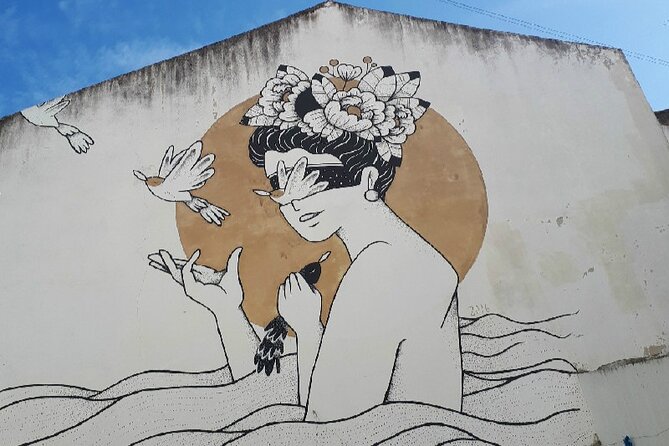
- Mouraria’s fado connections at Escadinhas de São Cristóvão, plus wall-to-photo context you’ll miss on your own
- A top viewpoint sprint to Miradouro da Graça (Sophia de Mello Breyner Andresen) for dramatic photo angles
- Big murals in Graça & São Vicente, mixing local scenes with international street artists
- The Azulejo-wall moment at Jardim Botto Machado, famous for its long stretch of blue-and-white tiles
- Guides who treat street art like culture, explaining technique and meaning (and often the difference between street art and graffiti)
- A route that changes with the art, since murals can appear, disappear, or shift over time
Lisbon’s Street Art Tour: a citywide “what am I seeing?” lesson

If you’ve ever walked past a mural and thought, nice… and kept going, this tour fixes that habit. Lisbon street art is everywhere, but it rarely comes with labels. Here, you get the story behind the colors, symbols, and locations—so the city starts making sense at eye level.
What makes this experience especially useful is the balance of history + art technique + neighborhood context. You’ll see fado-linked images in Mouraria, climb to a standout viewpoint, then move into Graça and São Vicente where murals range from very local to more international styles.
And yes, you’ll leave with photos. But the better takeaway is learning how to “read” a wall: where it sits, who it speaks to, and why it’s there.
You can also read our reviews of more tours and experiences in Lisbon



Starting in Graça: meeting point, walking pace, and the small-group advantage
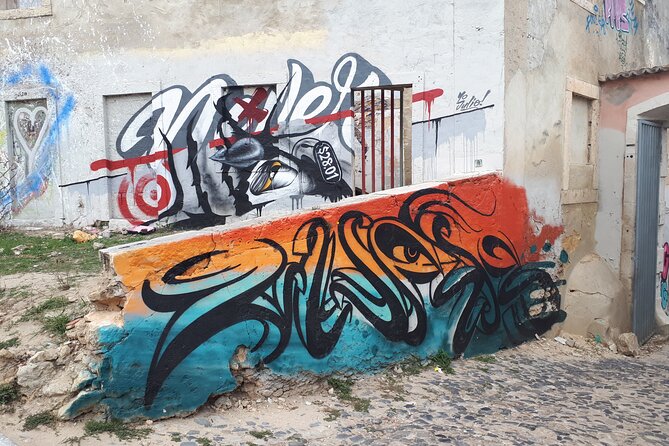
The tour begins and (usually) ends at Largo da Graça 13, 1170-364 Lisboa. The ending point can shift within the Graça/Alfama area depending on group energy and timing, so don’t plan your next reservation to the exact minute right after.
This is built for a maximum of 10 people, which matters more than it sounds. In a small group, the guide can slow down for details, answer questions without rushing, and keep everyone together on crowded streets. You’ll also get better “where to look” guidance—especially on tiny marks that your eye would skip at street speed.
The physical side is the main real-world consideration. You’re walking uphill and down, with plenty of steps. The good news is the stops break up the climb, and you can take your time during each photo break.
Stop 1: Escadinhas de São Cristóvão and Mouraria’s fado roots
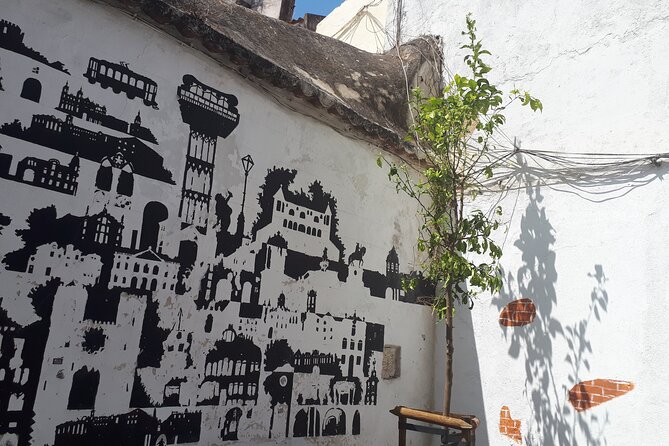
Your first stop is Escadinhas de São Cristóvão, in Mouraria, where the streets feel like an open-air museum. This area is tied to the roots of fado, and the guide helps you connect what you see on the walls to the human story of the neighborhood—plus the local character captured through art and photography.
Look closely and you’ll notice how murals can function like memory. They don’t just decorate a lane; they reference identity, community, and the culture that lives around it. If you like cultural context, this is the stop that sets the tone.
The time here is about 1 hour, and it’s long enough to do two things: get oriented with the neighborhood, and learn the “how to see street art” habit before the pace picks up again.
Stop 2: Miradouro da Graça for street-art views that feel like postcards
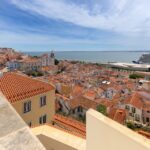
Next comes Miradouro da Graça (Sophia de Mello Breyner Andresen), one of those Lisbon spots where the view hits you fast. The tour is short here—about 15 minutes—but the payoff is huge: you’ll get a lookout that frames the city and makes street art look like part of a bigger picture.
The practical catch is the climb. Getting up to this hill isn’t the relaxing part of the day. Still, once you’re there, it’s a strong photo moment because the angle lets you see how the neighborhood’s built shape influences what artists choose to paint.
If you’re photographing, give yourself a minute or two to pick a viewpoint first. Then let the guide point out what to watch for in the surrounding walls and streets.
Stop 3: Graça & São Vicente murals, from local walls to international names

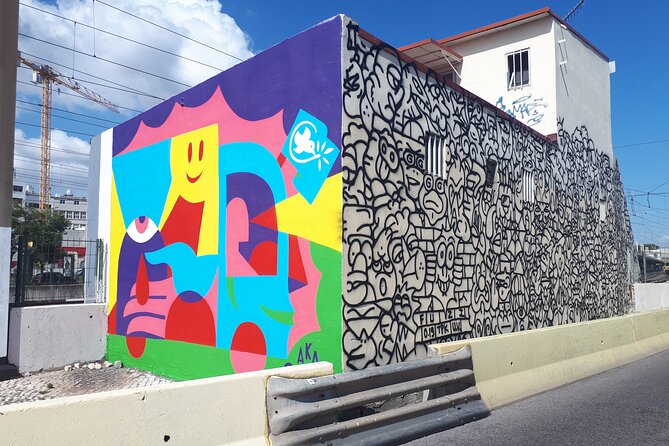
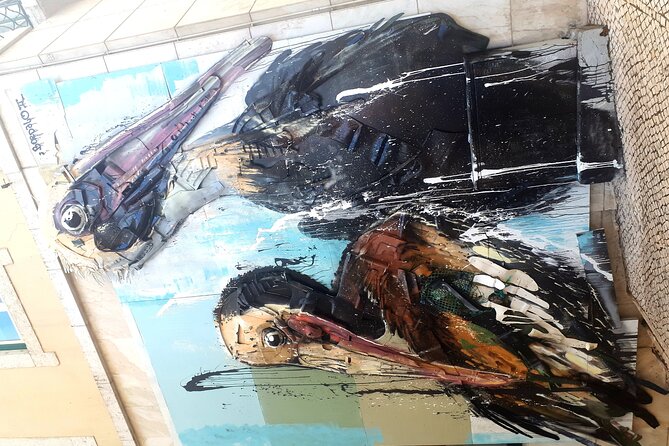
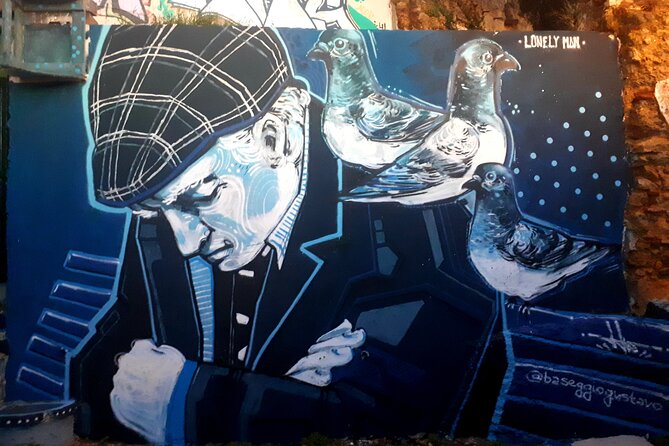
Graça is where the murals start to feel bigger and more frequent, and the tour spends about 1 hour 30 minutes here. You’ll pass through streets loaded with large-scale artwork, including pieces by both local voices and more internationally known street artists.
One part I’d especially plan for: the walk includes stops meant for recognition, not just looking. You’ll see places tied to local pride and community storytelling, including the tour’s own Walls of Fame element.
This is also where the explanation tends to get especially meaningful. The guide approach often includes how street art differs from graffiti—legal vs. informal work, plus the social and political meaning that shows up in both. Even if you think you already “know graffiti,” this part usually changes how you categorize what you’re seeing.




Stop 4: Jardim Botto Machado and Lisbon’s long azulejo wall
For the final stop, you move from street murals to azulejos, the traditional Portuguese tile style. Jardim Botto Machado is famous for the longest azulejo wall in the world (that’s the claim highlighted on this tour), and it’s a quick hit—about 15 minutes.
Even if you’re not a tile fanatic, this is worth doing because tiles create a different kind of visual language than spray paint and wheat-paste posters. You’ll see Lisbon represented in a very traditional, colorful way, which gives the day a nice balance: street art down below, heritage tiles up close.
Use the short time to focus on details. Tiles often reward a second look, especially where colors shift across the wall.
Guides who explain technique, meaning, and the neighborhood behind the paint

A lot of street-art tours stop at description. This one aims for interpretation. Guides on this walk include artists and researchers who can talk about technique, social themes, and why certain spots get used.
You may meet guides like Diego or Diogo, and others such as Vero, Vera, Luisa, and Ben. Different guides bring different angles—some emphasize the artistic craft, while others talk more about the Portuguese human story shown through street art.
One detail I found especially useful from the guide style: they don’t just list artists. They point out how the work works—what makes a mural legible from far away, how scale changes meaning, and why some messages land more powerfully on a specific street.
There’s also a human touch. One guide even brings a dog along, which turns the whole walk into a warmer, more personal experience—like you’re tagging along with someone who actually cares.
Price and value: is $24.20 actually a good deal?
At $24.20 per person for about 3 hours, this is priced like a proper activity, not an add-on. The value comes from three places: time in multiple neighborhoods, expert guidance on what you’re seeing, and admission stops that are ticket-free.
Because the schedule includes several distinct areas—Mouraria, Graça lookouts, mural-heavy streets, and the azulejo wall—you’re essentially buying a guided route that would take you much longer to plan. And because groups are small, you’re not stuck listening to one-way explanations while the rest of the group disappears down the street.
It’s also a good fit if you already know Lisbon has great sights, but you want a different lens. This tour gives you that “I didn’t realize Lisbon could look like this” feeling, without requiring museum tickets or a long reservation.
Practical tips: shoes, weather, and how to handle the stairs
This walk is one of those “bring the right stuff” Lisbon days. Wear good walking shoes—the steep bits and steps are a real part of the experience. You’ll likely climb lots of stairways and deal with uphill stretches, so slow down on the first hill; don’t save your energy for the end.
Weather matters too. One practical reminder: in winter months, bring an umbrella if rain is in the forecast. The streets are outdoors most of the way, and you don’t want to cut the photo stops short because you’re uncomfortable.
Also plan food earlier. The tour runs the full time, and there’s no built-in “let’s eat now” detail in the schedule. If you don’t want snack decisions to become stress decisions, grab breakfast or a snack before you meet.
If stairs are a hard no for you, this tour may not be the best choice. The route is designed around walking and climbing.
Should you book Lisbon Street Art Tours?
Book it if you want Lisbon beyond viewpoints and trams—specifically if you like art that has a place, a message, and a relationship to neighborhood life. It’s a great match for people who enjoy walking, want photo opportunities, and like learning how culture shows up on walls.
Skip it or think twice if mobility is limited or stairs feel risky. The experience is also less about quiet strolling and more about steady movement, with climbs and steps as part of the bargain.
If you’re the type who reads captions and then rewrites the story in your head, this tour will do that with street art—turning “random walls” into a Lisbon you can actually follow.
FAQ
How long is the Lisbon Street Art Tour?
It runs about 3 hours (approximately), with different stops ranging from 15 minutes to about 1 hour 30 minutes.
Where do I meet the tour guide?
The meeting point is Largo da Graça 13, 1170-364 Lisboa, Portugal.
Where does the tour end?
It starts and ends near Largo da Graça 13, but the final ending spot can vary within the Graça/Alfama area depending on time and group energy.
What is the price?
The price is $24.20 per person.
Is the tour offered in English?
Yes, the tour is offered in English.
How large is the group?
The maximum group size is 10 travelers.
Is the tour physically demanding?
It’s meant for people with moderate physical fitness. Expect uphill walking and steep steps, so comfortable shoes matter.
Are any attraction tickets included or required?
Admission tickets for the listed stops are free.
What’s the cancellation policy?
Free cancellation is available up to 24 hours in advance for a full refund. If you cancel less than 24 hours before the start time, the amount paid is not refunded.
Does the tour accommodate service animals?
Yes, service animals are allowed.