REVIEW · LISBON WALKING TOURS
Lisbon Private Full Day Walking Tour
Book on Viator →Operated by Local CoolTour · Bookable on Viator
A day like this helps you connect the dots fast. You’ll walk through Lisbon’s biggest sights, but the best part is how the route pairs landmarks with quick bites and real stories. I like that it’s private, so your guide can shift the pace to your questions, and it’s not just photos on autopilot.
Two things I especially like: you get skip-the-line entry for Convento do Carmo and Lisbon Cathedral (Se Cathedral), and the tour is built around Lisbon food moments—pastel de nata with coffee, plus lunch in a typical restaurant and a cup of ginja. One possible drawback: it’s a full 6 to 7 hours on foot, with some stair climbs and hills (especially in Alfama/Mouraria), so comfortable shoes matter.
In This Review
- Why this private walking day works so well
- A private Lisbon day that balances landmarks and everyday life
- Starting at Praça Dom Pedro IV: the city in one square
- Church of Saint Dominic and the stories people still talk about
- Casa do Alentejo and Praca dos Restauradores: architecture you can read
- Rossio Station to Carmo: the skip-the-line moment you’ll feel
- Elevador de Santa Justa and Rua Garrett: views and literary Lisbon
- A Manteigaria coffee break: pastel de nata plus real local rhythm
- Rua Augusta to Praça do Comércio: the big monument sequence
- Lunchtime in a typical Portuguese restaurant
- Escadinhas de São Cristóvão, the smallest bookstore, and a Fado mural
- Lisbon Cathedral on older ground, plus St. Anthony’s Church
- Alfama viewpoints and Tram 28: the moment most people remember
- Miradouro da Graça and Caracol da Graça: finish with views and street art
- Price and what you’re really paying for
- Who should book this private walking tour
- Should you book Lisbon Private Full Day Walking Tour?
- FAQ
- How long is the Lisbon Private Full Day Walking Tour?
- What’s included in the price?
- Does the tour include lunch?
- Is Tram 28 included?
- Where does the tour start and end?
- What language is the tour offered in?
- What’s the highest-profile admission you get skip-the-line for?
- Can I cancel for a full refund?
Why this private walking day works so well
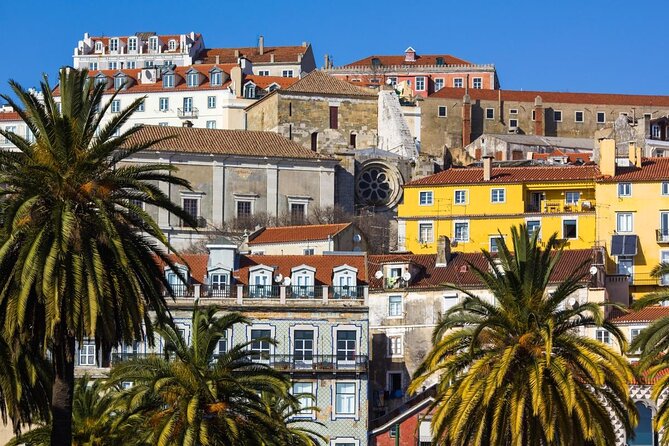
- Skip-the-line time-savers at Convento do Carmo and Lisbon Cathedral so you spend more time outside and less time in queues
- Food is part of the route, not an add-on, with lunch plus coffee, pastel de nata, and ginja
- Tram 28 is included, with a planned moment to hop on the famous line
- A balanced route across Baixa, Chiado, Alfama, and viewpoints, so you get both street life and iconic architecture
- Multiple morning start times so it fits your schedule
- High guide praise, including names like Tiago, Mariana, Miguel, Sofia, Beatriz, Andre, Paulo, and Pedro
A private Lisbon day that balances landmarks and everyday life

Lisbon can feel like two cities: the grand, postcard Lisbon of arches and squares, and the lived-in Lisbon of stairways, cafés, and sudden viewpoint reveals. This tour leans into both.
The structure matters for your day. It’s a long walking loop (roughly 6–7 hours) from a central start at Praça Dom Pedro IV and finishing near Praça Martim Moniz. That means you’re not constantly backtracking, and you’re set up to keep exploring afterward without feeling trapped at one neighborhood.
And because it’s private—only your group—your guide can tailor the pace. In the guide feedback, you see the same theme again and again: guides like Miguel, Mariana, Sofia, and Pedro communicate with energy and humor, and they actually answer follow-up questions rather than sticking to a script.
You can also read our reviews of more walking tours in Lisbon


Starting at Praça Dom Pedro IV: the city in one square
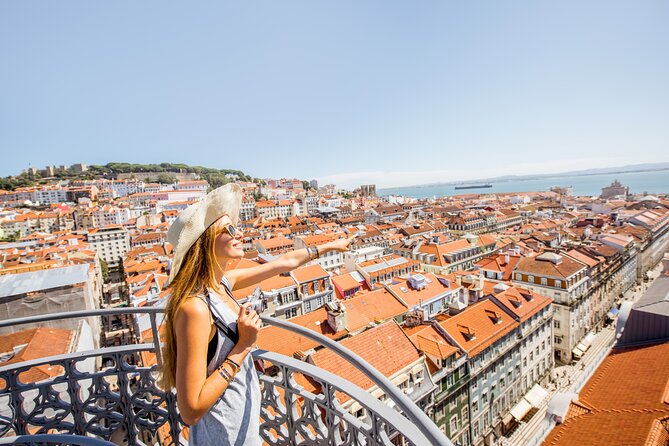
You begin at Praça Dom Pedro IV (1100 Lisboa). It’s one of the most central “start here” points in Lisbon, which helps if you’re arriving by tram or metro or just want an easy meetup.
This early stop is short, but it sets the tone. The square is named for the historical links between Portugal and Brazil, and it’s tied to the constitutional monarchy era. Even if you only catch a slice of the context, it’s a good warm-up: you’ll soon see that Lisbon’s story is shaped by power shifts, earthquakes, and rebuilding.
Quick practical tip: this is also the kind of place where it’s easy to orient yourself before you start walking uphill later.
Church of Saint Dominic and the stories people still talk about
Next you head to the Church of Saint Dominic area. This stop focuses less on architecture for its own sake and more on the stories connected to Lisbon’s past—especially the events people remember and the atmosphere around the square.
It’s only about 15 minutes here, but that’s part of the design. You get a compact historical “hook” early, then the tour moves on before details turn into overload. If you like history that connects to street corners and public spaces, you’ll probably enjoy this style.
If you’re someone who prefers long museum time, you might feel the brief stops elsewhere. But the trade-off is that you’ll see more of Lisbon day-to-day.
Casa do Alentejo and Praca dos Restauradores: architecture you can read
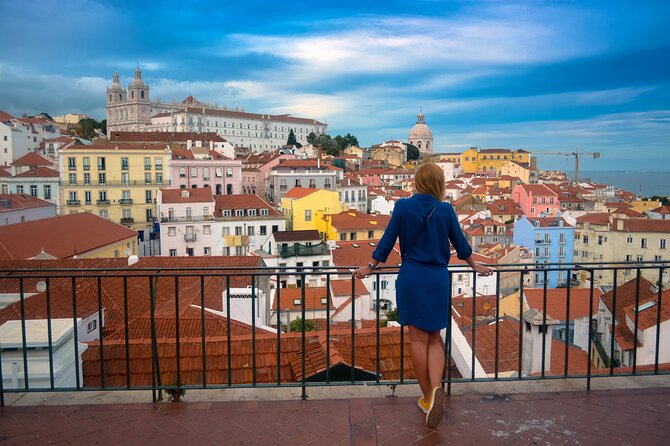
Then you make a short stop at Casa do Alentejo, a historic palace with neo-Moorish and Art Nouveau elements. It’s a quick look—about 10 minutes—but it’s the kind of place where you can spot the city’s layers without committing to a long interior visit.
From there, you walk to Praca dos Restauradores. The square is surrounded by eye-catching buildings and it sits close to one of the famous Lisbon elevators. Even without riding it in this exact moment, you’ll get that “Lisbon loves vertical movement” vibe right away.
If you hate rushing, you might want to linger outside. Still, this tour keeps the movement flowing, so you don’t get bogged down.
Rossio Station to Carmo: the skip-the-line moment you’ll feel

Rossio Station (Estação do Rossio) is next. You’ll get a short look—around 15 minutes—at the Neo-Manueline style that makes it feel like Lisbon built a station with personality.
Why this stop is useful: Rossio Station helps you understand Lisbon’s elegance in everyday infrastructure. It’s not only old churches and palaces; the city’s look shows up in the places you pass through.
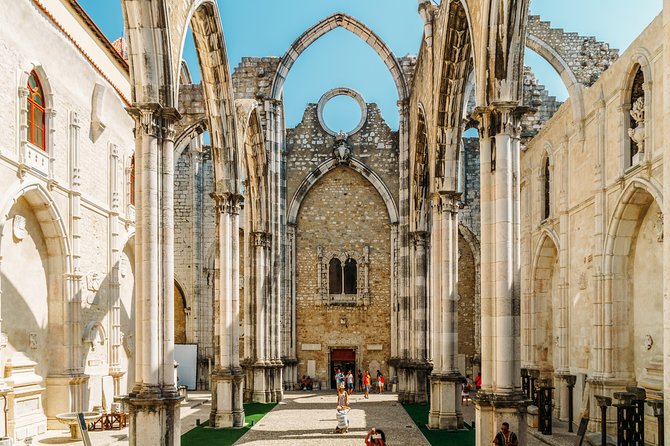
Then comes the big payoff: Carmo Archaeological Museum (Convento do Carmo). You’ll have a skip-the-line ticket, and you’ll spend about 40 minutes here. This is where the route earns its ticket include.
You’ll be stepping into a Gothic temple ruined after the 1755 earthquake. That matters because Lisbon isn’t just “old.” It’s old, damaged, and rebuilt—so ruins aren’t a sad detour; they’re a key part of Lisbon’s identity.
Possible drawback: if you dislike enclosed spaces or prefer more time outdoors, 40 minutes indoors may feel long. But the museum stop is one of the core story points of the whole day, so I’d treat it as a centerpiece.
You can also read our reviews of more private tours in Lisbon





Elevador de Santa Justa and Rua Garrett: views and literary Lisbon
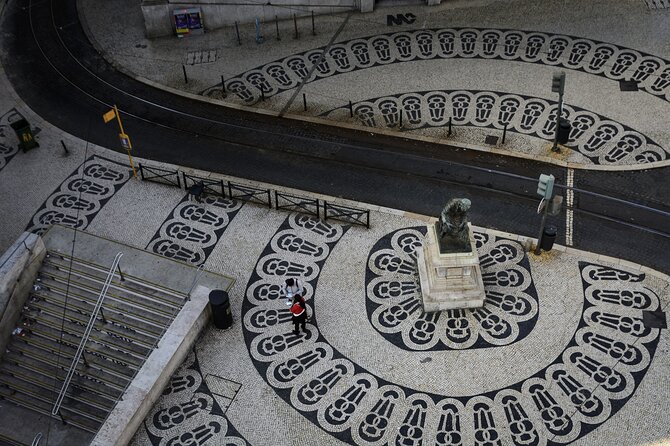
After Carmo, you travel to Elevador de Santa Justa for a short ride-and-look moment (about 10 minutes). This is the 1902 iron lift that’s one of the most recognizable vertical landmarks in Lisbon.
Even if you only get a quick window, the lift is a fast way to experience Lisbon’s “height culture.” The city is full of viewpoints, but this is a structured, central way to move up.
Next you stroll along Rua Garrett. This is classic Chiado energy: elegant central streets, old institutions, and the kind of places where Lisbon’s literary identity is visible in street life. The tour passes the oldest library in the world (as described in the tour info), and it connects you to the poet Fernando Pessoa.
If you want to take photos, this stretch gives you multiple chances without feeling like you’re stopping every 20 steps.
A Manteigaria coffee break: pastel de nata plus real local rhythm

Stop 9 is your planned coffee break at A Manteigaria, where you try pastel de nata and coffee in a traditional café setting. You get about 20 minutes here, which is enough time to eat without feeling like you’re trapped at a table.
This is also where the tour earns points for practicality. Food breaks are built in, so you don’t end up hunting for a pastry with hungry impatience.
And you also get Portuguese coffee as part of the included items. Add the fact that ginja is included later in the day, and you’ve got two iconic Lisbon tastes covered without extra planning.
Rua Augusta to Praça do Comércio: the big monument sequence
Rua Augusta is next, about 15 minutes, and it leads to the monumental Rua Augusta arch. It’s a straightforward “wow” moment, and it helps you shift from neighborhood lanes to grand boulevard views.
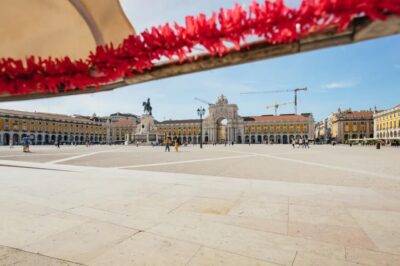
Then you reach Praça do Comércio (Terreiro do Paço). This is one of Lisbon’s strongest visual anchors: the wide plaza, the approach to the riverfront, and the sense of scale.
The tour info highlights Masonic symbolism here and mentions a view toward the Tejo River plus the Cais das colunas, an old footbridge used by kings and presidents. Even if you don’t catch every reference, the setting explains Lisbon’s historic role as a gateway city.
Practical note: this is open space. In warm weather, you’ll want water and sunscreen ready.
Lunchtime in a typical Portuguese restaurant
About halfway through the day you hit lunchtime at Largo dos Trigueiros 17. You get around 50 minutes. The meal is included and can be meat, fish, or vegetarian, plus sides and drinks.
This is a smart inclusion for first-time visitors. You don’t have to guess where to eat at your busiest point, and you can focus on conversation and walking afterward rather than menu math.
If you have specific dietary needs beyond vegetarian (like dairy-free or gluten-free), the only safe move is to check with the operator before booking. The tour data only states vegetarian as an option.
Escadinhas de São Cristóvão, the smallest bookstore, and a Fado mural
After lunch, you climb into Mouraria with Escadinhas de Sao Cristovao. This is the staircase that marks the entrance to the district, and you also visit the smallest bookstore in the world and a famous mural dedicated to Fado.
The best part about this stop is the way Lisbon culture shows up in everyday corners. You get a small-spot moment (tiny bookstore) plus a music connection (Fado mural), so the neighborhood isn’t just scenery—it’s an identity.
Then the tour continues toward Alfama, where you’ll spend more time in viewpoints and street life.
Lisbon Cathedral on older ground, plus St. Anthony’s Church
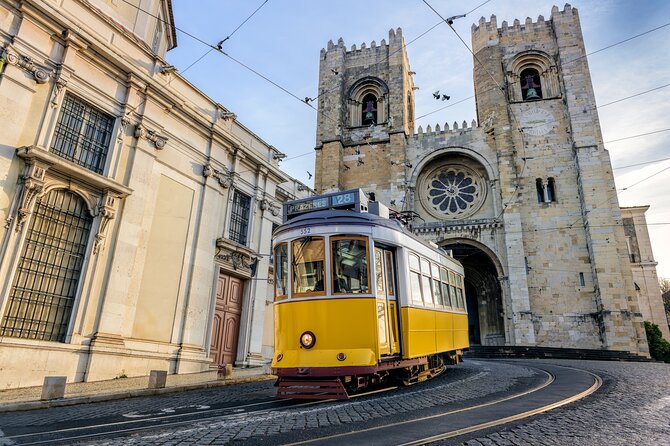
Next you reach Lisbon Cathedral (Se Cathedral) for about 40 minutes with skip-the-line tickets included. This matters. Cathedrals attract lines, and the tour is trying to protect your time.
The cathedral is a 12th-century structure built on ancient mosque foundations. That “layering” is one of Lisbon’s themes: different eras stacked on top of each other, not erased.
Then you visit Church of St. Anthony (about 20 minutes). This is another short stop, but it’s framed around the saint and the devotion connected to him. If you like churches that feel like part of living neighborhoods, this one tends to land well.
Alfama viewpoints and Tram 28: the moment most people remember
Alfama is next, with viewpoint time. The tour includes two of the most beautiful viewpoints and even mentions cherry liqueur tasting made by old ladies along the way.
Because this part mixes viewpoints with street moments, you’re not stuck staring at one view. You get a sequence of looks, and you’ll likely find you’re stopping for photos without needing to be told.
Then comes Tram 28. The tour includes tickets and gives you about 15 minutes to ride. Tram 28 is one of Lisbon’s most famous routes for a reason: it takes you through the city’s texture, and it gives you a moving perspective on the hills and neighborhoods.
One practical consideration: tram rides can get crowded. Since the tour includes the tram ticket, you don’t have to buy separately, but you may still want to keep expectations flexible about space.
Miradouro da Graça and Caracol da Graça: finish with views and street art
Toward the end you go to Miradouro da Graça (Sophia de Mello Breyner Andresen) for about 15 minutes. This viewpoint is described as giving some of the best views of the city, including the old town and the castle of Sao Jorge.
This is a good closing arc: you’ve moved from squares to ruins to streets, and now you look back at Lisbon as a whole.
Then you head to Caracol da Graça, a staircase street-art stop in Mouraria. It’s about 15 minutes and it’s described as a final descent through street art. If you like Lisbon murals and the sense of creativity in public spaces, this is a fun wind-down.
You finish at Praça Martim Moniz, about 15 minutes from the end. The tour description notes this is where the mythical Tram 28 is born. So you end right near the line’s origin vibe.
Price and what you’re really paying for
At $183.83 per person for 6 to 7 hours, this isn’t a bargain-basement walking tour. It is priced like a premium private day. But the value math is mostly about inclusions.
Here’s what you get that usually costs extra when you plan yourself:
- Skip-the-line tickets for Convento do Carmo and Lisbon Cathedral
- Lunch at a typical Portuguese restaurant (meat, fish, or vegetarian, sides, drinks)
- Portuguese coffee plus pastel de nata
- Ginja (a cup of typical Lisbon liquor)
- Tram 28 tickets
- A tram component built into the day, so you’re not coordinating it while tired
So you’re paying for planning and time protection, not just “walking with a guide.” In my book, that’s the fair way to spend on Lisbon. Lisbon’s best moments are spread out across neighborhoods, and getting them in one day without wasted time matters.
Also, the tour is often booked about 96 days in advance on average, which is a hint to plan ahead. If you have specific morning start times you prefer, the early booking window will help you secure them.
Who should book this private walking tour
This is a strong match if you:
- want a first big Lisbon day that covers multiple districts in one loop
- like history that connects to streets, squares, and churches (not just museum rooms)
- enjoy Portuguese food moments as part of the sightseeing plan
- want tram 28 without having to figure out timing and ticket details on the fly
It may be less ideal if you:
- struggle with long walks or frequent staircases (you will go up and down in Alfama/Mouraria areas)
- want a slower day with fewer stops and more free time
Should you book Lisbon Private Full Day Walking Tour?
If you want one guide-led day that ties together Lisbon’s architecture, earthquake-era story points, viewpoints, and classic Portuguese tastes, I think this booking makes sense. The biggest reason: the tour includes the costly pinch points—skip-the-line entries, a planned lunch, and tram 28 tickets—so you don’t lose momentum.
If you’re the type who likes to wander on your own after lunch, you can still use this tour as a launch pad. Start at Praça Dom Pedro IV, follow the route through Chiado and Alfama, and end near Praça Martim Moniz with plenty of energy left to keep exploring.
FAQ
How long is the Lisbon Private Full Day Walking Tour?
It runs about 6 to 7 hours.
What’s included in the price?
Skip-the-line tickets for the Convento do Carmo and Lisbon Cathedral, lunch in a typical Portuguese restaurant, Portuguese coffee and pastel de nata, a cup of ginja, and tram tickets.
Does the tour include lunch?
Yes. Lunch is included at a typical Portuguese restaurant and can be meat, fish, or vegetarian, with side dish and drinks.
Is Tram 28 included?
Yes. Tram 28 tickets are included in the tour.
Where does the tour start and end?
It starts at Praça Dom Pedro IV, 1100 Lisboa, Portugal and ends at Praça Martim Moniz, Lisboa.
What language is the tour offered in?
The tour is offered in English.
What’s the highest-profile admission you get skip-the-line for?
Skip-the-line tickets are included for Convento do Carmo and Lisbon Cathedral (Se Cathedral).
Can I cancel for a full refund?
Yes, you can cancel up to 24 hours in advance for a full refund.