REVIEW · SINTRA
19th Century Photography Experience
Book on Viator →Operated by Five Historic Photography Studio · Bookable on Viator
Wet plate portraits turn your face into a piece of history you can hold. At Five Historic Photography Studio in Sintra, you get your image made using Frederick Scott Archer’s wet plate collodion process, then you watch the dark-room development under safe red light.
I especially like the way the session feels personal and hands-on: it’s a private portrait with period props, plus you can choose from three tintype sizes. The one catch to plan for is that this studio is not wheelchair accessible, so it may be tricky if you need step-free access.
In This Review
- Key highlights you’ll care about before you go
- A 19th-century process you can actually see working in Sintra
- Five Historic Photography Studio: where the antique vibe meets real technique
- The portrait session: choosing size, posing, and dressing for the moment
- The wet plate collodion story, explained in a way you can follow
- Dark room development: seeing the image appear under safe red light
- Timing and collecting your tintype plates about one hour later
- Period props and the feel of an antique portrait session
- Price and value: what $48.06 buys you in real craft
- Who should book this tintype session (and who should skip it)
- Should you book the 19th-century photography experience in Sintra?
- FAQ
- How long does the 19th Century Photography Experience last?
- Is the experience wheelchair accessible?
- Is the session private?
- What kind of photo do you make?
- When do I collect my tintype plates?
- Do I get digital copies of the photo?
- Are period clothes and props included?
- What language is the experience offered in?
- Is it suitable for young children?
- Can I cancel for free?
Key highlights you’ll care about before you go
- Wet plate collodion tintype portrait made in a 19th-century style workflow
- Dark room viewing of the full development process under safe red light
- Private session for a more relaxed pace and personalized help
- Three tintype size options so you can pick what fits your space and budget
- Period clothing and props available, or you can bring your own
- Your plates are ready later: you collect them about one hour after the shoot starts
A 19th-century process you can actually see working in Sintra
Sintra is the kind of place where you expect old-world details. This experience delivers them in the most practical way: you don’t just learn about photography history, you watch it happen.
The star technique is wet plate collodion, invented in 1851 by Frederick Scott Archer. In plain terms, it’s a method where the photographic plate is prepared, exposed, and developed through a hands-on process. That means there’s drama in the timing, and you’ll see how quickly things move once the plate is in the workflow.
What makes this more than a museum demo is the real cause-and-effect. When the dark-room steps start, the image doesn’t feel like a distant concept. It feels like a process with stages, choices, and visible results.
You can also read our reviews of more photography tours in Sintra

Five Historic Photography Studio: where the antique vibe meets real technique
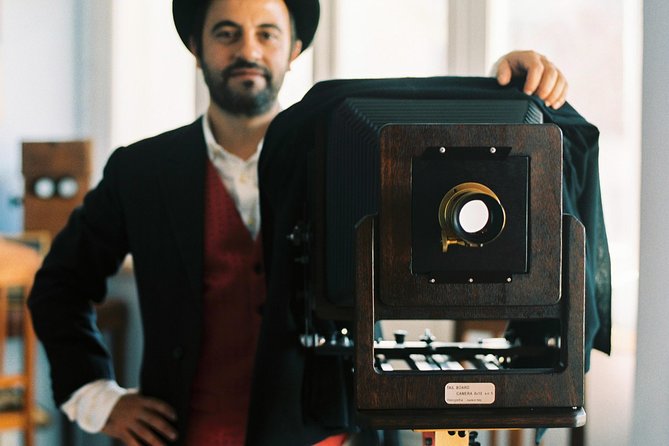
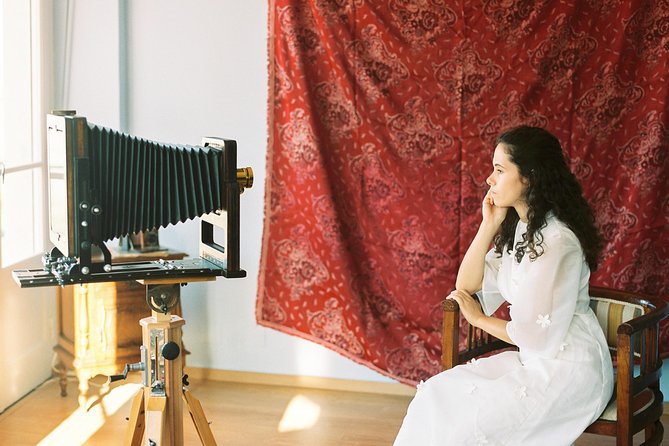
You’ll meet at Largo 1º de Dezembro 14, right in the Sintra area with easy access to public transportation. From there, the studio experience is built around a workshop feel: antique cameras, period furniture, and literature on 19th-century photography.
That matters because wet plate collodion is technical. Having the studio set up like a working historical space helps you understand what you’re seeing. You’re not just watching chemicals and motions; you’re learning what each step is trying to achieve.
Also, the studio format is a private session. That’s a big deal here, because portraits depend on small adjustments: pose, distance, and how you present yourself during the exposure.
The portrait session: choosing size, posing, and dressing for the moment
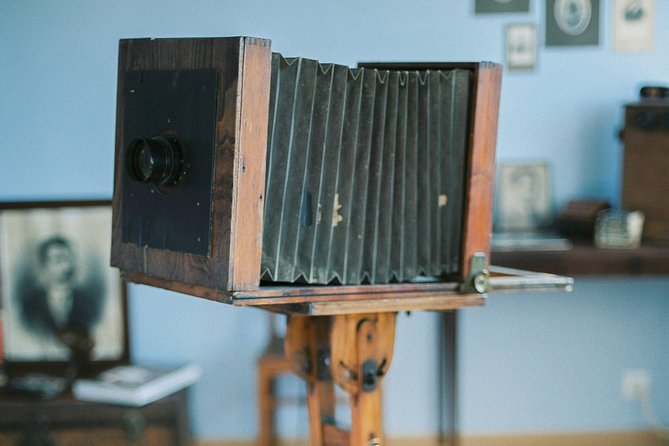
Your portrait is the core of the experience. You’ll work with the host to create a tintype using wet plate collodion. You can choose from three different tintype sizes, which is useful if you’re thinking about what you’ll do with the finished plate after you return home.
You also have styling options. There are period clothes and accessories available, and you can use your own items too if you brought them. In practice, this gives you two ways to get the look you want:
- Use the studio’s wardrobe if you want less hassle and more authenticity.
- Bring something personal if you already have a theme in mind.
One practical note: the exposure time can be up to 10 seconds. That doesn’t mean it will be that long for every portrait, but it’s enough that you should expect patience and stillness. If you’re planning for kids, this is a real consideration, especially for younger children.
The experience is flexible enough to feel fun, but it’s also strict in the way old photography was strict. You’ll be guided, yet the process still asks for cooperation.
The wet plate collodion story, explained in a way you can follow
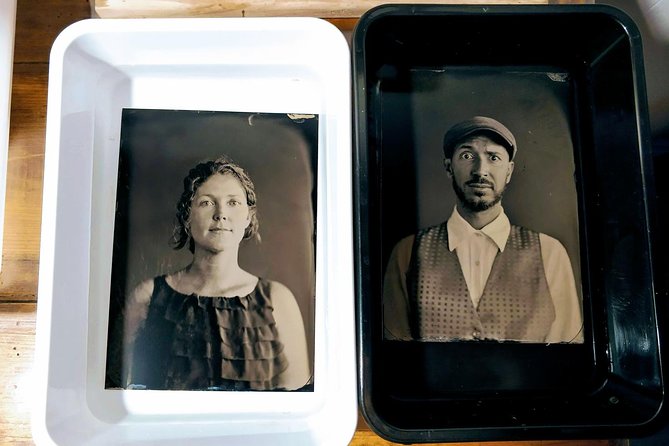
During the session, you’ll get an introduction to 19th-century photography and the collodion process. The best part is that it’s not taught like a lecture. It’s tied to what you’re doing right then, in the workflow of making your portrait.
Here’s why that teaching style matters: wet plate collodion involves steps that look simple but have consequences. If the plate preparation or the exposure timing is off, the result changes. So you’re learning the technique while it’s happening, not after the fact.
You’ll also learn what makes tintypes special compared to modern prints. Tintypes are made on metal plates, and the final image has that distinctive 19th-century look. It’s the kind of visual texture that digital copies just can’t reproduce in the same way.
Dark room development: seeing the image appear under safe red light
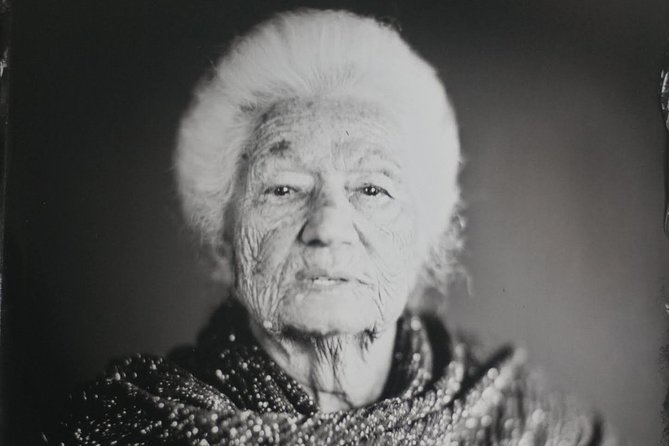
After your portrait, the experience takes you into the dark room. This is where the magic becomes visible.
You’ll witness the whole development process under safe red light, so you can watch the steps without feeling like you’re guessing what’s going on. The process is fast enough that you’ll see the image emerge right in front of you, rather than waiting for hours for results.
If you like photography even a little, this is the moment that will hook you. Modern photography often feels like a black box: press button, get file. Wet plate collodion pulls the curtain back. You see each stage and how the chemistry supports what the exposure captured.
It’s also a great moment for recording if you want to remember the process. The development happens quickly, and the change is visually dramatic.


Timing and collecting your tintype plates about one hour later
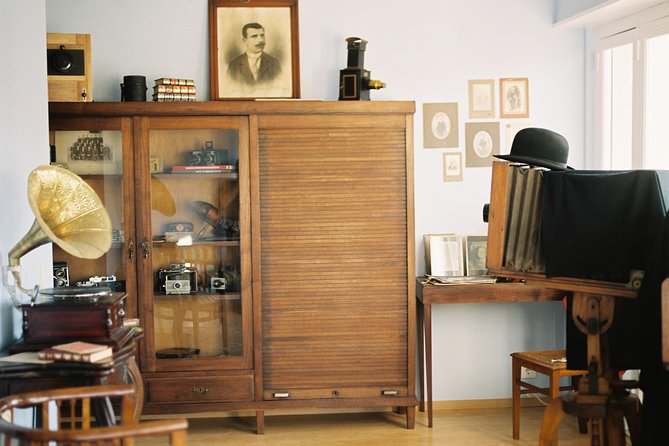
One of the most helpful details in this experience is the pickup timing. Your aluminium tintype plates are ready to collect about one hour after the shoot starts.
That means you’re not walking out with a finished keepsake in your hand immediately. But the trade-off is worth it. You’re seeing development happen, and then you get the result when it’s truly ready.
Plan your day with that in mind. If you’re juggling Sintra sightseeing (and you likely are), treat this as a scheduled stop where you’ll do the shooting and the dark-room segment, then circle back later for pickup.
The studio also provides the finished photograph in a protective box, along with guidance on care. That small detail matters a lot for tintypes, because a real keepsake deserves real handling instructions.
Period props and the feel of an antique portrait session
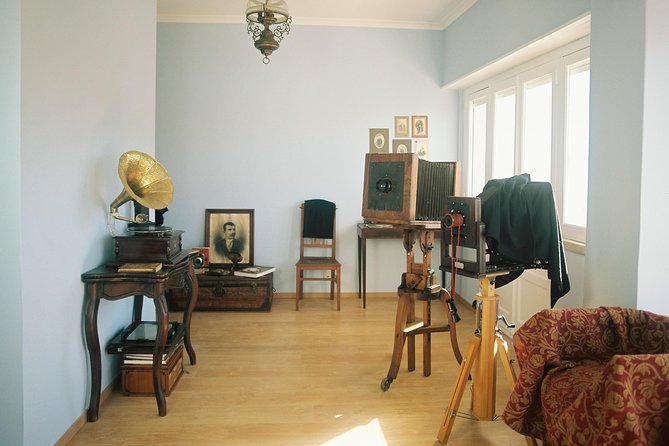
The studio gives you access to period clothing and accessories, and the room is set up to support the look. Even if you don’t have a costume, you can still create a portrait that feels era-appropriate.
If you do bring your own items, this becomes a personal story you can take home. It’s one thing to wear a costume for fun; it’s another thing to get photographed in the style of the 1800s. The process itself adds credibility to the look.
The vibe is warm and welcoming, and the hosts guide you through both the technical side and the posing side. That’s key because tintype portraiture isn’t just about style. It’s about getting the right result with old-school constraints.
Price and value: what $48.06 buys you in real craft
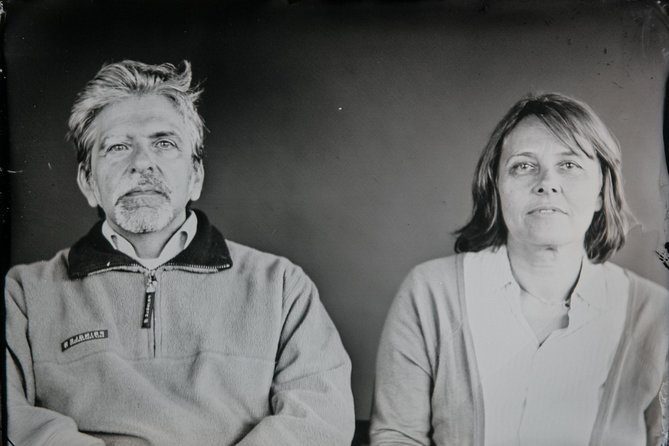
At $48.06 per person, this isn’t a mass-production photo experience. You’re paying for a hands-on, labor-heavy historical process, a private session, and dark-room time that’s centered on your portrait.
You also get tangible value. Many travel activities offer a photo or a memory. Here, you get a real tintype made with wet plate collodion and finished in a protective presentation box. That’s the kind of souvenir that feels more like a story object than a shop purchase.
Digital copies are not included. There’s an option for digital copies for €5.00 per booking. If your main goal is to share instantly online, you might consider budgeting for that add-on. If your goal is a physical artifact, you may not need digital at all.
Booking in advance can be smart here since it’s often scheduled. On average, this experience is booked about 62 days ahead, so if you’re visiting at a busy time, lock it in early.
Who should book this tintype session (and who should skip it)
This is best for you if:
- You like hands-on learning and want to see the full process, not just the end result.
- You want an authentic souvenir that feels connected to real craftsmanship.
- You’re okay with old photography’s practical limits, like longer exposures.
You might skip it if:
- You need wheelchair accessibility, since the studio is not wheelchair accessible.
- You’re traveling with very young children, because exposure time may reach up to 10 seconds.
If you’re a couple, a solo traveler, or a small group looking for something different from standard sightseeing, this works well because it’s private and focused on you.
Should you book the 19th-century photography experience in Sintra?
If you want a Sintra activity that turns history into something you can watch and take home, I think you’ll be happy booking it. The combination of a wet plate collodion tintype, dark-room development under red light, and period props makes it feel both educational and genuinely memorable.
The decision comes down to one practical question: are you comfortable with the limits of old-school photography? If you can handle a still portrait and you don’t need wheelchair access, this is a strong value way to spend about an hour in Sintra and leave with a real artifact.
FAQ
How long does the 19th Century Photography Experience last?
It runs for about 1 hour.
Is the experience wheelchair accessible?
No, it is not wheelchair accessible.
Is the session private?
Yes. It’s a private tour/activity for only your group.
What kind of photo do you make?
You create a tintype portrait using the wet plate collodion process.
When do I collect my tintype plates?
You collect your plates one hour after the shoot starts.
Do I get digital copies of the photo?
Digital copies are not included. They cost €5.00 per booking.
Are period clothes and props included?
Yes. Period clothing and accessories are available, and their use is optional.
What language is the experience offered in?
It is offered in English.
Is it suitable for young children?
It’s not recommended for children under 6, since the exposure time can be up to 10 seconds.
Can I cancel for free?
Yes. You can cancel for a full refund up to 24 hours in advance of the experience start time.