REVIEW · 3-HOUR EXPERIENCES
Lisbon Private 3 hours tour
Book on Viator →Operated by Ticket Online · Bookable on Viator
Lisbon in 3 hours 15 is a lot to ask. This private tuk tuk route makes it feel doable by stringing together Lisbon’s best lookouts and landmarks in a single loop, with a guide who can keep things moving even when the city gets chaotic. I love the Alfama-to-Belém flow, and I also like that pickup and drop-off are part of the plan, so you spend less time hunting buses and more time getting bearings.
I also like the mix of quick culture and big-sky views: Sé (Lisbon Cathedral), multiple miradouros (viewpoints), and a proper stop for the Museu do Fado. When guides like Rana or Shams are on your trip, the pacing and storytelling can really click—fast, but not random. The one drawback to keep in mind: the tuk tuk ride can be bumpy, and depending on the guide, audio can be harder to catch in the street noise.
Key things you’ll notice right away
- A short, efficient route that covers viewpoints from Santa Luzia and Portas do Sol down to Belém
- Pickup and drop-off (meet at Hard Rock Cafe) so you’re not planning transit mid-tour
- Paid sights are optional on top of the free stops, including Sé Cathedral, São Vicente de Fora, the National Pantheon, Santa Justa, and Belém Tower
- Fado culture before you head into the hills, with time at Museu do Fado
- Real-world pacing: many stops are brief, so you’ll want to keep your photos and questions ready
- Comfort and hearing can vary depending on ride conditions and guide setup
In This Review
- Private Tuk Tuk Lisbon in 3 Hours 15: What the Time Really Means
- Price and Value: What $106.02 Usually Covers (and What Doesn’t)
- Pickup at Hard Rock Cafe: The Easy Start (If You Watch the Details)
- Chafariz d’El Rei: Lisbon’s Water History in a Small, Specific Stop
- Church of St. Anthony and the Sé de Lisboa: Two Different Kinds of Sacred Space
- Miradouro Santa Luzia: The Viewpoint That Explains Lisbon
- Miradouro das Portas do Sol and Senhora do Monte: Photos, Plus the “Why”
- São Vicente de Fora: Monastery and Royal Pantheon Stop (5€)
- Mercado de Santa Clara and the Flea-Market Spirit
- Panteão Nacional (Santa Engrácia): Baroque Grandeur, The “Like Santa Engrácia” Story
- Museu do Fado: A Museum Stop That Doesn’t Feel Like Homework
- Alfama Streets, Chiado Edges, and the Way Lisbon Layers Itself
- Pink Street and Bairro Alto: Nightlife History, With a Rebuilt Present
- Praca do Comercio and the Tagus Frame: Lisbon at River Level
- Elevador de Santa Justa: A Short Ride, Big View Payoff (1.5€)
- Miradouro de São Pedro de Alcântara: Tiles, Gardens, and the Castle Line
- Torre de Belém (6€): The Big UNESCO Moment
- Time Out Market Lisboa: A Great Place to Eat After the Tour
- How to Get the Most Out of a Tuk Tuk Tour on Lisbon’s Bumpy Streets
- Should You Book This Lisbon Private 3 Hours 15 Tuk Tuk Tour?
- FAQ
- How long is the Lisbon Private 3 hours tour?
- What is the price per person?
- Is pickup included?
- What language is the tour offered in?
- Is this a private tour?
- Are monument tickets included in the price?
- Are any stops free of charge?
- Where does the tour start and end?
- What happens if weather is poor?
- Are service animals allowed?
Private Tuk Tuk Lisbon in 3 Hours 15: What the Time Really Means
This tour is built for one goal: getting you oriented fast. Lisbon is steep and stitched with narrow streets, and walking the “greatest hits” route can eat up your whole day. In a little over three hours, you’ll cover a lot of ground—enough to understand where things are and which areas you’ll want to revisit.
The tradeoff is simple. Many stops are short. You’re not signing up for a long, sit-down museum day. Instead, you get quick snapshots: viewpoints where you can see the city’s structure, then landmark stops where you can read the feel and move on.
The good news is that the private format keeps you from feeling rushed by a crowd. It’s just your group and the driver-guide handling the route through traffic and uphill bends. If you’re traveling as a couple, with friends, or on a tight schedule, this format makes sense.
Price and Value: What $106.02 Usually Covers (and What Doesn’t)
At $106.02 per person for about 3 hours 15 minutes, you’re paying mainly for two things: transportation in a tuk tuk and a guide to manage the route and explanations. The free stops are generous, and that’s where the value comes from—many key areas you’ll see don’t require entry tickets.
What’s not included is important for budgeting. Monument tickets and any food are extra. Based on the included sight list, some of the paid entries you may run into are:
- Sé de Lisboa (Lisbon Cathedral): 5€
- Mosteiro de São Vicente de Fora (church/monastery): 5€
- Panteão Nacional (Santa Engrácia): 4€
- Elevador de Santa Justa: 1.5€
- Torre de Belém: 6€
If you choose to enter all of those, you’re looking at about 21.5€ in ticket costs on top of the tour price. That won’t feel outrageous once you’re here, but it’s still money—so decide early which interiors matter most to you.
You can also read our reviews of more private tours in Lisbon


Pickup at Hard Rock Cafe: The Easy Start (If You Watch the Details)
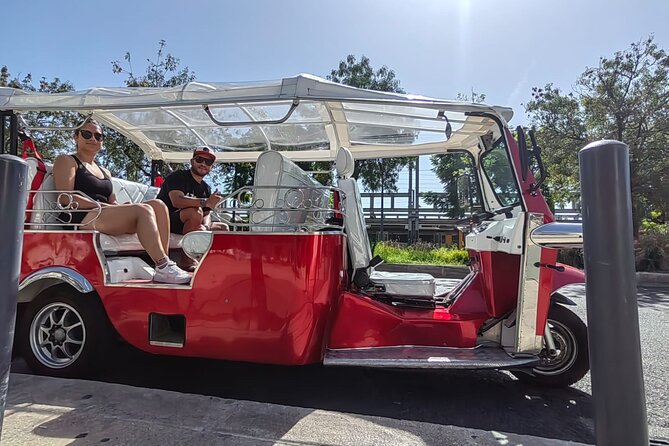
The meetup point is Hard Rock Cafe Lisboa, Av. da Liberdade 2. The tour ends at Time Out Market (Mercado da Ribeira), Av. 24 de Julho. Pickup is offered as mentioned in the tour details, with a note that if your hotel isn’t in the pickup range, they can adjust a solution.
This is one place where I’d encourage you to be proactive. Reviews included some confusion when locating the driver, and in one case the guide arrived later than expected. If you want the smooth start, have your pickup address saved and double-check directions to Hard Rock Cafe just in case you’re meeting there.
Also: the tour is listed as requiring good weather. So if rain is in the forecast, don’t assume you’ll still do the exact route as planned.
Chafariz d’El Rei: Lisbon’s Water History in a Small, Specific Stop
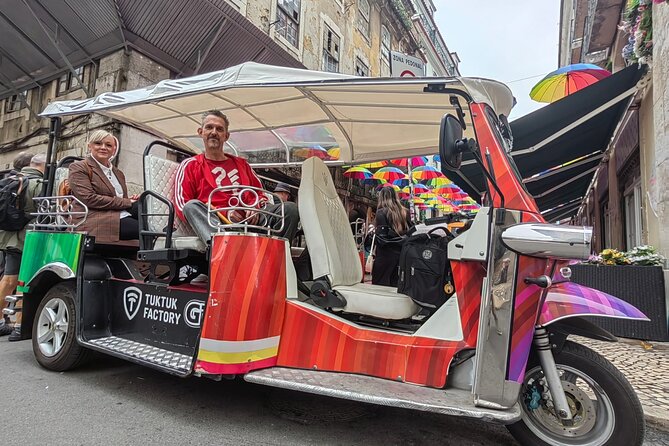
Your tour begins with a fountain stop that’s easy to overlook if you’re only chasing big monuments. Chafariz d’El Rei is tied to Lisbon’s older water system—spring water, built centuries ago, with later plumbing details recorded in the surrounding history.
The details here matter because they connect Lisbon’s geography to daily life. Lisbon’s hills shaped everything: where people built, how water moved, and how neighborhoods formed. Even if you only spend a few minutes here, you’ll start to understand why Alfama exists the way it does.
This first stop also works as a warm-up. You’re getting a quick “Lisbon origin story” before the viewpoints start stacking up.
Church of St. Anthony and the Sé de Lisboa: Two Different Kinds of Sacred Space

Next up is Igreja de Santo António de Lisboa, dedicated to Saint Anthony of Lisbon (linked in tradition to his birth site). The stop is brief, but it’s still worth it because it’s a National Monument and the church is part of Lisbon’s layered religious geography.
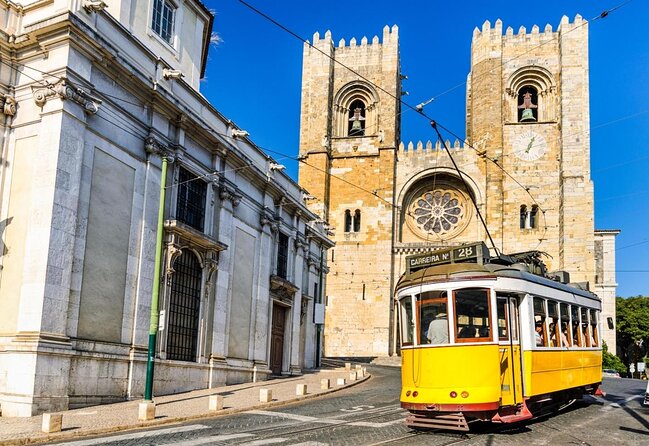
Then you reach Lisbon Cathedral (Sé de Lisboa / Santa Maria Maior)—often called simply the Sé. Built in 1147, it survived major shocks like earthquakes and has been reshaped by different architectural styles over time. That mix is part of the charm: it’s not one single aesthetic. It’s Lisbon’s history showing through the walls.
Important practical note: cathedral entry is 5€ and not included. If you’re short on time or you’d rather save ticket money, you can still appreciate the exterior and location. But if you like cathedral interiors and surviving-medieval structure, this is one of the paid stops I’d prioritize.
Miradouro Santa Luzia: The Viewpoint That Explains Lisbon
When the tour shifts into miradouros—viewpoints—it becomes clear why Lisbon is so hard to “get” from maps. Miradouro de Santa Luzia is one of the strongest stops for understanding the city in one glance.
You get a wide view over Alfama and toward the Tagus River. The area is also a nice cultural bonus because the base of the balcony includes azulejo panels, including scenes tied to Lisbon before the 1755 earthquake and to the storytelling of Portuguese history.
This is a stop where you should slow down for 60 seconds longer than you think. At viewpoint level, you’re learning the city’s layout: which streets climb, where the river sits, and why different neighborhoods feel like they’re perched on separate ledges.
You can also read our reviews of more tours and experiences in Lisbon




Miradouro das Portas do Sol and Senhora do Monte: Photos, Plus the “Why”
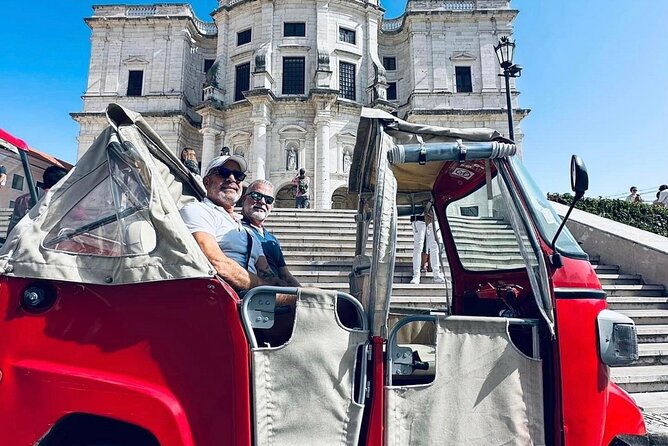
Portas do Sol lives up to the name: it’s a balcony-like viewpoint right in Alfama. The route here also connects you to the older Moorish-era geography through the idea of an old Porta do Sol integrated into the city’s fence system, later ruined in the earthquake.
From here, you can look over eastern Alfama and toward the Tagus, with prominent views in the direction of places like São Vicente de Fora. The stop is quick, but it’s one of those “click” moments for first-time visitors.
Then Miradouro da Senhora do Monte adds scale. From this point, you can see several directions at once: toward São Jorge Castle, parts of Baixa, and even out toward Monsanto Forest Park. It’s a viewpoint built for understanding how hills funnel your attention.
If you’re sensitive to bumpy transport, be ready here. Lisbon’s roads and cobblestones can make tuk tuk rides rough, and a viewpoint stop is when you’re likely to hop up quickly for photos.
São Vicente de Fora: Monastery and Royal Pantheon Stop (5€)
Next is Mosteiro de São Vicente de Fora, a 17th-century church and monastery known for its mannerist architecture. This stop is also tied to the royal pantheon of the Braganza monarchs.
Entry is 5€ and not included. If you love architecture or you like connecting Lisbon to Portuguese royal history, this is a good one to pay for. If interiors aren’t your priority, you can still appreciate the setting and the importance of where you are—but you’ll get more from going in.
Mercado de Santa Clara and the Flea-Market Spirit
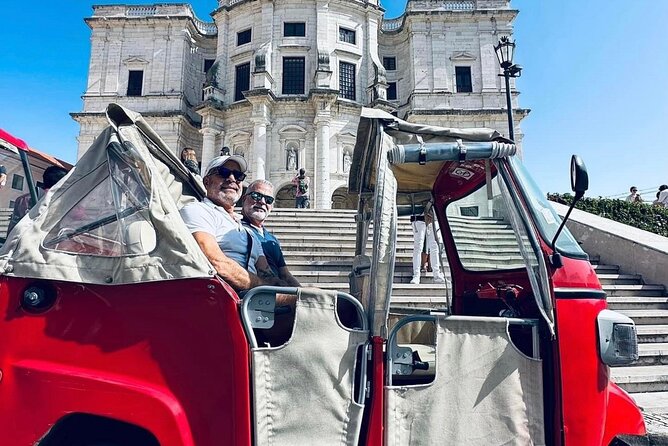
The tour pauses at Mercado de Santa Clara. The emphasis here is on exploring market energy—Lisbon’s tendency to keep daily life close to tourism. It’s positioned as a chance to find quirky items, vintage, or unusual pieces, with the Feira da Ladra vibe mentioned as part of the idea.
This stop is not about buying a specific souvenir. It’s more about letting Lisbon be a real place with real commerce for a moment.
If you’re trying to stay strict on time, you can do this as a browse-and-pick-one-item stop. That keeps you from losing the rest of the tour to shopping.
Panteão Nacional (Santa Engrácia): Baroque Grandeur, The “Like Santa Engrácia” Story
Then comes Panteão Nacional, the National Pantheon in the Santa Engrácia building. It’s described as a grand Baroque space holding tombs of Portugal’s distinguished figures.
What makes this stop more interesting than a typical monument is the construction saga. The church began in the 16th century but never matched its original purpose, with a saying tied to it—like the construction of Santa Engrácia—meaning something that drags on or never finishes as expected. It’s presented as completed much later, hundreds of years after it started.
Entry is 4€ and not included. This is another stop worth paying for if you like symbolism and the feeling of famous names being laid to rest in a dramatic building.
Museu do Fado: A Museum Stop That Doesn’t Feel Like Homework
Before the nightlife hills, you’ll visit Museu do Fado. It’s described as a must-visit for Portugal’s fado legacy, with a permanent exhibition, plus temporary ones. There’s also an auditorium and a document center.
Even better, this isn’t framed as a vague “cultural stop.” The museum is dedicated to fado and the guitar, and the artistic quality is called out as surprising.
The entry is listed as free, which helps your budget. If you want to understand why fado sounds the way it does and why saudade matters, this is one of the most useful stops on the whole route. It makes later evenings in Alfama and Bairro Alto easier to appreciate.
Alfama Streets, Chiado Edges, and the Way Lisbon Layers Itself
The tour includes time moving through Alfama, the old neighborhood of steep streets, crafts, and long-running cafés. This is where you feel the contrast between Lisbon’s tourist highlights and its everyday texture.
Then you pass through Largo do Carmo (Chiado area). You’ll see a mix of shops, cafés, art galleries, and a classic “Portuguese city center” mood. There’s also mention of Fernando Pessoa statue near A Brasileira, which gives the area a literary link that Lisbon does so well.
These are the stops where you’ll likely remember the “small things”: the way streets tilt, the way light hits stone, and the way Lisbon keeps moving even when the view steals your attention.
Pink Street and Bairro Alto: Nightlife History, With a Rebuilt Present
Calle Rosa de Lisboa is included as a reference point to the old Red Light era: brothels, shady bars, and the area’s crime and prostitution past. It’s noted that in 2011 the street was rebuilt and taken in a new direction.
Then the tour heads into Bairro Alto, known for steep cobbled streets and a bohemian feel. The area is described as lively after sundown, with different kinds of bars and fado sounds in the mix.
If nightlife is your thing, this section helps you orient fast—especially so you know which side streets and viewpoints to return to later.
Praca do Comercio and the Tagus Frame: Lisbon at River Level
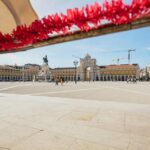
Praça do Comércio (Terreiro do Paço) is the big, harbour-facing square that resets your perspective. It’s described as huge—175 by 175 meters—and directly oriented toward the Tagus.
This stop matters because it’s the opposite of Alfama. After hills and winding lanes, Praca do Comércio is Lisbon’s flat, open “center of gravity.” It’s also a practical pause: it’s easier to stand, look, and reset your energy before the uphill return and the viewpoints.
Entry isn’t required; it’s a free, open-air stop.
Elevador de Santa Justa: A Short Ride, Big View Payoff (1.5€)
Elevador de Santa Justa is one of Lisbon’s most unique attractions. Built in the 19th century, it uses an industrial-age iron structure with neo-gothic arches and patterned details. It lifts you 45 meters from Baixa to Largo do Carmo.
Entry is listed as 1.5€ and not included. It’s not a long time investment, but the payoff is the view at the top and the sense of crossing between neighborhoods in a very Lisbon way.
Miradouro de São Pedro de Alcântara: Tiles, Gardens, and the Castle Line
Another viewpoint follows: Miradouro de São Pedro de Alcântara. It’s described as a panoramic garden with tile maps marking notable buildings. The lower garden includes busts of Greco-Roman figures like Minerva and Ulysses.
This stop also ties into a fun urban detail: the nearby Glória Elevator (a funicular) mentioned as running since 1885 between Restauradores Square and Bairro Alto.
If you’re the type who likes a viewpoint with a little story (tiles, statues, city cues), this one will probably stick with you.
Torre de Belém (6€): The Big UNESCO Moment
Then you reach the iconic Tower of Belém (Torre de Belém), a UNESCO World Heritage site described as one of Portugal’s cultural icons. It’s listed with a 6€ ticket not included.
This is where you’ll likely feel the “trophy moment.” After all the viewpoints and street-level stops, this gives you a clear, recognizable silhouette and a strong sense of where Lisbon’s maritime story shows up in stone.
Time Out Market Lisboa: A Great Place to Eat After the Tour
The tour ends at Time Out Market Lisboa (Mercado da Ribeira). The market opened in May 2014 and is described as a first for Time Out’s food-hall ventures.
This is a smart ending choice because it gives you a low-effort dinner plan right where the tour finishes. You can keep exploring Lisbon on foot after you get your bearings, without needing transit decisions immediately.
How to Get the Most Out of a Tuk Tuk Tour on Lisbon’s Bumpy Streets
Lisbon’s hills turn everything into a balancing act. The tuk tuk makes the route easier, but it doesn’t turn Lisbon into a smooth ride.
Two practical tips:
- Wear comfortable shoes and keep your legs ready for short walks at viewpoints and entrances.
- Keep your expectations aligned with the stop length. This is a “see and understand fast” format, not a “linger for an hour per site” schedule.
Also, audio can be a variable. Some past trips note that guides were hard to hear because of street noise or that a headset wasn’t used. If listening clearly is a priority for you, pick a seat where you face the guide, and don’t be afraid to ask for repetition.
Should You Book This Lisbon Private 3 Hours 15 Tuk Tuk Tour?
Book it if you’re:
- In Lisbon for a short time and want quick orientation
- Traveling as a pair or small group and want pickup/drop-off
- Interested in a mix of Alfama miradouros, cathedral sights, and fado culture without spending a full day walking
Consider a different option if:
- You want slow, deep time in a single museum or church
- You’re very sensitive to bumps and noise on older, uneven streets
- You expect long guided explanations at every stop (this route prioritizes coverage)
If you go in with the right mindset—quick stops, smart viewpoints, and optional ticket entries—you’ll get exactly what the tour is aiming to do: show Lisbon’s geography and highlights in a few efficient hours.
FAQ
How long is the Lisbon Private 3 hours tour?
The tour runs about 3 hours 15 minutes.
What is the price per person?
The price is listed as $106.02 per person.
Is pickup included?
Pickup and drop-off are offered, with the tour starting at Hard Rock Cafe Lisboa.
What language is the tour offered in?
The tour is offered in English.
Is this a private tour?
Yes. Only your group participates.
Are monument tickets included in the price?
No. Tickets for monuments are not included. Some listed ticket prices are Sé Cathedral (5€), São Vicente de Fora (5€), Panteão Nacional (4€), Elevador de Santa Justa (1.5€), and Torre de Belém (6€).
Are any stops free of charge?
Yes. Several stops are listed with admission ticket free, including Chafariz d’El Rei, Igreja de Santo António, Miradouro viewpoints, Museu do Fado, and Time Out Market.
Where does the tour start and end?
It starts at Hard Rock Cafe Lisboa (Av. da Liberdade 2) and ends at Time Out Market Lisboa (Mercado da Ribeira, Av. 24 de Julho).
What happens if weather is poor?
The tour requires good weather. If it’s canceled due to poor weather, you’ll be offered a different date or a full refund.
Are service animals allowed?
Yes, service animals are allowed.