REVIEW · LISBON WALKING TOURS
Lisbon: Jewish Walking Tour
Book on GetYourGuide →Operated by Jewish Cultural Center Rua da Judiaria · Bookable on GetYourGuide
Jewish Lisbon hides in plain sight. This 3-hour Jewish walking tour threads together views, streets, and archaeological clues to explain how Jewish life shaped Portugal—and how much was erased. You start with a famous overlook, then walk downhill through the Old Town toward Largo de São Domingos, where Portuguese Jewish history gathers one last time.
What I really like is the way the guide (archaeologist Luciano Waldman, sometimes introduced as Luciano/Zelig) uses on-the-ground context to make the story make sense. Two big wins for me: archaeology-led storytelling that helps you picture what’s gone, and the stop at the Jewish Cultural Center where your visit supports ongoing cultural work rather than treating history like a museum piece.
One consideration: this is a walking tour through areas with heavy tourist traffic and Lisbon’s uneven streets. If you need step-free routes or rely on clear audio, plan carefully—there’s also an English-only format, and the guide may have a slight accent.
In This Review
- Key points worth knowing before you go
- Portas do Sol and the Tagus: meeting the story at the first viewpoint
- The walk through former Jewish quarters and lost monuments
- Archaeology in plain language: seeing what’s underneath
- Jewish Cultural Center in Rua da Judiaria: history you can support
- Rossi station and the map in your head
- Largo de São Domingos: ending where Portuguese Judaism marks time
- Price and pacing: how $90 turns into value
- Who should book this tour (and who should skip it)
- Should you book the Lisbon Jewish Walking Tour?
- FAQ
- How long is the Lisbon Jewish Walking Tour?
- Where do I meet the guide?
- What language is the tour in?
- What should I bring?
- Is hotel pickup or drop-off included?
- Is food or drinks included?
- Is it suitable for people with mobility impairments?
- What’s included in the price?
Key points worth knowing before you go
- Archaeologist-led route: the guide ties visible places to excavations and what used to be there.
- Portas do Sol start: first stop is a standout viewpoint over the Tagus and Alfama.
- Where the old Jewish quarters were: you’ll learn locations even when the buildings are gone.
- Jewish Cultural Center visit: your fee supports a local cultural institute, not just a tour business.
- Old Town pacing with stories: the tour is designed to be readable and question-friendly as you walk.
- English live guide: single-language tour; helpful if you’re fluent and prepared for street noise.
Portas do Sol and the Tagus: meeting the story at the first viewpoint
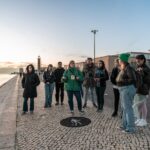
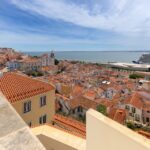
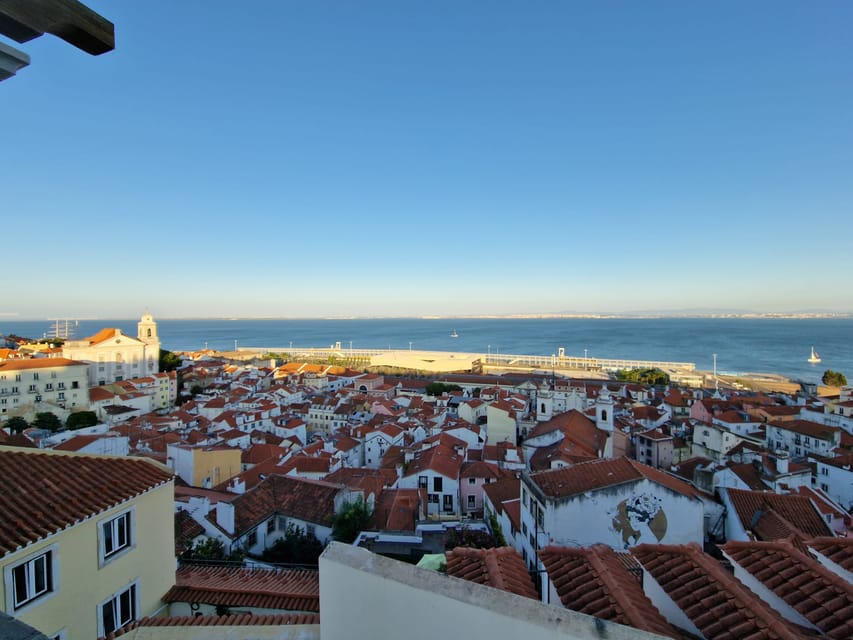
The tour meets at the Largo Portas do Sol viewpoint. Look for the statue of Saint Vicente—this is your landmark before you start walking into Alfama’s labyrinth. From here, you get that classic Lisbon view over the Tagus, with Alfama stretching below. It’s not just a photo stop. It’s a setup.
Why this matters: Jewish history in Lisbon isn’t one neat square on a map. It’s a set of places that were scattered through the city and reshaped over centuries. Starting with a big-picture panorama helps your brain lock onto distances and directions before you start turning corners.
If you’re arriving early, take a minute to study the slope of the streets you’ll be walking. Some stretches feel steeper than others, and you’ll thank yourself later for wearing the right shoes.
You can also read our reviews of more walking tours in Lisbon

The walk through former Jewish quarters and lost monuments
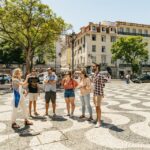
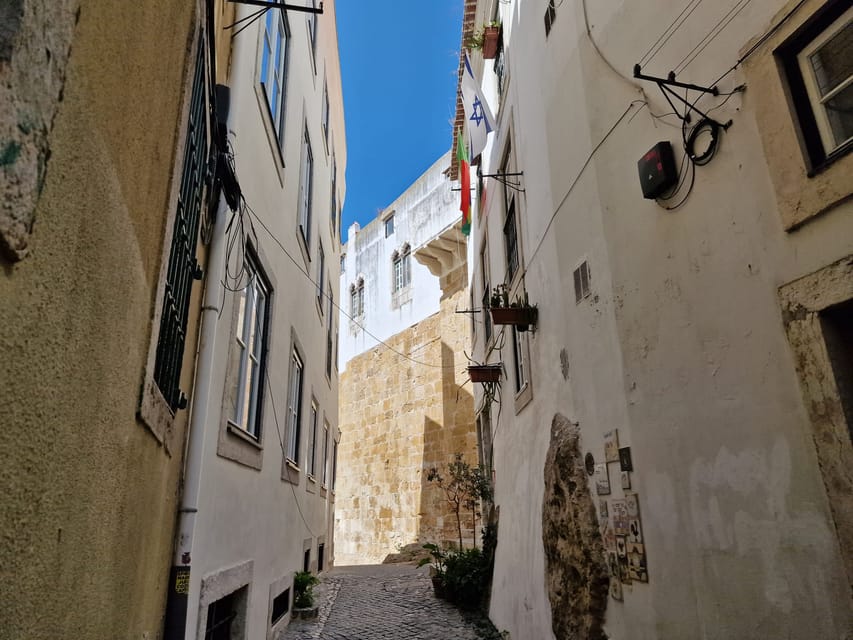
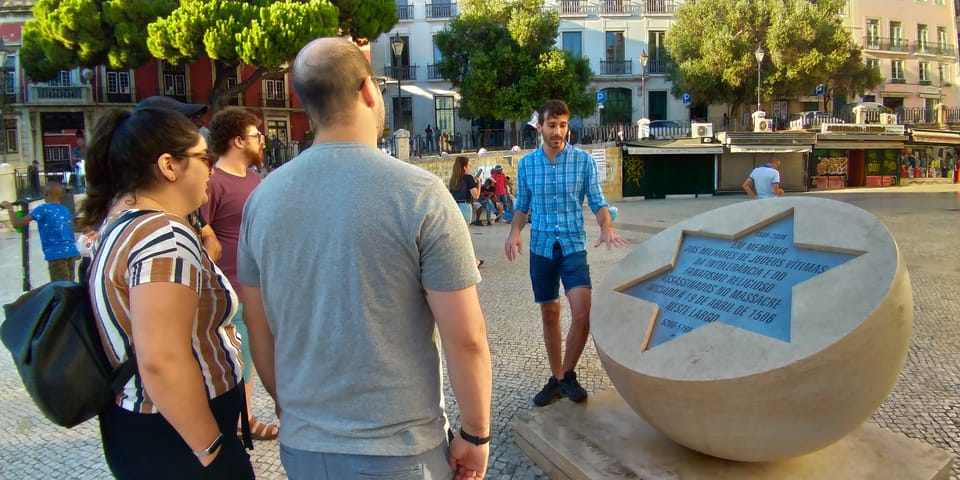
After the viewpoint, the route moves through Old Town streets and historical sites—areas where the urban fabric still hints at what once stood nearby. The tour includes stops tied to monuments and archaeological excavations, plus explanations of where the Jewish quarters of Lisbon once were.
Here’s the real value of a tour like this: Lisbon’s Jewish heritage includes many places you can’t easily point to with your phone. Lots of physical markers have been destroyed. So instead of pretending you’ll see a perfect, intact set of synagogues and street signs, the guide teaches you how to “read” the city anyway—by using location, layers of history, and excavation context to build the missing picture.
You’ll also get historical connections that go beyond Lisbon’s borders. The guide’s approach is to connect Portugal, Europe, and the Jewish community’s changing situation over time—so Lisbon doesn’t feel like a one-off chapter. It feels like part of a larger story of survival, law, community life, and forced change.
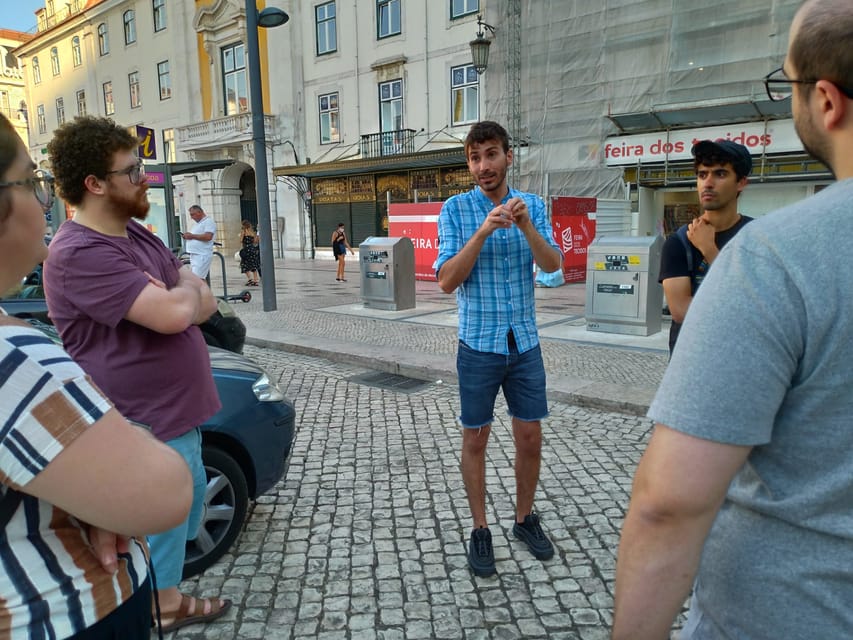
Practical note: you’ll spend time walking through parts of town that get tourist-heavy. The route is designed for sightseeing, but street noise can make it harder to catch every word. If you’re sensitive to audio issues, bring strategies—stand closer to the guide, and don’t hesitate to ask for repeat explanations when you miss something.
Archaeology in plain language: seeing what’s underneath
One reason this tour scores so high is that the guide doesn’t treat archaeology like jargon. He uses it to explain meaning. You get a sense of what excavations reveal (and what they can’t), and how archaeologists and historians piece together everyday life from fragmentary evidence.
This is especially helpful when the “thing you want to see” isn’t still visible above ground. Instead of feeling cheated, you’ll understand why certain structures are gone, what likely stood there, and how memory and documentation kept the story alive even when buildings didn’t.
I also like that the guide’s delivery feels personal without turning the tour into a lecture. The tone stays friendly and engaging, and you can ask questions as you go. That matters on a topic that can be both informative and emotionally heavy.
And yes, you’ll get a sense of lineage and perspective. The guide is Jewish and shares personal interest in explaining the community’s past and presence, which helps the tour feel grounded—not abstract.
Jewish Cultural Center in Rua da Judiaria: history you can support
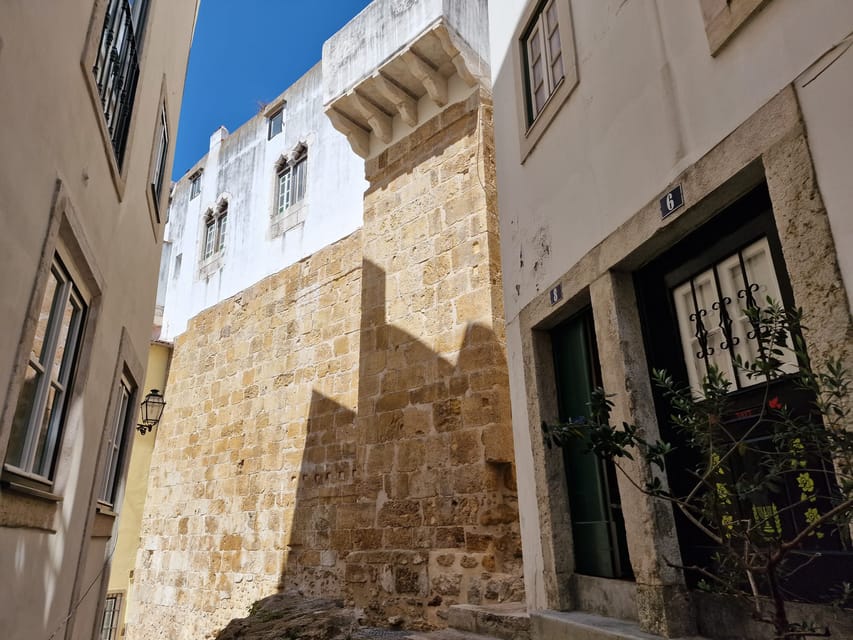
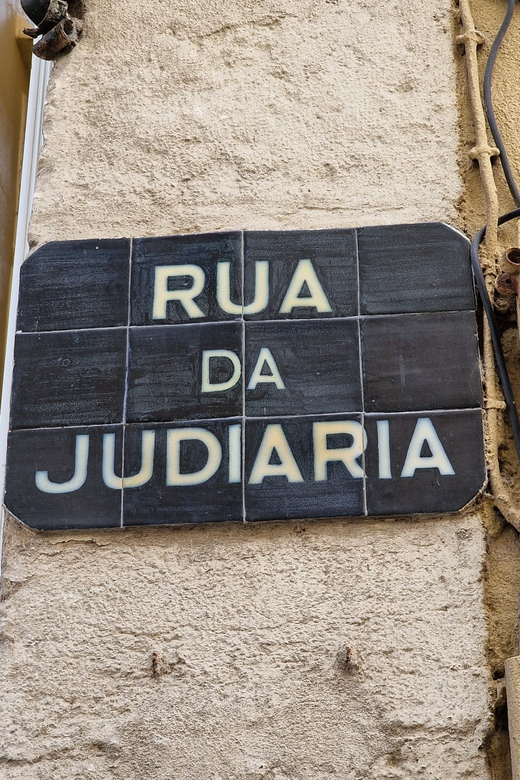
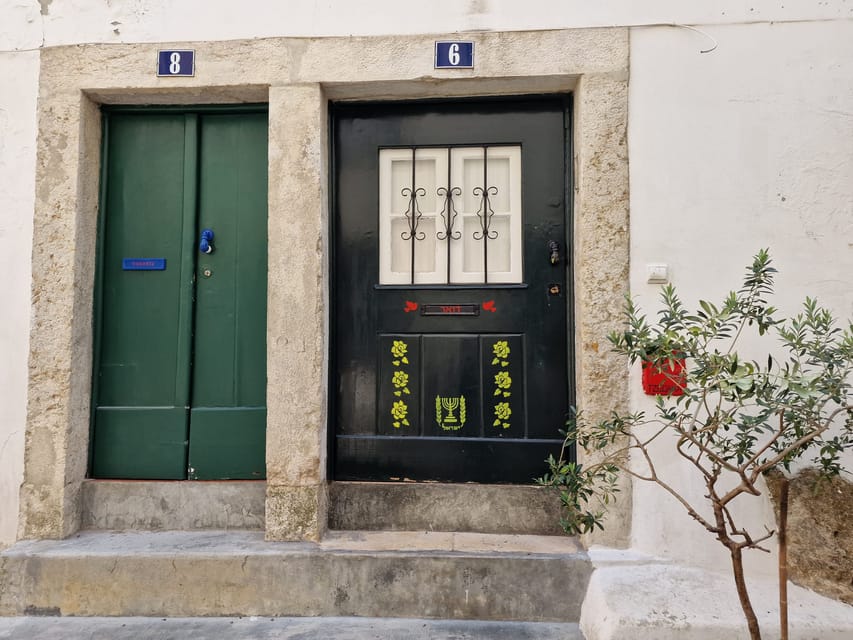
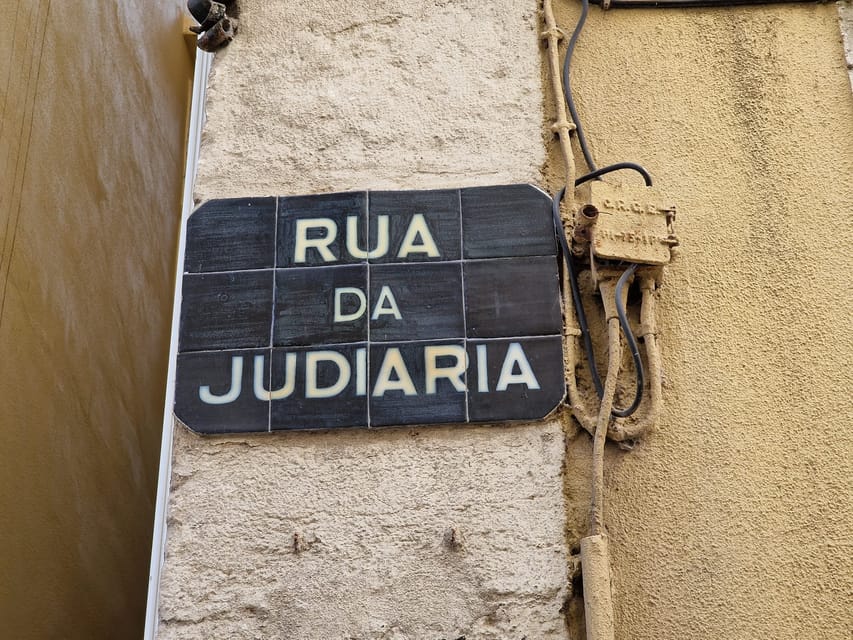
The tour includes a visit to the Jewish Cultural Center. This is listed as the experience provider, located at Rua da Judiaria. The center stop does two things at once.
First, it gives you a place where Jewish Lisbon isn’t just a story you pass by. You can connect the walking route to a living institution working to preserve memory and encourage cultural life.
Second, it reframes what “sustainable tourism” means. Here, supporting the local cultural institute isn’t a slogan. Your participation helps keep educational and preservation efforts going. That’s a meaningful difference from tours that take photos and move on.
When you arrive at the center, you’ll likely appreciate the contrast: the streets you walked through earlier show what survived and what didn’t. At the center, the emphasis is on continuity—teaching the past while supporting the present.
Rossi station and the map in your head
One of the sharper parts of the tour is learning how old neighborhoods related to modern city landmarks. A highlight from the experience is an explanation connected to the area by Rossi station, where you’ll get context on where Jewish life concentrated versus where the spaces are today.
This is one of those details you’ll use later. Once you’ve heard the comparison, you start noticing things on your own: street layout, hill slopes, neighborhood boundaries, and how the city “remembers” even after walls disappear.
If you’re the type who likes to walk with a mental map, this stop is made for you.




Largo de São Domingos: ending where Portuguese Judaism marks time
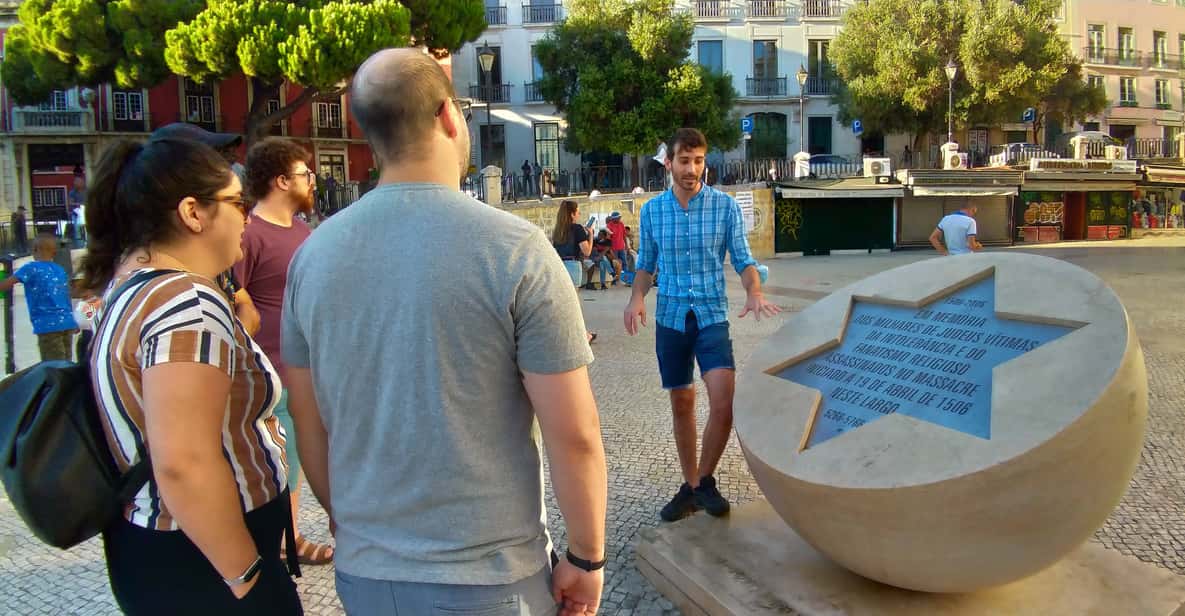
The tour ends at Largo de São Domingos, a place of historical value to Portuguese Judaism. Ending here works well because it gives you a focal point after you’ve been learning across multiple streets and fragments.
Think of it as closing the loop. You began at a wide view over Lisbon. You end at a specific place tied to community memory and Portuguese Jewish history. It’s the kind of ending that makes you slow down for a moment—because you realize you’ve been walking through more than sightseeing. You’ve been tracking a culture through time and trying to make sense of what’s left.
If you still have energy afterward, it’s a good idea to keep exploring the Old Town area at your own pace. You’ll likely notice patterns you missed earlier: where the stories cluster, where the city seems to “hold onto” certain traces, and where it feels like the record had to be rebuilt from other sources.
Price and pacing: how $90 turns into value
At $90 per person for about 3 hours, you’re paying for a focused guide, a route that’s more than just viewpoints and street corners, and an expert who can connect the physical city to historical explanation. This isn’t a casual overview tour.
What’s included is also part of the value: you get the walking tour, a tour guide, and liability and personal accident insurance. You’ll pay extra for anything beyond the tour itself, since hotel pickup/drop-off and food/drinks aren’t included.
How it feels on the ground:
- The walking is designed for city exploration, not for long transit between distant sites.
- The pace is laid back enough to ask questions and absorb details, especially since the guide keeps explanations clear while you move.
- Many people find the route manageable because there’s a lot of downhill walking during portions of the experience, which helps in a city known for hills.
Still, Lisbon isn’t flat. Bring water and wear comfortable shoes. If your feet get tired easily, plan a slow recovery afterward—don’t schedule something intense right after.
Who should book this tour (and who should skip it)
This is a strong fit if you want an informed introduction to Jewish history in Lisbon and Portugal, with a guide who can explain how community life changed over time. It’s also ideal if you like tours that focus on context—places where the main attraction is understanding, not just what you can photograph.
It’s also a good choice for first-timers to Lisbon who want to build cultural depth early. You’ll walk away with a better sense of where things were and why they mattered.
Who should be cautious:
- Mobility impairments: it’s not suitable, likely due to walking demands and uneven terrain.
- Hearing impairments: portions of the route pass through heavy tourist traffic, which can make it difficult to follow explanations.
- English-only expectations: the tour runs in English only, and the guide’s English can have a slight accent.
Should you book the Lisbon Jewish Walking Tour?
If your idea of a great tour includes more than monuments—if you want to understand how Jewish Lisbon changed, why so much is missing, and how the story is preserved in real places—you should book this one.
The biggest reason to choose it is the combination of archaeologist-led interpretation plus a stop at the Jewish Cultural Center that supports living preservation work. You’ll pay $90, but you’re buying time with a guide who can connect locations, history, and meaning in a way that makes the city feel clearer afterward.
If you’re limited on mobility or you need step-free access, skip it. If you’re sensitive to noise and audio clarity, be prepared to stand closer and ask follow-up questions.
In short: for the right traveler, this is one of the most meaningful ways to see Lisbon’s Old Town—with your eyes open to the parts history left behind.
FAQ
How long is the Lisbon Jewish Walking Tour?
It lasts about 3 hours.
Where do I meet the guide?
Meet at the Largo Portas do Sol viewpoint. There is a Statue of Saint Vicente at the meeting spot.
What language is the tour in?
The tour guide gives explanations in English only.
What should I bring?
Bring water and wear comfortable shoes.
Is hotel pickup or drop-off included?
No. Hotel pickup and drop-off are not included.
Is food or drinks included?
No. Food and drinks are not included.
Is it suitable for people with mobility impairments?
No, the tour is not suitable for people with mobility impairments.
What’s included in the price?
You get the walking tour, the tour guide, and liability and personal accident insurance.