REVIEW · LISBON WALKING TOURS
Lisbon: Jewish Quarter Guided Walking Tour
Book on GetYourGuide →Operated by CLOTHO · Bookable on GetYourGuide
Lisbon has layers, and this walk pulls one up. You’ll connect street corners in Alfama and Baixa to centuries of Jewish life, exile, and survival in Portugal. It’s a focused Lisbon Jewish Quarter guided walking tour that keeps the story anchored to real places you can stand in.
I especially love how the tour ties big moments to specific stops, from Praça do Comércio to Rossio. I also like the small-group format (max 10), which makes it easier to ask questions and keep pace without feeling herded.
One thing to consider: in parts of Lisbon, the physical evidence of Jewish life isn’t always obvious today. So you’ll want to lean on your guide to fill in the context, and you should wear solid shoes because this area includes hills and stairs.
In This Review
- Key things to know before you go
- Walking Lisbon’s Jewish Quarter from Praça do Comércio to Rossio
- Price and value: What you’re paying for (and what you get)
- How the 2-hour format really feels in Lisbon
- Meeting point and start: Finding your guide under the dark red umbrella
- Praça do Comércio and the Exodus origin story: Big meaning at a public square
- Rua do Comércio, Casa dos Bicos, and Ribeira: Spotting Lisbon’s “readable” details
- Resistance Museum and the 1940s reality: WWII refugees and Lisbon’s modern chapter
- Mouraria and Praça da Figueira: From one identity to many crowded streets
- Alfama Jewish quarter and medieval segregation: The power of remembering geography
- Baixa District and forced conversions: When faith became policy
- Rossio and the 1506 Pessah massacre: A square you can’t treat casually
- Marquis de Pombal and the Old/New Christian shift: How Lisbon changed after division
- Contemporary Lisbon presence: Judaism in the here-and-now
- Who this walking tour suits best
- A balanced expectation check: What you’ll likely feel by the end
- Should you book this Lisbon Jewish Quarter walking tour?
- FAQ
- What’s the duration of the Lisbon Jewish Quarter guided walking tour?
- What language is the guide?
- How large is the group?
- Where do we meet, and where does the tour end?
- Is food included?
- What’s included in the ticket price?
Key things to know before you go
- Small group (10 max) keeps the feel personal and discussion-friendly
- English live guide helps you connect Portugal’s Jewish story to the wider city
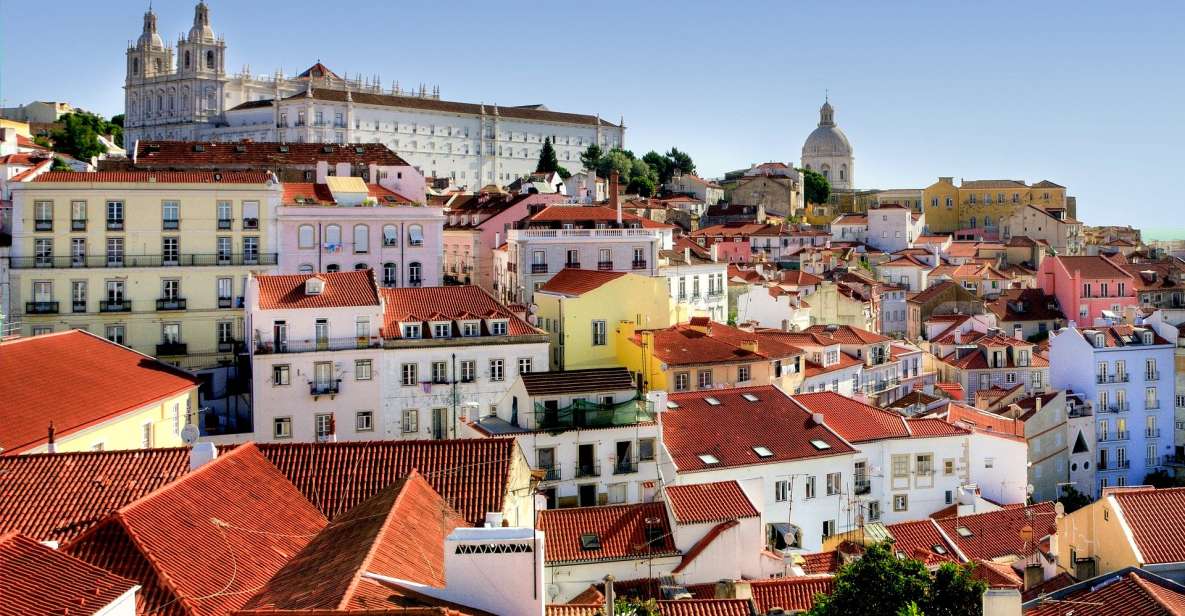
- You’ll move through Castle Hill, Alfama, and Baixa—the core areas tied to the Judaarias
- The route includes Resistance Museum, Mouraria, Praça da Figueira, and Rossio
- You’ll hear about Jewish life across time, including WWII-era refugees in the 1940s
- Meeting is easy to spot: look for a dark red umbrella or sign
Walking Lisbon’s Jewish Quarter from Praça do Comércio to Rossio
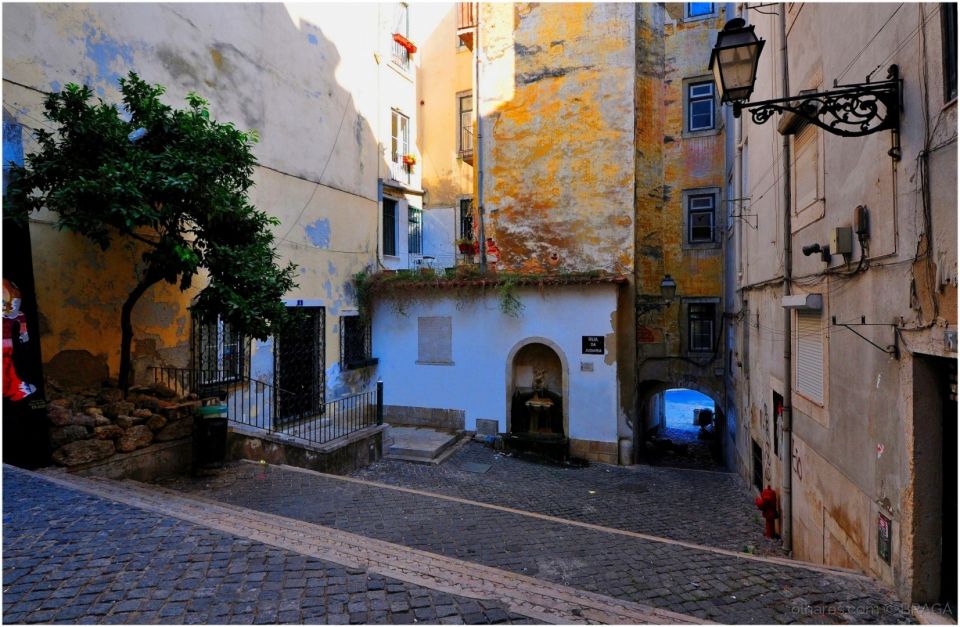
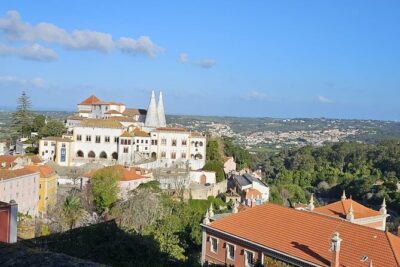
This is the kind of tour that works best when you’re ready to slow down and read the city like a document. Lisbon’s Jewish story isn’t confined to one neighborhood or one monument. It runs through multiple districts—Alfama’s medieval alleys, Baixa’s more formal streets, and key public squares where major events played out.
The payoff is the way the guide links what you see to what happened. You’ll start where Lisbon presents itself to the world—Praça do Comércio—and you’ll end at a place that forces the past into focus: Rossio. Along the way, the route hits the areas tied to the Judaarias (Jewish districts) and then follows how the story changed from medieval times into the modern era.
You can also read our reviews of more walking tours in Lisbon
Price and value: What you’re paying for (and what you get)
At $57 per person for 2 hours, you’re not buying a long bus-and-museum day. You’re paying for walking time plus a guide who can stitch together geography and history so it actually makes sense when you’re standing in place.
The value improves when you remember what’s included: just the guide. That means the tour is designed to be information-heavy rather than comfort-heavy. If you’re the type of traveler who gets more out of a good narrative than free samples of anything, this can be a fair deal—especially with the small group size.
How the 2-hour format really feels in Lisbon
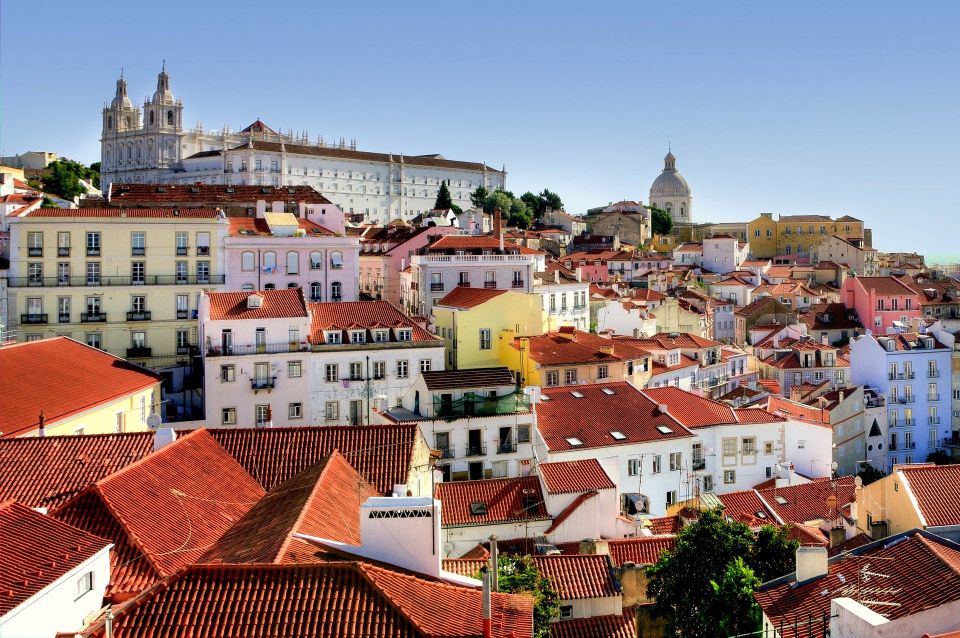
Two hours in Lisbon sounds simple, but the city’s slope makes it different. You’ll be doing an active walking loop that covers multiple historic areas: the tour starts in the central waterfront zone and works outward into older streets.
You should expect:
- Steep bits and stairs in the Alfama/Mouraria feel
- Short stops for explanation at key points
- A route that aims for breadth over lingering forever at one wall or plaque
If you’re traveling with mobility limits, you might want to ask about a custom route (the tour notes it can be tailored to different time frames and starting points). For most people, good shoes fix most issues fast.
Meeting point and start: Finding your guide under the dark red umbrella
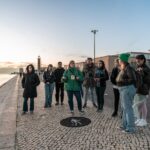
The tour meets at Praça do Comércio. Your guide will be easy to spot if you’re looking for the dark red umbrella or a sign.
A practical tip: don’t just arrive and hope. Message the contact number linked to your voucher via WhatsApp or iMessages to confirm. In Lisbon, squares look similar enough that a quick check prevents the classic start-of-tour frustration.
The tour also returns to the meeting point at the end, so you’re not dealing with complicated drop-off logistics.
Praça do Comércio and the Exodus origin story: Big meaning at a public square
You begin in Praça do Comércio, a place that feels like Lisbon’s front door. What makes this start work is the framing: the guide connects the square to the origin story of the Exodus.
Even if you’ve heard the broad outline of Portuguese and Jewish history before, starting here forces the story into a civic setting. This isn’t only private alley life. It’s also about public power, public decisions, and what gets remembered in open spaces.
You also pass by Praça do Município and along Rua do Comércio—street names that signal you’re moving through Lisbon’s commercial and political center, not just its older quarters.
You can also read our reviews of more guided tours in Lisbon


Rua do Comércio, Casa dos Bicos, and Ribeira: Spotting Lisbon’s “readable” details
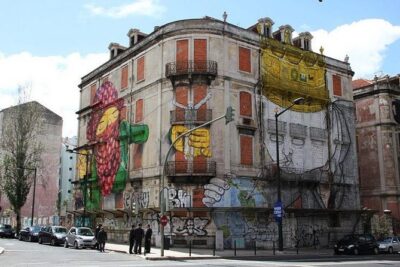
The walk then threads through recognizable textures of old Lisbon. Casa dos Bicos is one of those stops where you can actually see the city’s past choices in stone shapes and façade style. Your guide’s job is to connect architectural signals to the social world that produced them.
From there you head toward Ribeira, the river-facing zone where Lisbon’s history has long been tied to movement: trade, travel, and displacement. You’ll also encounter the Resistance Museum in the route.
This matters because the tour isn’t only medieval. By incorporating wartime themes, it explains why Lisbon’s Jewish story didn’t end with expulsions and conversions—it changed form and returned in later decades.
Resistance Museum and the 1940s reality: WWII refugees and Lisbon’s modern chapter
One of the most important parts of the tour is the mention of the 1940s passage of WWII refugees. That’s the bridge from medieval-era persecution and conversion pressures to the way Lisbon fit into Europe’s mid-century crises.
In plain terms: the Jewish presence you’re learning about is not stuck in a textbook. The guide pulls the story into the modern era, including how refugees moved and what Lisbon represented as a corridor of hope and survival.
This section is also a reminder that “history” is not only what happened long ago. It’s what people carried with them when they had nowhere else to go.
Mouraria and Praça da Figueira: From one identity to many crowded streets
You’ll move through Mouraria, an area closely linked to Lisbon’s layered population history. Even when you don’t see clear markers, the guide helps you understand how neighborhoods can act like living records—shaped by migration, pressure, and changing identities.
The route also includes Praça da Figueira, a central square where you can pause and reset your sense of direction. It’s a useful moment in the loop because you get a break from constant turning, climbing, and looking over walls.
For many people, this is where the tour shifts from “dates and events” to “how daily life got reshaped.”
Alfama Jewish quarter and medieval segregation: The power of remembering geography
Now you’re in Alfama, and the tour zeroes in on the Jewish quarter and the theme of medieval segregation. The guide connects the neighborhood’s medieval layout and social rules—how communities lived, how boundaries formed, and how segregation affected movement and safety.
What I like about this part is that it turns streets into evidence. Instead of only naming laws and decrees, you’re shown why place mattered: where people could go, how they organized community life, and what changes when the neighborhood becomes restricted.
This is also one of the highlights of the tour. Alfama’s alleys can feel like a maze, so having a guide who knows what to point out is a genuine advantage.
Baixa District and forced conversions: When faith became policy
The tour then addresses Baixa District history and the theme of forced conversions. This isn’t just a sad footnote—it’s a turning point that helps explain centuries of Iberian religious complexity.
When a city forces identity to shift, the result shows up in patterns: family naming, community survival strategies, and long-term cultural blending. Your guide ties those themes to Lisbon’s urban layout and key squares, so the story doesn’t stay abstract.
One caution: because Portugal’s Jewish history includes loss, hiding, and erasure, parts of Lisbon can feel like they have missing pages. You may notice that the physical evidence is limited. That’s where your guide’s narrative becomes the main bridge.
Rossio and the 1506 Pessah massacre: A square you can’t treat casually
The tour highlights Rossio and the 1506 Pessah massacre, and this stop carries real weight. Rossio is public, open, and central—exactly the sort of place where violence and fear can become collective memory.
This is where the guide typically does more than explain the event. You should expect the connection between fear, religious tension, and how communities were punished. It’s also a place to ask questions, because it’s easy to wonder how such events were possible in a city that also shows deep cultural contributions from Portuguese Jews over time.
Marquis de Pombal and the Old/New Christian shift: How Lisbon changed after division
The tour also touches on the 18th-century shift credited to Marquis de Pombal, including reforms that removed centuries of division between Old and New Christians / Conversos. Even if you didn’t plan on studying Portuguese politics, this is one of the sections that makes the larger timeline click.
You also get a symbolic ending connected to Pombal—so your final minutes aren’t just a fade-out back to the starting area. The point is to show that the story keeps evolving, even when the labels change.
Contemporary Lisbon presence: Judaism in the here-and-now
The tour states it covers both medieval and modern Jewish Lisbon. It’s not only about the past; it also points toward the broader modern reality of Jewish life in Portugal.
That’s the part I appreciate most when comparing tours like this with “old-world only” experiences. The history helps explain the present—but you’re still learning about the current Jewish legacy as part of Portuguese culture.
Who this walking tour suits best
This works well if:
- You want a guided narrative rather than self-guided sightseeing
- You like understanding how a city’s districts connect to major historical events
- You prefer walking + discussion instead of a long museum day
- You’re curious about Portuguese Jewish influence, including references to legacy in science and gastronomy (as described in the tour’s themes)
It may be less ideal if:
- You dislike walking hills and uneven old-street terrain
- You want lots of guaranteed, physical visible Jewish monuments at every stop (the tour acknowledges, in effect, that evidence isn’t everywhere)
A balanced expectation check: What you’ll likely feel by the end
By the time you finish back near Praça do Comércio, you may feel two things at once: sadness at the ruptures, and respect for the way Lisbon’s Jewish community shaped Portuguese culture even through pressure and change.
That emotional push is normal. The tour’s structure—public squares, neighborhood streets, and wartime context—makes it hard to keep the past in a distant box. You’ll come away with a clearer sense that Lisbon’s streets are not neutral. They’re part of the story.
Should you book this Lisbon Jewish Quarter walking tour?
I’d book it if your goal is a 2-hour, small-group way to understand Lisbon’s Jewish past and its later echoes without needing a full day of museums. The combination of Alfama and Baixa, plus public-square anchors like Praça do Comércio and Rossio, gives you a solid map for the timeline.
I’d skip or reconsider only if you’re looking for lots of clearly marked physical sites to photograph at every stop, or if you can’t handle hills. For most visitors, though, a good guide makes Lisbon’s missing “signposts” feel complete.
If you want Lisbon history with legs—and a story you can actually follow while you walk—this is a strong pick.
FAQ
What’s the duration of the Lisbon Jewish Quarter guided walking tour?
The tour lasts about 2 hours. Starting times vary, so you’ll need to check availability.
What language is the guide?
The live guide speaks English.
How large is the group?
It’s a small group, limited to 10 participants.
Where do we meet, and where does the tour end?
The tour starts at Praça do Comércio. The guide will be holding a dark red umbrella or a sign. The tour ends back at the same meeting point.
Is food included?
No. Food and drinks aren’t included, so plan to handle that on your own.
What’s included in the ticket price?
The tour includes the guide. Everything else is not included.