REVIEW · LISBON WALKING TOURS
Lisbon Highlights Guided Walking Tour
Book on Viator →Operated by Hi Lisbon Walking Tours · Bookable on Viator
Stories start at Praça do Comércio. In this 2 hours 30 minutes walk, you’ll connect major Lisbon landmarks to the big events that reshaped the city, including the 1755 earthquake. You also end with a viewpoint that makes the whole route feel like a guided movie set.
What I like most is the way the tour keeps value front and center. It’s $21.72 per person, and you’re with a professional guide while every stop is set up with free admission time built in.
One thing to consider: it’s a walking tour in central Lisbon. Expect hills and lots of steps between stops, so comfy shoes matter.
In This Review
- Key Points You’ll Actually Care About
- Why This Lisbon Highlights Walk Works in 2.5 Hours
- Start at Praça do Comércio: The 1755 Earthquake, Explained in One Square
- Arco da Augusta and Augusta Street: Lisbon’s Triumphal Moment
- Municipal Square to Rua Augusta: Monarchy Ends and the Grid Shows Up
- Santa Justa Elevator: Lisbon’s Vertical Landmark and the Eiffel Connection
- Rossio Square, São Domingo Church, and the Royal Escape Story
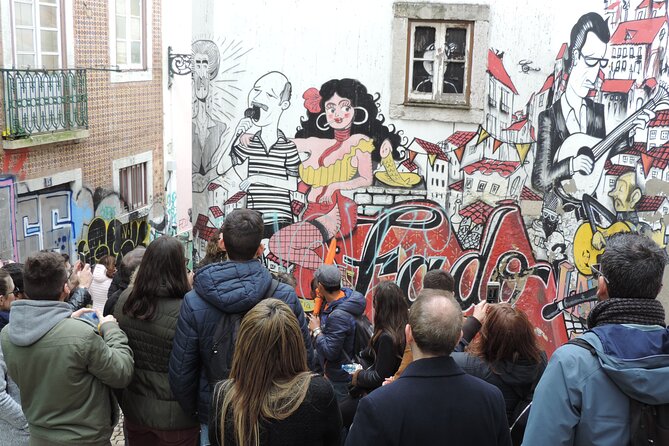
- Chiado Area: Carmo Square’s Unfinished Church and the Dictatorship Ending
- Café A Brasileira, Praça Luís de Camões, Ginjinha, and Casa do Alentejo
- Avenida da Liberdade and Estação do Rossio: The Grand City Face
- Miradouro São Pedro de Alcântara: End With a View That Makes Sense
- Price, Timing, and Real Value at $21.72
- Who This Tour Suits Best (And Who Might Want a Different Plan)
- Practical Tips for Your Walking Day
- Should You Book This Lisbon Highlights Walking Tour?
- FAQ
- How long is the Lisbon Highlights guided walking tour?
- What is the price per person?
- Where do I meet, and where does the tour end?
- Is the tour offered in English, and do I get a mobile ticket?
- Are admission fees included for the stops?
- How large is the group?
Key Points You’ll Actually Care About
- Small group size (max 20) makes it easier to ask questions while you’re moving
- English-speaking guide with a mobile ticket for easy entry
- Free admission built into the route, plus all fees and taxes are included
- Street-level history, from 1755 earthquake damage to monarchy endings
- Santa Justa Elevator stop with an explanation of its link to the Eiffel Tower concept
- Finish in the Chiado/Rossio area with a prime São Pedro de Alcântara viewpoint for photos
Why This Lisbon Highlights Walk Works in 2.5 Hours
Lisbon has a way of wearing you out if you chase sights at random. This tour is designed to move you through the city’s most important center without getting stuck in one neighborhood too long.
I like that the pace is tight but not frantic. The route is packed with major landmarks, yet each stop gets enough time for context—so you’re not just reading plaques while your feet complain.
And because it’s set up with a small group (up to 20 people), you’re more likely to get answers instead of just hearing a one-way lecture. Guides you might meet include Jose, Shiri, Telma/Thelma, and Ann-Elisa/Anna-Elyse—and the common thread is story-first explanations that connect history to what you see outside your eyes.
You can also read our reviews of more walking tours in Lisbon


Start at Praça do Comércio: The 1755 Earthquake, Explained in One Square
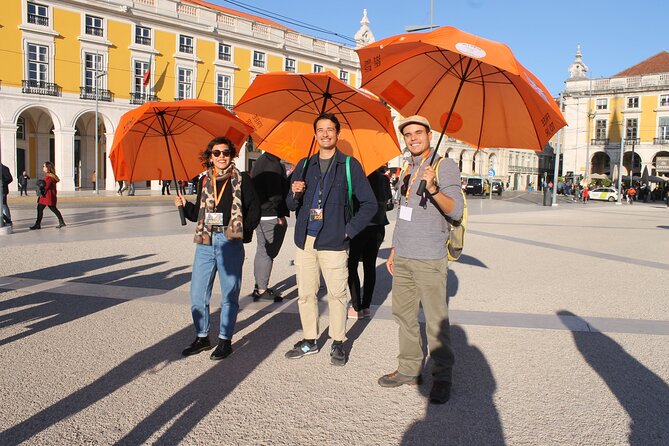
You’ll begin at Praça do Comércio, the massive main square right by the water. The meeting point is Praça do Comércio 574, 1100-148 Lisboa—a convenient start if you’re coming by public transport.
From here, the big story is the Great Earthquake of Lisbon in 1755, which destroyed about 80% of the city. Standing in this open space helps the explanation land. You can picture a city that had to rebuild itself from the ground up, street by street.
What to watch for: the sense of scale. A square this large is part of Lisbon’s rebuild identity. It’s also a calm “warm-up” stop before you start weaving through tighter streets.
Possible drawback: it’s a popular area, so expect crowds around the square. It’s still a great starting point because you get the event that connects everything after.
Arco da Augusta and Augusta Street: Lisbon’s Triumphal Moment
Next you’ll walk past the Arco do Triunfo, closely linked to the Augusta Street Arch. The guide talks about what the arch represents to Lisbon and how it ties to the city’s pride after the era of disruption.
This is where the tour shifts from disaster to rebuilding. The earthquake story sets the emotional stakes; the arch is the visual punchline—Lisbon signaling forward momentum.
Why this matters: you don’t have to memorize dates. You learn the theme. After this stop, Rua Augusta feels like more than a shopping corridor. It becomes part of a plan.
Municipal Square to Rua Augusta: Monarchy Ends and the Grid Shows Up
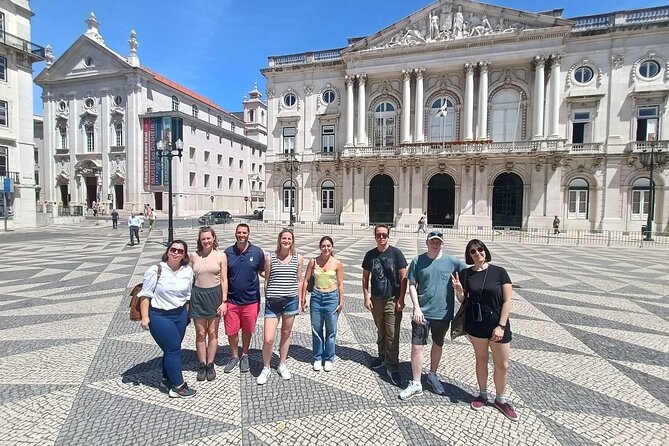
Then it’s on to Municipal Square, where the City Hall is located. Here you’ll hear about the end of Portugal’s Monarchy. This is one of the tour’s smartest moves: you don’t just hear about political change in a classroom tone—you learn it in the place where power has always been shown.
A short walk later you’re at Rua Augusta, Lisbon’s main street. The guide explains why the area was built as a grid. Again, this connects directly back to the earthquake: rebuilding isn’t only about repairing buildings—it’s about redesigning how people move.
What I like here: the “grid” detail is practical. Once you understand it, you navigate central Lisbon more easily after the tour. Streets become logical instead of random.
Footwear tip: Rua Augusta and the surrounding center include plenty of uneven pavement in spots. If you wear soft soles, you’ll thank yourself later.
Santa Justa Elevator: Lisbon’s Vertical Landmark and the Eiffel Connection
You’ll reach the Elevador de Santa Justa, the famous elevator landmark in Lisbon. The tour highlights how it’s the only elevator of its kind in Portugal and explains its connection to the Eiffel Tower.
Even if you don’t plan to ride it, the stop helps you understand why the structure is famous. It’s an engineering sight you can process immediately because the guide gives you the cultural link, not just the fact sheet.
Best use of this stop: look around before you focus on the elevator. Notice the positioning in the city. The whole area around Santa Justa makes more sense after you’ve been taught what you’re actually looking at.
You can also read our reviews of more guided tours in Lisbon




Rossio Square, São Domingo Church, and the Royal Escape Story
Your next anchor is Rossio Square (also tied to Praca Dom Pedro IV). The tour points out that Rossio is the oldest square in Lisbon dating back to the XIII century, and it covers big episodes tied to Portuguese monarchy and royal power.
One of the most memorable parts here is the story about the Portuguese royal family’s escape to a foreign country. You don’t just hear “history happened.” You see the kind of open civic space where people would have watched major changes unfold.
From Rossio, you’ll visit Igreja de S Domingos (São Domingo Church). The guide explains why it’s unique and shares one of the saddest episodes in Lisbon’s history behind the church.
Why this is worth the walking time: Lisbon church exteriors can blur together if you’re rushing. This stop gives you a reason to look carefully—details matter because the story has a payoff.
Practical note: this section can feel like the “densest” part of the route. Take short pauses when you can so you don’t arrive at later stops too tired to enjoy them.
Chiado Area: Carmo Square’s Unfinished Church and the Dictatorship Ending
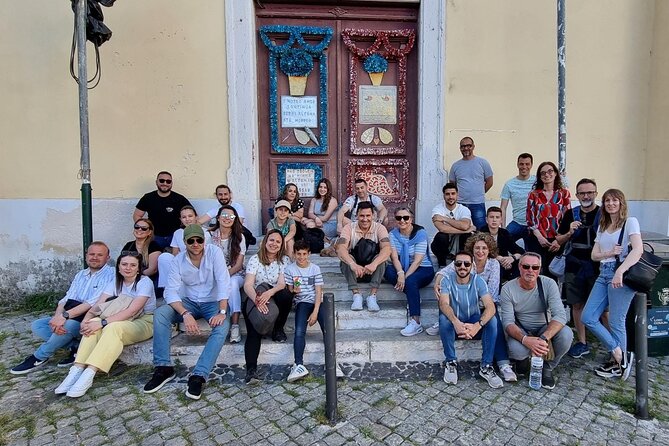
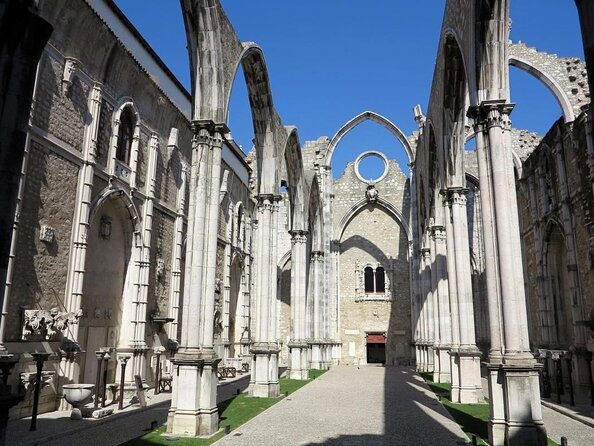
As you reach Chiado, you’ll stop at Museu Arqueologico do Carmo and near Carmo Square. The tour explains why the church there is unfinished—a visual reminder that history can stall, interrupt, and reshape.
Then the guide connects this site to the themes of Portuguese dictatorship and the revolution that put an end to it. Again, it’s a story told in a real place, not just a timeline.
What I like: the tour doesn’t treat politics like an abstract concept. It points you at physical reminders you can still see today. That’s how you remember things later.
Café A Brasileira, Praça Luís de Camões, Ginjinha, and Casa do Alentejo
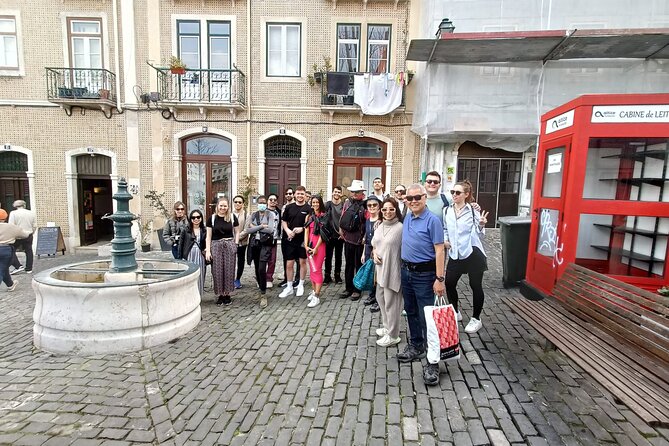
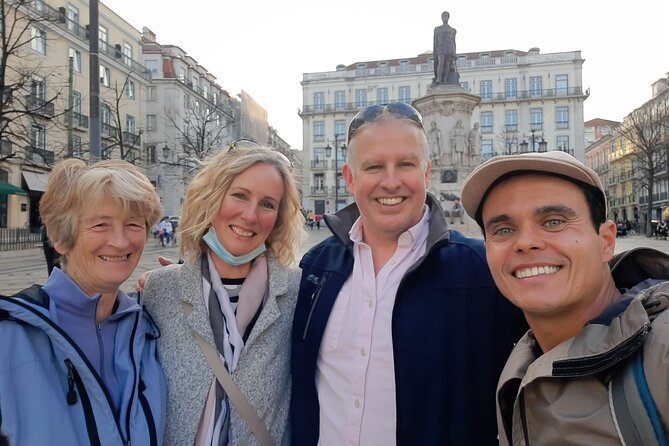
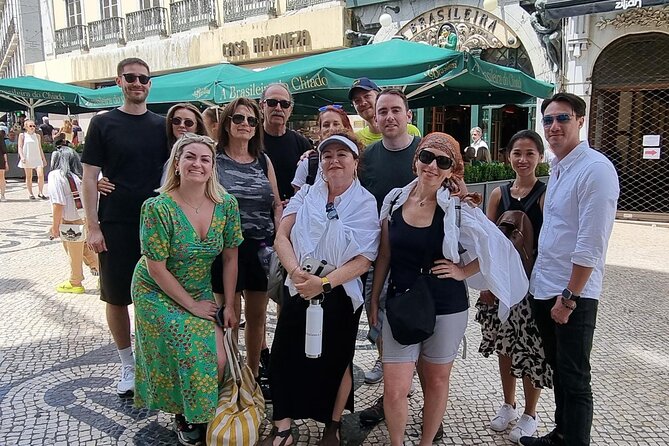
Next comes Praca Luis de Camoes, a key meeting point in Lisbon. The route covers the fancy shops in the area and points out Café A Brasileira, known as a writer and poet meeting point in the 20th century. Even if you only glance inside, it adds a cultural layer to your walk—Lisbon as a creative city, not just a postcard city.
From there, you’ll also hear about ginjinha, the famous cherry liquor in Lisbon, and why the shop at A Ginjinha became an institution. If you’re a first-time visitor, this is a nice way to connect food culture to local identity.
Later you’ll see Casa do Alentejo, another interesting stop. The guide shares moorish influence in Portugal’s history, and the building itself helps make that connection feel tangible.
How to use these stops: if you want to sample, treat it as a bonus, not a requirement. The tour works even if you skip tastings, but the food-and-drink moments help Lisbon feel human and lived-in.
Avenida da Liberdade and Estação do Rossio: The Grand City Face
You’ll pass Avenida da Liberdade, often compared to Lisbon’s Champs Elysees, and learn when it was built. This part is a contrast to the older, tighter streets earlier in the walk.
Then it’s on to Estação do Rossio, where the tour explains the history behind the station as the first central station in Lisbon and notes its distinctive architectural style found in Portugal.
Why this matters to you: after a walking tour filled with old-world drama, these stops remind you Lisbon also built modern identity—broad avenues and iconic transit spaces.
Possible drawback: if you’re sensitive to long stretches of walking, this can feel like the “in-between” segment. It’s still short, but the urban flow can blur fast if you don’t look up.
Miradouro São Pedro de Alcântara: End With a View That Makes Sense
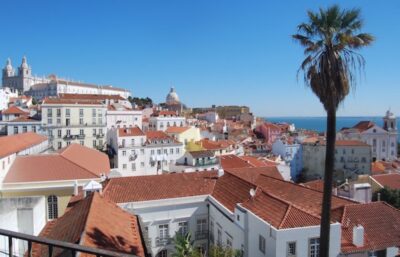
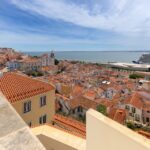
The final stop is Miradouro São Pedro de Alcantara, the viewpoint. This is a strong closer because you see Lisbon in one sweep and you’ve already learned how the city’s major layers connect.
You’ll also finish near Praça Luís de Camões (Largo Luís de Camões), next to the monument. That pairing is handy: you finish in a lively central area where it’s easy to continue exploring on your own.
This is my favorite kind of ending: a viewpoint where you can actually place what you’re seeing. After the earthquake, the monarchy stories, the elevator, and the squares, the city looks less like random rooftops and more like a sequence.
Price, Timing, and Real Value at $21.72
At $21.72 per person for about 2 hours 30 minutes, this tour is priced for budget-friendly travelers without turning into a “quick photo only” experience.
Here’s the value logic:
- You pay for a professional guide (not just a self-guided walk).
- All fees and taxes are included.
- The route includes multiple landmarks with free admission time built in.
- The group stays small (max 20), which helps the experience feel less generic.
Also, it’s usually booked around 43 days in advance on average. That doesn’t mean you must book months ahead, but it does mean you should plan if you’re traveling in peak season.
One more practical plus: it’s offered in English, and you get a mobile ticket. Less admin. More walking and learning.
Who This Tour Suits Best (And Who Might Want a Different Plan)
This Lisbon Highlights Guided Walking Tour is a great fit if you:
- want a first-time orientation to central Lisbon
- like stories that connect politics, disasters, and everyday streets
- enjoy photo stops but also want context before you shoot
It’s also good for mixed groups, since the structure is straightforward: short stops, frequent landmarks, and a pace that works for people across ages.
But if you have very limited mobility or you hate walking on hills, you might find the route tiring. The tour says most people can participate, yet it’s still a walking loop through central Lisbon.
Practical Tips for Your Walking Day
- Wear comfortable shoes with grip. Lisbon pavement can be slick in spots.
- Bring water. The route doesn’t look long on paper, but 2.5 hours adds up.
- Plan your day so you’re not rushing right after. If you can, leave room for lunch or a drink in the Chiado/Rossio area.
- If you want food ideas, use the guide as a local shortcut. The guides commonly share restaurant and nearby recommendations during the walk.
- Weather matters. The experience requires good weather, and if it’s canceled due to poor weather, you’ll be offered a different date or a full refund.
Should You Book This Lisbon Highlights Walking Tour?
If you want an efficient, story-driven way to understand central Lisbon, I think this is a smart booking. For the money, you get a structured circuit through major landmarks—plus clear explanations that make the city easier to navigate afterward.
Book it especially if it’s your first day or second day in Lisbon. You’ll start spotting the logic of neighborhoods, and the viewpoints won’t feel random.
If you’re already an extreme history nerd and want museum-heavy time, you might still enjoy this, but you’d likely add separate museum visits. For most people, this walk is the perfect “get your bearings fast” foundation.
FAQ
How long is the Lisbon Highlights guided walking tour?
The tour lasts about 2 hours 30 minutes.
What is the price per person?
The price is $21.72 per person.
Where do I meet, and where does the tour end?
The tour starts at Praça do Comércio 574, 1100-148 Lisboa, Portugal. It ends at Praça Luís de Camões (Largo Luís de Camões, 1200-243 Lisboa), next to the monument.
Is the tour offered in English, and do I get a mobile ticket?
Yes, it’s offered in English, and you receive a mobile ticket.
Are admission fees included for the stops?
All fees and taxes are included, and the itinerary includes stops with free admission ticket time.
How large is the group?
The tour has a maximum of 20 travelers.