REVIEW · CITY TOURS
Lisbon city tour on history, culture and current topics
Book on Viator →Operated by Walk 'N' Roll Stadtrundgänge & Ausflüge · Bookable on Viator
Lisbon clicks into place on foot. This small-group history-and-culture walk links Portugal’s past to the Portugal you feel today, with a German-speaking guide who keeps the story moving across classic neighborhoods. I especially loved the tight group size (max 12), which makes questions easy and the pace feel human. I also loved the stacked viewpoints—Santa Justa and the miradouros—so you get that Lisbon postcard feeling without needing a map app. The main drawback: it’s a hilly, active walk, so it’s not a good fit if walking difficulties are an issue.
You start at Rossio’s north fountain (Praça Dom Pedro IV) and finish at Praça do Comércio right on the Tejo River, under that big triumphal arch. You’ll also get one included snack tasting (local pastry or liqueur) plus a recommendation sheet your guide uses to point you toward practical food and day-plans. Expect a mobile ticket and a route that stays very much on foot, with no private transport.
In This Review
- Key highlights worth your time
- Getting Your Lisbon Bearings at Praça Dom Pedro IV
- Baixa de Lisboa: The Lower Town That Explains Lisbon’s Structure
- Santa Justa Elevator: Two Looks, One Big Payoff
- Convento do Carmo Ruins: A History Lesson You Can Walk Around
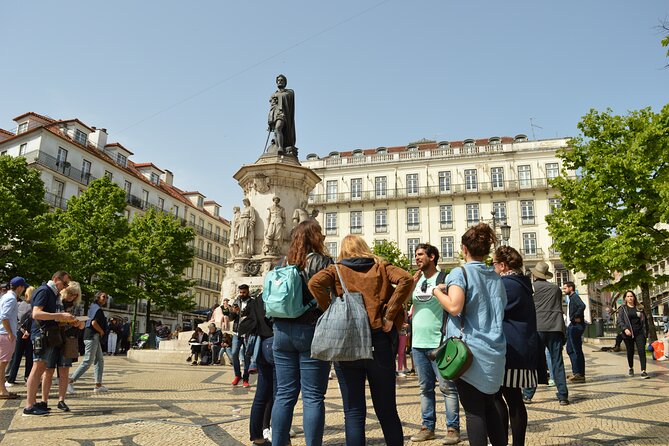
- Chiado and Praca Luis de Camoes: Poets, Politics, Daily Life
- Bairro Alto’s Hill Rhythm and the Long View Break
- Rua Augusta to Alfama: From Main Street Shopping to Old Lisbon
- Ending at Praça do Comércio: The Tejo River Moment
- The Guides and the Current-Topics Angle That Makes It Feel Live
- Price, What’s Included, and When It Feels Like a Deal
- Timing, Fitness, and Weather: The Real-World Limits
- Making the Most of Your Day After the Tour
- Should You Book This Lisbon History and Culture Walk?
- FAQ
- How long is the Lisbon history, culture, and current-topics city tour?
- What’s the maximum group size?
- What language is the tour guide?
- Where do we meet for the tour?
- Where does the tour end?
- What’s included in the price?
- Is the tour mostly walking?
- Are there admission tickets needed for the stops?
- Is the tour suitable for people with walking difficulties?
- What happens if the weather is bad?
- Can I get a refund if I cancel?
Key highlights worth your time
- Max 12 people for a more personal, question-friendly walk
- Santa Justa from below and from the observation deck for two angles on the same landmark
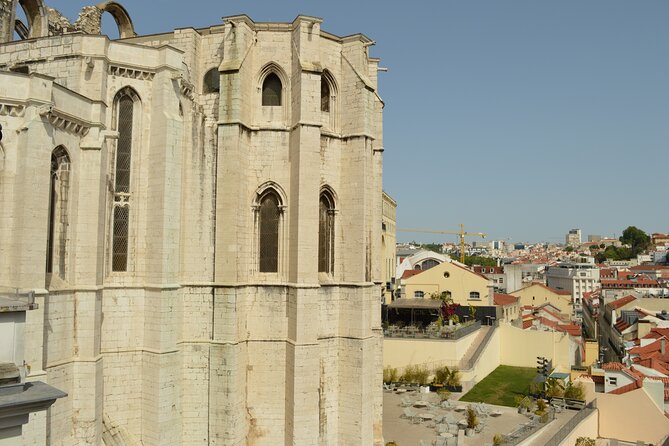
- Chiado + Carmo monastery ruins to connect Lisbon’s artsy side with a real historical scar
- Miradouro Sao Pedro de Alcântara break for a long pause with proper city views
- Alfama’s winding streets and viewpoints, finishing with the Tejo at Praça do Comércio
Getting Your Lisbon Bearings at Praça Dom Pedro IV
The meeting point is Rossio’s north fountain in Praça Dom Pedro IV. You’ll find the group by the northern fountain, between the King’s Statue and the National Theater—easy to spot once you’re standing there. The start is intentionally central, so before you even begin climbing, you get the mental map of where Lisbon’s “lower town” sits.
This first stretch also sets the tone: your guide talks about Portuguese history and culture, then brings it back to current topics you’ll notice as you walk. It’s not just facts on repeat. It’s how the city thinks, how it talks, and what locals still carry from earlier eras.
And because this is a small group, you’re not lost in a crowd. If you’re the type who wonders how Lisbon got shaped the way it did, you’ll find the pace works well early on—when everything is still new.
You can also read our reviews of more city tours in Lisbon


Baixa de Lisboa: The Lower Town That Explains Lisbon’s Structure
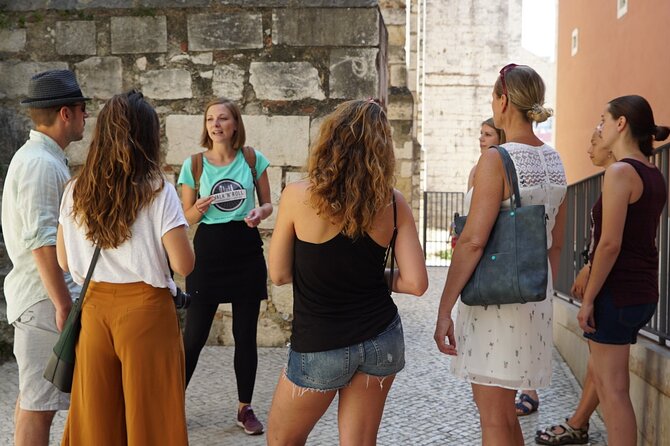
After the Rossio start, you head into Baixa, Lisbon’s lower town—the place that gives you the city’s grid-like feel and its everyday rhythm. This is where you start to understand why later districts feel like worlds apart. Baixa is calmer and more straightforward compared to the hills you’ll soon reach.
You spend about ten minutes here, so it’s not a deep museum-style stop. The value is orientation. You’ll notice street layout, how people move at street level, and how Baixa acts like a stage that connects neighborhoods. Think of it as the framework, not the whole story.
One practical thing I like about this approach: Baixa is where you can later return on your own with confidence. If you know the geometry of Lisbon’s center, it’s easier to choose which uphill detours are worth the effort and which are just a fun-but-random detour.
Santa Justa Elevator: Two Looks, One Big Payoff
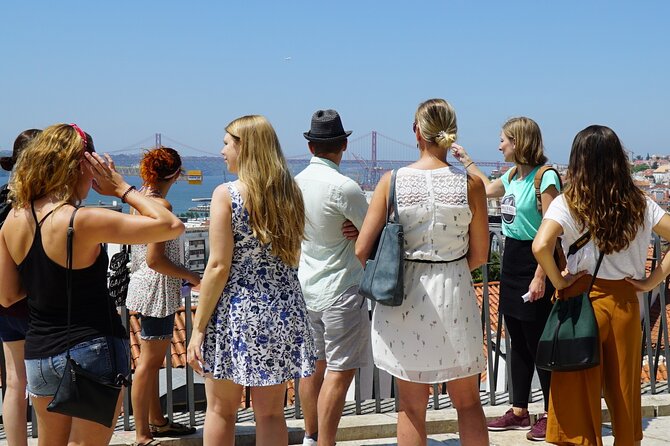
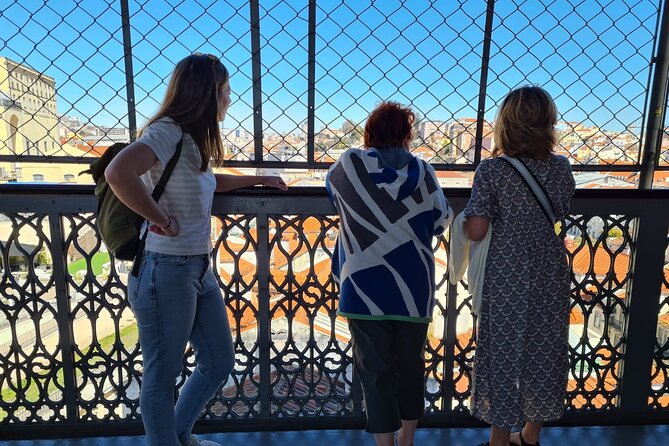
Santa Justa is one of those Lisbon landmarks you see in photos—but seeing it twice is the trick. You first admire the elevator from below, then you also get a look from the observation deck. That time split matters because you understand the structure as both machine and viewpoint.
From below, the elevator reads like an elegant solution to Lisbon’s slopes. From the deck, the view snaps the city into focus: you can take in the lower town and Lisbon Castle area, and the whole place starts to make sense as layers, not just streets.
This stop is also a good moment to ask questions. If you’re curious about how the city deals with elevation—transport, history, rebuilding after disasters—your guide can connect the dots in real time.
The only consideration: the elevator and the surrounding area can feel like a natural bottleneck if you arrive with a slow-moving group. Here, the max group size helps.
Convento do Carmo Ruins: A History Lesson You Can Walk Around
Then you move to the Convento do Carmo ruins. You’re not going inside as part of a formal entry—this is an outside admiration stop. That’s actually a strength. Ruins like this hit harder when you see them as part of daily streets, not separated behind ticket counters.
The guide uses this stop to explain Portuguese history and culture in a way that feels grounded. Lisbon is full of architecture, but the ruins show how the city changes—how it absorbs damage, rebuilds, and still carries the scars.
You’ll get around fifteen minutes here, which is enough time to look, take photos, and get the story without losing momentum.
If you’re someone who hates standing still, this stop should still work. The ruins offer plenty of angles for your eyes to do the work while you listen.
Chiado and Praca Luis de Camoes: Poets, Politics, Daily Life
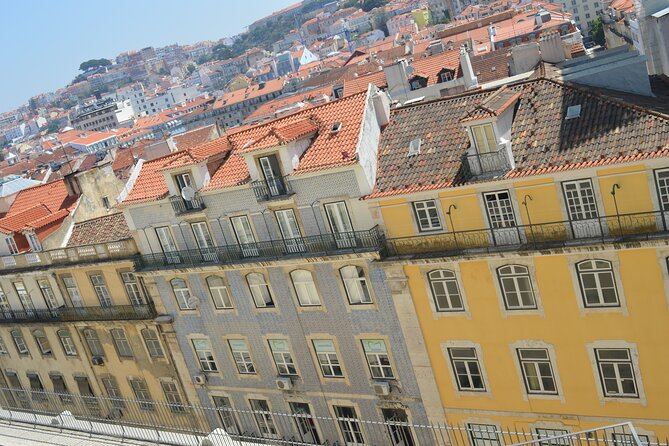
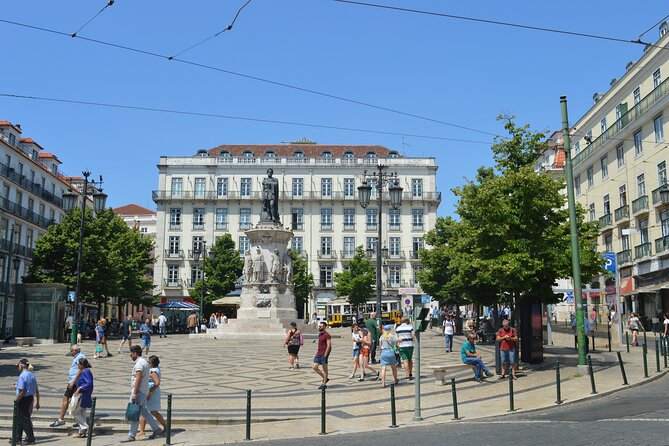
From Carmo, you head into Chiado, the poets’ quarter. Chiado is famous for culture, but what makes this walk valuable is the way your guide ties that cultural identity to real life: conversations in cafés, street culture, and the kinds of places Lisboners still treat as important.
You spend about twenty minutes in Chiado, then you visit Praca Luis de Camoes—the largest square in this poets’ area—for another fifteen minutes. The square functions like a breather. It’s a spot where you can recalibrate, look around, and understand how Chiado links upper and lower areas of the city.
This is also a good time to listen for how your guide talks about Portugal as a modern country with old roots. In the past, you might meet a Lisbon guide who only talks about what’s behind you. Here, the focus stays forward too: what you’ll see today and why it makes sense historically.
If you get a guide like Pedro, Sara, or Melina (names you might hear with this operator), you’ll likely feel the same pattern many groups mention: humor mixed with thoughtful context, plus very practical suggestions at the end.
You can also read our reviews of more historical tours in Lisbon





Bairro Alto’s Hill Rhythm and the Long View Break
Next comes Bairro Alto. This is the residential district that’s quiet in the daytime and comes alive at night. Your climb is part of the experience—so you feel the change from one neighborhood mood to the next.
You’ll stroll through for about twenty minutes, and that timing works because you’re not just rushing through. You get enough walking to notice the neighborhood character: smaller streets, local feel, and the kind of street energy that Lisbon is known for.
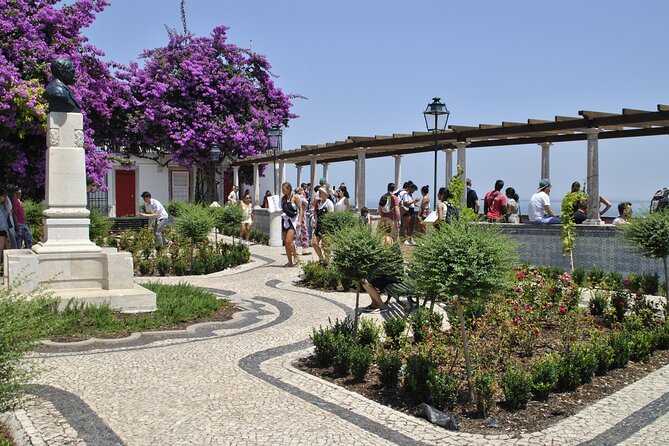
Then the tour reaches the viewing point at Miradouro Sao Pedro de Alcântara. You linger here for around forty minutes. This is one of the most valuable parts of the whole walk. It gives you a real break—time to sit, breathe, and actually see Lisbon from above instead of absorbing views while still on the move.
If you’re traveling in a weather window with wind, plan to hold onto your comfort items. A view stop is great, but Lisbon can be breezy. A long pause also makes it easier to pace your legs for what’s next.
Rua Augusta to Alfama: From Main Street Shopping to Old Lisbon
After the miradouro, you pass Rua Augusta—the big shopping street. It’s only about ten minutes, but that short exposure is smart. You’ll see the modern, commercial Lisbon side right in the center.
Then you shift into Alfama, the oldest quarter. This is a different world: winding alleys, narrower street corridors, and that sense you’re walking through time rather than just moving between stops. You get about thirty minutes here, which is enough for a real feel of the neighborhood without turning it into a slow crawl.
Alfama also includes another viewpoint: Miradouro de Santa Luzia for about ten minutes. That stop is short but powerful. You see Lisbon framed by rooftops and hills, and it helps you understand why people keep returning to this part of town.
The only drawback I’d flag is this: Alfama’s streets can be uneven and tight. If you’re carrying a bag that’s awkward on stairs or uneven surfaces, go lighter than you think you need.
Ending at Praça do Comércio: The Tejo River Moment
You finish at Praça do Comércio (Terreiro do Paço) on the banks of the Tejo River. The end is about ten minutes, but the location matters: you end where Lisbon opens up. After hours of hills, lookouts, and old streets, the riverfront feels like a reset button.
That triumphal arch is an unmistakable marker. It also gives you a clean “where am I now?” landing spot for the rest of your day—whether you want to stroll the waterfront, head to dinner, or catch public transport onward.
For many visitors, this end point becomes one of those memorable moments: the city feels larger and calmer at the river than it does on the slopes.
The Guides and the Current-Topics Angle That Makes It Feel Live
This tour is led by a German-speaking city guide, and it’s built for small groups (up to twelve). That combination is a big part of why the experience scores so high. You get enough time with your guide for real conversation, and you’re not shouting over the crowd.
The best part is how guides connect layers: Portuguese history isn’t delivered like a textbook. It’s tied to what you see outside your eyes. The guide also covers culture and current topics, which helps if you’re not visiting only for monuments. You’re learning how the city’s identity shows up now.
From the names you may encounter—Pedro, Sara, and Melina—there’s a consistent pattern many groups talk about: friendly energy, humor, and a habit of asking guests questions. It’s not stiff. You feel like part of the walk instead of an audience.
You’ll also get a recommendation sheet with tips from your city guides. That matters on day one because you don’t just leave with facts—you leave with choices.
Price, What’s Included, and When It Feels Like a Deal
At $45.86 per person for about 3 hours 30 minutes, this isn’t a “throwaway” tour. Still, it often feels like good value because several cost pressures are handled for you.
What you get for that price:
- A guided walk in German through multiple districts
- A small-group format (max 12)
- One included tasting (local pastry or liqueur)
- A recommendation sheet with tips
- A route where the listed stops are marked admission ticket free
Also, this tour runs on foot. Since private transportation isn’t included, your money goes into the guidance and the route design, not into vehicle transfers. In Lisbon, where neighborhoods can be steep and disjointed, walking with a plan can be cheaper than hopping around on taxis and still missing the context.
One more practical point: it’s commonly booked about 19 days in advance. That usually means the slots go quickly when travel demand is high. If your dates are fixed, booking earlier is the safest play.
Timing, Fitness, and Weather: The Real-World Limits
This tour is for moderate physical fitness. It’s not designed for people with walking difficulties, and the hills are part of the point. You’ll be going uphill and downhill through districts like Bairro Alto and Alfama, and your legs will feel it after a few hours.
If you’re choosing shoes, pick comfort over style. This is the kind of walk where your feet are the main transport.
Weather matters too. The experience requires good weather, and if it’s canceled due to poor weather, you’ll be offered a different date or a full refund. That’s fair. Long outdoor walks get miserable in heavy rain or cold wind.
If you’re walking with a plan, you’ll be fine. If you’re expecting an easy, flat stroll—skip it and look for a more transport-heavy option.
Making the Most of Your Day After the Tour
By the time you reach Praça do Comércio, you’ll have a much clearer picture of where to go next. You’ve seen Baixa, Chiado, Bairro Alto, and Alfama in one loop, plus multiple miradouro stops.
Here’s what I’d do with that advantage:
- Use your guide’s restaurant tips right away while you still remember what they meant.
- If you liked Santa Justa views, plan a second look later when the light changes.
- If Alfama clicked, spend extra time there on your own, but expect slow, meandering streets instead of fast sightseeing.
That recommendation sheet can also help you avoid the usual trap of picking a place that’s convenient but wrong for your tastes. If you care about food and local culture, the included tasting is also a good guide to what kinds of flavors to seek.
Should You Book This Lisbon History and Culture Walk?
Book it if you want a first (or second) look at Lisbon that feels structured but still human. The small group size and the guide-led storytelling make it easier to connect neighborhoods that would otherwise feel random. I also think it’s a strong choice for German speakers who prefer a guided explanation over a free-for-all stroll.
Don’t book it if you need a fully accessible, low-walking experience. This is active, hilly, and outdoor-heavy. Also, if you already know Lisbon well and mostly want a museum day, this may feel too street-level.
If you’re on the fence, here’s the decision rule I’d use: if you’re excited to walk, climb a bit, and collect views while learning why Lisbon looks the way it does, this is a solid pick.
FAQ
How long is the Lisbon history, culture, and current-topics city tour?
It lasts about 3 hours 30 minutes.
What’s the maximum group size?
The tour has a maximum of 12 travelers.
What language is the tour guide?
The tour is in German.
Where do we meet for the tour?
You meet at the north fountain of Rossio, at Praça Dom Pedro IV (between the King’s Statue and the National Theater).
Where does the tour end?
It ends at Praça do Comércio (Terreiro do Paço) on the banks of the Tejo River.
What’s included in the price?
A guided city tour on foot in German, one included tasting (local pastry or liqueur), and a recommendation sheet with tips from the guide.
Is the tour mostly walking?
Yes. It’s a city tour on foot that explores Baixa, Chiado, Bairro Alto, and Alfama.
Are there admission tickets needed for the stops?
The stops on the route are listed as admission ticket free.
Is the tour suitable for people with walking difficulties?
It is not suitable for people with walking difficulties. A moderate to good level of fitness is recommended.
What happens if the weather is bad?
The experience requires good weather. If it’s canceled due to poor weather, you’ll be offered a different date or a full refund.
Can I get a refund if I cancel?
Yes. You can cancel up to 24 hours in advance for a full refund. If you cancel less than 24 hours before the start time, the amount paid is not refunded.