REVIEW · FOOD & DRINK
Historic Winery Tour and Tasting in Bombarral
Book on Viator →Operated by Curioseety SRLS · Bookable on Viator
Copper stills and granite cellars are right outside Lisbon. This historic winery visit at Quinta do Sanguinhal is built for small groups, so you get real conversation, not a rushed lecture. And I really like the format: a guided tour plus a six-wine tasting with local snacks, all in about 90 minutes.
The main downside to weigh is time. It’s tightly scheduled, so if you’re hoping for hours of free roaming (or lots more pours), this may feel a bit short.
In This Review
- Key highlights I’d center in my planning
- A Family-Run Quinta About 40 Minutes from Lisbon
- Entering Quinta do Sanguinhal: The First Look at History
- Copper Alembic Stills and the Estate Story You Can Follow
- Granite Cellars and Screw Presses: Where the Details Matter
- Gardens, Aging Cellars, and the Centenary Buildings Feel
- The Six-Wine Tasting: What You’ll Actually Drink
- The Human Touch: Anna and Josephine Bring the Story to Life
- Price and Value: Is $52.36 a Good Deal?
- Planning Your Day: Lisbon, Beaches, and the Road to Fátima
- Who Should Book This Winery Tour (and Who Might Skip It)
- Should You Book? My Straight Answer
- FAQ
- How long is the Historic Winery Tour and Tasting in Bombarral?
- How many wines are included in the tasting?
- Is the tour limited to small groups?
- How far is the winery from Lisbon?
- Where does the tour start and end?
- Do I need a printed ticket?
- When is the best time to book?
- Is free cancellation available?
- Will I get confirmation after booking?
Key highlights I’d center in my planning
- Small group (max 12) keeps the vibe friendly and questions welcome
- Historic production spaces including copper alembic stills and granite cellars
- One press dates to 1871, plus other wood-and-granite equipment
- Six wines + local snacks with guidance on how they’re made and why they matter
- Quinta buildings and gardens give the place more character than most tasting rooms
A Family-Run Quinta About 40 Minutes from Lisbon
This experience is a smart break from Lisbon city sightseeing. Instead of stacking another church and another viewpoint, you head out to the countryside near Bombarral, about 40 minutes away. The setting matters: it’s a family-owned estate (not a big corporate operation), and the visit is designed around the winery’s historical buildings.
What you’ll feel from the start is that the tour is about place and process. The estate was shaped by the family and a dedicated team that now welcome visitors, and the winemaker has also invested in the tourism and service areas to make the history easy to experience.
One practical note: the location is also handy if you’re mixing day trips. The winery is close to beaches like Peniche, Baleal, and Nazaré, and it sits on the route toward Fátima. So if your itinerary already heads in that direction, this fits neatly without adding a whole extra drive.
You can also read our reviews of more food & drink experiences in Lisbon



Entering Quinta do Sanguinhal: The First Look at History
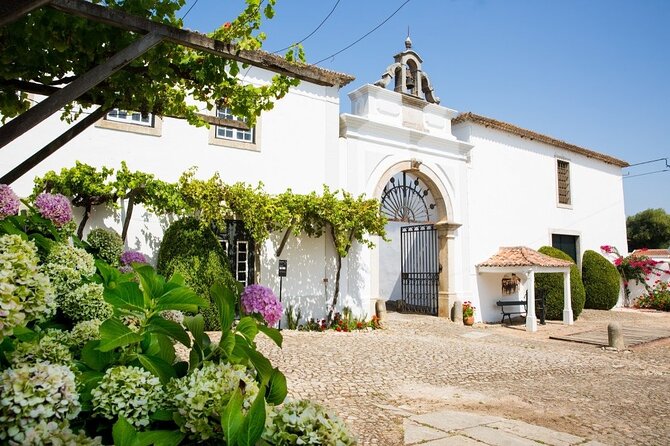
Your visit starts at 2540-216 Q.ta do Sanguinhal and ends back at the same meeting point. From there, you’ll get a guided walk through the estate’s key production and visitor areas, including the cellar side and garden areas.
A big part of what makes this tour special is that you’re not only tasting wine—you’re seeing the bones of production. At Quinta do Sanguinhal, the team points you to one of the first distilleries built in the region, which gives the buildings a long, lived-in feel. That historical framing helps you understand why the winemaker treats the estate as more than a backdrop.
You’ll likely spend most of your energy on the tour portion and then shift gears for the tasting. That flow is useful if you’re trying to learn while you’re still fresh, instead of saving all the questions for after you’ve already swallowed the last sip.
Copper Alembic Stills and the Estate Story You Can Follow
One of the standout things here is the visibility of equipment. The estate includes column copper alembic stills, and that detail isn’t just decorative. Seeing the stills in context helps you connect the story of distillation and production to what’s happening in the cellar today.
This is also where the guide’s role really matters. The tour is guided, and the point isn’t only to list facts. It’s to explain the secrets of how the winemaker approaches the wines and how the estate’s history shapes the way they work.
If you care about wine as a craft (not just a souvenir), this part is satisfying because it explains the “why,” not just the “what.” And because the group size is capped at 12, you can actually ask follow-ups instead of shouting across a crowd.
Granite Cellars and Screw Presses: Where the Details Matter
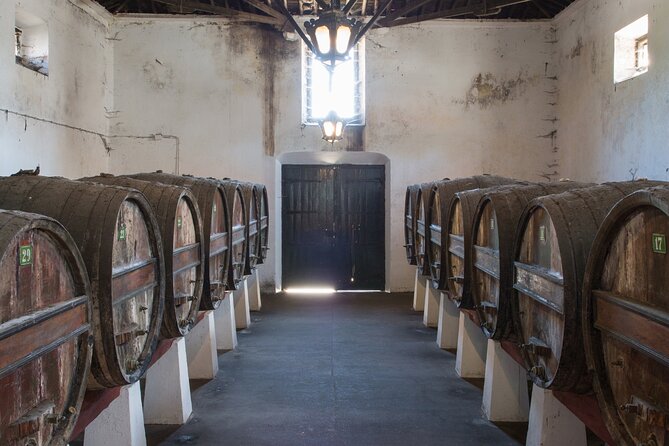
After the initial estate story, you’ll move into the granite cellars. This is one of those places where you can almost feel the age in the walls. The tour highlights equipment made from wood and granite, including screw presses—and one press dates from 1871.
That 1871 detail is not small. It’s the kind of date that tells you the process has been refined over many generations, and that the estate didn’t simply start producing wine yesterday. Even if you’re not a tech-nerd, seeing how tools are built for pressure and transfer gives you a clearer mental map of winemaking.
A practical thing to know: cellars tend to be cooler and more enclosed than the gardens. If you’re the type who runs hot in Lisbon sun, bring a light layer so you don’t feel uncomfortable during the cellar part.
Gardens, Aging Cellars, and the Centenary Buildings Feel
The tour doesn’t stop at production rooms. You’ll also get time in the gardens and around the aging cellars. This blend of outdoors and indoors is a big reason the overall experience feels more human.
The winery’s centenary buildings add character to the visit. Rather than a modern tasting room where everything is designed to sell wine, you’re walking through structures that already shaped the family business over time. That makes it easier to focus on the craft and less on the commercial side.
If you’re traveling with someone who doesn’t care about wine details, the gardens can be the compromise. You still learn, but you also get scenery and a change of pace before the tasting portion starts.
You can also read our reviews of more historical tours in Lisbon





The Six-Wine Tasting: What You’ll Actually Drink
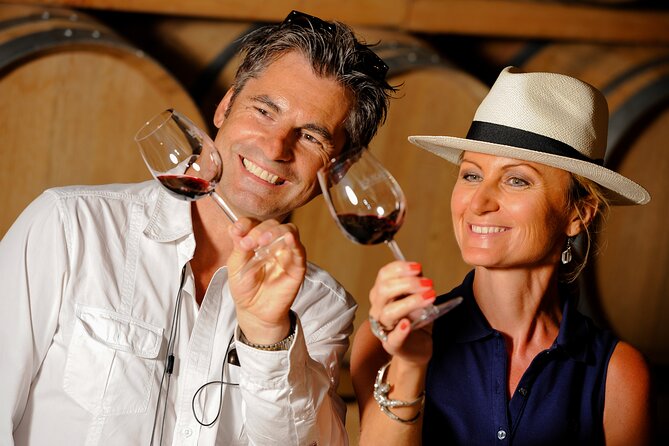
The tasting is the payoff, and it’s guided. You’ll be served six fine wines produced at the winery, plus local snacks. This matters because snacks help you taste more accurately and keep the experience comfortable rather than turning it into a rushed sprint from glass to glass.
One detail that helps you picture the tasting: accounts describe trying two whites, two reds, and two unique fortified wines. That mix is a practical way to cover styles instead of giving you six similar pours. Fortified wines can be a learning moment too—sweetness and structure behave differently than standard table wines, so the guide’s explanations are especially helpful here.
The tasting portion is also where you connect the earlier tour stops to what’s in your glass. Seeing cellar equipment and then tasting wines from the same place is one of the best ways to make learning stick.
Also, because the whole tour is about 1 hour 30 minutes, you’ll want to go into it ready to focus for a short, concentrated block. It’s ideal for a relaxed afternoon rather than a late-night drinking session.
The Human Touch: Anna and Josephine Bring the Story to Life
What makes this experience feel warm is the family angle. The winemaker and the team welcome you, and the story often comes through people who have a long connection to the business.
Two names come up when you look at what stands out: Anna, the great granddaughter of the founder, and Josephine, praised for patience during the experience. When the guide has both enthusiasm and control of the room, the tour works on two levels: you learn how wine is made, and you enjoy how the family talks about their work.
If you’re worried about tasting tours being awkward—standing in silence while everyone else nods—this one tends to be different because it’s small and guided. You can ask what you really want to know, like how the production process affects the flavor, or what makes those fortified wines distinctive.
Price and Value: Is $52.36 a Good Deal?
At $52.36 per person for about 90 minutes, you’re paying for two things: access and context. Yes, there’s the tasting. But the value is also in the guided walk through historic production areas—cellars, equipment, gardens, and the estate buildings—rather than only sitting down in a tasting room.
Small-group format matters here. A tour capped at 12 means more attention and fewer “wait your turn” moments. That’s a real value multiplier because wine tours can easily become one-size-fits-all. This one is built to feel personal without turning into a private tour price.
Timing matters too. Tours are often booked around 14 days in advance, which hints that slots can fill. If you’re planning around a busy Lisbon schedule, it’s smart to lock it in early rather than assuming you can pick it up last-minute.
Planning Your Day: Lisbon, Beaches, and the Road to Fátima
This is one of those tours that fits well into a bigger map. Because it’s near Lisbon but not stuck in the city, you can pair it with a coastline stop or a pilgrimage route day.
The winery is close to Peniche, Baleal, and Nazaré. If you’re thinking of spending time at the Atlantic and then heading inland, this is a natural middle stop. It also sits on the route to Fátima, so you can build a day that connects countryside wine and a classic religious stop without doubling back too much.
In practical terms, I’d treat this as an afternoon anchor. It’s long enough to feel worth the drive, but short enough that you still have time to continue your day afterward—especially if you’re heading toward beaches or another town.
Who Should Book This Winery Tour (and Who Might Skip It)
This tour is a strong match if you:
- want a family-owned feel and a small-group setting
- enjoy wine as a craft and like learning how production works
- want both a tour and a guided six-wine tasting without making it an all-day project
- like historical spaces—cellars, presses, and older production equipment
You might consider skipping or adjusting expectations if you:
- want a long, slow tasting with lots of free pour time
- expect a modern, high-energy entertainment-style wine bar experience
- feel frustrated by a schedule that runs in a tight 90-minute window
Should You Book? My Straight Answer
Book it if you want a countryside break from Lisbon that actually teaches you something and lets you taste with guidance. The combination of historic production areas—including the granite cellars and the screw press dating to 1871—plus the six-wine guided tasting with local snacks is where this experience earns its money.
If you’re a casual drinker who only wants one or two sips, you might feel it’s too structured. But if you like learning while you taste, this is the kind of stop that leaves you with stories you’ll remember long after the glass is empty.
FAQ
How long is the Historic Winery Tour and Tasting in Bombarral?
It runs for about 1 hour 30 minutes.
How many wines are included in the tasting?
The guided tasting includes six wines produced at the winery, along with local snacks.
Is the tour limited to small groups?
Yes. The maximum group size is 12 travelers.
How far is the winery from Lisbon?
It’s about 40 minutes away from Lisbon.
Where does the tour start and end?
It starts at 2540-216 Q.ta do Sanguinhal, Portugal, and ends back at the same meeting point.
Do I need a printed ticket?
No. The tour uses a mobile ticket.
When is the best time to book?
On average, it’s booked about 14 days in advance.
Is free cancellation available?
Yes. You can cancel up to 24 hours in advance for a full refund.
Will I get confirmation after booking?
Yes. Confirmation is received at the time of booking.