REVIEW · SINTRA
3 Tours Private / Tour SINTRA Second Day Tour FÁTIMA Third day Tour LISBON
Book on Viator →Operated by Fantastic Ride · Bookable on Viator
Three days across Portugal, with Sintra first. This private tour strings together UNESCO Sintra monuments, the quiet power of Fátima, and Lisbon’s most photogenic viewpoints—without you juggling buses or timing. I especially like the way the plan is built around the big-ticket highlights (Pena Palace, Quinta da Regaleira, Jerónimos, Torre de Belém), and I also like the comfort touches: an air-conditioned vehicle with onboard WiFi and bottled water, plus a driver who can flex the timing. The one real drawback to factor in is that tickets are not included, and several stops involve stairs and a fair amount of walking around palaces and sanctuaries.
You’ll start in Lisbon at 09:00 and end back at your Lisbon accommodation, which keeps the “where do we meet” stress low. Pickup is offered, and since it’s private, it’s just your group in the vehicle. That also means if your group wants a slower rhythm for photos and viewpoints, you have room to work with the day instead of racing a set timetable.
Pricing runs at $581.78 per person for roughly 3 days, and it’s commonly booked about 45 days in advance. For the money, you’re paying for guided transport across three regions plus a driver who adjusts pacing—so it’s best when you value comfort and direction more than DIY freedom. Plan your budget for entrance fees, and you’ll feel like you got your money’s worth.
In This Review
- Key points before you go
- The big picture: 3 regions, 1 driver, and Lisbon as home base
- Day 1 in Sintra: Moorish Castle to Pena’s palace-top romance
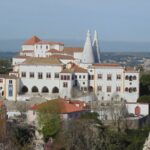
- Sintra village and the National Palace: where kings staged their Portugal
- Quinta da Regaleira and Monserrate: romantic revival, symbolism, and gardens
- Day 2 Fátima: Valinhos Via-Sacra to the modern Basilica of the Holy Trinity
- Capela das Aparições and the Rosary Basilica: the emotional center
- Day 3 Belém and Lisbon: Manueline monuments and the Tagus shoreline story
- Rossio, Sé Cathedral, and the Santa Luzia viewpoint: Lisbon’s layers in one afternoon
- Mirador de Senhora do Monte: the late-day sweep over Tagus and rooftops
- Price and logistics: what $581.78 per person is really paying for
- Make it work for your group: pacing, footwear, and expectations
- Who should book this private Portugal 3-day route
- Should you book it?
- FAQ
- FAQ
- What is the tour duration?
- Where does the tour start and end?
- Is pickup offered?
- What is included in the price?
- Are entrance tickets included?
- Is WiFi provided during the tour?
- Is there a restroom on board?
- How much is the tour per person?
- What is the cancellation policy?
Key points before you go
- Private pacing with a driver who can flex the day so you’re not stuck in a rigid schedule
- Sintra UNESCO highlights that cover Moorish-era roots, romantic palaces, and dreamlike estates
- Fátima’s major stops along the Via-Sacra route, plus the Capela das Aparições and Rosary Basilica
- Belém’s Manueline power moves at Jerónimos and Torre de Belém, paired with the story behind Pastéis de Belém
- Lisbon viewpoints in the mix (Santa Luzia and Senhora do Monte), not just monuments in the streets
The big picture: 3 regions, 1 driver, and Lisbon as home base
This is a classic “three best-known Portugal moments” package, but the structure matters. Starting at 09:00 in Lisbon and ending back at your accommodation means you can sleep, start fresh, and still land back where you’re staying.
The experience is built around comfort and control. You ride in an air-conditioned vehicle with WiFi and bottled water, and you won’t be stuck trying to coordinate transfers between Sintra, Fátima, and Lisbon in short bursts. Also, since it’s a private tour, you’re not sharing your vehicle with strangers.
One important thing: tickets aren’t included. Many of the stops listed (especially palaces and major monuments) have paid admissions, so you’ll want to set aside an entrance-fee budget so the day stays smooth.
You can also read our reviews of more private tours in Sintra
Day 1 in Sintra: Moorish Castle to Pena’s palace-top romance
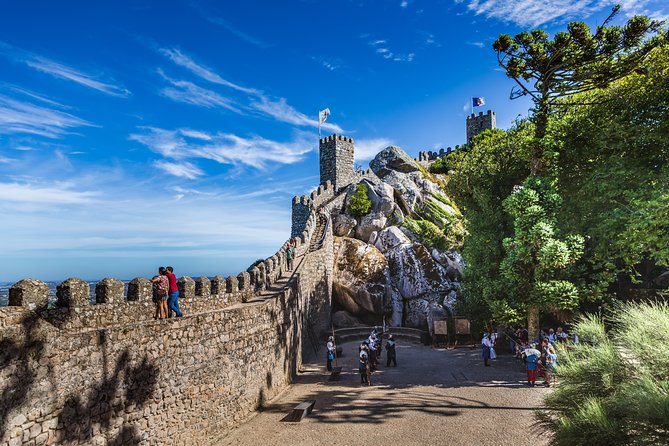
Sintra is where Portugal feels like a world of its own—part mountain air, part fairytale architecture. You begin with the Moorish Castle, a site that dates back to the early Moorish occupation of the peninsula. It’s about 3.5 km from Sintra’s historic center, so you’ll likely do this with a short ride and then some walking inside the area.
What I like about this stop is the timeline it brings. The castle was eventually taken by Dom Afonso Henriques in 1147, and after that it became tied to early Christian building, including a chapel dedicated to St. Peter of Penaferrim. Then, in the romantic period (around 1860), the walls were restored under Dom Fernando II, with wooded surroundings that helped turn medieval ruins into a more dignified ruin with views.
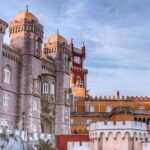
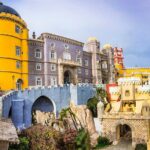
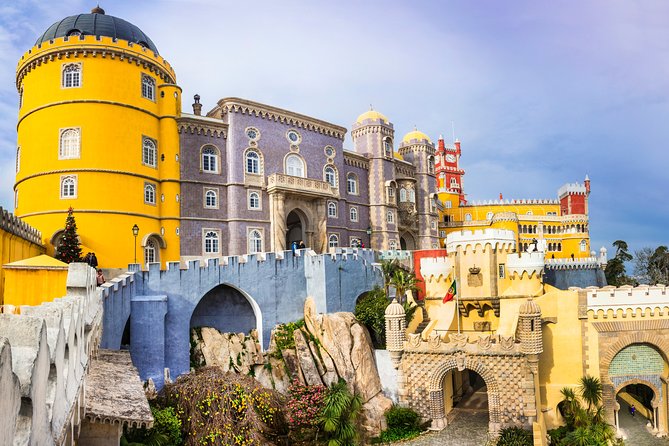
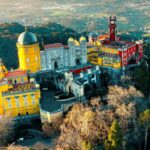
Next comes Park and National Palace of Pena, the signature “palace on a hill” stop. It’s set on Monte da Pena and built on the site of a former monastery. This is a very 19th-century story: it was built by D. Fernando de Saxe Coburg-Gotha, who married Queen Dona Maria II in 1836, bought the convent and surrounding lands, and created a summer palace for the royal family.
Plan for a slow, photo-friendly visit here. The guide can flex the day, but Pena is the kind of place where you’ll want time to look out over the Sintra Mountains and down toward the coast. Ticket costs are separate, so having your entrance sorted in advance (when possible) helps you lose less time.
Sintra village and the National Palace: where kings staged their Portugal
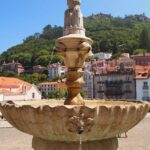
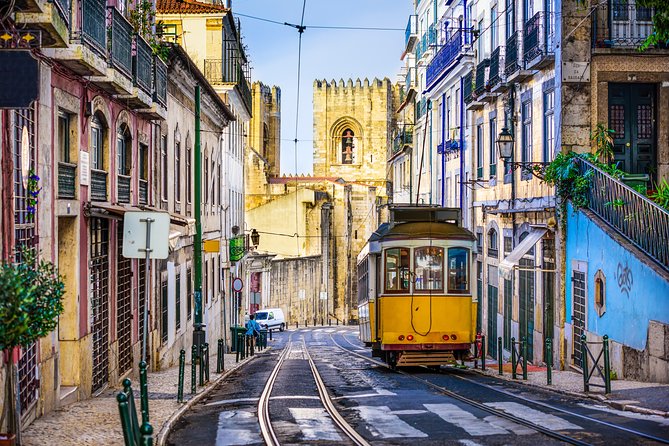
After the palace drama, you shift into the human scale of Sintra. The Centro Histórico de Sintra is a UNESCO-recognized zone, and it’s a useful reset after more expansive sites. You get an hour to wander among buildings and traces from different periods and cultural movements.
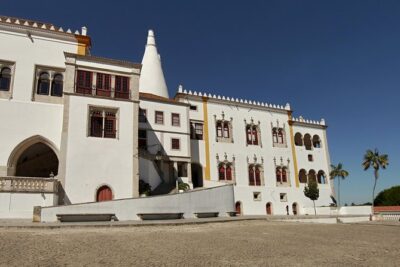
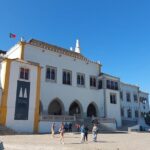
Then you move to the Sintra National Palace, which is a standout among Portugal’s medieval royal palaces. It’s unique in that it shows layers of Portuguese royal power and design decisions. Dom João I rebuilt it, and Dom Manuel I enriched the decorative character by adding a new wing.
When you visit the interior, pay attention to how the decoration blends different artistic styles. This stop works especially well if you want your Sintra day to feel more “how did the court live?” than just “wow, a pretty building.” If your group tends to linger, you’ll appreciate the private setup since the driver can stretch or shorten time at each place.
A practical note: National Palace interiors usually mean more walking inside and a steady pace rather than big outdoor stretches. Comfortable shoes matter.
Quinta da Regaleira and Monserrate: romantic revival, symbolism, and gardens
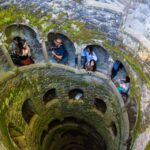
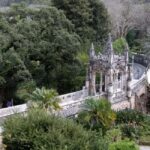
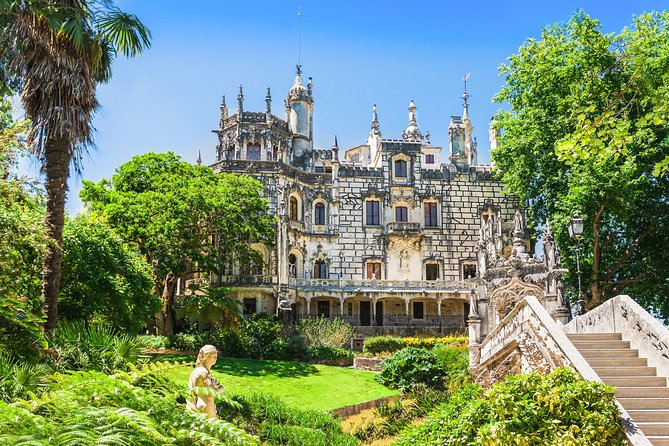
Quinta da Regaleira is the kind of place that feels slightly off-script in the best way. It’s very close to the historic center, and it’s described as one of Sintra’s most enigmatic sights. The estate was built in the early 20th century by millionaire Antonio Augusto Carvalho Monteiro (1848–1920), with scenographic architect Luigi Manini (1848–1936).
The palace here is in a romantic revivalist style, mixing Gothic, Manueline, and Renaissance architectural and decorative forms. What I find useful is the context: it isn’t just “nice buildings,” it also comes with mythical and esoteric symbolism. If you like estates that invite you to read meaning into the design, this stop will feel more memorable than a standard palace.
Admission is not included, so budget accordingly. Also, because Regaleira is a sprawling property, you may want to take your time at your own pace instead of rushing through. The private driver helps keep this from turning into a sprint.
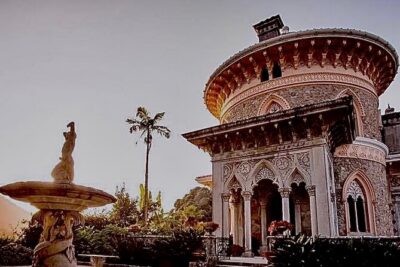
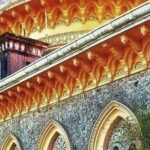
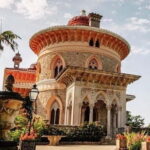
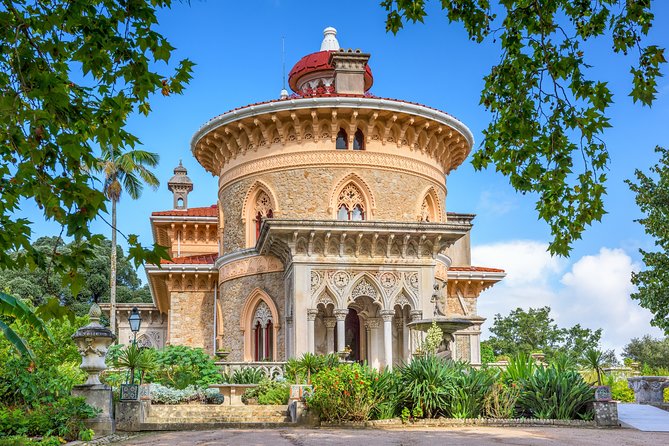
Then you head to Park and Palace of Monserrate, created by William Beckford after he fell in love with the Sintra Mountains. This is a romantic park setting rather than a purely palace-focused visit. The experience is a nice contrast to Pena: Pena is bold, high, and theatrical. Monserrate leans softer, garden-forward, and great for atmosphere.
Day 2 Fátima: Valinhos Via-Sacra to the modern Basilica of the Holy Trinity
Day two shifts tone. Fátima isn’t about architecture variety for variety’s sake. It’s about sacred space, processional routes, and the meaning pilgrims attach to each stop.
You start in Valinhos Sanctuary, where thousands of Portuguese and foreign pilgrims follow the Via-Sacra route to the Hungarian Calvary. On the way, you can see the Chapel of St. Stephen of Hungary, plus the House of Lucy and the House of Francis and Jacinta Marto in Aljustrel.
What I like here is the specificity. The route isn’t vague; it’s tied to named places and a clear walking itinerary. Even if you’re not a pilgrim, it helps you understand the geography of devotion in a grounded way.
The stop also includes sculptures of the Angel of Portugal and stations of the Via-Sacra written by Maria Amélia Carvalheira da Silva. That gives the place a layered, artistic element beyond simple signage.
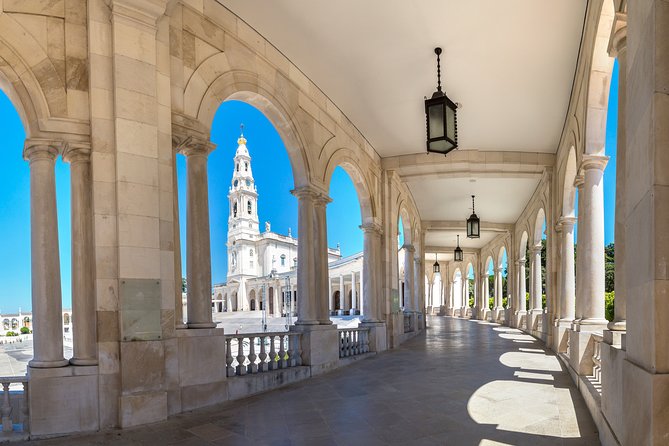
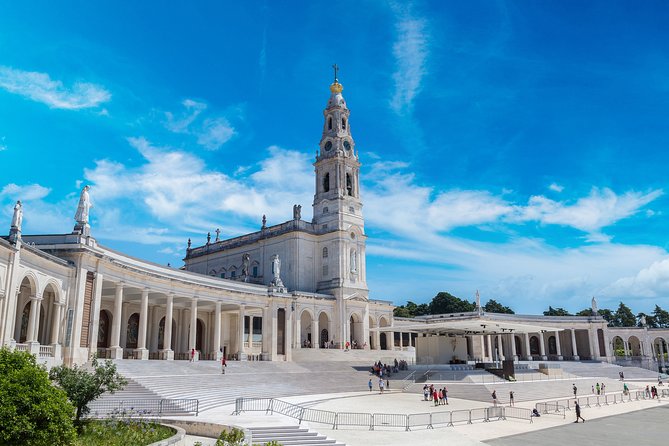
From there, you visit the Basilica of the Holy Trinity (Basílica da Santíssima Trindade). This church is modern, round, and white, inaugurated in 2007 but planned since 1973 due to the need for capacity when the Basilica wasn’t large enough for average turnout.
One detail I’d pay attention to: the building is 125 m in diameter with no intermediate support. That’s the kind of statement scale that can make you stop thinking of a “tour” and start thinking about how people gather in this space.

Capela das Aparições and the Rosary Basilica: the emotional center
Next comes the most direct connection to the story that defines Fátima for many people: Capela das Aparições. The chapel was built by local people in 1919 in response to Our Lady’s request during one of the apparitions. The first mass held there was in 1921.
The description matters: the chapel keeps a modest, rough design like a simple hermitage, even with changes from preservation and maintenance. The image of Our Lady marks the spot of the holm-oak tree where the apparitions were said to have happened. Over time, the actual tree disappeared piecemeal as believers took twigs away.
Then you finish with the Basilica of Nossa Senhora do Rosário de Fátima, commonly called the Basilica of the Rosary. This basilica integrates into the Sanctuary of Fátima at Cova da Iria. It’s a classic capstone for the day because it brings the day’s story and devotion into a larger, central worship space.
Expect a quieter rhythm here. Even if you’re in the middle of a busy sanctuary day, the vibe is about respect and attention, not a checklist sprint.
Day 3 Belém and Lisbon: Manueline monuments and the Tagus shoreline story
Day three is your Lisbon-heavy finale, and the order helps: you start with Belém’s most famous monumental cluster.
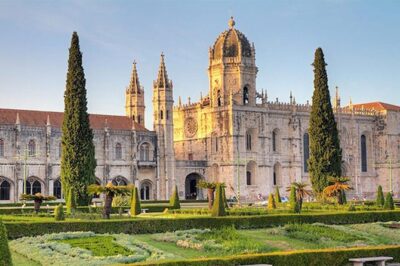
First up is Mosteiro dos Jerónimos. This is described as an apogee of Manueline architecture, linked to the Discoveries. The site originally held a small hermitage dedicated to Santa Maria built by Infante D. Henrique in 1452. In the early 16th century, King Manuel I’s plan for a large monastery gained Holy See approval, and it was donated to the Order of the Friars of St. Jerome.
This stop is usually where your brain goes from “beautiful buildings” to “understanding Portugal’s big national themes.” If you like architecture, the Manueline details will keep you looking up.
Next is Torre de Belém, the UNESCO-listed tower built between 1514 and 1521 by Francisco de Arruda, ordered by King Manuel I. It was constructed on a basalt island near the right bank of the Tagus in front of Restelo beach, but the river’s course shift means it ended up practically swallowed by the bank.
That’s a subtle but neat reminder: even famous monuments are shaped by water and time, not just human design.
Then you stop at the story behind Pastéis de Belém. It all traces back to a sugar cane refinery and shop attached to the monastery of Jerónimos. After the liberal revolution and the closure of monasteries in 1834, people working there offered pastries for sale as a survival strategy. The pastries became known as Pastéis de Belém.
You don’t have long here, but it’s a great “taste of culture” story stop, especially if you love connecting food to place.
You also visit Padrão dos Descobrimentos, the Monument to the Discoveries. It was designed in 1940 for the Exposition of the Portuguese World and built in 1960 to commemorate 500 years since the death of Prince Henry the Navigator.
Rossio, Sé Cathedral, and the Santa Luzia viewpoint: Lisbon’s layers in one afternoon
After Belém’s monumental focus, you move into old Lisbon energy. You get Parque Eduardo VII with panoramic city views. The park lies north of Avenida da Liberdade and used to be called Parque da Liberdade. It was renamed after British King Edward VII’s visit in 1903.
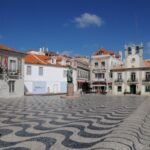
Then you reach Rossio Square, rebuilt after the 1755 earthquake and dominated by neo-classical harmony, including the D. Maria II Theatre.
From there you visit Lisbon Cathedral (Sé Catedral de Lisboa). It’s dedicated to the Mother of God since 1147, and construction began when D. Afonso Henriques reconquered Lisbon from the Moors. The cathedral was built on top of a Muslim mosque, which—according to archaeological excavations—was built on an earlier Visigothic Christian temple.
That layered footprint is what makes Sé more than a pretty façade. You’re standing in a spot where multiple belief systems have occupied the same geography.
The tour also includes the Mirador de Santa Luzia, one of Lisbon’s best “get your bearings fast” viewpoints. From here you look over Alfama and the Tagus River. The view points include the dome of Santa Engrácia, the Church of Santo Estêvão, and the two white towers of the Church of São Miguel. The south wall of Santa Luzia has modern tile panels, including one depicting Praça do Comércio before the earthquake.
Mirador de Senhora do Monte: the late-day sweep over Tagus and rooftops
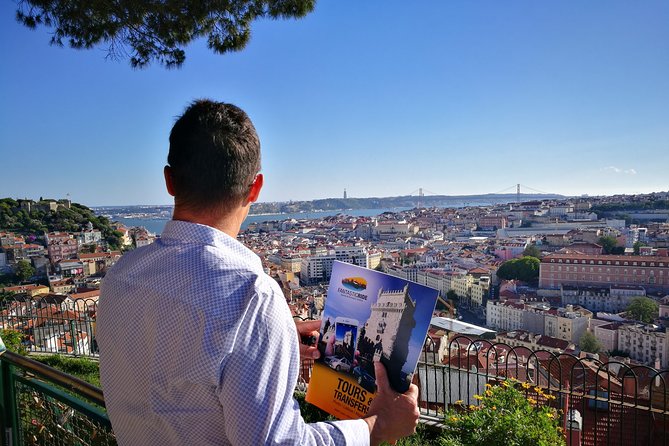
To close the Lisbon portion, you go to Mirador de Senhora do Monte in the Graça area. It sits in front of the Chapel of Our Lady of the Mount, and the viewpoint is known for wide reach.
From here you can see south toward the “sea of Straw,” the Castle of São Jorge, part of Baixa, and the estuary of the Tagus. West includes Bairro Alto and the Monsanto forestry park. To the north you get a view over the valley of Avenida Almirante Reis.
There’s also the small old hermitage of Our Lady of Monte nearby, founded in 1147 and consecrated to St. Gens. It’s tied to a tradition about D. Afonso Henriques installing his camp there to conquer Lisbon.
If you like Lisbon for its angles, this last viewpoint is the kind of stop that turns photos into a memory. It also feels like a nice landing before the tour returns you back to your Lisbon accommodation.
Price and logistics: what $581.78 per person is really paying for
Let’s talk value, because $581.78 per person is not “cheap,” but it can be fair depending on how you travel.
You’re paying for:
- Private transportation across three days and multiple regions
- An air-conditioned vehicle with WiFi and bottled water
- A driver who can flex time in each location based on your schedule
- A start-to-finish structure: Lisbon 09:00 start and return to your accommodation in Lisbon
What’s not included is just as important: tickets and food and drinks. Many of the big stops listed are admission sites, so you’ll want to plan for that cost separately rather than being surprised.
Also, there is no restroom on board. That doesn’t ruin the day, but it means you’ll want to use rest stops during transfers, especially if your group wants a relaxed rhythm.
Where the pricing can feel especially smart is if your group includes different mobility levels. One of the tour’s strongest signals from past service is that the guide adjusted the tour to better suit guests with walking limitations, which is exactly the kind of “real-world” flexibility worth paying for.
Make it work for your group: pacing, footwear, and expectations
Here’s how you get the best version of this tour.
First, wear shoes you can walk in for multiple sites. Sintra palaces and estates involve uneven paths and lots of stairs and corridors. In Fátima, you’ll also be on your feet as you move between sanctuary areas.
Second, set expectations around time and admissions. Since tickets aren’t included, do what you can to handle entrances efficiently. Your driver can’t change building rules, but they can help you avoid wasting time by adjusting the day’s flow.
Third, use the private nature of the tour. Your group can ask for longer or shorter time at places like Pena or Quinta da Regaleira based on what you care about. This is the difference between “touring” and actually enjoying what you came to see.
Finally, if you have anyone with mobility needs, bring it up early. The service has shown it can adapt when the group has walking issues, and that’s a big deal for comfort.
Who should book this private Portugal 3-day route
This tour fits best if you:
- Want a high-effort route (Sintra + Fátima + Lisbon) without public-transport stress
- Prefer comfort: AC vehicle, onboard WiFi, bottled water
- Like having a guide-driver presence to manage pacing and connections
- Plan to visit major monuments and also enjoy viewpoint time
It’s also a strong choice for small groups and friends who travel with mixed preferences. One person wants architecture, another wants scenic stops, and you can flex the schedule because the day isn’t locked to one pace.
If you’re the type who hates structured days and wants totally free wandering, this may feel like “too much guidance.” But if you want direction plus room to breathe, it’s a very practical balance.
Should you book it?
I’d book this if you want three iconic Portuguese experiences tied together cleanly, with comfort and pacing handled for you. The big value is not just the sights—it’s the private setup that lets you manage time between Sintra palaces, Fátima sanctuaries, and Lisbon’s Belém monuments and miradouros.
Do book it with two realities in mind: tickets are extra, and several stops involve walking. If you plan for those, you’ll spend your time looking at Portugal instead of figuring out logistics.
FAQ
FAQ
What is the tour duration?
It runs for 3 days (approximately).
Where does the tour start and end?
It starts in Lisbon at 09:00 and ends in the same place, at your accommodation in Lisbon.
Is pickup offered?
Yes, pickup is offered.
What is included in the price?
Included items are bottled water, an air-conditioned vehicle, private transportation, and WiFi on board.
Are entrance tickets included?
No. Tickets are not included.
Is WiFi provided during the tour?
Yes, WiFi is provided on board.
Is there a restroom on board?
No restroom on board is listed.
How much is the tour per person?
The price is $581.78 per person.
What is the cancellation policy?
You can cancel for free up to 24 hours in advance for a full refund.